

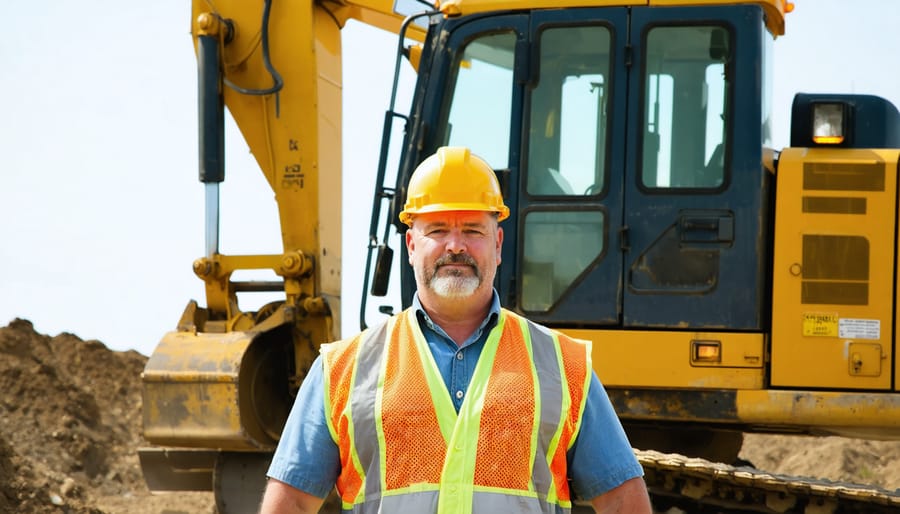
Launch your heavy equipment operator career in Kentucky with wages ranging from $18-35 per hour and steady growth potential across construction, mining, and infrastructure projects. Kentucky’s booming construction industry demands skilled operators for excavators, bulldozers, cranes, and loaders, with over 1,500 new positions expected in the next three years.
Master in-demand equipment certifications through Kentucky’s accredited training programs, including the Kentucky Community and Technical College System (KCTCS) and private vocational schools. These programs combine hands-on experience with essential safety protocols and equipment maintenance knowledge, typically completed in 8-16 weeks.
Top employers like Kiewit, Walsh Construction, and James River Coal actively recruit certified operators across Kentucky’s major urban centers and rural areas. Construction projects along I-75, I-64, and expanding commercial developments in Louisville, Lexington, and Northern Kentucky create consistent demand for skilled operators.
Required qualifications include a valid Commercial Driver’s License (CDL), OSHA certification, and specific equipment endorsements. Physical stamina, mechanical aptitude, and precise hand-eye coordination are essential for success in this rewarding field. Veterans often receive priority placement and additional training benefits through Kentucky’s Veteran Job Connection program.
Essential Heavy Equipment Qualifications in Kentucky
Required Certifications and Licenses
To work as a heavy equipment operator in Kentucky, you’ll need several key certifications and licenses. The most fundamental requirement is a valid Commercial Driver’s License (CDL), typically Class A or B, which you can obtain through the Kentucky Transportation Cabinet after passing written and practical tests.
The National Center for Construction Education and Research (NCCER) certification is highly valued by Kentucky employers. This credential demonstrates your proficiency in operating specific types of equipment and understanding safety protocols. You can earn this certification through approved training programs at Kentucky community colleges or vocational schools.
OSHA safety certifications are also essential, particularly the OSHA-30 certification for construction. Many employers require this before allowing operators to work on their sites. Additional equipment-specific certifications from organizations like the National Commission for the Certification of Crane Operators (NCCCO) may be necessary depending on the equipment you’ll be operating.
To maintain your certifications, you’ll need to complete regular renewal requirements and continuing education courses. Many Kentucky employers offer on-the-job training and certification assistance, but having these credentials before applying can give you a competitive edge.
For specialized work environments, such as mining operations, you’ll need additional certifications from the Mine Safety and Health Administration (MSHA). These can be obtained through approved training providers throughout Kentucky.
Remember that some certifications require periodic renewal, typically every 2-5 years, so staying current with your credentials is crucial for continued employment.
Training Programs and Schools
Kentucky offers several paths to become a qualified heavy equipment operator. The Kentucky Community and Technical College System (KCTCS) provides comprehensive training programs at multiple locations across the state. These programs typically last 4-12 weeks and include both classroom instruction and hands-on training with various equipment types.
Students learn essential skills like backhoe operation best practices, safety protocols, and equipment maintenance. The West Kentucky Community and Technical College in Paducah and Elizabethtown Community and Technical College are particularly noted for their well-equipped facilities and experienced instructors.
Several private vocational schools also offer specialized certifications, including Heavy Equipment Colleges of America in Louisville and Associated Training Services in Northern Kentucky. These programs often feature job placement assistance and connections with local employers.
For those seeking apprenticeships, the Kentucky Labor Cabinet’s Registered Apprenticeship program partners with construction companies to provide paid, on-the-job training combined with classroom instruction. These apprenticeships typically last 3-4 years and offer a direct path to employment while earning industry-recognized credentials.
Top Equipment Types and Specializations
Construction Equipment
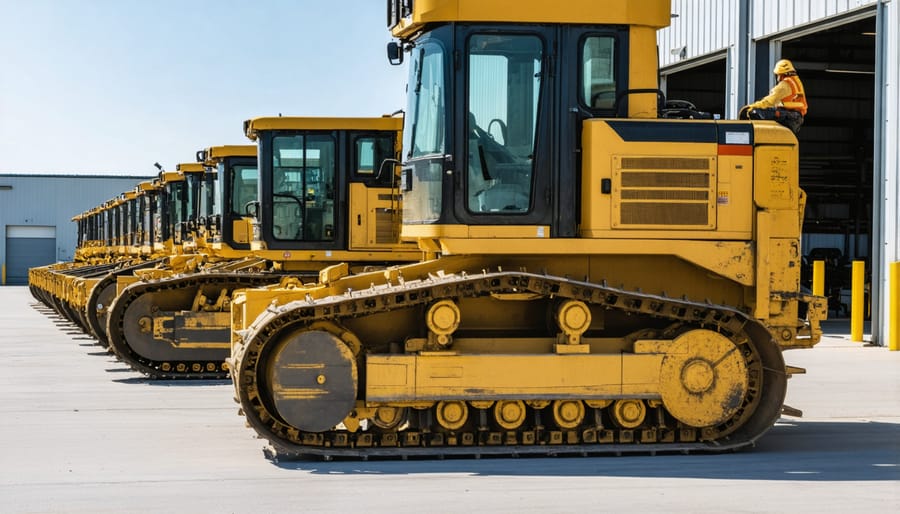
Construction equipment operators in Kentucky must be proficient with various heavy machinery commonly used on job sites. The most frequently operated equipment includes excavators, bulldozers, and backhoes. When it comes to choosing the right backhoe for different projects, operators need extensive training and experience.
Cranes, both mobile and tower varieties, require specialized certifications due to their complexity and safety requirements. Wheel loaders and motor graders are essential for earthmoving operations, while compactors and rollers are crucial for road construction projects. Experience in evaluating backhoe equipment and other machinery is a valuable skill for operators.
To operate these machines safely and efficiently, operators must complete comprehensive training programs and obtain necessary certifications. Most employers require a Commercial Driver’s License (CDL) and OSHA safety certifications. Familiarity with GPS systems and machine control technology is increasingly important as construction equipment becomes more sophisticated.
Operators should also understand basic maintenance procedures and be able to perform daily equipment inspections. This includes checking fluid levels, identifying wear and tear, and reporting any mechanical issues. Good communication skills are essential, as operators often work as part of larger construction teams and need to coordinate with other crew members effectively.
Mining and Industrial Equipment
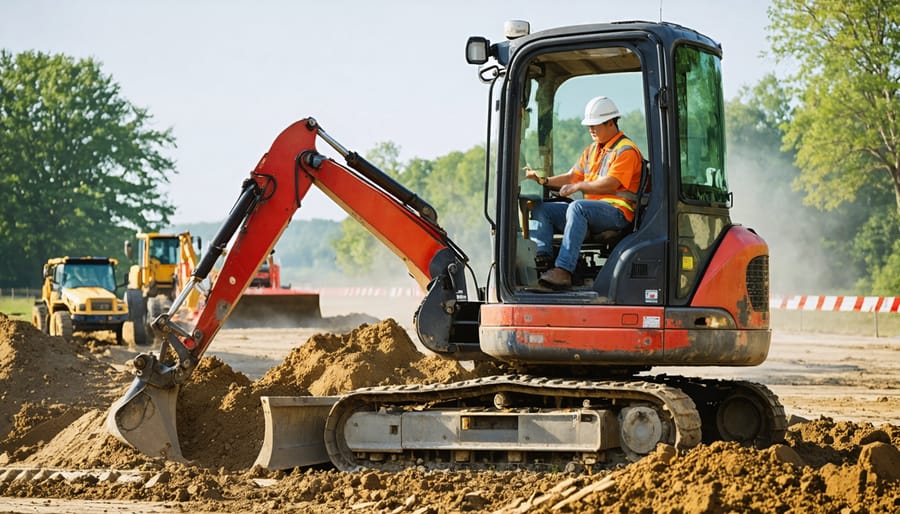
Kentucky’s mining and industrial sectors rely heavily on specialized heavy equipment operators who can handle complex machinery. Common equipment includes continuous miners, roof bolters, and longwall systems for underground coal operations. Surface mining requires proficiency with large-scale draglines, hydraulic shovels, and haul trucks that can move massive amounts of material efficiently.
Industrial facilities across the state employ operators for specialized equipment like overhead cranes, telescopic handlers, and industrial forklifts. Material handling equipment operators are essential in manufacturing plants, steel mills, and processing facilities. Many positions require certification for specific machines, such as mobile crane operators needing CCO certification.
Safety is paramount when operating this equipment, and employers provide extensive training on site-specific machinery. Operators must understand proper maintenance procedures, safety protocols, and emergency procedures. Many mining companies offer apprenticeship programs where new operators can learn alongside experienced professionals.
The industrial sector also requires operators for specialized construction equipment like pile drivers, concrete pump operators, and industrial demolition equipment. These positions often command higher wages due to the technical expertise required and the critical nature of the work. Companies typically provide ongoing training as equipment technology evolves, ensuring operators stay current with the latest safety features and operational procedures.
Major Kentucky Employers and Job Markets
Leading Construction Companies
Kentucky’s construction landscape is dominated by several major companies that regularly hire heavy equipment operators. Messer Construction, headquartered in Cincinnati with significant Kentucky operations, offers competitive benefits and prioritizes safety training. They typically require 3-5 years of experience and NCCCO certification for their operators.
Gray Construction, based in Lexington, is known for its industrial and commercial projects. They offer comprehensive training programs and prefer candidates with both technical certification and hands-on experience. Their equipment operators often work on large-scale manufacturing facilities and distribution centers.
Louisville-based Walsh Construction maintains a strong presence in infrastructure projects throughout Kentucky. They seek operators with bridge and highway construction experience, offering career advancement opportunities and union-scale wages.
Whittenberg Construction Company values versatile operators who can handle multiple types of equipment. Their projects often include healthcare facilities and educational institutions, requiring precision operating skills.
Other notable employers include Scott & Murphy Inc. and Wilhelm Construction, both offering competitive compensation packages and steady work throughout the year. Most of these companies require a valid CDL, OSHA certification, and clean drug screening. They typically provide health insurance, retirement plans, and paid time off, with starting salaries ranging from $45,000 to $65,000 annually.
High-Growth Regions
Kentucky’s heavy equipment operator job market is experiencing significant growth in several key regions. Northern Kentucky, particularly around the Greater Cincinnati area, shows robust demand due to ongoing infrastructure projects and warehouse development. The region’s proximity to major transportation routes has sparked numerous construction initiatives.
Louisville and its surrounding counties continue to expand with commercial and residential projects, creating steady opportunities for operators. The city’s urban development plans and infrastructure improvements are driving consistent job growth in the sector.
The eastern Kentucky coalfield region is transitioning toward new industries, creating unexpected opportunities for heavy equipment operators in site preparation and land reclamation projects. Federal infrastructure funding has particularly benefited this area, leading to increased job openings.
Central Kentucky, including Lexington and Frankfurt, maintains strong demand through university expansion projects, highway improvements, and commercial development. The Bluegrass region’s steady population growth continues to fuel construction activities.
Western Kentucky is seeing increased opportunities around Bowling Green and Paducah, where manufacturing facility expansions and logistics center developments require skilled operators. The region’s industrial parks and riverport facilities contribute to sustained job growth, making it an attractive area for equipment operators seeking stable employment.
Salary and Benefits Overview
Pay Ranges and Experience Levels
Heavy equipment operators in Kentucky can expect competitive pay rates that increase with experience and certifications. Entry-level operators typically start at $15-18 per hour, while those with 2-5 years of experience earn between $20-25 per hour. Seasoned operators with 5+ years of experience and multiple equipment certifications can command $28-35 per hour or more.
Specialized roles often offer premium pay rates. Crane operators tend to earn the highest wages, ranging from $25-40 per hour, depending on experience and project complexity. Excavator operators generally earn $22-32 per hour, while bulldozer operators can expect $20-30 per hour.
Union positions typically offer better benefits packages and more structured pay scales. Union operators often earn $5-8 more per hour than their non-union counterparts, plus additional benefits like health insurance and pension plans.
Location within Kentucky also affects pay rates. Urban areas like Louisville and Lexington generally offer higher wages than rural locations, though rural projects may provide additional benefits like per diem or travel allowances. Mining operations in Eastern Kentucky frequently offer premium pay rates due to the specialized nature of the work.
Benefits and Perks
Heavy equipment operators in Kentucky typically enjoy comprehensive benefits packages that make the profession even more rewarding. Most employers offer health, dental, and vision insurance coverage for operators and their families. Paid time off, including vacation days and sick leave, is standard across the industry.
Many companies provide retirement benefits through 401(k) plans, often with employer matching contributions. Life insurance and disability coverage are commonly included in benefits packages. Some employers offer performance bonuses and overtime pay opportunities, which can significantly boost your annual income.
Additional perks may include tool and equipment allowances, company-provided work gear, and safety equipment. Many operators receive ongoing training and certification opportunities paid for by their employers, supporting career advancement. Some companies offer vehicle allowances or company trucks for job site transportation.
Union positions often come with additional benefits, including stronger job security, standardized wage increases, and more comprehensive healthcare coverage. Many employers also provide shift differential pay for night work and emergency call-outs, plus holiday pay and weekend premiums.
Safety and Compliance Requirements
Working as a heavy equipment operator in Kentucky requires strict adherence to safety protocols and regulatory requirements. All operators must follow OSHA guidelines and maintain compliance with state-specific regulations. Personal protective equipment (PPE) including hard hats, steel-toed boots, high-visibility vests, and hearing protection is mandatory on all job sites.
Operators must obtain and maintain valid certifications, including a Commercial Driver’s License (CDL) when required. Regular safety training and refresher courses are essential, covering topics like backhoe safety guidelines, fall protection, and hazard recognition. Kentucky law requires operators to complete site-specific safety orientations before beginning work at new locations.
Daily equipment inspections are mandatory and must be documented. Operators need to understand and follow proper lockout/tagout procedures, maintain clear communication with ground crews, and be familiar with hand signals used on construction sites. Weather monitoring and appropriate response protocols are crucial, especially during Kentucky’s varying seasonal conditions.
Substance abuse testing is typically required, with many employers implementing random screening programs. Incident reporting procedures must be followed precisely, and operators should maintain detailed logs of their work hours to comply with federal regulations on operating time limits. Regular medical examinations may also be required to ensure operators maintain the physical capabilities necessary for safe equipment operation.
Kentucky offers abundant opportunities for those looking to build a rewarding career as a heavy equipment operator. With competitive salaries averaging $45,000-$65,000 annually and steady job growth in construction, mining, and infrastructure development, now is an excellent time to enter this field.
To get started, focus on obtaining the necessary certifications through accredited training programs available at Kentucky’s technical schools and community colleges. Most programs can be completed in 8-12 weeks, providing hands-on experience with various equipment types. Remember to acquire your Commercial Driver’s License (CDL) as it’s often required by employers.
Many successful operators begin their careers through apprenticeships or entry-level positions with construction companies, allowing them to gain valuable experience while earning. Major employers across Kentucky are always seeking qualified operators, particularly in urban centers like Louisville, Lexington, and Northern Kentucky.
For the best results in your job search, network with industry professionals, join local trade unions, and regularly check job boards specific to construction and heavy equipment operation. Consider starting with smaller companies to gain experience before advancing to larger projects and better-paying positions.
Stay current with industry trends and safety regulations through continuing education, and maintain all necessary certifications. With dedication and the right qualifications, you can build a stable, well-paying career operating heavy equipment in Kentucky’s growing construction industry.
Related Posts


Post a Comment