


**Start by contacting your local planning or zoning department** to obtain the specific zoning ordinance for your property’s location. Request the full text of allowable uses in your zone classification, as “self-storage” may be listed under various terms like “mini-warehouses,” “storage facilities,” or “warehouse, personal storage.”
**Verify whether self-storage is a permitted use, conditional use, or prohibited use** in your zone. Permitted uses require standard building permits, while conditional uses demand special hearings, neighbor notifications, and approval from planning commissions—adding 3-6 months to your timeline and potentially thousands in application fees.
**Map the dimensional requirements that will dictate your site layout**: setback distances from property lines, maximum building height, lot coverage percentages, parking space ratios, and landscape buffer requirements. These regulations directly impact how much rentable square footage you can build and whether your property qualifies at all.
**Identify overlay districts, special use restrictions, and design standards** that may apply beyond base zoning. Historic districts, highway corridors, and flood zones often impose additional limitations on building materials, signage, lighting, and architectural style that can significantly affect project feasibility and costs.
Understanding zoning requirements isn’t optional—it’s the foundation of every successful self-storage project. Whether you’re evaluating a potential purchase, planning new construction, or converting existing buildings, these regulations determine what you can build, where you can build it, and how long approval will take. This guide breaks down the research process, explains common requirements in plain language, and provides solutions to navigate typical challenges.
What Are Zoning Requirements and Why They Matter for Self-Storage
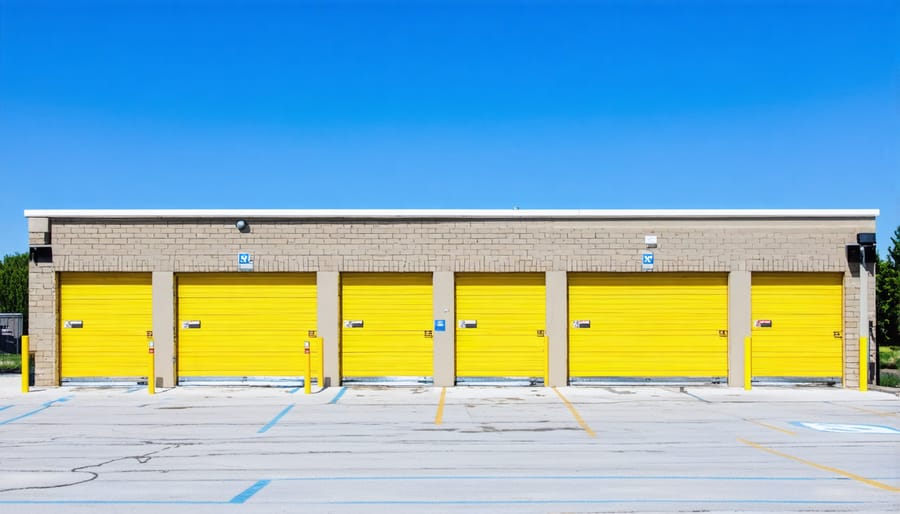
The Basics: Zoning Classifications That Allow Self-Storage
Before diving into permits and applications, it’s essential to understand where self-storage facilities are actually allowed to operate. Zoning classifications vary by municipality, but certain designations consistently permit self-storage development.
**Commercial Zoning** is the most common home for self-storage facilities. Look for codes like C-2 (General Commercial), C-3 (Highway Commercial), or similar designations in your local ordinances. These zones typically allow warehousing and storage businesses alongside retail and office uses.
**Light Industrial (M-1) or Industrial Zones** frequently accommodate self-storage, especially for larger facilities. These areas are designated for warehouse-style operations and often have fewer restrictions on building size and operational hours than commercial zones.
**Mixed-Use Districts** are increasingly popular in urban settings, where self-storage can share space with residential, retail, or office developments. These zones may have specific design standards to ensure the facility blends with surrounding uses.
Some municipalities create **Special Purpose** or **Planned Development** zones specifically for self-storage, with codes like SP-SS (Special Purpose-Self Storage). These provide clear guidelines tailored to storage operations.
When researching your property or selecting a self-storage facility location, start by checking your local zoning map—usually available online through your city or county planning department. Look for the zoning designation of your parcel, then review the municipal code to confirm whether “self-storage,” “mini-warehouses,” or “storage facilities” appear as permitted or conditional uses. Understanding these basics helps you target viable locations from the start.
What Happens When You Ignore Zoning Laws
Ignoring zoning laws might seem like a shortcut, but the consequences can derail your entire self-storage project—and they’re more common than many first-time developers realize.
**Financial penalties** start with daily fines that accumulate quickly, often ranging from $500 to $5,000 per day depending on your municipality. One community member shared their experience receiving $47,000 in fines before even opening their facility.
**Forced closure** is the most devastating outcome. Local authorities can issue stop-work orders during construction or shut down operating facilities until you achieve compliance. This means zero revenue while expenses continue piling up.
**Legal costs** multiply fast. You’ll need attorneys to navigate code enforcement proceedings, appeal hearings, and potential lawsuits from neighboring property owners who object to your non-compliant use.
**Financing evaporates** when lenders discover zoning violations. Banks won’t fund projects without proper permits and zoning approval. Similarly, **insurance companies refuse coverage** for non-compliant properties, leaving you personally liable for accidents or damages.
**Resale value plummets** because buyers can’t secure financing for properties with unresolved zoning issues. You’re essentially stuck with an unsellable asset until compliance is achieved—if it’s even possible.
The bottom line: compliance costs less than correction. Always verify zoning requirements before purchasing property or breaking ground.
Key Zoning Requirements You Must Check Before Starting
Permitted Use and Conditional Use Permits
Once you’ve identified your property’s zoning classification, you’ll need to determine whether self-storage is allowed “by right” or requires special approval. Permitted use (also called “by-right use”) means your zoning district automatically allows self-storage facilities without additional permissions—you simply need standard building permits. Conditional use permits (CUPs), also known as special use permits in some jurisdictions, require extra review and approval from local planning boards or zoning commissions, even when self-storage is technically allowed in your zone.
Check your zoning ordinance carefully. It will list self-storage under one of three categories: permitted use, conditional use, or prohibited use. Many industrial and commercial zones include self-storage as permitted, while mixed-use or transitional zones often require conditional approval. If your zone prohibits self-storage entirely, you’ll need to pursue a zoning variance or consider a different location.
**Applying for a Conditional Use Permit typically involves these steps:**
First, submit a formal application to your local planning department, including site plans, project descriptions, and applicable fees (usually $500-$3,000). You’ll likely need to demonstrate how your facility meets specific conditions—such as maintaining certain setbacks, providing adequate parking, or installing landscaping buffers.
Next, attend a public hearing where neighbors and planning commissioners can voice concerns. Come prepared with traffic studies, visual impact assessments, or other documentation addressing common objections. Many applicants find success by proactively engaging neighbors beforehand and adjusting plans based on community feedback.
The approval process typically takes 60-120 days. Once granted, CUPs usually remain valid as long as you operate according to approved conditions.
Setback and Lot Coverage Requirements
Setback requirements determine how far your self-storage buildings must sit from property boundaries, streets, and neighboring properties. Think of setbacks as invisible buffer zones that protect neighboring properties and maintain safe access for emergency vehicles. Most municipalities require front setbacks (facing streets) of 20-50 feet, while side and rear setbacks typically range from 10-25 feet, though these vary significantly by zone type.
Your local zoning code will specify exact measurements, often with different requirements based on whether you’re adjacent to residential versus commercial properties. Self-storage facilities near homes usually face stricter setbacks—sometimes 50 feet or more—to minimize visual and traffic impacts on neighborhoods.
Lot coverage limits restrict how much of your property you can actually build on, expressed as a percentage. A 40% lot coverage maximum means buildings can only occupy four-tenths of your total lot area. The remaining space accommodates parking, driveways, landscaping, and stormwater management. Commercial zones typically allow 35-60% coverage, while mixed-use areas may be more restrictive.
These requirements directly impact your project’s feasibility and revenue potential. Before purchasing property, calculate whether setbacks and coverage limits leave enough buildable area to make your investment profitable. Many developers discover too late that regulations significantly reduce their planned building footprint.
Height Restrictions and Building Size Limits
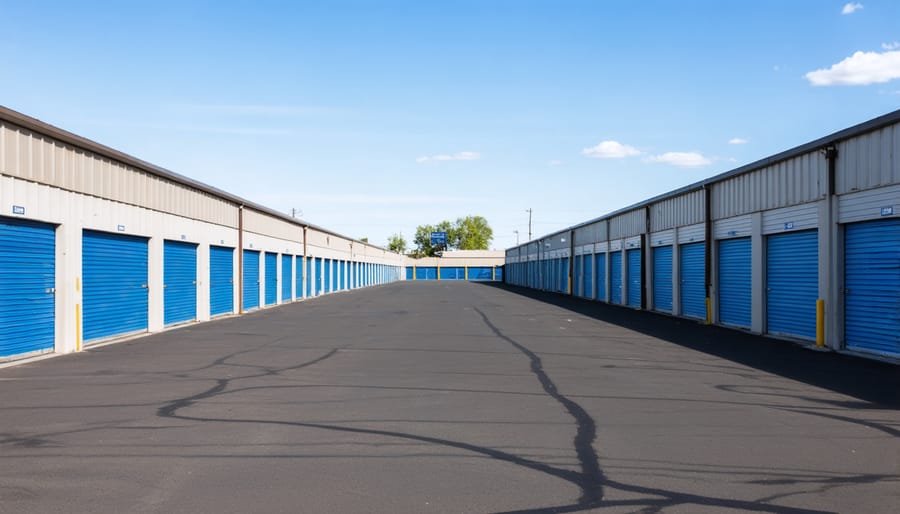
Self-storage facilities typically face height restrictions ranging from 15 to 45 feet, depending on the zoning district and surrounding land uses. Residential areas usually impose stricter limits—often 25 feet or less—while commercial or industrial zones may allow taller structures. Always check your local zoning ordinance for specific numbers, as these vary significantly by municipality.
**Understanding Floor Area Ratio (FAR)** is essential for determining your building’s maximum size. FAR measures the ratio of total building floor area to lot size. For example, if your property is 20,000 square feet and the FAR is 0.5, your maximum building area is 10,000 square feet (20,000 × 0.5). This calculation applies to all floors combined, so a two-story building would need each floor at roughly 5,000 square feet to stay compliant.
To calculate your maximum allowable building size, multiply your lot square footage by the permitted FAR. Many jurisdictions allow increased height or FAR through conditional use permits or variances, particularly if you incorporate community-requested features like improved landscaping or enhanced security measures. Review your zoning map and engage with local planners early—community feedback during planning meetings often influences approval decisions for projects exceeding standard dimensional requirements.
Parking and Access Requirements
Self-storage facilities need adequate parking and access to accommodate moving trucks, trailers, and customer vehicles. Understanding these requirements early in your planning process—similar to securing a premises for equipment storage—helps avoid costly redesigns later.
**Parking Space Minimums**
Most councils require one parking space per 40-80 storage units, though this varies by location. Office areas typically need additional spaces—usually one per 30 square metres of retail space. Check your local planning scheme for specific ratios, as urban areas often have stricter requirements than rural zones.
**Driveway and Access Standards**
Driveways must accommodate large moving trucks safely. Typical specifications include:
– Minimum width of 6-7 metres for two-way traffic
– One-way driveways at least 4 metres wide
– Turning circles with 12-15 metre radius for truck manoeuvring
– Clear height of 4.2-4.5 metres for covered access areas
**ADA and Accessibility Compliance**
Accessible parking bays (typically 3.8 metres wide) must connect to barrier-free pathways leading to ground-floor units. Ramps require 1:14 maximum gradient, and pathways need 1.2 metre minimum width. Ground-floor units should include wheelchair-accessible options with appropriate door widths (minimum 850mm) and turning space inside.
Consult with a traffic engineer if your site has challenging access points or high anticipated vehicle volumes.
Landscaping and Buffering Mandates
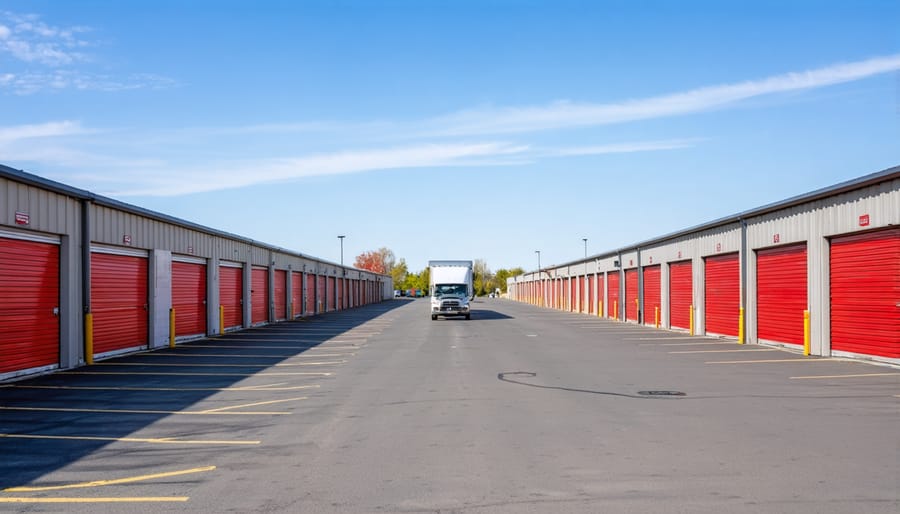
Most municipalities require self-storage facilities to include landscaping elements that help blend the building into the surrounding area and protect neighboring properties. Understanding these mandates early prevents costly redesigns later.
**Green Space Percentages**: Zoning codes typically mandate that 10-25% of your total lot area remains as landscaped green space. This means grass, planted areas, or rain gardens—not just pavement or buildings. Some jurisdictions allow bioswales (landscaped drainage channels) to count toward this requirement.
**Buffer Zones**: When your facility borders residential properties, expect to provide buffer zones ranging from 10-50 feet depending on local codes. These buffers create separation between your operations and homes. The width often increases if your facility includes outdoor storage or high-traffic areas.
**Screening Requirements**: Most zoning ordinances require visual screening along property lines, particularly near residential areas. Common requirements include:
– Solid fencing (typically 6-8 feet tall) made from wood, vinyl, or decorative masonry
– Evergreen vegetation planted densely enough to create year-round screening
– Combination approaches using both fencing and landscaping
These screening measures serve dual purposes: they improve neighborhood aesthetics while enhancing security for customers storing items safely in your facility.
Check whether your municipality requires landscaping plans prepared by licensed professionals before permit approval. Some areas also mandate irrigation systems and ongoing maintenance standards.

How to Research Zoning Requirements in Your Area
Step 1: Find Your Property’s Zoning Designation
Before you can move forward with your self-storage project, you need to know exactly how your property is currently classified. Start by visiting your city or county’s official website—most municipalities now offer online zoning maps and searchable property databases. Look for sections labeled “Planning,” “Development Services,” or “GIS Maps” (Geographic Information Systems). These interactive maps let you enter your property address to instantly see its zoning designation, often displayed as codes like “C-2” (commercial) or “M-1” (light industrial).
If online resources aren’t available or seem unclear, contact your local zoning office directly. Staff members can pull up your property’s official designation and provide printed zoning maps. When reviewing these maps, pay attention to the legend explaining each zone’s color coding and abbreviations.
Your property’s zoning designation determines what types of businesses and structures are permitted there. Self-storage facilities typically require commercial or industrial zoning, though requirements vary significantly by location. Write down your exact zoning code—you’ll need it for the next steps. Many community members in planning forums recommend taking screenshots or photos of online maps for your records, as zoning information can occasionally update without notice.
Step 2: Review the Zoning Ordinance
Once you’ve identified your property’s zoning district, your next step is diving into the actual zoning ordinance—the legal document that spells out what you can and cannot do on your land. Most municipalities publish their zoning codes online through their city or county website, often under sections labeled “Planning,” “Development Services,” or “Code of Ordinances.” If you can’t find it digitally, contact your local planning department directly—they’re typically helpful in providing copies.
When reviewing the ordinance, start with the section that defines your specific zoning district. Look for lists of “permitted uses,” “conditional uses,” or “special exception uses.” Self-storage facilities might be listed as “warehouse,” “mini-storage,” “self-service storage,” or similar terms—terminology varies by jurisdiction.
Pay close attention to these key sections:
**Use classifications**: Determines if self-storage is allowed by right, requires special approval, or is prohibited
**Dimensional standards**: Covers setbacks, height limits, and lot coverage requirements
**Parking requirements**: Specifies how many spaces you’ll need
**Design standards**: Addresses building materials, landscaping, and screening requirements
Don’t hesitate to flag confusing language or technical terms. Many planning departments offer free pre-application meetings where staff can walk you through the requirements and answer questions—a valuable resource that can save you time and costly mistakes down the road.
Step 3: Talk to the Right People
Once you’ve done your homework on local zoning codes, it’s time to have a conversation with the people who enforce them. Start by contacting your city or county planning department—most have dedicated staff who handle zoning inquiries and pre-application consultations. Don’t just send an email and hope for the best; pick up the phone or schedule an in-person meeting. Face-to-face interactions build rapport and often yield more detailed guidance than written exchanges.
When you reach out, come prepared with specific questions. Ask about permitted uses in your chosen zone, required setbacks, parking ratios, and any special use permits you might need. Inquire about the timeline for approvals and whether there are upcoming zoning changes that could affect your project. Most importantly, ask if they offer pre-application meetings—these informal sessions let you present your concept before filing official paperwork, potentially saving you time and money by identifying issues early.
Building a positive relationship with zoning officials pays dividends throughout your project. Be respectful of their time, show up prepared with property addresses and preliminary plans, and take detailed notes during conversations. Follow up in writing to confirm what you discussed. Remember, these officials deal with complex regulations daily and appreciate applicants who do their research. They’re not adversaries—they’re resources who can guide you through the approval process. Many communities also have economic development staff who specifically help businesses navigate regulations, so ask if such support exists in your area.
Common Zoning Challenges and How to Overcome Them
When Your Property Isn’t Zoned for Self-Storage
Discovering your property isn’t zoned for self-storage doesn’t mean the end of your project—it just means exploring alternative pathways. You have three primary options worth considering.
**Rezoning applications** involve requesting your local government to change your property’s zoning classification entirely. This process typically takes 3-6 months and costs between $1,500-$5,000 in application fees, plus potential expenses for traffic studies, environmental assessments, and public hearings. Success rates vary widely depending on your municipality’s comprehensive plan and community feedback. Be prepared to demonstrate how your project benefits the neighborhood and aligns with long-term development goals.
**Variance requests** are generally faster (2-4 months) and less expensive ($500-$2,000) but have stricter approval criteria. You’ll need to prove that your property has unique characteristics creating unnecessary hardship under current zoning—not just that self-storage would be more profitable. Many zoning boards require evidence that the variance won’t negatively impact surrounding properties.
**Finding alternative locations** often proves the most practical solution. Search for properties already zoned for commercial or light industrial use, where self-storage facilities are permitted by right. This eliminates months of uncertainty and legal fees, letting you move forward immediately.
Before investing heavily in rezoning or variance processes, attend a pre-application meeting with your planning department. These informal consultations are usually free and provide realistic assessments of your approval chances, potentially saving thousands in unnecessary applications.
Dealing with Neighborhood Opposition
Neighborhood opposition can derail even well-planned self-storage projects, but addressing concerns proactively makes approval much more likely. Understanding what worries residents—typically increased traffic, property values, and aesthetics—helps you present solutions before objections arise.
Start by researching the community’s character. Visit at different times to observe traffic patterns and note architectural styles. Your facility should complement the neighborhood, not clash with it. Consider design elements like residential-style facades, enhanced landscaping buffers, and subdued lighting that directs downward rather than spilling into adjacent properties.
Before public hearings, meet informally with neighbors and nearby business owners. Listen to their concerns without becoming defensive. Often, simple adjustments—like adjusting access points away from residential streets or adding privacy fencing—can transform opponents into supporters. Document these conversations and the compromises you’ve made.
At zoning hearings, present professionally. Bring visual aids showing your facility’s design, traffic studies demonstrating minimal impact, and examples of similar successful projects nearby. Emphasize benefits: improved property maintenance compared to vacant lots, minimal noise compared to other commercial uses, and enhanced security from surveillance systems that can benefit the whole area.
Include testimonials from communities where storage facilities operate successfully. Real-world examples carry weight with planning boards. Address opposition points directly rather than ignoring them, showing you’ve considered community welfare alongside your business goals.
If facing strong resistance, consider hiring a land-use attorney or consultant experienced in self-storage approvals. Their expertise in navigating local politics and presenting compelling cases often proves invaluable.
Special Considerations for Converting Existing Buildings
Converting an existing building into a self-storage facility often presents unique zoning challenges that differ from new construction projects. Understanding these considerations upfront can save you significant time and money during the approval process.
**Non-Conforming Use Rules**
When you’re looking at warehouses, retail spaces, or industrial buildings for conversion, the first hurdle is determining whether self-storage qualifies as a “conforming use” in that zone. Many properties operate under “grandfathered” or non-conforming use status, meaning they were legal when built but don’t meet current zoning standards. Converting a non-conforming building typically requires rezoning or obtaining a special use permit, which involves public hearings and additional scrutiny from planning departments.
**Change of Use Permits**
Most municipalities require a “change of use” permit when you switch from one business type to another. This process examines whether the new use creates different impacts—like increased traffic, parking demands, or operating hours. Self-storage generally creates less traffic than retail, which can work in your favor. However, you’ll need to demonstrate compliance with current building codes, fire safety standards, and accessibility requirements.
**Parking and Site Requirements**
Existing buildings may not meet modern parking ratios or setback requirements. While self-storage needs minimal parking compared to retail (typically one space per 50 units), you might need variances if the site can’t accommodate current standards. Loading zones and drive aisles also require careful review.
**Building Code Upgrades**
Converting to self-storage often triggers requirements for sprinkler systems, fire-rated walls between units, and updated electrical systems. These improvements can significantly impact your budget. Whether you’re finding the ideal storage unit or developing tool storage solutions, understanding these conversion requirements ensures your project meets all regulatory standards from the start.
Working with Professionals: When You Need Expert Help
Navigating zoning requirements often requires professional expertise, especially when regulations are complex or when you’re facing obstacles. Understanding when to bring in specialists—and what they’ll cost—helps you budget appropriately and avoid costly mistakes.
**Zoning Attorneys** interpret local ordinances, represent you at planning commission hearings, and handle appeals if your project faces denial. They’re essential when regulations are unclear, when you need variances or conditional use permits, or when neighbors oppose your project. Expect to pay $200-$500 per hour, with simple consultations costing $500-$2,000 and full representation for contested cases running $5,000-$25,000.
**Land Use Consultants** specialize in evaluating properties for development feasibility. They analyze zoning codes, identify potential compliance issues before you purchase land, and often coordinate the entire permitting process. Their services typically cost $2,500-$10,000 depending on project complexity. They’re particularly valuable when comparing multiple potential sites or navigating multi-jurisdictional requirements.
**Architects with Self-Storage Experience** design facilities that meet both zoning requirements and operational needs. Beyond creating building plans, they understand setback requirements, parking ratios, landscaping mandates, and architectural standards specific to storage facilities. Design fees generally range from 5-10% of construction costs, or $15,000-$50,000 for typical projects.
Consider hiring professionals early in your planning phase—their upfront guidance prevents expensive redesigns and delays later. Many offer initial consultations at reduced rates, helping you assess whether full representation is necessary. Request references from completed self-storage projects and verify their familiarity with your local jurisdiction’s specific requirements.
Navigating self-storage zoning requirements might seem overwhelming at first, but breaking it down step-by-step makes the process entirely manageable. Before you invest time and money into a self-storage property, thorough zoning research is essential—it’s the foundation that determines whether your project can move forward at all.
Start with your local planning or zoning department. These professionals are there to help you understand the specific regulations that apply to your property. Bring your property address, ask direct questions, and request copies of relevant zoning ordinances. Most communities also post zoning maps and codes online, giving you a head start before your visit.
Remember, zoning compliance isn’t just a legal checkbox—it protects your investment and ensures your facility can operate smoothly for years to come. While regulations vary significantly by location, the research process remains consistent: identify your zone, understand the requirements, and address any potential issues early.
Ready to take the next step? Check your local zoning regulations today and see where your property stands. We’d love to hear about your experiences—share your zoning journey, challenges, or success stories with our community. Your insights could help fellow property owners navigate their own self-storage projects more confidently.
Related Posts


Post a Comment