
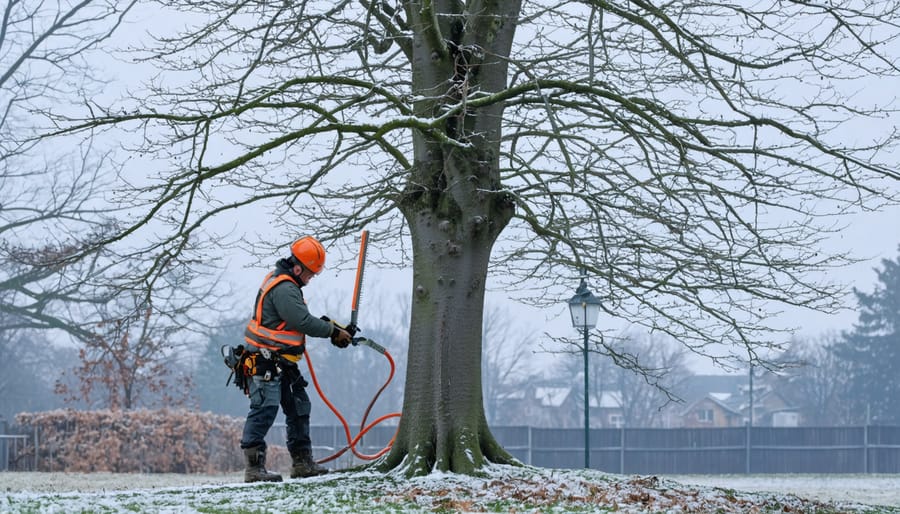
Winter’s arrival signals dormancy—the biological shutdown when trees conserve energy and suspend growth to survive freezing temperatures. This natural hibernation period, typically running from late autumn through early spring, creates the ideal window for critical maintenance tasks that would stress trees during active growing seasons.
Understanding dormancy transforms tree care from guesswork into strategic action. When sap flow slows and leaves drop, you can prune more aggressively without causing excessive bleeding or inviting disease through open wounds. The absence of foliage reveals structural problems invisible during summer—crossed branches, dead wood, and unstable growth patterns become immediately apparent. Cold temperatures also mean dormant pests and pathogens, significantly reducing infection risks from pruning cuts.
This dormant window presents homeowners and property managers with a practical advantage: trees tolerate major interventions during this rest period. Whether you’re removing hazardous limbs, reshaping overgrown specimens, or conducting health assessments, winter work yields better outcomes with less tree stress. The key lies in knowing exactly when your local trees enter dormancy and which maintenance tasks deliver maximum benefit during these crucial months before spring’s awakening.
What Happens When Trees Go Dormant

Recognizing Dormancy in Different Tree Types
Identifying dormancy in your yard trees is simpler than you might think. **Deciduous trees** (those that lose their leaves) provide the most obvious signs. Once leaves have completely fallen and branches are bare, these trees have entered full dormancy. Look for tightly sealed leaf buds at branch tips—these protective coverings indicate the tree is conserving energy for winter. The bark may also appear slightly duller as internal processes slow down.
**Evergreen trees** like pines, spruces, and firs are trickier since they retain their needles year-round. However, they do go dormant. Key indicators include stopped growth at branch tips, darker or duller needle color, and the absence of new cone development. You’ll notice evergreens aren’t producing fresh, lighter-colored growth shoots during winter months.
A simple scratch test works for both types: gently scrape a small section of bark with your fingernail. Green tissue underneath means the tree is still somewhat active, while brown or beige indicates full dormancy. Most trees in temperate climates enter dormancy between late fall and early winter, typically after several consecutive nights of freezing temperatures. This dormant period creates the ideal window for pruning, transplanting, and other maintenance tasks that would stress active trees.
The Best Tree Care Tasks for Winter
Pruning: Why Winter is Prime Time
Winter pruning offers distinct advantages that make the dormant season ideal for tree maintenance. When leaves drop, you gain crystal-clear visibility of the tree’s structure, making it far easier to spot dead branches, crossing limbs, and problematic growth patterns. This improved sight line helps you make better decisions about identifying pruning needs and ensures cleaner, more precise cuts.
Beyond visibility, dormant season pruning significantly reduces disease risk. Many tree diseases and pests remain inactive during cold months, meaning fresh cuts are less likely to attract harmful organisms. The tree’s natural defences also work more efficiently when sap flow is minimal, allowing wounds to seal properly once spring arrives.
**Essential Tools and Equipment**
For most pruning projects, you’ll need bypass pruners for branches up to 2cm thick, loppers for branches between 2-5cm, and a pruning saw for anything larger. A pole pruner extends your reach for higher branches without requiring a ladder. For substantial jobs involving larger trees, consider hiring a chainsaw from your local tool rental centre—it’s more cost-effective than purchasing equipment you’ll rarely use.
**Safety First Approach**
Always wear safety glasses, heavy-duty gloves, and sturdy boots when pruning. If working above shoulder height, ensure your ladder is stable and positioned on level ground. Never prune near power lines—that’s a job for qualified arborists. Keep cutting tools sharp; dull blades require more force and increase injury risk whilst creating ragged cuts that heal poorly.
Consider hiring a wood chipper to process pruned material efficiently, turning branches into valuable mulch for garden beds. Many rental centres offer package deals that bundle multiple tools at discounted rates, perfect for tackling comprehensive winter maintenance projects.

Strategic Tree Removal and Heavy Work
Winter’s frozen ground creates ideal conditions for removing problem trees without the mess and damage associated with warmer months. When the soil is frozen solid, heavy equipment like excavators, stump grinders, and skid steers can access your property without leaving deep ruts in your lawn or compacting the soil. This is especially valuable if you need to remove trees in areas that would be inaccessible during wet seasons.
The dormant period offers several practical advantages for major tree work. With leaves gone, arborists can better assess the tree’s structure and identify potential hazards. There’s also minimal risk of spreading diseases to surrounding trees since insects and pathogens are largely inactive. Additionally, many tree service companies and equipment rental facilities offer better rates during their slower winter months.
When planning heavy tree removal, consider renting a wood chipper to process branches on-site, reducing hauling costs and creating valuable mulch for spring gardening. For stump removal, a stump grinder rental can eliminate unsightly remnants and prevent regrowth. Always verify that rental equipment can handle frozen ground conditions—some machines perform better in cold weather than others.
Before starting any removal project, check local regulations about tree removal permits and contact utility companies to mark underground lines. Safety equipment, including hard hats, safety glasses, and chainsaw chaps, is essential. Many community members recommend booking equipment rentals well in advance, as winter availability can be limited despite being off-season.
Inspecting for Damage and Disease
Winter offers a unique advantage for tree inspection—with leaves gone, you can finally see what’s been hiding in plain sight. Conducting a thorough dormant season inspection helps you catch problems early, before they become safety hazards or expensive repairs.
Start your inspection from the ground up. Walk around the tree’s base, looking for mushrooms or fungal growths that indicate root rot or decay. Check for cracks in the soil that might signal root failure, and examine the trunk for vertical splits, sunken areas (called cankers), or any unusual swelling.
Move your eyes upward along the trunk. Look for holes or cavities where woodpeckers have been active—these birds often target insect-infested wood. Dark staining or oozing sap can signal disease or pest damage. Run your hand gently over suspicious areas; soft, spongy bark often means trouble underneath.
Inspect the branch structure carefully. Dead branches appear brittle and darker than living wood. Look for V-shaped branch unions where limbs meet the trunk—these weak attachment points are prone to splitting. Pay attention to branches crossing or rubbing against each other, as they create wounds that invite disease.
Use binoculars to examine upper branches without climbing. Note any hanging branches (widow-makers) or codominant stems competing for dominance. If you spot concerning structural issues, document them with photos and measurements.
For trees over 25 feet or complex problems, consider hiring a certified arborist who can safely assess upper canopy issues. Many readers in our community recommend scheduling professional inspections every 3-5 years, with homeowner checks annually between visits.
Protecting Young and Vulnerable Trees
Young trees and those weakened by disease need extra attention during dormancy to survive harsh winter conditions. Start by applying a 7-10cm layer of organic mulch around the base, keeping it 15cm away from the trunk to prevent moisture buildup and rot. Wood chips, straw, or shredded bark work well and can be sourced from local garden centres or landscape suppliers.
For newly planted trees, wrap the trunk with breathable tree wrap or burlap from ground level to the lowest branches. This protects against sun scald, frost cracks, and animal damage. You’ll find these materials at hardware stores or nurseries for around $10-20 per roll. Secure with natural twine, never wire, which can cut into bark.
Consider installing wind barriers for exposed saplings using timber stakes and burlap screens. Drive stakes 30cm from the trunk on the windward side and attach burlap loosely to allow some air circulation. For comprehensive guidance on these techniques, check out our detailed guide on winter tree protection.
**Materials checklist:**
– Organic mulch (wood chips or straw)
– Tree wrap or burlap
– Natural twine
– Timber stakes
– Watering equipment for mild winter days
Remove all protective materials in early spring to prevent moisture trapping as temperatures rise.
Essential Tools and Equipment for Dormant Season Tree Care
When to Rent vs. Buy
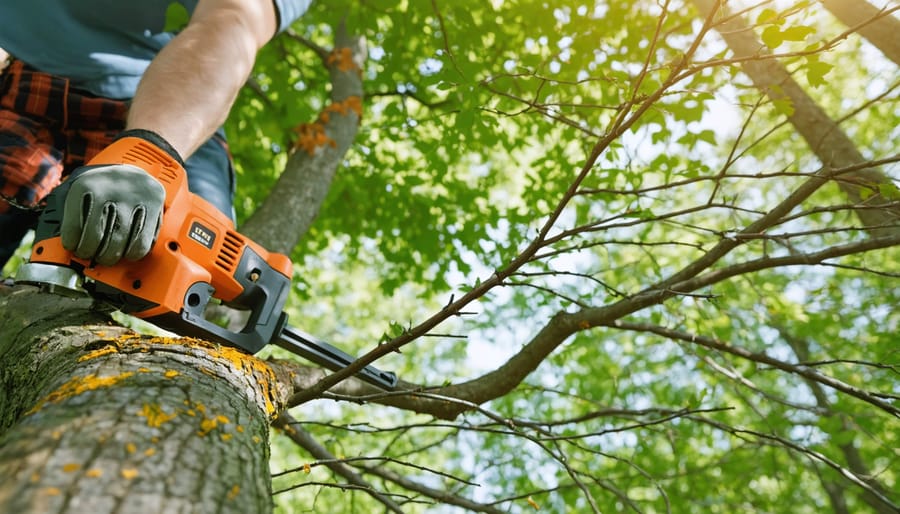
Deciding whether to rent or buy dormant season tree care equipment depends on frequency of use and storage capacity. For occasional users tackling 1-2 pruning sessions annually, renting makes financial sense. A quality pole saw costs $200-400, while renting runs $30-50 per day—meaning you’d need to use it 5-8 times before purchasing breaks even.
**Rent these tools** if you maintain fewer than 5 trees: pole saws, wood chippers, stump grinders, and hydraulic loppers. These specialized items require maintenance and take up considerable storage space between uses.
**Consider buying** hand pruners, manual loppers, and handsaws if you perform annual dormant pruning. These compact tools cost $30-80 and last years with proper care, paying for themselves after 2-3 seasons.
Professional arborists managing multiple properties should invest in core tools like chainsaws and quality pruning equipment, while renting specialty items like aerial lifts or large-capacity chippers for specific jobs. Community feedback consistently shows that DIYers appreciate the flexibility of trying different tool brands through rentals before committing to purchases, especially for electric versus gas-powered options.
Common Mistakes to Avoid
Even experienced homeowners make preventable mistakes during dormant season tree care. Understanding these common pitfalls helps you protect your trees and work safely.
**Pruning at the Wrong Time**
Many people assume “dormant season” means any cold day. However, pruning too early in fall—before trees are fully dormant—can stimulate new growth that won’t survive winter. Wait until leaves have completely dropped and temperatures consistently stay below 40°F. One community member shared how pruning maples in October led to frost damage on fresh cuts. Similarly, pruning too late in spring, after buds swell, wastes the tree’s stored energy reserves.
**Over-Pruning and Poor Technique**
Removing more than 25% of a tree’s canopy in one season stresses the tree significantly. We’ve seen DIYers get carried away with newly rented pole saws, creating unbalanced canopies. Always step back frequently to assess your progress. Another frequent error is leaving stubs instead of making clean cuts at the branch collar—this invites disease and prevents proper healing.
**Neglecting Safety Protocols**
Dormant branches are often brittle and unpredictable. Never work alone on ladder jobs, and always wear safety glasses and hard hats. Check equipment thoroughly before starting—dull chainsaw chains require more force and increase accident risk. If branches overhang power lines or the job requires climbing above 10 feet, hire certified arborists rather than attempting it yourself.
Creating Your Dormant Season Tree Care Schedule
Planning your dormant season tree care doesn’t need to be complicated. Here’s a practical timeline to help you tackle winter maintenance at the right times:
**Early Winter (November-December)**
Once leaves have fully dropped and temperatures consistently hover near freezing, begin with structural pruning. This is your prime window for removing dead, damaged, or crossing branches while the tree’s framework is fully visible. Many tool rental locations offer pole saws and pruning equipment specifically during this season—check community reviews to find reliable options in your area.
**Mid-Winter (January-February)**
Focus on your major pruning projects during the coldest months when trees are fully dormant. This period is ideal for shaping overgrown trees or removing larger limbs. You’ll need quality equipment like chainsaws or hydraulic pruners for bigger jobs. Safety tip: Never prune during ice storms or when branches are frozen and brittle.
**Late Winter (February-March)**
Wrap up pruning before buds begin swelling, typically 4-6 weeks before your area’s last frost date. This timing varies significantly by region—southern zones might finish by early February, while northern areas can continue into March. Apply dormant oil sprays during mild days (above 40°F) to control overwintering pests.
**Pro Planning Tips**
Check your local extension office’s recommendations for specific timing in your hardiness zone. Weather patterns vary yearly, so watch your trees’ bud development rather than relying solely on calendar dates. Document what works through photos and notes—this user-generated approach helps you refine your schedule each season.
The dormant season presents an invaluable opportunity to set your trees up for vibrant spring growth and long-term health. By pruning strategically, inspecting for damage, and addressing soil conditions while trees rest, you’re investing in stronger, more resilient landscapes. Don’t let this optimal maintenance window pass by—winter work now prevents costly emergency interventions later.
Whether you’re tackling one backyard tree or managing an entire property, having the right equipment makes all the difference. From pole pruners to chainsaws, quality tools transform challenging tasks into manageable projects. If purchasing isn’t practical, remember that rental options provide professional-grade equipment without the storage commitment or upfront investment.
We’d love to hear about your dormant season successes and challenges. What maintenance tasks have made the biggest difference for your trees? Have you discovered any time-saving techniques or favorite tools worth recommending? Share your experiences in the comments below—your insights help fellow tree caretakers make informed decisions and build a stronger community of knowledgeable property stewards.
Related Posts