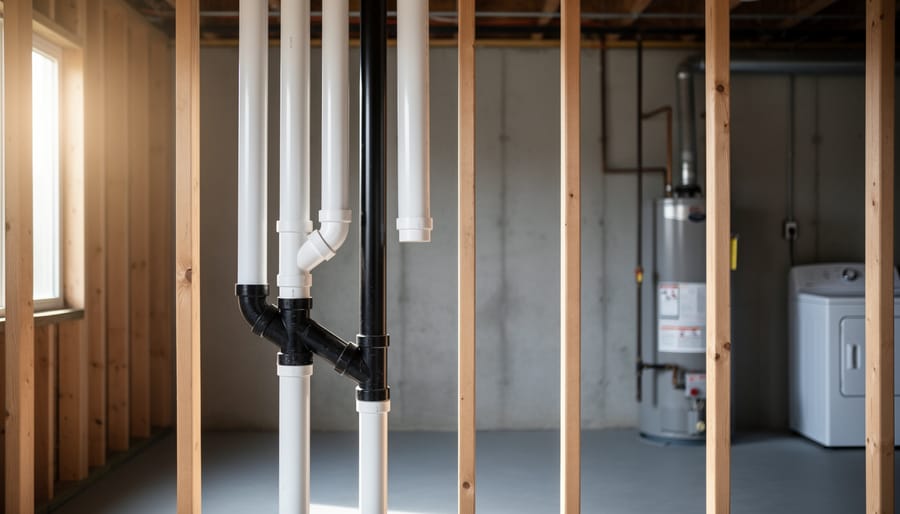
DWV stands for Drain-Waste-Vent, the critical three-part plumbing system that removes wastewater from your home while preventing sewer gases from entering living spaces. Every time you flush a toilet, drain a sink, or run your washing machine, you’re relying on this interconnected network of pipes working in harmony. The drain pipes carry water and waste away from fixtures, waste pipes transport everything to your sewer or septic system, and vent pipes allow air into the system so water flows smoothly without creating dangerous vacuums or allowing toxic gases to back up into your home.
Understanding DWV systems matters whether you’re planning a bathroom remodel, diagnosing a slow drain, or simply want to know what’s happening behind your walls. Unlike supply plumbing that operates under pressure, DWV systems rely entirely on gravity, which is why proper slope and sizing are essential for reliable performance. The venting component often confuses DIYers, but it serves the same purpose as the small hole in a gas can spout, allowing air to replace draining water so everything flows freely.
This guide breaks down each DWV component, explains how they work together, and shows you practical applications for home projects and repairs.
DWV Explained: The Backbone of Your Plumbing System

The Three Critical Components
Understanding how a DWV system works requires looking at its three distinct but interconnected parts. Each component has a specific job, and when they work together properly, they keep your plumbing system running smoothly and safely.
The Drain system is what most people think of first when considering plumbing. This network of pipes carries used water away from fixtures like sinks, showers, bathtubs, and appliances. Drains work primarily through gravity, sloping downward at a specific angle (typically 1/4 inch per foot) to keep water moving steadily toward the main sewer line or septic system. Every fixture in your home connects to this drain network through a P-trap, that curved pipe section you see under your sink. These traps hold a small amount of water that acts as a barrier, preventing sewer gases from entering your living space while still allowing wastewater to pass through.
The Waste system handles the heavier lifting, quite literally. This portion deals specifically with waste from toilets and is engineered with larger diameter pipes (usually 3 to 4 inches) to accommodate solid waste along with water. Waste lines follow similar gravity principles as drain lines but require more careful planning around pipe sizing and slope to prevent clogs and ensure everything flows properly to your main sewer connection.
The Vent system is the unsung hero that many homeowners don’t know exists. These pipes, which typically run up through your roof, allow air to enter the drainage system. Why does this matter? Without proper venting, water draining through pipes creates a vacuum effect that can slow drainage, cause gurgling sounds, and even siphon water out of those protective P-traps. Vents equalize air pressure throughout the system, allowing drains to work at peak efficiency while maintaining those essential trap seals. Think of it like pouring liquid from a can – without a second hole for air, the liquid glugs out slowly and unevenly.
How DWV Systems Work in Your Home
The Role of Gravity and Air Pressure
Unlike pressurized supply lines that push water through your home, DWV systems work with gravity as their primary driving force. Understanding this fundamental principle is key to grasping how wastewater moves through your plumbing and why proper venting is essential.
When you flush a toilet or drain a sink, gravity pulls the wastewater downward through sloped drain pipes. These pipes are intentionally installed at a slight angle, typically dropping about a quarter-inch per foot of horizontal run. This measured slope ensures waste flows smoothly without moving so quickly that it leaves solids behind or so slowly that debris accumulates and causes clogs.
However, gravity alone isn’t enough. As water rushes down a drain pipe, it can create a vacuum or suction effect behind it, similar to putting your thumb over the end of a straw. This vacuum can actually slow drainage or, in severe cases, suck water out of fixture traps, those U-shaped bends under sinks and toilets that hold water to block sewer gases from entering your home.
This is where the vent pipes become crucial. Vent pipes allow air to enter the drainage system from the roof, equalizing air pressure as wastewater flows downward. Think of it like pouring liquid from a can: if you punch two holes instead of one, the liquid flows much more smoothly because air can replace the exiting liquid.
Common signs of venting problems include slow-draining fixtures, gurgling sounds coming from drains when other fixtures are used, bubbling in toilets, and unpleasant sewer odors inside the home. These symptoms often indicate that air isn’t properly entering the system, creating those problematic vacuum conditions that prevent efficient drainage and can compromise the water seals in your traps.
Common DWV Materials and Their Uses
Choosing the right material for your DWV system depends on your local building codes, budget, and the specific application within your home. Each material has distinct advantages and ideal use cases that make it suitable for different situations.
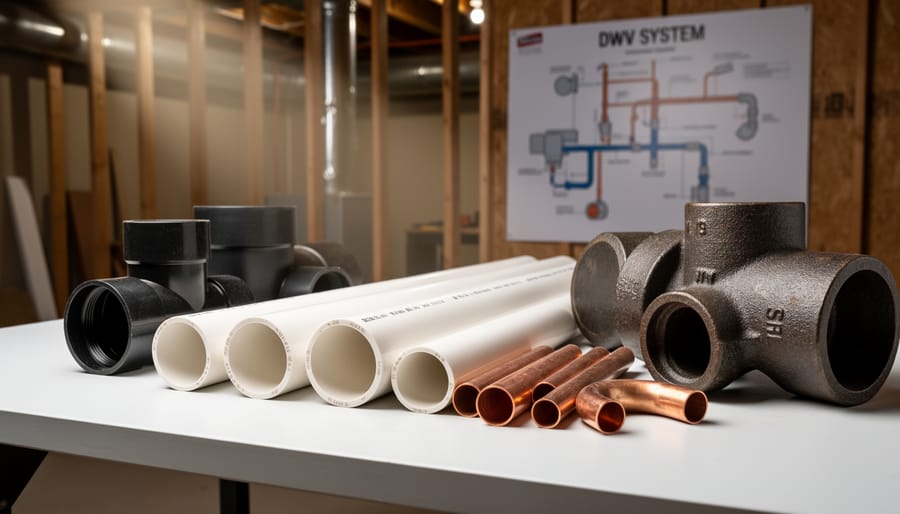
PVC (polyvinyl chloride) is the most popular choice for modern residential DWV systems, and for good reason. This white or cream-colored plastic pipe is lightweight, affordable, and exceptionally easy to work with using basic cutting and joining techniques. PVC resists corrosion and chemical damage, making it ideal for drain lines and vent pipes. It’s particularly well-suited for DIY projects since it doesn’t require specialized tools beyond a saw and primer. However, PVC isn’t approved for all applications in every jurisdiction, so always check your local codes before starting your project.
ABS (acrylonitrile butadiene styrene) appears as black plastic pipe and shares many characteristics with PVC. It’s slightly more flexible and can better withstand freezing temperatures, making it a preferred choice in colder climates. ABS requires only one-step cement application rather than the primer-and-cement process needed for PVC, which can speed up installation. Some building codes specifically require ABS while others prohibit it, so verification is essential before purchasing materials.
Cast iron represents the traditional choice for DWV systems and remains common in older homes. This heavy-duty material excels at sound dampening, making it valuable for waste lines running through walls between living spaces. While cast iron is extremely durable and fire-resistant, it’s significantly heavier and more expensive than plastic alternatives. Working with cast iron typically requires specialized cutting equipment and joining methods, making it less DIY-friendly.
Copper occasionally appears in DWV applications, though it’s more expensive and primarily reserved for special circumstances. Some commercial buildings and high-end residential projects use copper for its longevity and aesthetic appeal in exposed applications.
When selecting materials, consider accessibility for future repairs, local code requirements, and whether you’ll be doing the work yourself or hiring a professional.
DWV vs. Water Supply: Understanding the Difference
Understanding the difference between DWV and water supply systems is essential for anyone working on plumbing projects. These two systems serve opposite functions and have distinct characteristics that keep them separate within your home’s infrastructure.
DWV systems operate by gravity, moving wastewater and sewage downward and out of your building. They’re designed to handle zero pressure, relying entirely on slope and gravity to function properly. In contrast, water supply lines are pressurized systems, typically operating between 40-80 PSI (pounds per square inch), delivering clean water upward and throughout your home to fixtures and appliances.
This fundamental pressure difference explains why the two systems use different materials and pipe sizing. DWV pipes are generally larger in diameter, ranging from 1.5 inches for bathroom sinks to 4 inches for main drain lines. The larger size allows wastewater to flow freely and prevents clogs. Water supply lines are much smaller, typically 0.5 to 1 inch in diameter, since pressure pushes water through efficiently even in narrow pipes.
Material choices also differ significantly. DWV systems commonly use PVC, ABS plastic, or cast iron, materials chosen for their durability and resistance to corrosion from wastewater. Water supply lines utilize copper, PEX, or CPVC, materials that can withstand constant pressure and are safe for potable water.
The two systems must remain completely separate to prevent contamination of your drinking water. This separation is mandated by plumbing codes and enforced through specific installation requirements, including air gaps and backflow prevention devices. Cross-connections between DWV and supply lines can create serious health hazards, making proper identification and installation critical for any plumbing work you undertake.
Essential DWV Construction Skills for DIYers
Tools You’ll Need for DWV Work
Working with DWV systems requires specific tools, and deciding whether to buy or rent depends on how often you’ll use them and your project scope.
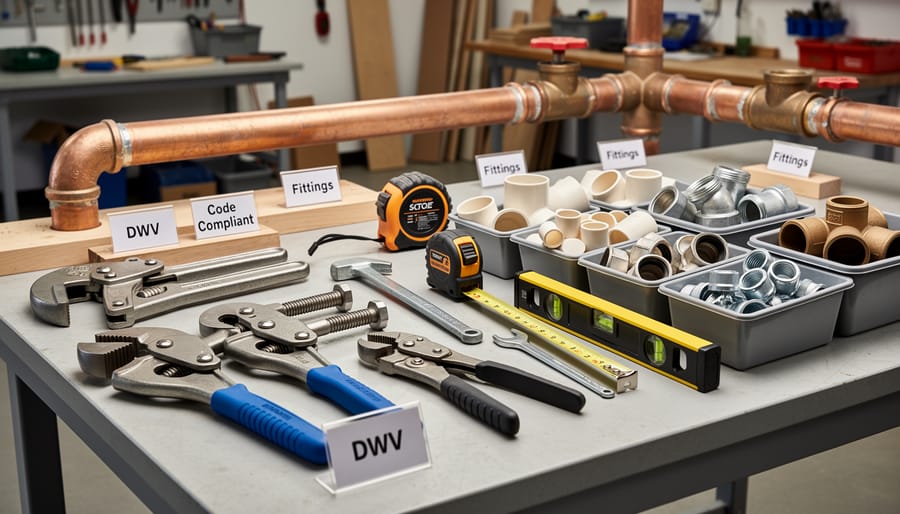
For basic DWV work, you’ll need pipe cutters or hacksaws to cut PVC, ABS, or cast iron pipes to size. A ratcheting pipe cutter makes clean, square cuts essential for proper fitting connections. For joining plastic pipes, you’ll need a deburring tool to smooth cut edges, cement and primer appropriate for your pipe material, and brushes for application.
A torpedo level ensures proper slope for drainage, which is critical since DWV systems rely on gravity. You’ll also want measuring tape, marking tools, and a cordless drill with hole saw attachments for creating penetrations through framing.
For more extensive projects, consider renting specialized equipment. A reciprocating saw with metal-cutting blades handles cast iron efficiently. If you’re working with underground drainage, a pipe inspection camera helps identify existing line locations and potential issues before you dig.
Professional-grade drain snakes and augers are typically better rented unless you’re a tradesperson who needs them regularly. The same applies to cast iron cutting tools and heavy-duty threading equipment for older galvanized systems.
Safety gear is non-negotiable: wear safety glasses, work gloves, and dust masks when cutting pipes. For tight crawl spaces or attic work, knee pads and headlamps make the job much more manageable.
Common DWV Problems and Warning Signs
Understanding what can go wrong with your DWV system helps you catch problems early, before they turn into costly repairs. Most DWV issues announce themselves through recognizable warning signs that even beginners can identify.
Slow drains are often the first indicator of trouble. When water takes longer than usual to empty from sinks, tubs, or showers, it typically means a partial blockage is forming somewhere in the drainage pipes. This might be due to accumulated hair, soap scum, grease buildup, or foreign objects. If multiple fixtures drain slowly throughout your home, the problem likely exists in your main drain line rather than individual fixture traps.
Gurgling sounds coming from drains or toilets signal ventilation problems in your DWV system. When you hear these noises, especially after flushing or running water, it means air is struggling to enter the system through the vent pipes. This creates negative pressure that pulls air through the water in your P-traps, causing that distinctive gurgling. Blocked or improperly installed vent pipes are usually the culprits.
Sewer gas odors represent a serious warning sign that shouldn’t be ignored. That unpleasant rotten egg smell indicates sewer gases are escaping into your living space. This happens when P-traps dry out (common in rarely used fixtures), when traps are damaged or missing, or when vent pipes are compromised. Beyond being unpleasant, sewer gas contains methane and hydrogen sulfide, which pose health risks.
Water backing up into fixtures, particularly when using other plumbing, suggests blockages in shared drain lines. For example, if your toilet gurgles when you run the washing machine, they likely share a drainage path that’s partially obstructed.
Recognizing these warning signs early allows you to address DWV problems before they escalate into major repairs or water damage.
Understanding your home’s DWV system is more than just learning plumbing terminology—it’s about gaining confidence to maintain your property effectively and make informed decisions about repairs and renovations. Whether you’re planning a bathroom remodel, troubleshooting a drainage issue, or simply want to communicate better with contractors, knowing how drain, waste, and vent systems work gives you a solid foundation.
The key takeaways are straightforward: DWV systems handle wastewater removal and require proper venting to function correctly. Drainage pipes carry waste away using gravity, waste pipes connect fixtures to the main drainage line, and vent pipes prevent airlocks while protecting trap seals. These three components work together as an integrated system, and problems with one element often affect the others.
For DIY enthusiasts, many DWV maintenance tasks are manageable with the right tools and preparation. Replacing P-traps, clearing clogs, and performing basic inspections can save you significant money. However, understanding your limits is equally important. Major installations, extensive repairs, and work requiring permits should involve licensed professionals who understand local codes and can ensure your system meets safety standards.
The community feedback from fellow DIYers emphasizes the value of proper planning and having quality tools available when needed. Start with smaller projects to build your skills, invest time in understanding how your specific system is configured, and never hesitate to consult professionals when uncertainty arises. Your home’s plumbing system is too important to risk with guesswork, but with solid knowledge of DWV basics, you’re well-equipped to handle appropriate projects confidently and maintain your system effectively for years to come.
Related Posts