
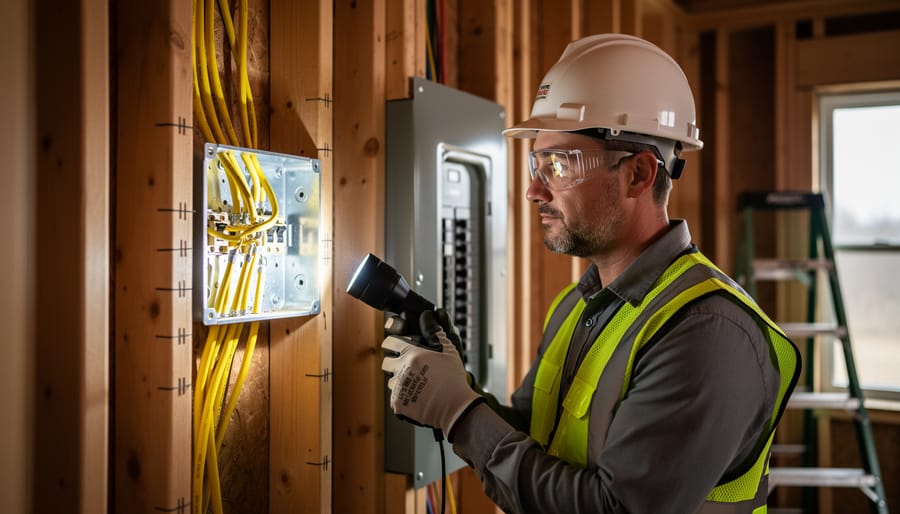
Schedule your electrical rough-in inspection before covering any wiring with drywall or insulation—once walls are closed up, inspectors cannot verify code compliance and you’ll face costly demolition. Contact your local building department 24-48 hours in advance to book an appointment, ensuring all circuit wiring, boxes, and panel connections are complete but exposed for examination.
The electrical rough-in inspection represents a critical checkpoint in any construction or remodeling project, determining whether your electrical work meets National Electrical Code (NEC) standards and local amendments. Inspectors evaluate wire sizing, grounding systems, box placement, circuit protection, and junction accessibility during this phase. Failing inspection means delays, rework, and potentially unsafe conditions that could endanger your home and family.
Understanding what inspectors scrutinize—from proper cable stapling intervals to correct box fill calculations—dramatically increases your first-time pass rate. Most inspection failures stem from preventable mistakes: inadequate support spacing, missing knockout covers, improper wire connections, or boxes installed too deep for finished wall surfaces. Inspectors also verify that circuits match your approved electrical plans, with appropriate amperage ratings for intended loads.
This guide walks you through pre-inspection preparation, common inspection checkpoints, required corrections, and pro tips from contractors who consistently pass on the first attempt. Whether you’re a homeowner tackling a permitted addition or a contractor preparing multiple job sites, mastering rough-in requirements saves time, money, and ensures safe, code-compliant electrical systems that protect your investment for decades.
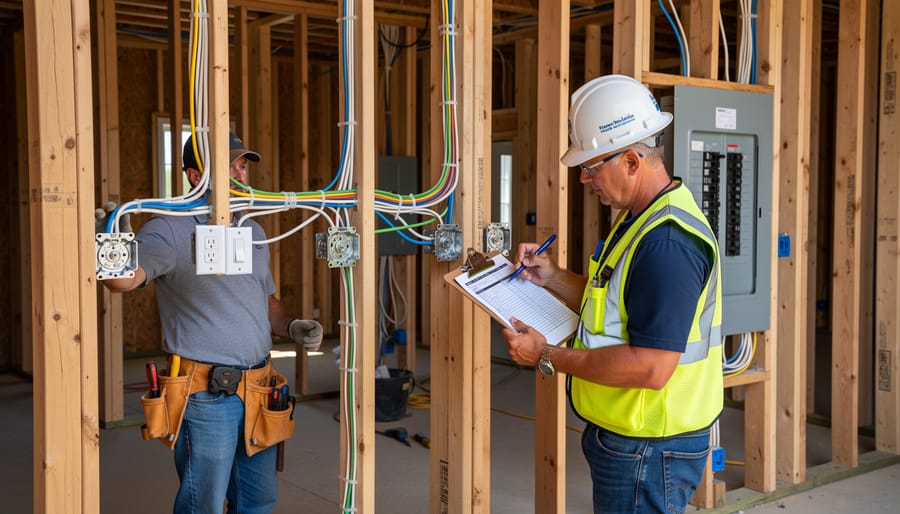
What Inspectors Actually Look For During Rough-In
Code Compliance Basics You Can’t Skip
Before your rough-in inspection, understanding code compliance isn’t optional—it’s the foundation of a successful inspection. The National Electrical Code (NEC) sets the baseline standards for electrical installations across the United States, but here’s what many DIYers miss: your local jurisdiction has the final say.
The NEC, published by the National Fire Protection Association and updated every three years, covers everything from wire sizing and circuit protection to box fill calculations (how many wires can safely fit in an electrical box) and proper grounding methods. During rough-in, inspectors focus heavily on Chapter 3 requirements, which address wiring methods and materials, including cable routing, securing intervals, and protection from physical damage.
However, your local building department may adopt a specific NEC edition—sometimes not the most recent one—and add amendments based on regional needs. Some municipalities require metal conduit where others allow nonmetallic cable. Certain areas mandate arc-fault circuit interrupters (AFCIs) in more locations than the baseline NEC requires.
To verify which codes apply to your project, start by contacting your local building department directly. Ask three specific questions: which NEC edition they’ve adopted, whether local amendments exist, and if they provide inspection guideline handouts. Many jurisdictions post this information on their websites, and some offer downloadable checklists tailored to their requirements.
Pro tip from the community: Experienced contractors recommend attending a pre-inspection consultation if your building department offers one. These brief meetings can clarify gray areas and prevent costly rework. Also, keep a copy of the applicable code on-site during your installation—inspectors appreciate when you can reference specific sections if questions arise. Understanding these requirements upfront saves time, money, and the frustration of failed inspections.
Common Violations That Trigger Instant Failures
Understanding what triggers automatic inspection failures can save you significant time and hassle. Here are the most common violations inspectors encounter during electrical rough-in inspections:
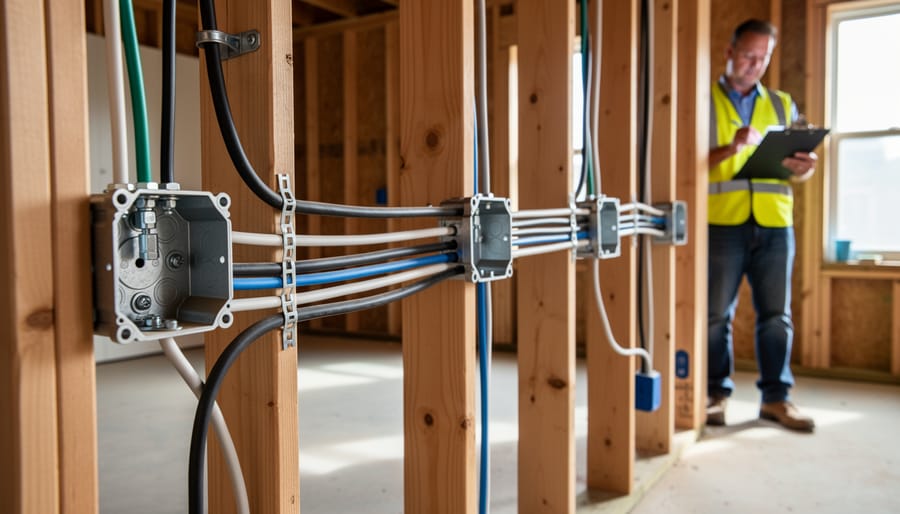
Improper wire stapling ranks among the top failures. Electrical cable must be secured within 8 inches of each box and every 4.5 feet along its run. Many DIYers either skip staples entirely or hammer them too tightly, which can damage the cable’s protective sheath. Use insulated staples designed for electrical work, and ensure they’re snug but not pinching the wire.
Overcrowded junction boxes cause immediate red flags. Every wire, connector, and device takes up calculated space inside a box. The National Electrical Code specifies exact box fill calculations based on wire gauge and the number of connections. If you’re stuffing wires into a box with difficulty, it’s likely overfilled. Choose larger boxes or reduce the number of connections per box.
Missing junction box covers seem like a minor detail but represent a serious safety violation. Every junction box must remain accessible and covered. Inspectors will fail installations where boxes are left open or will be buried behind drywall without proper access panels.
Inadequate wire gauge for the circuit load is a critical safety issue. A 15-amp circuit requires 14-gauge wire minimum, while 20-amp circuits need 12-gauge. Using wire that’s too thin for the amperage creates fire hazards. Always verify your wire matches your breaker size and intended load.
Improper grounding leads to failures frequently. Ground wires must be properly secured to metal boxes, terminated correctly at outlets and switches, and maintain continuous connection throughout the system. Missing ground connections or loose ground wires won’t pass inspection.
Cable damage, including nicks in the sheathing, crushed sections, or exposed conductors, results in automatic failure. Damaged cable must be completely replaced, not taped or patched. Handle cable carefully during installation and protect it from sharp edges and construction damage.
Pre-Inspection Checklist: What to Verify Before the Inspector Arrives
Electrical Boxes and Mounting
Inspectors pay close attention to electrical boxes because improper installation creates safety hazards and code violations. Start by verifying that outlet boxes are mounted at the correct height—typically 12 to 16 inches from the finished floor for general receptacles, though kitchen countertop outlets require 42 to 48 inches. Switch boxes should sit 48 inches high. These measurements account for drywall thickness, so measure from where the finished wall surface will be, not just the studs.
Check that every box is securely fastened to the wall framing or ceiling joists. Boxes should be nailed or screwed firmly without wobbling. The front edge must sit flush with the finished wall surface—not recessed or protruding. For standard half-inch drywall, this means the box edge should extend half an inch beyond the stud face.
Box fill calculations determine how many wires and devices can safely fit inside. Count each conductor entering the box, plus add one for all cable clamps combined, one for all internal clamps or fittings, and two for each device like a switch or outlet. Multiply this total by the wire gauge volume from NEC tables. Your box must meet or exceed this cubic inch requirement, which is stamped on most boxes.
Location matters too. Bathrooms and outdoor areas require weatherproof boxes rated for moisture. Kitchen and garage boxes often need deeper models to accommodate GFCI outlets. Ceiling fan locations need fan-rated boxes that support extra weight. Using incorrect box types flags immediate inspection failures.
Wire and Cable Installation Standards
Inspectors carefully examine how electrical cables are run throughout your home, and getting these details right is crucial for passing inspection. Understanding these standards helps you avoid costly callbacks and ensures your wiring is safe and code-compliant.
Cable routing should follow the shortest practical path between boxes while maintaining proper support. Non-metallic (NM) cable, commonly called Romex, must be stapled within 8 inches of every electrical box and every 4.5 feet along its run. These staples shouldn’t be driven so tight that they damage the cable jacket—a common mistake that can lead to inspection failure. When running cable parallel to framing members, maintain at least 1.25 inches from the edge of studs and joists. If this clearance isn’t possible, you’ll need to install metal nail plates to protect the cable from drywall screws or nails.
Where cables pass through drilled holes in framing, the holes should be centered in the stud when possible. This protection method works well when coordinated with proper framing work. Never notch studs for electrical cable without adding protective plates.
Maintaining proper separation from other systems prevents interference and safety hazards. Keep electrical cables at least 6 inches away from plumbing systems and ensure adequate separation from HVAC ductwork. When your electrical work intersects with HVAC rough-in work, coordinate routing to avoid conflicts.
Finally, leave 6-8 inches of wire extending from each box—enough to make connections comfortably but not so much that it creates crowding issues.
Grounding and Bonding Requirements
Proper grounding and bonding creates a safe pathway for electrical faults, protecting people and property from shocks and fires. During rough-in inspection, inspectors verify that your grounding system meets code requirements at multiple points throughout the installation.
Ground wire connections are among the first things inspectors check. Every metal electrical box must have a ground wire properly attached, typically using a green grounding screw or approved clip. The ground wire should be continuous, with no breaks or splices except where properly connected with listed connectors. Inspectors look for secure connections with no exposed copper beyond the connector.
Bonding jumpers bridge gaps in the grounding path, particularly around water meters, gas pipes, and other metallic systems. These jumpers ensure electrical continuity even if a meter or appliance gets removed. Your inspector will verify that bonding jumpers are properly sized according to the circuit amperage and securely fastened at both ends.
The grounding electrode system connects your electrical system to the earth itself. This typically includes grounding rods driven at least eight feet into the soil, connections to metal water pipes, or other approved electrodes. Inspectors verify the electrode conductor is the correct size and properly attached with approved clamps that won’t corrode.
At the main panel, inspectors confirm that the grounding bus bar is properly installed, all ground wires are securely terminated, and the neutral and ground are only bonded at this main disconnect point. Subpanels must keep grounds and neutrals separated on different bus bars to prevent dangerous current flow.
Tools and Equipment for Professional-Quality Rough-In Work
Must-Have Tools for DIY Electrical Rough-In
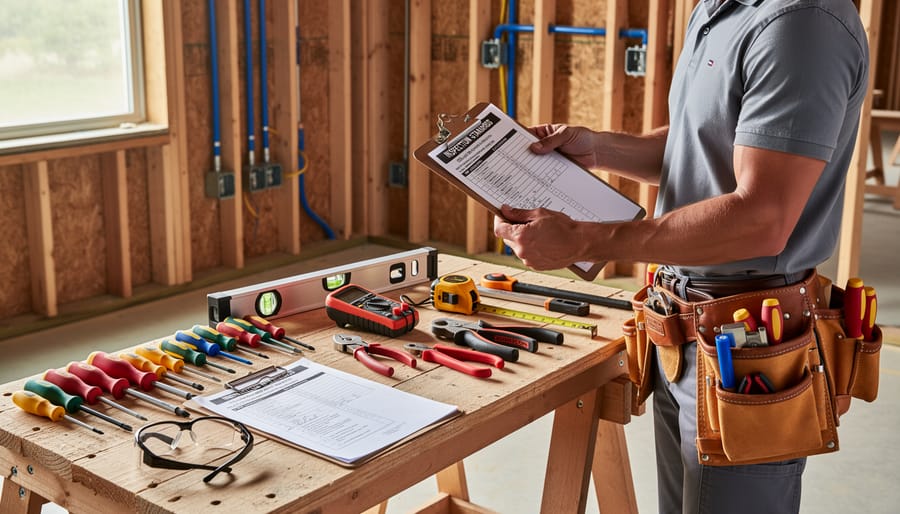
Having the right tools on hand makes electrical rough-in work safer and more efficient. Before your inspection, ensure you’re equipped with these essentials.
Wire strippers are fundamental for cleanly removing insulation without damaging conductors. Pair these with cable rippers, which quickly strip outer sheathing from Romex and similar cables. A quality drill with spade bits (for studs) and auger bits (for joists) creates precise pathways for your wiring runs.
Safety comes first, so always keep a non-contact voltage tester nearby to confirm circuits are de-energized before working. This simple device can prevent serious injuries and is non-negotiable for DIYers.
For accurate installations, you’ll need a measuring tape to maintain proper box heights and spacing, plus a torpedo level to ensure outlets and switches sit perfectly straight. Finally, a hammer and cable stapler secure your wiring runs according to code requirements, keeping cables properly supported within the required distances from box edges and along framing members.
Many of these tools are available through rental platforms if you’re tackling a one-time project, and community reviews can guide you toward the most reliable options for your specific needs.
Professional-Grade Tools Worth Renting
Tackling a rough-in inspection requires specialized equipment that most homeowners don’t keep in their toolbox. Fish tape sets are essential for pulling wire through walls and conduit, while right-angle drills let you bore through tight spaces between studs where standard drills can’t reach. Knockout punches create clean, professional holes in electrical panels and junction boxes, and cable pullers make quick work of running heavy-gauge wire over long distances.
For many DIYers, renting these tools makes more financial sense than purchasing. A quality right-angle drill costs several hundred dollars but rents for around $30 per day. Similarly, hydraulic knockout punch sets that retail for $500 or more are available to rent at a fraction of the cost. This approach is particularly smart for one-time projects or homeowners who won’t use these tools regularly.
One often-overlooked rental option is an inspection camera. These endoscope-style devices help you verify wire routing behind finished walls and confirm proper connections in hard-to-see areas before the inspector arrives. Community reviews consistently highlight how these cameras catch potential issues early, saving costly callback visits. When planning your rough-in project, budget for tool rentals as part of your overall costs to ensure professional results without the professional price tag.
Step-by-Step: Preparing for Inspection Day
Scheduling and Documentation
Contact your local building department at least 48 hours before you need the inspection, though many jurisdictions now offer online scheduling through their permitting portals. Have your permit number ready when you call or submit your request. Some areas require specific notice periods, so check local requirements early in your project planning.
Prepare your paperwork before the inspector arrives. This includes your approved electrical permit, a copy of your site plan showing circuit layouts and panel locations, and any manufacturer specifications for special equipment. Keep these documents accessible at the job site in a clean, dry folder.
Create a simple site plan if one wasn’t required with your permit application. Sketch the floor layout and mark all outlet locations, switch positions, light fixture boxes, and the main panel. Note circuit numbers and indicate which circuits serve which areas. This reference helps inspectors follow your work efficiently and demonstrates your organizational approach.
Document everything with photos before the inspection. Capture clear images of your panel connections, junction box wiring, cable routing, and support methods. Take photos showing proper stapling distances and any challenging installations. These photos serve multiple purposes: they create a permanent record of concealed work, help if questions arise later, and provide valuable reference material for future projects or community forums where you can share your experience with fellow DIYers.

Final Walkthrough and Cleanup
Before the official inspection, conduct your own thorough walkthrough with your approved plans in hand. Check each connection, box, and circuit against the code requirements you’ve prepared for. Look for loose wire nuts, improper stapling distances, missing nail plates, or any work that doesn’t match your submitted drawings. This self-inspection often reveals issues you can quickly fix before the inspector arrives.
Clear the work area of all debris, tools, and construction materials. Inspectors need unobstructed access to every electrical box, panel, and wire run. Remove ladders, sawhorses, and building supplies that block pathways or ceiling access. A clean workspace shows professionalism and makes the inspection process faster and smoother.
Ensure adequate lighting throughout the inspection areas. Basements, attics, and rooms without finished lighting can be difficult to inspect. Have portable work lights or flashlights ready if natural light is insufficient. Many inspectors appreciate when you’ve thought ahead about visibility.
Keep your approved electrical plans, permit documentation, and any product spec sheets readily available. Inspectors may reference these documents to verify your installation matches what was approved. Having everything organized demonstrates preparation and can help answer questions that arise during the walkthrough.
What to Expect During the Inspection
The typical electrical rough-in inspection takes 30 to 60 minutes, depending on your project’s size and complexity. Your inspector will walk through the property examining all exposed wiring, junction boxes, panel installations, and outlet placements before drywall goes up.
You should definitely be present during the inspection. This allows you to ask questions, understand any deficiencies immediately, and learn what corrections might be needed. Inspectors appreciate when you’re prepared with your permit documents and electrical plan readily available.
Common questions inspectors ask include who performed the work, whether you followed approved plans, and if you made any changes from the original permit application. They may also inquire about specific wire gauge choices or why certain fixtures were placed in particular locations.
When communicating with inspectors, remain professional and courteous. Answer questions directly and honestly. If you’re unsure about something, say so rather than guessing. Take notes on any feedback they provide, and don’t hesitate to ask for clarification on failed items. Remember, inspectors are there to ensure safety, not to make your life difficult. Many inspectors appreciate when homeowners and DIYers show genuine interest in learning proper electrical practices. If corrections are needed, ask specific questions about what’s required to pass re-inspection.
If You Fail: How to Handle Reinspection
First, take a deep breath. Failed inspections happen to professionals and DIYers alike, and they’re almost always fixable. According to feedback from our community members, roughly 30-40% of first-time rough-in inspections require some correction. You’re not alone, and this isn’t a disaster.
When you receive a violation notice, read it carefully. Inspectors typically provide specific code references and location details for each issue. Don’t guess at what needs fixing. If anything is unclear, call the inspection office and ask for clarification. Most inspectors appreciate follow-up questions because they want you to get it right.
Document everything with photos before making corrections. This helps you track what you’ve changed and provides evidence if questions arise later. Create a checklist from your violation notice, addressing each item systematically rather than jumping around.
Common corrections include adding missing junction box covers, securing loose cables within the required distances, correcting improper wire gauges, or adding GFCI protection where needed. Many corrections take just minutes once you understand what’s required.
When making fixes, resist the urge to over-correct or change things that weren’t cited. Stick to the violation list. Adding unnecessary modifications can sometimes create new issues.
Once corrections are complete, schedule your reinspection promptly. Most jurisdictions allow quick turnarounds for reinspections, often within a few days. Some areas charge reinspection fees while others offer one free follow-up visit.
Before the reinspector arrives, double-check each corrected item against your violation notice. Leave good lighting and clear access to all areas that needed work. Many community members report that reinspections go smoothly when you’ve addressed issues precisely as specified.
Remember, inspectors want your project to succeed. They’re ensuring safety, not creating obstacles.
Safety Considerations During Rough-In Work
Safety should always be your top priority when working with electrical systems during rough-in work. Before touching any wiring, verify that power is completely shut off at the main panel. Use a non-contact voltage tester to double-check that circuits are dead, even after flipping breakers. This simple step prevents potentially fatal electric shocks.
Proper personal protective equipment (PPE) is essential. Wear safety glasses to protect against debris when drilling, insulated work gloves when handling wire, and rubber-soled shoes for additional electrical protection. Keep a well-stocked first aid kit accessible on the job site.
When working at heights to install ceiling boxes or run wire through upper wall plates, ensure your ladder is stable and positioned on level ground. The three-point contact rule applies: always maintain either two hands and one foot or two feet and one hand on the ladder. Consider renting scaffolding for extensive overhead work to reduce fatigue and fall risks.
Exercise extreme caution when drilling through studs and joists. Drill slowly to avoid hitting existing plumbing, gas lines, or other hidden utilities. Use a stud finder with wire detection capabilities before making any penetrations.
Know your limitations. While many rough-in tasks are DIY-friendly, certain situations require a licensed electrician. These include working on the main service panel, installing circuits above 240 volts, complex three-way switch configurations, or any work that feels beyond your skill level. There’s no shame in calling a professional when safety or code compliance is uncertain.
Passing your electrical rough-in inspection ultimately comes down to thorough preparation and attention to detail. By understanding what inspectors look for, following local code requirements, and carefully checking your work before the scheduled inspection, you set yourself up for success. Remember that this inspection isn’t just a bureaucratic hurdle—it’s a critical safeguard that ensures your electrical system will operate safely and reliably for years to come.
Don’t hesitate to tap into available resources as you work through your project. Tool rental services can provide the specialized equipment you need without the investment, community forums offer real-world insights from people who’ve been through similar inspections, and many inspectors are willing to answer questions before your scheduled appointment. Taking advantage of these resources can save you time, money, and the frustration of failed inspections.
Quality rough-in work pays dividends in long-term safety and functionality. When done correctly, it creates a solid foundation for your electrical system that will serve you reliably while minimizing future maintenance issues.
Have you recently completed a rough-in inspection? We’d love to hear about your experience in our community section. Share your tips, lessons learned, or ask questions to help fellow DIYers and professionals navigate their own inspection processes.
Related Posts

Post a Comment