


Choose webhooks when you need instant notifications about specific events—like when a customer returns a power drill or when equipment becomes available. Your system sits ready and receives immediate updates without constantly checking for changes, similar to getting a text message the moment your rental period ends.
Select APIs when you need to pull information on demand or perform specific actions at chosen times. Think of it as making a phone call to check current tool availability, update booking details, or retrieve customer records exactly when your business needs that data. APIs give you control over timing and what information you request.
Implement both technologies together for complete inventory management and operational efficiency. Use webhooks to receive real-time alerts about bookings, damage reports, or payment confirmations, while APIs handle scheduled tasks like generating end-of-day reports or syncing customer databases. This combination eliminates manual data entry and ensures your rental platform stays synchronized across all systems, whether you’re managing five tools or five hundred.
The key difference comes down to communication direction: webhooks push information to you automatically when events occur, while APIs wait for you to request specific data. Understanding this fundamental distinction helps you build integrations that save time and reduce errors in your tool rental operations.
What APIs Actually Do (In Plain English)
Real-World Example: Checking Tool Availability
Let’s walk through what happens when someone searches for excavators on your rental platform. Picture Sarah, a homeowner planning a backyard renovation, who visits your site at 2 PM on a Tuesday.
She types “mini excavator” into your search bar and hits enter. At that moment, your platform sends an API request to your inventory system asking, “What mini excavators are available right now?” This is your platform actively reaching out for information it needs.
The inventory system receives this request and checks its database. It finds three available mini excavators at nearby locations, along with their rental rates, specifications, and community-driven reviews from previous renters. Within milliseconds, it packages this information and sends it back as an API response.
Sarah’s screen updates immediately, displaying the three options with photos, pricing, and star ratings. She clicks on one to see detailed specs and user-generated content from other DIY enthusiasts who’ve rented it before.
This entire exchange happened because your platform asked a specific question at a specific moment. The API acted like a helpful assistant who fetched exactly what was needed, when it was needed. No information was pushed automatically—your platform pulled it by making a deliberate request, ensuring Sarah saw current, accurate availability for her project.

How Webhooks Work (Without the Tech Jargon)
Real-World Example: Automatic Rental Updates
Imagine you’re running a tool rental business and list your inventory on a popular rental marketplace. A customer books your concrete mixer through their platform at 2 PM on a Saturday—your busiest day.
With a webhook, here’s what happens automatically: The moment the customer clicks “confirm booking,” the marketplace instantly sends a notification to your rental management system. Your inventory updates immediately, showing the mixer as unavailable. Your website reflects this change within seconds, preventing double-bookings before you even know the transaction occurred.
Without webhooks, you’d rely on an API that checks for new bookings every 15 minutes. During that gap, another customer could book the same mixer on your direct website, creating a scheduling nightmare and disappointed customers.
This real-time synchronization extends beyond inventory. Webhooks can trigger confirmation emails, update your calendar, notify your team, and adjust pricing—all without you lifting a finger. For rental businesses managing equipment across multiple platforms, this instant communication prevents the costly mistakes that happen when systems aren’t talking to each other in real-time. It’s the difference between reactive management and proactive automation.
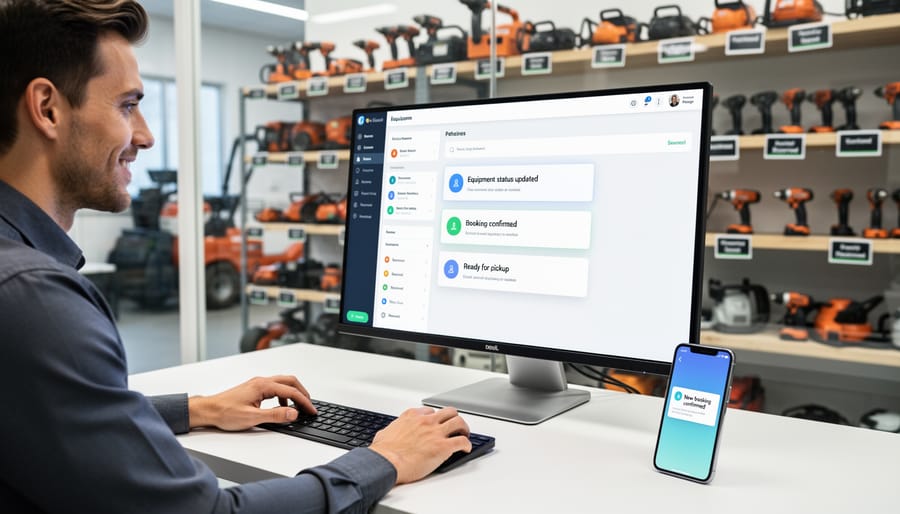
The Key Differences That Actually Matter
When to Choose APIs
APIs work best when you need information right now, triggered by a specific action. Think of it like walking into a tool rental shop and asking, “Do you have a pressure washer available today?” You get an immediate answer.
Choose APIs for on-demand data retrieval—like when a customer searches your inventory and you need to check availability across multiple supplier databases in real-time. The search happens, your system asks each supplier’s API for current stock levels, and results appear instantly.
APIs shine for user-initiated actions where timing matters. When someone clicks “Reserve Tool” on your platform, an API call confirms availability, calculates pricing, and processes the reservation—all before the confirmation screen loads.
If your workflow requires pulling specific information at unpredictable times or responding to customer requests immediately, APIs are your go-to solution. They put you in control, letting you fetch exactly what you need, when you need it, rather than waiting for updates to arrive.
When to Choose Webhooks
Webhooks shine when you need information delivered to you the moment something happens—no waiting, no constant checking. For tool rental platforms, this makes them ideal for time-sensitive notifications that require immediate action.
Think about booking confirmations. When a customer reserves your concrete mixer, webhooks instantly notify your system, triggering automated emails and updating availability across all channels simultaneously. This prevents double bookings and keeps everyone informed in real-time.
Payment notifications are another perfect use case. The moment a transaction completes, webhooks alert your platform so you can immediately process the order and send confirmation to the customer—no delays, no manual checking.
Equipment return alerts help you manage inventory efficiently. When a scanner logs a tool’s return, webhooks notify your system instantly, making it available for the next booking without staff intervention.
Damage reports benefit from webhook speed too. If equipment comes back damaged, instant notifications let you remove it from availability and contact the previous renter while details are fresh, streamlining your dispute resolution process.
Common Integration Scenarios for Tool Rental Platforms
Let’s look at real-world scenarios where tool rental platforms need integrations, and which technology makes the most sense for each situation.
When connecting booking systems, webhooks are typically your best friend. Here’s why: when a customer reserves a pneumatic drill for next Tuesday, you need several things to happen automatically. Your calendar needs updating, the customer gets a confirmation, and your inventory count adjusts. Webhooks excel here because the booking system can instantly notify all connected services the moment someone clicks “reserve.” You’re not constantly checking if a new booking exists—the booking system tells you when it happens.
For payment processors, you’ll actually use both technologies. APIs handle the initial transaction—when customers enter their card details, your platform uses the payment processor’s API to process the charge right then. But webhooks step in for everything that happens afterward. If a payment fails three days later, gets refunded, or triggers a fraud alert, the payment processor sends webhook notifications to your system. This combination ensures you’re not repeatedly pinging the processor asking “any updates?” while still maintaining control over the checkout process itself.
Inventory management works beautifully with APIs because you’re often pulling information on demand. When someone browses your concrete mixers, your platform makes an API request to check current availability, pricing, and condition notes. When staff mark equipment as damaged or ready for pickup, API calls update the central inventory system. This request-response pattern fits perfectly because you need specific information at specific moments.
For customer communication tools, webhooks handle most automation seamlessly. When equipment becomes overdue, your rental system sends a webhook to your messaging platform, which triggers a friendly reminder SMS. When customers leave reviews (that valuable community-driven feedback), webhooks can notify your team for moderation. However, you might use APIs when staff manually send custom messages or check delivery status.
The pattern becomes clear: use APIs when you need to fetch or send information on your schedule, and webhooks when other systems need to notify you instantly about events. Most successful rental platforms use both, letting each technology handle what it does best.
What Happens When You Choose Wrong
Making the wrong choice between APIs and webhooks can create real headaches for your tool rental business. Let’s look at what actually goes wrong and how to fix it.
When businesses rely solely on polling APIs too frequently, they risk overloading their servers. Imagine your system checking for new bookings every few seconds—like constantly refreshing your email instead of waiting for notifications. This creates unnecessary strain on your infrastructure and can slow down your entire platform during peak rental periods. One equipment rental company found their checkout page loading 8 seconds slower because their API was checking inventory status 50 times per minute across 200 locations.
On the flip side, webhook failures can mean missed notifications entirely. A customer books your power drill for tomorrow morning, but your webhook fails to deliver that confirmation. Result? Double bookings, angry customers showing up for equipment that’s already gone, and damaged reputation. These failures often happen silently—you don’t know notifications are missing until someone complains.
Here are practical troubleshooting tips when things go wrong:
For API overload issues, implement rate limiting and increase the polling interval. You likely don’t need real-time updates every second—every 2-3 minutes often works fine for inventory checks.
For webhook failures, always build in retry logic. If a webhook doesn’t receive confirmation within 30 seconds, it should automatically retry 2-3 times. Keep a backup system that polls APIs hourly to catch anything webhooks missed.
Monitor both systems actively. Set up alerts when API response times exceed 2 seconds or when webhooks fail more than twice consecutively. The community-driven feedback from your users often catches problems before your monitoring does—pay attention to customer complaints about notification delays or booking errors.

Making Them Work Together
Here’s the reality: most successful tool rental platforms don’t choose between APIs and webhooks—they use both strategically. Think of them as complementary tools in your integration toolbox, each handling different jobs.
APIs work best when you need information on demand. When a customer checks your website to see if a specific drill is available, an API fetches that real-time inventory data instantly. When your team member needs to pull up rental history for a customer standing at the counter, an API retrieves those records.
Webhooks shine for automated notifications that keep everyone informed without constant checking. When equipment gets returned, a webhook can automatically notify your accounting system to process the final charges, update your availability calendar, and trigger a maintenance inspection request—all without anyone clicking a button.
Here’s a simple decision framework for your rental business:
Choose APIs when you need to retrieve specific data at a particular moment, display information to users who are actively browsing, or let customers control when they access their account details.
Choose webhooks when you want to automate responses to specific events, keep multiple systems synchronized without manual updates, or reduce the load on your servers by eliminating constant status checks.
For example, you might use an API to let customers search available equipment while using webhooks to automatically send booking confirmations, overdue reminders, and maintenance alerts. This combination creates a responsive platform that serves information when requested while keeping operations running smoothly in the background. Most growing rental businesses find they need both technologies working together to deliver the seamless experience customers expect.
The bottom line? There’s no universal winner in the APIs versus webhooks debate. Think of it like choosing between a drill and a saw—both are essential tools, but each shines in different situations. APIs excel when you need to pull information on demand or maintain control over timing, while webhooks work best for instant notifications about events as they happen.
Take a moment to audit your current integrations. Are you constantly polling an API for updates that rarely change? A webhook might save you resources. Conversely, if you’re struggling with webhook reliability or need historical data, an API call could be your answer. Many successful platforms use both technologies working together, letting each handle what it does best.
We’d love to hear from the community: What integration challenges have you faced? Have you switched from one approach to another and seen real improvements? Share your experiences in the comments below—your real-world insights help fellow builders and business operators make better decisions for their specific needs.
Related Posts


Post a Comment