
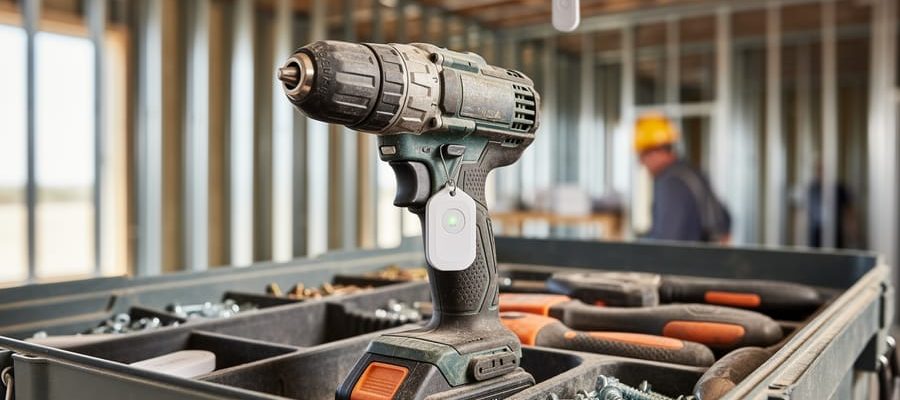
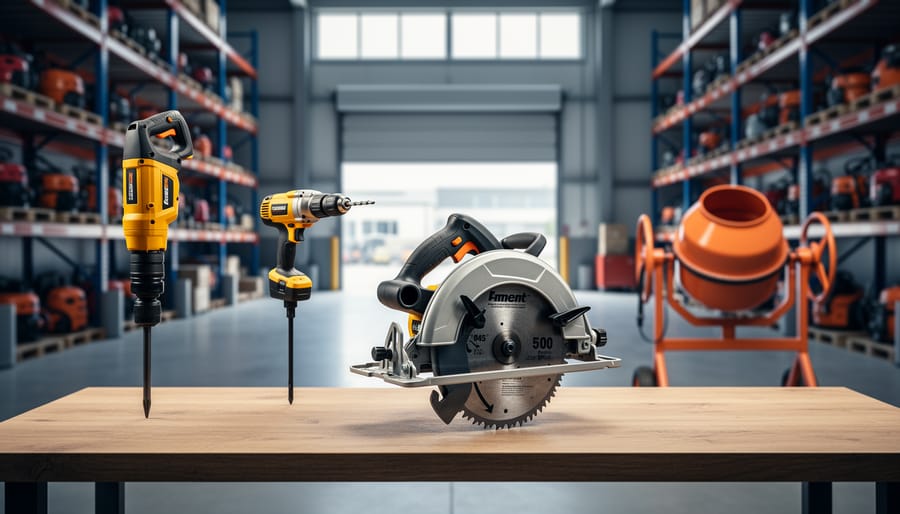
Every time you’ve searched for “concrete mixer rental” on one platform but found it listed as “cement mixer” on another, or watched “power drill” results fail to show “electric drill” options, you’ve encountered the costly reality of poor semantic interoperability. In the tool rental industry, this technical term describes something remarkably straightforward: whether different systems, platforms, and databases can understand each other’s language well enough to share information accurately.
When rental platforms can’t interpret variations in tool names, specifications, or categories, operators lose bookings, customers waste time, and the entire ecosystem suffers from fragmented data. A contractor searching for demolition equipment might never see your jackhammer listings simply because your system categorizes it differently than their search expects.
Semantic interoperability solves this by creating shared vocabularies and translation layers that recognize “rotary hammer,” “hammer drill,” and “percussion drill” as related tools serving similar purposes. Rather than requiring everyone to use identical terms, it teaches systems to understand relationships between concepts, just as humans naturally do.
For tool rental businesses, implementing semantic interoperability means your inventory becomes discoverable across multiple platforms, your equipment utilization rates increase, and customers find exactly what they need without translation headaches. This isn’t about complex programming, it’s about ensuring your circular saw appears in results whether someone searches for “skill saw,” “buzz saw,” or “Sidewinder,” maximizing every rental opportunity while delivering the seamless experience today’s users expect.
What Semantic Interoperability Actually Means for Tool Rental
Breaking Down the Technical Term
Think of semantic interoperability as a universal translator for your tool rental business. Just like how “colour” in British English and “color” in American English mean the same thing, semantic interoperability ensures that when you list a “cordless drill” in your inventory system, it appears as the exact same item across your website, mobile app, point-of-sale system, and any partner platforms you work with.
Without this universal understanding, you might face problems like a customer reserving a “power drill” online, your staff pulling a “cordless drill” from inventory, and your billing system charging for an “electric drill”—all referring to the same tool but creating confusion and potential errors.
Semantic interoperability solves this by establishing shared definitions and data standards. It’s not just about using the same words; it’s about ensuring everyone—from your inventory software to your customer’s shopping cart—understands what those words actually mean. This shared language prevents miscommunication, reduces errors, and creates a seamless experience whether someone’s browsing your catalog, checking availability, or leaving a review for that drill they just rented.
The Real-World Problem It Solves
Without semantic interoperability, tool rental operations hit frustrating roadblocks daily. Picture this: a customer searches your website for a “concrete mixer,” but your inventory system lists it as a “cement mixer.” The search returns zero results, and you’ve just lost a rental. This happens constantly across the industry because different suppliers, manufacturers, and platforms use varying terminology for identical equipment.
The problem multiplies when systems can’t communicate. Your booking platform might call a demolition hammer by one name while your inventory management software uses another. Staff waste hours manually cross-referencing equipment across platforms, and double-bookings become common. Equipment specifications create even more chaos. One supplier lists drill power in watts, another in amps, and a third uses horsepower. Customers can’t easily compare tools, and your team struggles to match the right equipment to job requirements.
These aren’t minor hiccups. They translate to lost revenue, frustrated customers who go elsewhere, and operational inefficiencies that eat into profits. When your digital systems speak different languages, everyone loses time and money trying to translate between them.
How Poor Data Communication Costs Your Tool Business
Customer Frustration and Lost Bookings
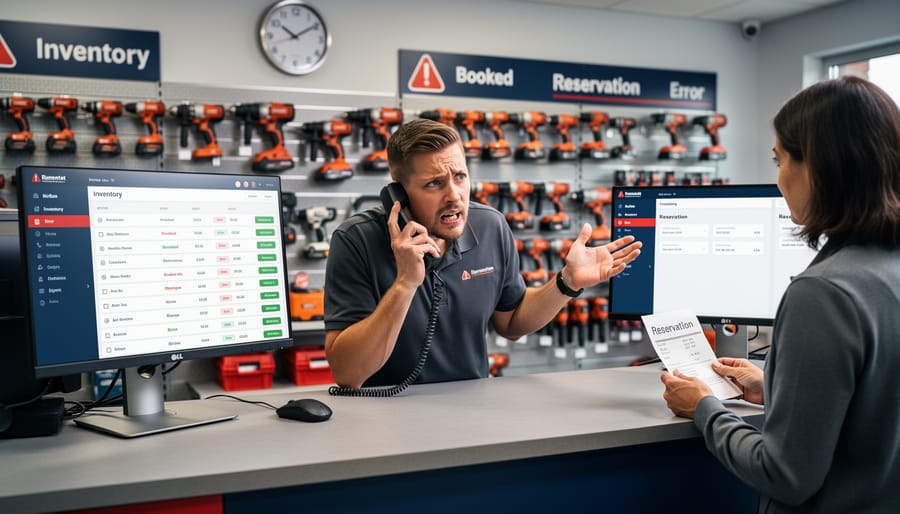
Picture this: A contractor urgently needs a concrete mixer for a morning job. They search your platform and find “Concrete Mixer Pro-500” available. Meanwhile, your partner supplier lists the identical unit as “500L Cement Mixer.” The contractor books what appears to be two different tools, only to discover they’re the same equipment. Now you’ve got a frustrated customer, a lost booking, and a trust problem.
These mishaps happen daily across tool rental platforms. When one system shows a power drill available while another marks it as reserved, customers either double-book or miss genuine opportunities. Search filters create similar headaches. A customer filtering for “cordless impact driver” won’t see results tagged as “battery-powered impact wrench,” even though they’re searching for the same tool category.
The consequences extend beyond inconvenience. Professional tradespeople operating on tight schedules can’t afford to arrive at job sites without promised equipment. When semantic inconsistencies cause no-shows or wrong deliveries, they’ll simply take their business to competitors with more reliable systems. Community reviews frequently highlight these frustrations, with users reporting booking confusion and mismatched expectations as top complaints. Each failed transaction doesn’t just cost immediate revenue; it damages your platform’s reputation in a community where word-of-mouth recommendations drive business decisions.
Operational Headaches for Staff
If you’ve ever worked behind the counter at a tool rental shop, you know the daily grind of juggling multiple systems that don’t talk to each other. Staff typically start their morning logging into three or four different platforms—one for inventory, another for customer records, maybe a third for equipment maintenance tracking. Each rental transaction means manually entering the same customer information and equipment details across these disconnected systems, eating up valuable time that could be spent actually helping customers.
The problem gets worse when dealing with equipment catalogs. A power drill listed as “DeWalt 20V Cordless Drill” in one system might appear as “DWLT Drill 20-Volt” in another. Staff waste hours reconciling these differences, double-checking that they’re actually looking at the same tool. This confusion leads to inventory mistakes—showing equipment as available when it’s actually out, or vice versa.
Then there’s the constant platform-switching. Need to check if a customer has outstanding rentals? Switch to system A. Want to see maintenance history for that same equipment? Jump to system B. Processing a return? Back to system A, but also update system C for billing.
These preventable errors create frustrated customers and stressed employees. When semantic interoperability is missing, your staff becomes human data translators, manually bridging the gaps between systems that should automatically understand each other.
Inventory Management Nightmares
When tool rental systems can’t communicate effectively, inventory chaos follows. Double-bookings become common as one platform shows a drill available while another marks it reserved. This frustrates customers and damages your reputation when they arrive expecting equipment that isn’t there.
Ghost inventory presents an equally troubling problem. Your system lists tools that were damaged, lost, or sold months ago, leading to awkward conversations and disappointed renters. Without semantic interoperability, tracking a tool’s actual status across multiple booking channels, maintenance logs, and physical locations becomes nearly impossible.
Maintenance schedules suffer dramatically too. When your booking system doesn’t share data with your maintenance tracker, tools get rented out when they’re due for service checks or repairs. This creates safety risks and accelerates equipment deterioration. Meanwhile, tools sitting idle in one location could be generating revenue elsewhere, but poor system communication prevents you from identifying these optimization opportunities. The result is wasted resources and missed income.
The Building Blocks of Semantic Interoperability in Tool Technology
Standard Data Vocabularies for Equipment
Think of standard data vocabularies as a universal translation guide for equipment specifications. When your rental platform lists a “cordless drill,” everyone needs to understand exactly what that means – from voltage and battery type to chuck size and torque settings. Without agreed-upon naming conventions, one vendor’s “heavy-duty drill” might be another’s “professional-grade power drill,” creating confusion for renters and platform operators alike.
Industry standards like those from equipment manufacturers and trade associations provide these common languages. For instance, power tool classifications typically follow standardized categories: consumer-grade, professional, and industrial. Similarly, equipment capacity measurements use universal units – a concrete mixer’s drum capacity in cubic feet, or a ladder’s weight rating in pounds – ensuring apples-to-apples comparisons.
When rental platforms adopt these vocabularies, search filters become truly meaningful. A tradesperson searching for “20V cordless impact driver with 1,500 in-lbs torque” finds exactly what they need, not a random collection of drills. This precision eliminates back-and-forth questions, reduces returns from mismatched expectations, and builds trust with your community. The key is consistency: every listing using the same terminology, measured the same way, so renters can make informed decisions quickly and confidently.
Unified Equipment Metadata
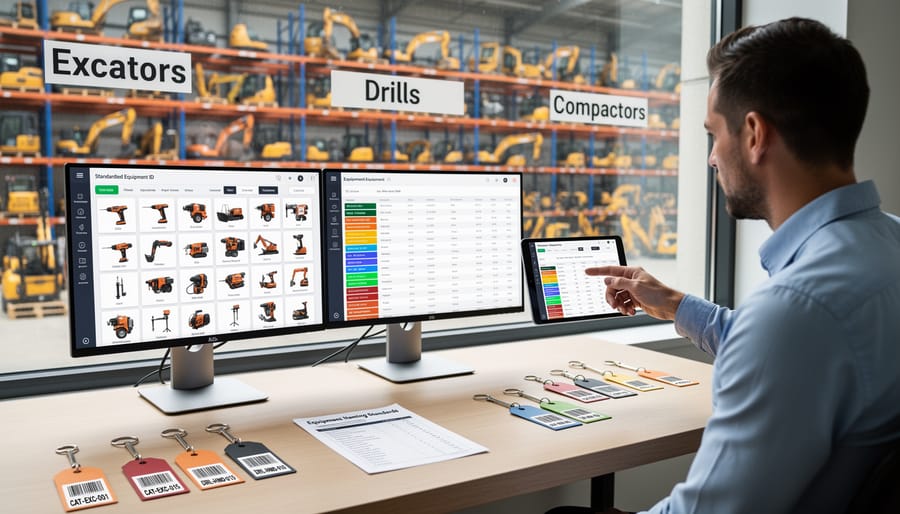
When you list a power drill for rent, the metadata—those details describing the tool—tells the complete story. This includes the manufacturer (like DeWalt or Milwaukee), the specific model number, technical specifications (voltage, speed settings, chuck size), current condition, maintenance history, and safety requirements. Think of metadata as a standardized product label that both humans and computer systems can read.
Why does consistent formatting matter? Imagine searching for “18V cordless drill” across multiple rental platforms. Without standardized metadata, one platform might list voltage as “18v,” another as “18 volt,” and yet another as “eighteen volts.” To a computer system, these look like three different things. Proper semantic interoperability means all platforms agree on formatting standards, so searches work seamlessly and inventory systems can communicate.
For your rental business, this consistency translates to better search results for customers, easier integration with booking software, and accurate cross-platform listings. When you maintain equipment metadata in a standardized format—using consistent units, terminology, and structure—you’re essentially speaking a universal language that connects renters with the right tools faster. This reduces customer frustration, minimizes booking errors, and helps automated systems match tools to specific project requirements without manual intervention.
Cross-Platform Communication Protocols
Think of cross-platform communication protocols as a universal translator for your tool rental business. When a customer books a demolition hammer through your online marketplace, that information needs to travel automatically to your inventory system, update availability calendars, trigger billing processes, and notify your warehouse team—all without anyone manually entering data multiple times.
These protocols work like standardized shipping containers in global trade. Just as containers fit on any ship, truck, or train regardless of manufacturer, communication protocols ensure your booking platform speaks the same language as your inventory manager, accounting software, and customer database. When systems share a common vocabulary and data structure, they can exchange information seamlessly.
For example, when digital twin technology tracks a power tool’s usage hours, that data flows automatically to maintenance scheduling systems. Similarly, automatic updates notify inventory systems when tools receive firmware upgrades, keeping rental records accurate.
The beauty of these protocols is their invisibility to users. Customers see instant availability updates, while your team avoids double-bookings and manual data entry errors—all because your systems communicate in a shared, standardized format behind the scenes.
Practical Benefits You’ll Actually Notice
Customers Find Exactly What They Need
When your rental platform uses semantic interoperability, customers experience a noticeably smoother journey from search to checkout. Instead of scrolling through dozens of mismatched results, they find exactly what they need on the first try. This happens because the system understands that a customer searching for a “cordless drill” might also benefit from seeing “battery-powered drills” or “18V drill drivers,” even if those exact words weren’t in their search.
Product information stays consistent across your entire catalog. Whether a customer views a pressure washer on your website, mobile app, or through a partner platform, they see the same accurate specifications, availability status, and pricing. This consistency builds trust and eliminates the confusion that causes customers to abandon their rentals midway through booking.
Your unified catalog also means customers can easily compare similar tools. When a homeowner needs a sander for their weekend project, they can quickly understand the differences between orbital, belt, and detail sanders without needing professional knowledge. The system presents information in plain language while maintaining technical accuracy.
According to user reviews on platforms with strong semantic systems, customers appreciate how quickly they can find appropriate tools for their skill level and project requirements, leading to higher satisfaction rates and repeat business.
Your Systems Finally Work Together
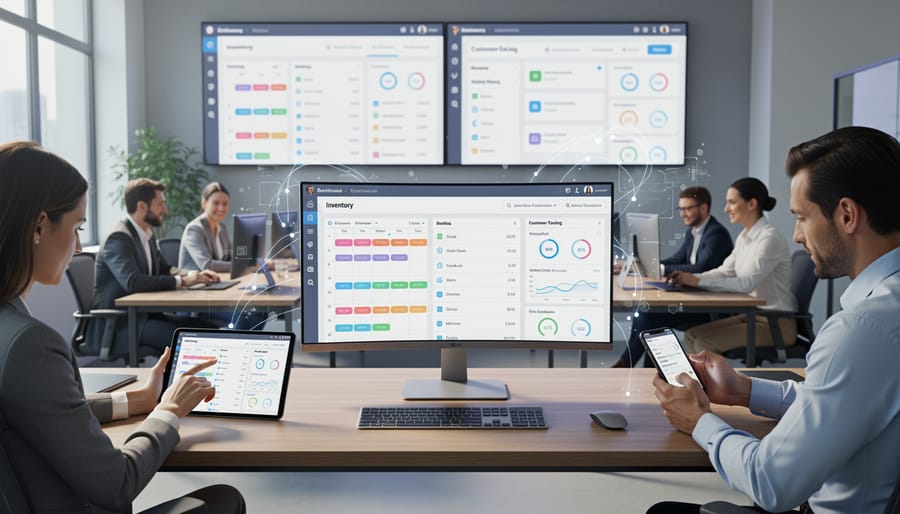
Picture this: A customer books a pressure washer through your online platform at 9 AM. Within seconds, your inventory system automatically updates, removing that unit from availability. The system recognizes the tool requires servicing after its previous rental, so it adjusts the pickup time and notifies your maintenance team. Meanwhile, your customer receives confirmation with their booking details, and your staff tablet shows the updated schedule, all without anyone manually entering data twice.
This is semantic interoperability in action. Your booking platform, inventory database, maintenance scheduler, and customer interface are speaking the same language, understanding not just the data being shared but what it actually means.
When a drill is marked as “unavailable,” every connected system understands whether it’s out on rental, needs repair, or is reserved for pickup. Your smart tools can report their usage hours directly into maintenance systems, automatically triggering service appointments. Customer preferences flow seamlessly from your website to your point-of-sale system to your email marketing platform.
The result? No double-bookings, no conflicting information, and no frustrated customers arriving to collect tools that aren’t actually available. Your team spends less time firefighting data mismatches and more time helping customers.
Better Data for Smarter Decisions
When your tool rental data speaks the same language across different platforms and devices, you unlock powerful insights that drive smarter business decisions. Data standardization transforms scattered information into actionable intelligence.
With semantic interoperability, you can easily identify which tools are most popular during specific seasons or for particular projects. This visibility helps you optimize your inventory investment, ensuring you stock the right equipment without tying up capital in underused items. Analytics reveal patterns like which power drills get rented most frequently or which brands professional tradespeople prefer, based on real usage data and community-driven reviews.
Predictive maintenance becomes straightforward when systems share standardized data about tool performance. You can spot early warning signs before equipment fails, scheduling servicing during quiet periods rather than dealing with unexpected downtime. Understanding usage patterns also helps you plan better promotions, adjust pricing dynamically, and improve customer recommendations. When one customer’s experience with a specific tool category can inform another’s rental choice, everyone benefits from shared knowledge that actually makes sense across your entire operation.
Making It Work in Your Tool Rental Operation
Start with Your Equipment Catalog
The journey toward semantic interoperability begins with understanding what you currently have. Start by auditing your equipment catalog and examining how items are named and described. You’ll likely discover inconsistencies—one person might list “cordless drill,” while another enters “battery-powered drill” for identical items. These variations create confusion for customers and complicate your inventory management.
Next, establish consistent categorization across all equipment. Group similar tools together using standardized categories like “Power Drills,” “Sanders,” or “Concrete Equipment.” This helps customers find what they need quickly and allows your system to communicate effectively with other platforms.
Standardize how you format specifications. Instead of mixing measurement systems or using varied terminology, create templates that ensure every drill lists voltage, chuck size, and battery life in the same format. This consistency makes comparisons easier for renters and enables automated systems to process your data accurately.
Finally, write clear product descriptions that speak to your audience’s needs. Explain what each tool does in plain language, highlight practical applications, and include relevant safety information. Remember, your customers range from weekend DIYers to seasoned professionals—your descriptions should serve everyone while maintaining technical accuracy where it matters.
Choose Integration-Friendly Platforms
When evaluating software for your tool rental business, prioritize platforms that openly support industry-standard data formats. Look for systems that can exchange information using formats like JSON, XML, or CSV, as these ensure your different tools can communicate effectively.
Start by asking vendors these key questions: What data standards do you support? Can your system export and import data automatically? Do you offer API access for connecting with other platforms? How do you handle equipment specifications and maintenance records? Most importantly, inquire about their approach to system security when sharing data between platforms.
Request a demonstration showing real data transfers between their system and commonly used platforms in your operation. A quality vendor should provide clear documentation about their integration capabilities and be willing to discuss how their platform handles equipment metadata, availability updates, and booking synchronization.
Check whether the platform supports webhooks or real-time data updates rather than requiring manual exports. This automation saves countless hours and reduces human error. Don’t hesitate to ask for references from other rental businesses using multiple integrated systems. Their experiences will reveal whether the vendor’s promises match reality and whether technical support adequately addresses integration challenges when they arise.
Build for Community Contribution
User-generated content and reviews strengthen your tool rental platform while helping maintain semantic consistency across your data ecosystem. When customers share feedback or equipment experiences, provide standardized input fields that guide them toward structured information. For example, instead of an open text box asking “Tell us about this tool,” use specific prompts: “How did this tool perform on your project?” or “Rate the tool’s condition (1-5 stars).”
Create dropdown menus for common attributes like project type, material used, or experience level. This approach captures valuable community insights while keeping data organized and searchable. When users mention “circular saw” versus “rotary saw,” your system can recognize both terms refer to the same equipment category.
Implement a moderation workflow that checks submissions against your standardized terminology before publishing. Flag entries using inconsistent product names or unclear descriptions for quick review. Train moderators to edit submissions lightly, preserving the authentic voice while aligning terminology with your data standards. Consider offering autocomplete suggestions as users type, gently steering them toward accepted terms. This balance ensures genuine community contribution without compromising the semantic structure that makes your platform searchable and reliable.
Semantic interoperability might sound like technical jargon, but here’s what it really means for your tool rental business: fewer headaches, happier customers, and a competitive edge that keeps you ahead. When your systems can actually talk to each other—sharing accurate information about tool availability, specifications, and compatibility—you eliminate the frustrating back-and-forth that costs you time and loses you customers.
Think about the last time a customer asked if a specific drill bit would work with their rented power tool, or when you needed to check inventory across multiple locations. With semantic interoperability, these answers come instantly because your systems share a common language. That’s not just convenient; it translates directly into more rentals, fewer returns, and customers who recommend you to their friends.
The good news? You don’t need to overhaul everything at once. Start by evaluating one pain point in your current operation. Maybe it’s your inventory system that doesn’t sync with your website, or customer data that lives in three different places. Pick one area where better data communication would make an immediate difference.
Connect with other rental operators in your community to learn what systems they’re using and what challenges they’ve solved. User feedback and real-world experiences are invaluable when making these decisions. The rental industry is moving toward smarter, more connected systems, and getting started now—even with small improvements—positions your business for long-term success. Take that first step today and watch how one improvement leads naturally to the next.
Related Posts


Post a Comment