

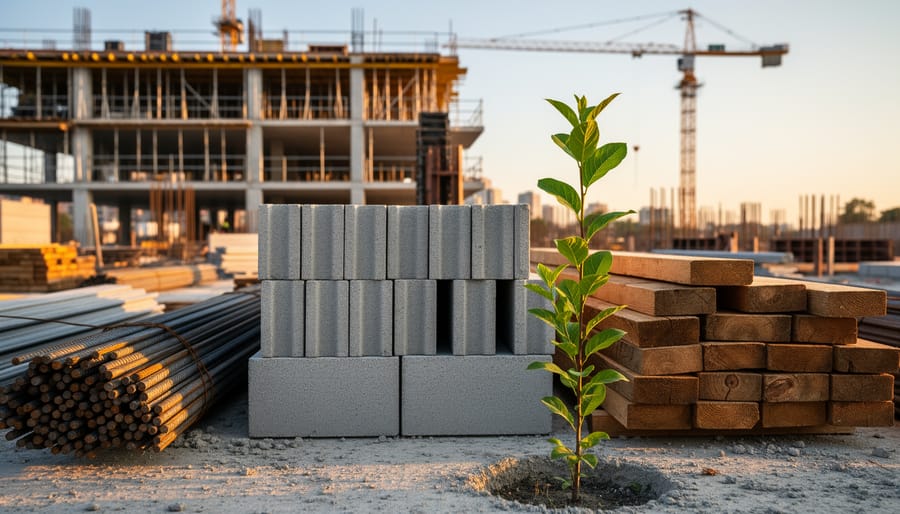
Every building project creates a hidden carbon debt before occupancy day arrives. Embodied carbon represents all greenhouse gas emissions released during the extraction, manufacturing, transportation, and installation of construction materials—from the concrete in your foundation to the paint on your walls. Unlike operational carbon from heating and cooling, which you can reduce over time, embodied carbon is locked in the moment materials arrive on site.
Understanding this upfront carbon cost matters now more than ever. Construction accounts for roughly 11% of global carbon emissions through embodied carbon alone, with concrete and steel as the primary culprits. A typical residential home can contain 50-100 tonnes of embodied carbon before a single light switch flips on. As buildings become more energy-efficient and operational emissions decrease, embodied carbon’s share of a building’s lifetime footprint grows—sometimes exceeding 50% in high-performance structures.
The practical news: you control significant embodied carbon through material selection and design decisions. Choosing reclaimed timber instead of new, specifying low-carbon concrete mixes, or designing with less material overall can cut embodied carbon by 30-50% without compromising structural integrity or aesthetics. Whether you’re planning a home extension, commercial renovation, or new build, reducing embodied carbon doesn’t require radical changes—just informed choices about what you build with and how you build it. This guide shows you exactly where those choices matter most.
What Is Embodied Carbon (In Plain English)
When you’re planning a building project or renovation, most people think about energy bills and insulation—how much power it’ll take to heat or cool the space once it’s built. That’s called operational carbon. But there’s another significant carbon footprint that happens before you even move in: embodied carbon.
Think of embodied carbon as the environmental price tag attached to every building material from the moment it’s made until it arrives on your job site. It’s all the greenhouse gas emissions released when extracting raw materials, manufacturing products, transporting them to suppliers and builders’ merchants, and finally installing them in your project.
Let’s break this down with materials you probably handle regularly. When concrete is manufactured, limestone gets heated to extreme temperatures in massive kilns, releasing huge amounts of CO2. Steel production requires coal-fired blast furnaces that generate significant emissions. Even something as natural as timber has embodied carbon from harvesting equipment, processing at sawmills, and transport—though it’s considerably lower than most alternatives and the trees actually store carbon while growing.
Here’s a relatable way to picture it: imagine the total carbon emissions from all the lorries, factories, and machinery involved in getting a pallet of bricks to your driveway. That’s embodied carbon. For a typical house extension, these upfront emissions can equal several years’ worth of heating and electricity use.
The challenge is that embodied carbon is often invisible to builders and homeowners. You don’t see it itemised on invoices, and unlike energy bills, you’re not reminded of it monthly. Yet with buildings responsible for nearly 40% of global carbon emissions—and roughly half of that coming from materials and construction—understanding embodied carbon matters whether you’re a professional tradesperson pricing up jobs or a DIYer planning a garden office.
Why Embodied Carbon Matters More Than You Think
When you’re planning a building project, whether it’s a home extension or a complete renovation, the focus typically lands on energy efficiency—better insulation, solar panels, efficient heating systems. These operational carbon concerns are important, but there’s a hidden environmental cost that happens before you even flip the light switch: embodied carbon.
Here’s the reality that catches many people off guard: embodied carbon accounts for roughly 11% of global carbon emissions. To put that in perspective, that’s more than the entire aviation industry. In construction specifically, the materials we use—concrete, steel, timber, insulation, even the glass in our windows—carry a carbon footprint from their extraction, manufacturing, and transportation.
Consider a typical new home. Before anyone moves in, that building has already generated approximately 50-80 tonnes of CO2 equivalent just from the materials used to construct it. That’s roughly the same as driving a car for 200,000 miles. For a single building project.
The construction industry contributes around 38% of global carbon emissions when you combine both embodied and operational carbon. As buildings become more energy-efficient through better design and renewable energy, embodied carbon’s share of the problem actually grows larger proportionally. By 2050, embodied carbon could represent up to 50% of a building’s lifetime emissions.
One community member working on a self-build project put it perfectly: “I spent months researching the best boiler and insulation, but I’d never questioned where my bricks came from or how much energy went into producing them.” This knowledge gap is exactly what we need to close.
The Biggest Carbon Culprits in Your Build
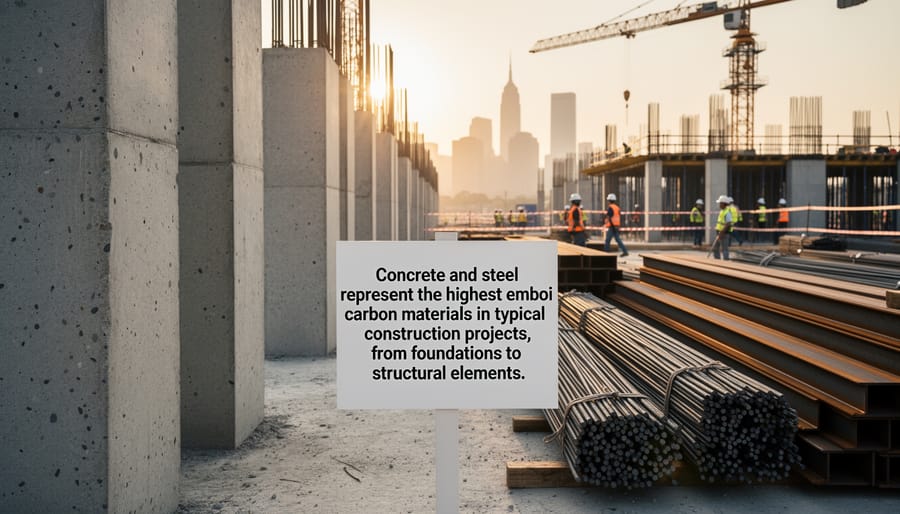
Concrete and Steel: The Heavy Hitters
Concrete and steel account for roughly 15% of global CO2 emissions combined, making them the heavyweight champions of embodied carbon in construction. Understanding why these materials carry such hefty carbon footprints helps you make smarter choices on your next project.
Concrete’s carbon problem starts at the cement plant. Manufacturing cement requires heating limestone to extreme temperatures—around 1,450°C—which releases massive amounts of CO2 both from the fuel burned and the limestone itself breaking down chemically. For every ton of cement produced, nearly a ton of CO2 goes into the atmosphere. Since concrete is the world’s most-used building material after water, that impact adds up fast.
Steel production isn’t much better. Traditional steelmaking involves heating iron ore in blast furnaces fueled by coal, creating significant emissions. Even recycled steel requires substantial energy to melt and reform, though it’s considerably better than virgin production.
In typical residential projects, you’ll find concrete in foundations, basement walls, driveways, and structural slabs. Commercial buildings use even more, with concrete forming entire structural frames. Steel appears in reinforcing bars (rebar) within concrete, structural beams, lintels, and increasingly in metal framing that’s replacing traditional timber in some applications.
The good news? Alternatives exist. Low-carbon concrete mixes, recycled steel options, and careful specification can dramatically reduce your project’s footprint without compromising structural integrity.
Insulation, Drywall, and Finishing Materials
Interior materials and finishing products often fly under the radar when considering a building’s carbon footprint, yet they contribute significantly to overall embodied carbon. The good news? These are often the most accessible areas for DIYers and renovators to make impactful choices.
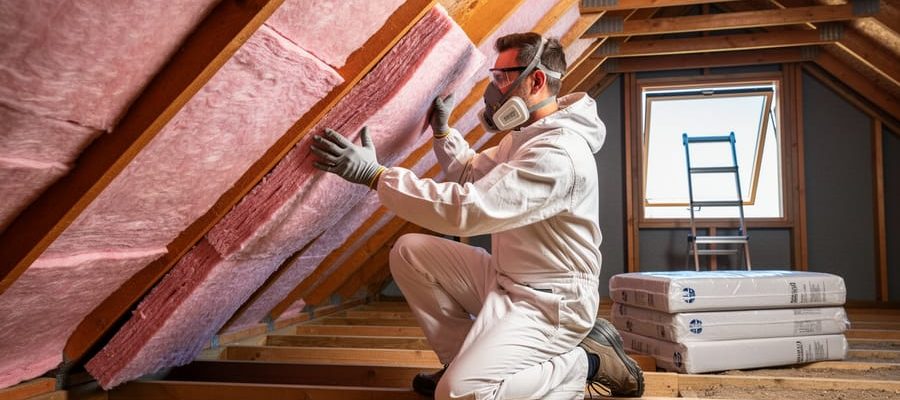
Standard fiberglass batt insulation typically carries 26-35 kg CO2e per cubic meter, while spray foam insulation can reach 130-150 kg CO2e per cubic meter due to its chemical manufacturing process. Community members have reported excellent results with cellulose insulation, which registers just 5-10 kg CO2e per cubic meter and is made from recycled newspaper. Mineral wool offers another lower-carbon alternative at around 20 kg CO2e per cubic meter, with the added benefit of superior fire resistance.
Drywall, or gypsum board, contributes approximately 0.39 kg CO2e per kilogram of product. While this seems modest, consider that an average room renovation requires substantial quantities. Some manufacturers now offer boards with recycled gypsum content, reducing embodied carbon by 15-20 percent according to user feedback in construction communities.
For finishing materials, consider these comparisons: conventional oil-based paints carry higher carbon loads than water-based alternatives, while natural lime plasters and clay-based finishes offer significantly lower embodied carbon than synthetic options. Many professionals now recommend zero-VOC paints that combine environmental benefits with improved indoor air quality, creating healthier spaces while reducing your project’s carbon footprint.
Manufacturing and Transportation Emissions
The journey materials take from factory to building site significantly impacts their carbon footprint. A locally quarried stone might carry half the embodied carbon of an identical product shipped from overseas, simply due to transportation differences. Manufacturing location matters too – the same brick produced in a country with coal-powered factories versus renewable energy sources can have vastly different carbon totals.
Transportation emissions depend on distance, method, and weight. Heavy materials like concrete blocks trucked 500 miles add substantial carbon compared to lighter timber framing sourced regionally. Shipping by sea is generally more efficient than air freight, but even ocean transport accumulates carbon over long distances. Many builders report choosing regional suppliers specifically to cut these emissions while supporting local economies.
Production methods vary wildly between manufacturers. Traditional cement kilns might release three times the carbon of newer, efficient facilities producing the same product. Some manufacturers now publish Environmental Product Declarations showing exact carbon figures, making comparisons easier. When planning your project, asking suppliers about production locations and methods helps you make informed choices. Community members often share supplier reviews highlighting companies committed to lower-emission manufacturing processes, giving you practical insights beyond marketing claims.
Smart Material Swaps That Actually Work
Lower-Carbon Concrete and Foundation Options
Switching to lower-carbon concrete alternatives can dramatically reduce your project’s embodied carbon footprint, and many of these options are now readily available through building suppliers and specialist contractors.
Recycled aggregate concrete replaces virgin stone and gravel with crushed concrete from demolition sites. This option cuts embodied carbon by up to 10-15% compared to standard mixes while maintaining structural performance for many applications. Most concrete suppliers can now provide recycled aggregate options, though you’ll want to check suitability for your specific project requirements with your structural engineer.
Geopolymer concrete represents a more significant leap forward. This innovative material substitutes traditional Portland cement with industrial byproducts like fly ash or slag, potentially reducing embodied carbon by 40-80%. While not yet universally available, geopolymer concrete is gaining traction in commercial projects and increasingly accessible for residential builds through forward-thinking suppliers.
For foundations specifically, consider alternative systems that use less concrete altogether. Screw pile foundations, for instance, eliminate the need for concrete footings entirely and can be installed with specialist equipment available through tool hire centres. Raft foundations with optimized reinforcement patterns use less material than traditional strip footings while providing excellent performance in suitable ground conditions.
When planning your foundation work, discuss these alternatives early with your supplier and structural engineer. Many tradespeople report that initial unfamiliarity with these systems is quickly overcome, and the carbon savings prove substantial without compromising build quality or increasing labour time significantly.
Sustainable Framing and Structural Choices
Choosing the right framing materials is one of the most impactful decisions you’ll make when reducing embodied carbon. Traditional steel and concrete structures carry massive carbon footprints due to energy-intensive manufacturing processes. Switching to timber alternatives can cut embodied carbon by up to 75% compared to conventional materials.
Engineered lumber products like cross-laminated timber (CLT), laminated veneer lumber (LVL), and glued laminated timber (glulam) offer structural strength comparable to steel while sequestering carbon throughout their lifespan. These products are manufactured from smaller timber pieces, making efficient use of forest resources. Many DIYers and builders report successful projects using these materials, with community feedback highlighting their ease of installation and dimensional stability.
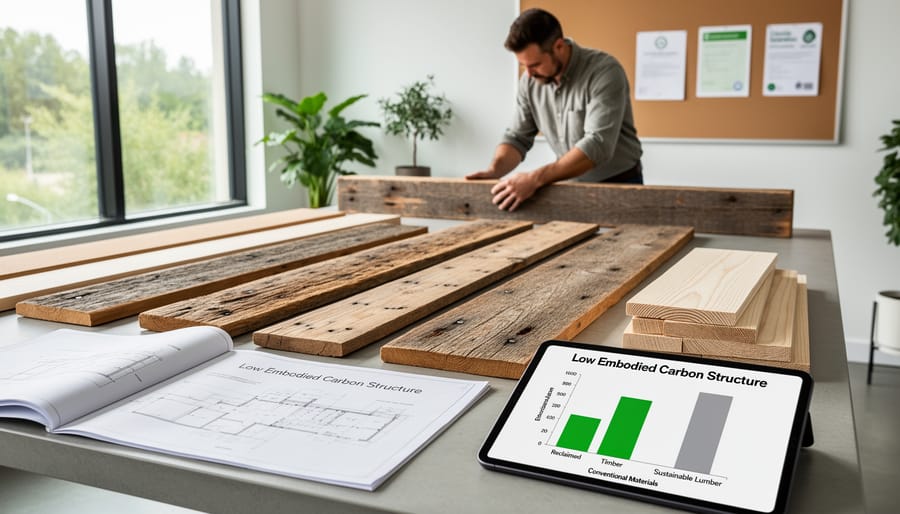
Reclaimed timber provides another excellent option for framing smaller projects, additions, and renovations. Salvaged beams from demolished buildings, old barn wood, and recovered industrial timber often possess superior density and strength compared to new-growth alternatives. When sourcing reclaimed materials, inspect for structural soundness, checking for rot, insect damage, and excessive warping.
For practical sourcing, connect with local demolition contractors, architectural salvage yards, and community building material reuse centres. Many tradespeople in our community recommend establishing relationships with these suppliers before starting projects. Consider sustainable building materials that prioritize local harvesting and processing to further reduce transportation emissions.
When selecting framing materials, verify certifications like FSC (Forest Stewardship Council) or PEFC (Programme for the Endorsement of Forest Certification) to ensure responsible sourcing practices.
Eco-Friendly Insulation and Interior Materials
Interior materials significantly impact a building’s embodied carbon footprint, but natural alternatives offer impressive environmental benefits without compromising performance. Understanding these green insulation options helps you make informed choices for your project.
Sheep’s wool insulation performs excellently, regulating moisture naturally while providing thermal values comparable to fibreglass. It requires minimal processing energy and is completely renewable. Community feedback consistently highlights its ease of installation, making it ideal for DIY projects.
Cellulose insulation, manufactured from recycled newspaper, offers outstanding thermal performance at roughly one-tenth the embodied carbon of mineral wool. Installation requires specialized blowing equipment, which many tool hire centres stock for both dense-pack wall applications and loose-fill attic installations.
Hemp insulation combines excellent thermal properties with carbon sequestration benefits, as hemp plants absorb CO2 during growth. While slightly more expensive upfront, users report superior durability and moisture resistance.
For wall finishes, consider alternatives to standard gypsum drywall. Clay plaster provides natural breathability and eliminates the need for vinyl paints, which contain significant embodied carbon. Lime-based finishes offer similar benefits with antimicrobial properties. Low-carbon drywall options now incorporate recycled content and reduced manufacturing temperatures, cutting embodied carbon by up to 30 percent compared to conventional products.
When to Use Reclaimed and Salvaged Materials
Reclaimed and salvaged materials work best for projects where their character adds value and where structural requirements allow flexibility. Consider using them for non-structural elements like interior cladding, flooring, decorative beams, doors, and fixtures where you can thoroughly inspect each piece before installation. Many community members report success with reclaimed brick for feature walls and salvaged timber for shelving and furniture projects.
When sourcing materials, visit architectural salvage yards and demolition sites with a clear list of what you need. Inspect every piece carefully for rot, pest damage, embedded nails, and structural integrity. Check timber with a moisture meter and look for signs of previous treatment that might affect workability. For brick and stone, tap them gently to listen for hollow sounds indicating cracks.
Safety is paramount when working with reclaimed materials. Always wear appropriate protective equipment including heavy-duty gloves and safety glasses, as old nails and splinters are common hazards. Test any painted wood manufactured before 1978 for lead content before cutting or sanding. Clean all materials thoroughly and remove protruding fasteners before working with them.
Plan extra time for preparation, as reclaimed materials often need cleaning, denailing, and resizing. Most users find the environmental benefits and unique aesthetic worth the additional effort, especially when the materials tell a story and reduce embodied carbon significantly compared to new alternatives.
Design Decisions That Cut Carbon Before You Swing a Hammer
Right-Sizing Your Project
One of the most effective strategies for reducing embodied carbon is surprisingly straightforward: build less. The carbon emissions from materials, manufacturing, and transportation scale directly with project size, so a smaller building always starts with a significant advantage. Before planning new construction, consider whether renovation or adaptive reuse of existing structures might meet your needs. Every building that remains standing represents embodied carbon already invested, and demolition wastes not just the materials but all the energy used to create them.
Community feedback consistently highlights that well-planned renovations often deliver better results per dollar while dramatically cutting carbon footprints. When evaluating a renovation versus new build, factor in that existing foundations, framing, and infrastructure already represent substantial material investment. Even if portions need upgrading, preserving the structural core can reduce embodied carbon by 50-75% compared to starting from scratch.
If new construction is necessary, challenge every square foot. Open-plan designs, multi-functional spaces, and efficient layouts deliver more usable area with less material. Professional builders report that thoughtful space planning often reveals homeowners need 20-30% less space than initially imagined when storage solutions and room purposes are optimized properly.
Designing for Longevity and Adaptability
Building structures that last reduces the need for energy-intensive demolition and reconstruction, directly cutting embodied carbon over time. When designing or renovating, prioritize durable materials like brick, concrete, and quality timber that can withstand decades of use with minimal maintenance. Simple design choices matter too—consider modular layouts that allow rooms to be repurposed as needs change, avoiding costly tear-outs later.
Passive building design principles complement longevity by creating efficient structures from the outset. Build with flexibility in mind by installing removable partition walls rather than permanent ones, and design spaces that can serve multiple functions. Community feedback from professional builders consistently highlights that overbuilding for current needs often leads to premature renovations.
When selecting tools and equipment for your project, consider renting quality gear that handles durable materials properly—precision matters for longevity. Avoid shortcuts that compromise structural integrity. Plan electrical and plumbing runs with future modifications in mind, leaving accessible pathways for upgrades. These practical considerations extend building lifespans significantly, spreading embodied carbon impacts across many more years of use.
Modular and Prefabricated Options
Modular and prefabricated construction offers significant embodied carbon advantages through controlled factory environments. When building components are manufactured off-site, waste reduction can reach 80% compared to traditional on-site construction. Factory settings allow precise material cutting, leftover recycling, and quality control that minimizes defects requiring replacement.
The controlled environment means materials aren’t exposed to weather damage during construction, eliminating waste from water-damaged timber or corroded metal. Manufacturing facilities can also optimize energy use, often incorporating renewable power sources more easily than temporary construction sites.
From a practical standpoint, prefabricated panels, wall systems, and entire modules arrive ready for assembly, reducing on-site construction time by up to 50%. This shortened timeline means less equipment idling and fewer vehicle trips to the site. Community feedback from builders using modular methods consistently highlights reduced material delivery needs and cleaner worksites.
For homeowners and DIYers considering renovations, prefabricated options like bathroom pods or kitchen modules can replace traditional stick-built approaches. While upfront planning is essential, the reduced waste and faster installation often offset initial coordination efforts. Professional tradespeople report that standardized connections in prefab systems speed assembly while maintaining structural integrity and reducing the carbon footprint associated with extended construction periods.
On-Site Practices That Make a Difference
Waste Reduction and Material Optimization
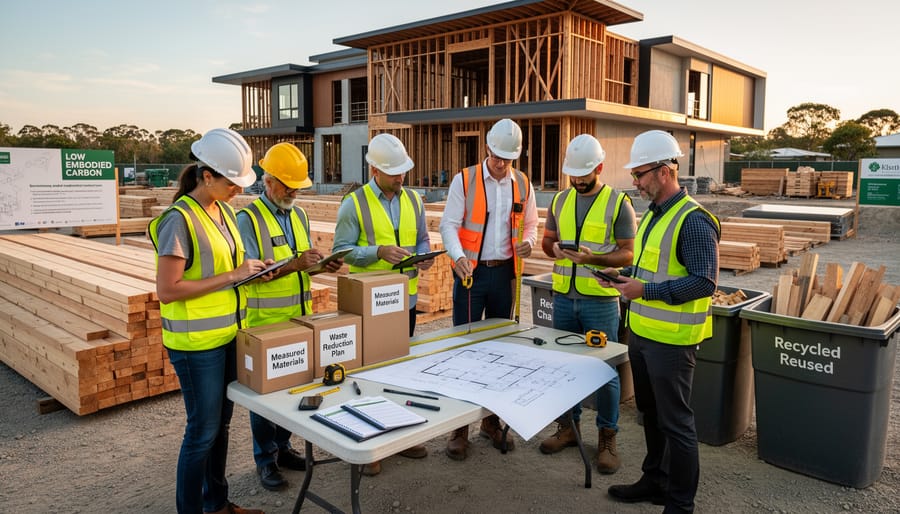
Material waste is one of the biggest contributors to embodied carbon in construction projects, with UK building sites sending millions of tonnes to landfill annually. The good news? Smart planning and practical techniques can dramatically reduce this waste, cutting both your environmental impact and project costs.
Start with accurate cutting lists before ordering any materials. Measure twice, cut once isn’t just about precision – it’s about buying the right quantities. Many DIYers and even experienced tradespeople order excess “just in case,” but this often leads to waste. Use online cutting list calculators or simple spreadsheet templates to map out exactly what you need from each sheet, board, or length of material.
When ordering timber, plasterboard, or sheet materials, work with your supplier to optimize sizes. Standard sheet dimensions may not suit your project perfectly, but planning your design around common sizes (like 2400mm x 1200mm plasterboard sheets) reduces off-cuts significantly. Some suppliers now offer custom cutting services that generate far less waste than on-site cutting.
Create a salvage system on-site for off-cuts. That 600mm piece of timber might seem too small now, but it could be perfect for blocking, bracing, or another project. Designate a clean, dry storage area for usable off-cuts, organized by material type and size. Community members often report saving hundreds of pounds by maintaining an organized off-cut collection.
Consider material swaps and donation programs in your local area. Construction materials reuse networks connect builders with surplus materials to those who need them. Even packaging materials like protective wrapping and cardboard can often be returned to suppliers or recycled through specialist schemes rather than sent to landfill.
Choosing Low-Emission Tools and Equipment
While choosing sustainable materials matters greatly, the equipment you use during construction and renovation also contributes to your project’s carbon footprint. Electric tools produce zero on-site emissions compared to petrol-powered alternatives, making them a smart choice for reducing operational carbon during the build phase.
Tool hire services increasingly offer electric alternatives across their ranges, from electric compressors and mixers to battery-powered drills and saws. Hiring rather than buying also makes environmental sense since shared equipment means fewer tools manufactured overall, reducing embodied carbon across the industry.
When selecting hired equipment, ask providers about their electric options. Battery technology has advanced significantly, meaning cordless electric tools now match the power and runtime of traditional petrol models for most applications. For static equipment like cement mixers or generators, mains-powered electric versions eliminate emissions entirely during use.
Many hire companies track equipment efficiency and user feedback on performance. Check community reviews before booking to ensure the electric option suits your specific job requirements. Users often share practical insights about battery life, charging times, and whether electric alternatives deliver sufficient power for demanding tasks.
Remember that while electric tools reduce operational emissions during your project, the electricity source matters too. Where possible, combine electric equipment with renewable energy sources to maximize carbon reduction throughout your build.
Local Sourcing and Smart Delivery Planning
Choosing materials from nearby suppliers dramatically cuts the carbon footprint from transportation. When planning your project, ask suppliers about local options and their delivery schedules. Many tool hire centres, including community members who’ve shared their experiences, recommend coordinating material deliveries to reduce multiple trips. Consider consolidating orders with other builders in your area or timing deliveries to match project phases. This approach, part of broader sustainable construction practices, not only reduces emissions but often saves on delivery costs and site congestion.
What the Pros Are Saying: Real Experiences with Low-Carbon Building
We reached out to builders, contractors, and ambitious DIYers who’ve taken steps to reduce embodied carbon in their projects. Here’s what they told us about the realities on the ground.
Mike Chen, a residential contractor in Bristol, shared his experience switching to reclaimed timber framing: “The first project took longer because sourcing took patience, but we cut embodied carbon by roughly 60% compared to new lumber. Now I’ve built relationships with salvage yards, and it’s become part of our standard workflow. The clients love the story behind the materials too.”
Sarah Thompson, a self-builder in Cornwall, learned some hard lessons: “I wanted to use hempcrete for insulation, but I underestimated the drying time. We lost three weeks on our schedule. Next time, I’d plan better around weather and allow extra time. That said, the thermal performance is brilliant, and knowing we’ve dramatically reduced carbon makes it worthwhile.”
James Okafor, a renovation specialist, highlighted an unexpected challenge: “Convincing clients to pay slightly more upfront for lower-carbon materials requires education. I now show them lifecycle cost comparisons and carbon calculators during consultations. Once they see the bigger picture, most come around.”
Common lessons emerged across conversations: start small with one or two material swaps rather than overhauling everything at once, build relationships with suppliers who understand sustainable materials, and factor in learning curves when pricing jobs. Several tradespeople emphasized that many low-carbon solutions actually save money, like using recycled aggregate or maximizing material efficiency through better planning.
The consensus? Reducing embodied carbon is achievable with current skills and tools, but requires intentionality in material selection and willingness to adapt established practices.
Reducing embodied carbon in your building project doesn’t require a complete design overhaul or specialized expertise. The evidence is clear: small, thoughtful decisions made throughout your project add up to measurable carbon savings. When you choose reclaimed timber instead of new, specify low-carbon concrete for your foundation, or source materials locally, you’re not adding complexity to your work. You’re simply making informed choices that reflect quality craftsmanship.
The practical steps we’ve covered, from material selection to design efficiency, are already part of good building practice. Thinking about embodied carbon simply adds another lens to decisions you’re making anyway. Which supplier should you choose? What materials will perform best long-term? How can you minimize waste? These questions now have an additional dimension that benefits both your project and the environment.
Start with one change on your next project. Perhaps it’s requesting an Environmental Product Declaration from your concrete supplier, choosing a timber alternative for a specific application, or keeping existing foundations rather than demolishing them. Track what works and share your experience with others in the community. Many tradespeople and DIYers have discovered that low-carbon alternatives often perform as well or better than conventional options, while frequently reducing costs through waste minimization and local sourcing.
Embodied carbon awareness isn’t an additional burden on your workload. It’s becoming part of what defines quality work in modern construction. As material manufacturers respond to demand with clearer environmental data and better products, these choices become easier and more accessible. Your next project is an opportunity to build better, and that starts with the materials you specify today.
Related Posts

Post a Comment