

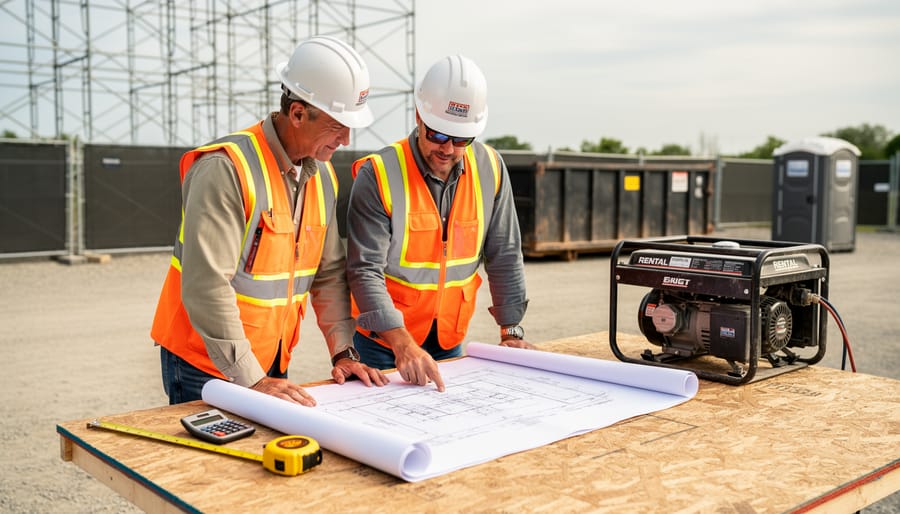
Project indirect costs can quietly consume 15-30% of your total budget—money that doesn’t show up in material receipts or labor invoices but is absolutely essential to completing your work. These hidden expenses include equipment rentals, site supervision, temporary utilities, insurance, permits, and administrative overhead that keep your project running smoothly behind the scenes.
Unlike direct costs that you can trace to specific tasks—like the lumber for framing or the electrician’s hours—indirect costs support your entire project without attaching to any single line item. That rented scaffolding serves multiple trades. The dumpster handles waste from every phase. The project manager oversees all activities. These shared resources create a budgeting challenge that trips up even experienced contractors.
Understanding and accurately estimating indirect costs separates profitable projects from financial disasters. A concrete patio might need $2,000 in materials and $3,000 in labor, but without accounting for the $400 concrete mixer rental, $150 in permits, $200 for waste removal, and $300 in incidental supplies, you’ve underestimated by nearly 25%. This gap between estimated and actual costs destroys profit margins and strains client relationships.
Mastering indirect cost estimation transforms your approach to construction project budgeting. Whether you’re a DIY homeowner tackling a major renovation or a professional contractor managing multiple jobs, capturing these expenses accurately means fewer surprises, better cash flow, and projects that finish on budget. The key lies in systematic identification, percentage-based calculation methods, and learning from real-world scenarios where indirect costs make or break project success.
What Are Project Indirect Costs? (And Why They Matter More Than You Think)
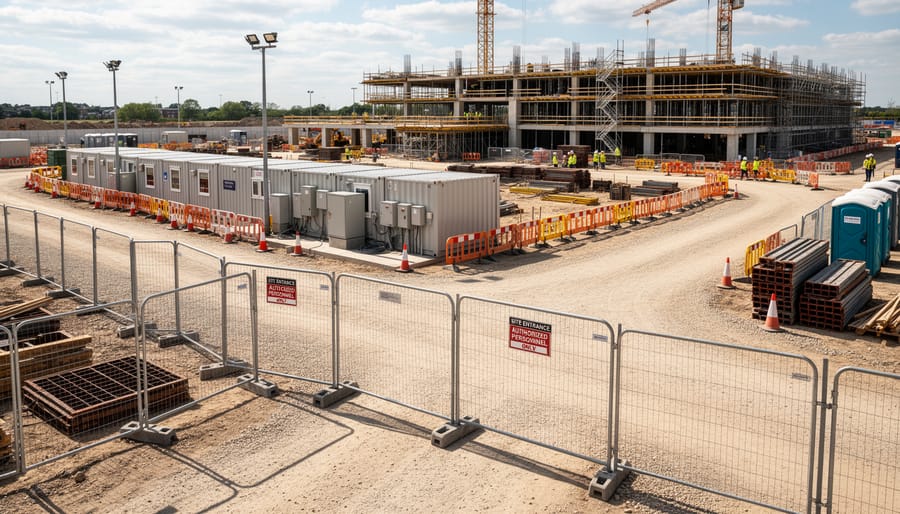
Direct vs. Indirect: Breaking Down the Difference
Understanding the difference between direct and indirect costs is essential for accurate project budgeting. Think of it this way: direct costs are expenses you can point to and say, “That’s going into the actual build.” Indirect costs support the work but don’t become part of the finished product.
Direct costs are straightforward. When you purchase lumber for framing, hire a carpenter to install cabinets, or buy concrete for a foundation, those expenses directly contribute to creating the structure. You can trace these costs to a specific task or material in your project.
Indirect costs, often called general conditions, keep your project running smoothly but don’t show up in the final building. These include site management salaries, safety equipment like hard hats and barriers, temporary utilities such as power and water hookups, and project signage.
Here’s where tool rentals get interesting. If you rent a concrete mixer specifically to pour a patio, that’s a direct cost because it’s tied to completing that exact task. However, if you rent a generator to power your entire job site, providing electricity for multiple tools and lighting throughout the project duration, that’s an indirect cost. The generator supports the overall project rather than one specific deliverable.
Similarly, renting a scissor lift for HVAC installation is direct, but renting portable toilets for your crew throughout the project timeline falls under indirect costs. Understanding this distinction helps you categorize expenses correctly and avoid budget surprises down the road.
The Two Types of Indirect Costs You’re Dealing With
When planning your project budget, it helps to understand that indirect costs fall into two main categories.
First, you have project-specific indirect costs, often called general conditions. These are expenses that support your particular project but aren’t part of the actual construction work. Think of things like temporary fencing around your job site, porta-potties for the crew, project management time, or that equipment rental you need for the entire duration of the build. These costs exist because of this specific project.
Second, there are company-wide indirect costs, which include overhead and administrative expenses. These are the costs of running your business overall: office rent, insurance, accounting services, your truck payments, and utilities. Unlike general conditions, these expenses exist whether you’re working on one project or ten.
Here’s the practical distinction: project-specific costs can be calculated separately for each job and often appear as line items in your estimate. Company-wide costs get distributed across all your projects, usually as a percentage markup. Understanding this difference helps you price jobs more accurately and identify where you can trim expenses without cutting corners on quality or safety.
General Conditions: The Project-Specific Expenses Everyone Forgets
Site Management and Supervision Costs
Site management and supervision costs cover the time people spend overseeing your project rather than doing hands-on work. For professional jobs, this includes project managers who coordinate schedules, site supervisors who monitor daily progress, and administrative staff who handle paperwork, permits, and invoicing. These costs typically range from 10-20% of your total project budget, depending on complexity and duration.
For DIYers tackling their own projects, you’re essentially your own project manager. While you won’t invoice yourself for supervision time, it’s smart to factor in the opportunity cost of your time when deciding whether to DIY or hire professionals. A bathroom renovation might require 15-20 hours of planning, material sourcing, and coordination beyond actual work time.
To estimate supervision needs on smaller projects, consider how much time you’ll spend researching methods, comparing tool rental options, scheduling helpers, ordering materials, and managing inspections. A helpful rule of thumb is to allocate 15-25% of your estimated hands-on work time for these management tasks. For a project requiring 40 hours of physical work, budget an additional 6-10 hours for planning and coordination. This realistic assessment helps prevent timeline surprises and ensures you’ve accounted for the full scope of your commitment.
Temporary Facilities and Equipment
Temporary facilities keep your project running smoothly but add up quickly in your budget. These include portable toilets (typically $75-200 per month), site offices or storage containers ($100-300 monthly), temporary fencing for safety and security ($5-15 per linear foot), and scaffolding rentals for elevated work areas.
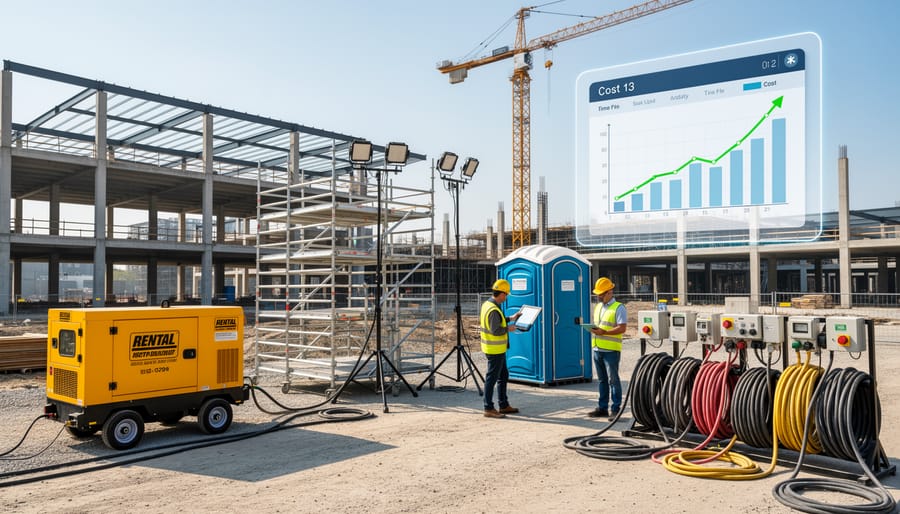
Don’t overlook climate control equipment like temporary heaters in winter or fans in summer, temporary lighting for early morning or evening work, and generators when permanent power isn’t available yet. These seemingly small equipment rental costs can consume 2-5% of your total project budget if not properly tracked.
When estimating these expenses, consider the full project timeline. A six-month project needs six months of portable toilet service, not just a one-time fee. Similarly, scaffolding might only be needed for specific phases, so calculate rental duration carefully rather than assuming the entire project length.
Many tool rental platforms now offer bundled temporary facility packages at discounted rates compared to piecing together individual rentals. This approach simplifies logistics and often reduces costs by 15-20%. Always compare daily versus weekly versus monthly rental rates, as longer-term commitments typically offer better value for extended projects.
Safety and Compliance Requirements
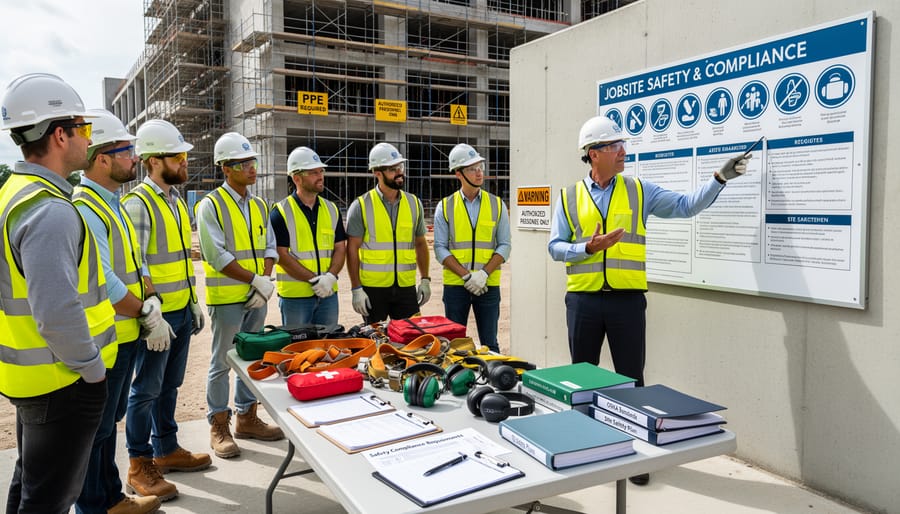
Safety and compliance costs represent essential indirect expenses that protect everyone on your project site. These include personal protective equipment (PPE) like hard hats, safety glasses, gloves, and steel-toed boots for your crew. You’ll also need proper signage indicating hazards, required PPE zones, and emergency exits.
Permit fees vary by location and project scope but are non-negotiable. Building permits, electrical permits, and specialized trade permits ensure your work meets local codes. Budget for required inspections at various project stages—these fees add up but prevent costly rework or legal issues later.
Temporary fencing, barricades, and fall protection equipment represent significant safety investments for larger projects. Fire extinguishers, first aid kits, and proper ventilation systems also fall under this category.
For DIY projects, don’t skimp on personal safety gear. For professionals, these costs also include liability insurance, worker’s compensation, and OSHA compliance training. Failing to budget adequately for safety measures can result in fines, project delays, serious injuries, or lawsuits that far exceed the initial cost savings. Always treat safety compliance as a priority investment, not an optional expense.
Site Utilities and Services
Site utilities and services are the ongoing costs that keep your project running day-to-day. Temporary electrical power typically ranges from $150-$500 monthly depending on your project size and local utility rates. Water hookups for mixing concrete, dust control, and sanitation add another $75-$200 per month. Waste disposal is often underestimated—a standard construction dumpster rental costs $300-$800 per haul, and most projects need multiple pickups. For a three-month renovation, you might spend $1,200 just on waste removal. Site security, whether cameras or guards, can run $500-$2,000 monthly for larger projects. Daily cleanup labor, often 30 minutes per worker at day’s end, adds up quickly across your crew. A five-person team spending this time equals 12.5 hours weekly—that’s significant indirect labor cost that doesn’t directly build anything but keeps your site safe and compliant.
How to Calculate Your Project’s Indirect Costs (Step-by-Step)
Step 1: List All Your General Conditions
Before you can accurately calculate your project’s indirect costs, you need a complete inventory of every general condition expense. Think of this as your financial safety net—these are the costs that keep your project running but don’t physically become part of the finished work.
Start by creating a master checklist organized into these key categories:
Site Setup and Management: Temporary fencing, job site trailers, portable toilets, dumpsters, safety signage, and site security measures.
Project Staffing: Superintendent wages, project manager time allocation, administrative support, and dedicated safety personnel.
Temporary Utilities: Electricity hookups, water service, heating or cooling for winter/summer work, and internet connectivity for project management.
Equipment and Tools: Scaffolding rentals, generators, air compressors, material hoists, and specialized equipment that serves the entire project rather than one specific trade.
Protection and Cleanup: Daily cleanup crews, final cleaning services, floor and surface protection materials, and debris removal throughout construction.
Documentation and Permits: Building permits, inspection fees, project insurance, bonding costs, and document reproduction.
Review similar past projects to identify costs you might overlook. Keep this list accessible and add items as you encounter them during planning—general conditions are easy to underestimate when working from memory alone.
Step 2: Estimate Time-Based Costs
Time-based costs are indirect expenses that accumulate over your project’s duration, regardless of the work being completed. The longer your project runs, the more these costs add up, making accurate estimation critical to your budget.
To calculate time-based costs, start by identifying which expenses accrue daily, weekly, or monthly. Common examples include site supervision salaries, equipment rentals, temporary power and water, portable toilets, and site security. The basic formula is straightforward:
Time-Based Cost = Daily Rate × Number of Days (or Weekly Rate × Number of Weeks)
For example, if you’re renting a skid steer loader at $250 per day for an estimated 15 days, your cost would be $250 × 15 = $3,750. Similarly, if you need a project supervisor at $500 per day for the entire 30-day project duration, that’s $15,000 in supervision costs.
Here’s a practical breakdown for a typical renovation project lasting 6 weeks (42 days):
– Equipment rentals (scaffolding, generator): $150/day × 42 days = $6,300
– Site supervision: $400/day × 42 days = $16,800
– Temporary utilities: $25/day × 42 days = $1,050
– Portable toilet rental: $75/week × 6 weeks = $450
Total time-based costs: $24,600
Remember to add a buffer of 10-15% to account for potential project delays. If your timeline extends, these costs continue accumulating, which is why efficient project scheduling directly impacts your indirect cost control. Always track your actual rental periods and compare them against estimates to improve future budgeting accuracy.
Step 3: Calculate Fixed and One-Time Costs
Fixed and one-time costs are expenses that occur once during a project or remain constant regardless of project duration. These are essential to identify early because they directly impact your initial budget and cash flow requirements.
Start by listing all upfront expenses. Permits and inspections are typical fixed costs—whether your project takes two weeks or two months, the permit fee stays the same. Document the exact amounts by contacting your local building department or checking their fee schedules online.
Next, calculate mobilization and demobilization costs. This includes transporting equipment to and from the job site, initial site setup, and final cleanup. If you’re renting larger equipment like excavators or scaffolding, factor in delivery and pickup fees, which can range from $50 to several hundred dollars depending on distance and equipment size.
Site preparation costs often fall into this category as well. Temporary fencing, utility connections, site offices, and initial safety installations happen once at the project start. Get quotes from suppliers and keep a running total.
Create a simple spreadsheet with three columns: description, vendor or source, and cost. This transparency helps you track every fixed expense and ensures nothing gets overlooked. Remember, accurately estimating these one-time costs prevents budget shortfalls that could derail your project before it truly begins.
Step 4: Apply the Percentage Method (The Industry Shortcut)
Many contractors use a quick calculation method: apply 10-15% of your total direct costs to cover indirect expenses. This percentage approach works well for straightforward projects with typical conditions. For example, if your direct costs (materials, labor, equipment) total $50,000, adding 12% gives you $6,000 for indirect costs.
This shortcut is appropriate when you’re working on familiar project types in your usual service area. However, it has limitations. Complex projects with extended timelines, challenging site conditions, or unusual permitting requirements often need higher percentages or detailed itemized calculations instead. Remote job sites requiring additional travel and coordination also push costs beyond standard percentages. Think of the percentage method as a starting point, not a replacement for careful analysis on unique projects.
Common Mistakes That Cost You Money (And How to Avoid Them)
Underestimating Project Duration
One of the biggest culprits behind ballooning indirect costs is underestimating how long your project will actually take. Every extra day means additional equipment rental fees, extended insurance coverage, prolonged site supervision, and ongoing utility costs that drain your budget.
The problem compounds quickly. If you budgeted for a two-week equipment rental but the project stretches to three weeks, that’s a 50% increase in rental costs alone. Add in other time-based expenses like temporary fencing, portable toilets, or storage containers, and you’re looking at significant unplanned spending.
The solution starts with realistic project scheduling. Build in buffer zones of 15-20% beyond your initial timeline estimates. Account for weather delays, material delivery holdups, and inspection wait times. Review similar past projects to gauge actual completion times rather than ideal scenarios.
When renting equipment, consider weekly or monthly rates instead of daily charges if your timeline has any uncertainty. Many rental companies offer better per-day pricing on longer commitments. Communicate openly with your rental provider about potential extensions so you can plan accordingly and avoid rush fees or availability issues that could halt your entire project.
Forgetting Tool Rental Return Dates
Missing a tool rental return date might seem like a minor oversight, but it can significantly inflate your project’s indirect costs. Late fees typically range from 25-50% of the daily rental rate and accumulate quickly. For example, keeping a $50/day compactor for just three extra days could add $75-150 in unexpected costs that weren’t in your original budget.
Beyond immediate late fees, delayed returns create a domino effect. You might need to rent alternative equipment at premium rates for your next job, or face project delays that extend other rental periods. These ripple effects can transform a single missed return into hundreds of dollars in additional expenses.
To avoid these costly mistakes, set calendar reminders two days before each return date. Take photos of equipment condition at pickup and return to protect against damage disputes. Consider implementing rental management strategies like digital tracking apps or shared team calendars for multi-person projects. Some rental platforms now offer automatic return reminders and grace periods, helping you stay on schedule while protecting your bottom line from unnecessary indirect costs.
Ignoring Weather and Seasonal Factors
Weather disruptions can silently drain your project budget through extended indirect costs. When rain delays concrete work or extreme temperatures halt painting, you’re still paying for site trailers, temporary utilities, supervision, and insurance—even when no productive work happens. A week-long weather delay might only add a few days to labor costs, but it extends every time-based indirect expense across your entire project.
The solution starts with honest seasonal planning. If you’re scheduling exterior work in regions with rainy seasons or harsh winters, build weather contingencies into your timeline from day one. A general rule is adding 10-15% time buffer for outdoor projects, though this varies by location and season. Check historical weather data for your area rather than hoping for the best.
For equipment rentals, this planning becomes critical. Renting a lift or scaffolding for an extra week due to weather delays significantly impacts costs. Consider flexible rental agreements that allow extensions without penalty, or schedule weather-sensitive work during historically favorable months. Some contractors successfully negotiate standby rates with rental companies for weather-related delays.
Document all weather delays with photos, weather reports, and daily logs. This protects you if disputes arise and helps refine your estimation process for future projects based on real conditions you’ve experienced.
Real-World Examples: What Indirect Costs Actually Look Like
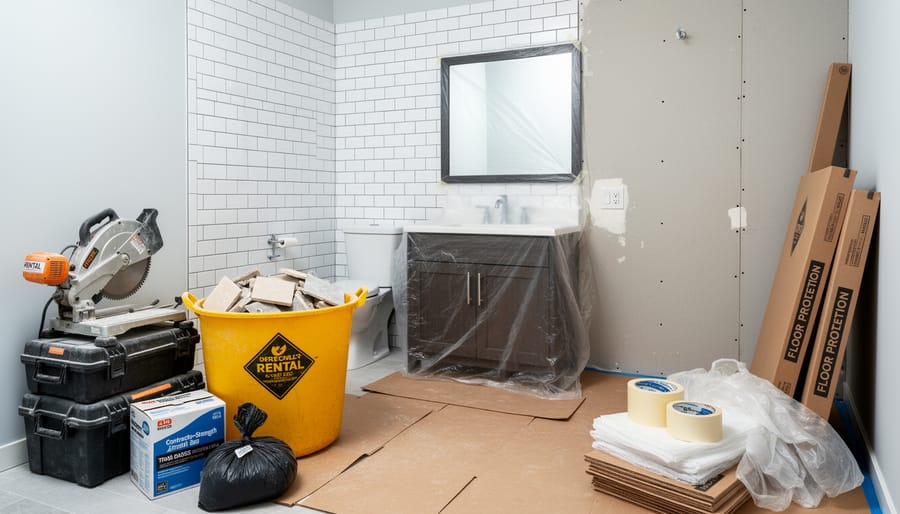
Small Project: Bathroom Renovation
A typical bathroom renovation involves more than just materials and labor—indirect costs can add 15-25% to your total bathroom renovation costs. Understanding these expenses helps you budget accurately and avoid surprises.
Tool rentals represent a significant indirect cost. For a standard bathroom remodel, expect to rent items like tile saws (around $50-75 per day), wet vacuums ($35-50 per day), and demolition equipment ($40-60 per day). If you’re tackling the project yourself over several weekends, these rentals can total $300-600.
Permits and inspections are non-negotiable indirect costs. Most municipalities require permits for plumbing and electrical work, typically ranging from $100-500 depending on your location and project scope. Plan for multiple inspection visits to ensure code compliance.
Waste disposal is often overlooked but essential. A construction dumpster rental runs $300-500 for a week, depending on size and location. Alternatively, hauling debris yourself to the dump costs $50-150 per trip, though this requires multiple visits and a suitable vehicle.
Don’t forget temporary facilities—if this is your only bathroom, you might need portable toilet rental ($150-200 monthly) or gym membership fees for shower access. These practical considerations significantly impact your overall project budget.
Medium Project: Home Addition
A home addition project illustrates how indirect costs scale with complexity and duration. For a 400-square-foot room addition taking three months, your indirect costs expand significantly beyond basic projects.
Supervision becomes a major factor. If you’re acting as your own general contractor, consider the time value of coordinating subcontractors, scheduling inspections, and managing the timeline. Professional supervision might cost 10-15% of direct costs, while self-management still represents opportunity cost worth tracking.
Extended equipment rentals add up quickly. A three-month project might require scaffolding ($200-400 monthly), debris dumpsters (multiple exchanges at $400-600 each), and specialty tools like concrete mixers or laser levels. These rental costs, while supporting the entire project rather than single tasks, fall squarely in the indirect category.
Temporary utilities become necessary for longer projects. Expect costs for temporary power hookups, portable toilets for crews, and potential heating or cooling of work areas, totaling $500-1,500 depending on season and location.
Compliance costs include multiple permit inspections, engineering stamps for structural modifications, and potential architect fees for plan revisions. Budget 3-5% of total project costs for these administrative necessities.
Total indirect costs for a medium addition typically range from 15-25% of direct construction costs, making them impossible to ignore in accurate budgeting.
What the Pros Factor In
Experienced contractors typically allocate 10-15% of total project costs to indirect expenses, though this varies by project complexity and duration. Professional tradespeople build overhead into their estimates by tracking historical data from past jobs—they know, for example, that a three-week residential renovation will require roughly $800-$1,200 in indirect costs for permits, temporary power, site protection, and waste disposal.
Smart contractors separate their overhead calculations into two categories: job-specific indirects (like portable toilets or dumpster rentals for that particular project) and general business overhead (insurance, office expenses, vehicle costs). They factor a markup on both to ensure profitability. Many pros use the “loaded labor rate” method, adding 30-50% to their base hourly wage to cover benefits, insurance, and downtime between jobs.
When it comes to equipment, experienced builders carefully weigh rental versus ownership costs, considering storage, maintenance, and utilization rates. They’ve learned that renting specialized tools for short-term needs often reduces indirect costs compared to purchasing equipment that sits idle.
Smart Tools and Resources for Tracking Indirect Costs
Tracking indirect costs doesn’t require fancy accounting software. Start with a simple spreadsheet that separates your direct material and labor costs from everything else. Create columns for categories like utilities, insurance, permits, equipment rental, transportation, and administrative expenses. Update it weekly rather than waiting until month-end when receipts pile up and details get fuzzy.
For mobile convenience, free apps like Expensify or Receipt Bank let you snap photos of receipts on the job site and categorize them immediately. This real-time tracking prevents the common mistake of forgetting smaller indirect expenses that add up over time.
One often-overlooked area where proper tracking saves money is tool and equipment management. Instead of purchasing specialized tools that sit unused between projects, platforms like Tool Hire connect you with rental options that convert fixed ownership costs into variable indirect expenses. This approach gives you better control over your budget because you only pay for equipment when you actually need it.
The key to reducing indirect costs through rentals is choosing the right rental duration and maintaining clear records. Track when you picked up each tool, the daily rate, and the return date. Set phone reminders to avoid late fees, which can quickly inflate your indirect costs. Many rental platforms offer community-driven reviews that help you select reliable equipment and avoid costly downtime from tool failures.
Whatever tracking method you choose, consistency matters more than sophistication. Review your indirect cost records monthly to identify patterns and opportunities for savings on your next project.
Getting your project indirect costs right isn’t just about adding a few extra dollars to your budget—it’s about protecting your entire project from financial surprises. Throughout this article, we’ve covered how these hidden costs, from equipment rentals to permits and administrative overhead, can make or break your project’s profitability and timeline.
The key takeaways are straightforward: identify all your indirect costs early in the planning phase, use percentage-based calculations as your starting point but adjust for your specific project needs, and always build in a contingency buffer. Whether you’re a professional contractor managing multiple job sites or a DIY homeowner tackling a major renovation, understanding these principles gives you control over your budget instead of letting it control you.
Remember that accurate estimation comes from experience, but also from learning from the community. Review what others have encountered on similar projects, ask questions, and don’t hesitate to adjust your calculations based on real feedback from people who’ve been there.
As you plan your next project, take time to itemize every indirect cost you can think of—especially tool and equipment rentals, which often represent a significant portion of these expenses. Start by creating a detailed list of what you’ll need, when you’ll need it, and for how long. Planning your rental strategy now means fewer budget overruns later. Ready to get started? Explore available equipment options and compare rental rates to build a more accurate project estimate today.
Related Posts

Post a Comment