


Request permits 4-6 weeks before you need them by contacting your local building authority directly and asking for average processing times for your specific permit type. Most residential projects require building permits (2-6 weeks), electrical permits (1-3 weeks), and plumbing permits (1-2 weeks), but complex commercial projects can stretch to 12 weeks or longer depending on required reviews and inspections.
Calculate your total lead time by adding base processing time plus 25-30% buffer for revisions, then add another week for each additional approval body involved. A simple deck permit might clear in 3 weeks, while a home addition requiring structural, mechanical, and zoning reviews could take 8-10 weeks. Track these timelines in your project schedule as hard dependencies, not flexible dates, because construction cannot legally proceed without approved permits.
Reduce permitting delays by submitting complete applications with all required drawings, engineering stamps, and site plans on first submission. Incomplete applications restart the clock entirely. Call the permit office weekly for status updates and respond to reviewer comments within 24 hours. Consider hiring an expediter for projects over $100,000, as they navigate bureaucratic processes faster and often reduce timelines by 20-30%.
Budget for permit costs and delay contingencies alongside material and labor expenses, as permit fees typically run 0.5-2% of project value and delays trigger additional expenses. Extended lead times create hidden costs through equipment rental extensions, labor rescheduling, and seasonal price increases. Understanding and accurately estimating these lead times separates projects that finish on schedule from those that hemorrhage money through preventable delays.
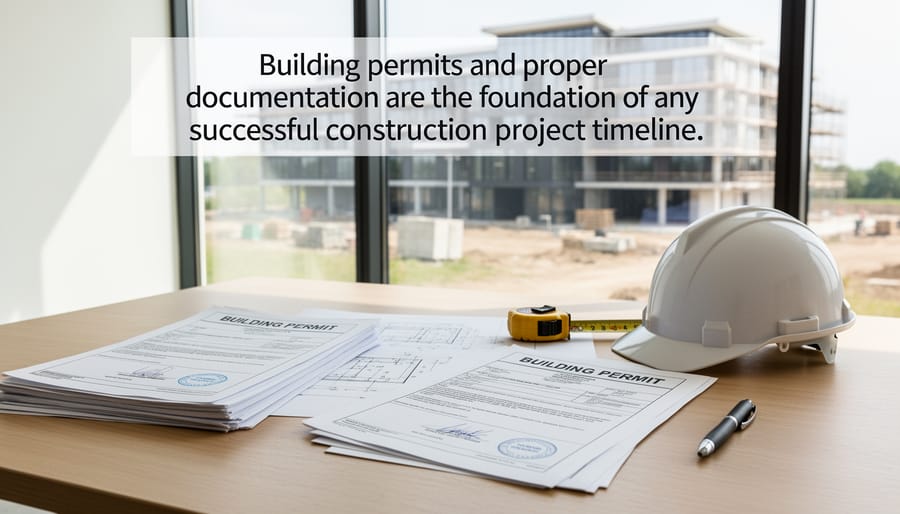
What Construction Lead Times Actually Mean (And Why Permits Matter Most)
The Three Types of Construction Lead Times
Understanding the different types of lead times helps you build a more accurate construction schedule. Each category affects your project timeline in unique ways, and knowing how to manage them can prevent costly delays.
Material procurement lead times involve ordering and receiving construction supplies. This includes everything from lumber and concrete to specialized fixtures and equipment. These timelines vary widely—common materials like dimensional lumber might arrive within days, while custom windows or specific tile selections could take 8-12 weeks. You have significant control here through early ordering and maintaining relationships with reliable suppliers. However, supply chain disruptions and seasonal demand can impact availability, so always confirm current lead times rather than assuming past experiences apply.
Labor availability lead times refer to scheduling contractors and tradespeople for your project. In busy construction seasons, popular contractors might be booked 4-8 weeks out or longer. Specialized trades like electricians or HVAC technicians often have the longest wait times. You can improve this situation by booking early, maintaining flexibility in your schedule, and building a network of reliable professionals.
Regulatory and permitting lead times are perhaps the most frustrating because they depend on government agencies processing your applications. While these timelines feel least controllable, they’re actually the most predictable with proper planning. Most permit offices publish standard processing times, and their timelines remain relatively consistent throughout the year. By researching requirements early, submitting complete applications, and building in buffer time, you can confidently account for permitting in your overall schedule without letting it become a surprise obstacle.
Common Permit Types and Their Typical Lead Times
Residential Projects: What to Expect
When planning home improvement projects, understanding residential permit lead times helps you create realistic schedules and avoid frustrating delays. Here’s what you can typically expect for common residential work.
For straightforward projects like simple electrical upgrades, basic plumbing repairs, or standard water heater replacements, permits usually take 2-4 weeks to process. These are considered routine applications that building departments can review quickly. Similarly, minor deck additions or fence installations generally fall within this same timeframe.
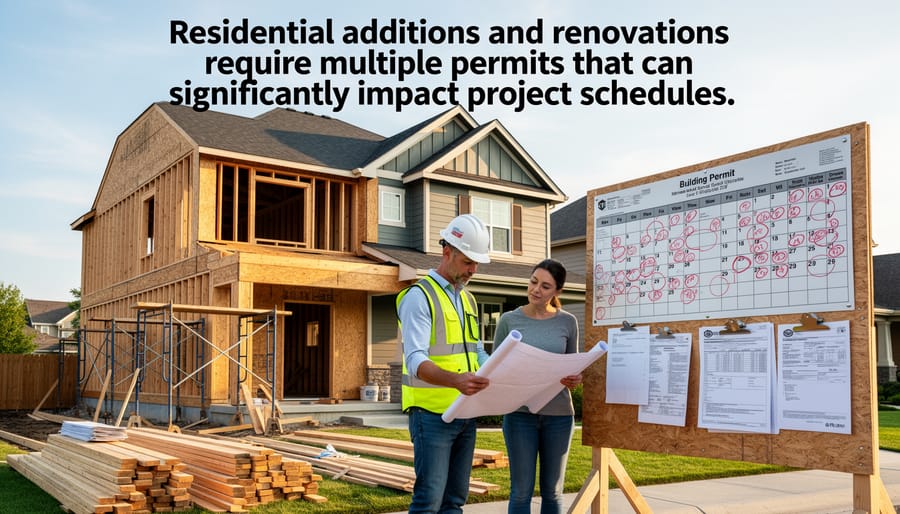
Home additions and substantial renovations require more extensive review, so expect 6-12 weeks for permit approval. Projects that modify your home’s footprint, add square footage, or require structural changes need closer scrutiny from building officials. Multiple departments often need to review these applications, including zoning, structural engineering, and sometimes fire safety divisions.
HVAC system replacements or major upgrades typically take 3-6 weeks, depending on whether you’re doing a straightforward swap or changing your home’s heating and cooling configuration. Complete system redesigns that affect ductwork placement and load calculations take longer than like-for-like replacements.
Kitchen and bathroom remodels present a mixed bag. If you’re only updating finishes and fixtures without moving plumbing or electrical lines, expect 3-5 weeks. However, gut renovations that involve relocating walls, plumbing, or gas lines can push into the 8-12 week range.
Several factors can extend these baseline estimates. Projects in historic districts face additional review processes, sometimes adding 4-8 weeks. Complex structural work requiring engineer-stamped drawings takes longer to approve. Incomplete applications get kicked back for revisions, restarting the clock entirely.
To get accurate estimates for your specific location, contact your local building department directly. Many municipalities now publish average processing times on their websites, and some offer expedited review for an additional fee.
Commercial and Heavy Construction Permits
Commercial and heavy construction projects involve significantly more complex permitting processes compared to residential work. If you’re planning a commercial build, major renovation, or industrial project, expect lead times ranging from 8 to 16 weeks at minimum, though some projects can stretch to 6 months or longer depending on scope and location.
The complexity comes from multiple factors. Commercial permits typically require detailed engineered drawings, structural calculations, and extensive documentation that takes time to prepare and review. Building departments scrutinize these plans more carefully due to public safety concerns and higher occupancy loads.
Site development permits add another layer of complexity. These govern grading, drainage, erosion control, and utility connections. Your project may need approvals from separate departments for water, sewer, stormwater management, and traffic impact. Each agency operates on its own timeline, and one delayed approval can hold up your entire project.
Environmental permits deserve special attention in your timeline planning. Projects affecting wetlands, protected habitats, or water quality may require state or federal environmental reviews. These can add months to your schedule and often involve public comment periods that you cannot expedite.
Multi-agency coordination is where many commercial projects experience unexpected delays. Even when individual departments work efficiently, the handoffs between agencies create gaps. For example, your building permit might depend on receiving stormwater approval first, which requires completed grading plans that need engineering review.
Pro tip from experienced contractors: start your permitting process early and maintain regular communication with all involved agencies. Budget at least 12 weeks for straightforward commercial projects and 16-20 weeks when environmental or special-use permits are required.
Fast-Track Options and Express Permits
When standard permit timelines don’t align with your project schedule, expedited or fast-track permitting may be an option worth exploring. Many jurisdictions offer express services for an additional fee, though availability varies significantly by location and permit type.
Expedited permits typically cost 50-200% more than standard fees. For example, a standard building permit costing $500 might run $750-$1,500 for express processing. While these fees can strain your budget, they may prove worthwhile for time-sensitive projects or when construction delays would cost more than the expedited fee.
Most municipalities offer fast-track options for straightforward projects like deck additions, minor electrical work, or simple renovations. Complex projects involving structural changes or multiple inspections rarely qualify for expedited review, as they require thorough technical evaluation that can’t be rushed safely.
Realistic expectations matter here. Express permits might reduce wait times from four weeks to two weeks, but you won’t receive same-day approval for most residential work. Contact your local building department early to understand their specific fast-track offerings, eligibility requirements, and actual turnaround times. Some jurisdictions also prioritize complete, error-free applications regardless of service tier, so thorough preparation remains essential even when paying for speed.
How to Accurately Estimate Permit Lead Times for Your Project
Research Your Local Building Department
Your local building department is your best source for accurate, up-to-date permitting timelines. Start by visiting their official website, where many municipalities now post current processing times for different permit types. Look for a “Permits” or “Building Services” section that often includes average wait times updated monthly or quarterly.
If online information seems outdated or unclear, pick up the phone. Call the building department directly and ask specific questions: What’s the current turnaround time for a residential electrical permit? Are they experiencing any backlogs? A quick conversation can reveal whether you’re looking at two weeks or two months, saving you from scheduling headaches later.
Keep in mind that permitting lead times fluctuate dramatically based on location and season. Urban areas typically face longer waits than rural communities due to higher application volumes. Spring and early summer often see the biggest backlogs as construction projects ramp up. Conversely, winter months in some regions may offer faster processing.
When contacting your building department, ask about expedited review options if your project has time constraints. Some jurisdictions offer faster processing for an additional fee. Also inquire about their process for revisions or resubmittals, as corrections can add weeks to your timeline.
Document everything you learn, including the date and who you spoke with. Permitting timelines can shift quickly due to staffing changes, budget cuts, or sudden increases in development activity. What’s true today might change next month, so verify information as your project start date approaches.
Building in Buffer Time (The 25% Rule)
Even the most accurate permit estimates can go sideways due to unforeseen complications, incomplete applications, or staffing changes at local authorities. That’s where buffer time becomes your safety net against budget overruns and scheduling disasters.
The 25% Rule provides a practical starting point: take your estimated permit timeframe and add 25% as contingency. For a permit quoted at 8 weeks, plan for 10 weeks total. This cushion accounts for common delays like requests for additional documentation, plan revisions, or inspection rescheduling.
However, this percentage isn’t set in stone. During peak construction season (typically spring and early summer), building departments get swamped with applications. In these high-demand periods, consider increasing your buffer to 30-35%. Similarly, complex projects requiring multiple permits or special approvals warrant additional contingency time.
Winter months might seem like they’d speed things up, but holiday closures and reduced staff can create unexpected bottlenecks. Research your local authority’s typical processing times during different seasons to calculate realistic estimates.
Remember, buffer time isn’t wasted time. It gives you flexibility to address issues without derailing your entire construction schedule, keeping subcontractors informed and equipment rentals properly timed.
Red Flags That Signal Longer Wait Times
Certain project characteristics can signal you’re in for a longer permitting journey than anticipated. If your property sits within a historic district, expect additional review layers and potentially months of extra wait time as preservation boards scrutinize your plans for compliance with character guidelines. Properties near wetlands, protected habitats, or environmentally sensitive areas trigger environmental impact assessments that can add 60-90 days or more to your timeline.
Projects requiring variances or special exceptions face extended reviews since these requests deviate from standard zoning rules and often need public hearings. This process alone can tack on 2-4 months before your standard permit review even begins.
Pay attention to your local permit office’s capacity. Understaffed departments struggling with backlogs may list standard timeframes online but consistently miss them in practice. Check community forums and recent reviews from other builders to get the real story about current processing speeds.
Complex projects involving multiple permit types—such as combining structural, electrical, plumbing, and mechanical work—face coordination delays as different inspectors review your plans sequentially rather than simultaneously. Budget extra time when your project crosses multiple jurisdictional boundaries or requires state-level approvals beyond local permits. These red flags don’t make your project impossible, but recognizing them early helps you plan realistic schedules and avoid costly surprises.
Schedule Impact: How Permit Delays Cascade Through Your Project
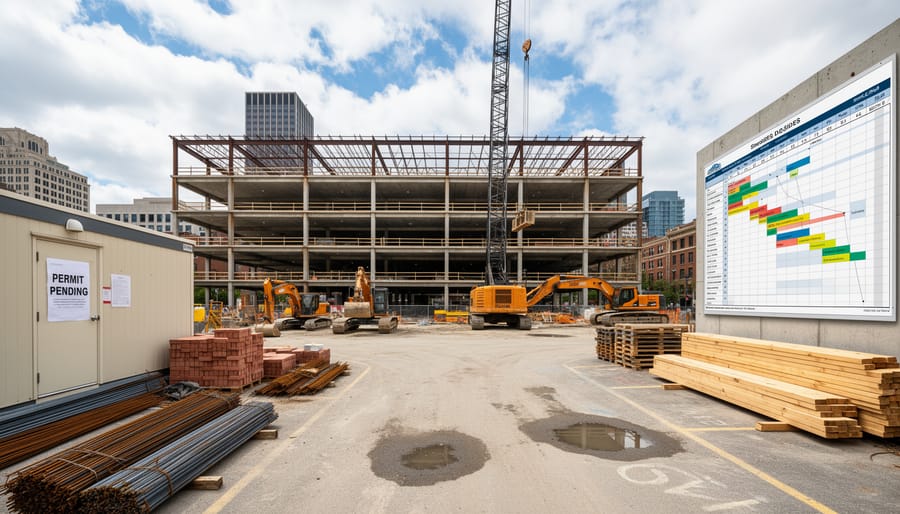
The Real Cost of Permit Delays
Permit delays create a domino effect of expenses that quickly add up. When your project sits idle waiting for approval, you’re still paying for resources you’ve already committed to. Let’s break down where your money actually goes during these frustrating holdups.
The most immediate hit comes from extended tool rental costs. If you’ve hired excavators, scaffolding, or concrete mixers expecting a two-week turnaround, each additional week of delay means paying rental fees with no productive work happening. Many tool hire companies charge weekly rates that don’t pause when your permit does.
Contractor rescheduling presents another significant expense. Tradies you’ve booked months in advance may need to slot in other jobs when permits drag on. When your approval finally comes through, you’ll often pay premium rates to get back on their calendar, or face additional delays while they finish other commitments.
Material storage costs mount up too. Lumber, fixtures, and other supplies ordered for specific installation dates need secure, weather-protected storage. You might pay for commercial storage units or risk material degradation if they’re left exposed.
The biggest bite often comes from lost opportunity costs. Every month your renovation remains incomplete is another month you can’t move in, rent the property, or open for business. These financial impacts compound quickly, making accurate permit timeline estimates essential for budget protection.
Coordinating Trade Schedules Around Permit Timelines
Once you’ve submitted your permit application, clear communication with your contractors becomes essential. Start by sharing realistic permit timelines with everyone involved in your project—don’t just give them the best-case scenario. Most contractors appreciate knowing about potential delays upfront rather than scrambling when permits take longer than expected.
Create a communication chain where your general contractor (or you, if managing the project yourself) serves as the central point of contact. This person should monitor permit status weekly and immediately notify all trades when approval comes through. Many permit offices now offer online tracking portals, so check these regularly rather than waiting for callbacks.
For projects with sequential work dependencies—where one trade must finish before another can start—map out the critical path. For example, you can’t schedule drywallers until electrical and plumbing inspections pass. Build buffer time between each phase, typically 1-2 weeks for standard residential projects.
Consider booking contractors with provisional dates. Many experienced trades understand permit unpredictability and will pencil you in with the understanding that dates may shift. Just maintain regular updates so they can adjust their schedules accordingly.
If permits are significantly delayed, discuss holding strategies with your contractors. Can they order materials with longer lead times now? Is there preparatory work they can complete while waiting? Sometimes demolition, site preparation, or material staging can happen before final permit approval.
Finally, document everything. Keep a shared project calendar that all trades can access, noting permit submission dates, expected approval dates, and actual approval dates. This transparency helps everyone plan their work efficiently and reduces frustrating miscommunications.
Strategies to Minimize Permitting Delays
Submit Complete Applications the First Time
Incomplete or incorrect permit applications are one of the biggest causes of preventable delays. Many jurisdictions report that up to 40% of initial submissions require revisions, adding weeks or even months to your timeline. Here’s a practical checklist approach to get it right the first time:
Start by contacting your local building department directly and requesting their specific application checklist. Many municipalities now provide downloadable checklists on their websites, but these can sometimes be outdated. A quick phone call confirms current requirements and reveals any recent changes.
Create a master document folder with these essential items: completed application forms with all fields filled out legibly, site plans drawn to scale showing property lines and proposed construction, detailed construction drawings with dimensions and materials specified, engineering calculations if required for structural elements, product specification sheets for major materials, and contractor license documentation where applicable.
Before submitting, have someone unfamiliar with your project review the application. Fresh eyes catch missing signatures, unclear dimensions, or contradictory information that you might overlook.
Consider submitting a pre-application review if your jurisdiction offers this service. While it adds a week or two upfront, it identifies problems before your official submission clock starts, ultimately saving time. Community members who’ve been through the process often share valuable insights about common oversights specific to your area, so check local forums or neighborhood groups for location-specific tips.

Consider Hiring a Permit Expediter
A permit expediter is a licensed professional who navigates the permitting process on your behalf, handling submissions, follow-ups, and corrections with local building departments. Think of them as specialized project managers who know the ins and outs of municipal bureaucracy.
These professionals are worth considering when you’re facing tight deadlines, complex multi-permit projects, or dealing with unfamiliar jurisdictions. For commercial projects or large residential renovations requiring multiple permits, the time savings often justify the cost. The typical investment ranges from $500 to $3,000 for residential projects, while commercial expediting can run $2,000 to $10,000 or more depending on project complexity.
For straightforward projects like deck additions or simple electrical upgrades, the DIY approach usually makes sense. Start by researching your local permit office’s online resources and calling with questions. Many building departments now offer pre-submittal meetings where staff review your plans before official submission, catching issues early.
Consider hiring an expediter if your project involves historic districts, zoning variances, or environmental reviews. These situations often require specialized knowledge of local codes and established relationships with reviewers. The investment can shave weeks or months off your timeline while reducing stress and resubmission cycles that delay your construction start date.
Start the Permit Process Early (Really Early)
Here’s the most important advice you’ll hear about construction permits: start the process before you think you’re ready. Many DIYers and even seasoned contractors make the mistake of waiting until they’ve finalized every project detail, ordered materials, or lined up tool rentals. This approach can add weeks or months to your timeline.
Instead, begin your permit application as soon as you have basic project parameters. You don’t need final blueprints or material specifications to start conversations with your local building department. A preliminary site visit or consultation can reveal potential issues early, giving you time to adjust plans before you’ve committed resources.
Consider this typical timeline: a simple deck addition might require a 2-3 week permit review, but that assumes you submit complete documentation on the first try. Factor in revisions, inspector availability, and administrative processing, and you’re looking at 4-6 weeks minimum. For major renovations or commercial projects, permits can take 8-12 weeks or longer.
Start permit research during your planning phase, not after. Contact your building department while you’re still sketching ideas and pricing equipment rentals. This proactive approach prevents the frustrating scenario of having tools sitting unused and materials delivered while you wait for approval stamps.
Real-World Examples: Permit Lead Times in Action
Let me share some real-world scenarios that show how permit timing can make or break a project schedule.
A homeowner in Austin, Texas, planned a modest deck addition and budgeted two weeks for permit approval based on optimistic online estimates. The reality? Six weeks. The city’s building department was understaffed during summer, their busiest season, and the initial plans needed minor revisions. Because the homeowner had already scheduled contractors and rented equipment, the delay cost an extra $1,200 in rescheduling fees and extended rental charges. The lesson here is clear: always contact your local permitting office directly and add buffer time for revisions, especially during peak construction seasons.
On the flip side, a small contracting firm in Denver approached a kitchen remodeling project with thorough research. They reviewed their city’s published permit timelines, which indicated 10-15 business days for residential permits. They built in a three-week buffer and submitted complete, code-compliant drawings. Their permit arrived in 12 days, giving them breathing room to coordinate subcontractors without rush fees. This contractor also maintained a relationship with a plan reviewer who provided informal feedback before official submission. Their takeaway: investing time in complete, accurate applications pays dividends in predictable schedules.
A third example involves a DIYer attempting a bathroom renovation in a suburban Chicago township. They assumed their small project wouldn’t need permits and started demolition. A neighbor reported the work, resulting in a stop-work order. Getting retroactive permits took eight weeks and included penalty fees totaling $850. The project that should have taken one month stretched to three.
Key takeaways from these cases: contact your local building department early, never skip required permits, submit complete applications to avoid revision delays, build in 25-50 percent buffer time beyond official estimates, and consider seasonal workload variations at permitting offices. These simple strategies help both professionals and DIYers maintain realistic schedules and avoid costly surprises.
Estimating permit lead times accurately isn’t some mysterious art reserved for seasoned contractors. It’s a practical, learnable skill that anyone can develop with the right approach and a bit of research. By understanding the types of permits your project requires, reaching out to local building departments early, and building in appropriate time buffers, you can protect both your budget and your sanity from costly schedule overruns.
The key is starting your research now, not later. Every jurisdiction operates differently, and what takes two weeks in one county might take two months in another. Don’t rely on assumptions or outdated information from online forums. Make those phone calls, visit your local building department, and talk to contractors who’ve recently navigated the same process. Document what you learn, including specific timeframes and any red flags that came up during conversations.
Remember that planning proactively means accepting that delays can happen despite your best efforts. Those buffer periods we discussed aren’t pessimistic thinking; they’re realistic project management. By incorporating them into your timeline from the start, you’ll avoid the stress of constant rescheduling and the financial hit of idle equipment or delayed material deliveries.
We’d love to hear from you. What’s been your experience with construction permits? Have you discovered any time-saving strategies or encountered unexpected delays? Share your stories and tips in the comments below. Your real-world insights help build our community’s collective knowledge and make everyone’s next project run more smoothly.
Related Posts


Post a Comment