
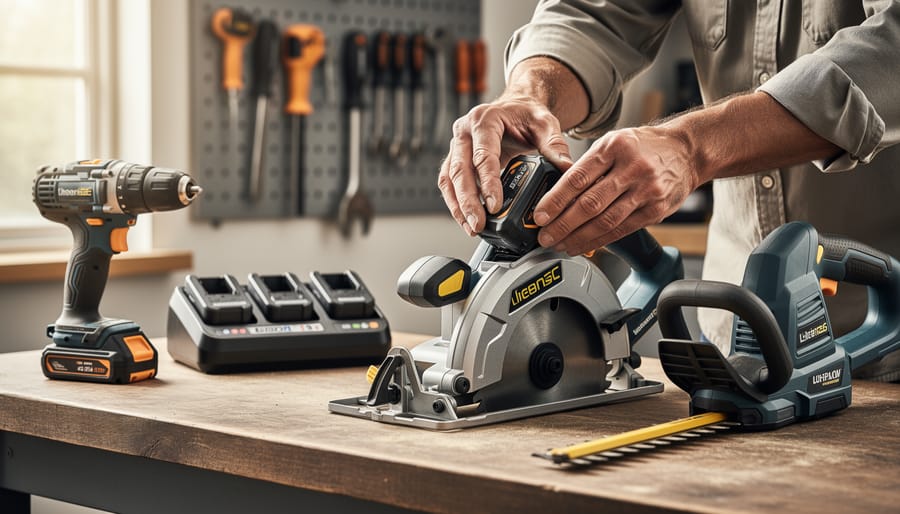
Evaluate your current tool collection to identify how many battery platforms you’re managing—most professionals waste time and money juggling three or more incompatible systems when a single smart ecosystem could power everything from drills to hedge trimmers. Calculate the total cost of ownership by counting your orphaned chargers, duplicate batteries, and tools you’ve avoided purchasing because they’d require yet another battery type.
Smart battery ecosystems eliminate this fragmentation through interchangeable power cells that work across dozens or even hundreds of tools from the same manufacturer. The technology centers on standardized voltage platforms (typically 18V, 20V, or 40V) where one battery connects to circular saws, impact drivers, garden equipment, and specialty tools through universal mounting systems. Leading platforms now incorporate fuel gauge indicators, temperature management, and compatibility tracking through mobile apps that monitor battery health and usage patterns.
The decision to commit to an ecosystem requires understanding both immediate benefits and long-term limitations. A typical professional using six battery-powered tools daily saves approximately 40% on battery costs compared to mixed-brand purchasing, while gaining the flexibility to share power sources across job sites. However, ecosystem lock-in means you’re bound to one manufacturer’s pricing, tool selection, and technology updates.
Before purchasing an entire platform, test your preferred ecosystem through tool rental services. This hands-on experience reveals whether the battery runtime, charging speed, and tool ergonomics match your specific workflow—insights that specifications sheets and marketing materials never capture. Community reviews from actual tradespeople provide unfiltered feedback about real-world performance across different applications and conditions.
What Makes a Battery System ‘Smart’?
Beyond Just Voltage: The Brain Inside Your Battery
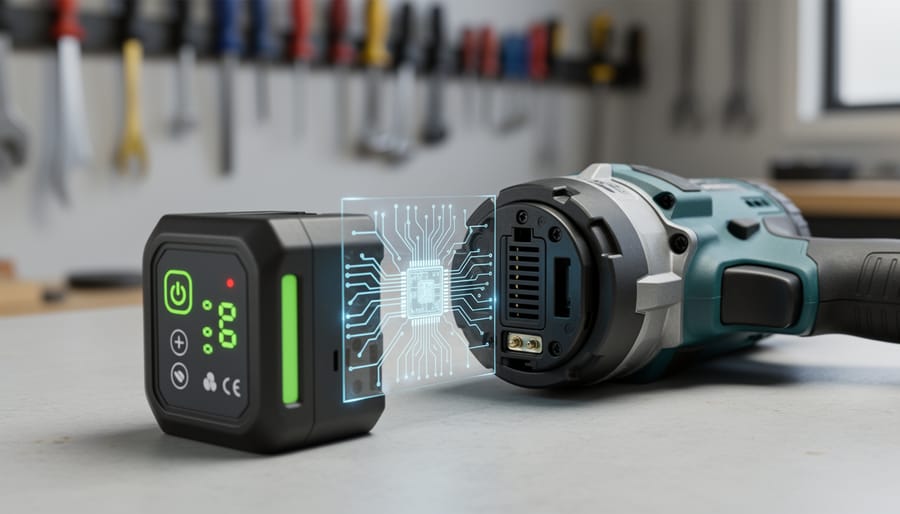
Modern smart batteries are far more sophisticated than simple energy containers—they’re essentially miniature computers monitoring every aspect of power delivery and storage. Inside each battery pack, microprocessors work alongside temperature sensors, voltage monitors, and current meters to constantly assess performance and health.
These sensors track critical metrics like cell temperature during charging and discharging, individual cell voltages, and the number of charge cycles completed. The battery’s built-in brain uses this data for intelligent power management, making real-time decisions to protect both the battery and your tool.
When you’re working hard and the battery heats up, the processor can throttle power output to prevent damage from overheating. If voltage drops too low in any cell, it cuts power before permanent capacity loss occurs. During charging, the system adjusts current flow to optimize battery longevity—this is why your charger might slow down as it approaches 100 percent.
Smart batteries also prevent common user mistakes. Leave your battery on the charger for days? The processor stops accepting charge once full. Try using a worn-out battery in demanding applications? It warns you or limits output to prevent tool damage.
For hire customers, this technology means rental batteries are better protected against misuse and deliver consistent performance. For owners, it translates to batteries that can last through hundreds more charge cycles than conventional packs.
Cross-Tool Compatibility That Actually Works
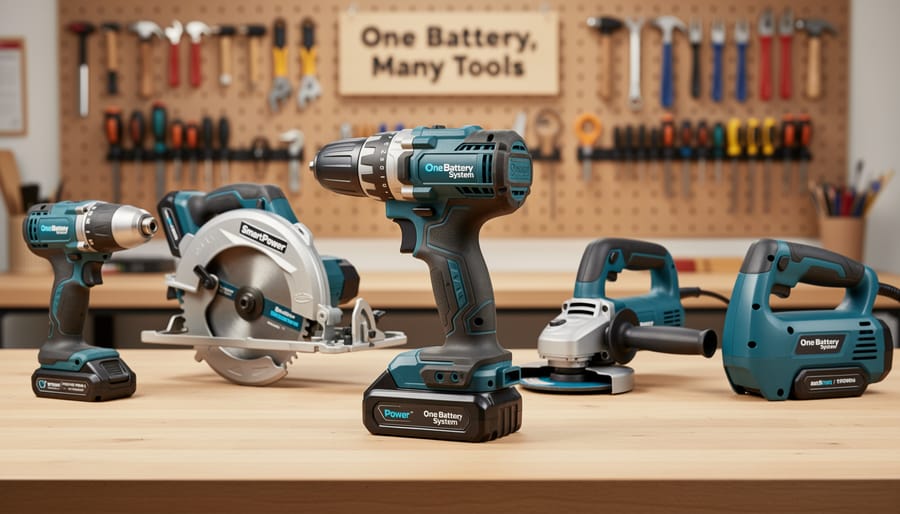
The real game-changer with smart battery ecosystems is genuine cross-tool compatibility. One fully charged battery can power your drill in the morning, your circular saw at midday, and your work light in the evening. Major brands have invested heavily in making this seamless.
Milwaukee’s M18 platform, for example, supports over 200 tools from compact screwdrivers to heavy-duty grinders. DeWalt’s 18V XR system similarly powers everything from sanders to garden blowers. Makita offers an impressive 18V LXT range exceeding 300 tools, while Ryobi’s ONE+ system provides budget-friendly options across 175-plus products.
According to user feedback on our platform, tradespeople particularly value this flexibility on job sites. One electrician reported carrying just three batteries to run seven different tools throughout the day, eliminating the tangle of different chargers that once filled their van.
The practical benefit is straightforward: invest in quality batteries once, then expand your tool collection without purchasing new power sources each time. For those hiring tools, this means you can test various products within the same ecosystem before committing to purchases, ensuring compatibility with batteries you already own.
The Real-World Benefits for Your Toolbox
Stop Buying Batteries You Don’t Need
Here’s the reality: every time you buy a tool from a different brand, you’re also buying into another battery system. A drill from Brand A needs Brand A batteries. A saw from Brand B needs Brand B batteries. Before you know it, you’ve got a drawer full of chargers and incompatible batteries that can’t be mixed and matched.
Let’s break down the numbers. A typical 4.0Ah lithium-ion battery costs between £40-£80, depending on the brand. If you own five tools across three different brands, you might need 6-8 batteries to keep everything running smoothly. That’s potentially £320-£640 just in battery costs alone.
Now compare that to an ecosystem approach. When you commit to one platform, you might start with 2-3 batteries that work across all your tools. As your collection grows, those same batteries power everything. A professional tradesperson who switched to a single ecosystem reported saving approximately £450 over three years by eliminating redundant battery purchases.
The savings multiply when you consider replacement costs too. Batteries degrade over time, but replacing two universal batteries is far more economical than replacing six brand-specific ones.
Never Run Out of Power Mid-Job
One of the biggest frustrations on any job site is having your tool die mid-task. Smart battery ecosystems tackle this problem head-on with interchangeable batteries and rapid charging technology that keeps you working without lengthy delays.
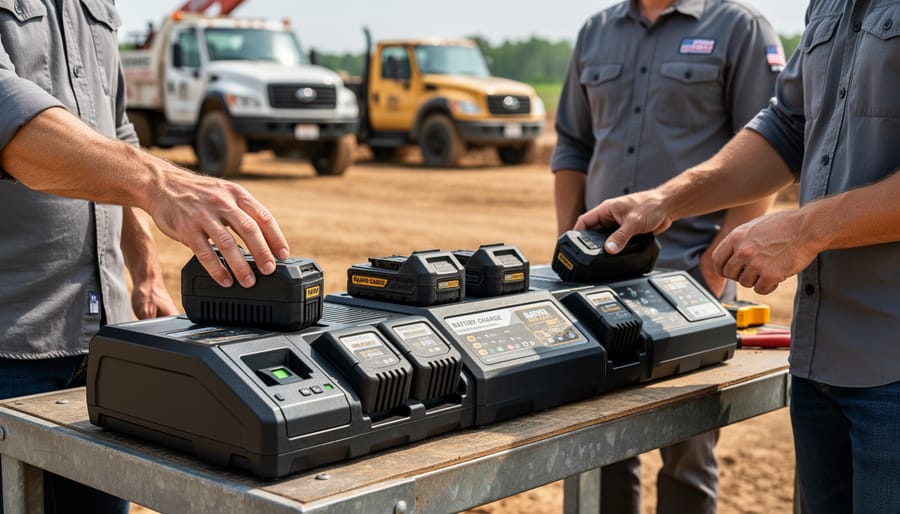
Because batteries work across multiple tools in the same ecosystem, you can easily swap a depleted battery for a charged one from another tool that’s not currently in use. This simple rotation strategy means you’re never waiting around for power. Professional tradespeople often recommend having at least three batteries in rotation for continuous work: one in your active tool, one charging, and one ready as backup.
Modern rapid chargers can replenish batteries to 80 percent capacity in as little as 30 minutes, with some systems offering even faster boost charges for emergency situations. Many chargers also feature LED indicators that show exactly how much charge remains, helping you plan your battery swaps strategically.
For those testing ecosystems through tool rental, pay attention to how quickly batteries recharge during your project. This real-world experience will help you determine how many batteries you’ll need if you decide to invest in the system. Community reviews consistently highlight battery runtime and charging speed as deciding factors, so don’t overlook these practical considerations when evaluating different platforms.
Lighter Loads, Fewer Trips to the Van
One of the most immediate benefits you’ll notice with a smart ecosystem is how much lighter your toolbox becomes. Instead of packing individual chargers and battery types for every tool, you only need one charger and a few interchangeable batteries that work across your entire collection. For professionals making multiple trips between the van and job site, this translates to real time savings and less strain on your back.
Many tradespeople report cutting their battery load in half after switching to a single ecosystem. A driller who previously carried six different battery types now brings three universal packs that power everything from impact drivers to work lights. This streamlined approach means fewer forgotten chargers and less time searching through your kit for the right battery. During tool rental trials, test how this simplified setup fits your workflow—you might discover you need fewer batteries than you thought, making the initial investment more manageable than expected.
How These Ecosystems Actually Perform on the Job
What Users Say About Different Platforms
Community feedback reveals distinct patterns across the major battery platforms, helping potential users make informed decisions about which ecosystem suits their needs.
Milwaukee’s M18 system consistently receives praise for exceptional battery longevity and power output. Professional tradespeople report batteries lasting 3-5 years under heavy daily use, with many highlighting the platform’s reliability on demanding job sites. However, some users note the higher initial investment compared to competitors. Customer support experiences vary by region, with most reviewers appreciating the straightforward warranty process.
DeWalt’s 20V MAX platform earns high marks for widespread availability and compatibility across an extensive tool range. DIY enthusiasts particularly appreciate the balance between performance and value. Several users mention that while batteries perform well, they’ve experienced shorter lifespans than expected when used with high-drain tools like angle grinders. The brand’s customer service generally receives positive feedback for responsiveness.
Makita’s 18V LXT system attracts loyal users who value the platform’s refined engineering and comfortable tool ergonomics. Community reviews frequently mention consistent performance across different tools, though some note slower charging times compared to rivals. Users praise Makita’s detailed documentation and helpful support team.
Ryobi’s ONE+ system dominates conversations among budget-conscious homeowners and occasional users. While batteries may not match professional-grade durability, reviewers appreciate the affordability and “good enough” performance for typical household projects. The platform’s broad tool selection receives consistent praise, making it an accessible entry point into battery ecosystems.
When Smart Batteries Fall Short
While smart battery platforms offer impressive advantages, they’re not without drawbacks worth considering before you invest.
The most significant issue is proprietary lock-in. Once you commit to a particular brand’s ecosystem, you’re essentially married to it. Switching manufacturers means replacing not just tools, but your entire battery collection, which represents a substantial financial commitment.
Battery degradation is another reality users report. Lithium-ion cells naturally lose capacity over time, typically holding 70-80% of their original charge after 500 cycles. Smart features can’t prevent this chemical process, though some systems do provide transparency about remaining battery health.
Compatibility problems between generations frustrate many tradespeople. One community member shared: “My three-year-old batteries work fine, but they can’t communicate with my new impact driver’s smart features.” Manufacturers occasionally redesign connection points or update firmware, leaving older batteries functional but feature-limited.
Price represents another barrier. Smart batteries cost 30-50% more than standard versions, and proprietary chargers add further expense. For occasional users, these premium costs may outweigh the connectivity benefits, making traditional tools or rental options more economical choices.
Choosing the Right Ecosystem for Your Needs
Match Your Most-Used Tools First
Before you’re tempted by the latest brand promotion or flashy starter kit, take a strategic step back. Grab a notepad and list the tools you actually reach for week after week. For most tradespeople, this might be a drill-driver, impact driver, and circular saw. Homeowners might find themselves using a drill and multi-tool most often.
This simple exercise reveals where to start building your ecosystem. If you’re primarily using power drills and sanders, prioritize battery platforms with strong performance in these categories rather than brands with excellent outdoor equipment you won’t use. Check community reviews to see how real users rate specific tools within each ecosystem.
Here’s a practical approach: rent individual tools from different ecosystems to test performance with your typical projects. This hands-on experience beats marketing claims every time. Pay attention to battery drain rates during your actual work, not manufacturer specs. If a brand’s drill impresses you but their circular saw disappoints, that’s valuable intelligence.
Remember, you’re building around your workflow, not adapting your work to fit a battery system. The right ecosystem should enhance your existing tool usage patterns, not force you to change them.
The Tool Hire Advantage: Test Before You Commit
Renting tools offers a smart, low-risk strategy for exploring different battery ecosystems before committing to a major purchase. Rather than investing hundreds or thousands of dollars upfront, you can hire tools from competing platforms like Milwaukee, DeWalt, or Makita to test how they perform in your specific work environment. This hands-on experience lets you evaluate performance and compatibility with your existing equipment and work style.
During your rental period, pay attention to battery runtime, charging speed, and ergonomics. Notice whether the tool’s power delivery matches your project demands and if the battery system feels intuitive to manage. Many users discover through rental that a platform’s marketing claims don’t always align with real-world performance in their hands.
Community reviews from other hirers provide valuable insights too. Fellow tradespeople and DIY enthusiasts often share honest feedback about which ecosystems deliver the best value, durability, and support. This collective knowledge helps you make informed decisions backed by real experiences, not just manufacturer specifications. Testing before buying protects your investment and ensures you choose the ecosystem that truly fits your needs.
Future-Proofing Your Investment
Before committing to a smart ecosystem, investigate the manufacturer’s track record and future plans. Look for brands with at least five years of consistent battery platform support and clear product roadmaps showing upcoming tool releases. Check if they’ve maintained backward compatibility with older batteries and chargers, as this protects your initial investment when upgrading tools. Community reviews from real users often reveal how manufacturers handle product support and warranty claims better than marketing materials alone. Ask about firmware update policies too, since smart features depend on ongoing software maintenance. Companies that actively engage with their user base and respond to feedback typically demonstrate stronger long-term commitment. Renting tools from different ecosystems first lets you test manufacturer reliability and customer service before making a substantial purchase decision.
Maintaining Your Smart Battery Investment
Charging Habits That Extend Battery Life
How you charge your smart battery tools makes a significant difference in their long-term performance. Based on manufacturer testing and real-world user feedback, following a few simple practices can help you get the most life from your investment.
The 20-80 rule is your best friend. Rather than letting batteries drain completely or charging them to 100% every time, aim to recharge when they hit 20% and unplug around 80% for daily use. Modern smart batteries with built-in charge indicators make this easy to monitor. Save full charges for when you need maximum runtime.
Temperature matters more than most people realize. Store and charge batteries in environments between 50-77°F (10-25°C) whenever possible. Never charge immediately after heavy use—let hot batteries cool for 15-20 minutes first. Similarly, cold batteries should warm to room temperature before charging. Many smart systems will actually refuse to charge outside safe temperature ranges, protecting the cells automatically.
Avoid leaving batteries sitting on the charger for days after they’re full. While smart chargers prevent overcharging damage, long-term storage at 100% capacity accelerates degradation. For batteries you won’t use for weeks, charge to around 50% before storing them in a cool, dry place. Community reviews consistently show that users following these practices report noticeably longer battery life spans across all major ecosystem brands.
Storage and Safety Essentials
Store smart batteries in a cool, dry location away from direct sunlight and extreme temperatures. Ideal storage temperature ranges between 5-20°C (40-68°F). Keep batteries at around 40-50% charge if storing for extended periods, as this maintains cell health better than full or empty storage. Never leave batteries in hot vehicles or near heat sources.
Always inspect batteries before use. Look for cracks, swelling, leaking fluid, or unusual odors. If you notice any damage, immediately remove the battery from service and follow the manufacturer’s disposal guidelines. Never attempt to repair a damaged battery yourself, as lithium-ion cells pose fire and explosion risks when compromised.
Smart batteries typically display health indicators through LED lights or companion apps. Pay attention to these warnings. Most manufacturers recommend retiring batteries when capacity drops below 80% of original performance or after 3-5 years of regular use, whichever comes first. Community reviews consistently highlight that retired tool batteries can often find second lives in lower-demand applications before final recycling. Always recycle old batteries at designated collection points rather than disposing of them in household waste.
Smart battery ecosystems represent a genuine shift in how we approach tool selection and usage, moving beyond individual purchases toward interconnected platforms that grow with your needs. The transformative impact lies not just in the convenience of swapping batteries between devices, but in the freedom to build a toolkit strategically over time without the burden of managing multiple charging systems.
Making informed decisions about which ecosystem suits your requirements starts with honest assessment of your current and future projects. Rather than committing immediately to a full platform investment, tool hire offers a practical gateway to test different ecosystems firsthand. Renting tools from various manufacturers allows you to experience battery performance, charging speeds, and tool ergonomics in real-world conditions before making significant financial commitments.
The value of community-driven reviews and shared experiences cannot be overstated when navigating these choices. Fellow users who have tested tools across various applications provide insights that manufacturer specifications simply cannot capture. Whether you are tackling weekend home improvements or managing professional job sites, learning from others who have walked similar paths helps avoid costly missteps.
We encourage you to share your own experiences with smart battery platforms, whether positive discoveries or lessons learned. Your feedback contributes to a growing knowledge base that helps others make confident, informed decisions. Together, through honest dialogue and practical testing via hire services, we can demystify these ecosystems and ensure everyone finds the right solution for their specific needs.
Related Posts