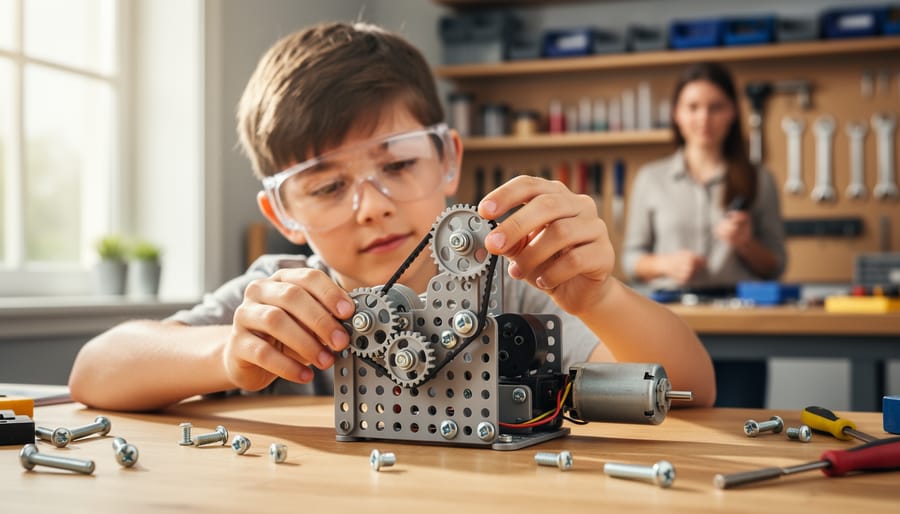
Choose building sets that mirror real construction tools and techniques—look for brands offering mechanical systems with gears, pulleys, and motors that teach genuine engineering principles your twelve-year-old can apply to actual DIY projects later. At this age, kids have developed the fine motor skills and problem-solving abilities to tackle complex builds that take hours or even days to complete, making it the perfect time to introduce construction toys that bridge play and practical skill development.
Match the toy’s complexity to your child’s current abilities while ensuring room for growth. Quality building sets for this age group should offer multiple project options, from guided builds that teach fundamental techniques to freestyle construction that encourages creative problem-solving. The benefits of building toys extend far beyond entertainment—they develop spatial reasoning, mathematical thinking, and the persistence needed for real-world construction work.
Prioritize sets with realistic components that introduce proper tool usage and measurement concepts. Mechanical building kits with actual screws, bolts, and assembly tools prepare young builders for working with real equipment while maintaining age-appropriate safety standards. Many experienced tradespeople in our community report that their interest in construction careers started with advanced building toys during their pre-teen years.
Involve your twelve-year-old in the selection process by discussing what interests them—whether robotics, architecture, or mechanical engineering. This age group responds well to challenges that produce functional end results like working vehicles, programmable robots, or structurally sound models. The investment in quality building toys now pays dividends when they’re ready to help with actual home improvement projects, already understanding basic construction principles and tool safety from hands-on play experience.
Why 12-Year-Olds Need More Than Basic Building Blocks
At twelve years old, young people stand at a critical developmental crossroads. Their brains are developing abstract thinking abilities, allowing them to grasp complex concepts like cause and effect, spatial reasoning, and mechanical advantage. This is the age when simple snap-together blocks no longer provide adequate challenge or engagement. Instead, twelve-year-olds need building systems that mirror real-world construction principles.
From a cognitive standpoint, research shows that pre-teens excel at problem-solving when presented with challenges that require planning, trial and error, and logical sequencing. Basic building toys designed for younger children don’t tap into these advancing capabilities. What twelve-year-olds really need are construction sets that introduce fundamental engineering concepts like structural integrity, gear ratios, and load distribution. These aren’t just abstract ideas, they’re the same principles that professional tradespeople apply daily on job sites.
Educational building toys at this level serve as a bridge between play and practical skill development. When a twelve-year-old constructs a working crane with pulleys or builds a motorized vehicle with functioning gears, they’re learning the same mechanical principles used in real workshop environments. These hands-on experiences lay groundwork for understanding how tools and machines actually work, making the transition to real DIY projects less intimidating later on.
Community feedback from parents and educators consistently highlights that advanced building sets spark genuine interest in STEM fields and practical trades. One parent noted their child transitioned from building toy mechanisms to helping with actual home repairs, confidently understanding concepts like leverage and torque.
The key is matching the complexity to their growing capabilities. Too simple, and they lose interest. Too complex without proper progression, and they become frustrated. Quality educational building toys for this age group strike that perfect balance, offering challenges that stretch their abilities while building confidence through achievable goals. This approach creates young people who see construction and mechanical work not as mysterious adult activities, but as logical, learnable skills within their reach.
Educational Building Toys That Mirror Real Tools and Techniques
Mechanical and Engineering Sets
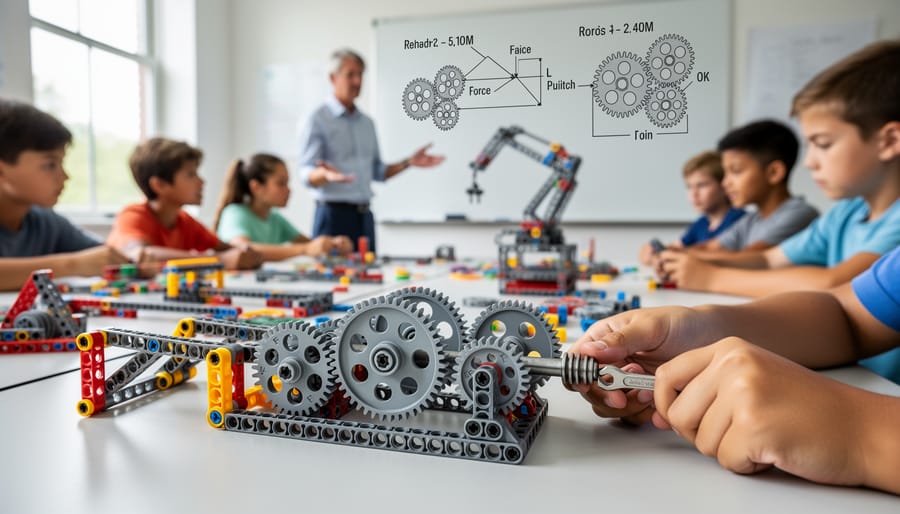
Mechanical and engineering sets take construction play to the next level by introducing working systems that mirror real industrial equipment and tools. These kits typically include gears, axles, motors, and pneumatic components that demonstrate fundamental engineering principles your twelve-year-old will encounter in actual workshop environments.
Quality sets feature motors (either hand-cranked or battery-powered) that teach how power transmission works through gear trains—the same concept found in drills, mixers, and automotive transmissions. Pneumatic systems use air pressure to create movement, replicating hydraulic lifts and construction equipment. According to community reviews from parents who work in trades, these hands-on experiences create “aha moments” when kids later recognize these same mechanisms in real tools.
Look for sets that challenge problem-solving abilities by requiring builders to achieve specific mechanical outcomes. For example, creating a gear ratio that lifts heavy loads or designing a pneumatic arm that grabs objects teaches mechanical advantage—why a lever makes work easier, or how a pulley system reduces effort.
The best engineering sets include comprehensive build guides but also encourage modification and experimentation. Many experienced builders in our community recommend starting with structured projects to learn the components, then progressing to freestyle builds where kids apply principles independently.
These kits bridge the gap between play and practical understanding, giving young builders foundational knowledge they’ll use throughout their lives—whether pursuing engineering careers or simply understanding how everyday tools and machines function.
Architectural and Structural Building Systems
For twelve-year-olds ready to grasp real-world building concepts, architectural systems toys bridge the gap between play and practical construction knowledge. These advanced sets teach fundamental principles that professional tradespeople use daily.
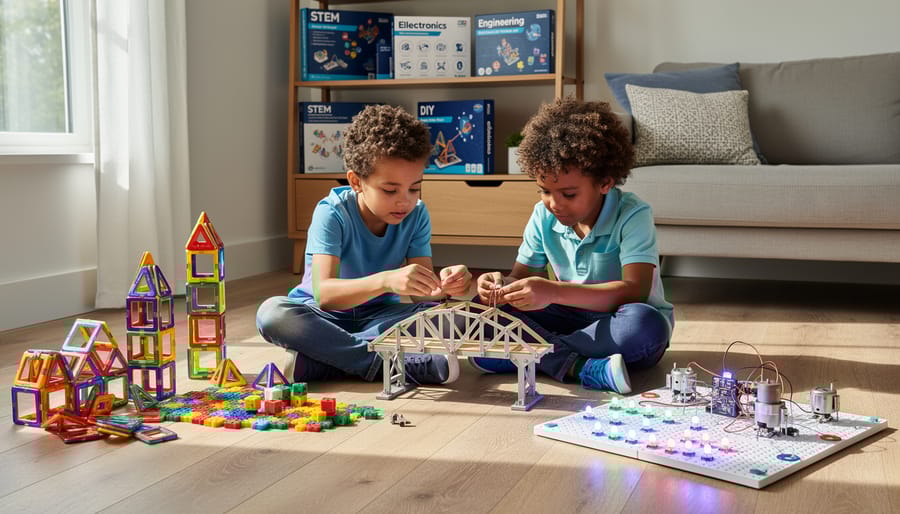
Load-bearing structure kits demonstrate how weight distributes through buildings. Look for systems that let kids experiment with different support configurations, showing what happens when beams, columns, and foundations carry various loads. These hands-on lessons reveal why some structures stand while others fail, teaching critical thinking about structural integrity.
Bridge-building challenges are particularly valuable, as they combine engineering principles with problem-solving. Kids learn about tension, compression, and the importance of triangular bracing—the same concepts used in roof trusses and deck framing. Many community reviewers note their children’s excitement when recognizing these patterns in real construction projects.
Advanced architectural sets that include blueprint reading and scale modeling prepare young minds for actual DIY projects. Some systems incorporate realistic constraints like material limits and span requirements, mirroring real construction challenges.
Parent feedback consistently highlights how these toys spark conversations about home improvement projects. Kids who understand why walls need studs at specific intervals or how foundation design affects stability often become eager assistants during family renovations, making these educational investments particularly worthwhile for DIY households.
Electronics and Circuitry Kits
Electronics and circuitry kits offer twelve-year-olds hands-on experience with electrical concepts and tools that translate directly into real-world DIY skills. These building sets teach foundational knowledge about circuits, conductivity, and power flow through practical experimentation rather than abstract theory.
Popular options include snap-together circuit kits that eliminate soldering requirements, making them safe for beginners while still demonstrating genuine electrical principles. Users in our community frequently recommend sets that progress from simple LED projects to more complex builds like working doorbells, alarm systems, and motor-powered devices.
According to parent feedback, the problem-solving aspect proves particularly valuable. When a circuit doesn’t work as expected, kids learn systematic troubleshooting—checking connections, testing components, and understanding cause-and-effect relationships. These same diagnostic skills apply when identifying electrical issues during home repairs or tool maintenance later in life.
Safety remains paramount with these kits. Choose sets with built-in battery power limits and clear component labeling. Community reviews consistently highlight that quality kits include comprehensive guides explaining why circuits work, not just how to assemble them. This deeper understanding builds confidence for future electrical projects and creates respect for safety protocols when working with household power systems.
Woodworking and Material-Based Construction Kits
Woodworking kits designed for 12-year-olds bridge the gap between toy construction and actual workshop skills. These sets typically include pre-cut or partially finished wood pieces that require measuring, sanding, drilling, and assembly using real hand tools. Community reviews consistently highlight brands offering birdhouse kits, wooden boat models, and functional projects like tool boxes or small furniture pieces as excellent starting points.
What sets these apart from younger children’s building toys is the requirement for genuine precision and patience. Young builders learn to read technical drawings, understand wood grain direction, and practice basic joinery techniques like doweling or simple mortise-and-tenon connections. Many parents in DIY communities report that these kits serve as confidence-builders before introducing young people to full-scale workshop projects.
Safety remains paramount. Quality kits include age-appropriate tools with proper guards and come with clear instructions emphasizing protective equipment like safety glasses and work gloves. User feedback suggests starting with softer woods like pine or basswood, which are more forgiving for beginners while still teaching fundamental woodworking principles. These hands-on experiences create practical skills that translate directly to real construction and repair projects later in life.
From Toy Workshop to Real Workshop: Making the Connection
The skills twelve-year-olds develop through construction toys provide an excellent foundation for working with actual tools, but this transition requires careful planning and supervision. Understanding how to bridge this gap safely empowers young people to apply their creativity to real-world projects while building confidence in their abilities.
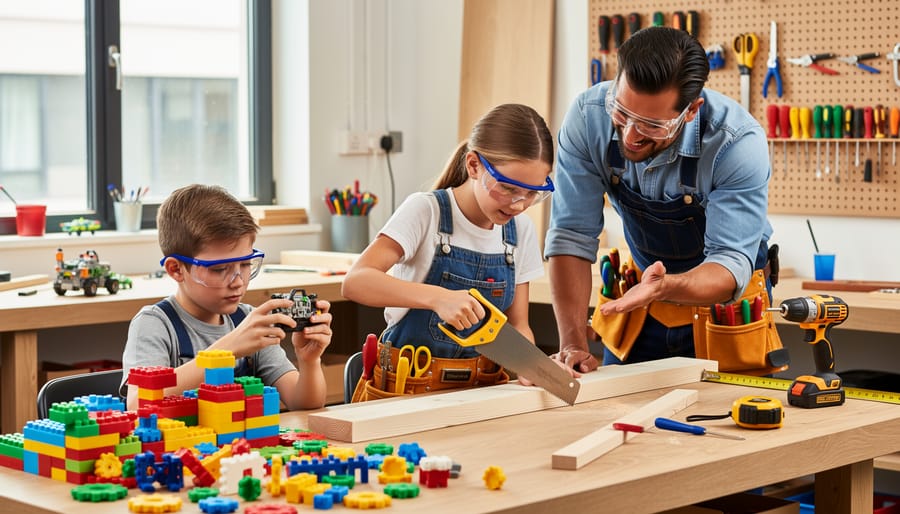
Start by assessing which skills have transferred from toy building. If your child has mastered following multi-step instructions with LEGO or similar systems, they’re ready for simple assembly projects using basic hand tools. Look for supervised projects that mirror familiar building patterns, such as assembling flat-pack furniture or creating simple wooden boxes. These activities introduce real tools while maintaining the structured approach they know from toys.
Tool introduction should happen gradually, beginning with the least hazardous options. Hand screwdrivers, measuring tapes, and manual saws with adult supervision make excellent starting points. Before any project begins, establish clear workshop safety protocols. This includes mandatory safety glasses, understanding proper grip techniques, and maintaining an organized workspace. Create a safety checklist together so they understand these aren’t arbitrary rules but essential practices that professional tradespeople follow daily.
Community makerspaces and youth workshop programs offer structured environments where twelve-year-olds can learn alongside peers. Many tool hire centres, including our own, run youth education days where young builders can try different tools under expert supervision. These experiences demystify real equipment while reinforcing that asking questions and following procedures matters more than speed or complexity.
Select appropriate starter projects that deliver visible results without overwhelming new skills. Bird houses, simple shelving units, or basic garden planters work well because they combine measurement, cutting, fastening, and finishing steps. When choosing the right tools for DIY projects, involve your twelve-year-old in the selection process, explaining why certain tools suit specific tasks.
Document projects through photos or simple journals. This reflection helps young builders recognize their progress and identifies areas needing more practice. Many parents find that sharing completed projects within community groups generates positive feedback that motivates continued learning. Remember, building real skills takes time—celebrate effort and problem-solving over perfection.
What to Look for When Choosing Educational Building Toys
Selecting the right building toy for a 12-year-old requires careful consideration of several key factors that ensure both engagement and genuine skill development. Here’s what matters most when making your choice.
Start by evaluating the complexity level. At twelve, kids have moved beyond basic snap-together blocks and need projects that challenge their problem-solving abilities. Look for sets with 500+ pieces or systems requiring multiple assembly steps. The sweet spot combines achievable goals with enough difficulty to maintain interest over several building sessions. Parent reviews consistently highlight that toys offering 3-5 hours of build time provide the best balance between challenge and frustration.
Safety certifications remain important even at this age. Check for ASTM (American Society for Testing and Materials) certification, which ensures toys meet safety standards for materials and construction. This becomes particularly relevant with sets containing small components, moving parts, or electrical elements. While choking hazards are less concerning at twelve, sharp edges and component durability matter for sustained use.
Expandability determines whether your investment continues providing value beyond the first build. The best building systems allow kids to combine multiple sets, modify existing designs, or integrate pieces from different kits. This mirrors real-world construction and DIY projects where adaptability and creative problem-solving are essential skills. Community feedback often emphasizes that expandable systems kept their children engaged for years rather than weeks.
Instructional quality separates frustrating experiences from successful builds. Clear, step-by-step guides with visual diagrams help kids work independently while developing the ability to follow technical instructions—a foundational skill for any hands-on work. Digital instructions or companion apps can enhance understanding through interactive 3D views.
Finally, consider real-world application. Building toys teaching mechanical principles, structural engineering concepts, or introducing tools and techniques used in actual construction provide the most lasting educational value, preparing young learners for practical DIY skills they’ll use throughout life.
Community Recommendations and Real Parent Experiences
We reached out to our community of DIY enthusiasts and tradespeople to learn which building toys actually prepared their 12-year-olds for real workshop projects. The feedback was overwhelmingly positive for hands-on construction sets that mirror actual building processes.
Mark, a carpenter from Sheffield, shared that his daughter progressed from a mechanical engineering kit to helping him with basic framing projects within six months. “The gear systems and structural concepts she learned translated directly to understanding how joints and supports work in real construction,” he explained.
Several electricians in our community praised circuit-based building toys for teaching fundamental wiring logic. Sarah, who runs her own electrical business, noted that her son’s experience with snap-circuit toys made explaining parallel and series circuits remarkably simple when he started shadowing her on jobs.
The most consistent recommendation involved robotics kits that require problem-solving under real constraints. Parents reported these toys taught their children to troubleshoot methodically, a skill that proves invaluable when projects don’t go as planned in actual workshops.
Community members strongly advised against purely decorative building toys that don’t teach engineering principles. As one plumber put it, “If the toy doesn’t make them think about how things actually work or why they might fail, it’s just entertainment, not preparation.”
The consensus: choose building toys where mistakes have consequences and solutions require genuine problem-solving. These experiences create young people who approach DIY projects with confidence rather than intimidation.
Investing in quality building toys for your 12-year-old creates more than just entertainment—it establishes a solid foundation for practical skills they’ll use throughout their lives. The hands-on problem-solving, spatial reasoning, and tool familiarity developed through educational construction sets translate directly into real-world DIY confidence. Whether they’re assembling mechanical systems, designing structures, or following technical instructions, these experiences mirror the skills that professional tradespeople use daily.
As young builders progress from toys to actual projects, they’ll be ready to explore tool rentals for DIY enthusiasts when taking on their first real construction tasks. The transition from building sets to proper equipment becomes natural when they’ve already mastered the underlying concepts and developed respect for tools and safety procedures.
We’d love to hear from our community about your experiences. Which building toys have helped spark your child’s interest in DIY projects? Have you noticed particular sets that led to genuine skill development? Share your recommendations and stories in the comments below—your insights help other parents and educators make informed choices while strengthening our community of practical problem-solvers.
Remember, every master tradesperson started somewhere, and those early experiences with construction and building often plant the seeds for lifelong passion and capability. By choosing the right educational toys now, you’re investing in your child’s future competence and confidence.
Related Posts