

Choose a seed blend combining cool-season varieties like perennial ryegrass and tall fescue with warm-season options such as bermudagrass to ensure year-round coverage in transitional climate zones. Test your soil pH between 6.0-7.0 before planting, amending with lime if acidic or sulfur if alkaline, as proper pH directly impacts germination rates and root development. Overseed existing lawns in early fall when temperatures range between 60-75°F, ensuring seed-to-soil contact by aerating compacted areas first and applying a starter fertilizer with higher phosphorus content to promote establishment.
Four-season grass seed blends solve the persistent problem of patchy, dormant lawns that plague homeowners through temperature extremes. Unlike single-variety plantings that thrive briefly then struggle, these strategic combinations maintain active growth across spring heat, summer stress, autumn recovery, and winter dormancy periods. The concept relies on complementary growth patterns where cool-season grasses dominate during moderate temperatures while warm-season varieties take over during peak heat.
Understanding which blend suits your specific region requires analyzing your hardiness zone, average rainfall, sun exposure, and intended lawn use. High-traffic areas need durable varieties like tall fescue, while shaded zones perform better with fine fescues mixed in. Maintaining healthy turf year-round demands matching seed genetics to your environmental conditions rather than fighting against them.
Success depends equally on proper installation techniques and ongoing care adjustments as seasons shift. This guide walks through selecting appropriate blends, preparing soil correctly, timing your planting windows, and troubleshooting common establishment failures that waste both money and effort.
What Is 4 Season Grass Seed?

The Science Behind the Blend
The secret to year-round lawn success lies in combining grass varieties that perform their best at different times. Think of it as creating a tag-team approach where each grass type takes the lead when conditions suit it best.
Most 4 season blends pair cool-season grasses with varieties that tolerate heat and drought. Cool-season grasses like perennial ryegrass, Kentucky bluegrass, and fine fescues are the workhorses during spring and fall when temperatures range between 60-75°F. These grasses actively grow, repair damage, and maintain that lush green appearance homeowners love during milder months.
As summer temperatures climb above 80°F, cool-season grasses naturally slow down and enter a semi-dormant state to conserve energy. This is where heat-tolerant varieties like tall fescue or improved cultivars step in. Their deeper root systems, which can extend 2-3 feet underground, access moisture that shallow-rooted grasses can’t reach. This deeper anchoring helps the lawn maintain color and density during summer stress.
The complementary growth patterns mean your lawn never goes completely dormant. When one grass type slows down, another picks up the slack. Community feedback from homeowners using these blends consistently notes improved appearance compared to single-variety lawns, particularly during transition periods between seasons.
The key is getting the ratio right for your climate zone. Northern regions typically need more cool-season grass in the mix, while southern transition zones benefit from higher percentages of heat-tolerant varieties. Understanding this balance helps you choose the right blend for your specific location.
Common Grass Varieties in 4 Season Mixes
Four season grass seed mixes typically combine three to four grass varieties, each bringing specific strengths to handle different weather conditions throughout the year. Understanding these components helps you know what you’re planting and why your lawn performs the way it does.
Perennial ryegrass is the quick starter of the group. It germinates in just 5-10 days, making it ideal for fast results and overseeding bare patches. This grass handles moderate foot traffic well and stays green during cool seasons, though it can struggle in extreme heat or severe cold without proper care.
Kentucky bluegrass is your lawn’s long-term foundation. It spreads through underground stems called rhizomes, which means it self-repairs damaged areas over time. This variety creates that classic dense, carpet-like appearance homeowners love. It takes longer to establish (14-30 days) but delivers excellent cold tolerance and recovers well from summer stress with adequate watering.
Fine fescue actually refers to several related grasses including creeping red, chewing, and hard fescue. These are shade champions, thriving where other grasses struggle under trees or alongside buildings. They require less water and fertilizer than other varieties, making them low-maintenance options. Fine fescues have a delicate texture and handle light traffic best.
Tall fescue brings toughness and deep roots to the mix, often reaching 2-3 feet down into soil. This drought-resistant variety handles heat better than most cool-season grasses and tolerates heavy foot traffic. Its coarser texture blends well when mixed with finer grasses, creating a resilient lawn that withstands various stresses year-round.
When 4 Season Grass Seed Makes Sense for Your Lawn
Climate Considerations
Four season grass seed blends work best in transition zones, the geographic band stretching from the Mid-Atlantic through the central United States where both cool and warm season grasses struggle to thrive year-round. If you live in areas like Virginia, Kentucky, Tennessee, or Kansas, these blends offer your best chance at maintaining consistent lawn coverage through temperature swings.
However, not every region benefits equally from 4 season mixes. Northern climates with harsh winters and cool summers typically perform better with pure cool-season varieties like Kentucky bluegrass or tall fescue. These grasses naturally thrive in your conditions without the compromise of blending species. Similarly, deep Southern regions with intense heat and mild winters should stick with warm-season specialists like Bermuda or Zaire grass that can handle extreme temperatures.
The key consideration is your average temperature range throughout the year. If you experience both freezing winters and summer temperatures regularly exceeding 85°F, a 4 season blend makes practical sense. For homeowners outside transition zones, choosing specialized seed suited to your dominant climate will likely deliver better results with less maintenance effort and lower water requirements.
Lawn Traffic and Use Patterns
Your lawn’s daily activity level plays a crucial role in determining whether a 4 season grass seed blend makes sense for your property. High-traffic areas from kids playing, pets running, or regular backyard gatherings benefit significantly from these versatile blends because they combine durability with resilience across changing weather.
If you have dogs that create worn paths along fence lines or children who’ve turned your backyard into a soccer field, 4 season grass seed typically includes hardy varieties like perennial ryegrass and tall fescue that recover quickly from wear. These grasses develop deeper root systems that withstand repeated foot traffic better than single-variety lawns.
For households with moderate to heavy use, community feedback consistently shows that 4 season blends outperform basic grass types. One homeowner reported that high-traffic zones near their patio remained green and intact through summer barbecues and winter snow play, whereas their previous lawn developed bare patches within months.
Conversely, if your lawn sees minimal activity or you have primarily decorative landscaping, a specialized single-season grass might suffice. Consider your lifestyle honestly: frequent outdoor entertaining, active pets, and family recreation all point toward needing the robust coverage that 4 season blends provide year-round.
Preparing Your Lawn for 4 Season Grass Seed
Essential Tools and Equipment
Successfully establishing a 4 season lawn requires the right equipment to prepare your soil and distribute seed evenly. Here’s what you’ll need and smart approaches for acquiring these tools.
A core aerator is essential for breaking up compacted soil before seeding. This machine pulls small plugs from your lawn, allowing seeds, water, and nutrients to penetrate deeper. For most homeowners, renting is the practical choice since you’ll only aerate once or twice yearly. Expect rental costs around $60-90 per day.
A broadcast spreader ensures even seed distribution across your lawn. Drop spreaders offer precision for smaller areas, while rotary spreaders cover ground faster. A quality spreader costs $30-150 and represents a worthwhile investment if you maintain your own lawn regularly.
You’ll also need a landscape rake for working seed into soil and a lawn roller to ensure proper seed-to-soil contact. Rollers can be rented for approximately $15-25 daily or purchased as lightweight, fillable models for around $75.
Safety considerations include wearing sturdy gloves when handling equipment, using eye protection during aeration, and following all manufacturer guidelines. Stay hydrated during the physical demands of lawn preparation, and avoid operating heavy equipment on slopes exceeding 15 degrees.
Many DIYers recommend testing rented equipment before leaving the rental facility to ensure proper operation.
Soil Testing and Amendment
Before planting 4 season grass seed, understanding your soil’s current condition is essential for success. Testing helps you avoid common pitfalls and ensures your investment grows strong.
Start by collecting soil samples from multiple spots across your lawn, digging 10-15cm deep. Mix these samples together in a clean bucket, then let the soil dry naturally. You can purchase an affordable soil testing kit from most hardware stores, or send samples to a professional lab for detailed analysis. These tests reveal your soil’s pH level (ideally 6.0-7.0 for most grass varieties) and nutrient content, particularly nitrogen, phosphorus, and potassium.
Once you have results, amendments become straightforward. If your soil is too acidic (below 6.0), add garden lime according to package directions. For alkaline soil (above 7.0), incorporate sulfur or compost. Low nutrient levels typically require adding quality compost or a balanced starter fertilizer before seeding.
For comprehensive guidance on soil testing and amendments, including product recommendations based on real user experiences, check our detailed resource.
Consider renting a broadcast spreader from your local tool hire centre to distribute amendments evenly across larger areas, ensuring consistent results throughout your lawn.
Best Timing for Seeding
While 4 season grass seed blends are designed to perform year-round, timing your seeding correctly gives your lawn the best foundation for success. The two optimal planting windows are early fall (late August through September) and spring (mid-March through May), depending on your climate zone.
Early fall consistently ranks as the best seeding time because soil temperatures remain warm enough to encourage germination while cooler air temperatures reduce stress on new seedlings. This combination allows grass roots to establish deeply before winter dormancy. Additionally, fall typically brings more consistent rainfall and fewer weed problems, giving your grass seed a competitive advantage.
Spring seeding works as a secondary option, particularly in northern regions with harsh winters. The key is planting early enough that seedlings can establish before summer heat arrives. However, spring seeding means competing with aggressive weed growth and potentially dealing with inconsistent moisture.
Avoid seeding during extreme heat (mid-summer) or when ground freezing is imminent (late fall), as germination rates drop significantly and seedling survival becomes unlikely. Many DIYers have found that using a quality broadcast spreader ensures even seed distribution regardless of season, maximizing coverage and reducing thin spots that might develop later.
How to Plant 4 Season Grass Seed Successfully
Step-by-Step Seeding Process
Getting your 4 season grass seed off to the right start makes all the difference in establishing a resilient lawn. Follow these steps for best results:
1. Prepare the ground thoroughly by removing debris, rocks, and existing dead grass. Use a garden rake to loosen the top 2-3 inches of soil, creating a level surface. If you’re working with compacted soil, consider using an aerator first to improve seed-to-soil contact.
2. Test and amend your soil based on results. Most grasses prefer a pH between 6.0 and 7.0. Add lime to raise pH or sulfur to lower it, along with any recommended nutrients. Work amendments into the soil at least a week before seeding if possible.
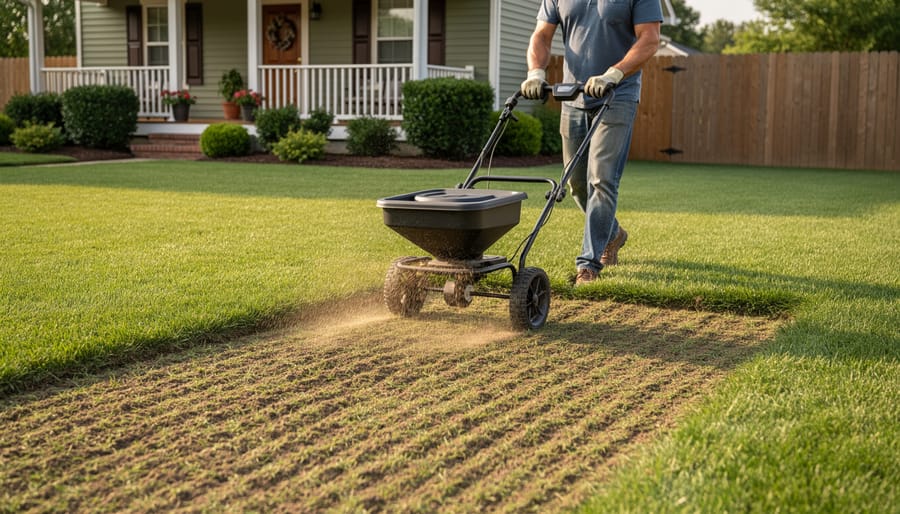
3. Spread the seed evenly using either a broadcast spreader for larger areas or hand-seeding for small patches. Check your seed package for specific coverage rates, but typically plan for 5-7 pounds per 1,000 square feet for new lawns, or 2-3 pounds for overseeding existing turf.
4. Lightly rake the seeded area to ensure seeds make good contact with soil. About one-quarter inch of coverage is ideal. Avoid burying seeds too deeply, as this prevents germination.
5. Water immediately after seeding with a gentle spray to avoid washing seeds away. Keep the top inch of soil consistently moist (not waterlogged) for the first 2-3 weeks, watering lightly 2-3 times daily.
Common mistakes to avoid include overwatering, which causes seed rot, applying too much seed (which leads to overcrowding), and walking on newly seeded areas before grass establishes. Many homeowners also skip soil preparation entirely, significantly reducing success rates.
Critical First 30 Days
The first month after seeding determines whether you’ll enjoy a lush, resilient lawn or face patchy disappointment. Here’s how to give your 4 season grass seed the best start.
Water is your top priority. For the first two weeks, keep the top inch of soil consistently moist by watering lightly 2-3 times daily. Early morning and late afternoon work best to minimize evaporation. A simple finger test helps: press your finger into the soil near the seed. If it feels dry at knuckle depth, it’s time to water. Avoid overwatering, which creates puddles and can wash seeds away or promote fungal disease.
After germination (typically 7-14 days), gradually reduce watering frequency while increasing duration. Transition to once daily, then every other day by week three, encouraging roots to grow deeper as they seek moisture.
Hold off on mowing until grass reaches 3-4 inches tall, usually around the three-week mark. Set your mower blade high for this first cut, removing only the top third of the grass height. Sharp blades are essential since dull ones can pull tender seedlings from loose soil.
Protecting new grass from foot traffic is critical. Cordon off seeded areas with simple stakes and string, and establish alternate paths around these zones. Even light foot traffic can compact soil and damage fragile root systems during establishment.
Many homeowners report success using oscillating sprinklers on timers to maintain consistent moisture without the daily hassle. Community feedback emphasizes patience: resist the urge to overseed thin spots before the 30-day mark, as germination rates vary by grass type.
Year-Round Care and Maintenance
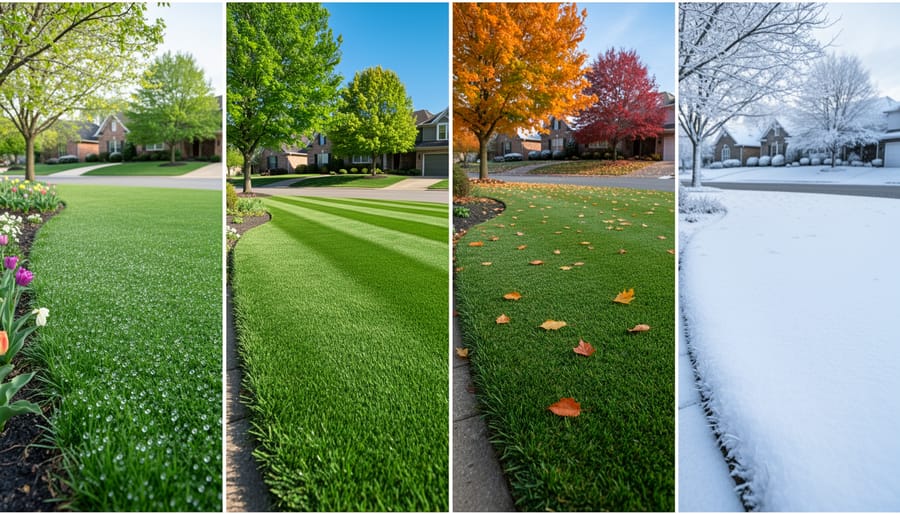
Spring Care Essentials
Spring marks the recovery period for your four-season lawn after winter’s harsh conditions. Start with fertilization when soil temperatures consistently reach 10-12°C, typically in early to mid-spring. Apply a slow-release, nitrogen-rich fertilizer to encourage strong root development and blade growth. This timing coincides with your grass seed’s natural growth surge.
Inspect your lawn for bare patches caused by winter stress, frost heaving, or ice damage. Rake these areas gently to remove dead material, then overseed using the same four-season blend you originally planted. This maintains consistency in your lawn’s appearance and performance. Light topdressing with quality soil improves seed-to-soil contact.
Address compacted areas with core aeration if foot traffic was heavy during winter months. This process improves oxygen flow to roots and enhances nutrient absorption, supporting overall lawn vitality.
Set your mower to a higher cutting height initially—around 6-8cm—to avoid stressing recovering grass. Following proper lawn care practices during spring establishes the foundation for year-round success with your four-season grass.
Summer Stress Management
Summer heat tests even the best 4 season grass seed blends, but proper care keeps your lawn thriving through scorching conditions. Implementing effective watering strategies is essential—water deeply but infrequently, aiming for 25-30mm per week in early morning hours to minimize evaporation. During extreme heat, raise your mower height by 1-2cm to provide shade for grass roots and reduce moisture loss.
Recognizing heat stress early prevents permanent damage. Watch for telltale signs like wilting blades, a blue-gray tinge, or footprints that remain visible after walking across the lawn. These indicate your grass needs immediate attention. During drought conditions, allow your lawn to go dormant rather than forcing growth—most quality 4 season blends recover remarkably well once cooler temperatures return.
Reduce mowing frequency during heat waves, and never remove more than one-third of the blade length. Community feedback consistently shows that patient, conservative care during summer stress periods results in stronger autumn recovery and better year-round performance.
Fall Recovery and Preparation
Fall is your lawn’s prep season for winter survival and spring success. Start with aeration in early September when soil is still warm but temperatures are cooling. Aeration (punching small holes in the soil) relieves compaction and allows oxygen, water, and nutrients to reach grass roots more effectively. You can rent an aerator from most equipment rental centers for a weekend project.
Apply a fall fertilizer with higher potassium content, which strengthens root systems and improves cold tolerance. Look for fertilizer ratios like 20-8-27 or similar formulations designed specifically for fall application. This timing helps your 4 season grass store energy for winter dormancy and emerge healthier in spring.
Manage fallen leaves promptly, as thick layers block sunlight and trap moisture, creating disease problems. Mulch light leaf coverage with your mower, or rake and remove heavy accumulations weekly. Continue mowing until growth stops, gradually lowering your blade height to about 2.5 inches for the final cut. This prevents matting under snow and reduces disease pressure during dormant months.
Winter Protection
During winter months, your 4 season grass seed enters dormancy, requiring minimal intervention but some protective measures. The good news? Maintenance is light during this period.
Minimize foot traffic on frozen grass blades, as they become brittle and snap easily when walked on, creating brown pathways that won’t recover until spring. If you must cross your lawn regularly, consider creating designated walkways using stepping stones or temporary paths.
Salt damage presents another winter hazard. If you use de-icing salt on driveways or sidewalks, prevent runoff from reaching your grass. Choose calcium chloride or magnesium chloride alternatives, which cause less harm than traditional rock salt. Create barriers or redirect drainage away from lawn edges.
Avoid fertilizing during dormancy, as grass can’t absorb nutrients effectively in this state. Skip mowing entirely once growth stops. Remove heavy debris like fallen branches that could smother grass beneath, but leave light leaf cover as natural insulation.
Many homeowners report success with these simple protective steps in community forums, noting healthier spring recovery when winter traffic stays minimal. Your lawn is simply resting, preparing for vigorous growth when temperatures rise again.
Troubleshooting Common Problems
Patchy Growth and Bare Spots
Bare patches in your lawn typically stem from three main culprits: compacted soil that prevents root growth, excessive shade limiting photosynthesis, or lingering disease damage. Before reaching for your grass seed, identify the root cause to avoid wasting time and money.
Start by examining the soil. Press a screwdriver into the bare area—if it’s difficult to penetrate more than a few inches, you’re dealing with compaction. In shaded spots under trees or near structures, insufficient sunlight (less than 4 hours daily) may be the issue. Brown, circular patches with unusual discoloration often indicate fungal disease.
For compaction, use a core aerator to pull soil plugs and improve oxygen flow. Heavily shaded areas might need shade-tolerant grass varieties within your 4 season blend, or consider alternative ground covers. Disease-damaged spots require treatment with appropriate fungicides before reseeding.
Once you’ve addressed the underlying problem, overseed during your region’s optimal growing season—typically early fall or spring. Simply scattering seed over problem areas without fixing the cause will lead to repeated failure. Many community members recommend documenting your lawn’s trouble spots with photos to track improvement and identify patterns over multiple seasons.
Weed Competition and Control
Keeping weeds under control is crucial when establishing 4 season grass seed, as young grass seedlings face tough competition for water, nutrients, and sunlight. The good news? You can manage weeds effectively without harming your new lawn.
Timing is everything with pre-emergent herbicides, which prevent weed seeds from germinating. However, these products also stop grass seed from growing, so avoid applying them until your new grass has been mowed at least three times and is well-established—typically 8-10 weeks after seeding.
For immediate weed control during the establishment phase, manual removal is your safest bet. Hand-pulling weeds when the soil is moist makes the job easier and ensures you remove the entire root system. Focus on removing weeds before they flower and spread seeds throughout your lawn.
Once your grass has matured past the seedling stage, you can spot-treat persistent broadleaf weeds with selective post-emergent herbicides labeled as safe for your specific grass type. Always read product labels carefully and follow application rates precisely.
Community feedback consistently shows that patience pays off—a thick, healthy lawn naturally crowds out weeds over time. Keep your grass at the recommended mowing height and maintain consistent watering to give your 4 season grass the competitive advantage it needs to thrive year-round.
Choosing 4 season grass seed is a smart investment for homeowners who want a resilient, attractive lawn throughout the year. By selecting a blend specifically designed to handle temperature fluctuations, moisture variations, and seasonal stresses, you’re setting yourself up for year-round lawn success. Remember that even the best seed variety requires proper preparation and ongoing maintenance to truly thrive. From soil testing and adequate watering to regular mowing with the right equipment, each step contributes to creating the durable turf you’re after.
We’d love to hear about your experience with 4 season grass seed. Have you noticed improved performance during harsh weather? What challenges did you face during establishment, and how did you overcome them? Share your tips, photos, and results with our community. Your real-world insights help fellow DIY enthusiasts make informed decisions and refine their lawn care techniques. Whether you’re a first-time seeder or a seasoned pro, your feedback strengthens our collective knowledge and helps everyone achieve better outcomes.
Related Posts