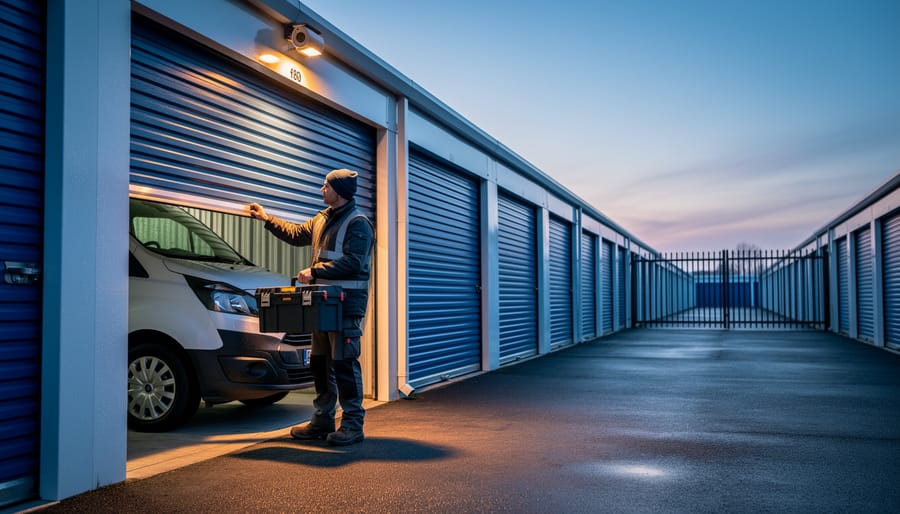
Evaluate whether 24/7 storage access matches your work schedule by calculating how many after-hours or weekend trips you’ll realistically make each month—most tradespeople find the premium worthwhile if they need access more than twice weekly outside standard business hours. Check if the facility offers truly unrestricted access or has quiet hours restrictions that limit noisy equipment loading between 10 PM and 6 AM, which could defeat the purpose for early-morning job site departures. Request a detailed breakdown of the access system before signing—keypad codes, smartphone apps, and biometric scanners each have different reliability levels in harsh weather, and you’ll want backup entry methods when technology fails at 5 AM before a critical job.
The difference between advertised 24/7 access and practical reality often surprises first-time storage users. Some facilities charge identical rates for standard and round-the-clock access, while others add 15-30% premiums that quickly erode savings compared to keeping equipment at home or in a work van. Security becomes paramount when your livelihood sits in a unit accessible at 3 AM—look for facilities with individually alarmed units, not just perimeter fencing and gate cameras that create a false sense of protection. Understanding these nuances separates costly mistakes from smart storage decisions that genuinely support your business operations and project timelines.
What 24/7 Self Storage Access Really Means
When selecting a self-storage facility with 24/7 access, you’re gaining the freedom to retrieve your tools, equipment, or materials whenever your schedule demands – whether that’s 2 AM before an early job site start or 11 PM after finishing a long project. Unlike traditional storage facilities that operate during standard business hours (typically 9 AM to 5 PM on weekdays), round-the-clock access means the facility gates and your unit remain accessible every hour of every day, including weekends and holidays.
The technology behind this convenience has evolved significantly. Most modern facilities use sophisticated entry systems that balance accessibility with security. Here are the common terms you’ll encounter:
- Gate Access Codes
- Unique numeric combinations assigned to each tenant that open the facility’s perimeter gates, typically changed periodically for enhanced security.
- PIN Entry Systems
- Personal identification numbers entered at keypads throughout the facility to access building doors and specific storage areas.
- Mobile App Access
- Smartphone applications that allow you to unlock gates and doors digitally, often providing entry logs and facility notifications in real-time.
- Key Cards or Fobs
- Physical electronic cards or key fobs that you scan at readers to gain entry, similar to hotel room access systems.
- Security Protocols
- The combination of surveillance cameras, motion sensors, individual unit alarms, and access logging that facilities use to monitor and protect stored items.
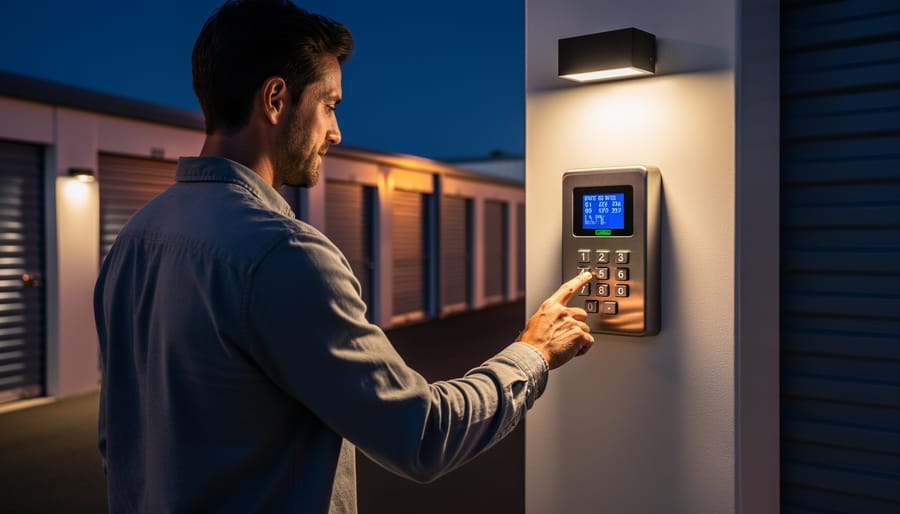
According to feedback from tradespeople in our community, the most reliable facilities layer multiple security measures together. You might scan your key card at the main gate, enter a PIN to access your building, and use your own lock on the unit itself. This multi-step approach means that even with 24/7 access, unauthorized individuals can’t simply walk in. Security cameras record all movement, creating accountability while giving you the flexibility to grab that forgotten drill bit or load materials for tomorrow’s job without watching the clock.
Why Tradespeople and DIYers Need After-Hours Storage Access
For tradespeople and serious DIYers, timing isn’t always convenient. The reality of managing tools, equipment, and materials often means needing access outside standard business hours. Here’s when round-the-clock storage access moves from nice-to-have to essential.
Picture this: You’ve landed a commercial job that requires a 6 AM start time to avoid disrupting business operations. Your specialized equipment is in storage, and the facility doesn’t open until 8 AM. Without 24/7 access, you’ve either lost the job or scrambled to keep everything in your already-cramped garage. Many contractors report that early morning job starts (often between 5-7 AM) are their most common need for after-hours access.
Weekend warriors face similar challenges. DIY projects don’t follow a 9-to-5 schedule. You might realize mid-project on Saturday evening that you need a specific tool for Sunday’s work. Rather than waiting until Monday and losing momentum, 24/7 access lets you retrieve what you need when inspiration strikes.
Emergency situations happen more often than you’d think. A client calls about a burst pipe on Sunday night, and you need your plumbing tools immediately. Or perhaps you’ve finished a job site earlier than expected and want to return equipment before heading to your next location across town, even though it’s 9 PM. These scenarios are real-world experiences shared by community members who’ve learned the hard way that restricted access hours cost them both time and money.
Managing multiple job sites creates another layer of complexity. Professionals juggling three or four projects simultaneously need the flexibility to swap out tools and materials as schedules shift. One community member noted that having 24/7 storage access essentially gave them a mobile workshop hub, allowing them to organize their week around job priorities rather than storage facility hours. This flexibility often translates directly into the ability to take on more work and serve clients better.
Cost Considerations: Is 24/7 Access Worth the Premium?
Let’s talk numbers. The convenience of 24/7 access typically costs 15-30% more than standard business-hours storage, but whether that premium makes sense depends entirely on how you actually use your space.
| Unit Size | Standard Access | 24/7 Access | Monthly Premium |
|---|---|---|---|
| 5×10 (Small) | $75-$95 | $90-$115 | $15-$20 |
| 10×10 (Medium) | $125-$155 | $145-$185 | $20-$30 |
| 10×20 (Large) | $200-$250 | $235-$295 | $35-$45 |
The real question is frequency and timing. If you’re a tradesperson grabbing tools before 6 AM job starts or a weekend warrior who works on projects after your day job, that $20-$45 monthly premium quickly justifies itself. Missing even one client appointment because you couldn’t access your equipment costs more than months of upgraded access.
Calculate your break-even point by considering after-hours trips. If you need weekend or evening access more than twice monthly, the math usually works in your favor. Remember to factor in lost revenue opportunities and the value of your time spent coordinating around restricted hours.
Community members consistently report that professionals using storage for active inventory almost always benefit from 24/7 access, while homeowners storing seasonal items during decluttering projects often find standard hours perfectly adequate. One contractor shared that paying the premium eliminated the need to haul his full toolkit home nightly, saving gas and vehicle wear that exceeded the access upgrade cost.
Don’t forget to ask about promotional rates. Many facilities waive the access premium for first-time customers or offer discounted annual rates that reduce the effective monthly difference substantially.
Security Features to Look For in 24/7 Facilities
Red Flags That Signal Poor Security
When touring a 24/7 access facility, trust your instincts if something feels off. Broken or flickering lights in hallways and outdoor areas are major red flags—you need clear visibility when loading expensive tools at night. Check whether motion-sensor lights actually work by walking through different zones during your visit.
Pay attention to gate functionality. Ask staff how quickly they respond when gates malfunction, and check online reviews for mentions of gate issues. A gate that stays open or closes too slowly defeats the purpose of controlled access.
Examine camera coverage carefully. Cameras should monitor all entry points, hallways, and elevator areas—not just the front office. Ask how long footage is retained (30 days minimum is standard) and whether cameras record continuously or only when triggered by motion.
Other warning signs include rust on gate mechanisms, outdated keypad systems that look tampered with, or facilities that can’t explain their after-hours emergency procedures. One community member shared: “The manager couldn’t tell me who to call if I got locked in after midnight—that told me everything I needed to know.”
If you spot multiple security concerns during one visit, keep looking. Your tools and equipment deserve better protection than a facility that cuts corners on basic safety measures.
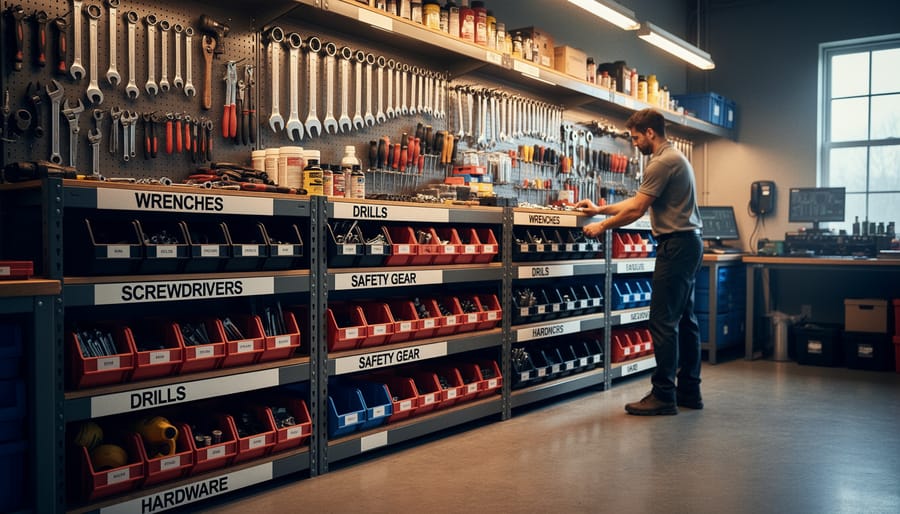
Organizing Your Tools for Quick 24/7 Retrieval
A well-organized storage unit makes the difference between a five-minute grab-and-go visit and a frustrating twenty-minute search through boxes. When you’re relying on 24/7 access to retrieve tools for early morning jobs or weekend projects, efficiency becomes paramount.
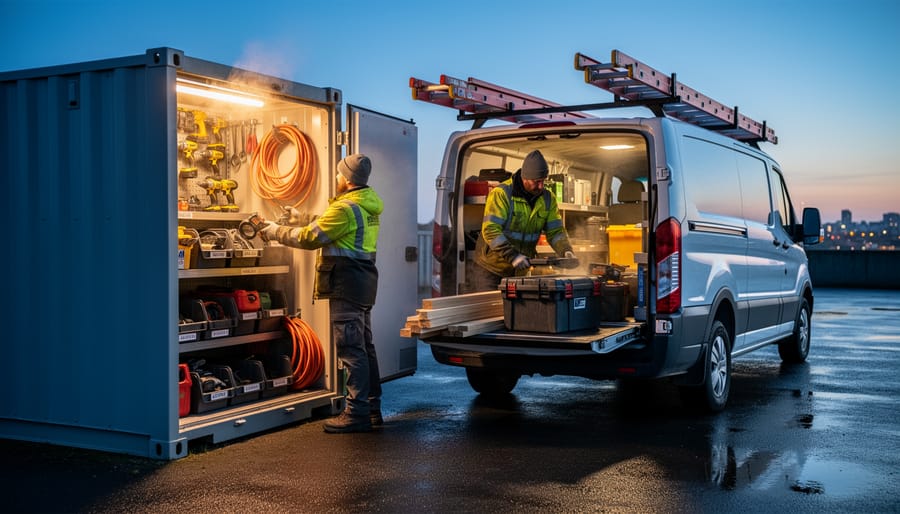
Start by investing in sturdy metal shelving units that can handle heavy equipment weight. Position these shelves along the walls, leaving a clear centre aisle for easy navigation. This layout allows you to walk straight in, grab what you need, and exit quickly—even during nighttime visits when lighting may be limited.
Storing equipment properly begins with a systematic approach:
- Map out your storage unit on paper before moving anything in, designating zones for different tool categories.
- Install shelving units first, ensuring they’re level and secure before loading them with equipment.
- Place frequently-used items at eye level and near the entrance—think drills, measuring tools, and safety gear.
- Store seasonal or rarely-used equipment toward the back or on higher shelves.
- Create a master inventory list and keep a copy on your phone for quick reference.
Labeling deserves special attention. Use large, clear labels on all boxes and bins—waterproof labels are worth the investment. Consider colour-coding by trade or project type: blue for plumbing, yellow for electrical, red for carpentry.
Keep a small toolbox near the entrance stocked with basics like screwdrivers, a torch, and work gloves. This “grab box” handles minor jobs without requiring deeper access to your unit. Many tradespeople also maintain a photo inventory on their phones, making it simple to locate specific items quickly during those midnight emergency calls that require immediate tool retrieval.
What Real Users Say About 24/7 Access
We gathered feedback from dozens of tradespeople and DIY enthusiasts who rely on 24/7 storage access for their tools and equipment. Their experiences reveal both the conveniences and realities of round-the-clock facilities.
Mark, a freelance electrician from Portland, shared that late-night access changed his business model. “I can grab materials at 10 PM when a client calls about an emergency repair. That responsiveness has earned me repeat customers.” However, he noted that not all 24/7 facilities are equal. “My first storage unit had terrible lighting in the hallways after 8 PM, making it unsafe to move heavy equipment.”
Sarah, a furniture restoration hobbyist, appreciated the flexibility but encountered an unexpected challenge. “The gate code system failed during a storm, and I couldn’t access my sanders and stains when I had free time that weekend. Always have a backup contact number for facility management.”
Professional contractors consistently praised the security features, with James, a general contractor, noting that “the combination of keypad entry, surveillance cameras, and individually alarmed units gives me peace of mind storing expensive power tools.”
The most common concern raised was temperature control. Several users warned that 24/7 access doesn’t automatically mean climate-controlled units are available around the clock. “Check whether accessing climate-controlled areas has any restrictions,” advised Linda, a woodworker who learned this lesson after signing a six-month lease.
Overall, experienced users recommend visiting facilities during your intended access hours before committing to ensure lighting, safety features, and ease of navigation meet your specific needs.
Questions to Ask Before Signing Up
Before committing to a facility, get clear answers to protect your investment and avoid surprises. Start by asking about any restrictions on the 24/7 access promise. Some facilities limit overnight access to certain unit types or require advance notice for late-night visits. Find out if there are scheduled maintenance windows when access might be temporarily blocked, as you’ll need to plan your tool runs around these times.
Request details about emergency procedures and after-hours support. Ask: “What happens if I get locked in or my access code stops working at 2 AM?” Understanding whether there’s an emergency contact number or on-site security can save you from frustrating situations when you’re racing to grab equipment for an urgent job.
Clarify whether climate-controlled units, often preferred for power tools, have the same access hours as standard units. Some facilities treat these differently due to HVAC scheduling. Don’t forget to inquire about hidden fees tied to access, such as charges for replacement key cards or additional user codes for team members.
These questions are crucial when finding the ideal storage unit that truly serves your workflow. Community members consistently report that facilities willing to answer these questions transparently tend to deliver better service overall.
Choosing 24/7 access self storage ultimately comes down to matching the solution to your specific work patterns and tool management needs. If you regularly work early mornings, late evenings, or weekends, round-the-clock access can be a game-changer for productivity and job flexibility. However, it’s not the right fit for everyone, especially if you primarily work standard hours and can plan ahead for equipment pickups.
Before committing to any storage facility, take time to honestly evaluate your requirements. Consider how often you’d actually use after-hours access, whether the additional cost fits your budget, and if the facility’s security measures give you peace of mind. Read community reviews from other tradespeople and DIY enthusiasts to understand real-world experiences at facilities you’re considering.
Remember that the cheapest option isn’t always the best value. Factor in location convenience, security features, climate control needs for sensitive tools, and the facility’s track record. Many providers offer trial periods or flexible contracts, so don’t hesitate to test the service before making a long-term commitment. Your tools are valuable investments, and they deserve storage solutions that work as hard as you do.
Related Posts