
Fall protection solutions reduce the risk of serious injury or death when working at height. They are required by law in many workplaces and are a core part of any safety program.
A fall from as little as six feet can cause severe harm. That is why regulators and employers focus on prevention, not reaction.
What Are Fall Protection Solutions
Fall protection solutions are systems designed to prevent falls or limit injury if a fall occurs. They include equipment, structural controls, and procedures.
Most solutions fall into three groups:
- Prevent access to a fall hazard
- Stop a fall in progress
- Reduce injury after a fall
Why Fall Protection Is Required
Occupational Safety and Health Administration requires fall protection in general industry and construction. Rules are defined under 29 CFR 1910 and 1926.
Employers must:
- Identify fall hazards
- Provide approved systems
- Train workers
- Inspect equipment
Non-compliance leads to fines, shutdowns, and injuries.
Core Types of Fall Protection Systems
|
System Type |
Purpose |
Example |
|
Fall arrest |
Stops a fall |
Harness and lanyard |
|
Fall restraint |
Prevents reaching edge |
Lifeline system |
|
Passive protection |
No PPE needed |
Guardrails |
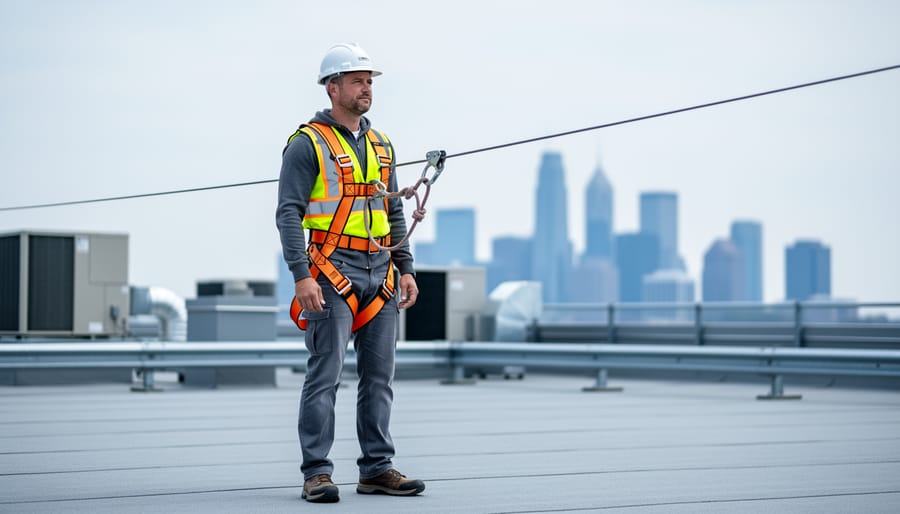
Fall Arrest Systems
3M and Honeywell manufacture complete fall arrest systems and can be found in stores like Height Dynamics.
Key components:
- Full body harness
- Shock-absorbing lanyard
- Secure anchor point
These systems do not prevent a fall. They stop it safely.
Fall Restraint Systems
Restraint systems keep workers away from edges. They are ideal where fall hazards are predictable.
Benefits:
- Lower injury risk
- Simpler rescue planning
- Less force on the body
Passive Fall Protection Systems
Passive systems do not rely on user action.
Examples include:
- Guardrails
- Safety gates
- Covers
They are effective in warehouses and fixed platforms.
Permanent vs Temporary Solutions
Permanent systems are installed once and used long-term. Temporary systems are portable and job-specific.
|
Permanent |
Temporary |
|
Portable anchors |
|
|
Fixed rails |
Temporary lifelines |
Choose based on job duration and environment.
Selecting the Right Fall Protection Solution
Before buying, assess:
- Work height
- Surface type
- Worker movement
- Rescue plan
A safety professional should review all selections.
Industry-Specific Applications
- Construction: Roof anchors, harnesses
- Warehousing: Guardrails, ladder cages
- Utilities: Vertical lifelines
Each industry has unique risks.
Inspection, Training, and Maintenance
All systems must be inspected before use. Training is mandatory.
Best practices:
- Annual formal inspections
- Logged equipment history
- Worker retraining
Common Mistakes to Avoid
- Using unapproved anchor points
- Skipping inspections
- Poor harness fit
These errors cause most fall injuries.
Cost, ROI, and Long-Term Value
Fall protection reduces:
- Injury claims
- Lost workdays
- Regulatory fines
The return on investment is clear.
How to Get Started
Start with a site assessment. Choose compliant systems. Train workers.
Link solutions to your workflow and scale as needed.
FAQs about Fall Protection Solutions
What height requires fall protection?
In construction, protection is required at 6 feet. In general industry, 4 feet.
Are harnesses mandatory?
Only when using fall arrest or restraint systems.
How often should equipment be inspected?
Before each use and annually by a competent person.
Can fall protection be reused?
Only if it has not arrested a fall and passes inspection.
Related Posts

Post a Comment