
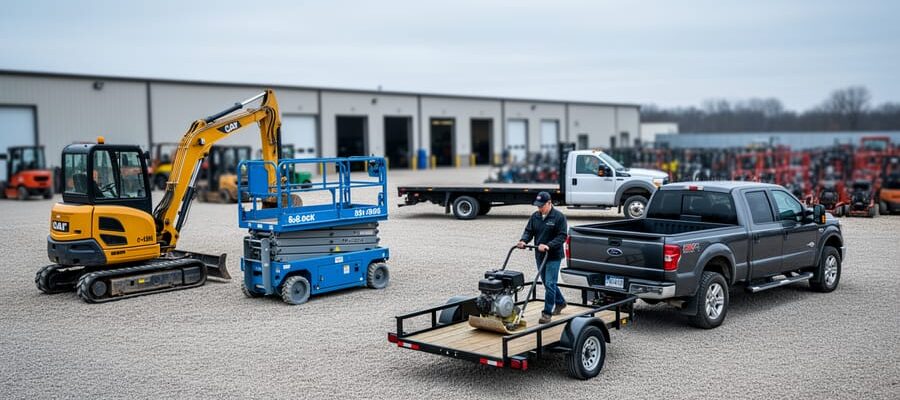
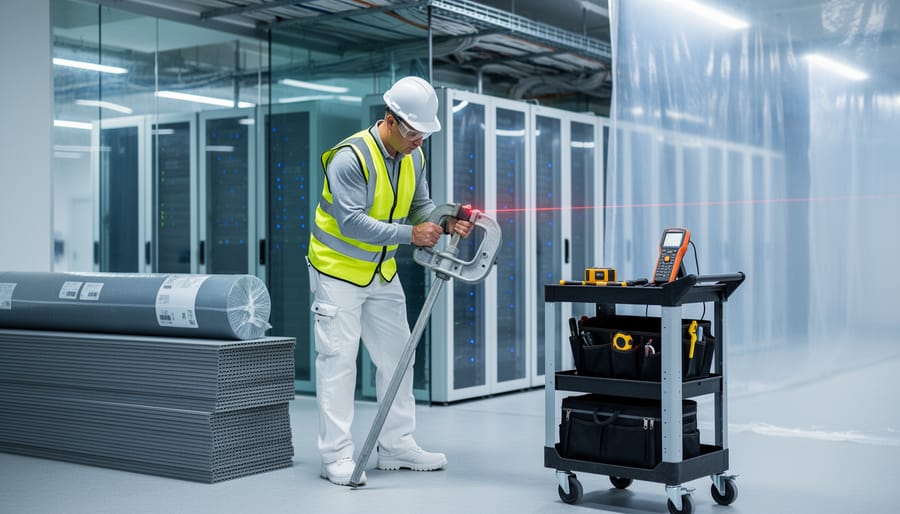
Healthcare facilities are undergoing massive digital transformations that create unprecedented opportunities for tradespeople and contractors. Modern hospitals now require specialized electrical infrastructure for AI-powered diagnostic equipment, climate-controlled server rooms for patient data storage, and reinforced flooring to support heavy medical imaging machines. These technology upgrades translate directly into equipment rental needs you can capitalize on today.
Understanding healthcare construction requirements positions you ahead of competitors. Medical facilities installing telemedicine networks need cable management systems and wall-mounting equipment for digital consultation rooms. Robotic surgery suites demand precision flooring installation with anti-static properties, requiring specialized leveling tools and moisture meters. Smart hospital wings incorporating IoT sensors need conduit benders and fishing equipment for extensive wiring projects behind walls and ceilings.
The surge in outpatient care centers and mobile health clinics creates steady demand for modular construction tools. These facilities need quick-turnaround builds using scaffolding systems, concrete mixers for foundation work, and HVAC installation equipment to maintain strict temperature controls for medication storage. Renovation projects in existing hospitals require dust containment systems and quiet power tools to minimize disruption to patient care areas.
This shift affects your business whether you’re a general contractor bidding on medical facility projects or a maintenance professional servicing healthcare buildings. Knowing which tools healthcare construction demands and how technology trends drive these requirements helps you prepare proper equipment inventories and develop specialized skills that command premium rates in this growing sector.
Why Healthcare Construction Is Booming Right Now
Telehealth Infrastructure Requirements
The expansion of telehealth services is transforming healthcare facilities from the ground up, creating new opportunities for contractors and tradespeople who understand these specialized requirements.
Network infrastructure tops the priority list. Telehealth consultations demand high-speed, reliable internet connectivity throughout medical buildings. This means installing Cat6 or Cat6a cabling to support bandwidth-intensive video consultations. Unlike standard office setups, healthcare facilities need redundant network pathways to ensure uninterrupted service during critical patient consultations. Contractors should prepare to run additional cable conduits and install backup power systems for network equipment.
Acoustic considerations are equally important. Telehealth rooms require soundproofing to protect patient privacy and ensure clear audio transmission. This involves installing acoustic insulation in walls, specialized door seals, and sometimes acoustic ceiling tiles. Sound transmission class (STC) ratings become crucial measurements here—aim for STC 50 or higher for consultation rooms where sensitive health information is discussed.
Lighting modifications also factor into successful telehealth spaces. These rooms need adjustable LED lighting systems that eliminate screen glare while providing adequate illumination for video consultations. Avoid overhead lighting that creates harsh shadows on faces during video calls.
Room layout changes include dedicated telehealth stations with proper cable management systems, adjustable monitor arms, and ergonomic furniture positioning. Many facilities are converting existing examination rooms or creating new dedicated spaces, requiring electrical upgrades to support multiple devices, monitors, and medical equipment simultaneously. Understanding these specific infrastructure needs positions contractors to capitalize on this growing sector while delivering spaces that genuinely serve modern healthcare delivery.
Smart Hospital Builds and Retrofits
Hospitals are becoming smarter through IoT sensors, automated systems, and connected devices that monitor everything from patient vitals to building climate control. This transformation creates significant opportunities for tradespeople skilled in specialized installation work.
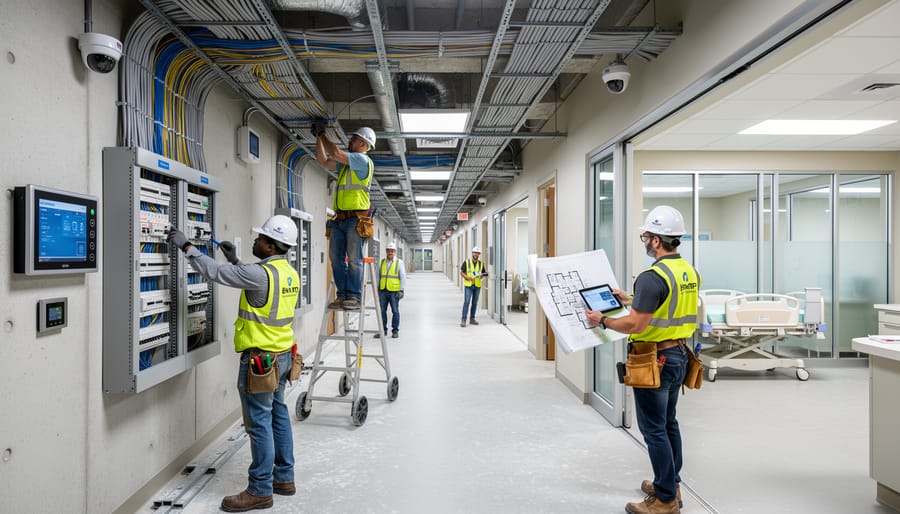
Modern healthcare facilities require extensive electrical infrastructure upgrades to support their technology needs. Unlike traditional buildings, smart hospitals need redundant power systems, dedicated circuits for medical equipment, and sophisticated cable management solutions. Electricians working on these projects need access to specialized testing equipment, cable pulling tools, and elevated work platforms to install overhead conduit and data cabling safely.
IoT sensor installation represents another growing work area. These devices monitor air quality, temperature, humidity, and even equipment performance throughout facilities. Installing them requires precision mounting equipment, core drilling tools for clean cable routing, and calibration devices. The infrastructure technology supporting smart hospitals demands contractors who understand both traditional construction methods and modern connectivity requirements.
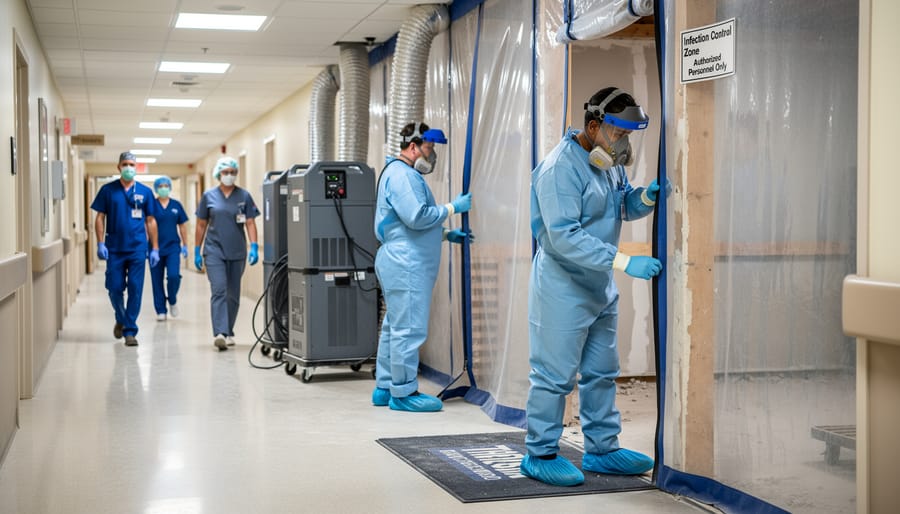
Retrofit projects present unique challenges since work often happens in occupied buildings with strict infection control protocols. This means specialized dust containment systems, quiet power tools for noise-sensitive areas, and equipment that can navigate tight spaces without disrupting patient care.
For tradespeople, investing time in understanding smart building systems pays off. These projects typically require longer timelines and offer better margins than standard construction work. Whether you’re installing conduit for network cables or mounting sensor arrays, having the right specialized equipment through rental services ensures you can tackle these increasingly common projects efficiently.
Specialized Tools and Equipment for Healthcare Projects
Infection Control and Cleanroom Requirements
When working in active healthcare facilities, maintaining sterile environments isn’t optional—it’s critical to patient safety. Whether you’re involved in renovation projects, routine maintenance, or equipment installation, understanding infection control requirements helps you work safely and professionally in medical settings.
The cornerstone of infection control during construction or maintenance is proper containment. Portable containment barriers create sealed work zones that prevent dust, debris, and contaminants from entering patient care areas. These systems typically use zippered panels and adjustable poles to create temporary walls. Think of them as creating a “room within a room” that isolates your work area from the rest of the facility.
Air scrubbers, also called negative air machines, are equally essential. These specialized units filter airborne particles and create negative pressure within your work zone. Negative pressure means air flows into your contained space rather than out of it, preventing contaminated air from escaping into sterile areas. Most healthcare projects require HEPA-filtered units that capture 99.97% of particles, including dangerous pathogens.
Antimicrobial cleaning equipment goes beyond standard jobsite cleanup. Hospital-grade HEPA vacuums prevent contaminated dust from becoming airborne during cleanup. Many facilities also require electrostatic sprayers for applying disinfectants that kill viruses and bacteria on surfaces.
Before starting any healthcare facility project, always check the facility’s Infection Control Risk Assessment (ICRA). This document outlines specific requirements based on the work type and location. Requirements vary significantly—a project near an operating room demands stricter protocols than work in an administrative area.
Safety tip: Never assume you know the requirements. Each healthcare facility has unique protocols, and non-compliance can halt your project immediately. Always attend required infection control training and maintain open communication with facility infection control officers throughout your work.
HVAC and Air Quality Equipment
The COVID-19 pandemic fundamentally changed how healthcare facilities approach air quality, creating new opportunities for contractors and maintenance professionals who understand specialized HVAC equipment. Healthcare projects now require advanced ventilation systems, high-efficiency particulate air (HEPA) filters, and sophisticated air quality monitoring tools to meet updated regulations and safety standards.
HEPA filtration systems are now standard in many healthcare environments, capturing 99.97% of airborne particles as small as 0.3 microns. These systems require professional installation and regular maintenance, making them essential equipment for tradespeople working on medical facilities. Understanding how to properly install and service these units is becoming a valuable skill in the construction and maintenance sectors.
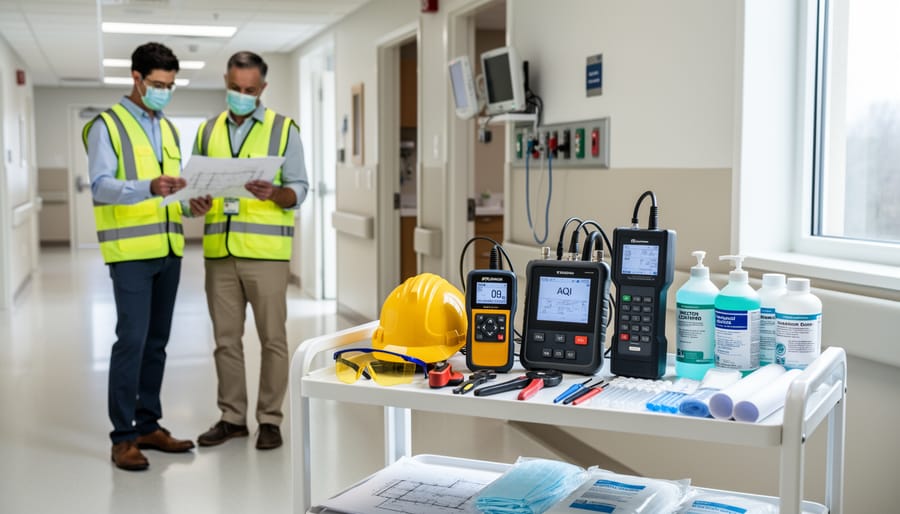
Air quality testing equipment has also seen increased demand. Particle counters, which measure airborne contaminants, and carbon dioxide monitors help facilities maintain optimal indoor air quality. Many contractors now rent this equipment to verify that newly installed HVAC systems meet healthcare standards before project completion.
Negative pressure systems represent another critical technology trend. These specialized ventilation units prevent contaminated air from spreading to other areas by maintaining lower air pressure in isolation rooms. Installation requires precise calibration and an understanding of airflow dynamics.
For professionals looking to capitalize on these opportunities, familiarizing yourself with healthcare air quality standards and the proper use of specialized equipment is essential. Many tool rental companies now stock these items specifically for healthcare projects, recognizing the growing market demand driven by heightened awareness of airborne disease transmission.
Safety and Compliance Standards You Can’t Ignore
When working in healthcare facilities, you’re entering one of the most regulated environments in construction and maintenance. Understanding these requirements isn’t just about following rules—it’s about protecting patients, staff, and your business reputation.
The first thing to know is that healthcare facilities operate under strict infection control protocols. The Interim Life Safety Measures (ILSM) permit process governs any construction work in occupied medical spaces. Before starting any project, you’ll need approval that outlines how you’ll contain dust, manage air quality, and minimize disruption to patient care. This affects everything from the barriers you install to the vacuum systems you rent for dust collection.
HEPA filtration is non-negotiable in most healthcare renovation work. Your standard shop vacuum won’t cut it. You’ll need to rent specialized HEPA-rated equipment that captures 99.97% of particles. This applies to both extraction systems and air scrubbers that maintain negative pressure in work zones. Many contractors new to healthcare work underestimate this requirement and face costly delays when their equipment doesn’t meet facility standards.
Material selection also falls under strict guidelines. Healthcare facilities typically require low-VOC products, antimicrobial surfaces, and materials that withstand rigorous cleaning protocols. Check with facility management before ordering supplies, as they often maintain approved product lists.
Fire safety codes in medical facilities are more stringent than standard commercial buildings. Any work affecting fire suppression systems, emergency lighting, or exit pathways requires coordination with facility safety officers. You cannot simply shut down systems without backup measures in place.
Noise restrictions present another challenge. Many facilities enforce quiet hours during patient rest periods, typically between 10 PM and 6 AM. This impacts project scheduling and may require renting quieter equipment models, even if they cost more.
Background checks and health screenings are standard for anyone working in patient areas. Budget time and cost for these clearances when bidding healthcare projects. Some facilities also require proof of vaccinations and TB testing before granting site access.
What Tradespeople Are Saying About Healthcare Jobs
We reached out to tradespeople working on healthcare projects to get their firsthand perspectives on what these technology-driven jobs really entail. Here’s what they shared.
“The scope of work has completely changed,” says Mark Thompson, a commercial electrician with 15 years of experience. “Healthcare facilities now need advanced cable management systems for all their connected devices. I’ve had to learn about power backup requirements for medical equipment that simply didn’t exist when I started. The planning phase takes twice as long, but the repeat business is worth it.”
Several contractors emphasized the importance of specialized certifications. Sarah Chen, who installs HVAC systems in medical facilities, notes that “you can’t just walk onto a healthcare site anymore. Infection control training is mandatory, and you need to understand clean room protocols. It’s an investment, but it opens doors to premium contracts.”
The challenges are real but manageable. “My biggest lesson was understanding lead times,” shares David Martinez, a general contractor. “Medical-grade equipment and specialized tools often require advance ordering. I once delayed a telemedicine setup project by three weeks because I didn’t account for procurement time. Now I build in buffer periods and maintain relationships with suppliers who stock healthcare-specific gear.”
Common advice from the community includes:
Start small with medical office fit-outs before pursuing hospital contracts. The complexity scales quickly, and smaller projects help you build relevant experience.
Invest in quality safety equipment and documentation systems. Healthcare clients expect meticulous record-keeping for every phase of work.
Network within the healthcare construction niche. Many tradespeople report that referrals from facility managers and other contractors generate their most profitable leads.
Stay current with regulations, as compliance requirements change frequently and vary by medical facility type.
Getting Started with Healthcare Facility Work
Breaking into the healthcare construction market requires strategic preparation, but the opportunities are substantial as facilities modernize their infrastructure. Here’s how tradespeople can position themselves for success in this growing sector.
Start by understanding compliance requirements. Healthcare facilities operate under strict regulations, so familiarize yourself with infection control protocols, OSHA healthcare standards, and local building codes specific to medical environments. Many contractors find success by completing an ICRA (Infection Control Risk Assessment) certification, which demonstrates your knowledge of dust containment, barrier installation, and safe work practices in occupied medical facilities. The ASHE (American Society for Healthcare Engineering) also offers valuable certifications that signal your expertise to potential clients.
Next, evaluate your tool inventory strategically. Healthcare projects often require specialized equipment beyond standard construction tools. Air scrubbers with HEPA filtration are essential for maintaining clean environments during renovations. Negative air machines, antimicrobial surface preparation tools, and low-noise equipment become priorities since you’ll frequently work around patients and sensitive medical equipment. Consider rental options initially to test the market without heavy upfront investment, and develop pricing strategies that account for specialized equipment costs.
Finding opportunities requires targeted networking. Connect with healthcare facility managers through industry associations and attend medical construction conferences. Register with procurement platforms that healthcare systems use for contractor sourcing. Start small with maintenance contracts or minor renovation projects to build your portfolio and references. Many successful contractors report that word-of-mouth referrals become their primary lead source once they establish credibility within the healthcare sector.
Document everything meticulously. Healthcare clients expect detailed records of work performed, materials used, and compliance measures followed. This documentation protects both parties and demonstrates your professionalism. With preparation and the right approach, healthcare facility work offers steady, premium-rate opportunities for skilled tradespeople.
The healthcare industry’s technological evolution is creating genuine opportunities for tool rental businesses and tradespeople who stay ahead of the curve. From hospital expansions requiring specialized ventilation systems to aged care facilities needing accessibility modifications, these developments translate into real projects that demand specific equipment and expertise.
Understanding these healthcare construction and maintenance requirements gives you a competitive edge in securing contracts and building lasting relationships with medical facility managers. Whether it’s providing air filtration equipment for cleanroom environments, specialized lifting gear for medical equipment installation, or precision tools for fiber optic cabling, being prepared with the right inventory sets you apart.
Success in this growing sector comes down to adapting to industry changes and maintaining connections with healthcare contractors. Keep your finger on the pulse of local healthcare developments, invest in equipment that meets medical facility standards, and ensure your team understands compliance requirements. The healthcare technology boom is not just about digital innovation—it represents tangible building projects, equipment upgrades, and maintenance work that savvy tool rental businesses and tradespeople can capitalize on today.
Related Posts

Post a Comment