
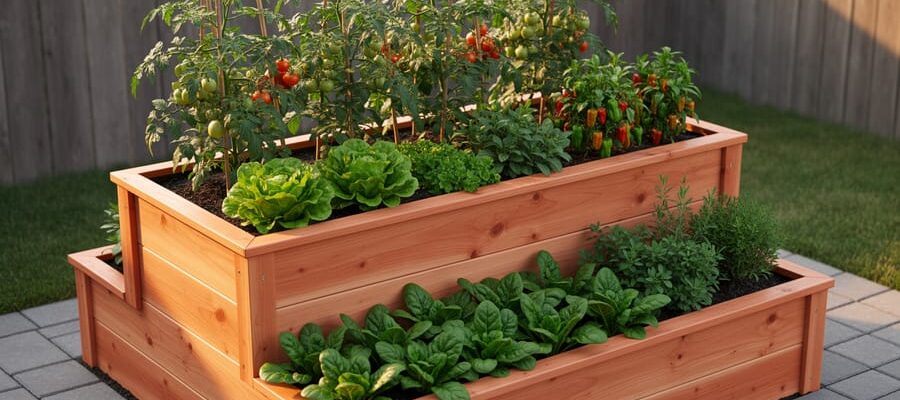
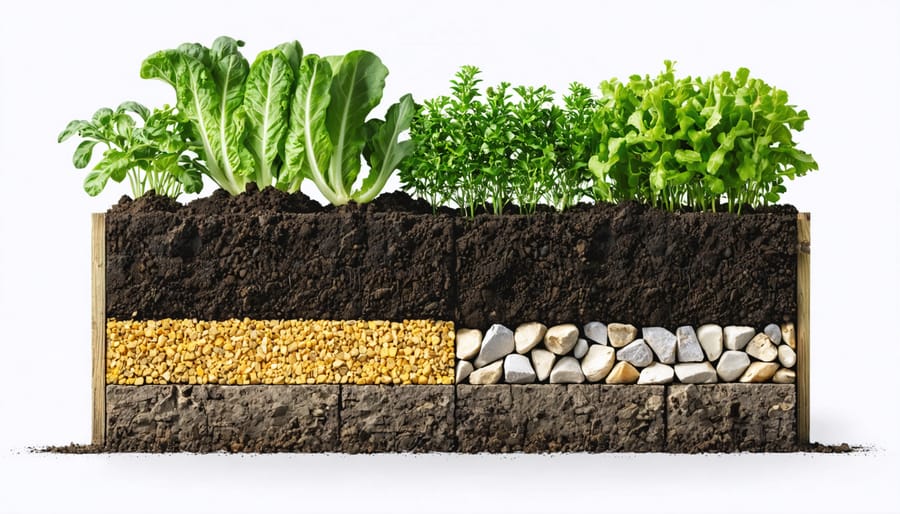
Fill raised vegetable beds with a proven layered mix: 50% high-quality topsoil, 30% compost, and 20% well-rotted manure for optimal plant growth. Start with a 4-inch base layer of coarse materials like branches or cardboard to improve drainage and deter pests. Add organic matter annually to maintain soil fertility and structure – a practice essential for how to create a raised vegetable garden that produces abundant yields.
Mix in mineral amendments like rock dust or lime based on soil tests to balance pH and provide micronutrients. Calculate materials needed by multiplying bed length x width x depth (in cubic feet), then divide by 27 to determine cubic yards required. Source materials in bulk from local landscape suppliers to reduce costs while ensuring quality.
Expert tip: Layer materials gradually rather than dumping them all at once, watering each layer thoroughly to eliminate air pockets and promote proper decomposition. This method creates a living soil ecosystem that improves over time, reducing the need for synthetic fertilizers and ensuring sustainable garden productivity.
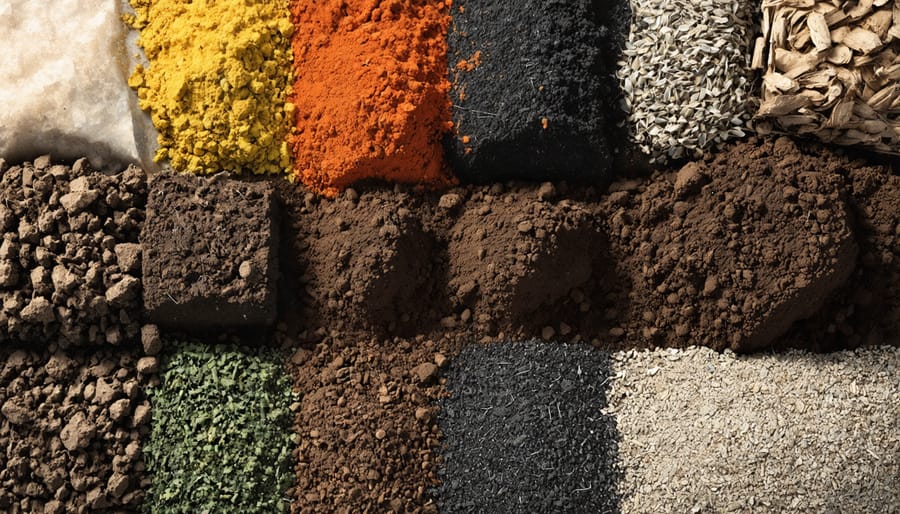
The Ideal Soil Components for Raised Beds
Topsoil: Your Foundation Layer
Topsoil serves as the crucial foundation layer in your raised bed, typically making up about 60% of your total filling mixture. When selecting topsoil, look for a dark, rich material that’s free from debris and has a slightly crumbly texture. Quality topsoil should smell earthy and feel moist but not waterlogged when squeezed.
For best results, source your topsoil from a reputable garden center or landscape supplier rather than using soil from your yard, which may contain weed seeds or disease organisms. Ask for a screened topsoil that’s specifically blended for vegetable gardens.
Before adding topsoil to your bed, check its texture by performing a simple squeeze test: grab a handful and squeeze it firmly. Good topsoil should form a ball that breaks apart easily when poked. If it stays in a tight ball, it contains too much clay; if it won’t form a ball at all, it’s too sandy.
Mix your topsoil with organic matter and other amendments to create the ideal growing environment for your vegetables. This combination ensures proper drainage while maintaining essential nutrients.
Compost: The Living Component
Compost is the powerhouse of your raised bed, bringing life and vitality to your growing space. As a key component of sustainable gardening practices, quality compost provides essential nutrients, improves soil structure, and supports beneficial microorganisms that help your plants thrive.
You have several options for sourcing compost. Store-bought organic compost offers convenience and consistency, while homemade compost from kitchen scraps and yard waste provides a cost-effective alternative. Well-aged manure compost from local farms can also be an excellent choice, particularly from horses, cattle, or chickens.
Aim to include 25-30% compost in your total soil mix. For optimal results, combine different types of compost to create a diverse nutrient profile. If using fresh compost, allow it to mature for several weeks before planting to prevent nitrogen competition with your vegetables.
When selecting compost, look for material that’s dark, crumbly, and smells earthy. Avoid compost that’s soggy, has an unpleasant odor, or contains visible pieces of undecomposed material.
Essential Soil Amendments
Peat Moss vs. Coco Coir
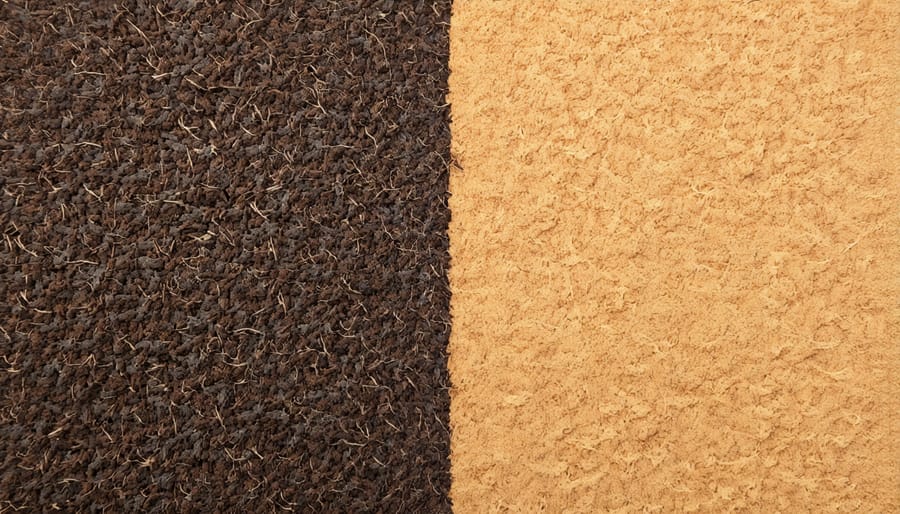
Both peat moss and coco coir serve as excellent moisture-retaining amendments for raised beds, but they come with distinct advantages and environmental considerations. Peat moss, traditionally popular among gardeners, holds up to 20 times its weight in water and creates an ideal environment for root development. However, peat bogs take thousands of years to form, and their harvesting contributes to carbon emissions and habitat loss.
Coco coir, made from coconut husks, offers a sustainable alternative that’s gaining popularity. This renewable resource matches peat’s moisture-retention capabilities while providing better aeration for roots. When combined with proper watering techniques, coco coir can significantly reduce the frequency of irrigation needed.
While peat moss is typically more affordable upfront, coco coir’s durability often makes it more cost-effective in the long run. Coir breaks down more slowly and can be reused across growing seasons. It also maintains a more stable pH than peat moss, which tends to become acidic over time.
For environmentally conscious gardeners, coco coir is the clear winner. However, if you choose peat moss, consider mixing it with other sustainable materials like compost or aged pine bark to reduce its environmental impact while maintaining its beneficial properties.
Vermiculite and Perlite
Vermiculite and perlite are lightweight soil amendments that play crucial roles in improving drainage and aeration in raised bed soil mixtures. Both materials are mineral-based and undergo heat treatment to create their characteristic porous structure.
Vermiculite resembles small, shiny flakes and excels at retaining water while keeping soil loose. When mixed into your raised bed soil, it creates tiny pockets that hold moisture and nutrients, releasing them gradually to plant roots. This makes it particularly valuable for vegetable gardens, where consistent moisture levels are essential for healthy growth.
Perlite, recognizable as white, popcorn-like granules, primarily improves soil drainage and prevents compaction. It creates permanent air spaces in the soil mixture, ensuring roots receive adequate oxygen and excess water can drain freely. Unlike vermiculite, perlite doesn’t retain much water, making it ideal for plants that prefer drier conditions.
For most raised bed applications, aim for a mixture containing 10-20% vermiculite or perlite by volume. You can use either one individually or combine them for balanced benefits. When purchasing, opt for horticultural-grade materials rather than industrial versions, as these are specifically processed for garden use.
Remember that while both amendments are beneficial, they’re relatively lightweight and may float to the soil surface during heavy rains. Consider mixing them thoroughly into the lower layers of your bed filling to prevent this issue.
Perfect Soil Ratios
Different vegetables thrive in varying soil compositions, so it’s essential to adjust your mix based on what you plan to grow. For a versatile all-purpose mix that works well with most vegetables, combine 60% topsoil, 30% compost, and 10% potting soil. This ratio provides excellent drainage while retaining enough moisture for healthy root development.
For root vegetables like carrots and potatoes, use a mix with more sandy components: 50% topsoil, 30% compost, 10% coarse sand, and 10% vermiculite. This looser composition allows roots to develop freely without obstruction.
Leafy greens such as lettuce and spinach prefer a richer mix with more organic matter. Aim for 50% topsoil, 40% compost, and 10% peat moss or coco coir. This combination provides the nutrients these heavy feeders need while maintaining good moisture retention.
For tomatoes and peppers, create a mix of 50% topsoil, 30% compost, 10% perlite, and 10% aged manure. These plants benefit from excellent drainage and high organic matter content.
When growing moisture-loving plants like cucumbers and squash, adjust your ratio to 45% topsoil, 35% compost, 10% peat moss, and 10% vermiculite. This mix helps maintain consistent moisture levels while preventing waterlogging.
Remember to test your soil pH after mixing, as different vegetables have varying pH preferences. Most vegetables thrive in soil with a pH between 6.0 and 7.0. You can adjust the pH by adding lime to increase it or sulfur to decrease it.
Pro tip: Whatever ratio you choose, ensure all components are well-mixed before filling your beds. Consider layering materials as you fill, mixing each layer thoroughly to avoid pockets of single materials that could affect plant growth.
Budget-Friendly Filling Options
Creating a cost-effective filling mix for your raised beds doesn’t mean compromising on quality. Start with the “lasagna gardening” method, which uses layers of free or low-cost organic materials. Begin with a base layer of cardboard or newspaper to suppress weeds, then add fallen leaves, grass clippings, and kitchen scraps like vegetable peelings and coffee grounds.
For bulk materials, check with local tree services who often give away wood chips for free. Municipal compost facilities frequently offer discounted or free compost to residents. When planning your DIY garden projects, contact nearby construction sites for clean fill dirt, which can make up 30-40% of your bed volume.
Save money by creating your own compost throughout the year. Collect autumn leaves in bags to decompose over winter, producing valuable leaf mold. Partner with local stables or farms for aged manure, which they often provide free if you collect it yourself. Coffee shops typically give away used grounds, an excellent nitrogen source for your garden.
Mix these free or low-cost materials with smaller amounts of purchased components like peat moss or coconut coir. Aim for a ratio of 60% free materials to 40% purchased ingredients. Remember to add some coarse sand or fine gravel (often available from construction sites) to improve drainage. This approach can reduce your filling costs by up to 75% while creating a rich, fertile growing medium for your vegetables.
Common Filling Mistakes to Avoid
When filling your raised vegetable beds, avoid these common pitfalls that can hinder your garden’s success. One of the most frequent mistakes is using straight topsoil without any amendments, which can lead to poor drainage and compacted growing conditions. Instead, aim for a balanced mix of materials that promote good soil structure.
Another critical error is filling the bed with materials in the wrong order. Placing heavy soil on top of lighter organic matter can cause the bed to sink unevenly over time. Always start with larger materials at the bottom and work your way up to finer materials at the top.
Watch out for using contaminated or treated materials. Some free wood chips or municipal compost may contain harmful chemicals or weed seeds. Always verify the source of your materials and avoid using pressure-treated wood products or diseased plant matter in your fill.
Cost-cutting by using too much inorganic filler can backfire. While it’s tempting to fill the bottom with construction debris or excessive amounts of gravel, this can create drainage problems and limit root growth. Stick to no more than 20% inorganic material in your total fill mixture.
Be cautious about mixing ratios. Adding too much sand can create concrete-like conditions when combined with clay soil, while too much organic matter can lead to excessive settling. Maintain a balanced ratio of roughly 60% topsoil, 30% compost, and 10% aeration materials like perlite or vermiculite.
Lastly, don’t forget to account for settling. Many gardeners fill their beds to the brim initially, only to find the soil level significantly lower after a few weeks. Add extra material to compensate for the 10-20% settling that typically occurs.
Successfully filling your raised vegetable beds comes down to using the right combination of materials in the correct proportions. Remember that the ideal mix includes 60% topsoil, 30% compost, and 10% potting soil or other organic materials. This blend provides the perfect balance of nutrients, drainage, and structure for healthy plant growth.
For the most cost-effective solution, consider sourcing materials locally and in bulk. Municipal compost, if available in your area, can significantly reduce expenses while providing excellent organic matter. Don’t forget to factor in amendments like lime or sulfur based on your soil test results.
Whether you choose the lasagna method, bulk soil delivery, or mix your own blend, ensure your bed is filled to the appropriate level, allowing for settling. Regular maintenance, including annual topping up with compost and periodic soil testing, will keep your raised beds productive for years to come.
Remember that investing in quality soil from the start will pay dividends in healthier plants and better harvests. Happy gardening!
Related Posts


Post a Comment