

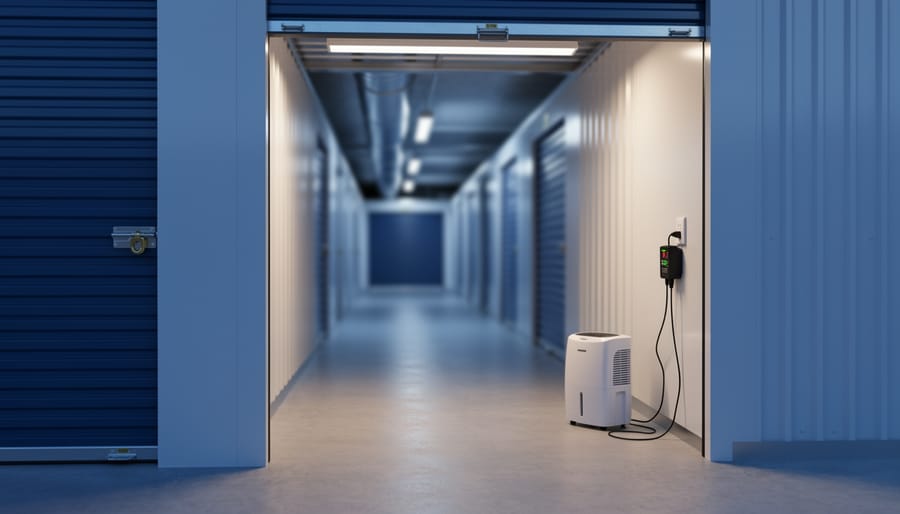
Most standard self storage units do not have electrical outlets or power access—they’re designed as simple, secure spaces for storing belongings that don’t require electricity. However, if you need power for charging tools, running dehumidifiers, or maintaining equipment, several practical alternatives exist.
Climate-controlled storage units often include electrical infrastructure to support their HVAC systems, though direct outlet access for tenants isn’t guaranteed. Some facilities offer premium units with dedicated power outlets, specifically marketed toward contractors and tradespeople who store power tools, welding equipment, or inventory requiring electronic monitoring. These specialized units typically cost 15-30% more than standard options but eliminate the hassle of dead batteries and equipment deterioration.
Before renting, confirm the facility’s exact electrical offerings in writing. Ask whether outlets are metered separately, what the power limitations are, and if any restrictions apply to specific equipment types. Some facilities prohibit high-draw devices or require additional insurance for powered units. Understanding these details upfront prevents frustration and ensures your storage solution matches your actual needs—whether you’re a weekend DIYer protecting seasonal tools or a professional tradesperson maintaining job site equipment between projects.
The key is matching your storage choice to your power requirements rather than assuming any unit will accommodate electrical needs.
Do Self Storage Units Come With Electricity?
The straightforward answer is that most standard self storage units do not come with electricity. This is the industry norm across Australia and worldwide. Basic storage facilities are designed as simple, secure spaces for storing belongings that don’t require power—think furniture, seasonal items, documents, and general household goods.
Why don’t standard units have electricity? The primary reasons are cost, safety, and practicality. Installing electrical infrastructure throughout an entire facility significantly increases operational expenses, which would be passed on to customers. There are also legitimate safety concerns—unmonitored electrical access could create fire hazards or facilitate misuse of the space. Storage facilities are designed for storage only, not as workshops or living spaces.
However, this doesn’t mean you’re completely out of options. Specialized storage units with electrical access do exist, though they represent a small segment of the market. These premium units typically cost 20-50% more than standard units and may be marketed under different names like “workshop storage,” “business storage,” or “climate-controlled units.” Some climate-controlled facilities include electrical outlets as part of their HVAC infrastructure, though this varies by provider.
When finding the ideal storage unit for tools and equipment, you’ll need to ask facilities directly about electrical availability. Don’t assume any unit has power without confirmation. For tradespeople and DIY enthusiasts who need occasional access to power tools or battery charging capabilities, consider alternative solutions like portable generators or investing in battery-powered tool systems that can be charged at home. Always verify what amenities are included before signing a rental agreement, as requirements vary significantly based on your specific storage needs.
Types of Storage Units That Offer Electrical Access
Climate-Controlled Units With Power
Climate-controlled storage units are your best bet when it comes to finding electricity in self-storage facilities. These premium units maintain consistent temperature and humidity levels, and many come equipped with electrical outlets as a standard feature. The controlled environment protects your tools from rust, warping, and damage caused by extreme temperatures or moisture—critical factors for maintaining power tools, woodworking equipment, and precision instruments.
These units work particularly well if you’re storing battery-powered tools that need regular charging, or if you want to run a dehumidifier to protect hand tools from corrosion. The electrical access typically provides standard 110-volt outlets, sufficient for most battery chargers and small appliances. Community feedback from tradespeople suggests that climate-controlled units with power are especially valuable for storing sensitive equipment like laser levels, digital measuring tools, and specialty electronics that can’t tolerate temperature swings.
Keep in mind that climate-controlled units cost 25-50% more than standard units, and facilities may charge additional fees for electricity usage. Always verify outlet availability before signing your lease, as not all climate-controlled units automatically include power access. Ask about the amperage limitations to ensure the outlets can handle your specific charging needs.
Workshop and Vehicle Storage Units
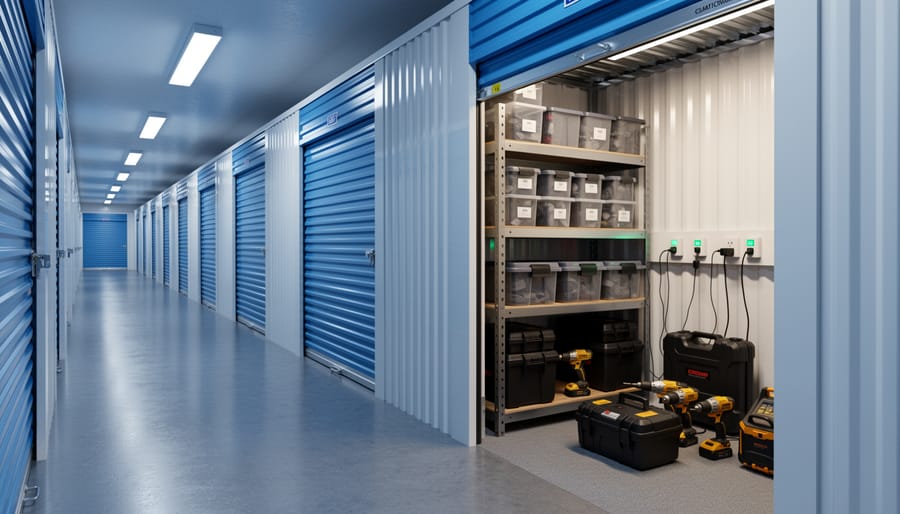
For DIY enthusiasts and tradespeople who need more than basic storage, workshop and vehicle storage units offer a game-changing solution. These specialized spaces come equipped with reliable electrical access, making them perfect for hands-on projects and equipment maintenance.
Think of these units as an extension of your workspace. They typically include multiple power outlets, adequate lighting, and sometimes even dedicated circuits for heavy-duty tools. Many facilities offer units ranging from small 10×20 workshop spaces to larger climate-controlled bays that can accommodate full vehicle restorations.
What makes these units stand out is their practical design. You’ll find concrete floors that can handle oil spills and tool drops, high ceilings for lift equipment, and roll-up doors wide enough for easy vehicle access. The electrical setup usually supports everything from basic power tools to welders and air compressors, though you should always confirm voltage requirements with the facility manager before signing up.
Community feedback from users highlights the importance of checking electrical capacity beforehand. One tradesperson shared how verifying amperage prevented issues when running multiple tools simultaneously. Before committing, ask about circuit breakers, available voltage (110V versus 220V), and any restrictions on equipment usage. These details ensure your workshop unit truly meets your project needs.
Business and Commercial Storage Solutions
For businesses requiring consistent power access, commercial-grade storage units offer robust electrical infrastructure designed for operational needs. These specialized units typically feature dedicated electrical panels with higher amperage capacity—often 20 to 30 amps—compared to standard climate-controlled units. This makes them ideal for contractors storing power tools that need overnight charging, retail businesses managing inventory with electronic systems, or small operations using the space as satellite workshops.
Many commercial storage facilities provide 24/7 access alongside electricity, allowing tradespeople to retrieve equipment before job sites open or restock inventory after hours. The electrical setup usually includes multiple outlets and sometimes overhead lighting on separate circuits, giving you flexibility in how you arrange and power your equipment.
Expect to pay premium rates for these units—typically 30-50% more than standard storage—but the convenience often justifies the cost. Before signing a lease, request documentation showing the unit’s electrical specifications, including circuit breaker capacity and any usage restrictions. Some facilities meter electricity separately, while others include it in monthly rent. Ask about the facility’s policy on high-draw equipment like compressors or battery charging stations, as some locations impose limitations to prevent circuit overloads. Review other users’ experiences with the facility’s electrical reliability to avoid unexpected downtime affecting your business operations.
Why Most Standard Storage Units Don’t Have Electricity
Most standard storage units skip electricity for several practical reasons that directly impact both facility operations and customer safety. Understanding these factors helps you make informed decisions about which storage option fits your needs.
Safety stands as the primary concern. When tenants have unrestricted access to power outlets, facilities face increased fire risks from faulty equipment, overloaded circuits, or improperly stored flammable materials near electrical sources. Without constant supervision, storage operators can’t monitor what gets plugged in or how power is being used, creating potential hazards that could affect multiple units.
Cost considerations also play a significant role. Installing and maintaining electrical infrastructure throughout an entire facility requires substantial investment in wiring, outlets, circuit breakers, and ongoing electrical inspections. These expenses would get passed to all customers through higher rental rates, even those who don’t need power access.
Insurance policies present another challenge. Many insurance carriers either exclude coverage for electrically-equipped units or charge significantly higher premiums due to elevated risk levels. This makes standard non-electric units more financially viable for storage operators to manage.
From a facility management perspective, metering individual electricity usage across hundreds of units becomes administratively complex and costly. Without separate meters, facilities would need to absorb electricity costs or estimate usage, neither being practical solutions.
These limitations explain why basic storage units remain unpowered spaces designed primarily for static storage. However, if your tools or equipment require electricity, specialized climate-controlled units or dedicated workspace storage options offer alternatives worth exploring for your specific situation.
What You Can Store Without Electricity (And What You Should Avoid)
Tools and Equipment That Store Well Without Power
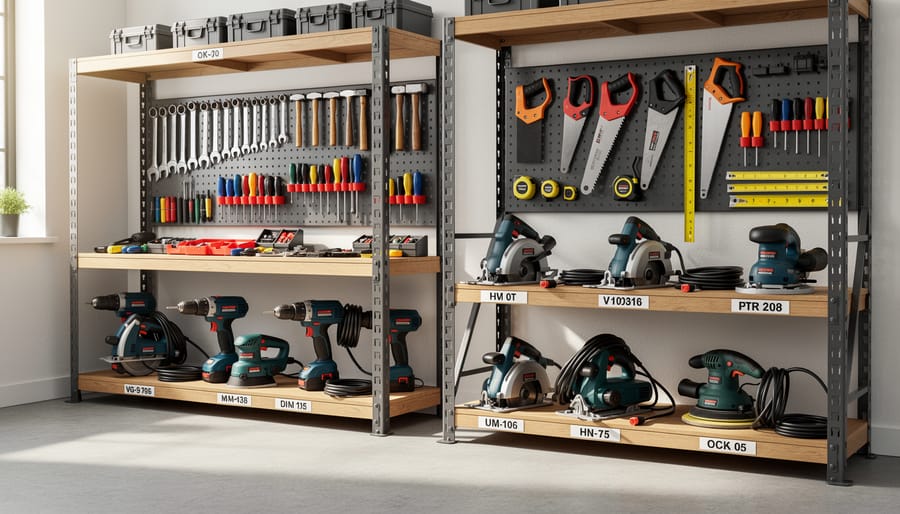
Most tools and equipment thrive in standard storage units without electricity. Hand tools like hammers, screwdrivers, wrenches, pliers, and measuring tapes are ideal candidates, requiring only protection from moisture and rust. Apply a light coating of machine oil to metal surfaces before storage and keep them in toolboxes or wrapped in cloth.
Power tools including drills, saws, sanders, and grinders store perfectly well unplugged. Remove batteries from cordless tools to prevent corrosion and charge deterioration. Store them in their original cases when possible for added protection.
Ladders, wheelbarrows, garden equipment, and manual lawn mowers need minimal maintenance beyond cleaning and drying before storage. For storing equipment properly, elevate items off the floor using pallets or shelving to prevent moisture damage.
Consider these storage-friendly items: workbenches, tool chests, safety equipment, extension cords, clamps, vices, and seasonal equipment. Always clean tools thoroughly, removing dirt and debris. Store sharp implements with blade guards, and organize smaller items in labeled containers for easy access. These simple maintenance steps ensure your tools remain in excellent condition throughout their storage period, ready for your next project.
Items That Need Climate Control or Power
Certain items simply aren’t suited for standard storage units without power or climate control. Battery-powered tools and equipment can discharge over time, potentially damaging the batteries if left uncharged for extended periods. Sensitive electronics like laser levels, digital measuring tools, and computerized equipment are particularly vulnerable to temperature fluctuations and humidity, which can cause internal condensation and component failure.
Paint, adhesives, sealants, and finishing materials often require stable temperatures to maintain their effectiveness. Extreme heat can cause these products to separate or dry out, while freezing temperatures can permanently ruin water-based formulas. Professional tradespeople storing inventory should be especially mindful of manufacturer storage recommendations.
For items requiring power access for periodic charging or climate-sensitive materials, consider climate-controlled units even though they typically lack electrical outlets. These units maintain consistent temperatures year-round, protecting your investment. Alternatively, rotate battery-powered equipment between your workspace and storage, keeping batteries charged separately. Always store items safely by checking manufacturer guidelines and preparing sensitive materials with proper protective measures before placing them in storage, regardless of the unit type you choose.
Alternative Power Solutions for Your Storage Unit
Battery-Powered Options and Portable Generators
Since traditional electrical outlets aren’t available in most standard storage units, battery-powered solutions offer practical alternatives for keeping your tools and equipment ready to use. Rechargeable battery packs designed for power tools have become increasingly reliable, with many lasting months between charges when powering low-drain devices like security cameras or LED lighting. Consider bringing items home periodically to recharge, or invest in solar-powered battery chargers that can maintain charge levels if your facility allows placement near unit openings.
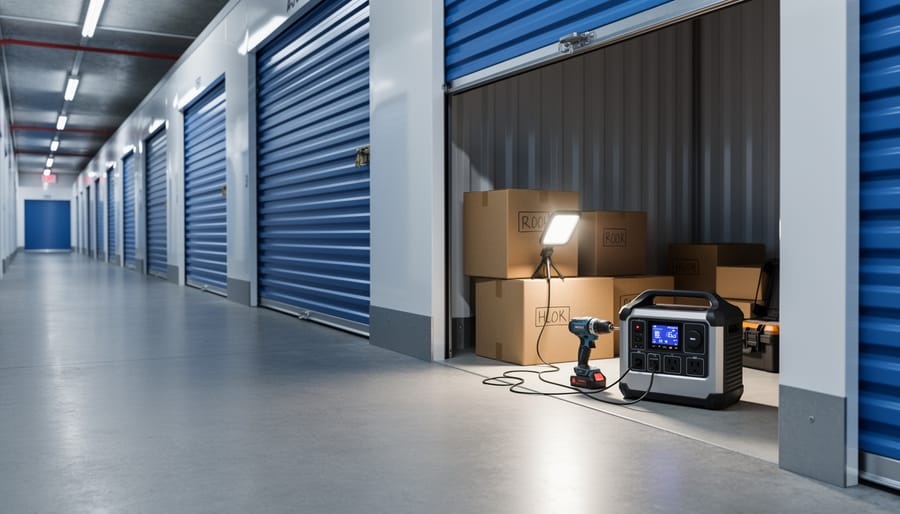
For professional tradespeople storing temperature-sensitive materials or equipment requiring occasional power, portable generators might seem appealing. However, most storage facilities strictly prohibit generators due to fire hazards, carbon monoxide risks, and noise concerns. Always check your facility’s specific policies before attempting to use any power-generating equipment. Some customers have found success with solar panels paired with battery storage systems, though you’ll need written approval from management first.
Battery-powered dehumidifiers and wireless security cameras represent facility-approved options that many storage users successfully implement. These devices typically run for weeks on rechargeable batteries and help protect valuable tools and equipment without violating facility rules. The key is planning ahead and selecting battery-powered alternatives specifically designed for long-term, unattended operation.
What Facilities Typically Allow (and Don’t Allow)
Most facilities strictly prohibit tenants from bringing portable generators, installing wiring, or using extension cords from common areas due to fire hazards and liability concerns. Standard storage unit agreements typically ban open flames, fuel-powered equipment, and any modifications to electrical systems. However, rules vary significantly between providers—some allow battery-powered tools and small solar chargers for personal devices, while others prohibit any power source whatsoever.
Before signing a lease, ask facility managers specific questions: Can you use battery-operated LED lighting? Are solar panels allowed? What about charging power tool batteries before arrival? Document their answers in writing, as verbal agreements often aren’t enforceable. Safety regulations exist for good reason—improper electrical use causes storage facility fires annually. If you’re planning DIY projects requiring consistent power, climate-controlled units with built-in outlets cost more but eliminate safety risks and potential lease violations. Many professional tradespeople find this premium worthwhile for secure tool storage with legitimate power access.
Questions to Ask Before Renting a Storage Unit
Before signing a rental agreement, ask these essential questions to ensure the storage unit meets your needs:
Start with the basics: “Do your standard units have electrical outlets?” Most facilities will say no, so follow up with “Do you offer units with power access?” If electricity is available, ask about voltage specifications, outlet types, and whether there are usage limits or additional fees.
Climate control often confuses renters. Ask “Is climate control the same as having access to power outlets?” Clarify that while climate-controlled units maintain temperature and humidity, they typically don’t provide accessible electrical outlets for tenants.
For pricing transparency, request a breakdown: “What are the additional monthly costs for a powered unit?” and “Are there setup fees or deposit requirements?” Some facilities charge substantially more for electricity access, so budget accordingly.
Understand the rules by asking “What items can I plug in, and are there restrictions on usage?” Many facilities prohibit certain equipment due to fire hazards or power consumption concerns. Also ask “Can I leave items plugged in continuously, or must they be disconnected when I leave?”
Security matters too: “How is electrical usage monitored?” and “What happens if I exceed power limits?” This protects you from unexpected charges.
Finally, inquire about alternatives: “Do you have power outlets in common areas?” or “Are there designated work bays where I can temporarily power equipment?” These options might suit your needs without requiring a premium powered unit.
Taking time when selecting a storage facility ensures you find the right solution for your tools and equipment.
To wrap things up, here’s what you need to know: most standard self-storage units don’t come with electricity, but that doesn’t mean you’re out of options. If you’re storing items that need climate control or you require power for workshop space, specialized units with electrical access are available—though they’ll cost more than basic storage.
The key is honestly assessing what you actually need. If you’re simply storing tools, equipment, or seasonal items that can handle temperature fluctuations, a standard unit will work just fine and save you money. However, if you’re storing sensitive electronics, need to run power tools, or want to use the space as an occasional workspace, investing in a climate-controlled or premium unit with electrical outlets makes sense.
Before signing any rental agreement, ask specific questions about what’s included. Check if electrical access comes standard or costs extra, understand any usage limits or restrictions, and clarify whether you can use extension cords or need dedicated outlets. Read reviews from other users to learn about their experiences with power availability and reliability at specific facilities.
Remember, the right storage solution depends entirely on your individual situation. Take time to evaluate your needs, compare options in your area, and choose a facility that truly fits how you plan to use the space.
Related Posts


Post a Comment