


Senior living apartment costs range from $2,000 to $7,000 monthly, with luxury beachside living options typically commanding premium rates. Base rent covers essential services like maintenance and utilities, while additional care services can add $1,500 to $4,000 per month depending on assistance levels required. Hidden costs often catch families off-guard – from community fees averaging $3,000 upon move-in to monthly service charges for meals, transportation, and social activities that can total $800-1,200 extra.
Understanding these cost components helps families make informed decisions about senior living arrangements:
– Monthly base rent (covers housing and basic utilities)
– Care services package (scales with required assistance level)
– Community fees and deposits
– Additional amenities and services
– Location-based premium charges
– Annual rate increases (typically 3-7%)
Factor in both immediate and long-term financial implications when budgeting for senior living accommodations. Many communities require proof of assets worth 2-3 times the annual cost, ensuring residents can maintain their chosen lifestyle throughout their stay.
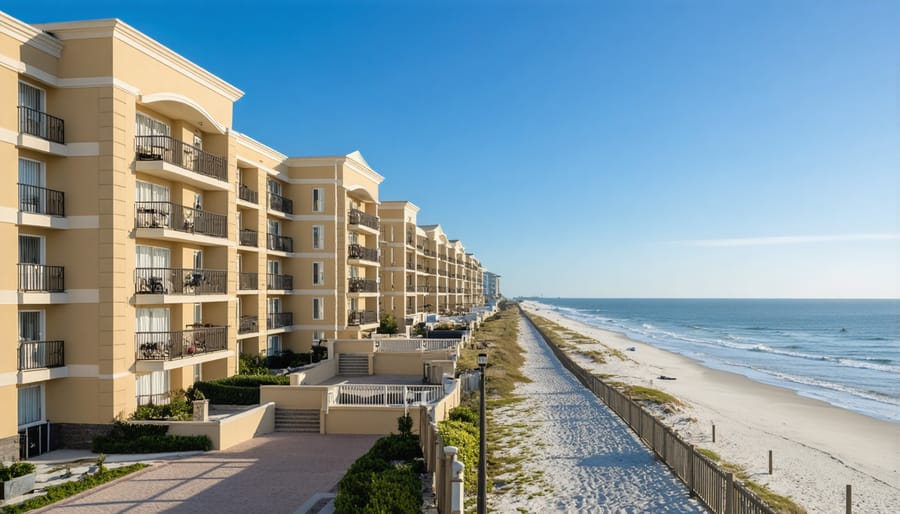
Base Rental Costs for Beachside Senior Apartments
Location Premium Factors
Location plays a crucial role in determining senior living apartment costs, with beachside and prime urban locations commanding premium prices. Properties within walking distance to the beach typically cost 20-35% more than similar inland facilities, reflecting the desirable views and lifestyle benefits of coastal living.
Proximity to essential amenities also significantly impacts pricing. Senior living communities near medical facilities, shopping centers, and cultural attractions often charge 15-25% more than those in less convenient locations. This premium reflects both the convenience factor and the higher property values in these areas.
Urban centers and popular retirement destinations like Florida and California generally have higher base rates, with location premiums varying by specific city and neighborhood. For example, senior apartments in Miami Beach or Newport Beach might cost 40-50% more than similar facilities just 10 miles inland.
Additionally, communities offering easy access to public transportation, parks, and senior-specific services typically command a 10-15% premium. While these location-based costs can be substantial, many seniors find the investment worthwhile for the lifestyle benefits and convenience they provide. When budgeting, it’s important to consider both the immediate cost impact and the long-term value of choosing a well-located senior living community.
Apartment Size and Layout Options
Senior living apartments typically come in three main configurations, each with distinct price points. Studio apartments, the most economical option, usually range from $2,000 to $3,500 monthly in coastal areas. These efficient spaces combine living and sleeping areas, making them ideal for seniors seeking simplicity and affordability.
One-bedroom units, offering separate living and sleeping spaces, generally cost between $3,000 and $4,500 monthly. These apartments provide more flexibility for updating your living space and accommodating visitors, making them a popular choice among active seniors.
Two-bedroom configurations, while the most expensive, offer the most versatility and space. Monthly costs typically range from $4,000 to $6,500, depending on location and amenities. These units are particularly suitable for couples or seniors who want a dedicated guest room or home office.
Square footage also impacts pricing significantly. Coastal senior communities typically charge an additional $100-200 per month for every 100 square feet of living space. Premium floor plans featuring ocean views or private balconies can add 15-25% to the base rental cost, reflecting the desirability of these features in beachside locations.

Additional Monthly Expenses
Utilities and Maintenance Fees
When considering a senior living apartment, utilities and maintenance fees form a significant part of your monthly expenses. On average, residents can expect to pay between $150-300 per month for utilities, including electricity, water, and air conditioning. These costs may vary depending on apartment size, local utility rates, and individual usage patterns.
Building maintenance fees typically range from $200-400 monthly and cover essential services like landscaping, common area upkeep, and basic repairs. Many senior living communities bundle these costs into a single monthly fee, which can help with budgeting and eliminate surprise expenses.
Some facilities include utilities in the base rent, while others require separate payment. It’s worth noting that energy-efficient apartments can significantly reduce utility costs, with savings of up to 30% on monthly bills. Most communities also include trash removal and pest control services in their maintenance fees.
Additional services like cable TV, internet, and phone service usually cost extra, averaging $80-150 per month. Some facilities offer package deals that can provide better value than individual service subscriptions.
Remember to ask about the community’s policy regarding maintenance requests and emergency repairs. Most senior living facilities provide 24/7 maintenance support, ensuring quick resolution of any issues that might arise, from plumbing problems to HVAC maintenance.
Service Packages and Amenities
Senior living communities typically offer various service packages and amenities that can significantly impact the overall monthly cost. Basic packages usually include utilities, housekeeping, and building maintenance, ranging from $200-500 monthly. Meal plans are often tiered, with options for one, two, or three meals daily, adding $300-800 to monthly expenses depending on the chosen plan.
Transportation services, including scheduled shuttle services to medical appointments and shopping centers, typically cost $100-250 per month. Social activities and wellness programs might add another $150-300 to the monthly bill, covering everything from fitness classes to art workshops and organized outings.
Additional personal care services are available à la carte or in bundled packages. These may include medication management ($200-400 monthly), assistance with daily activities ($400-800), and laundry services ($100-200). Many communities also offer concierge services, which can range from $50-200 monthly depending on usage.
Emergency response systems and 24-hour staff availability are often included in base rates, but premium security features might add $100-200 to monthly costs. Some facilities offer specialized wellness programs, including physical therapy or memory care services, which can increase monthly expenses by $500-1,000 or more.
Remember that these costs vary significantly by location and level of luxury, with upscale communities offering premium amenities at higher price points.

Insurance and Special Considerations
Hurricane Insurance Requirements
For senior living facilities in coastal regions, hurricane insurance is typically mandatory and can significantly impact monthly costs. Most properties require comprehensive coverage that includes wind damage, flooding, and storm surge protection. The average annual premium ranges from $2,500 to $6,000, depending on the location’s proximity to the coast and the building’s construction standards.
These costs are usually factored into the monthly rent or maintenance fees, adding approximately $200-500 per month to your living expenses. Some facilities may require residents to maintain their own supplemental hurricane coverage for personal belongings, which typically costs an additional $300-600 annually.
Many senior living communities in hurricane-prone areas have implemented special deductible structures. These often range from 2% to 5% of the coverage amount for named storms. It’s important to understand that some policies may have separate deductibles for hurricane damage versus regular wind damage, potentially affecting out-of-pocket expenses during storm events.
Always review the specific insurance requirements and coverage details with the facility management before signing a lease, as requirements can vary significantly between properties and locations.
Flood Insurance Considerations
For senior living apartments in coastal areas, flood insurance is a crucial consideration that can significantly impact your monthly expenses. While standard insurance policies typically cover basic water damage, properties near the coast often require additional coastal water damage protection through specialized flood insurance policies.
These policies can add anywhere from $100 to $500 to your monthly costs, depending on factors such as proximity to the shoreline, elevation of the building, and local flood zone classifications. Some senior living communities include flood insurance in their monthly fees, while others require residents to secure their own coverage.
When budgeting for a coastal senior apartment, it’s essential to verify whether flood insurance is included in the base rent or if it needs to be purchased separately. Additionally, consider asking about the community’s flood mitigation measures, such as elevated construction, storm barriers, or drainage systems, as these features can affect both insurance rates and your peace of mind during severe weather events.
Cost-Saving Strategies
There are several effective ways to reduce senior living costs without compromising on quality of life. Consider sharing an apartment with a roommate, which can cut your monthly expenses nearly in half. Many senior communities offer companion suites specifically designed for shared living arrangements.
Take advantage of available financial assistance programs, including veterans’ benefits, long-term care insurance, or reverse mortgages. Research local and state programs that offer subsidies or tax breaks for senior housing. Some facilities also provide sliding scale fees based on income levels.
Timing your move strategically can lead to significant savings. Many communities offer move-in specials during off-peak seasons or when they have higher vacancy rates. When planning your move to beachside living, consider locations slightly inland from the coast, where rates are often lower while still maintaining easy beach access.
Investigate all-inclusive packages that bundle housing, utilities, meals, and activities. While the initial price might seem higher, these packages often prove more economical than paying for services separately. Additionally, many communities offer loyalty programs or discounts for longer-term commitments.
Don’t hesitate to negotiate with facility management. Some communities are willing to customize packages by removing services you don’t need or offering price breaks for upfront payments. Remember to regularly review your service package to ensure you’re only paying for amenities you actually use.
Choosing a senior living apartment is a significant financial decision that requires careful consideration of multiple cost factors. As we’ve explored, the average monthly costs can range from $2,500 to $6,000 or more, depending on location, amenities, and level of care needed. Coastal areas typically command premium prices, but many seniors find the lifestyle benefits worth the investment.
Remember that beyond the base rent, you’ll need to account for additional expenses such as utilities, meal plans, housekeeping services, and potential care fees. It’s crucial to thoroughly review all contract terms and understand which services are included in the monthly rate versus those that incur extra charges.
To make the best financial decision, consider creating a comprehensive budget that includes both fixed and variable costs. Many communities offer financial planning assistance or can connect you with senior living advisors who can help navigate payment options, including long-term care insurance, veterans’ benefits, or reverse mortgages.
Don’t forget to factor in future cost increases, which typically range from 3% to 5% annually. It’s also wise to maintain an emergency fund for unexpected expenses or changes in care needs. By thoroughly understanding all costs upfront and planning accordingly, you can make an informed decision that ensures both comfort and financial stability in your senior years.
Related Posts


Post a Comment