

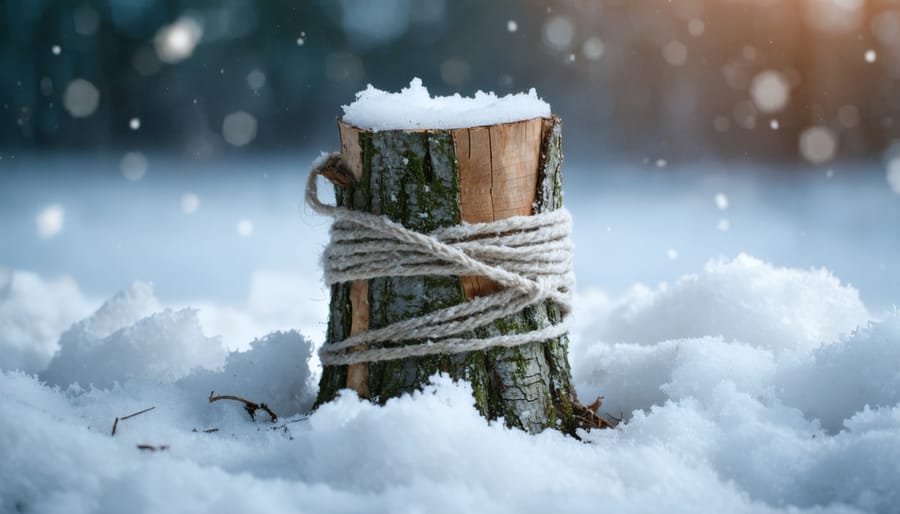
Protect dormant trees by wrapping young trunks with breathable tree wrap, extending from ground level to the first major branches to prevent winter sun scald and frost damage. Remove dead, diseased, or crossing branches while trees are leafless, enabling clear visibility of the tree’s structure and promoting healthy spring growth. Apply a 3-4 inch layer of organic mulch around the tree base, keeping it 6 inches away from the trunk, to regulate soil temperature and preserve vital root moisture through freeze-thaw cycles. Monitor for snow and ice accumulation on branches, gently brushing off heavy loads to prevent breakage and structural damage – a crucial part of year-round landscape maintenance. Schedule professional inspections before severe weather hits to identify potential hazards and strengthen vulnerable branches, ensuring your trees emerge strong and healthy in spring.
Essential Winter Tree Assessment Tools
Basic Tools for Winter Inspection
Before heading out for winter tree inspection, gather these essential tree care tools to ensure a thorough assessment. A pair of high-quality binoculars helps examine the upper canopy for damaged branches or signs of disease without climbing. Keep a sturdy pruning pole handy for testing branch flexibility and removing small dead twigs.
A reliable flashlight with fresh batteries is crucial for inspecting dark areas and examining bark during overcast winter days. Don’t forget a notebook and pencil (pens can freeze) to document any issues you find. A digital camera or smartphone helps record specific concerns for later reference or professional consultation.
For closer inspection, carry a small hand trowel to check soil conditions around the base of trees, and a moisture meter to monitor winter hydration levels. A rubber mallet can help identify hollow areas or decay by gently tapping the trunk. Always pack basic safety gear, including non-slip boots, work gloves, and a high-visibility vest if working during low-light conditions.

Safety Equipment for Cold Weather Work
When working with trees in cold conditions, proper safety equipment is essential for both protection and comfort. Start with a well-insulated, water-resistant jacket and pants that allow free movement. Layer your clothing, beginning with moisture-wicking base layers and adding insulating mid-layers as needed.
Wear safety-rated winter work boots with good traction and insulation. Choose boots that are waterproof and provide ankle support to prevent slips on icy surfaces. Thermal socks made from wool or synthetic materials will keep your feet warm and dry.
Protect your hands with insulated work gloves that maintain dexterity for operating tools. Consider using glove liners for extra warmth. A safety helmet is mandatory and should be worn with a winter liner to keep your head warm. Don’t forget eye protection that’s rated for cold weather to prevent fogging.
For extended outdoor work, bring hand warmers and use a high-visibility vest or jacket, especially during shorter winter daylight hours. Keep spare dry clothing accessible in case you get wet, and always carry a basic first-aid kit suited for cold-weather injuries.
Protecting Trees from Winter Damage
Preventing Snow and Ice Damage
Snow and ice accumulation can place tremendous stress on tree branches, potentially leading to breakage and lasting damage. To protect your trees during winter storms, start by inspecting branches before the first snowfall and removing any weak, damaged, or diseased limbs that might not withstand the extra weight.
For smaller trees and shrubs, installing supports before heavy snow arrives is crucial. Use sturdy poles or stakes with proper tree ties to brace branches that might be vulnerable. Remember to maintain some flexibility in the supports to allow for natural movement without causing damage to the bark.
When snow accumulates on branches, use a broom or rake with an extended handle to gently knock it off before it becomes too heavy. Always work from bottom to top and avoid hitting the branches themselves. This is particularly important after wet, heavy snowfalls that can add significant weight to the tree structure.
For ice prevention, consider using commercial-grade tree wraps or burlap shields around particularly vulnerable specimens. These protective barriers help prevent ice from forming directly on the bark and branches. Never attempt to remove ice by force, as frozen branches are brittle and easily damaged.
If you notice branches bending under snow weight, don’t try to force them back into position while frozen. Wait until temperatures rise above freezing and the wood naturally regains its flexibility. In cases of severe ice accumulation, it’s best to contact a professional arborist to assess and address any damage safely.
Winter Bark Protection
Winter sun scald and frost cracks can severely damage tree bark, but there are effective ways to protect your trees during the cold months. As seasonal effects on tree health become more pronounced, it’s crucial to implement proper protection methods.
Tree wrap or light-colored trunk guards are excellent barriers against winter damage. Install these from the base of the tree up to the first major branches, ensuring a snug but not tight fit. For young trees, corrugated plastic tubes offer excellent protection and can be easily installed with basic tools.
Consider painting the south and southwest sides of tree trunks with white latex paint diluted 50/50 with water. This reflects sunlight and prevents the bark from warming during winter days, which can lead to damaging freeze-thaw cycles at night.
For established trees, installing a temporary barrier made of burlap or shade cloth on the south side can prevent sun scald. Secure these materials loosely to allow for proper air circulation while still providing adequate protection against harsh winter conditions.

Root Zone Winter Care
Proper mulching is crucial for protecting tree roots during harsh winter conditions. Apply a 2-4 inch layer of organic mulch around your tree’s base, extending it to the drip line (the outer reach of the branches). Keep the mulch a few inches away from the trunk to prevent moisture buildup and rot.
For best results, use wood chips, shredded bark, or leaves as mulching material. These natural materials help regulate soil temperature, retain moisture, and protect roots from freeze-thaw cycles that can damage or kill sensitive root systems.
Consider adding a layer of compost before mulching to provide extra nutrients and insulation. If your area experiences severe winters, you might want to add burlap or landscape fabric beneath the mulch for additional protection.
Monitor soil moisture throughout winter, especially during dry spells. While trees are dormant, they still need some water to survive. The mulch helps maintain consistent soil moisture, but you may need to water during extended dry periods when the ground isn’t frozen.
Remove any weeds before mulching, as they compete with trees for vital nutrients and moisture. Remember to refresh your mulch layer if it becomes scattered by wind or animals.
Winter Pruning Done Right
When to Prune in Winter
Winter pruning is most effective during the dormant season, typically from late November through early March. Knowing when to prune trees in winter is crucial for maintaining their health and encouraging robust spring growth.
The ideal time to prune is on a dry, mild day when temperatures are above freezing. Avoid pruning on extremely cold days or when frost is present, as this can damage the fresh cuts and make the tree more susceptible to disease. Similarly, skip pruning during or immediately after wet weather, which can increase the risk of fungal infections.
For deciduous trees, pruning is best done after the leaves have completely fallen. This makes it easier to see the tree’s structure and identify problem branches. Evergreens can be pruned throughout winter, but early to mid-winter is optimal to prevent winter burn on fresh cuts.
If you’re dealing with damaged or diseased branches, don’t wait for the perfect timing – these should be removed as soon as possible to prevent further issues. However, for general maintenance pruning, waiting until the deepest part of winter has passed (late January to February) can help reduce the time the tree needs to heal before spring growth begins.
Winter Pruning Techniques
Winter pruning is essential for maintaining healthy trees and promoting spring growth. Before starting, ensure you have clean, sharp pruning tools and wear appropriate safety gear, including gloves and eye protection.
Begin by removing any dead, diseased, or damaged branches, which are easily identifiable by their brittle texture and lack of buds. Make clean cuts at a 45-degree angle, approximately 1/4 inch above a bud or branch collar. This angle prevents water from collecting on the cut surface and reduces the risk of disease.
Focus on thinning out crowded areas to improve air circulation and light penetration. Look for crossing branches that might rub against each other, potentially causing damage. Remove the weaker of the two branches to prevent future problems.
For larger branches, use the three-cut method: First, make a shallow cut underneath the branch about 18 inches from the trunk. Second, make a top cut slightly further out to remove the branch’s weight. Finally, make your final cut just outside the branch collar, where the branch meets the trunk.
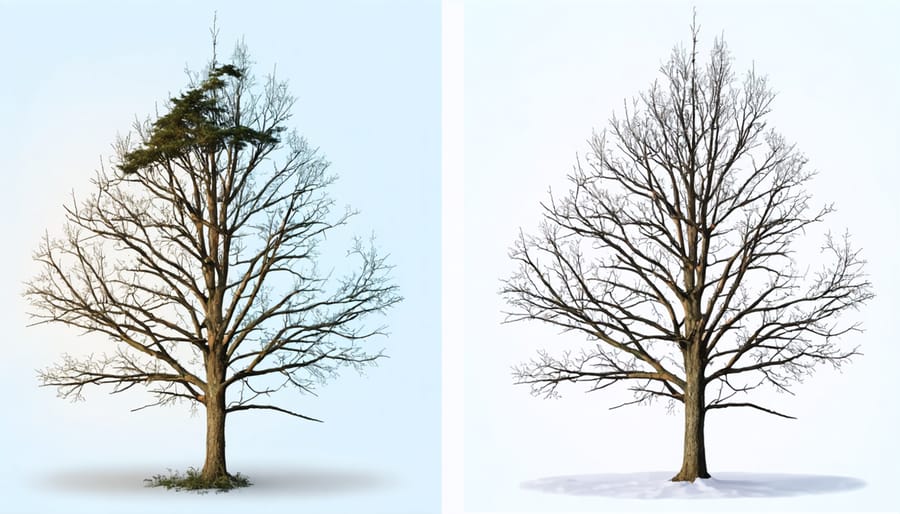
Avoid removing more than 25% of a tree’s live branches in one season, as this can stress the tree. Also, resist the urge to top trees (cutting off the crown), as this harmful practice can lead to weak growth and increased susceptibility to disease.
Clean your tools between cuts when dealing with diseased branches to prevent spreading infections. After pruning, monitor the cuts for proper healing during spring growth.
Emergency Winter Tree Care
Storm Damage Assessment
After a winter storm, conducting a thorough damage assessment is crucial for both tree health and safety. Start by examining your trees from a safe distance, looking for obvious hazards like hanging branches, split trunks, or leaning trees. Pay special attention to branches weighed down by snow or ice, but never stand directly under them.
For closer inspection, wait until conditions are safe and use binoculars to check the crown for broken limbs. Document any damage with photos, which can be helpful for insurance claims or consulting with arborists. Look for signs of structural damage, including cracks in major branches, split branch unions, or exposed roots from soil heaving.
Categorize damage as either minor (small broken branches), moderate (larger limbs affected), or severe (major structural damage). Minor damage can often be addressed with basic pruning tools, while moderate to severe damage requires professional assessment. If you notice power lines entangled with damaged trees, contact your utility company immediately.
Remember that some damage may not be immediately visible, so monitor your trees in the weeks following a storm for signs of stress or delayed failure.
Emergency Response Steps
When winter storms damage your trees, quick action can prevent further harm and protect your property. First, assess the situation from a safe distance and check for downed power lines – if present, contact your utility company immediately and keep everyone away from the area.
For smaller branches, use properly maintained pruning tools to make clean cuts at the branch collar, removing damaged limbs before they become hazardous. However, if branches are large or high up, always contact a certified arborist – attempting these repairs yourself can be dangerous.
If a tree is partially uprooted but still standing, don’t try to prop it up yourself. These situations require professional evaluation as the tree may be unstable and dangerous. Document the damage with photos for insurance purposes before any work begins.
Remove any debris from the ground as soon as it’s safe to do so, but avoid working in icy conditions or during ongoing storms. If your tree has suffered significant damage but remains salvageable, consider installing cable supports or bracing systems – but only through professional services.
Remember: safety comes first. When in doubt, wait for professional help rather than risking personal injury.
Protecting your trees during winter is essential for maintaining a healthy landscape throughout the year. By following proper pruning techniques, maintaining adequate mulching, and protecting against winter damage, you can ensure your trees survive and thrive during the cold months. Remember to regularly inspect your trees for signs of stress or damage, and address any issues promptly to prevent long-term problems. Keep tools clean and well-maintained, and always prioritize safety when performing winter tree care tasks. While winter maintenance requires extra effort, the reward of robust, beautiful trees in spring makes it worthwhile. Consider establishing a seasonal maintenance schedule and don’t hesitate to consult professional arborists for complex care needs. With proper attention and care, your trees will continue to enhance your property’s value and beauty for years to come.
Related Posts


Post a Comment