

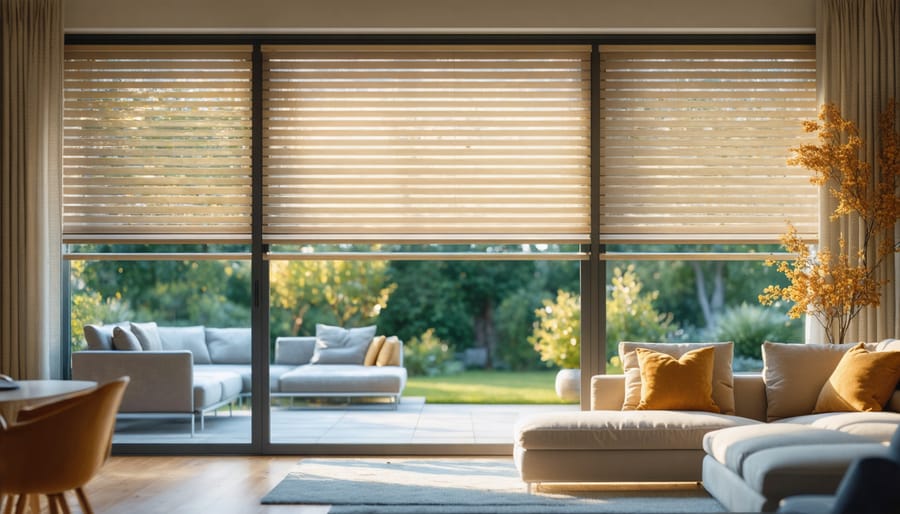
Transform your home’s energy efficiency with cellular shades that create insulating air pockets, reducing heat loss by up to 40% during winter months. Install motorized energy efficient window treatments that automatically adjust throughout the day, maximizing natural light while minimizing heat gain. Position reflective solar blinds on south and west-facing windows to block 70% of solar heat without sacrificing natural illumination. Layer thermal curtains with side-mounting brackets behind existing blinds to create a complete seal against drafts and temperature fluctuations.
These smart window solutions pay for themselves within 2-3 years through reduced heating and cooling costs. Modern energy-efficient blinds combine sophisticated materials with practical design, offering both aesthetic appeal and measurable performance benefits. Whether retrofitting an existing home or planning new construction, proper blind selection and installation represent one of the most cost-effective ways to improve household energy performance.
How Energy-Efficient Window Blinds Cut Your Energy Costs
Heat Loss Prevention in Winter
During winter months, energy-efficient window blinds serve as a crucial barrier against heat loss, helping to maintain comfortable indoor temperatures while reducing heating costs. When properly installed, these blinds create an insulating air pocket between the window surface and the room, effectively minimizing heat transfer through the glass.
Cellular or honeycomb blinds are particularly effective at preventing heat loss, as their unique hexagonal structure traps air within individual cells. This design creates multiple insulating layers that significantly reduce cold air infiltration from windows. For maximum effectiveness, ensure the blinds fit snugly within the window frame and lower them completely during nighttime hours when temperatures drop lowest.
Some modern energy-efficient blinds feature reflective backing, which directs indoor heat back into the room rather than allowing it to escape through the windows. Side tracks or channels can further enhance insulation by eliminating gaps where drafts might enter. For optimal winter performance, consider combining your blinds with thermal curtains or drapes, creating multiple insulating layers that work together to keep warm air inside where you want it.
Solar Heat Reduction in Summer
During summer months, properly installed window blinds can significantly reduce your home’s heat gain and lower cooling costs. Light-colored blinds reflect up to 80% of incoming solar radiation, preventing it from turning into heat inside your living spaces. When positioned correctly, exterior-mounted blinds are particularly effective, as they block solar heat before it passes through your windows.
Cellular shades with honeycomb pockets trap air between the window and your room, creating an additional insulating barrier against heat transfer. For maximum effectiveness, close your blinds during peak sunlight hours, especially on south and west-facing windows where direct sun exposure is strongest.
Many homeowners report temperature reductions of 10-15 degrees in rooms with properly utilized blinds compared to uncovered windows. This passive cooling method can reduce your air conditioning needs by up to 30%, leading to substantial energy savings. For enhanced performance, consider combining blinds with reflective window films or light-colored exterior awnings.
Remember to adjust your blinds throughout the day as the sun’s position changes. Automation systems can help maintain optimal positioning without constant manual adjustment.
Best Energy-Saving Blind Types for Your Home
Cellular (Honeycomb) Blinds
Cellular blinds, also known as honeycomb shades, feature a unique layered design that creates insulating air pockets, similar to a honeycomb structure. These pockets trap air, forming a barrier between your room and the window, effectively reducing heat loss in winter and heat gain in summer.
Available in single-cell, double-cell, and triple-cell configurations, these blinds offer varying levels of insulation. Single-cell designs work well for moderate climates, while double and triple-cell options provide maximum energy efficiency for extreme temperatures. The cells can range from 3/8 inch to 3/4 inch in size, with larger cells offering better insulation.
These blinds come in light-filtering and room-darkening fabrics, with some models featuring dual-sided construction – white facing outside to reflect sunlight and a decorative color inside to match your décor. Installation is straightforward using either inside or outside mounting brackets, though precise measurements are crucial for proper fit.
Consider the window’s exposure when selecting cellular blinds. South-facing windows benefit from room-darkening options to block intense sunlight, while north-facing windows might do well with light-filtering varieties to maximize natural light while maintaining insulation.
Solar Shades
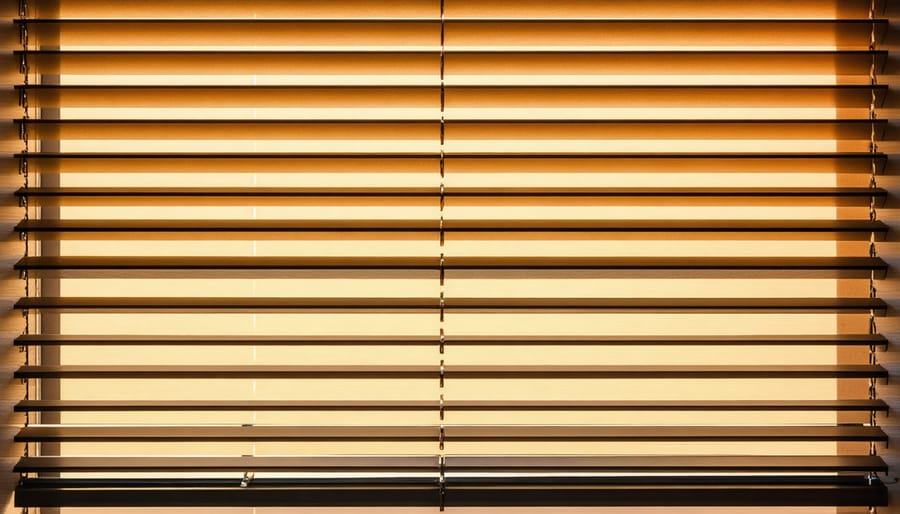
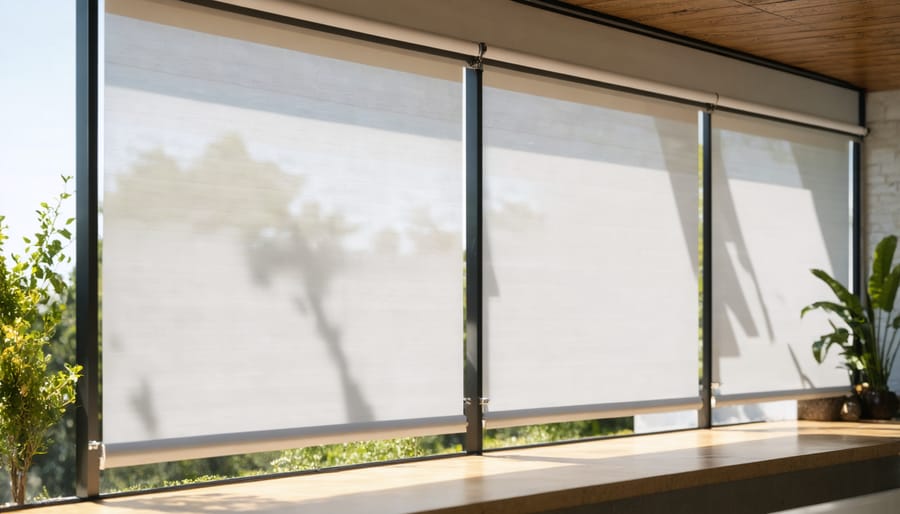
Solar shades are a revolutionary window treatment that effectively blocks harmful UV rays while maintaining your view of the outdoors. These specialized blinds can block up to 99% of UV radiation, protecting your furniture, flooring, and artwork from sun damage and fading.
The magic lies in their unique mesh fabric construction, which comes in various openness factors ranging from 1% to 14%. A lower percentage means tighter weave and better heat reduction, while a higher percentage allows more natural light. Most homeowners find that a 3-5% openness factor provides an ideal balance between light control and energy efficiency.
During summer months, solar shades can reduce indoor heat gain by up to 70%, significantly lowering your cooling costs. The reflective properties of these shades bounce solar heat back outside before it can warm your living space. In winter, they provide an additional insulating layer that helps retain indoor heat.
What sets solar shades apart is their ability to maintain outward visibility while blocking glare and heat. This dual functionality makes them particularly popular in rooms with scenic views or home offices where screen visibility is important. They’re available in motorized options, allowing for convenient adjustment throughout the day to maximize energy savings.
Insulated Roman Shades
Insulated Roman shades combine classic elegance with modern energy efficiency, making them a popular choice for homeowners seeking both style and functionality. These shades feature multiple layers of fabric with insulating materials sandwiched between them, creating an effective thermal barrier against heat loss in winter and heat gain in summer.
The cellular construction of insulated Roman shades creates air pockets that trap air, similar to double-pane windows. This design can reduce heat transfer by up to 40% when properly installed. Available in various fabric options, from light-filtering linens to room-darkening materials, these shades can be customized to match any décor while maintaining their energy-saving properties.
Many modern versions come with additional features like cordless operation and motorized lifting systems, making them both safe and convenient. The cascading folds create a soft, sophisticated look when raised, while providing full coverage when lowered. For maximum efficiency, choose shades with side tracks that seal against the window frame, preventing air leakage around the edges.
Regular maintenance is simple – periodic dusting and occasional spot cleaning keep these shades looking fresh while maintaining their insulating properties.
Installation Tips for Maximum Energy Savings
Measuring and Fitting
Before installing your energy-efficient window blinds, accurate measurements are crucial for optimal performance and energy savings. Start by gathering your tools: a metal measuring tape, pencil, and notepad.
For inside-mounted blinds, measure the window opening’s width at three points: top, middle, and bottom. Use the narrowest measurement to ensure proper fit. For height, measure from the top inside edge to the sill at the left, center, and right. Again, use the shortest measurement.
For outside-mounted blinds, measure the entire area you want to cover, including any overlap desired for better light blocking and insulation. Add 3 inches to both sides of the width for optimal energy efficiency and light control. For height, measure from where you want the headrail to sit to where you want the blinds to end, adding 3 inches for light gaps.
Double-check all measurements before ordering. Remember that blinds typically come in standard sizes, so you may need to round down to the nearest size for inside mounts or up for outside mounts.
When installing, ensure the headrail is perfectly level using a spirit level. Most energy-efficient blinds come with mounting brackets – install these first, ensuring they’re secure and aligned. Mount the headrail according to manufacturer instructions, testing the operation before finalizing the installation.
For optimal energy performance, ensure there are minimal gaps between the blinds and window frame, particularly for inside-mounted installations.
Sealing and Mounting
Achieving maximum energy efficiency with your window blinds requires meticulous attention to sealing and mounting. Start by thoroughly cleaning the window frame and ensuring all surfaces are dry before installation. For optimal performance, apply weatherstripping tape along the sides of the window frame where the blinds will make contact. This creates a better seal against drafts and heat transfer.
When mounting your blinds, precise measurements are crucial. Allow for a 1.5-inch overlap on each side of the window frame to minimize light gaps and air leakage. Use a level to mark mounting bracket positions and ensure they’re perfectly aligned. For inside-mount installations, maintain a consistent depth to create a proper seal against the window.
Following proper sealing techniques around the mounting hardware can significantly improve efficiency. Consider using foam gaskets behind mounting brackets to prevent thermal bridging. For cellular or honeycomb blinds, pay special attention to the headrail installation, as this is where most heat loss occurs.
Always use appropriate anchors for your wall type – toggle bolts for drywall, masonry anchors for brick, or wood screws for window frames. Double-check that all brackets are securely fastened and test the operation of your blinds before finalizing the installation. Remember to caulk any visible gaps between the window frame and wall to complete the thermal barrier.

Maintenance for Long-Term Performance
Regular maintenance of your energy-efficient window blinds is crucial for maximizing their performance and extending their lifespan. Following proper maintenance techniques ensures your investment continues to deliver optimal energy savings year after year.
Start with weekly dusting using a microfiber cloth or vacuum with a brush attachment to prevent debris buildup. For cellular shades, pay special attention to the honeycomb cells where dust can accumulate and reduce insulation effectiveness. Monthly deep cleaning with a gentle soap solution helps remove stubborn dirt and maintains the material’s reflective properties.
Check the operating mechanisms every three months. Lubricate moving parts with a silicone-based spray to ensure smooth operation and prevent wear. Inspect cords, chains, and brackets for signs of damage or loosening, and tighten or replace components as needed.
For motorized blinds, test the battery levels regularly and replace them before they fail completely. Clean the solar sensors if your blinds are automated with light-detection features, as dirty sensors can affect their responsiveness to changing light conditions.
Address any damage promptly to prevent it from worsening. Small tears in fabric blinds can expand and compromise their insulating properties. Similarly, bent or damaged slats in venetian blinds can create gaps that let heat escape or enter.
Consider scheduling professional cleaning annually, especially for high-end cellular shades or motorized systems. This helps maintain warranty coverage and ensures all components are functioning correctly for maximum energy efficiency.
Energy-efficient window blinds are a smart investment that can significantly reduce your energy bills while enhancing your home’s comfort. From cellular shades that trap air to reflective roller blinds that deflect summer heat, these innovative window treatments offer practical solutions for every climate and budget. By choosing the right blinds and installing them properly, you can expect to see immediate improvements in your home’s temperature regulation and energy efficiency.
Don’t wait to start saving on your energy bills. Take action today by measuring your windows, considering your specific needs, and selecting the most suitable energy-efficient blinds for your home. Remember to maintain your blinds regularly and adjust them according to the season to maximize their effectiveness. With proper care and use, your energy-efficient window treatments will provide years of comfort and savings while contributing to a more sustainable future.
Related Posts

Post a Comment