


**Balance safety compliance with stunning design** by choosing tempered glass panels that meet pool barrier standards while maintaining unobstructed sightlines—critical for supervising children and showcasing your landscape investment.
**Install removable mesh fencing** as a flexible, budget-friendly solution that satisfies legal height requirements (typically 4-5 feet) without permanent visual impact. This DIY-friendly option uses reinforced poles secured in deck sleeves, allowing complete removal during adult-only gatherings while keeping installation costs under $2,000 for most residential pools.
**Combine horizontal aluminum slats with strategic landscaping** to create privacy without sacrificing airflow or modern aesthetics. Space slats according to your local building code’s 4-inch maximum gap rule, then soften the industrial look with climbing jasmine or ornamental grasses positioned 3-4 feet from the fence line.
**Retrofit existing chain-link with bamboo screening or privacy slats** if you’re working with pre-installed fencing. This cost-effective upgrade transforms utilitarian barriers into attractive features while maintaining compliance with non-climbable surface requirements.
The right pool fence delivers both peace of mind and visual appeal—but the difference lies in understanding which materials suit your specific yard conditions, local regulations, and long-term maintenance capabilities. Whether you’re installing post-mounted glass, tension-based mesh, or decorative metal panels, success depends on proper tool selection and installation technique. The following designs represent real-world solutions from homeowners and contractors who’ve solved the beauty-versus-safety challenge, complete with material costs, required tools, and compliance considerations for your jurisdiction.
Why Traditional Pool Fences Fall Short (And What’s Changed)
Let’s be honest—traditional pool fences haven’t exactly won design awards. For years, homeowners have wrestled with the same frustrations: clunky chain-link barriers that feel like prison yard enclosures, tubular aluminum fencing that screams “safety requirement” rather than landscape feature, and basic glass panels with chunky frames that block those carefully planned sightlines. Many property owners in our community have shared that their pool fence feels like an afterthought rather than an integrated design element.
But here’s the thing—those safety regulations aren’t going anywhere, and for good reason. Australian pool safety standards exist because they save lives. Every pool fence must be at least 1200mm high, have non-climbable zones, self-closing and self-latching gates, and gaps no larger than 100mm. These requirements are non-negotiable, regardless of how beautiful your backyard vision might be.
So what’s changed? Everything.
The pool fencing industry has experienced a genuine revolution over the past decade. Manufacturers and installers have finally cracked the code on combining compliance with aesthetic appeal. Frameless glass panels now dominate high-end installations, practically disappearing while maintaining full safety standards. Powder-coated aluminum comes in colours that complement modern architecture rather than clash with it. Mesh fencing has evolved from saggy netting to sleek, removable barriers perfect for families who want flexibility.
Today’s pool fence designs prove you don’t have to choose between protecting your children and creating an outdoor space you’ll actually want to spend time in. The innovations combine better materials, smarter engineering, and genuine attention to residential design needs—transforming a legal requirement into a legitimate landscape feature.
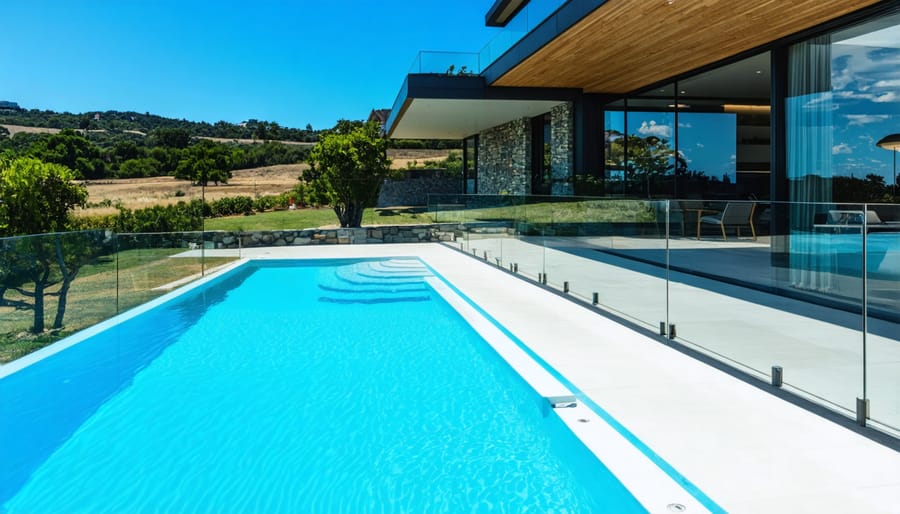
Glass Panel Fencing: The Invisible Safety Barrier
Frameless vs. Semi-Frameless Options
When choosing glass pool fencing, you’ll encounter two main systems that differ significantly in appearance and installation complexity.
**Frameless glass fencing** uses spigots—metal brackets embedded into the pool deck—to hold individual glass panels. These systems create an uninterrupted sightline with no visible vertical posts, offering maximum transparency and a sleek, modern aesthetic. The glass panels typically measure 10-12mm thick for structural integrity. Installation requires precise core drilling into your deck to secure the spigots, making it more labor-intensive. Many DIYers find this challenging and opt for professional installation or specialized drill rental equipment.
**Semi-frameless options** incorporate minimal vertical posts between glass panels, usually made from powder-coated aluminum or stainless steel. While posts interrupt the view slightly, they simplify installation and reduce costs by 20-30% compared to fully frameless systems. The glass panels can be thinner (8-10mm), as posts provide additional structural support.
Community feedback suggests frameless systems deliver superior visual impact for infinity-edge pools or properties with premium landscaping, while semi-frameless works well for budget-conscious projects without sacrificing safety. Both meet Australian standards AS1926.1, so your choice ultimately depends on aesthetic priorities and installation confidence. Consider the long-term maintenance too—frameless systems have fewer metal components that require upkeep.
Installation Considerations and Tools Needed
Installing an inground pool fence requires careful planning and the right equipment, particularly for popular frameless glass options. Core drilling is essential for creating secure mounting points in concrete or paving—you’ll need a diamond-tipped core drill (typically 50-65mm diameter) with water cooling capability to prevent overheating. These can be hired from specialized tool rental providers for around $80-150 per day.
For glass panel installations, proper glass handling tools are non-negotiable. Suction cup lifters rated for the panel weight (usually 12mm toughened glass weighing 30kg per square meter) protect both you and the material. You’ll also need a laser level to ensure posts are perfectly plumb—even minor angles compromise structural integrity and aesthetics.
Other essentials include spigot installation tools, torque wrenches for consistent tensioning, and appropriate safety gear including cut-resistant gloves and safety glasses.
**DIY or Professional?** While aluminum and mesh fences suit confident DIYers, glass installations typically require professional help due to the precision needed, heavy materials, and compliance certification requirements. According to community feedback, many homeowners successfully tackle preparation work like measuring and marking, then hire professionals for the technical installation—a cost-effective middle ground.
Real User Experiences
Glass pool fencing consistently receives high marks from homeowners who’ve made the investment. Community members report that quality frameless glass panels have maintained their clarity for 5-10 years with minimal maintenance, though coastal properties experience slightly faster degradation from salt air.
The most common feedback centers on cleaning requirements. Users recommend squeegees and microfiber cloths for weekly maintenance, noting that hard water stains and fingerprints become visible quickly. Parents particularly appreciate the unobstructed sight lines, allowing constant supervision of children from indoor living spaces.
Pet owners highlight mixed experiences—larger dogs occasionally scratch lower panels, while the transparent barrier effectively contains smaller pets without blocking their view. Several reviewers emphasize the importance of self-closing, self-latching gates, describing them as “peace of mind” features that have prevented unsupervised pool access multiple times. The consensus suggests investing in premium hardware and professional installation for optimal safety performance.
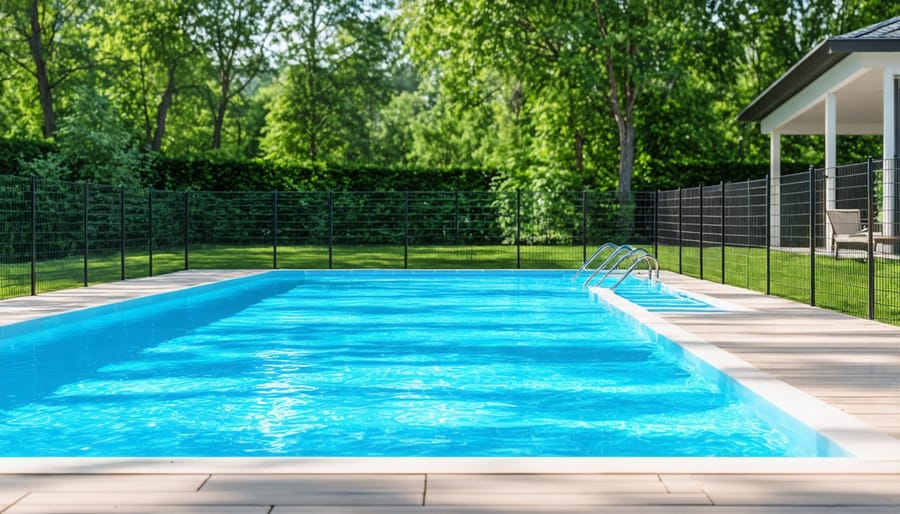
Mesh Pool Fencing: Removable Protection That Disappears
Permanent Sleeve vs. Drill-and-Fill Systems
When installing an inground pool fence, you’ll choose between permanent sleeve systems and drill-and-fill methods, each with distinct advantages.
**Permanent sleeve systems** involve embedding metal sleeves into concrete during pool deck construction. Fence posts slide into these sleeves, allowing seasonal removal while maintaining anchor points. This method requires no specialized drilling equipment and offers excellent reversibility—perfect for homeowners who want flexibility.
**Drill-and-fill systems** use a rotary hammer drill or core drill to create anchor points in existing concrete. You’ll need a masonry bit (typically 1-2 inches diameter), safety goggles, dust masks, and hearing protection. After drilling, anchors are secured with epoxy resin or expansion bolts. While more permanent, this method works for established pool areas.
For rental properties, permanent sleeves are ideal since they allow complete fence removal without visible holes. Tenants can install temporary fencing as needed. Drill-and-fill creates permanent modifications that may affect property value or lease agreements.
Consider exploring tool rental options for rotary hammers and core drills rather than purchasing—most homeowners need these tools only once. Many DIYers report in community forums that renting professional-grade equipment produces cleaner holes and reduces installation time significantly.
DIY Installation Step-by-Step
Installing an inground pool fence requires precision and patience, but with the right approach, it’s entirely achievable for confident DIYers. Start by measuring your pool perimeter, adding at least 1.2 meters clearance from the water’s edge to meet most local regulations. Mark post positions every 2-3 meters using chalk lines and spray paint.
Before drilling, always call your local utility provider to identify underground services—this step prevents costly and dangerous mistakes. Use a post hole digger or rent a power auger for larger projects to create holes at least 600mm deep. Set posts using quick-set concrete, checking vertical alignment with a spirit level from multiple angles.
Once posts have cured (typically 24-48 hours), attach mounting brackets at consistent heights. When installing mesh panels, start from a corner and work systematically around the perimeter. Many community reviewers emphasize the importance of proper tensioning—panels should be taut but not overstretched, which can warp the framework over time.
**Common mistakes to avoid:** rushing the concrete curing process, inconsistent spacing between posts, and forgetting to account for gate swing clearance. One homeowner reviewer noted: “I measured twice but didn’t consider the latch mechanism—had to relocate an entire post.”
Always install self-closing, self-latching gates with locks positioned at adult height (minimum 1.5 meters). Test all mechanisms thoroughly before considering the job complete, and keep your local building inspector’s contact information handy for the final safety compliance check.
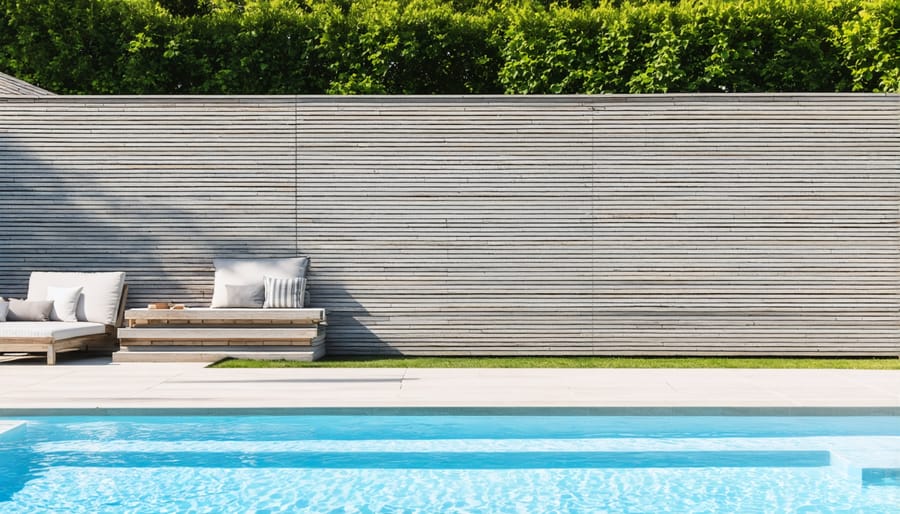
Horizontal Slat Fencing: Contemporary Style Meets Function
Material Options: Aluminum, Composite, and Wood
Choosing the right fence material impacts both your pool’s appearance and long-term maintenance needs. Here’s what you need to know about the three most popular options.
**Aluminum** stands out as the top choice for many homeowners. It won’t rust, requires minimal upkeep beyond occasional cleaning, and typically costs $25-40 per linear foot installed. The powder-coated finish resists fading, and the material handles temperature extremes without warping. Community feedback consistently praises aluminum’s durability, though some users note it can feel hot to the touch in direct sunlight.
**Composite materials** blend wood fibers with plastic, offering wood’s aesthetic at $30-50 per linear foot. They resist rot and insects while requiring no staining or sealing. However, they can fade over time and may expand slightly in heat. DIYers appreciate that composite installs similarly to wood but check your local codes—some jurisdictions have specific spacing requirements for composite slats.
**Wood fencing** remains the most budget-friendly option at $15-30 per linear foot but demands the most attention. Cedar and redwood naturally resist decay better than pressure-treated pine. Expect to restain every 2-3 years and watch for warping in humid climates. Despite the maintenance, many homeowners value wood’s classic warmth and customization potential.
Building It Yourself: Tools and Technique
Installing a compliant pool fence requires the right equipment and methodical execution. Here’s what you’ll need and how to use it effectively.
**Essential Tools**
A quality **post-hole digger** (manual or powered auger) is critical for creating uniform holes 600-900mm deep, depending on your local code requirements. Many DIYers recommend renting a powered auger for harder soils—community feedback consistently highlights how this saves hours of labor compared to manual digging.
You’ll need a **concrete mixer** or pre-mixed bags for setting posts. Professional tradespeople suggest allowing 48 hours cure time before adding panels, though user experiences vary based on weather conditions.
**Precision Equipment**
A laser level or quality spirit level ensures posts remain perfectly vertical—non-negotiable for both safety and aesthetics. Create a simple **spacing jig** using timber cut to your exact panel width to maintain consistent gaps between posts.
Pro tip from the community: Use string lines to maintain straight fence runs and check diagonal measurements to ensure square corners. A post-hole template made from scrap plywood helps maintain accurate positioning across the entire installation, preventing costly rework when panels don’t align properly.
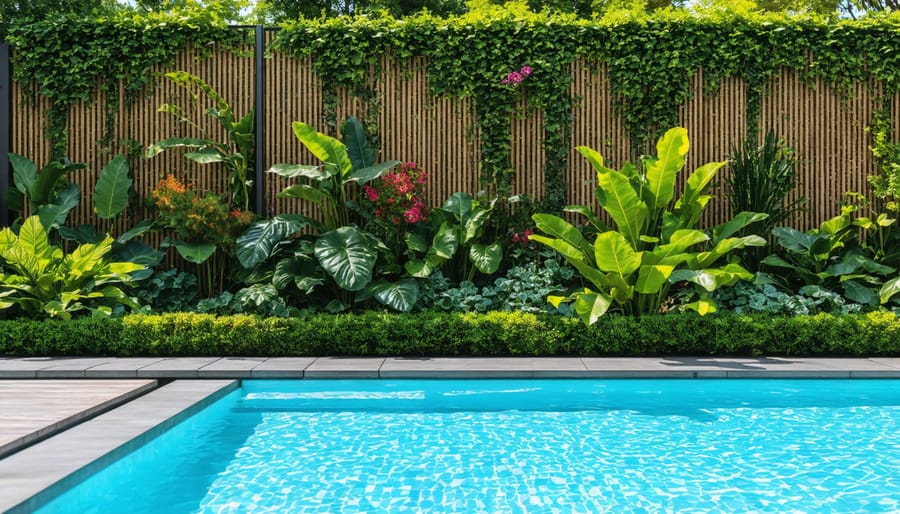
Living Fences: Plants Combined with Safety Barriers
Compliance-First Design
When incorporating plants near your pool fence, compliance with local safety codes isn’t optional—it’s essential. Most regulations require that nothing within three feet of the fence creates a “climbable zone” that could help children scale the barrier.
Start by reviewing your local pool safety ordinances, which typically prohibit plantings that could serve as footholds or handholds. Avoid tall shrubs, thick vines, or anything with sturdy horizontal branches near the fence base. Instead, opt for low-growing groundcovers like creeping thyme or sedum that stay below 12 inches and can’t support a child’s weight.
Maintain clear sight lines from your home to the pool area—many codes require visibility through or over the fence from at least one vantage point. Dense hedges might look attractive but can obscure dangerous situations. Consider ornamental grasses or airy perennials that provide softness without blocking views.
Choose non-toxic, thorn-free varieties exclusively, especially where kids play barefoot. Skip roses, bougainvillea, or anything with spines. Community feedback consistently recommends soft-leaved options like hostas, lavender, or dwarf fountain grass.
Before planting, snap photos and share your layout with local DIYers online—their real-world experience catching code violations before inspection can save costly replanting later.
Smart Pool Fencing: Technology-Enhanced Safety
Installation and Integration Tips
Installing an inground pool fence requires careful planning and the right equipment. For DIY installations, you’ll need basic tools including a post hole digger or auger, spirit level, drill with masonry bits, measuring tape, and a wrench set. Many homeowners find renting a power auger worthwhile for consistent post holes, especially in hard soil.
If you’re adding self-closing gates with magnetic latches or electronic access controls, you’ll need wire strippers, cable connectors, and waterproof junction boxes. These safety features often integrate with smart home systems like Ring, Google Home, or Apple HomeKit, allowing you to monitor gate status remotely—a feature many community members praise in their reviews.
Consider battery backup for electronic locks, as power outages shouldn’t compromise pool security. Solar-powered options are increasingly popular, combining reliability with sustainability. According to user feedback, rechargeable battery systems lasting 6-12 months offer the best balance between convenience and safety.
Always check local regulations before starting installation, as pool barrier height, gate swing direction, and latch positioning have specific requirements. When in doubt, consult a licensed contractor to ensure compliance and optimal safety for your family.
Budget-Friendly Innovations That Don’t Compromise Safety
Meeting safety compliance doesn’t require breaking the bank. Today’s pool fence market offers several budget-conscious options that tick all the regulatory boxes while keeping your wallet happy.
**Powder-Coated Aluminum: The Smart Alternative**
Powder-coated aluminum has become a game-changer for cost-conscious homeowners. Unlike premium stainless steel, aluminum fencing typically costs 30-40% less while offering excellent durability. The powder coating process creates a weather-resistant finish that won’t rust or corrode, even in harsh pool environments. Community feedback consistently rates these systems highly for their DIY-friendly installation—most panels come pre-assembled with simple post-mounting systems requiring just basic tools like a post hole digger and level.
**Tubular Steel: DIY-Friendly Strength**
Galvanized tubular steel represents another economical choice that doesn’t skimp on safety. These modular systems feature straightforward assembly with clear instructions, making them ideal for weekend projects. User reviews highlight that while slightly heavier than aluminum, the material’s rigidity reduces movement and provides exceptional longevity. The key is ensuring proper galvanization to prevent rust—look for hot-dipped galvanized options rather than electroplated versions.
**Creative Material Combinations**
Savvy installers are pairing budget materials strategically. For example, using premium glass or metal for highly visible front sections while installing more economical powder-coated aluminum along less prominent sides can reduce overall costs by 20-30% without compromising aesthetics or safety standards.
Remember: all materials must meet local pool barrier regulations regardless of price point. Check specifications for gate self-closing mechanisms, maximum gap dimensions (typically 100mm), and minimum height requirements (usually 1200mm) before purchasing any budget option.
Code Compliance Essentials: What You Can’t Compromise
Before you fall in love with a particular fence design, understanding code compliance is crucial—these regulations exist to prevent drownings and keep children safe. While specific requirements vary by location, most jurisdictions share common non-negotiable standards.
**Height requirements** typically mandate fencing at least 1,200mm (4 feet) tall, though many areas now require 1,500mm. This measurement applies from ground level on the pool side, not your deck or patio surface.
**Gap spacing** is strictly regulated to prevent small children from squeezing through. Vertical bars must have no more than 100mm (4 inches) between them. Horizontal railings require greater spacing (900mm minimum) to discourage climbing.
**Self-closing and self-latching gates** are mandatory in virtually all jurisdictions. Gates must swing outward from the pool area and close automatically from any open position. Community reviews on DIY projects consistently emphasize testing gate mechanisms thoroughly before inspection.
**Latch positioning** must be at least 1,500mm above ground or on the pool side of the gate to prevent young children from reaching it. Some codes require additional safety releases.
**Critical reminder**: Check your local council regulations before purchasing materials or starting installation. Building without proper permits can result in fines, insurance complications, and mandatory removal. Many councils provide free guidance documents, and inspectors often appreciate being consulted early in the planning process rather than discovering non-compliance issues later.
Making Your Choice: Matching Fence Design to Your Situation
Choosing the right fence for your inground pool requires balancing multiple factors to find your perfect match. Start by asking yourself these essential questions before committing to materials or tools:
**Budget Reality Check**: Glass panel fencing might cost $200-400 per linear foot installed, while chain-link runs $15-40. Determine your total budget including materials, tool rental, and potential professional help for complex sections.
**Skill Assessment**: Be honest about your capabilities. Installing tension wire systems requires moderate skills, while welding aluminum fencing demands advanced expertise. Many DIYers successfully handle wood panel or removable mesh installations with basic power tools. Check community reviews from other homeowners who’ve tackled similar projects to gauge realistic difficulty levels.
**Climate Considerations**: Coastal properties need corrosion-resistant materials like vinyl or powder-coated aluminum. Cold climates with freeze-thaw cycles may crack concrete post footings if improperly installed. Wood fencing in humid regions requires regular treatment against rot.
**Maintenance Willingness**: Glass requires weekly cleaning to maintain clarity. Wood needs annual sealing or staining. Vinyl and aluminum offer low-maintenance alternatives for time-strapped homeowners.
**Temporary vs. Permanent**: Families with young children might prefer removable mesh fencing that can be taken down once kids are older. Permanent installations add long-term property value but represent bigger commitments.
**Property Style**: Match your fence to your home’s architecture. Modern homes pair beautifully with frameless glass or horizontal slat designs, while traditional properties suit classic wrought iron or picket styles.
Before renting tools like post-hole diggers, concrete mixers, or specialized drivers, confirm your chosen fence system’s requirements and verify you understand proper operation through safety tutorials.
Today’s pool fence innovations have transformed what was once a purely functional requirement into an opportunity to enhance your outdoor living space. From frameless glass panels that preserve uninterrupted sightlines to mesh systems offering temporary flexibility, modern solutions prove you don’t need to choose between safety and style.
As you plan your project, carefully assess your specific needs—consider your property’s architectural style, maintenance preferences, budget constraints, and local compliance requirements. Whether you’re tackling this as a DIY project or working with professionals, the right fence should integrate seamlessly with your landscape while meeting every safety standard.
We’d love to hear from our community: What pool fence solution worked best for your space? Have you discovered clever installation techniques or design approaches worth sharing? Your real-world experiences help fellow homeowners and tradespeople make informed decisions. Share your pool fence stories, photos, and lessons learned in the comments below. Together, we can build a resource that goes beyond generic advice to offer practical, tested solutions from people who’ve actually done the work.
Related Posts

Post a Comment