
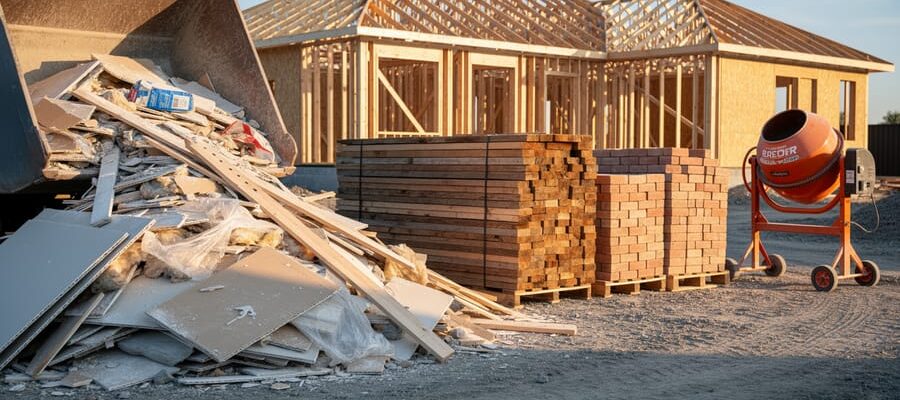
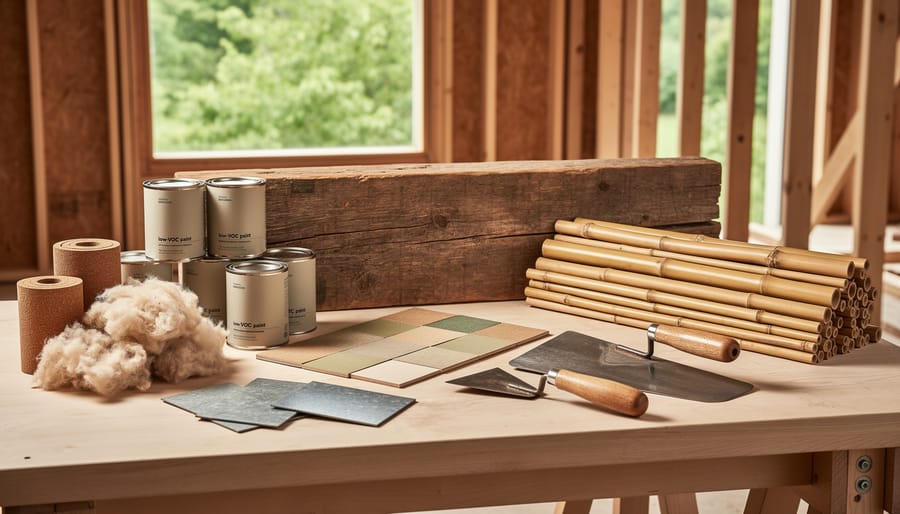
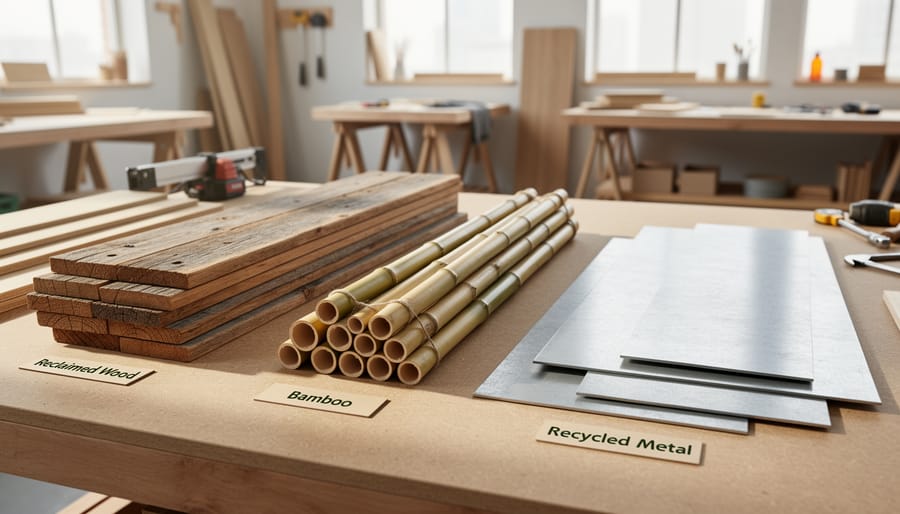
Choose reclaimed wood, recycled metal, and bamboo as your first alternatives to conventional materials—these three options reduce embodied carbon by 40-80% compared to virgin alternatives while delivering comparable structural performance. Start by calculating your project’s material needs, then source locally within a 100-mile radius to minimize transportation emissions that account for 15-20% of a building material’s lifecycle footprint.
Prioritize materials with third-party certifications like Cradle to Cradle, FSC, or GreenGuard to verify environmental claims. These labels confirm reduced toxicity, responsible sourcing, and end-of-life recyclability—factors that determine whether a material truly benefits the environment across its entire lifecycle, not just at installation.
Replace standard insulation with cellulose, sheep’s wool, or cork alternatives that offer R-values matching fiberglass while sequestering carbon rather than releasing it. These materials maintain thermal performance for 50+ years, reducing energy consumption throughout your building’s operational phase, which represents 80-90% of total lifecycle emissions.
Select low-VOC paints, natural linoleum, and clay plasters for interior finishes to improve indoor air quality while supporting circular economy principles. These materials break down safely, avoiding the landfill burden of vinyl and synthetic coatings that persist for centuries.
Understanding lifecycle impacts transforms material selection from simple cost comparison to strategic environmental investment. Every choice you make compounds—whether reducing extraction impacts, lowering operational energy, or ensuring materials return safely to biological or technical cycles. The practical guidance ahead breaks down specific materials, their applications, and the tools needed to work with them effectively, whether you own equipment or rent for single projects.
What Makes a Building Material Truly Eco-Friendly?
Understanding Lifecycle Impact
When you’re choosing materials for your project, those “eco-friendly” stickers don’t tell the whole story. That’s where lifecycle assessment comes in—a comprehensive way to evaluate a material’s environmental impact from start to finish.
Think of lifecycle assessment (LCA) as tracking a material’s environmental footprint through five key stages. First is extraction, where raw materials are pulled from the earth. Mining metals or quarrying stone requires significant energy and can disrupt ecosystems. Second comes production, which transforms raw materials into usable products—often the most energy-intensive phase. A brick needs firing in kilns, while timber requires milling and treatment.
Transportation is the third stage, and distance matters enormously. Importing bamboo flooring from overseas might negate its renewable benefits compared to locally-sourced recycled timber. The use phase—stage four—considers how materials perform during a building’s lifetime. Quality insulation, for instance, saves far more energy over decades than it consumed during manufacture. This principle extends to passive building design, where initial material choices dramatically reduce ongoing environmental costs.
Finally, disposal and recycling evaluate what happens when materials reach end-of-life. Can they be recycled, composted, or must they sit in landfill for centuries?
Why does this matter more than green labels? Because marketing claims often highlight one positive attribute while ignoring others. “Natural” doesn’t automatically mean sustainable if the material travelled halfway around the world. “Recycled” loses value if the recycling process consumed excessive energy.
According to community feedback from granny flats builders Sydney and DIYers, understanding LCA helps them make genuinely informed choices rather than falling for greenwashing. You’ll select materials that actually reduce environmental impact across their entire lifetime, not just at the checkout.
Top Eco-Friendly Building Materials You Can Use Today
Reclaimed and Recycled Wood
Reclaimed and recycled wood offers one of the most accessible entry points into eco-friendly building. By giving existing timber a second life, you’re diverting material from landfills while reducing demand for newly harvested lumber. The environmental payoff is substantial, since the wood has already been processed and seasoned, eliminating the carbon footprint of fresh milling and kiln-drying.
Sourcing reclaimed wood requires some detective work. Check demolition sites, salvage yards, and online marketplaces where renovation contractors often sell materials from teardowns. Old barns, factories, and shipping pallets provide excellent lumber, though you’ll need to inspect carefully for rot, insect damage, and embedded nails or hardware. Community reviews on salvage suppliers help identify reputable sources with quality stock.
Working with reclaimed materials demands patience and the right equipment. You’ll need a metal detector to locate hidden fasteners that could damage blades, plus a reciprocating saw for removing old nails. A thickness planer helps restore weathered surfaces, and orbital sanders smooth out imperfections. Since many DIYers won’t own these specialized tools, hiring equipment for weekend projects makes economic sense without the upfront investment.
Quality concerns are valid but manageable. Look for dense hardwoods with minimal checking or warping. Dense species like oak and maple withstand decades better than softer pines. While reclaimed wood often costs more per board foot than new lumber initially, you’re paying for character, durability, and sustainability. Applications range from flooring and accent walls to furniture and outdoor decking, where the aged patina adds unique aesthetic value that new materials simply cannot replicate.
Bamboo: The Fast-Growing Alternative
Bamboo stands out as one of nature’s most renewable building materials, reaching maturity in just 3-5 years compared to hardwood trees that take 25-50 years. This grass species regenerates from its root system after harvesting, requiring no replanting while naturally absorbing more carbon dioxide than equivalent tree stands.
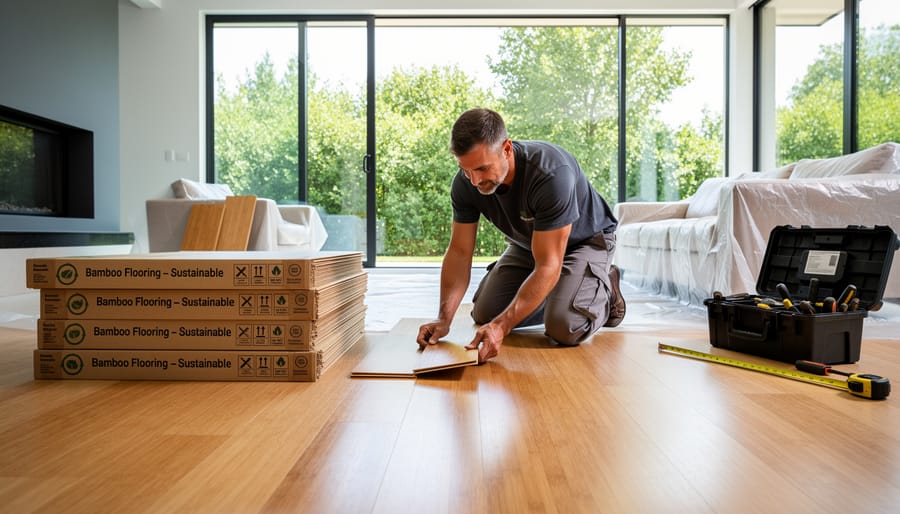
For DIY projects, bamboo excels in several applications. Flooring remains the most popular use, offering comparable durability to oak when properly manufactured. Structural elements like beams and columns work well in non-load-bearing applications, though always check local building codes. Bamboo also shines in decorative finishes, paneling, and cabinetry.
Installation typically requires standard woodworking tools you might already own or can easily rent. For flooring, you’ll need a table saw or circular saw, pneumatic flooring nailer, and moisture meter to test subfloor conditions. Community reviews consistently emphasize the importance of acclimating bamboo to your home’s humidity for 72 hours before installation to prevent warping.
Durability varies by density grade. Strand-woven bamboo rates highest on the Janka hardness scale, exceeding many traditional hardwoods. However, bamboo is susceptible to moisture damage, making it unsuitable for bathrooms without proper sealing.
Maintenance is straightforward: sweep regularly and damp-mop with pH-neutral cleaners. Refinishing is possible but requires careful sanding to avoid penetrating through the wear layer. User feedback suggests applying polyurethane sealant every 3-5 years maintains optimal protection and appearance.
Recycled Steel and Metal
Recycled steel and metal offer compelling environmental advantages over virgin materials. Steel production from recycled sources uses approximately 75% less energy and reduces greenhouse gas emissions by 58% compared to manufacturing from raw iron ore. These metals can be recycled indefinitely without losing structural integrity, making them truly circular building materials.
In construction, recycled steel commonly appears in structural beams, roofing panels, framing systems, and reinforcement bars. You’ll also find it in gutters, downspouts, and decorative metalwork. Performance-wise, recycled steel matches virgin material specifications exactly, meeting the same building codes and load-bearing requirements. The difference lies purely in environmental impact, not structural capability.
Installing metal building components requires specific equipment depending on your project scope. For steel framing, you’ll need metal cutting saws, screw guns, and magnetic drill presses. Roofing projects benefit from panel lifters and seaming tools. Since these aren’t everyday items for most DIYers, consider hiring equipment rather than purchasing it outright for one-time projects. Local tool rental centres typically stock specialized metal-working equipment at reasonable daily rates.
When comparing costs, recycled metals often price competitively with virgin alternatives while offering superior durability and longevity. Steel structures resist warping, cracking, and pest damage better than many traditional materials. Community feedback consistently highlights the material’s fire resistance and dimensional stability as major advantages, particularly in regions with extreme weather conditions.
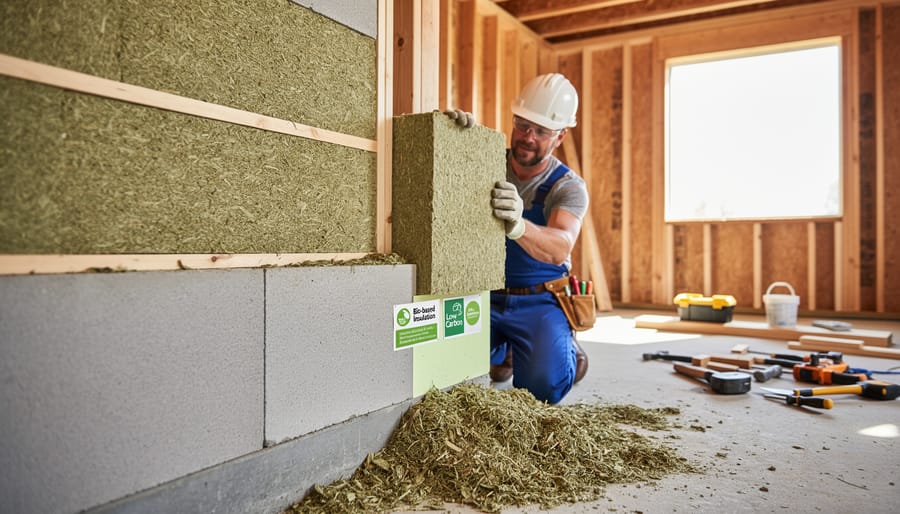
Hempcrete and Other Bio-Based Insulation
Plant-based insulation materials are gaining popularity among eco-conscious builders, and for good reason. These natural alternatives offer excellent thermal performance while reducing environmental impact throughout their lifecycle.
Hempcrete, made from hemp hurds mixed with lime binder, stands out as a carbon-negative material that actually absorbs CO2 as it cures. It provides moderate insulation (R-value of 2.5 per inch) and excellent moisture regulation. Installation requires a pneumatic sprayer or hand-packing between temporary formwork. While hempcrete isn’t load-bearing, it creates durable, breathable walls perfect for retrofit projects. Expect costs around $200-250 per cubic meter of material.
Cork insulation, harvested from bark without harming trees, delivers superior performance with R-values up to 4.0 per inch. Available in boards or granulated form, cork resists moisture, pests, and fire naturally. Installation mirrors standard rigid board insulation using a reciprocating saw for cutting and adhesive for mounting. Cork costs more upfront (roughly $8-12 per square foot) but lasts decades without degrading.
Sheep’s wool insulation offers R-values comparable to fibreglass (around 3.5 per inch) with natural flame resistance and moisture management. It comes in batts that install easily between studs using standard cutting tools and protective gear. Some builders hire insulation blowers for loose-fill applications in attics and cavities.
When exploring green insulation options, consider your climate, budget, and installation timeline. Many tool hire centres now stock specialized equipment like spray systems and compaction tools, making these sustainable materials accessible for DIY projects without major equipment investment.
Recycled Concrete and Aggregate
Recycled concrete and aggregate offer a sustainable alternative to virgin materials while maintaining impressive structural performance. Created by crushing demolition waste and old concrete structures, this material diverts tons of debris from landfills and reduces the environmental impact of quarrying new stone.
Performance-wise, recycled concrete aggregate typically matches virgin concrete in most residential applications, achieving compressive strengths suitable for foundations, driveways, and pathways. However, it absorbs slightly more water than traditional aggregate, which means you’ll need to adjust your water-to-cement ratio during mixing. Many professional contractors report excellent results when recycled aggregate comprises 20-30% of the mix for structural applications, or up to 100% for non-structural uses like sub-base layers.
When using recycled concrete, you’ll need the same equipment as traditional concrete work. Standard concrete mixers handle recycled aggregate well, though you may want to hire a larger capacity mixer if working with coarser grades. For pouring, conventional screeds and trowels work perfectly fine.
Community feedback consistently highlights cost savings as a major advantage, with recycled concrete often priced 20-40% below virgin materials. Users recommend requesting material certifications from suppliers to verify aggregate quality and ensure it’s free from contaminants like wood, plastic, or excessive dirt that could compromise structural integrity. For load-bearing applications, always consult local building codes and consider having test cylinders evaluated.
Low-VOC and Natural Paints and Finishes
Low-VOC and natural paints offer significant health advantages by releasing fewer volatile organic compounds into your home’s air. Traditional paints can off-gas harmful chemicals for months after application, potentially causing headaches, respiratory irritation, and long-term health concerns. Eco-friendly alternatives use plant-based oils, natural pigments, and mineral components instead of petroleum-derived ingredients.
Application techniques remain largely the same as conventional paints. You’ll need standard equipment including brushes, rollers, painter’s tape, drop cloths, and paint trays. Many natural paints require slightly different mixing procedures, so always read manufacturer instructions carefully. Some clay-based finishes may need specialized trowels or application tools, which are readily available at tool rental centers if you’re tackling a one-time project.
Coverage rates typically match or slightly trail conventional paints, with most products covering 350-400 square feet per gallon. Plan for two coats regardless of paint type. Durability has improved dramatically in recent years. Quality low-VOC paints now offer comparable lifespan to traditional options, often lasting 5-7 years in high-traffic areas.
According to community feedback from DIYers who’ve made the switch, the slightly higher upfront cost is offset by improved indoor air quality and reduced environmental impact. Many users report minimal odor during application and faster room reoccupancy times.
Tools and Equipment You’ll Need for Sustainable Building
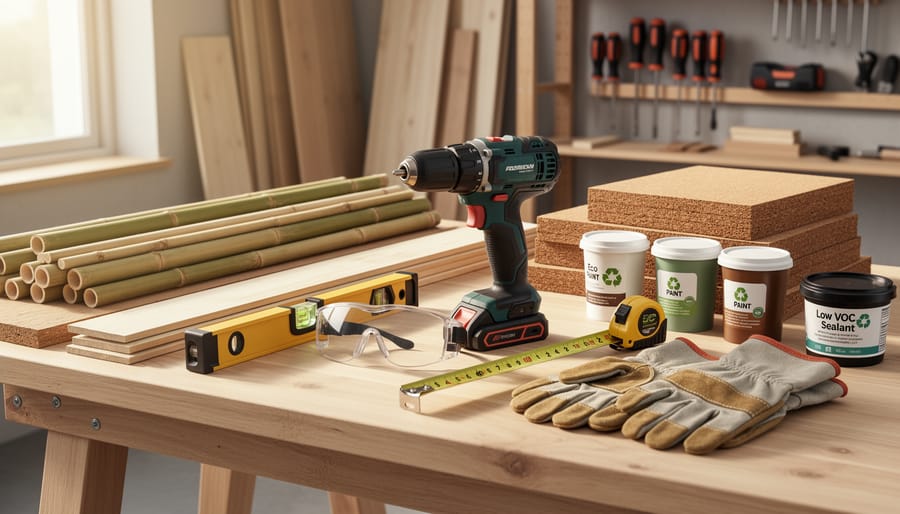
Working with eco-friendly building materials doesn’t always require specialized equipment, but having the right tools makes a significant difference in achieving professional results. The good news is that many tools you already own can handle sustainable materials, while others are worth hiring for specific projects.
For cutting and shaping bamboo flooring or reclaimed timber, you’ll need a quality circular saw with carbide-tipped blades. These blades handle the density variations in recycled wood without dulling quickly. A compound miter saw is essential for precise angle cuts, particularly when working with cork or bamboo trim. If you’re tackling a one-off project, hiring these power tools is often more economical than purchasing.
When installing natural insulation like sheep’s wool or cellulose, basic hand tools suffice. You’ll need a utility knife with sharp blades for cutting batts to size, a staple gun for securing material, and protective equipment including dust masks and gloves. Natural fibers can irritate skin and airways during installation, making safety gear non-negotiable.
For hempcrete or lime-based plasters, standard mixing equipment works well. A paddle mixer attachment for your drill handles small batches, while larger projects benefit from hiring a forced-action mixer. These materials require thorough mixing to achieve proper consistency, and the right equipment saves hours of manual labor.
Moisture meters prove invaluable when working with natural materials. Reclaimed timber, straw bales, and natural plasters all perform best at specific moisture levels. A quality meter costs around fifty dollars and prevents costly mistakes from premature installation.
The rise of green building tools means you can now find equipment specifically designed for sustainable construction. Battery-powered tools reduce on-site emissions, while dust extraction systems keep natural fiber particles contained during cutting.
Consider hiring specialized equipment for installing living walls or green roofs. These projects require specific brackets, irrigation systems, and sometimes scaffolding. Tool hire centers increasingly stock equipment suited to eco-friendly projects, and staff can offer guidance on what you’ll need.
Community tool libraries and builder cooperatives offer another avenue for accessing equipment without purchasing. Many cities now have these shared resources, allowing members to borrow tools for sustainable building projects while connecting with experienced builders who can share practical advice.
Real Cost Analysis: Sustainable vs. Traditional Materials
Let’s tackle the elephant in the room: eco-friendly materials often carry higher upfront costs, but that’s only part of the story. When you factor in durability, maintenance, and energy savings, the numbers tell a different tale.
Take reclaimed timber versus new hardwood. Reclaimed costs roughly 20-30% more initially, but it’s already seasoned, meaning zero warping or shrinking issues that plague fresh lumber. A DIY deck project using reclaimed materials might cost $3,500 versus $2,800 for new wood, but the reclaimed version typically lasts 15+ years longer with minimal maintenance. That’s a clear winner when you calculate cost per year of use.
Bamboo flooring offers another compelling example. At $3-8 per square foot, it’s competitive with mid-range hardwood but regenerates in 3-5 years compared to 20-60 years for trees. User feedback from our community consistently rates bamboo as more scratch-resistant than traditional hardwood, reducing refinishing costs over time.
For insulation, energy-efficient insulation like sheep’s wool or cellulose runs 15-25% higher than fibreglass initially. However, homeowners report 20-30% lower heating and cooling bills, meaning the investment typically pays for itself within 5-7 years. One tradesperson from our community shared that a 150-square-metre home insulation upgrade cost an additional $800 for eco-friendly materials but saved $280 annually in energy costs.
The durability factor matters significantly. Cork flooring, hempcrete, and recycled steel all outlast their conventional counterparts, reducing replacement frequency. When exploring sustainable building solutions, remember that hiring specialized installation tools rather than purchasing them can offset higher material costs, keeping your project budget-friendly while maintaining environmental standards.
The bottom line: eco-friendly doesn’t always mean expensive when you measure true lifecycle value rather than just sticker price.
Common Mistakes When Choosing Eco-Friendly Materials
Even well-intentioned builders fall into traps when selecting sustainable materials. Understanding these common mistakes helps you make truly eco-friendly choices rather than just feeling good about surface-level claims.
Greenwashing remains the biggest pitfall. Many manufacturers slap “natural” or “eco-friendly” labels on products without substantiation. Always look for third-party certifications like FSC, Cradle to Cradle, or GREENGUARD rather than trusting marketing language alone. Ask suppliers for documentation proving their environmental claims, and don’t hesitate to research products independently through community reviews.
Compatibility issues can undermine your project’s success. That reclaimed timber might look beautiful, but if your rented planer can’t handle its hardness or embedded nails, you’ll waste time and money. Similarly, natural lime plasters require specific substrates and won’t adhere properly to all surfaces. Test material compatibility before committing to large quantities, and consult with experienced tradespeople in your community about real-world performance.
Over-specification creates unnecessary environmental impact. Choosing certified tropical hardwood for interior trim when local softwood would suffice defeats the purpose. Match material durability to actual use requirements rather than defaulting to premium options everywhere.
Neglecting local sourcing misses significant carbon savings. Materials transported across continents carry hidden environmental costs regardless of their sustainable origins. Regional alternatives often perform equally well while supporting local economies and reducing transportation emissions.
Installation technique matters enormously with sustainable materials. Natural insulation like sheep’s wool or cellulose requires different handling than conventional fiberglass. Improper installation can reduce effectiveness, create moisture problems, or even present fire risks. When hiring specialized equipment for installation, request operator guidance specific to eco-friendly materials. Many tool rental centers now offer advice tailored to sustainable building practices, helping you avoid costly mistakes while ensuring safety throughout your project.
Making the switch to eco-friendly building materials doesn’t require an all-or-nothing approach. Whether you’re planning a major renovation or a weekend project, starting with just one sustainable material swap makes a real difference. Replace conventional drywall with reclaimed wood paneling, swap out standard insulation for recycled denim batts, or choose bamboo flooring instead of hardwood. Every choice counts toward a healthier planet and living space.
The tools needed to work with sustainable materials are the same ones you’d use for conventional options, and hiring equipment keeps costs manageable while reducing your environmental footprint. From circular saws for cutting reclaimed timber to pneumatic nailers for bamboo flooring, having the right tools ensures professional results without the investment.
We want to hear from you. What eco-friendly materials have you used in your projects? Which swaps worked best, and what challenges did you face? Share your experiences and questions in the comments below. Your insights help build a community where everyone can learn practical ways to make their building projects more sustainable. Together, we’re proving that environmentally responsible construction is achievable for DIYers and professionals alike.
Related Posts


Post a Comment