

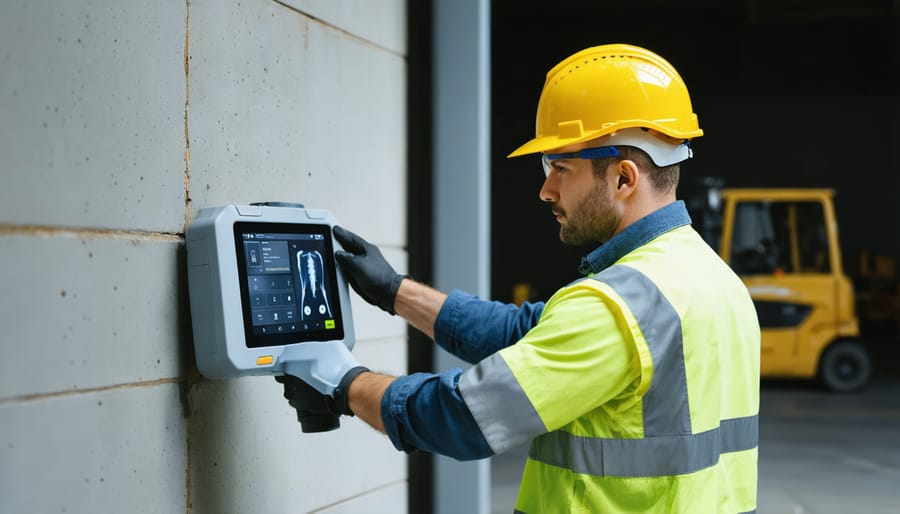
**Scan before you drill.** Concrete x-ray services use advanced imaging technology to reveal what’s hidden inside concrete structures—rebar, post-tension cables, conduits, and voids—preventing costly mistakes and safety hazards during renovation or maintenance projects.
Behind every concrete wall, floor, or ceiling lies a network of essential infrastructure. Cutting through a post-tension cable can cause catastrophic structural failure. Striking electrical conduits creates fire risks and expensive repairs. Traditional methods like ground-penetrating radar provide surface-level data, but x-ray imaging delivers precise, photographic evidence of what exists within your concrete, down to exact depths and positions.
For facility managers overseeing warehouses, storage units, or commercial properties, these services prove invaluable during expansion projects, anchor installations, or concrete storage facility maintenance. The technology works by sending x-ray beams through concrete from one side while capturing images on the opposite surface, creating detailed maps of everything embedded within.
**When you need concrete x-ray services:** Installing heavy machinery anchors, cutting openings for HVAC systems, investigating structural concerns, or planning any penetration deeper than 50mm into existing concrete. The average service call costs $500-$1,500 but prevents repairs that frequently exceed $10,000—plus potential injury claims and project delays.
Professional technicians typically complete scans within 1-3 hours, providing immediate digital reports that guide your contractors with millimetre-accurate placement recommendations. This isn’t just about avoiding problems; it’s about working smarter and safer.
What Concrete X-Ray Services Actually Do (And Why You Need Them)
The Technology Behind the Scan
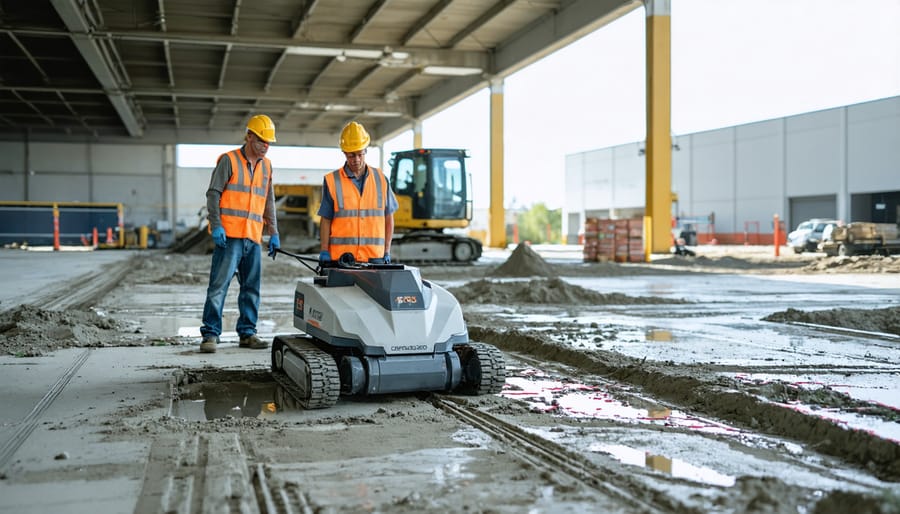
Concrete x-ray services use two primary technologies to see inside solid structures: Ground Penetrating Radar (GPR) and traditional X-ray imaging. Think of it like getting a medical x-ray at your doctor’s office, but instead of checking bones, we’re examining what’s hidden in concrete slabs and walls.
GPR works by sending electromagnetic pulses into the concrete. These waves bounce back when they hit objects like rebar, conduits, or voids, creating a detailed image of what’s below the surface. It’s completely safe—no radiation involved—and technicians can scan while you continue working nearby.
Traditional concrete x-ray uses low-level radiation, similar to medical imaging, but requires access to both sides of the structure. A radioactive source on one side projects rays through the concrete while film or digital sensors on the opposite side capture the image.
Both methods reveal the location and depth of embedded utilities, structural elements, and potential problem areas. GPR typically provides real-time results and works well for most concrete scanning needs up to 18 inches deep, while x-ray offers superior image clarity for critical structural assessments.
What Shows Up on a Concrete Scan
Concrete scanning reveals a detailed underground picture that helps you work safely and efficiently. When technicians perform a concrete x-ray, the images display several critical elements within your storage structure.
**Reinforcement patterns** appear as dark lines or grids, showing the location, spacing, and depth of rebar (steel reinforcement bars) and wire mesh. This information is essential before cutting, coring, or drilling into concrete floors or walls, preventing costly damage to structural supports.
**Embedded utilities** show up clearly on scans, including electrical conduits, water pipes, gas lines, and communication cables. Identifying these before any concrete work prevents dangerous accidents and expensive repairs that could shut down your storage facility.
**Structural elements** like post-tension cables, support beams, and anchor bolts become visible, helping you understand load-bearing capacities and safe modification zones. For storage facilities, this is particularly important when installing heavy shelving systems or equipment.
**Problem areas** also reveal themselves through scanning. Technicians can identify voids, cracks, delamination, and areas where concrete has deteriorated—issues that might compromise your storage structure’s integrity. Early detection means addressing problems before they escalate into safety hazards or require extensive reconstruction.
Common Concrete Storage Issues That X-Ray Services Uncover
Hidden Structural Damage
Concrete may look solid on the surface, but hidden structural damage can silently threaten your storage facility’s integrity. X-ray imaging reveals internal voids—empty spaces where concrete didn’t properly fill during pouring—that create weak points susceptible to sudden failure under heavy loads. Delamination occurs when concrete layers separate internally, often caused by moisture intrusion or thermal expansion, compromising the structure’s load-bearing capacity even though the surface appears intact.
Internal cracking presents another invisible danger. Unlike surface cracks you can spot during routine inspections, these fissures develop deep within the concrete from freeze-thaw cycles, chemical reactions, or excessive vibration. Left undetected, they expand over time, allowing water penetration that accelerates deterioration and corrosion of embedded rebar. For facility managers, catching these issues early through concrete x-ray services prevents catastrophic failures and costly emergency repairs. The technology provides a non-invasive diagnostic tool that maps these hidden defects without drilling test holes or compromising the structure further, helping you make informed decisions about remediation before minor issues become major safety hazards.
Concealed Utilities and Hazards
Before breaking ground on any concrete drilling or cutting project, identifying hidden utilities is critical for both safety and cost management. Concrete x-ray services reveal electrical conduits, water and gas pipes, rebar reinforcement, and post-tension cables—all invisible threats that could lead to catastrophic accidents, expensive repairs, or facility shutdowns.
Post-tension cables present particular danger. When accidentally cut, these high-tension structural cables can whip violently, causing severe injuries and compromising building integrity. Similarly, striking live electrical conduits risks electrocution, while severing plumbing lines creates flooding and water damage.
Professional cable locating services work hand-in-hand with concrete scanning to provide comprehensive utility mapping. This technology uses ground-penetrating radar to create detailed images showing the exact location, depth, and orientation of embedded objects. The non-invasive process typically takes minutes per scan area, allowing contractors to mark safe drilling zones directly on the concrete surface.
For facility managers and contractors, this preventative step eliminates guesswork and protects workers, equipment, and project timelines from unexpected disasters.
Deterioration in Aging Facilities
Older storage facilities face unique challenges as concrete ages and environmental factors take their toll. Concrete x-ray technology reveals what’s happening beneath the surface—identifying steel reinforcement corrosion, internal cracking, and moisture intrusion long before they manifest as visible damage.
This early detection is crucial for facility managers. Corroded rebar can expand, causing concrete to crack and spall. Concrete x-ray services pinpoint these trouble spots without destructive testing, allowing you to prioritize repairs based on actual structural conditions rather than guesswork.
For facilities built 20-30 years ago, regular scanning helps track deterioration patterns over time. You’ll see exactly where water has penetrated, which areas show the most reinforcement damage, and whether previous repairs are holding up. This data-driven approach prevents catastrophic failures and helps you budget maintenance costs more accurately, extending your facility’s service life while maintaining safety standards for stored materials and equipment.
When Your Storage Facility Needs Concrete Scanning
Before Any Drilling, Cutting, or Coring Work
Before starting any project that involves penetrating concrete—whether you’re mounting heavy-duty shelving systems, installing electrical conduits, running new plumbing lines, or making structural modifications—concrete x-ray scanning should be your first step, not an afterthought. Here’s why: concrete slabs contain hidden networks of rebar, post-tension cables, electrical conduits, and existing utilities that aren’t visible from the surface. Drilling blindly into these elements can cause catastrophic damage, from severing vital cables to compromising structural integrity.
Professional tradespeople and DIY enthusiasts alike can benefit from this non-invasive inspection method. The process reveals what’s beneath the surface before your drill bit does, preventing costly repairs, project delays, and safety hazards. Many contractors now include concrete scanning as standard practice in their project estimates because the relatively small upfront investment protects against expenses that can run into thousands of dollars. For homeowners planning renovations or installing anchor points for storage systems, understanding subsurface conditions ensures your project proceeds safely and according to plan without unexpected complications.
During Routine Maintenance Inspections
Regular facility inspections become significantly more effective when concrete x-ray services are part of your maintenance routine. Rather than waiting for visible cracks or structural concerns to appear, proactive scanning helps identify hidden issues like internal corrosion, rebar degradation, or developing voids before they escalate into costly repairs.
Many facility managers schedule concrete x-ray assessments annually or biannually, depending on the building’s age and usage intensity. These scans create a baseline record of your concrete’s internal condition, making it easier to track changes over time. You’ll spot patterns that might indicate water infiltration, settling issues, or post-tensioned cable deterioration—problems that show few external symptoms initially.
Professional scanning during routine maintenance proves especially valuable before planning renovations or modifications. Knowing exactly where utilities, reinforcement bars, and conduits are located prevents accidental damage during drilling or cutting operations. This knowledge saves money, protects worker safety, and reduces project delays. Community feedback consistently highlights how preventive scanning eliminates surprise discoveries that derail construction timelines and budgets.
When Planning Facility Upgrades or Expansions
Before breaking ground on any facility renovation or expansion project, concrete X-ray scanning should be your first step—not an afterthought. These scans reveal exactly what’s hidden within your concrete structures, eliminating costly surprises that can derail budgets and timelines.
When planning to add new electrical conduits, plumbing lines, or structural supports, X-ray imaging shows you where existing rebar, post-tension cables, and utilities are located. This means you can design around obstacles rather than discovering them mid-project when workers have already cut into walls or floors. Storage facility managers particularly benefit from this proactive approach when expanding unit capacity or upgrading security systems.
The upfront investment in scanning typically pays for itself by preventing just one major mistake—like severing a post-tension cable (which can cost thousands to repair) or hitting an underground utility line. You’ll also avoid project delays, emergency repairs, and potential safety hazards. Smart planning means having accurate maps of your concrete structures before any cutting, drilling, or demolition begins, giving contractors the confidence to work efficiently and safely.
How to Hire Concrete X-Ray Services (What You Need to Know)
Questions to Ask Before Hiring
Before selecting a concrete x-ray service provider, confirm they hold current certifications from recognized organizations like the American Society for Nondestructive Testing (ASNT). Experienced technicians should have at least two years of field work and be familiar with ground penetrating radar (GPR) technology—essentially a specialized tool that sends radar pulses into concrete to create images of what’s hidden inside.
Ask what equipment they use. Modern GPR units with real-time imaging capabilities provide immediate results on-site, while older analog systems may require off-site analysis. Inquire about their scanning depth range—most projects need detection capabilities of 12 to 18 inches, though some equipment can penetrate deeper.
Turnaround time matters for project scheduling. Most providers can deliver preliminary scan reports within 24 hours, with detailed documentation following in 2-3 business days. For urgent situations, some offer same-day service at premium rates.
Request examples of past projects similar to yours, particularly in storage facilities or similar structures. Ask about their insurance coverage—reputable providers carry both general liability and professional indemnity insurance. Finally, clarify pricing structure upfront: some charge hourly rates while others price per square footage scanned. Understanding these factors ensures you hire qualified professionals who can safely guide your concrete cutting or drilling work.
What to Expect During the Scanning Process
When you schedule concrete x-ray services, the process is straightforward and designed to minimize disruption to your daily operations. Before the technician arrives, you’ll simply need to clear the scan area of loose debris and provide access to the work zone—no major prep work required.
The service visit typically begins with a brief consultation where the technician marks the scanning areas and discusses your specific concerns, whether you’re locating rebar before drilling or mapping post-tension cables. Using Ground Penetrating Radar (GPR) equipment, the technician systematically scans the designated concrete sections. Most standard scans take between 30 minutes to two hours, depending on the area size and complexity.
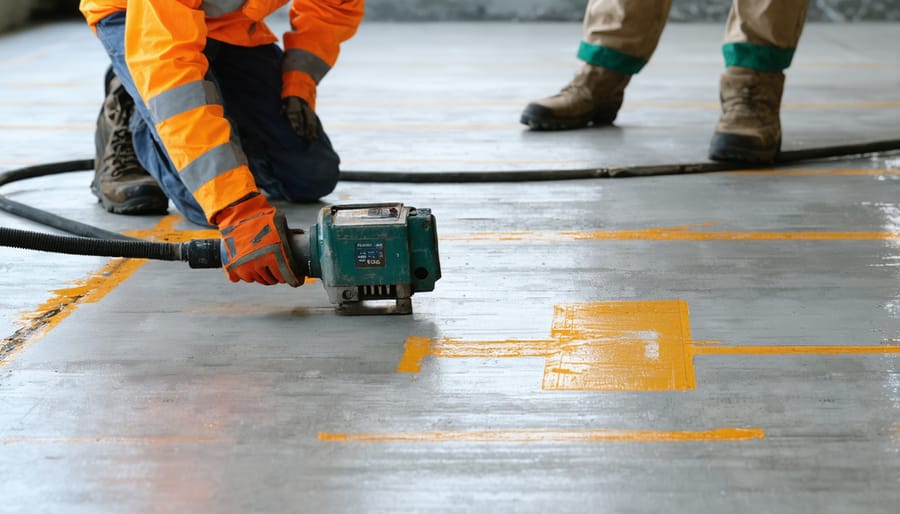
You’ll receive real-time feedback as the technician identifies embedded objects like reinforcement bars, conduits, or voids within the concrete. The equipment is completely non-invasive—no drilling, dust, or structural damage occurs during scanning. Many technicians provide on-site markings with spray paint or chalk, clearly indicating safe drilling zones and obstacle locations.
After scanning, you’ll typically receive a detailed report with images and measurements within 24-48 hours. This documentation proves invaluable for project planning and serves as a permanent record. Throughout the entire process, your facility remains operational, making concrete x-ray services one of the least disruptive diagnostic methods available for construction and maintenance projects.
Understanding Your Scan Results
Concrete x-ray scan reports typically include both visual imaging and marked-up diagrams showing what’s hidden beneath the surface. The images display different densities—rebar and conduits appear as bright or dark contrasts against the concrete background, depending on the scanning method used. Technicians usually overlay colored lines or symbols on these images: red often indicates rebar, blue marks post-tension cables, and yellow highlights electrical conduits or PVC pipes.
Your report should include depth measurements, showing how far below the surface each element sits. This information is critical when planning cut depths for drilling or coring operations. Most reports also provide a legend explaining all markings and abbreviations used.
Don’t hesitate to request clarification if anything seems unclear. Ask technicians to walk you through the findings, especially if you’re planning DIY work. Specifically request information about safe drilling zones and any areas requiring special caution. Professional operators should explain confidence levels in their findings—some materials are easier to detect than others.
Keep your report handy during any concrete work, and share it with contractors or other tradespeople involved in your project. These documents serve as essential safety references and project planning tools.
Real Cost Savings: X-Ray Services vs. Repair Bills
Let’s look at real numbers that make the case for concrete x-ray services crystal clear. A typical scanning session for a residential or small commercial project runs between $300-$800, depending on the area size and complexity. Compare that to what happens when things go wrong.
**The Emergency Repair Scenario**
Hit a major electrical conduit while core drilling? You’re looking at $2,000-$5,000 minimum for emergency electrical repairs, plus project delays of 2-5 days while you wait for licensed electricians. Sever a water line embedded in a concrete floor? That’s $3,000-$8,000 in plumbing repairs, water damage remediation, and flooring replacement—not to mention the headache of coordinating multiple contractors.
**Structural Damage Costs**
Accidentally cutting through rebar in a load-bearing wall creates an even bigger problem. Structural engineers charge $150-$300 per hour for assessments, and repairs involving epoxy injection, steel reinforcement, or concrete replacement easily climb into the $10,000-$25,000 range. One contractor we spoke with shared how a $400 scanning investment would have prevented a $17,000 structural repair bill.
**The Hidden Expenses**
Beyond direct repair costs, consider project delays that keep your team idle (still paying wages), equipment rental extensions, and potential liability issues if damaged utilities affect neighboring properties. Some insurance policies won’t cover damages from work performed without proper scanning documentation.
**The Bottom Line**
Even if concrete x-ray scanning prevents just one significant mistake in ten projects, you’re ahead financially. But the reality is it prevents problems on nearly every job where hidden obstacles exist. The modest upfront investment delivers immediate peace of mind and protects your budget from explosive, unexpected expenses that can derail entire projects.
Safety Considerations and Best Practices
Concrete x-ray services significantly enhance workplace safety by eliminating dangerous guesswork during cutting, drilling, or coring operations. Before these non-destructive scanning techniques became standard practice, workers risked striking live electrical conduits, pressurized water lines, or structural reinforcement—hazards that could result in serious injury, electrocution, or catastrophic structural failure. By mapping what’s hidden within concrete slabs and walls, these services protect both maintenance teams and facility users from preventable accidents.
From a regulatory perspective, concrete scanning supports comprehensive safety compliance requirements. Many jurisdictions mandate utility location before invasive work, and documentation from x-ray services provides verifiable evidence of due diligence. This proactive approach parallels other facility safety measures, such as maintaining proper storage racking compliance, creating a holistic safety framework.
Beyond regulatory obligations, concrete scanning offers substantial liability protection. Accidental utility strikes can trigger costly repairs, project delays, insurance claims, and potential lawsuits. The relatively modest investment in pre-construction scanning typically represents a fraction of potential liability costs, making it both a safety measure and a sound financial decision.
Building a culture of safe maintenance practices starts with making concrete x-ray services a standard protocol rather than an optional extra. Facility managers should integrate scanning requirements into work orders, maintenance schedules, and contractor agreements. When teams consistently prioritize knowing what’s beneath the surface before beginning work, safety becomes embedded in everyday operations rather than an afterthought.
Concrete x-ray services offer invaluable protection for your storage facility’s structural integrity and long-term durability. By revealing what’s hidden beneath the surface before you drill, cut, or anchor, these scanning technologies prevent costly mistakes that could compromise your building’s safety and lifespan. Whether you’re a facility manager planning renovations, a contractor working on modifications, or a property owner considering upgrades, investing in concrete scanning is a smart decision that pays dividends through avoided damage, reduced liability, and peace of mind.
As you plan your next concrete project—whether it’s installing new racking systems, adding electrical conduits, or reinforcing foundations—we encourage you to consider concrete x-ray services as an essential first step. The relatively small upfront cost of scanning can save thousands in repairs and prevent dangerous accidents.
We’d love to hear from you! Have you used concrete scanning services for your facility? What was your experience? If you’re considering these services for an upcoming project, what questions do you have? Share your thoughts, experiences, or concerns in the comments below. Your insights help build our community’s collective knowledge and support fellow readers facing similar decisions.
Related Posts


Post a Comment