
Estimate your renovation or building project costs within minutes by using historical data from similar projects—multiply a known cost per unit (like price per square metre) by your project’s scope to get a ballpark figure before detailed planning begins. This parametric cost estimating technique helps you predict project costs when you’re still deciding whether to tackle that deck extension or kitchen remodel, giving you the confidence to move forward or adjust your plans early.
Identify the cost driver that matters most for your specific project—square metres for flooring or painting, linear metres for fencing, cubic metres for concrete work, or number of fixtures for plumbing updates. Gather pricing data from recently completed projects in your area, either through community forums, contractor quotes, or your own past invoices, then calculate the average cost per unit. Apply this rate to your project dimensions to generate a quick estimate that typically falls within 15-25% of actual costs.
This approach works best during the conceptual phase when you need to set budgets, compare design alternatives, or determine whether professional contractors or DIY execution makes financial sense. While it won’t replace detailed quotes for final planning, parametric estimating gives you the reliable early-stage numbers needed to make informed decisions about tool rentals, material purchases, and project timelines without spending hours on complex calculations.
What Is Parametric Cost Estimating?

How It Differs from Other Estimating Methods
Parametric estimating stands apart from other methods by using mathematical relationships between project variables and costs. Unlike analogous estimating, which relies on comparing your project to similar past projects, parametric uses statistical data and formulas to calculate costs based on measurable parameters like square metres or linear metres.
Bottom-up estimating involves breaking down every single task and material requirement, making it extremely accurate but time-consuming. Think of it as counting every nail and screw versus using a formula based on project size. While detailed estimating approaches like bottom-up work brilliantly when you have complete plans, parametric shines during early planning when you need quick, reasonably accurate figures.
Expert judgment depends entirely on someone’s experience and gut feeling, which can vary widely between professionals. Parametric removes this subjectivity by using proven historical data and industry standards.
Choose parametric estimating when you’re in the initial planning phase, need to compare different project options quickly, or want to establish preliminary budgets before investing time in detailed designs. It’s particularly valuable for projects following standard patterns, like residential construction or routine renovations.
Why Use Parametric Estimating in Early Project Phases
Real-World Scenarios Where It Shines
Parametric cost estimating proves invaluable when you need ballpark figures before committing to detailed planning. Here’s where this technique truly shines in everyday projects.
Building a deck represents a perfect scenario. Instead of measuring every board and fastener, you can estimate using cost per square foot. If similar decks in your area run about $35 per square foot and you’re planning a 200-square-foot deck, you’re looking at roughly $7,000. This quick calculation helps you determine whether the project fits your budget before investing time in detailed plans or booking equipment rentals.
Kitchen renovations benefit enormously from parametric estimating. Using averages like $150-$250 per square foot for mid-range updates, a 100-square-foot kitchen renovation would cost between $15,000-$25,000. This range helps you evaluate whether to proceed and what tool rentals you’ll need to budget for, from tile saws to paint sprayers.
Landscaping projects become less daunting with parametric methods. If sod installation typically costs $0.50 per square foot including labor, you can quickly estimate costs for your 500-square-foot lawn project at around $250, plus equipment rental for soil preparation.
Tool rental planning also benefits from this approach. When estimating a fencing project at $20 per linear foot for 150 feet of fence, you immediately know you’re working with a $3,000 budget, allowing you to factor in post hole digger rentals and other necessary equipment without overcomplicating early planning stages.
The Basic Formula Behind Parametric Estimates
Where to Find Reliable Historical Data
Finding reliable historical data is the foundation of accurate parametric cost estimating. Start by reviewing your own past project records, including receipts, invoices, and completion notes. These documents provide real-world costs specific to your work habits and local market conditions.
Industry publications and trade associations offer valuable benchmark data. Construction industry databases, tool rental company price histories, and manufacturer catalogs give you baseline figures for equipment and material costs. Many rental companies maintain transparent pricing archives you can reference.
Don’t overlook supplier quotes from recent projects. Even if you didn’t proceed with a particular supplier, those quotes capture market rates at specific points in time.
Community resources are increasingly valuable for gathering cost data. User-generated content on tool rental platforms includes real project stories where fellow DIYers and tradespeople share actual costs and timelines. Community-driven reviews often mention pricing alongside performance feedback, helping you understand typical project expenses.
Local hardware stores and rental centers can provide regional pricing information, as costs vary significantly by location. Building these relationships creates ongoing access to current market data for future estimates.
Step-by-Step: Creating Your First Parametric Estimate
Identifying Your Cost Drivers
Understanding which parameters drive your project costs is essential for accurate estimates. Start by asking: what aspects of this project will most impact the final price?
For most projects, key cost drivers include:
Size and scale: A deck’s square footage directly affects lumber, fasteners, and rental equipment needs. Doubling the area typically doubles material costs.
Complexity: Installing basic drywall costs less per square foot than creating curved archways or intricate ceiling designs. Complex work requires specialized tools and more labor hours.
Material type: Choosing pressure-treated pine versus composite decking can triple your material budget, even with identical dimensions.
Location factors: Accessibility matters. A bathroom renovation on the second floor may require additional equipment rental time compared to ground-level work, increasing costs by 15-20%.
To identify your specific drivers, review similar completed projects in online communities or user reviews. Notice patterns in what made projects expensive. A fence installation might show that terrain changes (hills requiring extra posts) drive costs more than linear footage alone. For kitchen remodels, cabinet quality and appliance choices often outweigh room size as primary cost factors.
List your project parameters, then rank them by potential cost impact to focus your estimating efforts where they matter most.
Adjusting for Your Specific Conditions
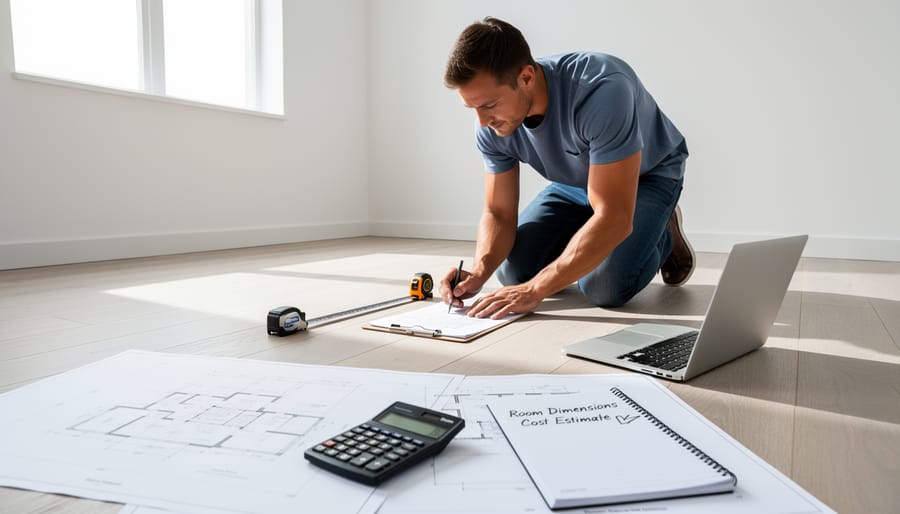
Your baseline parametric estimate is just a starting point. Real-world conditions require adjustments to get accurate numbers. Here’s what to consider:
Regional pricing differences can significantly impact your estimate. Labor rates and material costs vary widely by location. A deck project costing $5,000 in rural areas might run $8,000 in major metropolitan regions. Check local supplier pricing and typical contractor rates in your area to adjust your baseline figure accordingly.
Project complexity adds another layer. Standard parameters assume typical conditions, but unique site challenges, custom designs, or difficult access can increase costs by 15-30%. If your project involves unusual terrain, specialized finishes, or limited workspace, factor in these complexity premiums.
Timing matters too. Construction costs fluctuate seasonally and with market demand. Spring and summer typically see higher prices due to increased demand, while winter might offer savings but potentially slower progress.
Finally, consider the rent-versus-buy decision for equipment. For single-use or occasional tools, rental often makes financial sense and reduces your upfront investment. Factor rental duration into your estimate, as extended projects might tip the balance toward purchasing. Community members often share their rental experiences, providing real-world cost comparisons that refine your estimates beyond basic parameters.
Common Pitfalls and How to Avoid Them
When NOT to Use Parametric Estimating
Parametric estimating works great for early planning, but it’s not a one-size-fits-all solution. Here’s when you should skip it and use a more detailed approach instead.
If your project is highly customized or one-of-a-kind, parametric estimating won’t give you accurate results. For example, building a custom curved staircase or installing specialty equipment requires detailed takeoffs and precise calculations. Historical data from standard projects simply won’t apply.
Projects with too many unknowns also need different methods. When you’re dealing with extensive renovation work where you haven’t opened up walls yet, or when soil conditions are uncertain for foundation work, you need a contingency-heavy approach that parametric models can’t provide.
Once you’ve moved past initial planning into the execution phase, switch to more precise estimating techniques. At this stage, you should have detailed drawings, material lists, and labor hours mapped out. Parametric estimates are too rough for managing actual construction budgets or ordering materials.
Finally, if community feedback and reviews suggest significant variability in similar projects, trust those real-world experiences. When users report widely different costs for supposedly similar work, that’s a red flag that parametric estimating might miss critical factors specific to your situation.
Tools and Resources to Make Estimating Easier
Getting started with parametric estimating doesn’t require expensive software or advanced training. Several accessible tools can help you create accurate estimates quickly, whether you’re planning a weekend project or managing a professional job.
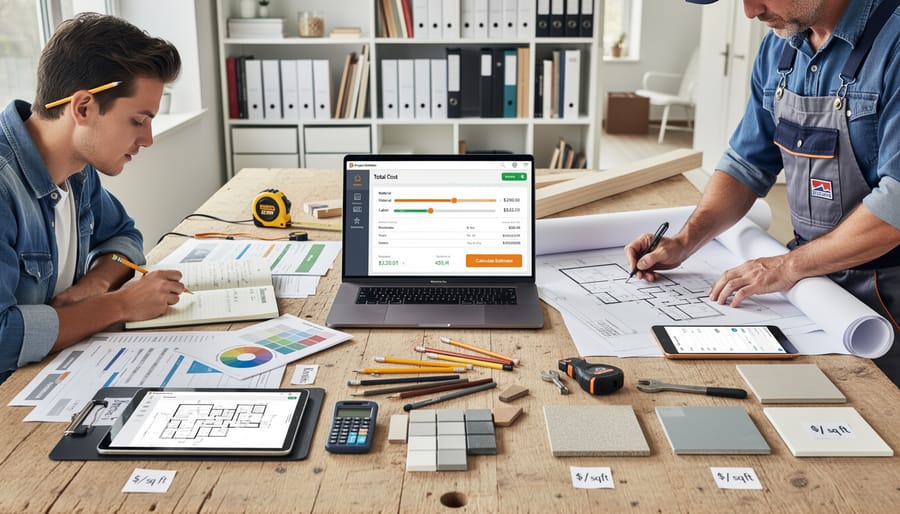
Spreadsheet templates offer the most flexibility for parametric estimating. Free templates available through Google Sheets and Excel allow you to input your parameters (like square footage or linear feet) and automatically calculate costs based on your unit rates. Many DIY community forums share user-created templates that include pre-populated cost data for common projects like decking, fencing, or room additions. You can customize these templates to match your local material costs and labor rates.
Mobile apps have made on-site estimating incredibly convenient. Apps like Estimation Builder and Construction Cost Estimator let you input measurements directly from the job site and generate instant cost breakdowns. Most include databases of standard parametric cost factors that you can adjust based on your specific circumstances.
Online calculators provide quick ballpark figures without any setup. Websites dedicated to construction and home improvement often feature calculators for specific projects like concrete pours, roofing, or flooring installations. While these typically use basic parametric models, they’re excellent for initial planning and comparison shopping.
Community resources deserve special attention. Online forums and local trade groups frequently share real-world cost data from completed projects. This user-generated information helps you validate your parametric assumptions against actual outcomes. Many users post their estimates alongside final costs, providing valuable learning opportunities and helping you refine your own estimating parameters over time.
Parametric cost estimating offers a practical, time-saving approach that can transform how you plan your next project. Whether you’re tackling a weekend DIY renovation or managing a professional construction job, this technique gives you the quick ballpark figures you need to make informed decisions early on. Instead of spending hours calculating every detail before you even know if a project is feasible, parametric estimating lets you assess costs in minutes using proven historical data and simple calculations.
The beauty of this method lies in its accessibility. You don’t need specialized software or years of estimating experience to get started. By identifying the right cost drivers for your project—whether that’s square footage, linear feet, or number of units—and applying average unit costs from similar past projects, you can generate reliable preliminary estimates that guide your planning and budgeting.
We encourage you to try parametric estimating on your next project, even if it’s just to validate your current approach. Start small, track your results, and refine your parameters as you gain experience. Most importantly, we’d love to hear from you. Share your estimating experiences, tips, and lessons learned in the comments below. What cost drivers worked best for your projects? How close were your parametric estimates to final costs? Your insights help build a stronger community where everyone learns from real-world experience.
Related Posts


Post a Comment