
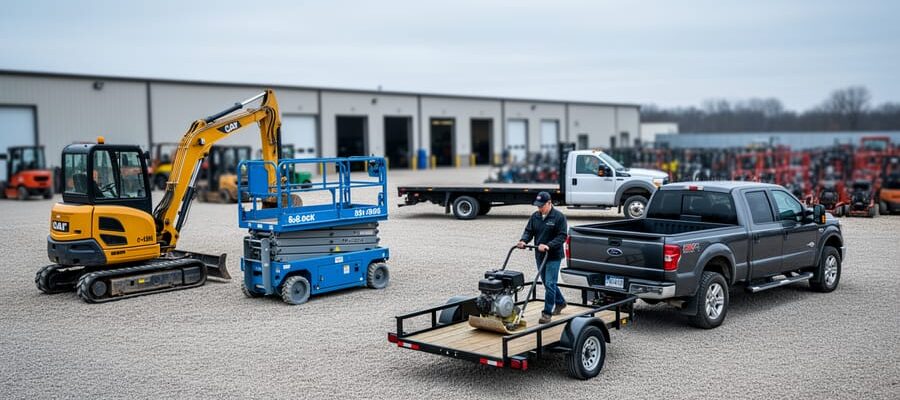
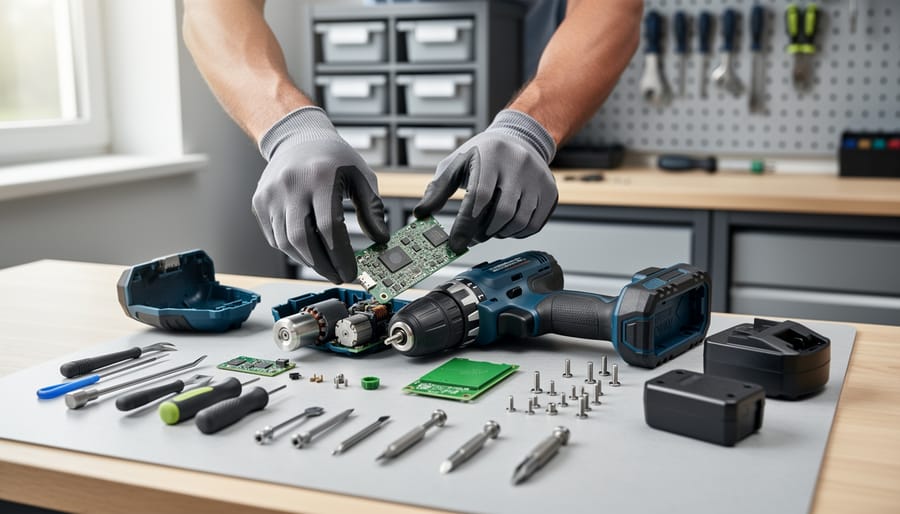
When you rent or buy tools, the company behind them matters as much as the product itself. Organizational sustainability determines whether manufacturers prioritize durable designs over disposable ones, whether they stock replacement parts five years down the line, and whether they invest in repair networks that keep equipment running instead of landfills growing.
Companies with strong sustainability practices build tools engineered for longevity and serviceability. They design products with standardized components that can be replaced rather than requiring complete unit disposal. They maintain transparent supply chains, publish product lifespans, and support right-to-repair initiatives that empower users to fix rather than discard. This approach directly impacts your wallet and project timelines—sustainable manufacturers ensure parts availability, provide comprehensive repair documentation, and often offer trade-in or refurbishment programs.
The connection between corporate sustainability and tool quality is straightforward: businesses committed to environmental responsibility must reduce waste, which means producing equipment that lasts. They face financial incentives to design repairable products since warranty claims decrease when tools are built right. For tool renters and buyers, this translates to more reliable equipment, lower total cost of ownership, and reduced frustration from premature failures.
Understanding which companies genuinely practice organizational sustainability requires looking beyond marketing claims. Examine their parts availability policies, warranty structures, and whether they design for disassembly. Check community reviews for real-world durability reports. These practical indicators reveal whether sustainability commitments translate into the dependable, long-lasting tools your projects demand.
What Organizational Sustainability Really Means in Tool Manufacturing
The Three Pillars: Economic, Social, and Environmental
Understanding the three pillars of sustainability helps you identify tool manufacturers and rental businesses that are built to last. Let’s break down what each pillar means in practical terms for the tool industry.
The economic pillar focuses on long-term financial health without sacrificing quality or ethics. For tool companies, this means designing products that last longer, reducing warranty claims and customer dissatisfaction. A drill manufacturer investing in durable components may have higher upfront costs, but they build customer loyalty and reduce returns. Tool rental businesses following strong sustainability reporting practices often demonstrate better inventory management and financial stability, which translates to more reliable equipment for you.
The social pillar addresses fair labor practices, workplace safety, and community impact. This matters because tools manufactured in facilities with proper safety standards typically undergo stricter quality control. Companies supporting their workers tend to have lower turnover and more experienced staff building your equipment. Look for brands transparent about their manufacturing locations and worker conditions.
The environmental pillar covers resource use, waste reduction, and emissions. Tool manufacturers embracing this pillar design for repairability rather than disposability. They use recyclable materials, minimize packaging, and offer repair programs. For example, some power tool brands now offer battery recycling programs and modular designs where you can replace individual components instead of discarding entire tools. This approach saves you money while reducing environmental impact, creating a win-win situation for both your wallet and the planet.
How Sustainable Organizations Design Better Tools
Built to Last: When Longevity Becomes Company Policy
Some companies are flipping the script on planned obsolescence by designing tools that stand the test of time. Take Hilti, for example. Their Fleet Management program doesn’t just rent tools—it maintains and repairs them throughout their lifecycle, keeping equipment in circulation for years rather than months. This approach means rental businesses can stock tools that won’t need replacing after a handful of jobs.
Festool has built its reputation on modular design. When a motor burns out or a switch fails, you replace that component rather than the entire tool. Their repair manuals are publicly available, and parts remain in stock for discontinued models. For rental companies, this translates to lower replacement costs and better inventory reliability. For users, it means the hammer drill you rent today will perform just as well as it did five years ago.
Milwaukee’s One-Key system exemplifies how durability and technology intersect. Their tools track usage data, helping rental businesses predict maintenance needs before failures occur. This proactive approach reduces downtime and extends tool life significantly.
The real-world impact? Rental businesses report 30-50% longer tool lifespans when stocking brands committed to repairability. This reliability matters especially for construction site organization, where equipment failures can halt entire projects.
Community feedback consistently highlights these brands in reviews, with tradespeople noting fewer mid-job breakdowns and more consistent performance across rental periods. When companies prioritize longevity over disposability, everyone benefits—rental businesses maintain healthier margins, users get dependable equipment, and fewer tools end up in landfills.
Repair-Friendly Design: Why It Matters for Your Tool Hire Business
When a tool hire business invests in equipment from manufacturers committed to repairability, the financial benefits ripple through their entire operation. Companies that design tools with repair in mind use standardized fasteners, modular components, and readily available replacement parts. This approach dramatically reduces the total cost of ownership compared to tools designed for disposal.
Consider a concrete example: A professional-grade circular saw with a repairable motor costs around £180 upfront. When the motor brushes wear out after 200 hours of use, replacement brushes cost £15 and take 20 minutes to install. Compare this to a sealed-unit alternative at £120 that requires complete replacement when the motor fails. For a rental company cycling equipment through hundreds of hours annually, the repairable model saves money by the third motor service.
Modular drill designs offer another clear advantage. Tools with removable gearboxes, replaceable chuck assemblies, and accessible switches can be serviced component by component. One rental business owner shared that switching to modular drills reduced their replacement costs by 60% over three years. Instead of scrapping entire units, technicians swap damaged gears or worn chucks in minutes.
The contrast becomes stark with disposable designs. Some manufacturers use proprietary screws, glued assemblies, or integrated circuits that make repair impossible without specialized equipment. These tools might cost less initially, but rental companies face complete replacement expenses when any component fails.
For DIYers renting tools, this matters too. Rental shops with repairable equipment maintain better inventory quality and can offer competitive rates because their overhead stays lower. You benefit from well-maintained, professional-grade tools at fair prices. When choosing where to rent, ask about their equipment maintenance practices and whether they prioritize repairable designs. This simple question reveals a company’s commitment to sustainability and value.
Red Flags: Spotting Unsustainable Tool Manufacturers
Warning Signs in Product Design and Support
When you’re evaluating tools for purchase or rental, certain red flags can reveal organizational instability that affects long-term usability. Understanding these warning signs helps you avoid tools that become expensive paperweights once support disappears.
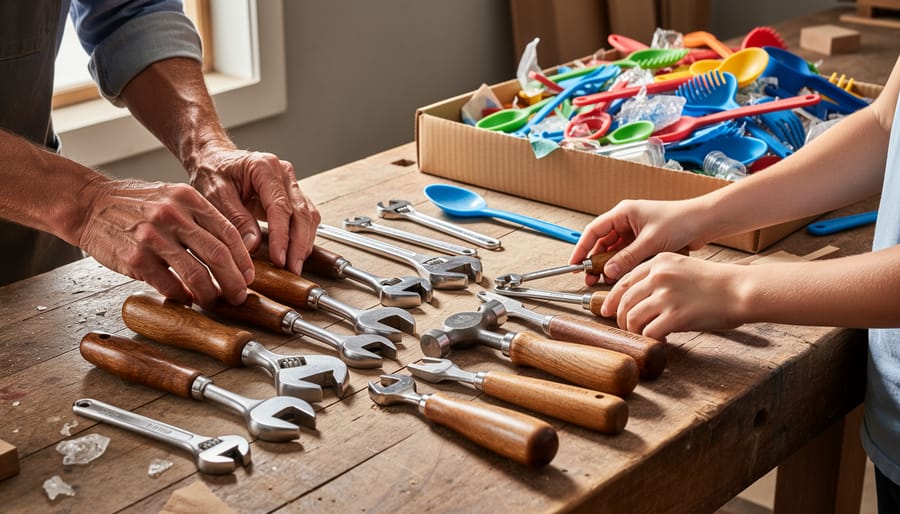
Proprietary parts represent one of the clearest warning signs. When manufacturers design tools requiring custom-made components that only they produce, you’re locked into their supply chain. If the company struggles financially or discontinues a model, finding replacement parts becomes nearly impossible. Community feedback consistently highlights frustration with tools using non-standard screws, unique battery connections, or specialized housing components that differ from industry norms.
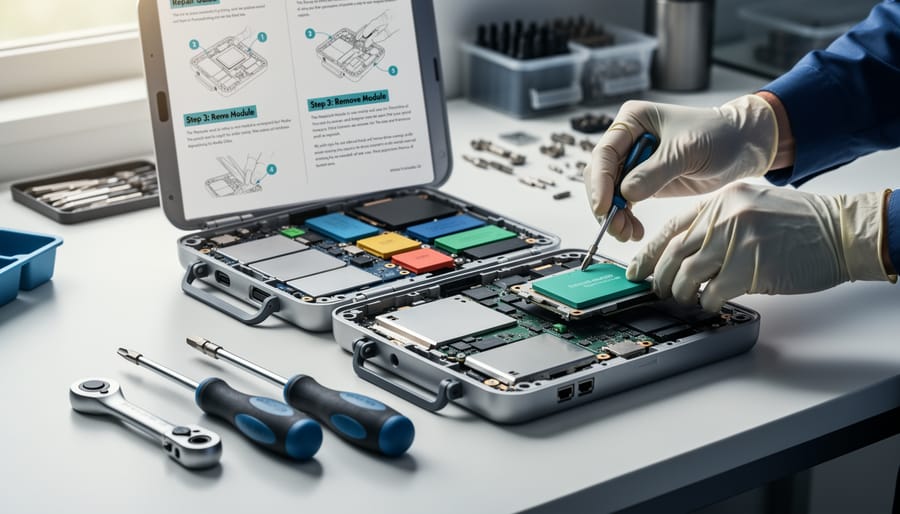
Missing or restricted repair documentation signals another concern. Companies committed to sustainability provide detailed service manuals, exploded diagrams, and troubleshooting guides. When manufacturers actively hide this information or threaten legal action against repair communities, it suggests they prioritize short-term sales over product longevity.
Frequent model changes without meaningful improvements indicate marketing-driven strategies rather than engineering excellence. If a company releases new versions annually with only cosmetic changes or minor tweaks, they’re essentially planned obsolescence in disguise. This approach fragments parts inventory and makes cross-compatibility difficult.
Poor customer support quality reveals organizational priorities. Long wait times, unhelpful responses, or difficulty reaching actual technicians suggest understaffing or disorganization. Many users report that companies in decline gradually reduce support quality before eventually abandoning products entirely.
Watch for these patterns across multiple product lines. One warning sign might be circumstantial, but multiple indicators together paint a concerning picture about organizational health and product sustainability.
What User Reviews Reveal About Company Sustainability
Customer reviews offer valuable insights into how well a company maintains its operations over time. When reading reviews for tool rental businesses, look beyond star ratings to spot patterns that reveal organizational health.
Consistent complaints about equipment availability signal poor inventory management or maintenance schedules. If multiple users mention “always out of stock” or “had to wait weeks,” the company may be struggling with planning or resource allocation. Similarly, recurring mentions of broken or poorly maintained tools indicate inadequate repair systems—a red flag for organizational sustainability.
Pay attention to reviews discussing staff knowledge and customer service quality. Comments like “new staff every visit” or “nobody knew how to help” suggest high employee turnover, which often points to deeper operational problems. Sustainable organizations invest in training and retain experienced personnel who understand their inventory.
Review timelines matter too. A company with consistently positive feedback that suddenly shifts negative may be experiencing growth challenges or management changes. Conversely, improving review trends show a business actively addressing issues.
Watch for specific details in negative reviews. Vague complaints are less informative than those describing concrete problems like “charged for damaged equipment I didn’t break” or “reservation system crashed twice.” These specifics reveal which operational areas need attention and whether the company responds to feedback.
Supporting Sustainable Tool Companies as a Consumer
Questions to Ask Before Renting or Buying
Before committing to a rental or purchase, asking the right questions helps you evaluate a company’s organizational sustainability. Start with warranty coverage: How long does it last? What specific components does it cover? Companies confident in their products typically offer comprehensive warranties that reflect long-term thinking.
Next, inquire about parts availability. Ask whether replacement parts will be accessible in five or ten years, and whether the company manufactures proprietary parts that could become scarce. Community members frequently report frustration with discontinued models that become unrepairable due to unavailable components.
Repair options matter significantly. Does the company support independent repair shops, or must you use authorized service centers? Are repair manuals and diagnostic tools available to users? Companies practicing organizational sustainability typically embrace repair accessibility rather than restricting it.
Ask about the company’s business model directly. Do they prioritize planned obsolescence, or do they design for longevity? How do they handle discontinued products? User-generated reviews often reveal patterns in how companies treat customers after the initial sale.
Finally, investigate their supply chain practices. Do they maintain relationships with consistent suppliers? How do they handle component shortages? Companies with sustainable organizational practices typically have transparent answers to these questions, demonstrating their commitment to long-term reliability rather than short-term profits.
The True Cost: Why Sustainable Tools Save Money
When you choose tools from sustainably-minded organizations, you’re making a smart financial decision that extends far beyond the initial purchase price. Let’s break down the real numbers.
Quality tools from sustainable manufacturers typically last 3-5 times longer than budget alternatives. A premium drill from a responsible company might cost $150 upfront versus $50 for a disposable option, but with proper maintenance, that sustainable choice delivers 10+ years of service compared to 2-3 years. Your per-year cost drops to $15 versus $20, and you’ve kept two extra tools out of landfills.
Maintenance costs tell an equally compelling story. Sustainably-designed tools use standardized, readily available parts and clear repair documentation. When a component fails, you’re looking at a $20 replacement part rather than junking the entire tool. Many sustainable organizations offer repair services and comprehensive warranties, reducing your long-term expenses significantly.
Resale value matters too. Well-maintained professional tools from reputable sustainable brands retain 40-60% of their original value, creating a secondary market that benefits both buyers and sellers. This principle applies equally to rental pricing strategies, where durable equipment generates more revenue over its lifetime while requiring fewer replacements.
The bottom line: sustainable tools cost less per hour of actual use while delivering superior performance throughout their extended lifespan.
The Future of Tool Rental in a Sustainability-Focused Market
The tool rental industry stands at an exciting crossroads where sustainability isn’t just good ethics—it’s becoming the foundation for competitive advantage. As consumer awareness grows and environmental regulations tighten, rental businesses that embrace organizational sustainability are positioning themselves as market leaders rather than followers.
One emerging trend is the circular economy business model, where tools are designed specifically for multiple lifecycles. Forward-thinking rental companies are partnering directly with manufacturers to create products built for longevity, easy repair, and eventual material recovery. This collaboration means you’ll increasingly find rental fleets stocked with modular tools where individual components can be swapped out rather than discarding entire units.
Technology integration represents another major opportunity. Smart tracking systems now monitor tool usage patterns, maintenance needs, and carbon footprint in real-time. Some progressive rental businesses are sharing this data transparently with customers, letting you choose tools based on their environmental impact alongside traditional factors like power and price.
The sharing economy model is expanding beyond traditional rental shops. Peer-to-peer tool sharing platforms and community tool libraries are gaining traction, supported by sustainability-conscious consumers who value access over ownership. These models reduce manufacturing demand while building stronger local networks.
For rental businesses, adapting to market changes means investing in staff training around sustainable practices, transparent communication about environmental initiatives, and customer education programs. Businesses that embrace these shifts early are seeing increased customer loyalty and positive community reputation.
The future belongs to rental operations that view sustainability not as a cost center but as an innovation driver, creating value for customers while protecting the planet.
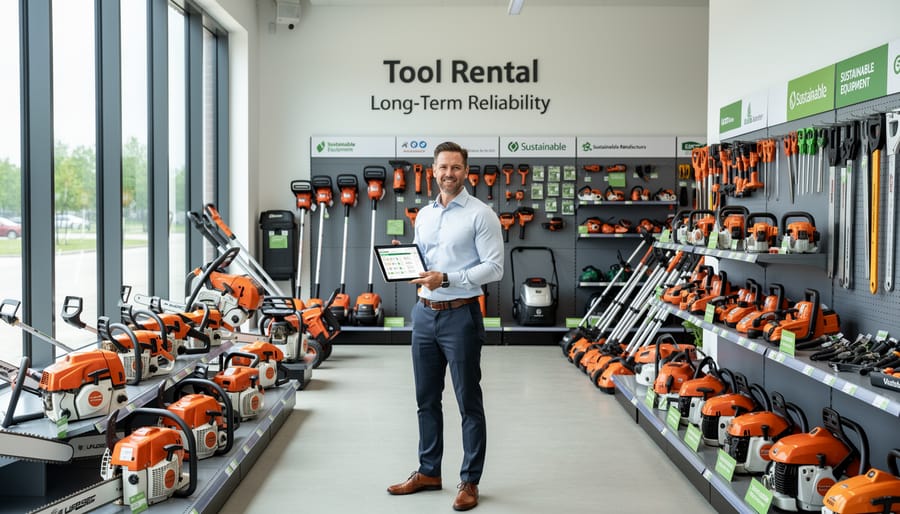
Understanding how organizational sustainability shapes tool design and rental markets empowers you to make smarter choices. Companies committed to sustainable practices typically produce more durable, repairable tools that deliver better long-term value—whether you’re renting for a weekend project or investing in equipment for your trade. By choosing rental partners and manufacturers with strong sustainability credentials, you’re not just accessing quality tools; you’re supporting business models that reduce waste, maintain extensive repair networks, and keep products in circulation longer.
The practical benefits are clear: longer-lasting equipment, lower total costs, and access to well-maintained inventories. When evaluating rental companies or purchasing decisions, look for transparency in their maintenance practices, availability of spare parts, and commitment to refurbishment programs. Check community reviews to see how other users rate equipment reliability and customer service responsiveness.
Your tool choices matter more than you might think. By prioritizing organizationally sustainable companies, you contribute to a marketplace that values quality over disposability. Take time to research rental partners, ask questions about their maintenance protocols, and share your experiences with the community. Informed decisions today create better options for everyone tomorrow.
Related Posts

Post a Comment