


Project budgets fail when unexpected costs arise with no safety net in place. Understanding the difference between management reserve and contingency reserve prevents budget overruns and project abandonment, yet most planners confuse these two distinct financial buffers or skip them entirely.
Contingency reserve covers known risks you can identify and estimate during planning. When you’re renovating a kitchen and budget an extra 15% for potential delays in cabinet delivery or minor electrical upgrades discovered during demolition, that’s contingency reserve. You know these risks exist, you’ve assessed their likelihood, and you’ve allocated specific funds to address them. This money sits within your project budget baseline and gets tracked alongside regular expenses.
Management reserve addresses unknown unknowns, the surprises you cannot predict during planning. If your renovation uncovers structural damage requiring emergency repairs or a supplier goes bankrupt mid-project, forcing you to source materials at premium prices, that’s when management reserve saves your project. This fund sits outside your baseline budget and requires authorization from stakeholders or project sponsors before use.
The distinction matters because mixing these reserves creates false confidence in your planning. A project with adequate contingency but no management reserve will fail when genuinely unexpected events occur. Conversely, treating all buffer money as management reserve means you haven’t properly analyzed identifiable risks. Professional project managers separate these reserves, track them independently, and apply them according to strict criteria. This article breaks down exactly how to calculate, allocate, and manage both reserves so your next project stays financially viable from start to finish.
What Are Budget Reserves in Project Planning?
Every project planner faces the same reality: things don’t always go according to plan. Whether you’re managing a home renovation, organizing a community workshop build, or coordinating professional construction work, unexpected expenses pop up. A supplier might increase material costs mid-project. Weather delays could push your timeline back. You might discover electrical work that needs upgrading before you can proceed. These surprises are inevitable.
Budget reserves exist because experienced planners know that no estimate is perfect. Rather than getting caught off-guard when unexpected costs arise, smart project planning builds financial buffers directly into the budget from day one. Think of reserves as your project’s financial safety net, designed to absorb shocks without derailing everything you’ve worked to accomplish.
The concept is straightforward: you calculate your best estimate for materials, labor, equipment rentals, and other project costs, then add additional funds to cover the unknowns. Without these reserves, you’d need to halt work, scramble for emergency funding, or compromise on quality every time something unexpected happens. These hidden costs in construction and renovation projects can quickly accumulate if you haven’t planned ahead.
What many people don’t realize is that there are actually two distinct types of reserves in professional project budgeting: contingency reserves and management reserves. Each serves a different purpose and covers different kinds of risks. Understanding both types helps you create more realistic budgets and avoid the common pitfall of underestimating what your project will truly cost. Getting this right from the start makes the difference between a project that finishes smoothly and one that stalls halfway through due to budget shortfalls.
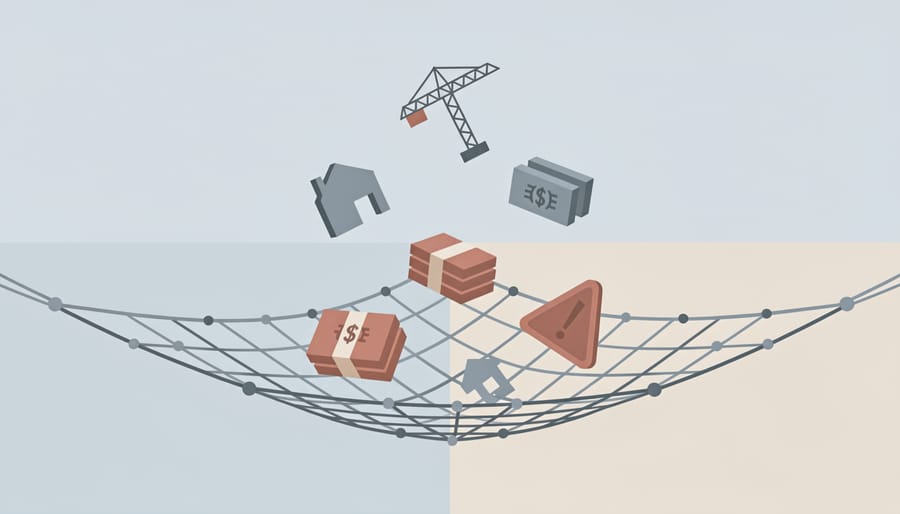
Contingency Reserve: Your Safety Net for Known Unknowns
What Contingency Reserve Covers
Contingency reserve is your safety net for known risks—the predictable challenges that experienced builders and DIYers recognise as part of almost every project. This budget portion covers specific, identifiable issues that might occur during your tool hire period and project execution.
Weather delays are classic contingency items. If you’ve hired equipment for outdoor work and rain forces a three-day shutdown, your contingency reserve covers the extended rental period. Many professional tradespeople budget an extra 10-15% of their tool hire costs specifically for weather-related delays, particularly during unpredictable seasons.
Equipment breakdowns fall squarely within contingency planning. When a hired concrete mixer stops working mid-pour, you’ll need a replacement quickly. Your contingency reserve ensures you can secure alternative equipment without derailing your entire budget. According to community feedback from previous hirers, having backup funds for unexpected equipment swaps has saved countless projects from costly delays.
Minor design changes also draw from contingency reserves. Perhaps you’ve decided to extend that retaining wall by two metres or adjust the deck layout slightly. These aren’t fundamental project changes, but they require additional materials and potentially extended tool hire periods.
Material price fluctuations represent another contingency consideration. If timber costs increase 8% between planning and execution, your contingency reserve absorbs this variance without requiring complete budget restructuring. Smart planners typically allocate 5-10% of material budgets as contingency for such predictable market movements.
How to Calculate Contingency Reserve
Calculating your contingency reserve doesn’t require complex mathematics, but it does need careful consideration of your project’s specific circumstances. The most common approach is the percentage method, where you allocate 5-10% of your total project budget as contingency. This straightforward formula works well for most DIY and professional projects.
For a basic home renovation budgeted at $20,000, a 5% contingency reserve would be $1,000. This covers minor issues like discovering a few extra damaged boards during deck replacement or needing additional paint due to surface porosity. However, if you’re tackling something more unpredictable, like a bathroom remodel in an older home, bump that percentage to 10% ($2,000). Older properties often hide surprises behind walls—outdated plumbing, electrical work that doesn’t meet current codes, or hidden water damage.
The complexity of your project should guide your percentage. Simple projects with well-defined scopes, like building a garden shed from a kit, might only need 5%. Complex renovations involving multiple trades, structural work, or where you’re uncertain about existing conditions warrant 8-10% or higher.
When predicting project costs, consider these factors: project duration (longer projects face more variables), your experience level (first-timers should pad more), material price volatility, and weather exposure for outdoor work. A kitchen renovation might use 7%, while landscaping projects exposed to weather unpredictability could justify 10%.
Remember, contingency reserves address known risks—the “what-ifs” you can reasonably anticipate during planning.
Who Controls the Contingency Reserve
The contingency reserve typically sits under the control of the project manager. For DIY home renovations, that means you—the homeowner—hold the keys to these funds. This puts decision-making power right where the daily work happens.
You can access contingency funds when identified risks actually occur. For example, if you budgeted extra money for potential electrical code upgrades during a kitchen remodel, and the inspector indeed requires panel updates, you can tap into that reserve immediately. No need for extensive approval processes or lengthy justifications.
The key difference from management reserves is that contingency funds respond to known-unknown risks—things you planned for during your initial risk assessment. You don’t need permission from stakeholders or clients because these scenarios were already discussed and budgeted. Simply document what happened, verify it matches a planned risk category, and allocate the necessary funds to address it.
Management Reserve: Your Buffer for Unknown Unknowns
What Management Reserve Covers
Management reserve handles the truly unexpected situations that weren’t on your radar during initial planning. These are the surprises that make you think, “Well, we didn’t see that coming.” Unlike the risks you identified and budgeted for in your contingency reserve, management reserve covers genuine unknowns.
Think of that kitchen renovation where you planned to remove a wall, only to discover it’s load-bearing and requires structural engineering work you never anticipated. That’s a management reserve scenario. Or imagine starting your deck project only to have the building inspector inform you that code requirements changed last month, now requiring different beam specifications that cost significantly more.
Scope creep is another common drain on management reserve. Perhaps you’re installing new flooring and the homeowner decides they actually want the entire layout reconfigured, adding unexpected complexity and materials. While some might argue this should be handled through change orders, smaller projects often absorb these shifts from reserve funds.
Unforeseen site conditions frequently trigger management reserve use. You’re digging post holes for a fence and hit bedrock at two feet instead of the anticipated six feet of workable soil. Suddenly you need specialized drilling equipment you never budgeted for. Or that bathroom remodel reveals extensive water damage behind the walls, requiring remediation work that wasn’t part of the original scope.
The key difference: these aren’t risks you could have reasonably identified beforehand. They’re the genuine surprises that test even experienced planners.
How to Calculate Management Reserve
Calculating management reserve doesn’t follow a precise formula like contingency reserve does. Instead, it’s based on your project’s overall risk profile and organizational policies. Most project managers set aside 5-15% on top of the total project budget, which already includes your contingency reserve.
Start by adding up your base project costs plus contingency reserve to get your total estimated budget. For example, if your deck renovation costs $10,000 and you’ve allocated $1,500 for contingency (15%), your project budget is $11,500. Management reserve would then be calculated as a percentage of this complete figure.
Several factors influence what percentage you should use. Projects with high complexity or many unknown variables typically warrant reserves at the higher end, around 10-15%. A straightforward bathroom remodel might only need 5-7%, while a whole-house renovation with potential structural surprises could justify 12-15%.
Consider your project’s timeline too. Longer projects face more potential for scope changes and unforeseen challenges, requiring larger reserves. Your organization’s risk tolerance also matters. Some companies maintain conservative 15% reserves as standard practice, while others operate leaner.
Past project performance provides valuable guidance. Review similar completed projects to see how often management reserve was actually needed. If you consistently tap into reserves, increase your percentage. If reserves frequently go unused, you might be over-allocating funds.
Remember, management reserve isn’t officially part of your project baseline until specific risks materialize and require formal approval to access these funds.
Who Controls the Management Reserve
The management reserve sits at the top of the decision-making hierarchy. Unlike contingency reserves that project managers or site supervisors can tap into for identified risks, the management reserve requires approval from senior decision-makers. For homeowners managing their own renovation, you control this reserve yourself and decide when circumstances justify using it. For larger projects with general contractors, the property owner or project sponsor typically holds this authority.
Accessing these funds usually involves a formal change process. You’ll need to document why the situation wasn’t foreseeable during planning and demonstrate that contingency funds have been appropriately used or allocated. This higher-level approval protects the budget from casual overruns and ensures that truly unexpected challenges receive proper attention and resources. Think of it as your project’s emergency fund that requires careful consideration before withdrawal, keeping everyone accountable to the original budget while providing essential backup for genuine surprises.
The Key Differences That Matter for Your Project
Understanding these two reserve types becomes much clearer when you see them side-by-side. Here’s how management reserve and contingency reserve differ in ways that directly impact your project planning:
Purpose and Function: Contingency reserve handles known risks you’ve already identified, like potential material shortages or weather delays during outdoor work. Management reserve covers unknown risks you couldn’t predict, such as discovering structural damage behind walls during a renovation.
Who Controls the Money: Your project manager controls contingency reserve and can authorize its use when identified risks occur. Management reserve sits with upper management or the project sponsor, requiring their approval before funds release.
When You’ll Use It: You tap contingency reserve for expected complications during normal project execution. Management reserve only comes into play for significant scope changes or completely unexpected situations that threaten project completion.
Typical Budget Percentages: Contingency reserve commonly ranges from 5-15% of your project budget, depending on risk level. Management reserve typically adds another 5-10% on top of the total project budget, including contingency.
Approval Process: Using contingency reserve involves straightforward documentation and your project manager’s authorization. Accessing management reserve requires formal requests, justification, and approval from senior management or stakeholders.
Budget Calculation: Contingency reserve gets added to your cost baseline and counts as part of your project budget. Management reserve sits outside the baseline as a separate line item.
Think of it this way: If you’re renovating a kitchen and planned for potential plumbing issues, that’s contingency reserve. If you discover the entire subfloor needs replacing, something nobody anticipated, that’s when you’d need management reserve. Both protect your project, but they work at different levels of risk management and control.

Real-World Example: Planning a Home Extension
Let’s walk through a real example to see how these reserves work in practice. Sarah is planning a home extension—adding a 4×6 meter sunroom to her house. Here’s how she builds her budget using proper project estimates.
First, Sarah calculates her base costs. Foundation work comes to $8,000, framing and roofing $12,000, windows and doors $6,000, electrical and plumbing $5,000, and interior finishing $9,000. Her base project cost totals $40,000.
Next, she adds her contingency reserve. Based on community feedback from homeowners who’ve completed similar extensions, Sarah learns that weather delays, minor design changes, and material price fluctuations are common. She allocates 15 percent of her base cost for these known risks. That’s $6,000 for contingency reserve, bringing her subtotal to $46,000.
Now for management reserve. Sarah’s uncle, a retired builder, warns her that unexpected discoveries happen during renovations. Old plumbing that needs replacing, asbestos removal, or structural surprises could emerge. These are the unknown unknowns. She adds another 10 percent of the base cost as management reserve—$4,000—which sits outside her main project budget as a safety net.
Her complete budget breakdown looks like this:
Base project cost: $40,000
Contingency reserve: $6,000
Management reserve: $4,000
Total available funds: $50,000
Sarah controls the $6,000 contingency herself, releasing it as anticipated issues arise. The $4,000 management reserve stays untouched unless genuine surprises occur—and importantly, if she doesn’t need it, that money stays in her pocket for the next project.
Common Mistakes to Avoid When Setting Reserves
Even experienced project managers make critical errors when establishing reserves. One of the most common mistakes is underestimating both types of reserves entirely. Many people calculate a contingency reserve based on optimistic scenarios, forgetting that unexpected issues compound quickly. Similarly, they might skip the management reserve altogether, assuming their initial planning covers everything.
Another frequent error is mixing the two reserve types or treating them as interchangeable funds. When you dip into management reserves for a known risk that should have been covered by contingency, you’re left vulnerable to true scope changes. This confusion often stems from inadequate cost estimation strategies during the planning phase.
Failing to track reserve usage is equally problematic. Without monitoring which reserve you’re drawing from and why, you lose visibility into your project’s financial health. Create a simple log noting each withdrawal, its category, and remaining balance.
Many planners also neglect to adjust reserves as the project progresses. As you complete phases and retire certain risks, you should reassess your contingency needs. Similarly, if scope changes occur, your management reserve may need recalculation.
Perhaps the most dangerous mistake is treating reserves as profit or padding. Reserves exist for specific purposes, not as extra money to improve finishes or upgrade materials. When stakeholders view unused reserves as savings to pocket, they’re gambling that nothing will go wrong. Professional project management requires maintaining these funds until project completion, only releasing them when risks have truly passed.
How This Affects Your Tool Hire Planning
When planning your equipment rental budget, applying reserve principles prevents costly delays and rushed decisions. Start by calculating your baseline tool hire costs based on your project timeline, then add a contingency buffer of 10-15% to cover known variables like weather delays or extended work periods. This contingency might mean budgeting for an extra week of scaffolding hire or keeping a concrete mixer longer than initially planned.
Next, include a separate management reserve of 5-10% for truly unexpected situations, such as discovering additional work that requires specialized equipment you hadn’t anticipated. For example, if your renovation uncovers structural issues requiring temporary support equipment, your management reserve covers this.
When requesting quotes from tool hire companies, be transparent about your project timeline and ask about flexible rental periods. Many providers offer discounted rates for extended bookings, which can absorb some contingency costs. Always confirm cancellation policies and extension charges before committing.
Build these buffers into your initial estimate rather than assuming you’ll only pay for minimum rental periods. This realistic approach means you won’t scramble for additional funding or compromise on necessary equipment when delays occur. Document your reserve calculations so you can track usage and refine estimates for future projects.
Understanding the difference between management reserve and contingency reserve isn’t just about knowing definitions—it’s about setting your projects up for success. Remember, contingency reserve protects you from identified risks you’ve planned for, like material price fluctuations or weather delays. Management reserve safeguards against the complete unknowns that no amount of planning can predict.
Every successful project, whether you’re renovating a kitchen or building a deck, needs both reserves working together. Skipping either one leaves you vulnerable to budget overruns and project delays that could have been managed effectively.
As you plan your next project, take time to calculate both reserves based on your risk assessment and project complexity. Start by identifying your known risks and allocating 5-15% for contingency, then add another 5-10% for management reserve depending on project uncertainty.
Looking for help with project planning? Many online communities and budget planning tools can guide you through these calculations. Share your experiences with reserve planning in DIY forums—your insights might help someone else avoid costly mistakes. The two-reserve approach might seem like extra work upfront, but it’s the difference between controlled adaptation and financial crisis when challenges arise.
Related Posts


Post a Comment