

**Calculate your baseline rental rate by adding your equipment cost, maintenance expenses, and desired profit margin, then divide by expected rental days per year.** This cost-plus approach ensures you cover expenses while building sustainable profit—most successful tool rental businesses aim for equipment payback within 12-18 months.
**Implement tiered pricing that rewards longer rentals with progressive discounts.** Structure your rates so a week-long rental costs less per day than daily rates, and monthly rentals offer even better value. This pricing model increases equipment utilization while attracting professional tradespeople who need tools for extended projects, creating predictable revenue streams.
**Set competitive rates by researching local competitors and adjusting for your unique value propositions.** If you offer newer equipment, faster availability, or superior customer service, price 10-15% above budget competitors. For commodity tools like basic drills, match market rates to remain competitive while premium or specialized equipment can command higher prices.
**Test dynamic pricing during peak seasons and slow periods to maximize profitability.** Charge premium rates during spring and summer construction seasons when demand peaks, then offer promotions during winter months to maintain cash flow. Monitor your utilization rates weekly—equipment sitting idle at 15% premium pricing generates less revenue than fully-booked tools at standard rates.
**Build customer loyalty programs that incentivize repeat business without eroding margins.** Professional contractors who rent regularly deserve volume discounts, but structure these as percentage-based rather than fixed amounts to protect profitability as your business scales.

Why Traditional Pricing Fails in the Tool Rental Business
The Real Costs Behind Your Rental Rates
Before you can set profitable rental rates, you need to understand what it actually costs to put a tool in someone’s hands. Many rental operators focus only on the purchase price, but the real story runs much deeper.
**Equipment Acquisition**: Your initial investment is just the starting point. A professional-grade concrete mixer might cost $800 upfront, but that’s only one piece of the puzzle. Factor in delivery fees, setup costs, and any modifications needed to make the equipment rental-ready.
**Maintenance and Repairs**: Tools don’t maintain themselves. Between rentals, you’ll need cleaning supplies, replacement parts, and periodic servicing. Industry experts suggest budgeting 15-20% of the equipment’s value annually for maintenance. A power washer might need new hoses, nozzles, and pump servicing throughout its lifetime.
**Storage Solutions**: Where will your equipment live between jobs? Whether you’re renting warehouse space or dedicating garage square footage, storage costs money. Calculate your cost per square foot and allocate it proportionally based on each tool’s footprint.
**Insurance Coverage**: Protecting your investment means carrying liability and equipment insurance. Policies vary, but expect to pay 2-5% of your total equipment value annually. This protects you when tools are damaged, stolen, or cause property damage.
**Transportation Expenses**: Getting tools to customers involves fuel, vehicle maintenance, and your time. Even if you charge delivery fees, account for wear and tear on your vehicle.
**The True Cost Formula**: Add all these expenses together, then divide by your expected annual rentals for each tool. For example: ($800 purchase + $160 annual maintenance + $100 storage + $40 insurance + $150 transport) ÷ 50 rentals = $25 true cost per rental. This baseline ensures you’re actually making money, not just breaking even.

What Your Commercial Clients Actually Value
When setting B2B pricing for your tool rental business, understanding what commercial clients actually prioritize helps you position your rates strategically. According to feedback from professional tradespeople and contractors across our community, price alone rarely determines their rental decisions.
**Reliability stands at the top.** Commercial clients consistently emphasize needing equipment that works perfectly every time—downtime on a job site costs far more than slightly higher rental rates. One plumber shared, “I’ll pay 20% more if I know the tool won’t fail mid-job.”
**Availability comes next.** Professional contractors often need equipment immediately or on specific dates. Multiple reviews highlight that businesses offering guaranteed availability and advance booking systems earn premium pricing power. When tools are ready when promised, clients notice.
**Delivery speed matters tremendously** to commercial operations. Same-day or next-day delivery can justify significantly higher rates compared to competitors requiring multi-day advance notice. Construction managers regularly mention that fast turnaround prevents costly project delays.
**Flexible rental periods** also rank highly. While weekend warriors might accept rigid return times, professionals value hourly or half-day options, plus extensions without penalties. This flexibility directly ties to customer service excellence that builds loyalty.
Community feedback reveals that professional clients view their rental choice as a partnership investment. They’re comparing total project cost impact, not just rental fees. Understanding these priorities lets you confidently price based on value delivered rather than competing solely on cost.

Five B2B Pricing Models That Work for Tool Hire
Volume-Based Pricing for Repeat Contractors
Volume-based pricing creates win-win relationships with contractors who rent regularly or manage large projects. This tiered approach rewards loyalty while securing predictable revenue for your business.
**Understanding Tiered Pricing Structure**
Start by establishing clear volume thresholds. A basic three-tier system might look like:
– **Standard Tier**: 1-5 rentals per month at regular rates
– **Preferred Tier**: 6-15 rentals monthly with 10-15% discount
– **Premium Tier**: 16+ rentals monthly with 20-25% discount
**Calculating Your Breakpoints**
To determine profitable tiers, analyze your costs and rental frequency data. Calculate your break-even point for each tool, then set discounts that maintain a healthy margin even at higher volumes. For example, if your break-even is 40% of rental price, a 20% discount still leaves comfortable profit.
Consider aggregate spending too. A contractor renting $500 monthly might qualify for Preferred status, while $1,500+ enters Premium territory.
**Community Insights Matter**
Professional tradespeople in our community consistently report that transparent tier requirements and automatic upgrades build trust. They appreciate knowing exactly what qualifies them for better rates—no hidden requirements or complicated formulas.
Track utilization patterns through your system to identify contractors approaching the next tier, then proactively communicate their progress. This encourages increased rental activity while demonstrating your commitment to rewarding their business.
Project-Based Bundling
Project-based bundling groups complementary tools and equipment that contractors and tradespeople need for specific jobs. Instead of renting items separately, you package everything required for common tasks like deck building, bathroom renovation, or electrical installations. This approach simplifies the rental process while boosting your revenue per transaction.
Start by analyzing your rental data and customer feedback to identify frequently co-rented items. For example, a concrete pouring bundle might include a mixer, trowels, vibrator, and safety gear. Price these packages at 15-25% below the combined individual rental rates—this discount incentivizes bulk ordering while still increasing your average order value compared to single-item rentals.
Consider creating tiered bundles for different project scales. A basic painting package could include ladders and rollers, while a premium version adds sprayers and scaffolding. This strategy serves both DIY homeowners tackling weekend projects and professional contractors managing complex jobs requiring better construction site organization.
Market these bundles through your platform using real project examples and community reviews from tradespeople who’ve successfully used them. Update offerings seasonally based on rental patterns—outdoor landscaping bundles in spring, indoor renovation packages during winter months. Clear bundle descriptions help customers quickly identify what they need, reducing decision fatigue and cart abandonment.
Dynamic Pricing Based on Demand
Dynamic pricing allows you to adjust rental rates based on seasonal demand patterns and market conditions—maximizing revenue during busy periods while staying competitive during slower months. For tool rental businesses, this typically means higher rates during spring and summer construction seasons, with reduced pricing in winter when project activity drops.
Start by analyzing your booking data from the past 12-24 months. Identify clear demand patterns: which tools are rented most frequently during specific months? When do professional contractors book equipment weeks in advance versus same-day rentals? This historical data becomes your pricing foundation.
Implement tiered pricing gradually rather than dramatic swings. A 15-20% premium during peak season is generally acceptable to B2B customers who understand supply constraints, while a 10-15% discount during slow periods can incentivize bookings without devaluing your service.
Communicate changes transparently to maintain trust with loyal customers. Send advance notices explaining seasonal adjustments, and consider offering volume discounts or loyalty pricing tiers that soften the impact for regular clients. Many successful rental businesses create “preferred partner” programs where frequent renters receive priority booking and capped rate increases.
Test dynamic pricing on high-demand items first—specialized equipment that books solid during peak season. Monitor customer feedback closely and adjust if you notice booking hesitation or complaints from valued accounts.
Contract Pricing for Long-Term Partnerships
Long-term partnerships with builders, maintenance companies, and property managers require specialized pricing structures that benefit both parties. These contract arrangements typically offer reduced rates in exchange for commitment and predictable revenue streams.
**Monthly and Annual Contract Structures**
Start by establishing tiered pricing based on commitment level. Monthly contracts might offer 10-15% discounts off standard rates, while annual agreements can provide 20-30% savings. Structure your contracts to include minimum monthly spending thresholds—for example, £500 for monthly contracts or £5,000 for annual agreements.
**Minimum Commitments and Equipment Rotation**
Define clear minimum usage requirements that guarantee baseline revenue. Include equipment rotation clauses allowing partners to swap tools throughout the contract period without additional fees, providing flexibility for varying project needs. This approach keeps equipment circulating while maintaining consistent income.
**Guaranteed Availability Clauses**
Build trust by including guaranteed availability provisions. Reserve specific equipment categories for contract partners during peak seasons, ensuring they can access essential tools when needed. Set response times for equipment requests—typically 24-48 hours for standard items and 5-7 days for specialized machinery.
Consider including maintenance and replacement guarantees in your contracts. If equipment fails, provide immediate replacements at no extra cost, demonstrating your commitment to their business continuity and building long-term loyalty.
Membership and Subscription Models
Subscription models are gaining traction in tool rental businesses as operators seek predictable revenue and customers want hassle-free access. These membership-based approaches work particularly well for professional tradespeople who need regular tool access without the commitment of ownership.
**Unlimited Rental Tiers** offer customers all-you-can-rent access for a fixed monthly fee. This model attracts contractors with ongoing projects who value convenience over cost-per-rental calculations. The upside? Steady cash flow and increased customer loyalty. The downside? Heavy users might reduce your profit margins if you don’t cap usage or tier your inventory appropriately.
**Priority Booking Systems** give members first dibs on high-demand equipment during peak seasons. Combined with discounted rates—typically 10-25% off standard pricing—this creates value without dramatically impacting revenue. Members feel valued, and you secure advance bookings that improve inventory planning.
**Ideal customer profiles** for subscriptions include professional contractors working multiple concurrent jobs, property maintenance companies, and serious DIY enthusiasts tackling multi-month renovations. According to community feedback, these customers prioritize reliability and availability over absolute lowest cost.
Start conservatively with subscription pricing—analyze your average customer’s monthly spend, then price memberships at 70-80% of that figure to encourage sign-ups while protecting profitability. Monitor utilization rates closely and adjust tier benefits as you gather real-world data from your member base.
Setting Your Baseline: How to Price Each Equipment Category
The Cost-Plus Method Made Simple
The cost-plus method provides a straightforward foundation for setting your rental rates. It ensures you cover expenses while building in profit—essential for sustainable business growth.
**Here’s the basic formula:**
**(Equipment Cost ÷ Expected Lifespan in Months) + Operating Costs + Desired Profit Margin = Monthly Rate**
Let’s break this down with a real example. Say you purchase a professional-grade circular saw for $450.
**Step 1: Calculate Monthly Equipment Cost**
If you expect the saw to last 36 months with regular maintenance, divide the purchase price by its lifespan: $450 ÷ 36 = $12.50 per month.
**Step 2: Factor in Utilization Rate**
If you anticipate renting it out 60% of available days, adjust accordingly: $12.50 ÷ 0.60 = $20.83 per month needed.
**Step 3: Add Operating Costs**
Include maintenance, storage, insurance, and cleaning—approximately $5 per rental cycle.
**Step 4: Apply Your Profit Margin**
For a 30% margin on a daily rental: ($20.83 per month ÷ 30 days) + $5 = $5.69 equipment cost + $5 operating = $10.69 × 1.30 = **$13.90 daily rate**.
This method establishes your baseline—your absolute minimum to stay profitable. Many operators then adjust this figure based on market demand, competitor pricing, and seasonal factors. The key is knowing your floor price before making strategic adjustments upward.
Competitive Benchmarking Without Racing to the Bottom
Understanding your competitors’ pricing is essential, but blindly matching their rates can erode your profits and undervalue your service. The key is researching what others charge while staying focused on what makes your tool rental business different.
Start by creating a simple spreadsheet tracking competitor rates for your most popular equipment categories. Check pricing monthly, noting any seasonal adjustments or promotional patterns. Many rental businesses post rates online, making this research straightforward. Don’t forget to compare rental terms—a competitor’s lower daily rate might actually cost more when you factor in delivery fees, minimum rental periods, or damage deposit requirements.
Once you’ve gathered this intelligence, resist the urge to immediately undercut everyone. Instead, ask yourself: “What extra value do we provide?” Perhaps your tools are newer models with better safety features. Maybe you offer free delivery within a certain radius, or your maintenance standards mean less equipment downtime for customers. These advantages justify premium pricing.
**When to match competitors:** If you’re offering nearly identical service with similar equipment age and condition, matching rates keeps you competitive without sacrificing margin.
**When to charge more:** Premium pricing works when you provide demonstrable advantages—extended hours, superior customer service, specialized equipment, or comprehensive insurance coverage. Professional tradespeople especially value reliability and are willing to pay for it.
**When to undercut (carefully):** Only reduce prices strategically—perhaps for older equipment models or to fill slow rental periods. Never compromise safety or maintenance quality to support lower pricing. That approach damages reputation and invites liability issues that far outweigh any short-term gain.
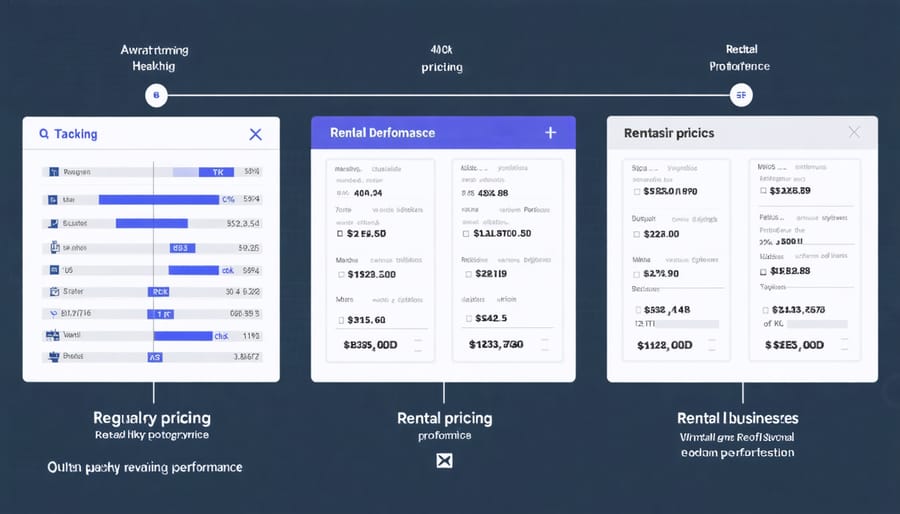
Optimizing Your Pricing Strategy Over Time
Key Metrics to Track
Tracking the right numbers helps you understand whether your pricing strategy is working. For rental businesses, five key performance indicators (KPIs) stand out as essential measurements.
**Utilization rate** shows how often your tools are actually out earning money versus sitting idle. Calculate it by dividing the total days rented by the total days available, then multiply by 100. A rate above 60% is generally healthy, though this varies by equipment type.
**Average rental duration** tells you how long customers typically keep items. This helps set daily versus weekly rate structures. Track it simply by recording pickup and return dates in a spreadsheet or basic rental software.
**Customer acquisition cost (CAC)** measures how much you spend to gain each new client. Add up your marketing expenses and divide by new customers acquired. Compare this against **customer lifetime value (CLV)**, which estimates total revenue from a customer relationship. If CAC exceeds CLV, your pricing or marketing needs adjustment.
**Price sensitivity indicators** reveal how rate changes affect demand. Monitor booking volumes after price adjustments and note customer feedback about rates. Many successful operators implement data-driven business improvements by reviewing these metrics monthly and adjusting accordingly.
Start simple: track these in a basic spreadsheet before investing in complex software.
When and How to Adjust Your Prices
Timing price adjustments requires careful planning and transparent communication. Review your rates quarterly, but implement increases annually unless significant cost changes occur. Monitor your expenses, competitor pricing, and customer feedback through reviews to determine when adjustments are necessary.
Before raising prices, analyze your booking data to identify seasonal patterns and avoid increases during peak demand periods when customers are already stretched. Instead, announce changes during slower months, giving clients 60-90 days’ notice to adjust their budgets.
When communicating price changes, be honest about the reasons—whether it’s rising equipment maintenance costs, insurance premiums, or service improvements. Send personalized emails to existing clients highlighting the value they receive, such as enhanced tool maintenance or expanded inventory. Consider creating a community forum where customers can ask questions about changes.
Implement grandfathering strategies to reward loyal customers. Lock in current rates for existing clients for 6-12 months, or offer exclusive discounts to long-term renters. This approach, combined with regular review monitoring, helps you optimize your pricing strategy while maintaining strong relationships.
Use customer reviews as a pricing compass—if multiple reviews mention affordability concerns, reassess your rates. Conversely, consistently positive feedback about service quality may indicate room for modest increases. Remember, transparent communication and customer appreciation always outweigh aggressive pricing tactics.
Making Your Pricing Work for Different Customer Segments
Transparent Pricing That Builds Trust
Displaying your B2B pricing clearly removes guesswork and builds confidence with professional clients. Create distinct pricing tiers that show exactly what each customer type qualifies for—whether they’re independent contractors, small businesses, or large construction companies. Include qualification requirements upfront: minimum order volumes, account verification needs, or trade license documentation.
Make pricing accessible without requiring login credentials for initial browsing. List rates per day, week, and month alongside any volume discounts or loyalty program benefits. When you streamline your ordering process, transparent pricing becomes even more powerful in converting browsers to buyers.
Community feedback validates your pricing fairness. Feature reviews from verified trade professionals who’ve used your rental service, highlighting both pricing satisfaction and value received. Display aggregate ratings for specific equipment categories so potential customers see real-world validation.
Encourage clients to share pricing feedback publicly—positive reviews mentioning “fair rates” or “competitive pricing” serve as powerful trust signals. Address any pricing concerns in your responses to demonstrate accountability. This open dialogue shows you’re committed to maintaining reasonable rates while delivering quality equipment and service.
Optimizing your B2B pricing strategy doesn’t have to be overwhelming. Start with the fundamentals—calculate your true costs including maintenance, depreciation, and overhead—then build from there. Whether you choose hourly rates for flexibility, daily pricing for simplicity, or tiered models for customer loyalty, the key is matching your approach to how your customers actually use your equipment.
Remember, pricing isn’t a “set it and forget it” decision. The most successful tool rental businesses continuously refine their rates based on real-world data: tracking which items rent most frequently, monitoring seasonal demand patterns, and listening to customer feedback about what works and what doesn’t.
Ready to take action? Pick one strategy from this guide and test it over the next month. Maybe it’s introducing a volume discount for repeat customers or adjusting your weekend rates based on demand data. Track the results carefully—revenue per rental, utilization rates, and customer response.
We’d love to hear about your experiences. What pricing challenges are you facing? Which strategies have worked best for your business? Share your insights with the community in the comments below—your real-world lessons could help fellow rental operators optimize their own pricing approaches.
Related Posts