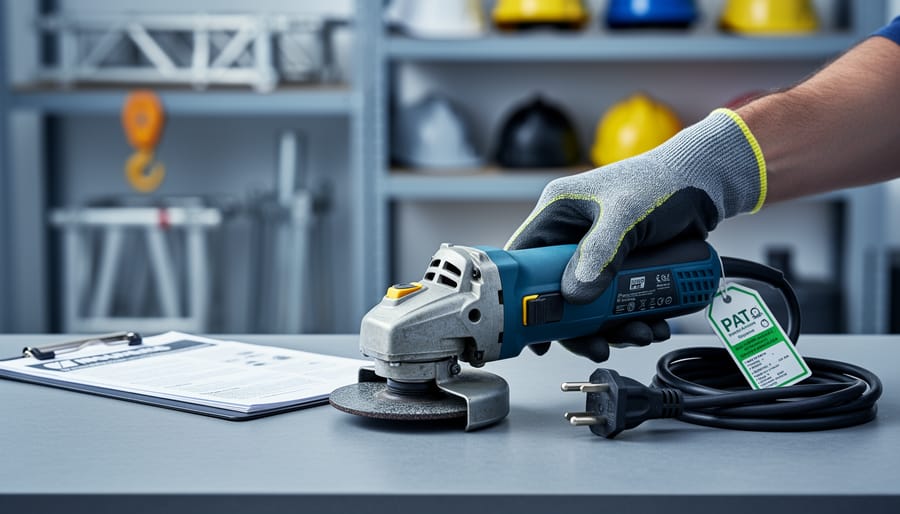
Verify your hired equipment carries the CE or UKCA marking before accepting delivery—these safety certifications confirm the tool meets mandatory UK standards for electrical safety, noise levels, and operational hazards. Request written documentation from your hire company proving their Portable Appliance Testing (PAT) is current, with equipment tested within the last three months for handheld tools or six months for stationary machinery.
Check that the rental agreement explicitly states who holds liability insurance for equipment-related incidents, as regulations require either you or the hire company to maintain minimum £5 million public liability coverage during the rental period. Insist on receiving the manufacturer’s operating manual and a safety briefing for any powered equipment, particularly for items classified under the Provision and Use of Work Equipment Regulations (PUWER), which legally requires proper instruction before first use.
Confirm the hire company maintains up-to-date records under the Lifting Operations and Lifting Equipment Regulations (LOLER) if renting scaffolding, hoists, or lifting gear—these items require statutory six-monthly inspections by certified engineers. Document any existing damage with timestamped photographs at collection to protect yourself from disputes, as consumer protection regulations place the burden of proof on renters to demonstrate pre-existing faults.
Understanding these compliance requirements protects you from legal exposure, prevents workplace accidents, and ensures you’re working with reputable hire companies who prioritize customer safety over shortcuts.
Understanding Regulatory Tools: What They Are and Why They Matter
When you hire a drill, pressure washer, or scaffolding, you’re not just picking up equipment—you’re entering a regulated system designed to keep everyone safe. Regulatory tools are the practical measures that ensure hired equipment meets safety standards and operates as intended. Think of them as the behind-the-scenes checks that stand between a smooth project and a potential disaster.
These tools include regular inspections, where qualified technicians examine equipment for wear, damage, or defects before it reaches your hands. Compliance certificates verify that machinery meets legal safety standards, while safety audits assess whether hire companies follow proper maintenance schedules. Equipment standards, like those set by the Health and Safety Executive, establish the baseline requirements all tools must meet before they’re available for hire.
Why does this matter? These safeguards protect renters from faulty equipment that could cause injury or damage property. They also protect hire companies from liability by demonstrating they’ve taken reasonable precautions. When a pressure washer comes with an inspection tag showing it was tested last week, you can work confidently knowing it’s been professionally vetted.
The consequences of ignoring regulations are serious and measurable. In 2019, a construction firm faced prosecution after an uninspected scaffold collapsed, injuring two workers. The equipment had bypassed required safety checks to save time and money. Similarly, faulty electrical testing equipment that hadn’t received proper certification caused a house fire during renovation work.
These aren’t scare stories—they’re preventable incidents that happened because regulatory tools weren’t properly implemented. Understanding what these protections are helps you recognise when they’re missing and make informed decisions about where you hire your equipment.
Essential Compliance Requirements for Tool Hire Operations
Equipment Testing and Certification Standards
When hiring tools, understanding certification standards helps ensure you’re getting safe, compliant equipment. Here’s what you need to know about the key testing requirements.
PAT testing, which stands for Portable Appliance Testing, applies to any electrical tool or equipment. This involves checking that electrical items are safe to use, with tests covering everything from power drills to extension leads. While there’s no legal requirement for how often PAT testing must occur, the frequency depends on the equipment type and usage environment. Hire companies typically test tools before each rental or at regular intervals, usually between three to twelve months for frequently used items. When hiring, look for a PAT testing label showing the test date and next due date.
LOLER, the Lifting Operations and Lifting Equipment Regulations 1998, governs equipment like hoists, lifting platforms, and cherry pickers. These regulations require thorough examination by a competent person at least every six to twelve months, depending on the equipment type. Some lifting equipment needs inspection before first use and after any incident that could affect safety.
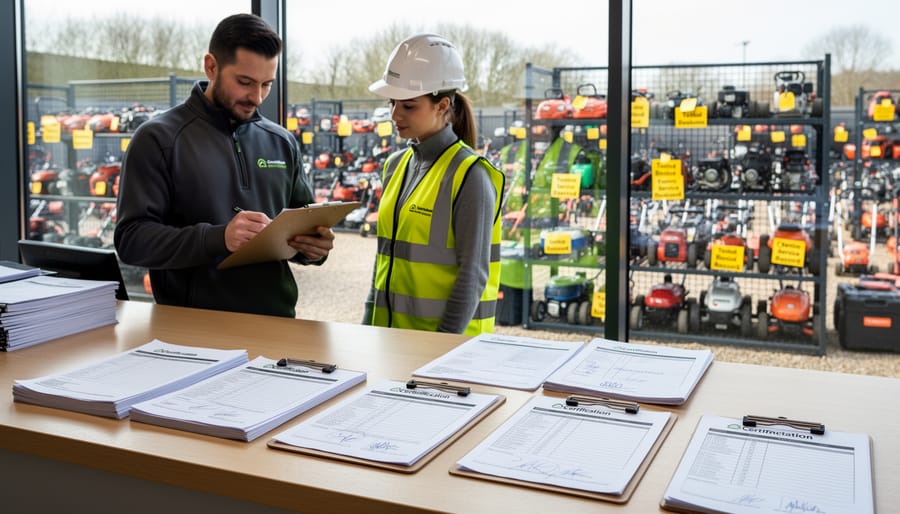
Before hiring any tool, ask to see current certification. Reputable hire companies will readily provide copies of PAT certificates, LOLER examination reports, and any manufacturer service records. These documents prove the equipment has been properly maintained and tested.
Red flags include faded or missing certification labels, reluctance to share test certificates, or equipment that appears overdue for inspection based on the dates shown. Always verify that certificates are current and issued by qualified inspectors, as this protects both your safety and legal compliance on site.
Documentation and Record-Keeping Requirements
Before hiring any equipment, responsible rental companies should readily provide several key documents that demonstrate regulatory compliance. Maintenance logs record all servicing activities, repairs, and component replacements performed on each tool. These logs prove the equipment receives regular professional attention and help identify patterns that might indicate safety concerns.
Inspection records document safety checks conducted before and after each rental period. These should include dates, inspector signatures, and notes on any issues found and resolved. Current calibration certificates are particularly important for precision equipment like laser levels or testing instruments. Don’t hesitate to ask when the tool was last inspected and what specific checks were performed.
User agreements outline your responsibilities as the hirer, covering proper usage, insurance requirements, damage protocols, and rental agreement pricing. Review these carefully before signing, ensuring you understand liability terms and return conditions.
Additionally, request proof of public liability insurance and copies of manufacturer specifications for unfamiliar equipment. Reputable operators welcome these questions and maintain organized documentation systems. If a company seems reluctant to share these records or claims they’re unavailable, consider this a red flag and look elsewhere for your hire needs.
Insurance and Liability Considerations
Tool hire companies in Australia must carry minimum public liability insurance, typically between $10 million and $20 million, to protect against property damage or injuries caused by faulty equipment. Before renting, ask to see proof of current insurance certificates and verify coverage specifics.
As a renter, you should understand your own liability exposure. Most rental agreements include clauses holding you responsible for damage occurring during your hire period, regardless of fault. Making informed insurance coverage decisions means reading these clauses carefully before signing.
Key protection tips include photographing equipment condition before and after use, documenting any pre-existing damage, and checking whether your home or business insurance covers hired equipment. Many policies don’t automatically include this coverage.
Look for rental agreements that clearly define what constitutes normal wear versus damage requiring compensation. Reputable hire companies should explain their damage assessment process upfront. Some offer optional damage waiver insurance for daily fees, which can provide peace of mind for expensive equipment.
Always clarify who’s responsible if equipment malfunctions cause project delays or secondary damage. Understanding these liability boundaries protects both your wallet and your projects, ensuring you’re covered when things don’t go as planned.
Safety Regulations That Directly Impact Tool Users
Personal Protective Equipment (PPE) Requirements
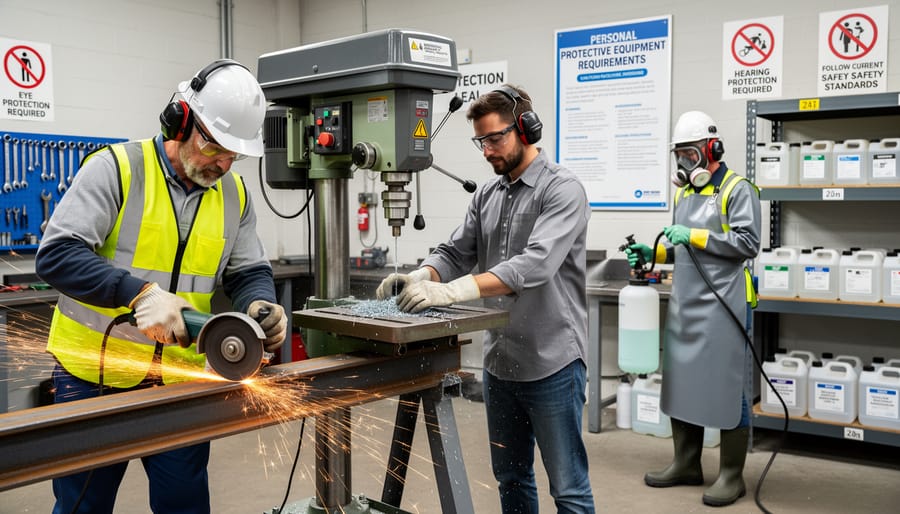
The type of PPE required depends on the tool category you’re hiring. For power tools like angle grinders, circular saws, and demolition hammers, you’ll need safety glasses or goggles, hearing protection, and sturdy work gloves. When using respiratory hazards like sanders or concrete cutters, add a dust mask or respirator rated to current standards. Ladder and scaffolding work requires a hard hat and non-slip safety boots.
In the UK, responsibility for PPE falls primarily on the hirer (that’s you). While rental companies must ensure their equipment meets safety standards, you’re expected to provide your own personal protective equipment. Some hire centers stock basic PPE for purchase, but don’t rely on this – always bring appropriate protection to the job site.
Current safety standards include EN166 for eye protection, EN352 for hearing defenders, and EN149 for respiratory masks. Check that your PPE displays these certification marks before use. Professional tradespeople should maintain a complete PPE kit, while DIY users can build their collection over time, starting with essentials like safety glasses and gloves. Remember, compromised or damaged PPE offers no real protection – replace worn items immediately. Your rental agreement should outline these requirements clearly.
Operator Competency and Training Standards
Professional certification requirements vary significantly depending on the equipment type and your location. For most standard hire tools like drills, sanders, and ladders, no formal certification is legally required. However, specialized equipment tells a different story. Operating machinery like scissor lifts, cherry pickers, telehandlers, and certain woodworking equipment typically requires specific licenses or certification cards. For example, working at height equipment often mandates IPAF (International Powered Access Federation) certification, while forklift operation requires accredited training.
Reputable hire companies must verify operator competency before releasing certain equipment. This usually involves checking certification cards or providing onsite training demonstrations. At minimum, they should offer comprehensive safety briefings and operating instructions for all equipment, regardless of legal requirements. Many companies now provide induction videos or printed guides with each rental.
Even when certification isn’t legally mandated, it’s highly recommended for unfamiliar equipment. Many accidents occur when users overestimate their abilities. Don’t hesitate to ask hire staff about available training courses or request a practical demonstration. Some companies offer short competency assessments that, while not formal certifications, ensure you understand basic operations and safety protocols. Remember, insurance coverage may be affected if incidents occur while operating equipment without proper training, even if certification wasn’t legally required.
Site-Specific Safety Regulations
Safety regulations differ significantly depending on where you’re working. Residential projects typically have fewer formal requirements than commercial sites, but you’re still responsible for neighbour safety and noise restrictions. Commercial and industrial environments demand stricter compliance, including site access controls, designated equipment zones, and documented safety procedures.
Indoor work introduces specific concerns around ventilation when using petrol-powered equipment, dust control, and electrical safety in confined spaces. Outdoor sites face different challenges like weather-related hazards, securing equipment overnight, and managing public access. Understanding these distinctions is essential for proper construction site organization and compliance.
Common pitfalls include failing to obtain necessary permits before starting work, neglecting to verify that hired equipment meets current safety standards, and inadequate record-keeping of equipment inspections. Many users also overlook the requirement for specific personal protective equipment based on their work environment. Always check with your local council about site-specific requirements before beginning any project. When hiring tools, confirm that the rental company provides current compliance documentation and operating instructions. Don’t assume residential work exempts you from safety obligations, as homeowner liability remains regardless of project scale.
Recent Regulatory Changes and What’s Coming Next
The tool hire industry has seen significant regulatory updates over the past 18 months that directly impact both rental businesses and users. As of January 2024, all power tools hired out must include clear safety labeling in English, meeting the updated Australian Standard AS/NZS 3760. This means every tool you rent should display inspection dates and usage warnings prominently.
From July 2024, stricter electrical safety testing requirements came into effect. Rental equipment must now undergo testing and tagging every three months instead of six, ensuring higher safety standards. When collecting your hired tools, check for current test tags dated within the last 90 days.
Looking ahead, new workplace health and safety guidelines will take effect on January 1, 2025. These changes require rental companies to provide digital safety instructions and operating manuals accessible via QR codes on all equipment. As a renter, you’ll need to acknowledge receipt of these materials before taking tools offsite.
The regulatory updates have contributed to recent pricing changes across the industry, as businesses invest in more frequent testing and enhanced documentation systems.
What you need to do: Always verify test tags are current, request safety documentation before use, and ensure you understand operating procedures. Keep digital or printed copies of hire agreements showing compliance verification. These simple steps protect you legally and ensure you’re working with properly maintained, regulation-compliant equipment.
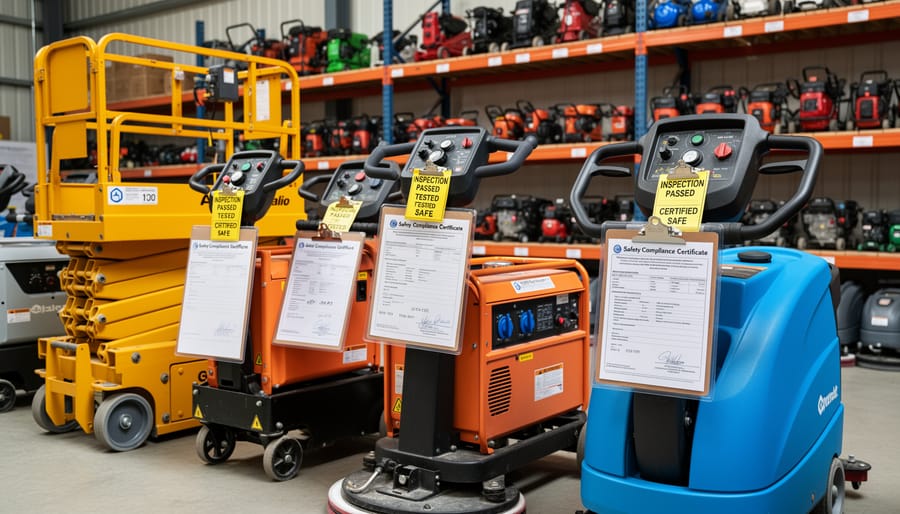
How to Verify Compliance Before You Hire
Before signing any rental agreement, protect yourself by running through this essential compliance checklist. Start by asking the supplier for their current public liability insurance certificate and proof that all equipment has undergone recent safety inspections. Legitimate hire companies will provide these documents without hesitation.
Red flags to watch for include reluctance to show maintenance records, equipment that appears damaged or poorly maintained, and vague answers about safety certifications. As DIY enthusiast Sarah M. shared in her review, “I walked away from a cheaper hire company when they couldn’t produce LOLER certificates for their lifting equipment. Best decision I made.”
Ask specific questions: When was this tool last serviced? Do you provide safety instructions and training? What happens if the equipment fails during my hire period? Request written documentation of the tool’s compliance status, particularly for items like pressure washers, electrical equipment, and access machinery.
Professional tradesperson Mike T. notes, “I always check the equipment’s PUWER compliance tag before leaving the yard. Takes two minutes but saves potential legal headaches.” Look for clear labeling showing inspection dates, serial numbers, and safety warnings. If a supplier seems annoyed by these questions, consider it another warning sign and take your business elsewhere.
Understanding and following regulatory requirements isn’t just about ticking boxes—it’s about protecting yourself, your projects, and everyone around you. Whether you’re a weekend DIYer or a seasoned professional, staying informed about compliance standards ensures you’re hiring safe, legally compliant equipment every time.
Regulations change, new safety standards emerge, and staying current can feel overwhelming. That’s why we encourage you to regularly check back with Tool Hire Regulatory and Safety News for the latest updates affecting your rentals. These changes often directly impact the equipment available to you and how you can use it safely.
Beyond reading updates, we invite you to engage with our community. Share your compliance experiences, ask questions, and learn from others who’ve navigated similar situations. Your insights help fellow renters make better decisions and contribute to a culture of safety and accountability.
Remember, informed hiring protects everyone—from the person operating the equipment to bystanders and the environment. By taking regulatory awareness seriously, you’re not just following rules; you’re actively contributing to a safer, more responsible tool hire industry.
Related Posts