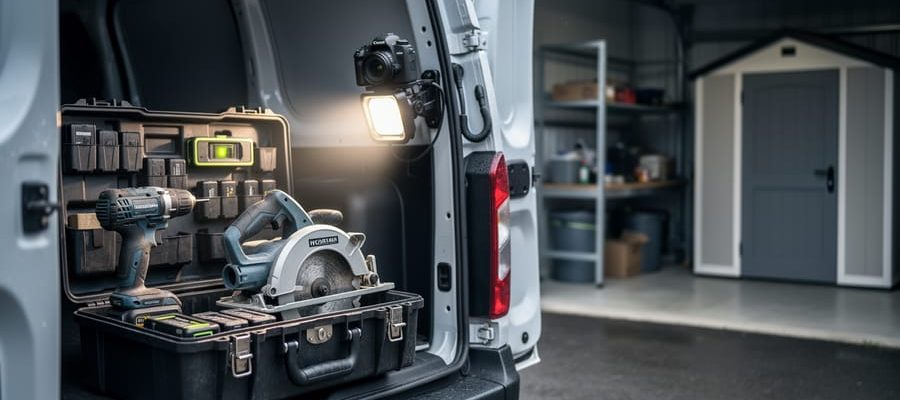
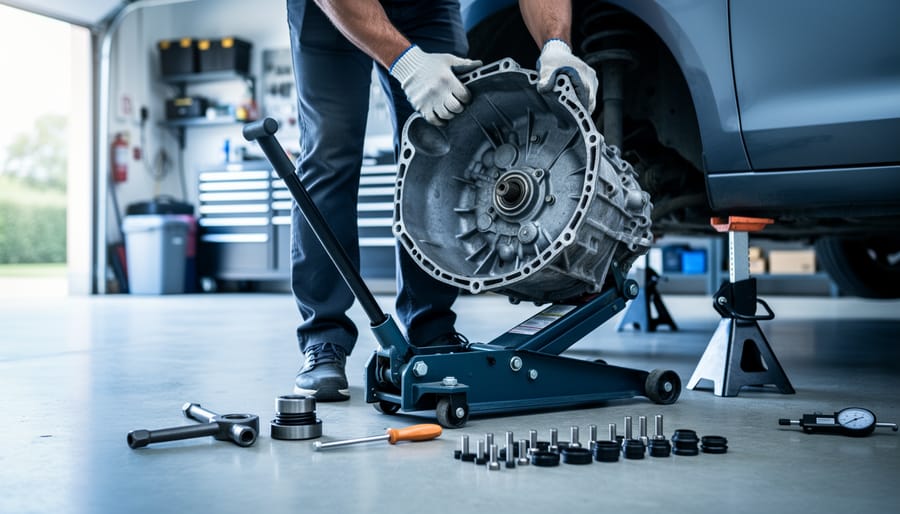
Evaluate whether hiring transmission tools makes financial sense by calculating the cost of specialist equipment against the frequency of use—transmission jack sets, bearing pullers, and clutch alignment tools can cost thousands to purchase but typically rent for $30-80 per day. Identify the essential tools required for your specific job: hydraulic transmission jacks handle the weight safely, seal and bushing drivers prevent damage during installation, bearing separator sets remove stuck components without destroying casings, and dial indicators ensure precise shaft alignment. Reserve equipment at least 48 hours ahead of major repairs, as specialized transmission tools have limited availability at most hire centers, and confirm the hire period includes adequate time for unexpected complications—most gearbox removals take DIY mechanics 6-8 hours versus the 2-3 hours professionals quote.
Professional mechanics increasingly choose tool hire for infrequent transmission work rather than tying up capital in equipment that sits idle, while DIY enthusiasts tackle DIY projects previously considered beyond their skill level when proper equipment becomes accessible. Quality hire centers provide usage instructions and safety guidance with each tool, eliminating the knowledge gap that once separated amateur mechanics from professional results. Community reviews consistently highlight that transmission repairs completed with correct hired equipment succeed at rates comparable to workshop jobs, while attempts using improvised tools frequently result in damaged seals, cross-threaded bolts, or misaligned components requiring costly professional intervention.
Understanding Transmission and Gearbox Repair Complexity
Transmission and gearbox repairs often carry an intimidating reputation, but understanding what’s actually involved can help demystify the process. At their core, these systems transfer power from your engine to the wheels through a complex arrangement of gears, clutches, and hydraulic components. While this sounds daunting, many transmission tasks exist on a spectrum from straightforward maintenance to full rebuilds.
Simple jobs like changing transmission fluid, replacing external seals, or adjusting linkages require basic mechanical knowledge and standard tools. However, internal repairs—such as replacing clutch packs, rebuilding valve bodies, or addressing gear wear—demand specialized tools like bearing pullers, snap ring pliers, dial indicators, and torque wrenches calibrated to precise specifications.
The common misconception is that transmission work is exclusively for professional mechanics. While complex overhauls certainly require experience, many intermediate repairs are within reach for dedicated DIYers who invest time in research and use proper equipment. The key difference lies in preparation and having the right tools for the job.
Community feedback consistently shows that attempting transmission repairs without appropriate equipment leads to frustration, damaged components, and ultimately higher costs. Conversely, those who hire specialized tools report significantly better outcomes, even on their first attempt. The investment in tool hire provides access to professional-grade equipment without the prohibitive purchase cost, making previously impossible projects achievable for home mechanics willing to learn.
Essential Gearbox and Transmission Tools You Can Hire
Transmission Jacks and Lifting Equipment
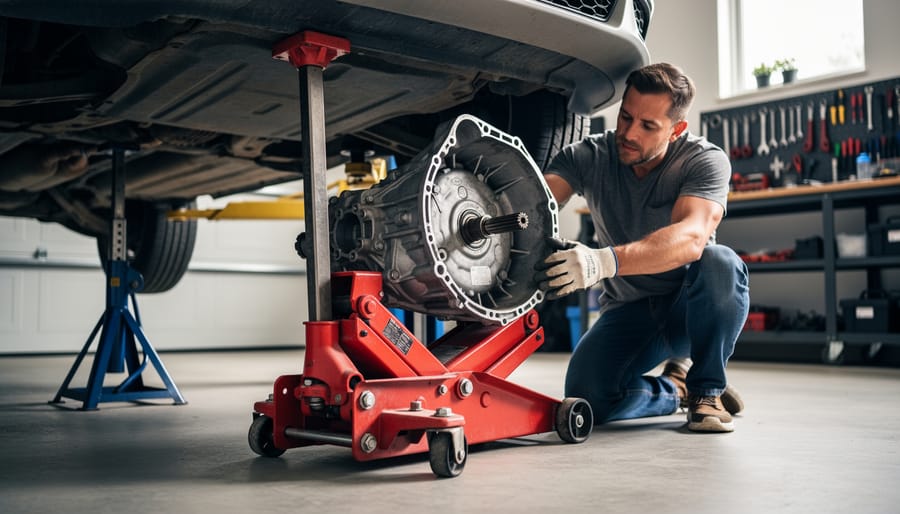
Proper lifting equipment is absolutely critical when working with transmissions—these units typically weigh between 45-180kg depending on vehicle type, making manual handling both dangerous and impractical. Attempting to support a gearbox without appropriate equipment risks serious injury and potential damage to expensive components.
Transmission jacks come in several configurations for hire. Standard floor-model transmission jacks feature adjustable saddles and tilting heads to accommodate different gearbox shapes, with typical weight capacities ranging from 250kg to 500kg. Low-profile models suit vehicles with limited ground clearance, while heavy-duty versions handle larger commercial vehicle transmissions. Many hire facilities also offer adaptor plates and securing straps as part of the rental package.
Weight capacity is your primary consideration—always hire a jack rated well above your transmission’s actual weight to provide a safety margin. Check your vehicle’s service manual or contact the hire company for guidance on appropriate capacity.
Typical hire costs range from £15-30 per day for standard transmission jacks, with weekly rates offering better value at £40-75. Heavy-duty models command premium rates of £25-40 daily. According to community feedback, many hirers recommend booking for slightly longer than anticipated, as transmission work often takes more time than initially planned, especially for first-time DIY projects.
Bearing Pullers and Installation Tools
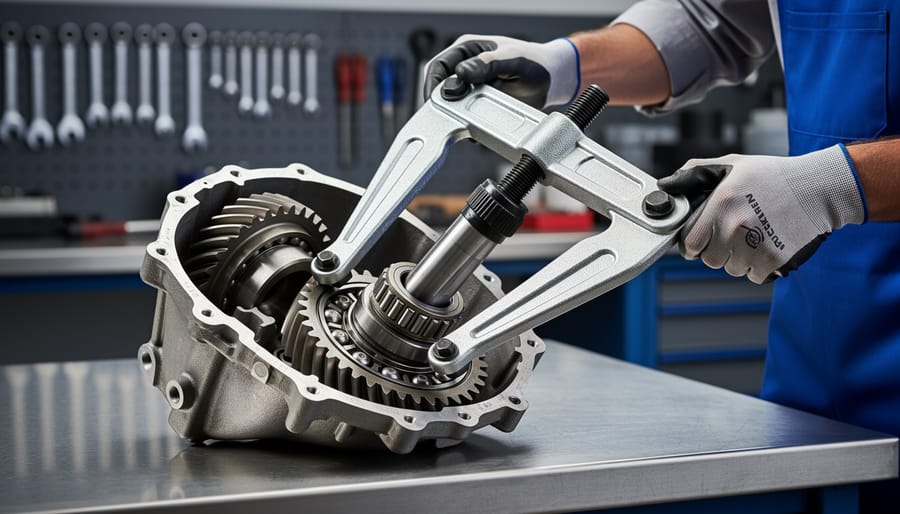
Bearings are critical components in gearboxes, and removing or installing them incorrectly can cause expensive damage to both the bearing and housing. Bearing pullers and installation tools make this delicate work manageable, even if you’ve never tackled a gearbox repair before.
Slide hammer pullers attach to the bearing’s inner race and use controlled force to extract it without damaging surrounding components. Hydraulic bearing pullers generate immense pressure for stubborn bearings that won’t budge with manual tools. For installation, bearing drivers ensure the new bearing seats evenly without tilting or cracking. Each tool type suits different bearing sizes and access situations.
Community members frequently highlight how hiring these specialized tools saved them from costly mistakes. As one reviewer noted, “I would have destroyed the gearbox casing trying to hammer out the bearing myself.” Rental costs typically range from £15-35 per day depending on the tool type, a worthwhile investment compared to replacing damaged components. Most hire centers provide sizing guides to help you select the correct pullers and drivers for your specific gearbox model.
Torque Wrenches and Precision Tools
Achieving proper torque specifications is absolutely critical when assembling transmission components. Over-tightening can strip threads or crack housings, while under-tightening leads to leaks and component failure. Standard socket wrenches simply can’t provide the precision needed for these sensitive assemblies.
When hiring torque wrenches, you’ll typically find three types available: beam-style (basic but reliable), click-type (most popular for their audible signal when reaching target torque), and digital models (offering the highest accuracy with easy-to-read displays). Most transmission work requires wrenches covering 10-250 Nm, so confirm the range matches your vehicle’s specifications before hiring.
Generic tools fall short because transmission bolts often require specific torque patterns and incremental tightening sequences. Professional-grade torque wrenches available through hire services come calibrated and certified, ensuring accuracy within 3-4% – essential when manufacturer specs might differ by just 5 Nm between components.
Community feedback consistently emphasizes that hiring calibrated torque equipment prevents costly mistakes. One reviewer noted: “Spent £25 hiring proper torque tools instead of using my old wrench – saved my gearbox from a £800 rebuild.”
Seal and Bushing Drivers
Seal and bushing drivers are precision tools that ensure new seals and bushings sit perfectly flush in their housings, preventing leaks and premature wear. Without the correct driver size, you risk damaging delicate seals or creating gaps that allow transmission fluid to escape. These tools look like large sockets or cylindrical mandrels, each sized to match specific seal diameters.
Professional sets can include 20 or more drivers ranging from 25mm to 90mm, covering most passenger vehicles. For a one-off gearbox rebuild, purchasing a complete set isn’t cost-effective. Hiring gives you access to the exact sizes needed without storing rarely-used equipment. Many hirers report in community reviews that having the full range available saved their projects when unexpected seal sizes appeared during disassembly. The proper driver distributes installation force evenly, preventing the seal lip distortion that causes immediate leaks after reassembly.
Diagnostic Equipment and Scan Tools
Modern transmissions rely heavily on electronics, making diagnostic equipment essential for accurate troubleshooting. OBD-II scanners are the foundation, reading error codes that pinpoint transmission issues like slipping gears or sensor failures. These basic scanners are widely available for hire and work with vehicles manufactured after 1996.
For deeper analysis, transmission-specific diagnostic tools offer live data streaming, allowing you to monitor parameters like fluid temperature, shift solenoid performance, and pressure readings in real-time. Professional-grade scan tools with manufacturer-specific software provide access to adaptation values and can perform relearns after repairs.
Many hire shops now stock bi-directional scan tools that not only read data but also command transmission components for testing. Community reviews consistently highlight these as invaluable for confirming repairs before reassembly, saving both time and costly mistakes.
When to Hire Instead of Buy: The Cost-Benefit Reality
The financial case for hiring over buying tools becomes crystal clear when you examine gearbox and transmission equipment costs. A professional transmission jack typically retails for $800-$1,500, while daily hire rates range from $35-$55. If you’re tackling a single gearbox removal or an occasional repair every few years, the math is straightforward: purchasing doesn’t make economic sense.
Consider a complete gearbox tool kit including a transmission jack, clutch alignment tools, seal drivers, and bearing pullers. Buying this equipment outright could easily exceed $2,000-$3,000. Hiring the same tools for a weekend project costs approximately $150-$250 depending on your location and the specific equipment rental yards you choose.
The frequency-of-use rule provides a practical guideline: if you’ll use a specialized tool fewer than five times per year, hiring is almost always more cost-effective. For home mechanics working on their own vehicles, transmission work typically occurs once every several years, making purchase costs impossible to justify.
Storage presents another hidden cost of ownership. Transmission jacks alone require approximately 1.5 square meters of garage space, and specialized pullers, alignment tools, and seal kits add to your storage burden. Many DIY enthusiasts simply don’t have room for equipment they’ll rarely use.
One community member shared their experience: “I priced buying a decent transmission jack at $1,200. Over ten years, I’ve hired one four times at $45 each time. I’ve saved over $1,000 and my garage isn’t cluttered with single-use equipment.”
The verdict? Unless you’re operating a professional workshop with regular transmission work, hiring delivers better value.
Step-by-Step: Planning Your Gearbox Repair with Hired Tools
Assess Your Repair Before Booking Tools
Before committing to tool rentals, properly diagnosing your transmission issue saves both time and money. Start by identifying symptoms: slipping gears typically require clutch alignment tools and flywheel holders, while fluid leaks might only need a drain pan and seal removal equipment. Grinding noises often indicate bearing problems, necessitating bearing pullers and press adapters.
Check your vehicle’s manual to understand whether you have a manual or automatic transmission, as this determines your tool requirements entirely. Manual gearboxes generally need clutch alignment tools, transmission jacks, and flywheel locking devices. Automatic transmissions may require specialized pressure gauges, fluid exchangers, and torque converters.
Community members recommend creating a checklist before hiring. One reviewer noted, “I initially ordered five tools but only needed three after watching tutorial videos specific to my car model.” Research your exact repair procedure online and list every tool mentioned. Compare this against hire packages to avoid paying for unnecessary equipment.
If you’re uncertain about the diagnosis, consider hiring basic diagnostic tools first, such as transmission fluid pressure test kits, before committing to the full repair toolkit.
Timing Your Tool Hire Period
Getting your timing right can save money and stress when hiring gearbox tools. For basic clutch replacements, most DIYers need 1-2 days, while full gearbox removals typically require 2-4 days depending on vehicle complexity and your experience level. Professional mechanics often complete these jobs faster, but rushing increases the risk of costly mistakes.
Before committing to a hire period, thoroughly assess the job. Check community reviews from others who’ve tackled similar repairs on your vehicle model—they’ll often share realistic timeframes. Factor in potential complications like seized bolts or corroded components that commonly appear on older vehicles.
Maximize efficiency by preparing everything beforehand. Have all complementary tools ready, organize your workspace, and review repair guides completely. Many hirers report wasting precious rental time searching for missing sockets or waiting for parts deliveries.
If you’re uncertain, opt for a slightly longer hire period. The minor extra cost beats paying rush fees or rebooking equipment. Most hire companies offer flexible extensions, but weekend availability can be limited, so plan accordingly and always build in buffer time for unexpected challenges.
Preparing Your Workspace and Safety Setup
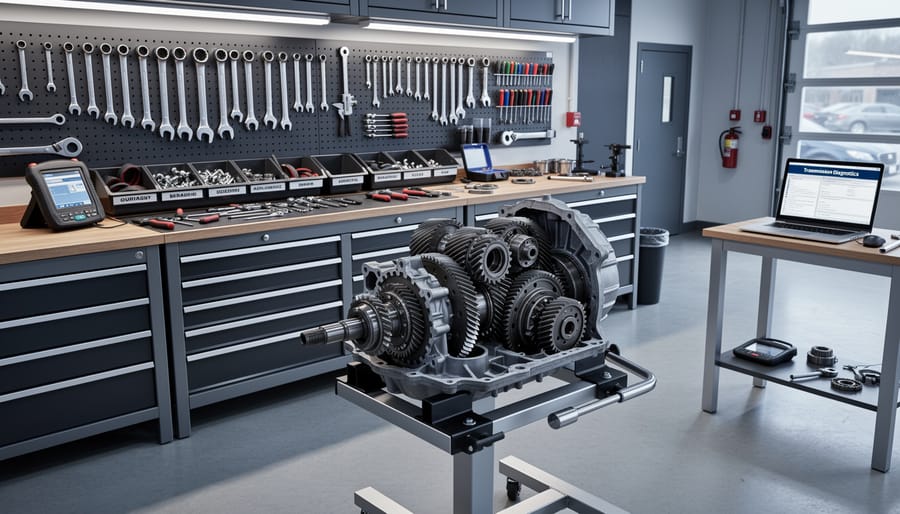
Before starting your gearbox or transmission project, create a clean, spacious workspace with at least 15 square feet of clearance around your vehicle. You’ll need a solid, level surface capable of supporting your car on jack stands, as most transmission work requires underneath access.
Essential safety equipment includes heavy-duty gloves (gearbox components can weigh 50-100 pounds), safety glasses, steel-toed boots, and a quality respirator mask. Transmission fluid contains harmful chemicals, so skin protection is crucial. Many hire companies provide basic safety gear with their tool packages, but always verify what’s included.
Proper ventilation is non-negotiable when working with transmission fluids and solvents. If working in a garage, ensure doors and windows remain open, or use industrial fans to maintain airflow. Position a drain pan rated for at least 5 gallons beneath the transmission to catch old fluid safely.
According to community feedback from experienced DIYers, having absorbent materials like cat litter or spill mats on hand prevents slips and simplifies cleanup. Remember, disposing of old transmission fluid requires taking it to an authorized recycling facility, never down drains.
What to Check When Collecting Hired Tools
Before leaving the hire center, thoroughly inspect your gearbox tools. Check that all listed attachments are present—adapters, support brackets, and lifting chains are easily overlooked. Test moving parts to ensure smooth operation and look for existing damage like cracks or excessive wear. Take photos or videos of the equipment’s condition as evidence. Verify you’ve received the correct capacity tool for your vehicle’s transmission weight. Ask staff to demonstrate any unfamiliar features. Request written documentation of any pre-existing issues. This careful inspection protects you from disputes over damage deposits and ensures you have everything needed for successful transmission work.
Common Pitfalls and How to Avoid Them
Even experienced mechanics encounter challenges when using hired transmission tools, often due to unfamiliarity with specific equipment. One of the most frequent mistakes is selecting the wrong jack capacity. Community feedback consistently highlights cases where DIYers underestimate transmission weight, leading to dangerous situations. Always verify the weight of your specific gearbox and choose a jack rated at least 20% above that capacity.
Another common issue involves inadequate preparation before transmission repairs in Sydney or elsewhere. Users report discovering incompatible adapters mid-project because they failed to confirm fitment specifications beforehand. Before collecting hired tools, photograph your transmission mounting points and consult the hire centre staff to ensure you have the correct adapter plates and fixtures.
Safety oversights represent the most serious pitfalls. Reviews frequently mention people working underneath vehicles without proper jack stands, relying solely on hydraulic jacks. This is extremely dangerous as hydraulic seals can fail. Always use rated jack stands as primary support, with the jack providing secondary backup only.
Alignment tool misuse is another recurring theme. Many first-timers struggle with clutch alignment because they rush the process or apply excessive force. The alignment tool should slide smoothly through the clutch disc and into the pilot bearing. If you encounter resistance, stop and reassess rather than forcing components together, which can damage the clutch plate splines.
Finally, users consistently emphasize the importance of keeping transmission fluid drain pans nearby from the start. Waiting until fluid begins flowing often results in messy workspaces and environmental concerns. Position catch containers before loosening any fasteners to ensure safe, clean fluid collection throughout the repair process.
What Professional Tradespeople Say About Tool Hire for Transmission Work
Real-world feedback from tradespeople highlights the practical benefits of transmission tool hire. Mark, a mobile mechanic from Manchester, shares: “I needed a clutch alignment tool for a one-off BMW job. Hiring cost me £18 versus £120 to buy. The tool arrived next day, and I had it back within 48 hours. Perfect solution for occasional specialist work.”
Sarah, who runs an independent garage in Bristol, explains her approach: “We hire bearing pullers and slide hammers for transmission rebuilds maybe twice a month. It’s transformed our cash flow – we’re not tying up thousands in tools that sit idle. Plus, we always get the latest equipment.”
Common efficiency tips from professionals include checking tool availability a week ahead for complex jobs, photographing the setup process for reassembly reference, and scheduling work to maximize the hire period. Many recommend starting with basic transmission jack hire to understand the process before committing to full rebuild equipment.
Cost savings consistently emerge as the primary advantage, with mechanics reporting 70-85% savings compared to purchasing. As John, a transmission specialist, notes: “Tool hire lets me take on varied work without the capital investment. It’s genuinely changed how I operate my business.”
Hiring specialized gearbox and transmission tools offers clear financial advantages over purchasing equipment you’ll rarely use, particularly for one-off repairs or occasional professional jobs. By assessing your specific repair requirements—whether you’re tackling a clutch replacement, installing a flywheel, or conducting a full transmission rebuild—you can identify exactly which tools you need and hire them at a fraction of the purchase cost. This approach also eliminates storage concerns and ensures you’re working with well-maintained, professional-grade equipment.
Before making your booking, take time to read community-driven reviews from DIY enthusiasts and tradespeople who’ve completed similar projects. These real-world experiences provide valuable insights into tool performance and reliability. Compare hire rates, check availability for your required dates, and don’t hesitate to ask hire companies about technical support or guidance. Ready to get started? Browse available transmission tool options, review ratings from previous users, and book the equipment that matches your project needs today.
Related Posts