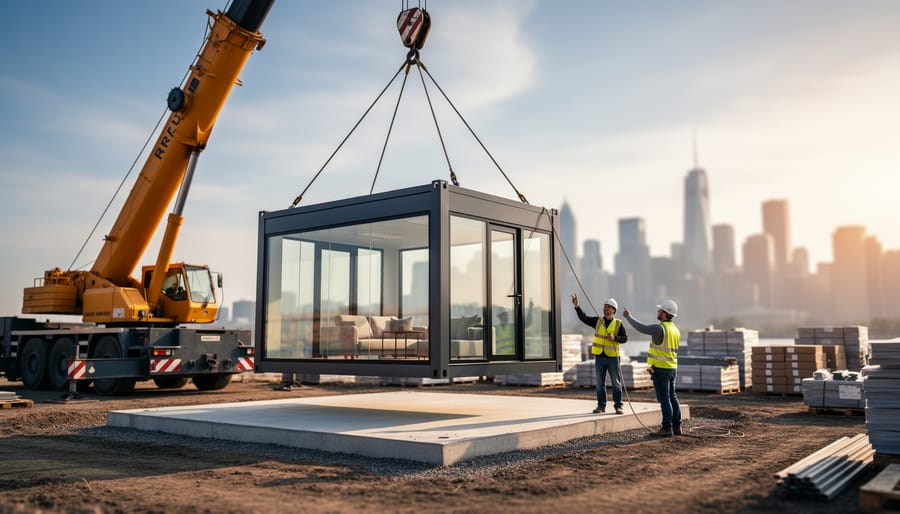
Commercial modular construction is reshaping how businesses approach their building projects, slashing construction timelines by up to 50% while maintaining quality standards that rival traditional methods. Unlike conventional site-built structures, modular buildings are constructed in controlled factory settings using precision manufacturing techniques, then transported and assembled at your location—delivering a fully functional commercial space in a fraction of the usual timeframe.
The appeal for business owners extends far beyond speed. When hiring modular structures or investing in permanent installations, companies gain predictable costs, minimal site disruption, and immediate operational capacity. These aren’t the temporary, low-quality boxes many imagine from decades past. Today’s modular construction produces everything from sophisticated office complexes and medical facilities to retail spaces and restaurants that meet the same building codes as traditionally constructed buildings.
For practical-minded business operators evaluating their options, understanding modular construction means grasping both its mechanical advantages and its real-world applications. The process eliminates weather delays, reduces material waste by approximately 15-20%, and allows simultaneous site preparation and building construction. This parallel workflow explains why businesses facing tight deadlines or operating in challenging locations increasingly choose modular solutions.
The decision between modular and traditional construction isn’t about which method is universally better—it’s about matching the right approach to your specific business requirements, timeline, budget, and long-term plans. Whether you need temporary expansion space during peak seasons or a permanent facility that must be operational within months, modular construction offers a proven alternative worth serious consideration. This guide breaks down exactly what you need to know to make an informed choice for your business.
What Makes Commercial Modular Construction Different
The Factory-to-Site Process Explained
The factory-to-site process transforms commercial modular construction from concept to completed building through a well-coordinated sequence. Here’s how it works in practical terms.
First, the design phase takes place in weeks rather than months. Your building specifications are finalized, and factory production begins immediately after permits are approved. Unlike traditional construction where weather and site conditions cause delays, modules are built indoors under controlled conditions while your site is simultaneously being prepared.
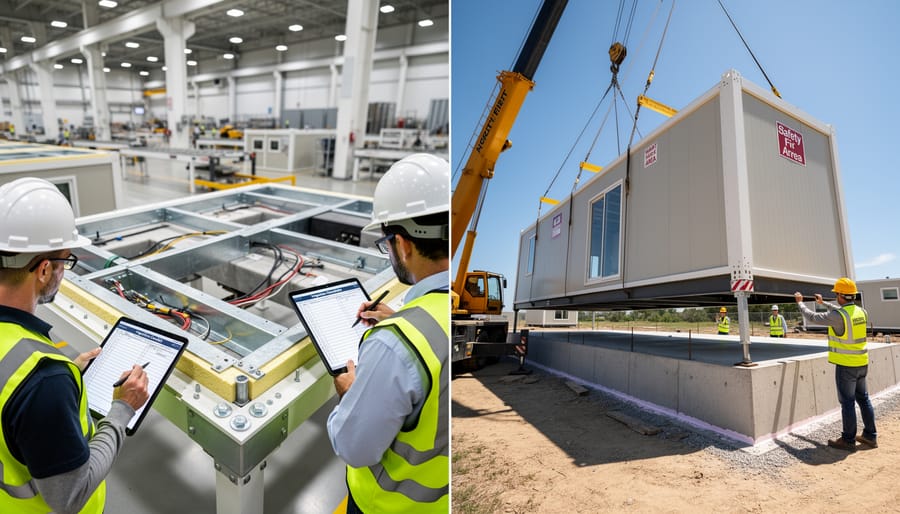
Inside the factory, skilled workers assemble individual modules—think of them as three-dimensional sections of your building. Each module arrives at the production line as raw materials and leaves as a finished room, complete with electrical wiring, plumbing, flooring, walls, and even fixtures. Quality inspections happen at multiple checkpoints throughout this process, ensuring each component meets building codes before it leaves the facility. This typically takes 6-12 weeks depending on project complexity.
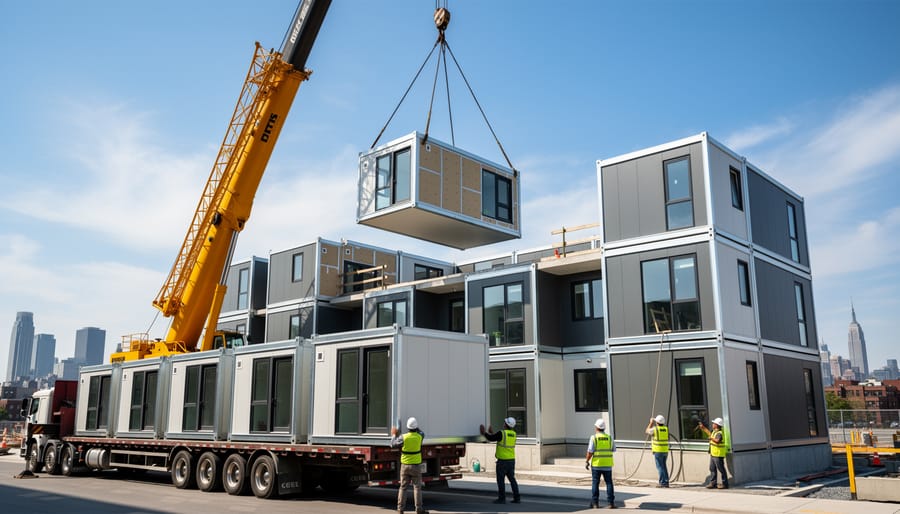
Once modules are complete, they’re transported to your site on flatbed trucks. Transportation logistics are planned carefully, considering route restrictions and delivery schedules. The actual on-site assembly happens remarkably fast—sometimes in just days. Cranes lift modules into position, where they’re secured to the foundation and connected to adjacent modules. Final steps include joining utility systems, sealing connections, and completing exterior finishes.
From start to finish, most commercial modular projects are completed 30-50 percent faster than traditional construction, getting your business operational sooner while minimizing disruption to surrounding areas.
Modular vs. Traditional Construction: The Real Differences
The fundamental difference between modular and traditional construction lies in where the building happens. Traditional construction takes place entirely on-site, with materials delivered to your location and assembled from the ground up, exposed to weather delays and site-specific challenges. Modular construction, on the other hand, happens primarily in a controlled factory environment, where 60-90% of your building is completed before arriving at your site.
When it comes to materials, both methods can use identical components—steel framing, drywall, insulation, and commercial-grade finishes. The misconception that modular means lower quality simply isn’t accurate. In fact, modular units often undergo more rigorous quality control since they’re inspected at multiple factory checkpoints and must be sturdy enough to withstand transportation.
The construction timeline tells a compelling story. Traditional builds progress sequentially—foundation first, then framing, then systems installation. Modular construction runs these processes simultaneously. While your foundation is being prepared on-site, your building modules are being completed in the factory. This parallel approach typically cuts project timelines by 30-50%.
Flexibility differs between the two approaches as well. Traditional construction offers unlimited customization during the build, though changes often mean delays and added costs. Modular construction requires more upfront planning and design finalization, but modern modular systems offer surprising versatility with various floor plans, exterior finishes, and internal configurations. Future expansion is also simpler—additional modules can be added as your business grows.
Where Commercial Modular Structures Excel
Retail and Office Spaces
Retailers and office developers are increasingly turning to modular construction to launch their spaces faster and more affordably. A modular storefront or showroom can be designed, built off-site, and installed in weeks rather than months, which means businesses can start generating revenue sooner. This speed advantage is particularly valuable in competitive retail markets where timing matters.
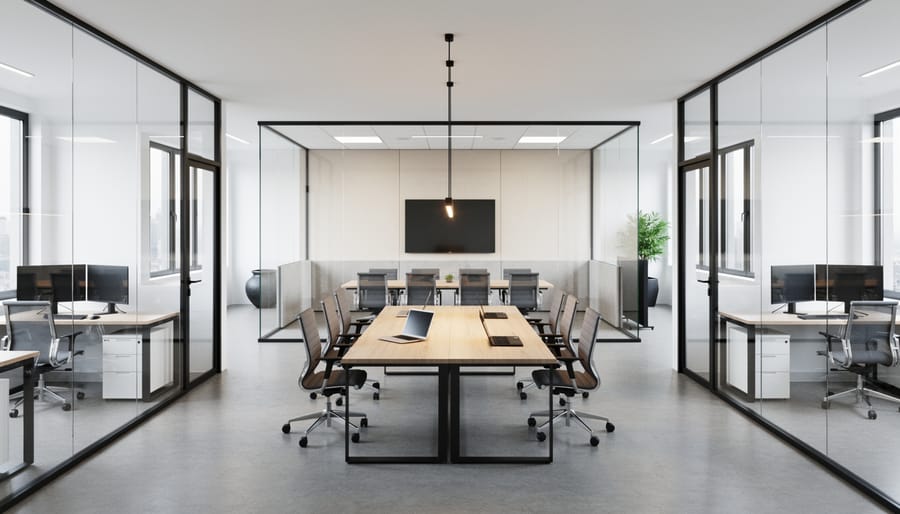
For office buildings, modular construction offers flexible floor plans that can adapt as businesses grow or change. Companies have successfully used modular units to create everything from single-story professional offices to multi-floor corporate campuses. The controlled factory environment ensures consistent quality and allows for precise customization of layouts, lighting, and technology infrastructure.
One practical advantage many business owners appreciate is the reduced disruption to surrounding operations. Since most construction happens off-site, there’s less noise, dust, and traffic congestion compared to traditional builds. This makes modular particularly suitable for adding office space to existing facilities or opening retail locations in busy commercial areas.
Community feedback from businesses using modular spaces has been largely positive, with owners citing lower upfront costs and predictable timelines as key benefits. However, it’s important to verify local zoning requirements and building codes early in your planning process, as regulations vary by location.
Hospitality and Healthcare
Modular construction has transformed hospitality and healthcare sectors by delivering speed without compromising quality. Hotels benefit significantly from this approach—guest rooms share identical specifications, making them perfect candidates for factory-built modules. A modular hotel can open months earlier than traditional builds, allowing owners to generate revenue sooner and respond quickly to market demands. Restaurant chains appreciate the consistency and faster deployment, particularly for franchise expansion.
In healthcare, speed matters for different reasons. Medical facilities face urgent demand for additional capacity, whether responding to community growth or health crises. Modular clinics and medical offices can be operational in weeks rather than months. The controlled factory environment ensures superior hygiene standards—modules are built in clean conditions, reducing contamination risks that construction sites typically face. Infection control features are integrated during manufacturing, not added as afterthoughts.
Both sectors value the minimal disruption modular construction creates. Existing operations continue while new sections are fabricated off-site, then quickly installed. This approach reduces noise, dust, and construction traffic that would otherwise impact patients or guests. The predictable timeline helps facility managers plan staffing and licensing requirements with confidence, knowing exactly when spaces will be ready for occupancy.
Warehouses and Industrial Facilities
Modular construction has become increasingly popular for warehouses and industrial facilities, offering businesses a practical alternative to traditional builds. These prefabricated structures work particularly well for storage units, distribution centres, manufacturing workshops, and equipment housing.
The modular approach allows for large, open-plan spaces that can be customised with loading bays, high ceilings for racking systems, and reinforced flooring to support heavy machinery. Construction typically takes 30-50% less time than conventional methods, meaning you can get your operation running faster. Many business owners appreciate that modules can be relocated if you need to expand to a new site or reconfigured as your storage needs change.
From a practical standpoint, these facilities often include built-in electrical systems, climate control options, and industrial-grade insulation. The construction happens off-site in controlled conditions, which reduces weather delays and maintains consistent quality standards. This matters when you need precise specifications for temperature-sensitive storage or clean manufacturing environments.
Real-world feedback from warehouse operators highlights the cost predictability as a major advantage. Fixed pricing helps with budgeting, and the faster construction timeline means reduced interim rental costs. The flexibility to add sections later without major disruption makes modular warehouses especially suitable for growing businesses that need scalable solutions rather than guessing future space requirements.
The Cost Reality: What You’ll Actually Save
Upfront Investment Breakdown
Commercial modular construction typically costs between $1,500 and $3,500 per square metre, though prices vary based on complexity, finishes, and site requirements. This pricing generally sits 10-20% lower than traditional construction methods, making it attractive for business financial decisions where budget certainty matters.
Your upfront investment includes several key components. The base price covers the prefabricated modules themselves, which are constructed in controlled factory environments. You’ll also need to factor in transportation costs from the manufacturing facility to your site, crane hire for module placement, and site preparation work including foundations and utility connections. Many suppliers bundle these elements into a fixed-price package, reducing unexpected costs.
When comparing to traditional builds, modular construction offers significant advantages beyond the sticker price. Traditional projects often experience cost overruns averaging 10-15%, while modular builds provide greater price certainty from day one. You’ll also save on financing costs thanks to faster completion times, typically 30-50% quicker than conventional methods.
Additional expenses to consider include council permits, engineering certifications, and any required modifications for your specific business needs. Most reputable modular suppliers provide detailed quotes upfront, allowing you to compare options effectively and plan your investment with confidence.
Long-Term Financial Benefits
Commercial modular buildings offer compelling financial advantages that extend well beyond the initial construction phase. Understanding these long-term benefits helps you make an informed investment decision for your business.
Energy efficiency stands out as a primary cost-saver. Modern modular buildings are constructed in climate-controlled factories with precise attention to insulation, air sealing, and thermal performance. This controlled environment eliminates the gaps and inconsistencies common in traditional builds. The result? Lower heating and cooling costs month after month. Many modular structures exceed current energy codes, with some achieving LEED certification or other green building standards. These efficiency gains typically translate to 10-20% reductions in utility expenses compared to conventional buildings.
Maintenance costs tend to be lower due to the quality control inherent in factory construction. Components are installed correctly the first time, reducing premature wear and system failures. Factory-sealed joints and professionally installed roofing systems mean fewer leaks and weather-related repairs over time.
Insurance considerations can work in your favor too. Many insurers recognize the superior construction standards of modular buildings, potentially offering reduced premiums. The faster construction timeline also means shorter builder’s risk insurance periods during construction.
Resale value remains strong when modular buildings are properly maintained, especially as the market increasingly recognizes their quality and durability.
Speed Advantages That Actually Matter to Your Business
Construction Timeline Comparisons
Real-world data shows the dramatic time savings modular construction delivers. A typical two-story commercial office building of 10,000 square feet takes approximately 12-16 months using traditional construction methods. The same project built with modular components completes in 6-8 months, cutting timelines by nearly half.
Consider these documented examples: A 64-room hotel in the Midwest finished in 7 months through modular construction versus the typical 14-16 months for conventional builds. A medical clinic expansion in Texas opened for patients in just 5 months, compared to the industry average of 10-12 months for traditional construction.
The speed advantage comes from simultaneous work streams. While your foundation gets prepared on-site, the building modules are being constructed in a controlled factory environment. Once delivered, module installation often takes just days rather than weeks.
Weather delays, which commonly add 2-4 months to traditional projects, have minimal impact on modular builds since 80-90 percent of construction happens indoors. This predictability matters when you’re planning business operations, hiring staff, or coordinating lease agreements around specific opening dates.
Minimizing Business Disruption
One of the most practical advantages of commercial modular construction is how it keeps your business running smoothly during the building process. Since 80-90% of construction happens off-site in a controlled factory environment, you’ll experience significantly less disruption at your location.
Traditional construction sites typically generate considerable noise from power tools, machinery, and heavy equipment throughout the workday. With modular construction, the noisy fabrication work occurs elsewhere, meaning your employees, customers, and neighbors won’t face months of drilling, sawing, and hammering. When modules arrive at your site, the installation process is remarkably quick—often completed in days rather than months.
Traffic congestion around your property also decreases dramatically. Instead of daily deliveries of materials, worker vehicles coming and going, and supply trucks blocking access points, you’ll see minimal site activity. The main traffic occurs during the brief installation period when modules are delivered and craned into position.
For businesses that need to remain operational during construction, this approach is invaluable. Retail stores can stay open, offices can maintain normal hours, and service businesses can continue serving clients without explaining constant construction chaos. The streamlined process means less coordination headaches, fewer safety concerns for staff and visitors, and a faster return to normal operations once your new structure is complete.
Quality and Durability: Setting the Record Straight
Building Codes and Compliance
Commercial modular buildings must meet the same rigorous building codes as traditional construction—and in many cases, they’re held to even higher standards. Here’s what you need to know about compliance.
Modular structures are manufactured in controlled factory settings where they undergo continuous inspection during each phase of construction. This means quality control happens throughout the building process, not just at completion. Factory inspectors examine electrical systems, plumbing, structural integrity, and fire safety measures before modules ever leave the facility.
Once modules arrive on-site, local building inspectors perform the same checks required for conventional buildings. This includes foundation inspection, proper module installation, weather sealing, and final systems testing. Because modular components are built to withstand transportation and crane lifting, they often exceed minimum structural requirements.
Most commercial modular manufacturers design their products to meet International Building Code (IBC) standards, which means they’re approved for use across different jurisdictions. However, it’s essential to verify that your specific project complies with local zoning laws and municipal codes, as requirements can vary by location.
The factory construction environment actually reduces common compliance issues. Weather-related delays don’t compromise material integrity, and standardized processes minimize human error. Many business owners find this built-in quality assurance provides peace of mind that their investment meets all safety and legal requirements from day one.
Expected Lifespan and Maintenance Needs
Commercial modular buildings are designed with longevity in mind, typically lasting 30 to 60 years when properly maintained—comparable to traditional construction. The key difference lies in understanding that durability depends heavily on the initial quality of materials and ongoing care rather than the construction method itself.
For businesses, maintenance planning should focus on regular inspections of roof seals, exterior panels, and connection points where modules join together. These areas require checking every 12 to 18 months, particularly after severe weather. HVAC systems, electrical connections, and plumbing fixtures follow standard commercial building maintenance schedules, making them familiar territory for facility managers.
Budget for exterior repainting or re-cladding every 10 to 15 years, similar to conventional buildings. The modular nature actually simplifies some repairs—individual panels or sections can be replaced without affecting the entire structure. Many businesses report lower long-term maintenance costs due to factory-quality construction standards and better initial weatherproofing.
Plan for professional inspections annually, focusing on structural integrity at module seams and foundation anchoring. Simple preventative measures like clearing drainage systems and maintaining proper ventilation significantly extend your building’s lifespan while protecting your investment.
Customization Options and Design Flexibility
One of the biggest misconceptions about commercial modular construction is that it limits your design options. In reality, modern modular buildings offer remarkable flexibility to match your brand identity and operational requirements.
Modular structures can be customized in nearly every aspect, from exterior finishes and colors to interior layouts and materials. Whether you need a sleek, contemporary office space or a rugged warehouse facility, modular construction adapts to your vision. You can select from various cladding options including brick, metal panels, wood, or composite materials to create the exact look you want.
Interior customization goes equally deep. Floor plans can be configured to accommodate specific workflows, equipment placement, and customer traffic patterns. Partition walls, ceiling heights, and window placements are all adjustable during the design phase. Many businesses successfully incorporate their existing branding elements, custom lighting schemes, and specialized fixtures into modular designs.
The key advantage is that these customizations happen during the manufacturing process, not as costly afterthoughts. This means better quality control and often lower costs than traditional construction modifications. However, it’s important to finalize your design requirements early, as changes become more expensive once manufacturing begins.
From feedback shared by businesses that have made the switch, the planning phase typically requires collaboration between you, the modular manufacturer, and potentially an architect. This upfront investment in planning pays dividends in getting exactly what you need without the typical construction delays.
Don’t assume modular means one-size-fits-all. The standardization that creates efficiency in manufacturing doesn’t prevent you from achieving a unique, professional result that serves your business goals. Think of it like building with high-quality, pre-fabricated components that still allow personal expression.
Practical Challenges You Should Know About
Site Preparation Requirements
Before your commercial modular building arrives, proper site preparation is essential for a smooth installation. Start by ensuring your property has a level, stable foundation—this might be a concrete slab, pier and beam system, or properly compacted gravel base, depending on your building specifications and local codes. The foundation must be completed and cured before delivery day.
Next, plan your utility connections. Coordinate with licensed electricians and plumbers to rough-in water, sewer, electrical, and data lines to predetermined connection points. These should align with your modular unit’s pre-installed systems. Don’t forget to obtain necessary permits and schedule inspections before and after installation.
Site access is crucial. Clear a path wide enough for delivery trucks and cranes, typically requiring at least 14 feet of clearance. Remove overhead obstacles like tree branches and ensure ground conditions can support heavy equipment. Many builders find that utilizing equipment rental solutions for excavation and grading work keeps preparation costs manageable.
Finally, verify that all paperwork—including zoning approvals and building permits—is complete. Proper preparation prevents costly delays and ensures your modular construction project stays on schedule and within budget.
Financing and Zoning Considerations
Before committing to commercial modular construction, investigate local zoning laws and building codes, as regulations vary significantly between jurisdictions. Some municipalities have outdated codes that don’t specifically address modular buildings, which can delay approvals or require additional documentation proving compliance with structural standards.
Financing presents another consideration worth exploring early. Traditional lenders sometimes view modular construction as non-traditional, potentially affecting loan terms or requiring larger down payments. However, this perception is changing as modular construction gains acceptance. Shop around with multiple lenders, including those specializing in commercial properties, and come prepared with documentation showing that modular buildings meet or exceed conventional building standards.
Permit requirements deserve careful attention too. While the manufacturing portion occurs off-site, you’ll still need building permits, site preparation approvals, and utility connection permits. Work with experienced modular contractors who understand local permitting processes and can guide you through inspections at both the factory and installation site.
Community feedback suggests partnering with contractors who have established relationships with local building departments, as this familiarity often smooths the approval process and prevents costly delays.
Making the Decision: Is Modular Right for Your Business?
Questions to Ask Potential Suppliers
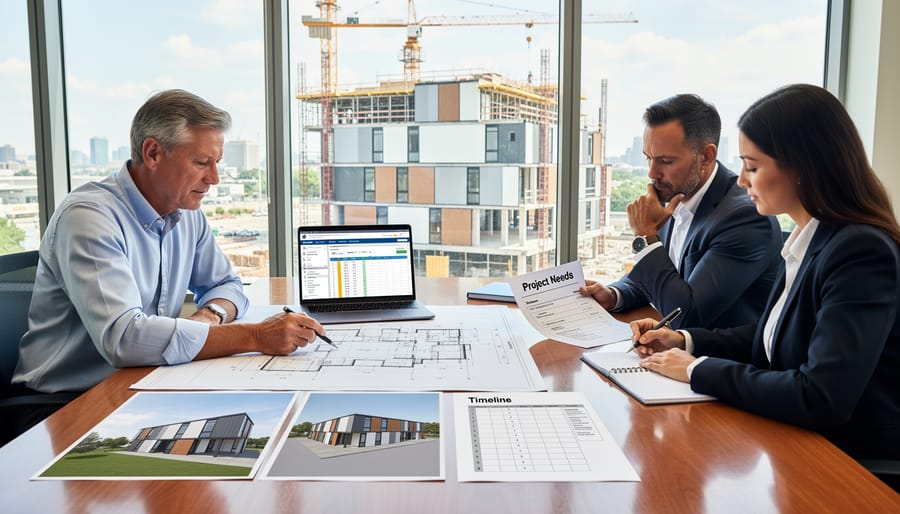
Before signing a contract, prepare a thorough list of questions to evaluate potential suppliers. Start by asking about warranty coverage—what’s included, how long it lasts, and what circumstances might void it. Inquire about the installation process: does the supplier handle it, or will you need to coordinate with local contractors? Understanding this upfront helps when working with contractors on your project.
Ask about customization options and any limitations. Can they modify layouts, add specific features, or accommodate unique requirements? Request detailed timelines from order placement to completion, including potential delays.
Don’t skip questions about ongoing support and maintenance. Who handles repairs? Are replacement parts readily available? What’s the typical response time for service calls?
Finally, request references from similar businesses in your industry and ask to visit completed installations. This gives you real-world insight into quality and performance. Community feedback from other business owners who’ve used modular construction can prove invaluable in making your final decision.
Commercial modular construction offers compelling advantages for business owners seeking faster timelines, predictable costs, and flexible spaces. As we’ve explored, this building method delivers projects 30-50% quicker than traditional construction while maintaining quality standards through controlled factory environments. The upfront cost clarity, reduced site disruption, and scalability make it particularly attractive for retail spaces, offices, healthcare facilities, and educational buildings.
However, success depends on careful planning. Consider your site conditions, financing options, and long-term space requirements before committing. Modular construction isn’t always the perfect fit—complex custom designs or challenging sites may benefit from traditional methods. The key is matching the solution to your specific business needs.
We recommend consulting with experienced modular construction professionals and visiting completed projects in your industry. Request detailed proposals that outline timelines, costs, and warranty coverage. Don’t hesitate to ask about their quality control processes and past client experiences.
We’d love to hear from you. Have you considered or used modular construction for your business? What factors influenced your decision? Share your experiences, questions, or concerns in the comments below. Your insights help fellow business owners make informed choices about their construction projects.
Related Posts