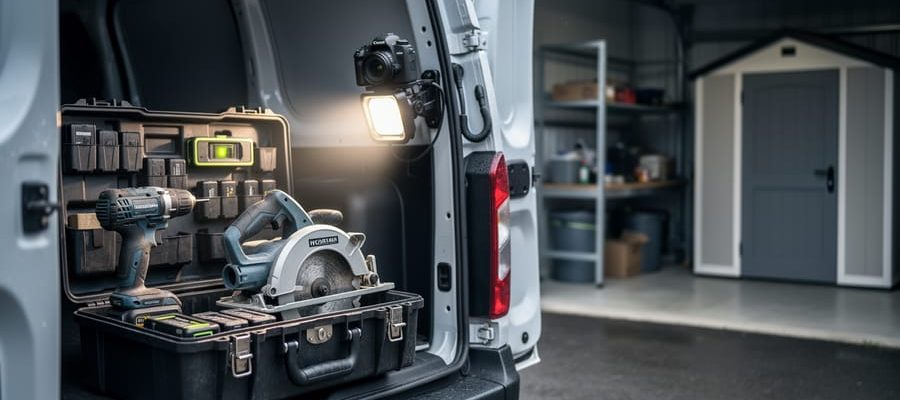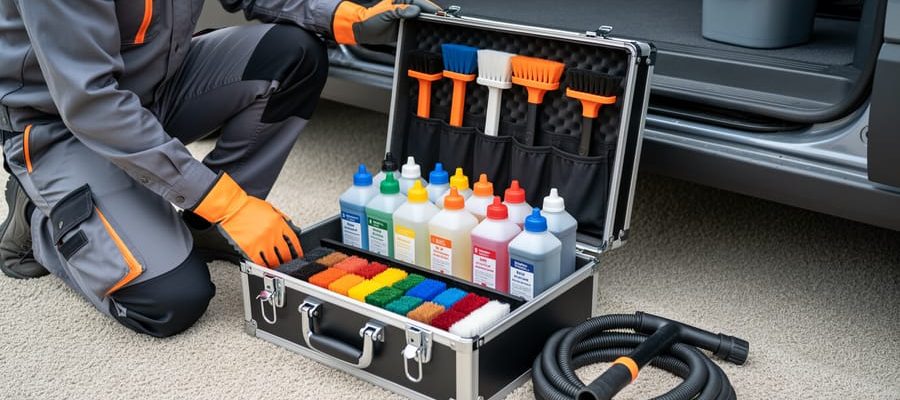
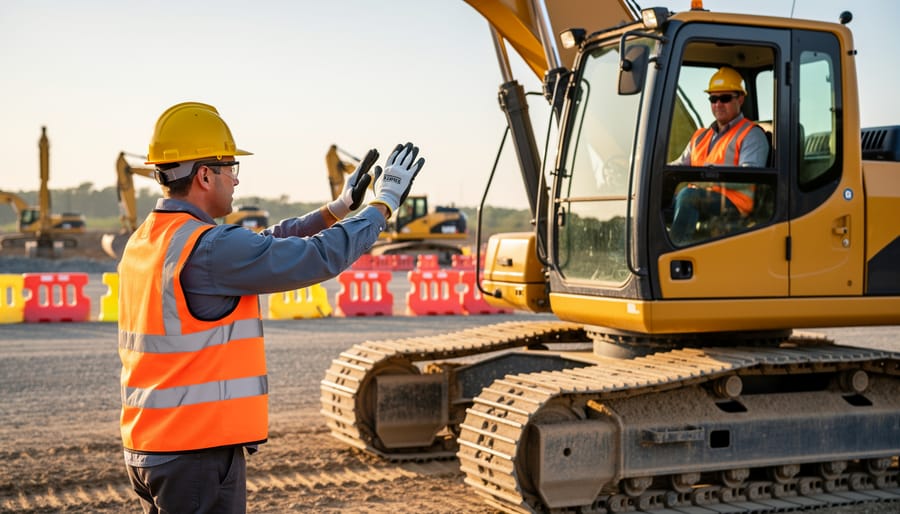
Verify your operator qualifications before touching any heavy equipment controls—OSHA requires documented training for most machinery over 10,000 pounds, and lack of certification can result in fines exceeding $13,000 per violation. Whether you’re renting a compact excavator for weekend landscaping or managing a construction crew, proper safety training protects lives, reduces liability, and prevents costly equipment damage.
Understand that heavy equipment operates fundamentally differently from passenger vehicles. A skid steer’s load capacity shifts with every bucket movement, creating rollover risks that claim dozens of lives annually. Excavators have massive blind spots extending 20 feet in multiple directions. Forklifts tip forward when overloaded, and backhoes require coordinated control of multiple hydraulic systems simultaneously. These machines demand respect and systematic training, not trial-and-error learning.
Complete a three-part training program combining classroom instruction, hands-on practice, and supervised operation. Classroom sessions cover load charts, stability principles, hand signals, and site-specific hazards. Hands-on training teaches daily pre-operation inspections, smooth control inputs, and emergency shutdown procedures. Supervised operation allows practicing in realistic conditions while an experienced operator provides immediate feedback on technique and safety violations.
Document every training session with signed certificates, practice hours, and competency evaluations. Employers need this documentation for OSHA compliance and insurance requirements. DIY renters benefit from proving their qualifications to rental companies, often unlocking access to larger equipment and better rates. Safety officers use these records to identify knowledge gaps and schedule refresher training before accidents occur.
Recognize that equipment-specific training matters more than generic certifications. Operating a telescopic handler requires different skills than running a dozer, and your training should reflect the exact machines you’ll use.
The Real Cost of Skipping Safety Training
The decision to skip or minimize safety training might seem like a cost-saving measure, but the real-world consequences tell a dramatically different story. According to workplace safety data, operators without proper training are three times more likely to be involved in equipment-related incidents. These aren’t just statistics—they represent real people suffering injuries that could have been prevented.
When accidents occur, the financial impact extends far beyond medical expenses. Workers’ compensation claims for heavy equipment incidents average between $30,000 and $100,000, depending on injury severity. Legal liabilities can multiply these costs significantly, particularly if negligence or inadequate training is proven. For businesses relying on rental equipment, comprehensive fleet risk management becomes essential to protecting against these preventable costs.
Equipment damage represents another substantial expense often overlooked in the training equation. An untrained operator can cause tens of thousands of dollars in damage within minutes—whether it’s a tipped excavator, damaged hydraulics from improper operation, or collision damage to the equipment or surrounding structures. Rental companies frequently charge for equipment damage, and these costs come directly from your project budget.
Project delays compound these financial impacts. When an incident occurs, work stops immediately. Investigation periods, equipment replacement, potential regulatory inspections, and finding replacement operators can halt projects for days or weeks. Construction delays typically cost between $500 and $2,000 per day, not including potential contract penalties.
Compare these costs against the investment in proper training: comprehensive safety courses typically range from $200 to $800 per operator, depending on equipment complexity. The math is straightforward—a single preventable incident costs exponentially more than training your entire team.
Beyond finances, consider the intangible costs: damaged reputation, decreased team morale, insurance premium increases, and the personal toll of workplace injuries. Community members who’ve shared their experiences consistently emphasize that investing in training upfront isn’t just smart business—it’s the responsible choice that protects everyone on your worksite.
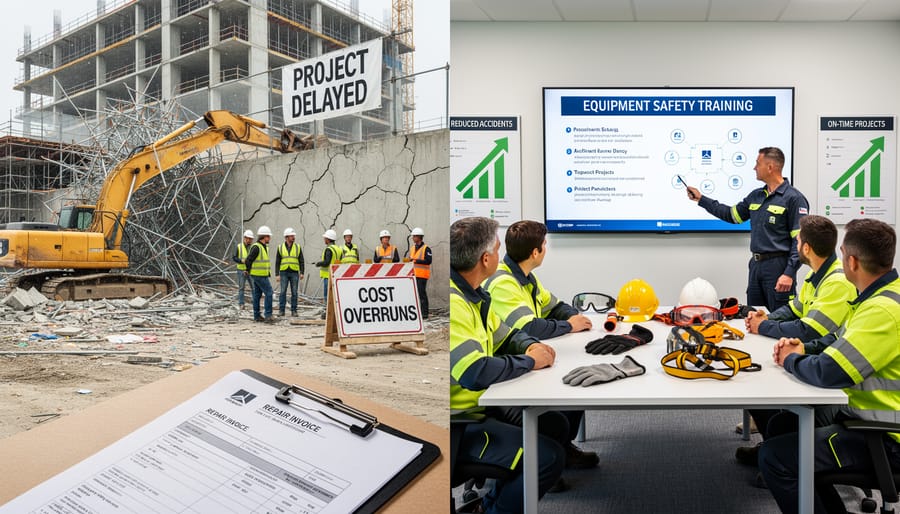
Understanding Heavy Equipment Safety Compliance Requirements
OSHA Standards and Legal Obligations
Understanding OSHA requirements doesn’t have to be overwhelming. The Occupational Safety and Health Administration sets clear standards to protect workers and anyone operating heavy machinery, whether you’re a construction professional or a homeowner tackling a weekend project.
OSHA’s primary rule is straightforward: employers must ensure operators are competent to use equipment safely. This means providing training that covers the specific machinery being used, potential hazards, and safe operating procedures. For powered industrial trucks like forklifts, OSHA requires formal certification, which includes both classroom instruction and hands-on evaluation. This certification must be renewed every three years.
For construction equipment such as excavators, loaders, and bulldozers, OSHA mandates that operators receive training but doesn’t always require formal certification. However, the equipment owner or employer must verify the operator can safely handle the machinery before allowing independent operation. This applies whether you’re renting equipment for a DIY project or managing a construction crew.
Rental companies have legal obligations too. They must provide basic operating instructions and safety information with every rental. Many go further by offering optional training sessions, which we strongly recommend taking advantage of, especially if you’re new to the equipment.
Key employer responsibilities include conducting hazard assessments, maintaining equipment properly, and documenting all training. Even if you’re self-employed or renting for personal use, following these same guidelines protects you from injury and potential liability. Remember, compliance isn’t just about avoiding fines; it’s about getting home safely at the end of the day.
Industry-Specific Compliance Standards
Beyond federal OSHA requirements, specific industries have additional safety training standards that apply whether you’re a professional contractor or a homeowner tackling a major project. In construction, the 10-hour and 30-hour OSHA training programs are often mandatory, covering equipment operation, fall protection, and site-specific hazards. These courses are particularly important if you’re managing a multi-day renovation that involves excavators or aerial lifts.
For maintenance and facility work, the American National Standards Institute (ANSI) provides equipment-specific standards that many rental companies now require customers to understand before checkout. The construction industry follows additional guidelines from the National Commission for the Certification of Crane Operators (NCCCO) for lifting equipment.
Here’s when DIYers should consider formal training: operating equipment over 10,000 pounds, working near utilities or on public property, using aerial work platforms above 15 feet, or operating equipment with specialized attachments. Many rental centers now offer brief certification courses or require proof of experience. Community members frequently share in reviews which rental locations provide the most thorough equipment orientations, helping fellow DIYers make informed choices about where to rent and whether additional training might be worthwhile for their specific project scope.
Documentation and Certification Requirements
Proper documentation protects both operators and employers while ensuring compliance with safety regulations. When someone completes heavy equipment safety training, they should receive a certification that includes the trainee’s name, equipment types covered, training date, and instructor credentials. Keep these records for at least five years, as WorkSafe and other regulatory bodies may request them during inspections.
Most certifications remain valid for three to five years, depending on your state’s requirements and the equipment type. High-risk machinery like cranes often requires more frequent recertification. Set calendar reminders before certificates expire to avoid operational disruptions.
When hiring operators or renting equipment, always verify credentials directly with the training provider rather than accepting photocopies alone. Check that the certification matches the specific equipment class you need. Many rental companies now use smart tool tracking systems that link equipment access to verified operator credentials, preventing unauthorized use.
Maintain a simple logbook recording who operated which equipment and when. This creates accountability and helps identify refresher training needs. Digital platforms make this easier, but even a basic spreadsheet works effectively for smaller operations.
Core Components of Effective Heavy Equipment Training
Pre-Operation Safety Checks
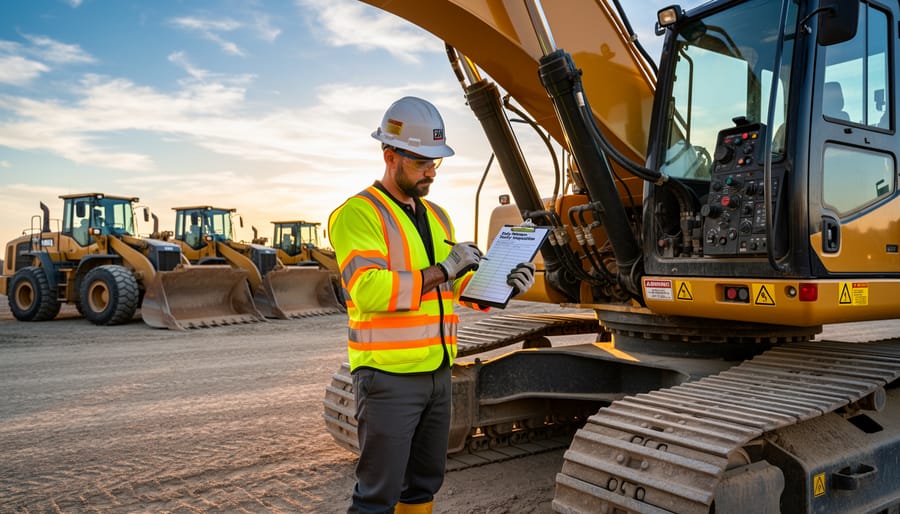
Before operating any heavy equipment, conducting thorough pre-operation safety checks can prevent accidents and equipment damage. Think of this as your daily safety ritual—it only takes a few minutes but could save lives.
Start by walking completely around the equipment, looking for obvious damage, leaks, or debris. Check all fluid levels including hydraulic oil, engine oil, and coolant. Inspect tires or tracks for proper inflation, cuts, or excessive wear. Test all lights, backup alarms, and warning signals to ensure they’re functioning properly.
Next, examine critical safety components. Verify that seatbelts are intact, mirrors are properly adjusted, and the operator’s cabin is clear of loose objects. Check that fire extinguishers are accessible and charged. Inspect hydraulic hoses for cracks or bulges, and ensure all guards and shields are securely in place.
Create a personalized checklist specific to your equipment type. Many rental companies provide pre-operation checklists, but customize yours based on the machine’s unique features and your work environment. Document any issues immediately and never operate equipment with known defects—report problems to supervisors or rental providers right away.
Remember, experienced operators emphasize that rushing through safety checks is when mistakes happen. Take your time, follow the same sequence every day, and don’t skip steps even when you’re pressed for time.
Hands-On Operational Training
Before you ever move a piece of heavy equipment on a job site, hands-on practice in a controlled setting is essential. Think of it like learning to drive—you wouldn’t start in rush-hour traffic. The same principle applies whether you’re renting an excavator for weekend landscaping or operating a forklift professionally.
Fundamental operation training begins with understanding your specific machine’s controls. Each equipment type has unique operating characteristics. Excavators require coordinated joystick movements, while skid steers demand push-pull lever control. Spend time familiarizing yourself with throttle response, brake sensitivity, and steering mechanisms before attempting any actual work. Many rental centers offer brief orientations, but dedicated practice time makes the real difference.
Load management separates safe operators from accidents waiting to happen. Learn to assess weight distribution and understand your equipment’s rated capacity—never exceed it. For example, telehandlers must account for load weight and extension distance, as stability decreases dramatically when the boom extends. Always consult the load chart specific to your machine.
Stability principles are critical across all equipment types. Understand your machine’s center of gravity and how it shifts during operation. When operating on slopes, keep heavy loads on the uphill side and lower the boom when traveling. Practice emergency stops and learn how your equipment responds to sudden movements.
Safe maneuvering techniques require spatial awareness and patience. Practice traveling in straight lines, making gradual turns, and positioning equipment in tight spaces. Use a spotter when visibility is limited, and establish clear hand signals beforehand. Community feedback consistently shows that operators who invest time in foundational practice experience fewer incidents and greater confidence on actual job sites.
Emergency Response and Hazard Recognition
Recognizing potential hazards before they become emergencies is your first line of defense when operating heavy equipment. Always conduct a pre-operation inspection to identify issues like hydraulic leaks, damaged controls, or unstable ground conditions. During operation, stay alert for warning signs such as unusual noises, vibrations, or smoke that could indicate mechanical failure.
If equipment fails while in use, your immediate priority is to safely bring the machine to a controlled stop. Turn off the engine, engage all safety locks, and clearly mark the equipment as out of service before exiting. Never attempt repairs unless you’re qualified and the machine is properly secured.
Emergency situations require quick, calm responses. If a fire breaks out, evacuate immediately and use a fire extinguisher only if the flames are small and you have a clear escape route. For tip-over scenarios, stay inside the cab with your seatbelt fastened rather than jumping clear. In case of someone being pinned or injured, call emergency services first before attempting rescue.
Keep emergency contact numbers posted in equipment cabs and ensure all operators know evacuation routes and assembly points. Community feedback consistently shows that operators who practice emergency drills respond more effectively under pressure, so regular scenario-based training sessions prove invaluable for building muscle memory and confidence when seconds count.
Training Options for Different User Needs
Professional Certification Programs
Professional certification programs provide structured pathways to ensure operators meet industry standards and regulatory requirements. Organizations like TAFE, registered training organizations (RTOs), and specialized equipment training providers offer accredited courses that combine classroom theory with hands-on practice.
Most professional programs include multiple components: hazard identification training, pre-operation inspection procedures, load calculations, and emergency response protocols. Expect to complete written assessments alongside practical evaluations where instructors observe your equipment handling in real-world scenarios.
High-risk work licenses, such as those for forklifts, excavators, and cranes, require certification through nationally recognized bodies. These courses typically range from one to five days depending on equipment complexity. Many hiring businesses now require proof of certification before releasing heavy equipment, making formal training essential for both professionals and DIY operators.
Look for programs that provide ongoing support, refresher courses, and updates on regulatory changes. Community feedback suggests prioritizing instructors with current industry experience who can share practical insights beyond textbook knowledge. Certification validity periods vary, so plan for periodic renewal to maintain compliance and skill currency.
Employer-Provided and On-Site Training
Many employers provide on-site training to ensure their teams operate heavy equipment safely and efficiently. OSHA requires that workers receive instruction from qualified trainers before operating machinery independently, and companies must document all training activities. This typically includes classroom instruction covering basic safety principles, hands-on supervised practice, and evaluation of the operator’s competence.
To establish an effective internal program, designate experienced operators as trainers and develop standardized training materials specific to your equipment fleet. Include site-specific hazards in your curriculum, such as terrain conditions or overhead power lines. New operators should complete practice sessions under close supervision until they demonstrate proficiency. Many companies implement a three-phase approach: initial training, supervised operation, and periodic refresher courses. Remember to keep detailed training records including dates, trainer names, and equipment types covered. Encourage workers to share their experiences and near-miss incidents during safety meetings, as this community feedback helps identify gaps in your training program and prevents future accidents.
Training for Tool Rental Customers
Before operating heavy machinery from equipment rental yards, take advantage of orientation services offered by most rental companies. Many provide brief demonstrations covering basic operation, safety features, and shutdown procedures. Ask specifically about emergency stops, weight limits, and terrain restrictions for your rented equipment.
Online resources can fill knowledge gaps before you arrive. YouTube tutorials, manufacturer websites, and equipment-specific guides help familiarize you with controls and common hazards. However, watching videos doesn’t replace hands-on instruction or reading the operator’s manual thoroughly.
DIYers should honestly assess their skill level before renting. If you’ve never operated an excavator or skid steer, consider hiring a professional or starting with smaller equipment. Request a written safety checklist from your rental provider and confirm insurance coverage details. Many companies offer phone support during your rental period, so save their contact information. Remember, proper training prevents injuries and costly equipment damage that could exceed your project budget.
Equipment-Specific Safety Considerations
Excavators and Backhoes
Excavators and backhoes present unique safety challenges that require focused attention. The primary risk is tip-over incidents, which typically occur when operating on slopes greater than 15 degrees or when the bucket is overloaded and extended beyond the machine’s stability zone. Always check the manufacturer’s load charts before beginning work and maintain awareness of ground conditions that could shift or collapse.
Before breaking ground, contact your local utility notification service at least 48 hours in advance. Underground power lines, gas mains, and water pipes aren’t always where maps indicate. Hand-dig or use a vacuum excavator in marked utility areas to expose lines safely. Many experienced operators share that taking an extra hour to verify utility locations has saved them from costly and dangerous strikes.
Proper digging technique matters for both safety and efficiency. Keep the excavator bucket close to the machine rather than fully extended, which reduces tip-over risk and provides better control. Establish a clear exclusion zone around the equipment with no personnel within the swing radius. When operating on public roads or job sites, assign a dedicated spotter to watch for pedestrians and vehicles. Community feedback consistently shows that communication between operators and ground crew prevents most close-call incidents.
Forklifts and Aerial Lifts
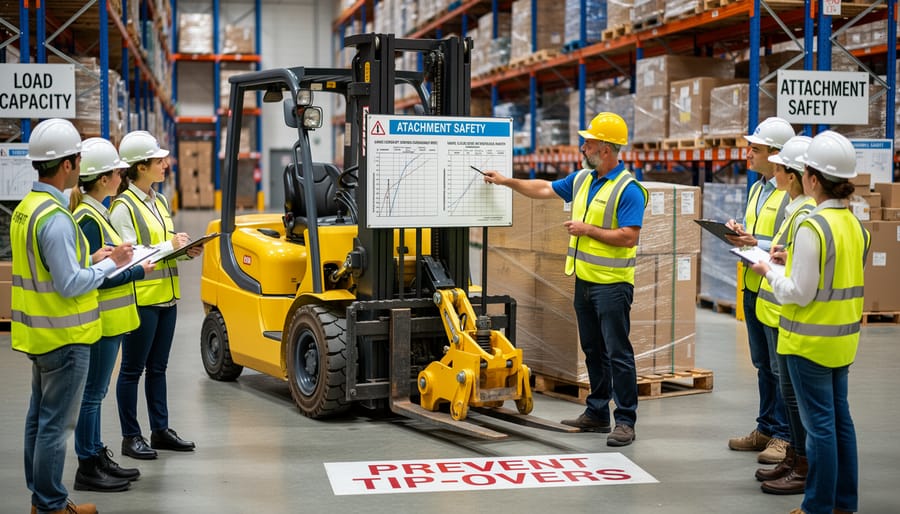
Forklift and aerial lift operations require specialized training due to their unique hazards. Before operating any lift equipment, you must understand weight capacity limits, which are clearly marked on each machine. Never exceed these limits, as doing so compromises stability and can cause tip-overs, the leading cause of forklift-related injuries.
Stability training should cover the equipment’s center of gravity and how it shifts when raising loads. For forklifts, this means keeping loads low while traveling and avoiding sharp turns with elevated loads. Aerial lift operators need to understand outrigger positioning and how wind, uneven surfaces, and load placement affect balance.
Fall prevention is critical for aerial lifts. Always use proper fall protection equipment, including harnesses and lanyards, and never stand on guardrails or climb outside the platform. Inspect equipment daily for hydraulic leaks, damaged controls, and tire condition.
Many rental centers now offer brief orientation sessions, but these shouldn’t replace comprehensive training. Community feedback consistently emphasizes that hands-on practice under supervision builds confidence and reveals common mistakes before they become dangerous. Consider starting with simulator training if available, then progressing to supervised operation before working independently.
Skid Steers and Compact Equipment
Skid steers rank among the most commonly rented pieces of heavy equipment, making proper safety training essential for both professionals and DIYers. These compact machines pack significant power into a small footprint, which creates unique challenges you need to understand before operation.
The biggest safety concern with skid steers is limited visibility. The operator’s position inside the cab means significant blind spots exist on all sides, especially directly behind the machine. Always conduct a complete walk-around inspection before starting your equipment, and never assume your path is clear. Many rental yards now offer machines with rear-view cameras, which can be worth requesting if available.
Attachment safety deserves special attention since skid steers accept dozens of different implements. Each attachment changes the machine’s center of gravity and handling characteristics. Before switching attachments, ensure the hydraulic connections are properly secured and test the attachment at ground level before lifting. Never operate with an attachment you haven’t been specifically trained to use.
Keep the safety bar or door closed at all times during operation. This might seem obvious, but user feedback consistently identifies this as a common oversight, particularly when making quick position adjustments. The protective structure only works when properly engaged. Additionally, always lower attachments completely to the ground before exiting the cab, even for brief moments.
Creating a Safety Culture Beyond Training
Refresher Training and Skills Maintenance
Heavy equipment safety isn’t a one-and-done training event. Industry experts recommend annual refresher courses at minimum, with many employers requiring semi-annual sessions for frequently used equipment. These recurring sessions help operators maintain muscle memory for proper procedures and learn about new safety features as equipment models evolve.
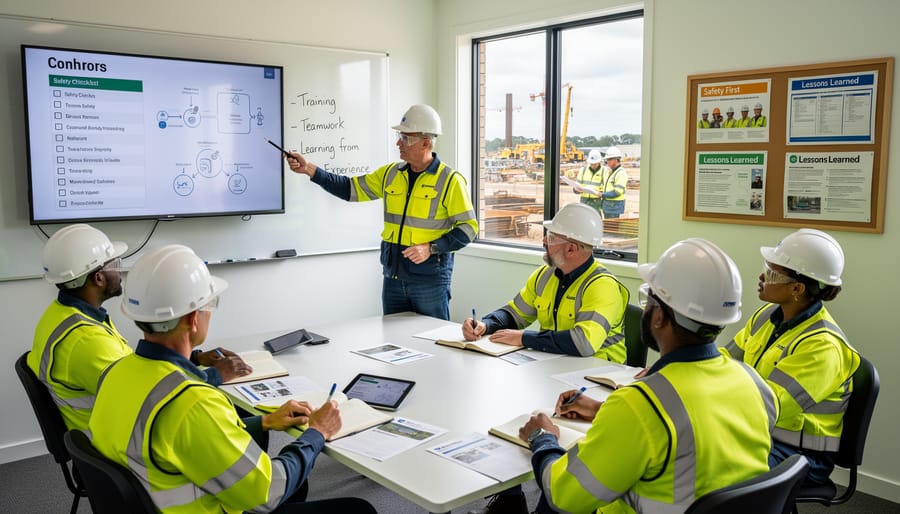
Between formal training sessions, establish monthly toolbox talks focused on specific safety topics or near-miss incidents reported by your team. This community-driven approach keeps safety conversations active and allows operators to share real-world experiences and solutions. Many rental companies now offer quick competency checks before equipment pickup, providing valuable touchpoints for skill reinforcement.
Stay current by subscribing to manufacturer safety bulletins and equipment update notifications. When your facility acquires new machinery or existing equipment receives significant modifications, schedule immediate training sessions rather than waiting for the next annual cycle. Document all refresher training in individual operator files to maintain compliance records and identify team members who might benefit from additional support or specialized instruction.
Learning from the Community
Real-world experiences from operators and safety trainers offer invaluable insights that textbooks often miss. Many equipment hire platforms now feature user reviews and ratings that highlight safety concerns, operational challenges, and best practices learned on the job. These community-driven reviews frequently reveal common mistakes before they become serious incidents.
For example, experienced excavator operators consistently warn newcomers about the dangers of working near underground utilities, sharing photos and stories that reinforce proper spotting procedures. Forklift users emphasize load stability issues they’ve encountered, providing practical tips for securing awkward loads that training manuals might overlook.
Community feedback also identifies equipment-specific quirks that vary between models and manufacturers. One user might share how a particular telehandler’s blind spots differ from standard units, while another explains the sensitivity differences in hydraulic controls across brands. This shared knowledge helps operators adapt more quickly and safely to unfamiliar equipment.
Discussion forums and review sections become living safety resources where tradespeople ask questions, share near-miss experiences, and collectively problem-solve challenges. Safety officers can monitor these conversations to identify training gaps and update their programs accordingly. By tapping into this collective wisdom, everyone from first-time renters to seasoned professionals can strengthen their safety awareness and avoid repeating others’ mistakes.
Heavy equipment safety training isn’t just another box to check or expense to budget for—it’s a fundamental investment that pays dividends across every aspect of your operation. Whether you’re managing a construction crew, running a landscaping business, or tackling a weekend excavation project with rented equipment, proper training protects what matters most: the people operating the machinery, the success of your projects, and ultimately, your bottom line.
The cost of comprehensive training pales in comparison to the potential expenses of accidents, injuries, equipment damage, or project delays. More importantly, no amount of money can compensate for preventable injuries or worse. When operators understand not just how to run equipment but why certain safety protocols exist, they become active participants in creating safer work environments for everyone on site.
For professionals, maintaining current certifications and staying updated on industry standards demonstrates your commitment to excellence and positions you as a trusted expert in your field. For DIY enthusiasts and occasional equipment users, even a few hours of training can mean the difference between a successful project and a dangerous mishap.
We encourage you to share your own experiences with heavy equipment safety training in the comments below. What training methods worked best for you? Have you witnessed how proper training prevented an accident? What safety tips would you pass along to someone operating heavy equipment for the first time? Your insights help build a community where everyone learns from real-world experiences, making every job site safer and every project more successful. Remember, safety isn’t just a personal responsibility—it’s a collective commitment we all share.
Related Posts