
Inspect every electrical cord before use for frayed wires, exposed conductors, or damaged plugs—a single nick in the insulation can cause shock or fire. Replace any cord showing wear immediately rather than wrapping it with tape, which creates a false sense of security while the underlying damage worsens.
Match your extension cord’s gauge rating to your tool’s amperage requirements. Using an undersized cord forces it to carry more current than designed, generating dangerous heat that degrades insulation and can ignite surrounding materials. For cords longer than 50 feet or tools drawing over 10 amps, use 12-gauge wire minimum.
Keep cords completely away from water, sharp edges, and hot surfaces during operation. Route them where they won’t be stepped on, pinched by equipment, or create tripping hazards across walkways. Uncoil extension cords fully before use—bundled cords trap heat and accelerate insulation breakdown.
Disconnect cords by gripping the plug itself, never yanking the cable. This simple habit prevents internal wire separation that creates shock risks invisible from the outside. Store cords loosely coiled without tight knots, hanging them clear of the ground to prevent moisture damage and rodent interference. These practices, consistently applied across every project, eliminate the most common electrical accidents reported by both DIY users and professional tradespeople in our community.
The Real Risks: What Goes Wrong With Electrical Cords
Heat Buildup and Fire Hazards
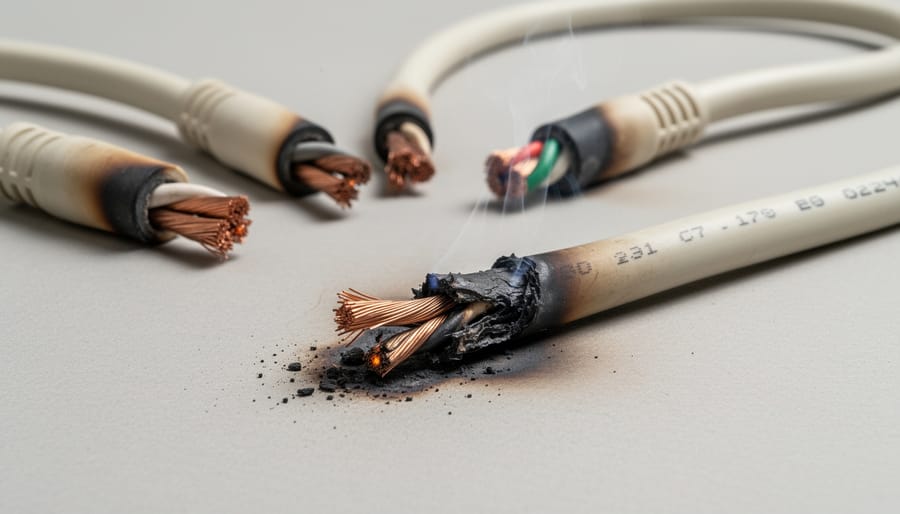
When electrical current flows through a cord, it naturally generates heat. This is normal physics at work, but problems arise when that heat can’t dissipate properly. Coiled or bundled extension cords are particularly dangerous because the loops trap heat inside, essentially creating a hot spot that can melt insulation or even ignite nearby materials. Always uncoil your entire extension cord before use, even if you don’t need the full length.
Using an undersized cord for your tool’s power requirements forces more current through wires that aren’t designed to handle the load. Think of it like forcing water through a narrow pipe—the pressure builds up. In electrical terms, this resistance creates excessive heat that can damage the cord’s internal wiring and outer jacket. A 16-gauge cord might work fine for a light-duty drill, but connecting a heavy-duty circular saw will cause dangerous heat buildup within minutes.
Check cords regularly during use by briefly touching them. They should feel slightly warm at most, never hot. If a cord feels uncomfortably warm or you notice any discoloration or soft spots in the insulation, disconnect it immediately and replace it. These are warning signs that heat damage has already begun compromising the cord’s safety.
Shock and Electrocution Dangers
Electrical shock occurs when current passes through your body, and the consequences range from minor tingles to fatal cardiac arrest. The primary culprits are surprisingly common: frayed or cracked insulation exposing live wires, extension cords lying in puddles or wet grass, and tools with faulty or missing ground pins.
Damaged insulation is perhaps the most overlooked danger. Even small nicks in a cord’s outer jacket can expose copper wiring, creating a direct contact point for shock. When you grip a damaged cord or tool handle, you become the path of least resistance to the ground, especially if you’re standing on concrete, metal, or wet surfaces.
Water dramatically increases conductivity. Using non-rated extension cords outdoors during rain or near water features multiplies your risk exponentially. Similarly, plugging tools into outlets without proper grounding removes your safety net. The ground wire directs fault current safely away from you, but only if it’s intact and connected.
Protection starts with inspection. Before each use, run your hands along cords checking for cuts, exposed wiring, or warm spots indicating internal damage. Pair this vigilance with essential safety equipment like insulated gloves and safety-rated footwear, and always use residual current devices (RCDs) that cut power within milliseconds of detecting current leakage.
Choosing the Right Cord for Your Tool
Understanding Wire Gauge and Amperage
Understanding wire gauge might seem complicated at first, but it’s actually straightforward once you know the basics. In North America, we use the American Wire Gauge (AWG) system to measure electrical cord thickness. Here’s the key point that trips people up: the numbers work backward. A lower AWG number means a thicker wire that can safely carry more electricity. For example, a 12 AWG cord is thicker and handles more amperage than a 14 AWG cord.
Think of it like highway lanes. A thicker wire (lower gauge number) is like a wider highway that allows more electrical current to flow without overheating. Using a cord that’s too thin for your tool’s power requirements creates resistance, generating dangerous heat that can melt insulation or start fires.
Here’s a practical reference chart for common scenarios:
16 AWG: Up to 13 amps, suitable for light-duty tools like drills and sanders, maximum 50 feet
14 AWG: Up to 15 amps, good for medium-duty tools, works up to 100 feet
12 AWG: Up to 20 amps, handles heavy-duty tools like circular saws and compressors, up to 100 feet
10 AWG: Up to 30 amps, professional-grade applications and long distances over 100 feet
Always check your tool’s amperage rating on its nameplate or manual. If you’re running multiple tools from one cord or working at distances beyond 100 feet, size up to the next lower gauge number. When in doubt, going thicker is always safer than cutting it close.

Length Matters: Why Distance Affects Performance
You might not realize it, but the length of your extension cord directly impacts how much power reaches your tools. This phenomenon is called voltage drop, and it happens when electrical current travels through a conductor over distance. Think of it like water pressure decreasing as it flows through a longer garden hose.
When voltage drops below what your tool needs, several problems occur. Motors run hotter and less efficiently, potentially shortening their lifespan. Power tools may struggle to reach full speed, affecting performance and increasing the risk of kickback or binding. In extreme cases, the tool won’t start at all, leaving you puzzled about what’s wrong.
Here’s a practical guideline: for tools drawing up to 10 amps, keep extension cords under 50 feet when using 16-gauge wire, or up to 100 feet with 14-gauge. For heavy-duty equipment pulling 15 amps or more, like circular saws or air compressors, stick with 12-gauge cords and minimize distance whenever possible.
The key is matching your cord’s gauge and length to your tool’s power draw. Always check the amp rating on your tool’s nameplate before selecting an extension cord. When in doubt, go shorter and thicker. A 25-foot, 12-gauge cord will always outperform a 100-foot, 16-gauge option for demanding applications.
Professional tradespeople often keep multiple power cords on hand rather than relying on one extra-long cord for everything, ensuring optimal power delivery while reducing trip hazards on the job site. This approach ensures optimal power delivery while reducing trip hazards on the job site.
Daily Inspection Checklist: Spotting Problems Before They Start
Before you plug in that power tool or extension cord, take two minutes for a quick safety check. Making visual inspections part of your regular maintenance routine can prevent electrical fires, shocks, and equipment damage.
Start at the plug end. Examine both the male plug and any female connectors for cracks, burns, or discoloration. The prongs should be straight and firmly attached, not loose or bent. Check that the grounding pin (the third round prong) is present and intact. This safety feature diverts dangerous electrical surges away from you and your tools.
Next, run the entire length of cord through your hands. You’re feeling for soft spots, cuts, or exposed wiring. Pay special attention to areas near the plug and connector ends, where flexing causes the most wear. Look for fraying in the outer jacket or any spots where internal wires are visible. Even small nicks can let moisture in and create shock hazards.
Inspect any inline switches, outlet boxes, or connectors along the cord. These junction points take extra stress during use. Check for loose housing, damaged switches, or moisture inside transparent outlet covers.
Finally, verify the strain relief at both ends. This rubberized section where the cord enters the plug should be flexible but intact, preventing the internal wires from breaking due to repeated bending.
When to replace immediately: any exposed wiring, missing grounding pins, burn marks, melted insulation, or plugs that feel hot after use. Electrical tape is not a permanent fix for damaged cords. If the outer jacket is compromised or you can see copper wire, retire that cord from service.
Tag any questionable cords and remove them from your workspace. Many hardware stores and local councils offer recycling programs for damaged electrical equipment, keeping these hazards out of landfills and away from job sites.
Smart Usage Practices That Prevent Accidents
Proper Connection and Positioning
Making proper connections is fundamental to preventing tool-related injuries and electrical hazards. Always push plugs fully into outlets until they’re firmly seated—loose connections generate heat and can spark. Before plugging in, check that prongs aren’t bent or damaged, and ensure the connection feels snug rather than wobbly.
Avoid daisy-chaining extension cords by connecting multiple cords together, as this dramatically increases resistance and fire risk while reducing the power available to your tool. If one cord doesn’t reach, use a single longer cord rated for your tool’s requirements instead. The same rule applies to power strips—never plug one strip into another.
Keep cords visible and accessible throughout your workspace. Running them under carpets, rugs, or mats creates a tripping hazard you can’t see and traps heat that can damage insulation. Route cords along walls or use cord covers in high-traffic areas to protect both the cord and people moving through the space.
Position cords away from doorways, walkways, and areas where they might get pinched by furniture, ladders, or equipment. Pinched cords develop internal damage that isn’t always visible externally but compromises safety. When working outdoors, elevate cords above ground level where practical to prevent vehicle traffic from running over them, and never close doors or windows on cords.
Environmental Considerations
Your work environment plays a crucial role in electrical cord safety. Understanding how different conditions affect your equipment helps prevent dangerous situations and extends the life of your tools.
Wet conditions pose the greatest risk when working with electricity. Water and electricity create a potentially lethal combination, so never use standard extension cords in damp areas, near pools, or outdoors during rain. Instead, invest in cords rated for wet locations, marked with a “W” designation. These cords feature weather-resistant jackets that protect against moisture penetration. Always use ground fault circuit interrupters (GFCIs) in wet environments – these devices detect electrical imbalances and shut off power within milliseconds, potentially saving your life.
Temperature extremes also matter. Cold weather makes cord insulation brittle and prone to cracking, while excessive heat can soften the protective covering. If you’re working in a freezing garage or hot attic, choose cords designed for extreme temperatures. Look for specifications mentioning temperature ranges on the cord packaging.
Chemical exposure is often overlooked but equally important. Oil, solvents, and harsh cleaners can degrade standard cord insulation over time. If you’re working in workshops where chemicals are present, select cords with chemical-resistant jackets.
Before starting any project, assess your environment and match your electrical cords to those specific conditions. Taking five minutes to verify you have the right equipment prevents accidents and protects your investment in quality tools.
GFCI Protection: Your First Line of Defense
Ground Fault Circuit Interrupters, or GFCIs, are specialized safety devices that can save your life when working with corded tools. Think of a GFCI as an ultra-fast circuit breaker that detects even tiny electrical imbalances and cuts power in milliseconds—fast enough to prevent electrocution. When electricity leaks from a damaged cord or faulty tool, the GFCI senses this “ground fault” and instantly shuts off the circuit before serious injury occurs.
Understanding why GFCIs matter is straightforward: electricity and moisture don’t mix. Whether you’re using power tools outdoors, in damp basements, or near water sources, a GFCI provides critical protection. According to workplace safety standards, GFCI protection is mandatory in many commercial settings and increasingly required for residential applications.
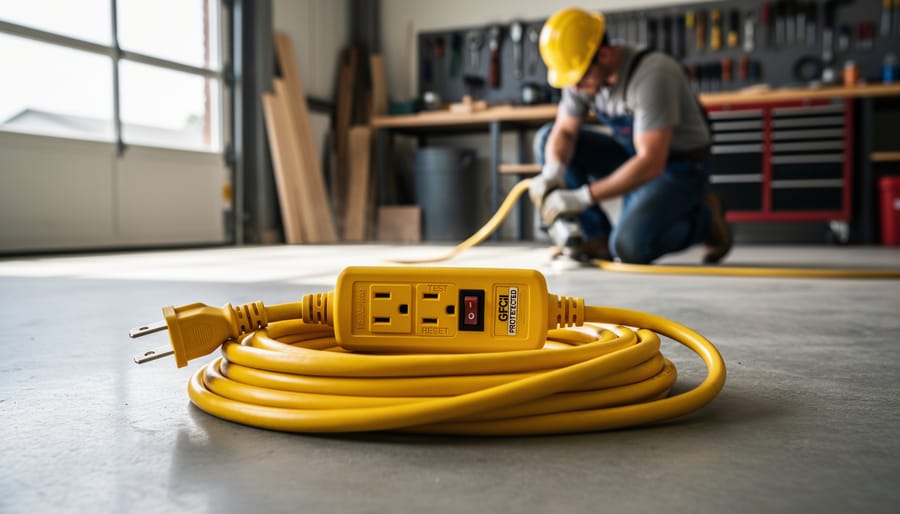
You’ll find GFCIs in three common forms: built into power outlets (recognizable by their “test” and “reset” buttons), as portable units that plug into standard outlets, or integrated into some extension cords. For maximum protection, use GFCI outlets or portable GFCI adapters when working with corded tools in wet locations, outdoors, garages, or construction sites.
Testing your GFCI takes just seconds and should happen monthly. Press the “test” button—the power should cut immediately and the “reset” button should pop out. If nothing happens, the GFCI has failed and needs replacement. After testing, press “reset” to restore power. This simple routine ensures your protection remains active.
Many experienced tradespeople share a common tip: never ignore a tripping GFCI. If your GFCI repeatedly trips during use, it’s detecting a real problem—possibly a damaged cord, moisture intrusion, or tool malfunction. Stop work immediately and investigate rather than bypassing this essential safety feature.
Storage and Maintenance That Extends Cord Life
How you store and maintain your electrical cords directly impacts their lifespan and safety. A damaged cord isn’t just inconvenient; it’s a genuine hazard that can lead to shocks, fires, or equipment failure.
Start with the basics: never wrap cords tightly around tools or wrap them while still warm. This creates stress points and can damage the internal wiring. Instead, use the over-under coiling method. Hold the cord in one hand and alternate between natural loops and reverse loops. This technique prevents kinking and twisting, keeping your cords ready for immediate use without tangles.
Store cords in a cool, dry location away from direct sunlight, chemicals, and sharp objects. Hanging them on hooks or storing them in dedicated cord reels prevents crushing and accidental damage. If you’re storing cords in a garage or shed, keep them off the floor where they might be run over or exposed to moisture.
Regular inspection is part of proper tool maintenance. Before each use, run your hands along the entire length of the cord, feeling for cuts, exposed wires, or soft spots in the insulation. Check both plug ends for cracks, bent prongs, or loose connections. If you spot damage, tag the cord as unsafe and remove it from service immediately.
Clean cords periodically with a damp cloth to remove dust, oil, and debris that can degrade insulation over time. Let them dry completely before storage. This simple routine, combined with proper handling, can double or triple your cord’s useful life while maintaining workplace safety.
When to Replace vs. Repair: Making the Right Call
Knowing when to retire a damaged cord versus attempting repairs is critical for your safety. Replace any cord immediately if you spot exposed wiring, missing ground prongs, cracked insulation, or burn marks. These aren’t cosmetic issues – they’re serious hazards that can cause shocks, fires, or equipment damage.
Check for damage by running the entire length of the cord through your hands, feeling for soft spots, cuts, or irregularities in the insulation. Pay special attention to areas near the plug and where the cord enters tools, as these high-flex zones fail first.
Here’s the straight truth about DIY electrical repairs: don’t attempt them. Electrical tape wrapped around frayed wires might look fixed, but it’s a temporary bandage on a permanent problem. Improper repairs can create hidden failure points that spark fires inside walls or shock users unexpectedly. Professional electricians use specialized techniques and materials that ensure lasting safety.
The cost of replacing a damaged cord is minimal compared to medical bills, property damage, or worse. When community members share their experiences, the message is consistent – replacement always beats risky repairs. Think of electrical cords as safety equipment with expiration dates. Once compromised, their protective function is gone, and no amount of tape or wire nuts can restore the engineered safety margins built into factory-made cords.
Electrical cord safety isn’t a box you tick once and forget. It’s an ongoing commitment that protects you, your colleagues, and your workspace every single day. Start by inspecting every cord before use, checking for damage, proper ratings, and secure connections. Replace worn or damaged cords immediately rather than attempting repairs. Keep cords away from water, heat sources, and high-traffic areas where they might become tripping hazards.
Make it a habit to match your extension cord specifications to your tool requirements, considering both amperage and length. Never daisy-chain multiple extension cords together, and always fully uncoil cords to prevent overheating. Store cords properly by coiling them loosely and hanging them in dry locations.
The simple practices we’ve covered can prevent serious injuries and equipment damage. Review your current cord inventory this week and retire anything questionable. Set calendar reminders for regular inspections, especially in professional settings where cords see heavy use.
We’d love to hear from you. What cord safety practices have worked best in your workshop? Have you experienced a close call that taught you a valuable lesson? Share your experiences and questions with our community. Your insights might be exactly what someone else needs to stay safe on their next project.
Related Posts