
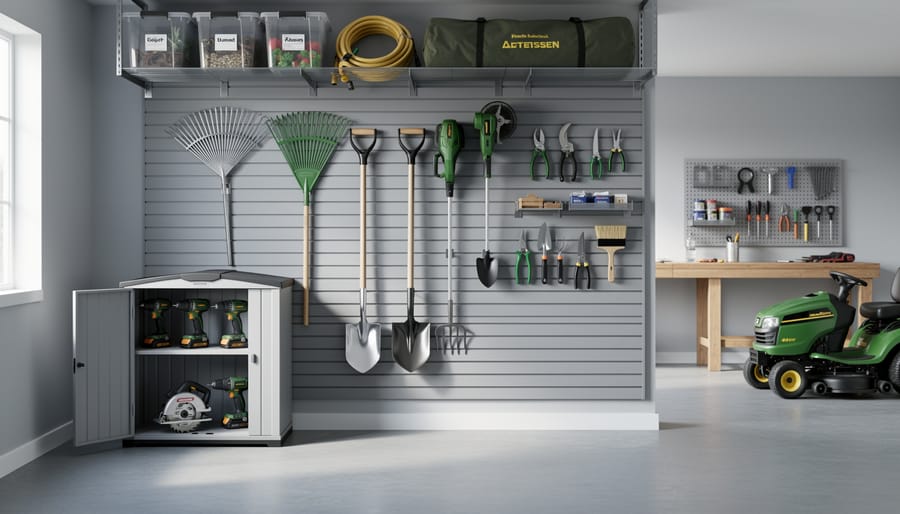
Evaluate your current tool inventory by categorizing items based on frequency of use, size, and maintenance requirements. This assessment reveals whether you need wall-mounted systems for everyday items like rakes and shovels, enclosed cabinets for power tools requiring protection from moisture, or overhead storage for seasonal equipment. Most homeowners discover they’re storing 30-40% more tools than they actively use, making strategic organization essential.
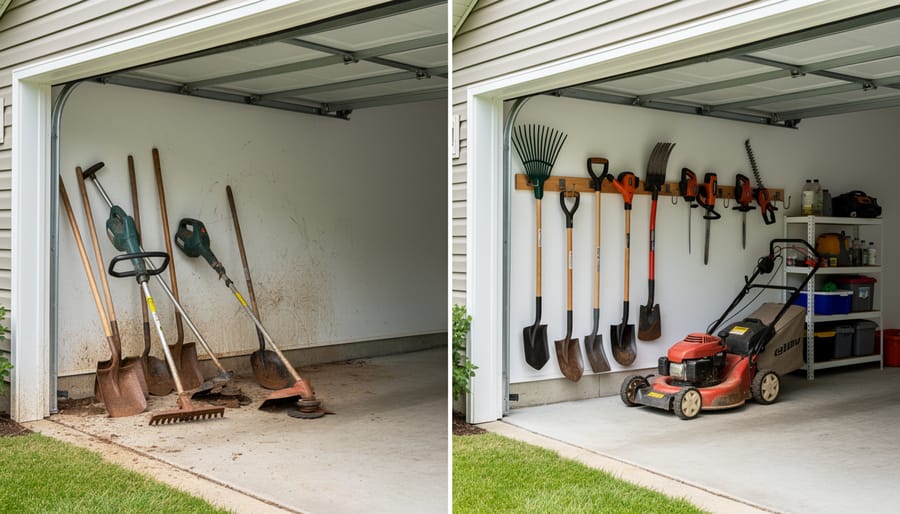
Install vertical storage solutions that maximize unused wall space in garages and sheds. Wall-mounted pegboards, slatwall systems, and French cleat arrangements keep tools visible and accessible while preventing the blade damage and handle deterioration that occurs when equipment leans against walls or piles on floors. Professional landscapers report reducing tool retrieval time by 60% after implementing vertical systems.
Protect high-value investments with weatherproof storage that addresses your climate’s specific challenges. Humidity-controlled cabinets prevent rust on metal tools in coastal areas, while UV-resistant outdoor sheds protect wooden handles in sunny regions. Community reviews consistently highlight that proper storage extends tool lifespan by 3-5 years compared to exposed storage methods.
Design zones within your storage area that group tools by project type rather than tool category. Create dedicated sections for lawn care, gardening, trimming, and maintenance tasks. This functional approach, recommended by professional organizers, eliminates the frustration of gathering scattered tools before starting work and ensures nothing gets left behind during cleanup.
Why Most Yard Tool Storage Fails (And What It Costs You)
Walk into most garages or sheds, and you’ll see the same scene: rakes propped against walls, shovels piled in corners, and hand tools scattered across workbenches. This haphazard approach might seem harmless, but it’s quietly draining your wallet and creating genuine safety risks.
The financial cost adds up faster than most homeowners realize. When metal tools rest directly on concrete floors or lean against damp walls, rust starts forming within weeks. A quality spade costs around $45-$80, while pruning shears run $30-$60. Replace just three corroded tools annually, and you’ve lost $150-$200 that proper storage would have prevented. Professional landscapers face even steeper losses, with commercial-grade equipment costing hundreds per piece.
Beyond replacement costs, there’s the injury factor. Emergency room data shows that improperly stored yard tools contribute to thousands of preventable accidents each year. A rake handle falling from a wall can cause eye injuries, while tripping over garden hoses or tools left on garage floors leads to sprains, cuts, and worse. Preventing tool-related injuries starts with eliminating these hazards through organized storage systems.
Then there’s the time penalty. The average DIYer spends 15-20 minutes per project hunting for the right tool buried in a cluttered corner. Over a year of regular yard maintenance, that’s 6-8 hours of wasted time simply searching instead of working.
Community feedback consistently highlights these frustrations. One homeowner shared: “I bought the same hand trowel three times before realizing the originals were just buried under other stuff.” Another noted: “My hedge trimmer rusted solid after one winter leaning against the shed wall.”
The pattern is clear: poor storage doesn’t just create clutter, it actively costs you money, time, and peace of mind while creating unnecessary hazards in your workspace.
The Three Pillars of Advanced Yard Tool Storage
Safety First: Eliminating Hazards from Your Storage Area
A well-organized storage area means nothing if it puts you or your family at risk. Start by positioning heavy tools like lawnmowers and hedge trimmers on lower shelves or floor-level spaces to prevent dangerous falls. Wall-mounted systems work brilliantly for lighter items but ensure brackets and hooks are rated for the tool’s weight—community feedback consistently highlights failed mounting hardware as a common safety issue.
Sharp-edged tools demand special attention. Store pruning shears, hedge trimmers, and saws with blade guards in place, and orient them with cutting edges facing the wall. Many DIYers recommend magnetic strips for smaller bladed tools, keeping them visible yet safely secured. Always wear proper safety equipment when handling or reorganizing sharp implements.
Child safety requires multiple layers of protection. Install storage cabinets with locking mechanisms for hazardous items like chainsaws and chemical treatments. Position frequently used but dangerous tools on high shelves beyond children’s reach. User reviews emphasize that simple latch locks aren’t enough—invest in quality cabinet locks or dedicated tool chests.
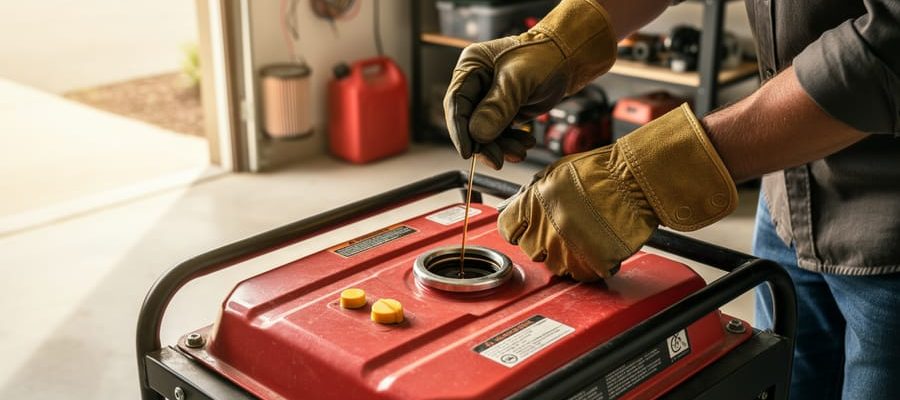
Fire hazards from fuel-powered equipment need serious consideration. Store gasoline and oil in approved, clearly labeled containers away from electrical panels and heat sources. Empty fuel tanks before long-term storage when possible, and maintain proper ventilation in enclosed spaces. Keep a fire extinguisher rated for flammable liquids within easy reach of your storage area. Professional tradespeople recommend storing fuel-powered equipment in a separate zone from electrical tools to minimize ignition risks.
Durability: Protecting Your Investment from the Elements
Your yard tools represent a significant investment, and proper storage protection ensures they’ll perform reliably for years. Moisture is the primary enemy of most tools, causing rust on metal components and rot in wooden handles. Even in covered areas, humidity can accumulate, so incorporate moisture-absorbing solutions like silica gel packets in enclosed cabinets or ensure wall-mounted systems allow airflow around each tool.
Rust prevention starts with cleaning tools before storage. Remove soil and debris, then apply a light coating of oil to metal surfaces. Storage systems with powder-coated or galvanized finishes resist corrosion themselves while protecting your tools. Many community members report success with simple oil-soaked rags kept in storage areas, which maintain a protective atmosphere around metal implements while also supporting keeping tools sharp.
UV exposure degrades wooden handles and plastic components, causing brittleness and splitting. If your storage area receives direct sunlight, choose UV-resistant materials or add protective covers. Storage sheds benefit from proper ventilation through roof vents or screened openings, preventing heat buildup that accelerates deterioration.
Material selection matters tremendously. Heavy-duty resin and powder-coated steel outperform basic plastic in outdoor conditions. User reviews consistently highlight that spending extra on weather-resistant construction saves replacement costs within two years. Look for drainage features in enclosed systems and rust-proof hardware in mounting brackets. Remember that protecting your tools from the elements means selecting storage solutions built to withstand those same conditions.
Accessibility: Organizing for Efficiency and Convenience
Efficient yard tool storage isn’t just about having a place to put things—it’s about creating systems that save time and encourage good habits. Start by organizing tools based on how frequently you use them. Keep everyday essentials like pruners, trowels, and gloves at eye level or within arm’s reach, while seasonal equipment can occupy higher shelves or back corners.
Group tools by function to streamline your workflow. Store all planting supplies together, cutting tools in another zone, and lawn maintenance equipment in a dedicated area. This functional grouping means you’ll grab everything needed for a task in one trip. Many DIYers in our community recommend using color-coded tags or labels to identify tool categories at a glance, especially helpful when multiple household members share the space.
The key to maintaining organization is making tool return easier than leaving them scattered. Install tool-specific holders—like rake clips or shovel brackets—that clearly show where each item belongs. Shadow boards, where you trace tool outlines on pegboard backing, provide visual cues that even kids can follow. One professional landscaper shared that adding a simple drop zone near the entrance, like a bucket for hand tools or hooks for frequently used items, prevents the “I’ll put it away later” habit that leads to clutter buildup.
Wall-Mounted Systems: Maximizing Vertical Space
When garage floor space is at a premium, looking up becomes your smartest move. Wall-mounted systems transform unused vertical real estate into highly functional storage that keeps tools accessible while clearing valuable workspace below.
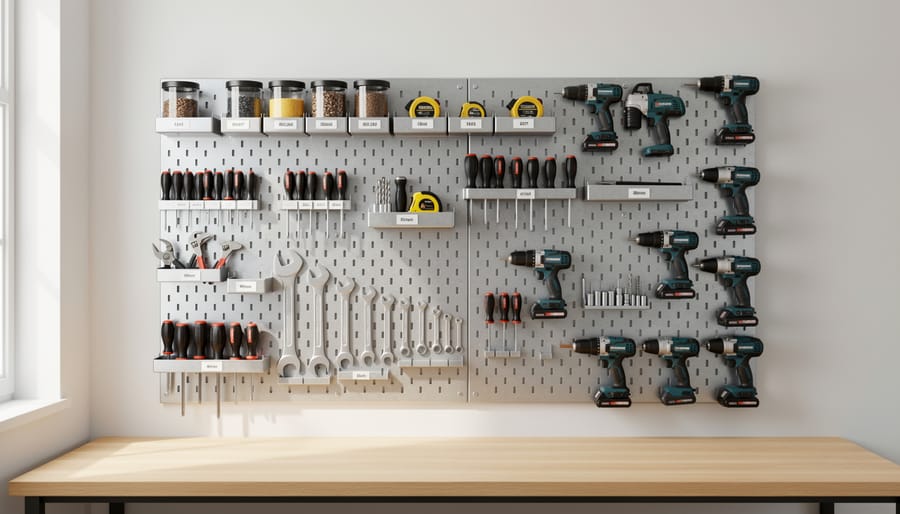
Pegboards remain a classic choice for good reason. These perforated panels accept various hooks, shelves, and specialized holders that you can rearrange as your tool collection evolves. Metal pegboards offer superior strength compared to traditional tempered hardboard, supporting 100-200 pounds when properly anchored to wall studs. Installation requires basic tools and takes about an hour. One community member shared that “switching to metal pegboard doubled what I could hang, and I’ve reorganized it three times without buying new components.”
Slatwall systems provide even more versatility through horizontal grooves that accept modular accessories. Originally designed for retail displays, these panels handle heavier loads than pegboards—typically 75-100 pounds per square foot. The grooves run horizontally every few inches, letting you slide hooks and brackets anywhere along the wall. Slatwall comes in PVC, metal, and MDF options. PVC resists moisture best for damp environments, while metal offers maximum durability in professional settings. Expect to invest 2-3 hours for installation across an average garage wall.
French cleat systems excel for heavy-duty applications. This simple yet brilliant design uses two interlocking beveled boards—one mounted to the wall, the other attached to your tool or storage unit. The angled connection distributes weight evenly and allows effortless repositioning. DIYers can build French cleats from basic lumber for under twenty dollars, or purchase aluminum versions rated for 200+ pounds. Multiple users report this as their preferred method for hanging bulky equipment like leaf blowers and hedge trimmers.
For specific tools, specialized holders outperform generic hooks. Garden tool racks with shaped cradles prevent handle slippage. Spring-loaded grips accommodate various handle diameters without adjustment. Magnetic strips work surprisingly well for small metal tools like pruners and trowels.
When selecting any wall-mounted system, verify your wall construction first. Drywall alone won’t support heavy loads—locate studs or install backing boards. Always follow manufacturer weight limits and distribute heavy tools across multiple mounting points. Safety matters more than aesthetics when tools hang overhead.
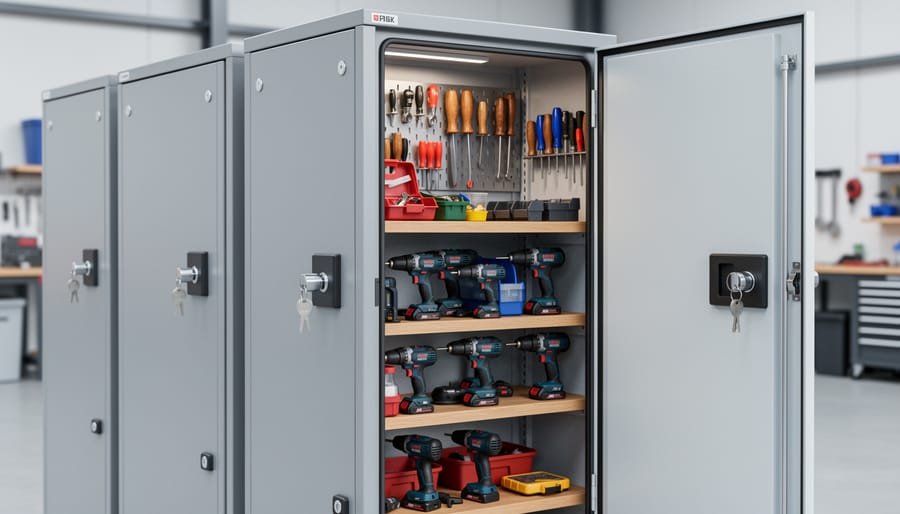
Cabinet and Enclosed Storage: Weather Protection for High-Value Tools
When you’ve invested in premium power tools, specialized equipment, or a substantial tool collection, basic hooks and open shelving won’t provide adequate protection. Enclosed storage systems offer weather resistance, security, and organization specifically designed for high-value tools.
Cabinet systems come in three primary materials, each with distinct advantages. Metal cabinets, typically constructed from galvanized steel or aluminum, deliver superior durability and security. They resist rust when properly coated and can support heavy loads without warping. Resin cabinets (high-density plastic or polyethylene) excel in wet environments since they’re inherently rust-proof and require minimal maintenance. Wood cabinets, often cedar or treated pine, provide aesthetic appeal for visible storage areas but need regular sealing to prevent moisture damage. User feedback consistently shows metal cabinets lasting 15-20 years in outdoor settings, while resin units perform well for 10-15 years with virtually no upkeep.
Ventilation proves critical for enclosed storage. Without proper airflow, condensation builds inside cabinets, leading to rust on metal tools and mildew on wooden handles. Look for units with built-in vents near the top and bottom to create natural air circulation. Some manufacturers incorporate mesh panels or louvered designs. Community reviews emphasize placing moisture-absorbing products inside sealed cabinets during humid seasons.
Locking mechanisms range from basic padlock hasps to integrated keyed systems and combination locks. Professional tradespeople recommend spending extra on quality locks, as budget hardware becomes a weak point. Heavy-duty barrel locks or three-point locking systems (securing top, middle, and bottom) provide the best protection against forced entry.
Sizing depends on your collection. Small weatherproof deck boxes (50-100 gallons) work for basic hand tools and supplies. Mid-sized cabinets (150-300 gallons) accommodate power tools and seasonal equipment. Large garage cabinet systems exceed 500 gallons, suitable for extensive professional collections. Measure your largest tools first, then add 20 percent extra space for future growth—a sizing tip frequently mentioned in user reviews that prevents premature replacement needs.
Mobile Storage Solutions: Flexibility for Active Users
For homeowners and professionals who frequently move between work areas, mobile storage solutions offer the flexibility to bring tools exactly where they’re needed. Tool carts, rolling cabinets, and portable organizers transform how you work, eliminating countless trips back to a stationary storage location.
Tool carts come in various configurations, from simple wheeled platforms to multi-tiered units with drawers and pegboard sides. Rolling cabinets provide secure, lockable storage with heavy-duty casters that can handle uneven surfaces. Portable organizers, like tool bags with rigid frames or stackable bins with wheels, work well for lighter equipment and smaller yards.
Mobility matters most when you’re tackling large properties, moving between front and back yards, or working on projects that span multiple locations. One community member shared how a rolling cart cut their landscaping time by 30 percent simply by reducing tool-fetching trips.
Terrain considerations are critical. Pneumatic wheels handle grass and gravel better than solid plastic wheels, which excel on pavement and smooth surfaces. Check weight capacity ratings, as loaded carts can quickly exceed limits on softer ground.
Balancing portability with security requires planning. While mobile units offer convenience, they’re also easier targets for theft. Consider units with integrated locks, and always secure mobile storage in a locked garage or shed overnight. Some users attach GPS trackers to high-value rolling cabinets for added protection. For outdoor events or job sites, cable locks anchored to permanent structures provide reasonable security without sacrificing mobility during work hours.
DIY vs. Ready-Made: Choosing Your Path
Deciding between building your own yard tool storage or buying a ready-made system comes down to four key factors: budget, skills, time, and specific needs.
From a cost perspective, DIY solutions can be significantly cheaper if you have basic materials on hand. Community member Jake R. shared that his custom pegboard wall cost just $85 in materials, while a comparable commercial system ran $250. However, Sarah M. notes that once she factored in mistakes and tool purchases, her DIY cabinet ended up costing nearly the same as a pre-made option. Budget-conscious builders should expect to spend 40-60% less on materials alone, but remember to account for tools you might need to acquire.
Skill requirements vary widely. Simple pegboard installations or basic wall-mounted racks require only drilling abilities and a level. More complex projects like building custom cabinets or overhead storage demand woodworking experience, proper measurements, and understanding of load-bearing principles. If you’re unsure about your capabilities, start with straightforward projects before tackling advanced builds.
Time investment is often underestimated. Ready-made systems typically install in 2-4 hours, while custom builds can take anywhere from a full weekend to several weeks for elaborate setups. Professional tradesperson Miguel T. advises, “If your tools are sitting idle because you’re building storage instead of working, you’re losing money. Sometimes buying ready-made is the smarter business decision.”
The customization advantage heavily favors DIY approaches. You can design storage that fits awkward spaces, accommodates unusual tool shapes, and matches your exact workflow. Community feedback consistently highlights this benefit, with 78% of DIY builders reporting better space utilization compared to pre-made options.
Ready-made systems shine in quality hardware, warranties, and proven designs. They eliminate guesswork and provide immediate solutions. For renters or those planning to move, modular purchased systems offer portability that custom-built solutions cannot match.
Consider hybrid approaches too. Many users successfully combine store-bought base units with DIY customizations, getting the best of both worlds without compromising quality or breaking the budget.
Maintenance Routines That Keep Storage Systems Working
Your storage system works hard to protect your tools, but it needs care too. Just like regular tool maintenance keeps equipment running smoothly, maintaining your storage setup prevents costly problems and extends its lifespan.
Weekly Quick Check (5 minutes):
Walk through your storage area and look for loose hooks, sagging shelves, or damaged pegboard holes. Sweep away sawdust and dirt that accumulate around tool bases. Check that wall-mounted systems remain secure by gently tugging on brackets. This quick inspection catches small issues before they become major failures.
Monthly Deep Maintenance (30 minutes):
Wipe down all surfaces with a damp cloth to remove grime buildup. For metal cabinets and racks, inspect for rust spots and treat them immediately with rust converter or touch-up paint. Tighten all bolts, screws, and mounting hardware using the appropriate tools. Lubricate drawer slides and hinges with silicone spray to prevent squeaking and sticking. Test weight capacity by ensuring shelves aren’t sagging under load.
Seasonal Adjustments:
Before winter, check that outdoor storage boxes have weatherproof seals intact. Apply fresh rust prevention treatment to metal systems exposed to moisture. In spring, reorganize based on seasonal tool usage, moving lawn care equipment to accessible positions. Summer humidity requires checking enclosed cabinets for condensation issues.
Following proven maintenance schedules protects both your storage investment and the valuable tools inside. Community feedback consistently shows that homeowners who dedicate 15 minutes monthly to storage maintenance avoid 90% of organizational breakdowns. Set phone reminders to stay consistent, and your system will reliably serve you for years.
Real Users Share What Works (And What Doesn’t)
When it comes to yard tool storage, real-world experience often reveals what actually holds up versus what looks good in product photos. We gathered insights from homeowners, landscaping professionals, and weekend warriors to understand what truly works.
The most consistent feedback centers on French cleat systems. Users praise their flexibility, with one professional landscaper noting, “I’ve reorganized my wall three times in two years without drilling new holes. Everything just slides where I need it.” The main modification people make is adding rubber padding to metal hooks, preventing tools from sliding off and reducing noise.
Pegboard systems receive mixed reviews. While affordable and accessible, users warn about weight limitations. A common upgrade involves backing pegboard with plywood for reinforcement and using locking pegs instead of standard hooks. As one DIYer explained, “Standard pegs work loose from vibration when you close the garage door. Locking versions solved that instantly.”
Slatwall systems earn high marks from professionals who value durability. The initial cost causes hesitation, but users report these systems lasting 10-plus years without sagging. One contractor shared, “I moved houses and took my slatwall with me. That wouldn’t happen with cheap pegboard.”
For budget-conscious builders, pallet wood projects consistently appear in community forums. The most popular DIY build involves creating simple rake and shovel holders using 2x4s mounted horizontally. Users emphasize treating the wood properly, with untreated lumber failing within two seasons in humid climates.
The universal lesson learned is that proper anchoring matters more than the system itself. Multiple users reported wall-mounted systems failing because they only hit drywall instead of studs. Using heavy-duty anchors or ensuring stud placement prevents the most common storage disasters, regardless of which organizational approach you choose.
Investing in proper yard tool storage isn’t just about organization—it’s about protecting your valuable equipment, creating a safer workspace, and saving yourself time and frustration. When your tools are properly stored and easy to access, you’ll spend less time searching and more time getting work done. The extended life of your tools alone often pays back the cost of a good storage system within just a few seasons.
The good news is you don’t need to overhaul your entire garage overnight. Start with one storage solution that addresses your biggest pain point. Maybe that’s a wall-mounted rack for your long-handled tools or a simple pegboard system for hand tools. Once you see the difference that first improvement makes, you can gradually build out a more comprehensive system that works for your space and budget.
We’d love to hear about your yard tool storage setup. What solutions have worked best for you? Have you discovered any clever DIY hacks or product combinations that other community members should know about? Share your experiences, photos, and tips in the comments below. Your real-world insights help fellow homeowners and DIYers make better decisions about their own storage systems.
Related Posts

Post a Comment