
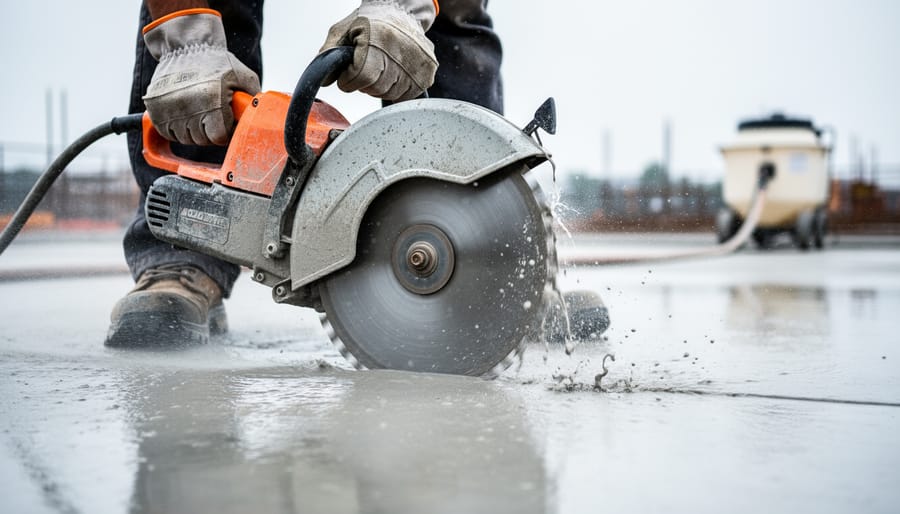
Wet dust collection systems suppress silica dust at the source by injecting water directly onto cutting surfaces, preventing dangerous particles from becoming airborne during concrete cutting, grinding, or drilling operations. Unlike dry collection methods that rely solely on filtration, these systems turn dust into a slurry that’s easier to contain and dispose of safely.
Connect your wet dust collector to the tool’s water port, ensuring constant water flow reaches the cutting point. Most systems require 0.5 to 2 gallons per minute depending on the tool size. Check water levels before starting work and maintain consistent pressure throughout the job to achieve maximum dust suppression rates of 95-99%.
Monitor the slurry consistency as you work. Thick, paste-like residue indicates proper dust capture, while dry residue means you need to increase water flow. Empty collection tanks before they reach capacity to prevent overflow and maintain suction power.
Clean the system immediately after each use to prevent concrete slurry from hardening inside hoses and fittings. Flush all lines with clean water for at least two minutes, paying special attention to tool connection points where buildup commonly occurs.
Inspect water filters and screens weekly when using rental equipment. Clogged filters reduce water flow and compromise dust suppression effectiveness. Replace damaged hoses or worn seals promptly, as even small leaks allow silica dust to escape into your breathing zone.
OSHA’s silica standard requires employers to use engineering controls like wet collection systems when exposure levels exceed permissible limits, making proper operation not just a best practice but a legal requirement for many commercial applications.
What Makes Wet Dust Collection Different (And More Effective)
The Science Behind Water Capture
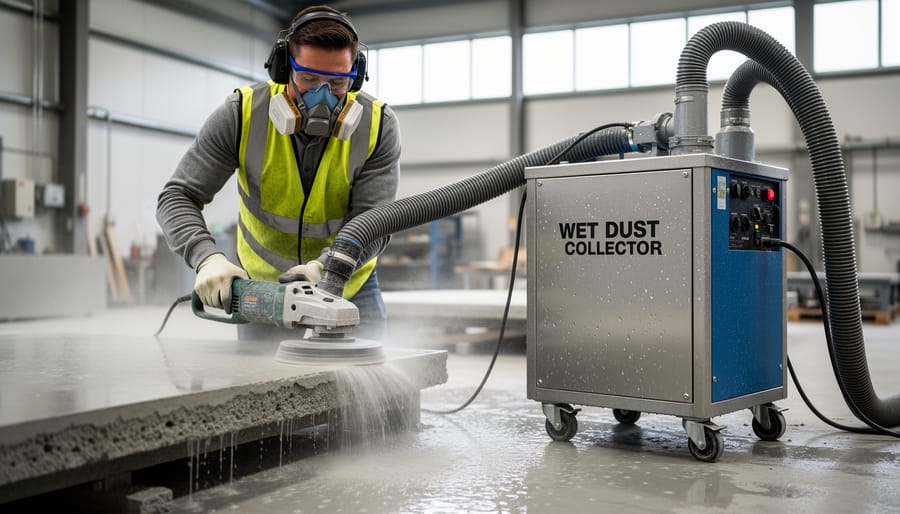
The science behind wet dust collection is surprisingly straightforward. When you introduce water into the dust collection process, the moisture binds with dust particles through a process called agglomeration. Essentially, water droplets act like tiny magnets, attracting and trapping dust before it can escape into the air you breathe.
Here’s what happens during common jobs: When you’re cutting concrete with a saw or grinding down a surface, the tool creates thousands of microscopic dust particles. In a wet collection system, a fine mist or stream of water immediately contacts these particles at the point of creation. The water weighs down the dust, making particles too heavy to become airborne. Instead of floating around your workspace, the wet dust forms a slurry that gets channeled away through the vacuum system.
This method is particularly effective against respirable crystalline silica, the dangerous dust created during concrete and masonry work. These particles are so small they can penetrate deep into your lungs, but when captured wet, they’re rendered harmless before you ever inhale them. The result is cleaner air, better visibility while working, and significantly reduced health risks compared to dry collection methods.
When You Need Wet vs. Dry Collection
Wet collection systems become necessary when you’re working with materials that produce silica dust, particularly concrete, masonry, tile, or stone. If you’re cutting, grinding, or drilling these materials indoors or for extended periods, a wet system isn’t just recommended—it’s often required by OSHA regulations for professional worksites.
For DIYers, consider wet collection essential for any concrete or masonry project that lasts more than an occasional quick cut. Cutting pavers for a patio, drilling anchor holes in concrete walls, or grinding down mortar joints all generate significant silica dust that dry systems can’t adequately capture.
Professionals should use wet systems whenever working with silica-producing materials, especially in enclosed spaces. OSHA’s silica standard mandates specific dust control measures, and wet collection is the most reliable method for many applications. This applies to concrete contractors, tile installers, stonemasons, and renovation specialists.
Dry collection works fine for wood dust, drywall, and general debris. But when silica is involved, the particles are too fine and dangerous for standard filtration. Wet systems trap these microscopic particles in water, preventing them from becoming airborne and protecting your lungs from serious long-term damage. When in doubt about which system your project requires, consult the material safety data sheet or ask experienced tradespeople in your community.
Essential Daily and Weekly Maintenance Tasks
Before Each Use: Your Pre-Work Checklist
Before you power up your wet dust collection system, spend two minutes running through these critical checkpoints. These simple inspections prevent equipment damage, ensure proper silica dust capture, and keep you safe on the job.
Start by checking the water level in the collection tank. Most systems have a clearly marked fill line, typically between half and three-quarters full. Too little water means dust won’t be captured effectively, while overfilling can cause spillage or motor strain. If the level is low, add clean water before starting work.
Next, inspect all hose connections from your power tool to the collection unit. Give each connection a firm tug to confirm it’s secure. Loose fittings allow silica dust to escape into the air, defeating the system’s purpose. If any connection feels loose, tighten the coupling or replace damaged sections.
Examine the filter condition by looking for visible damage, tears, or excessive buildup. A clogged filter reduces suction power and collection efficiency. Clean or replace filters according to the manufacturer’s schedule. Many rental facilities include this in their rental equipment safety inspections, but you’re the final line of defense.
Finally, check the power cord for fraying or damage, and ensure the drainage valve is securely closed. If anything looks wrong, don’t use the equipment until it’s repaired or replaced.
After Every Job: Cleanup That Protects Your Health
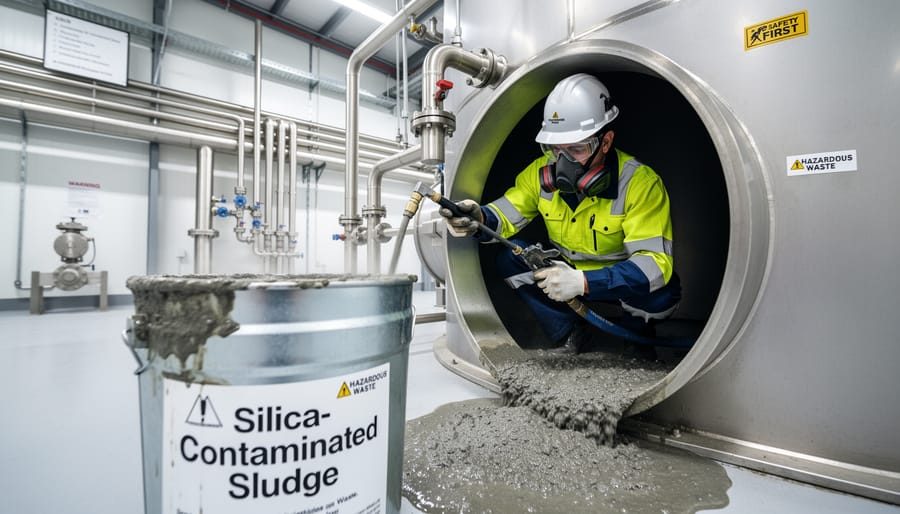
Once you’ve finished the job, proper cleanup is just as important as operating the system correctly. Silica-contaminated water and sludge aren’t regular waste—they require special handling to protect both your health and the environment.
Start by carefully removing the collection container without stirring up any settled material. Most municipalities classify silica sludge as non-hazardous, but you should never pour it down household drains. Instead, let the water evaporate in a well-ventilated area, then dispose of the dried sludge according to your local regulations. Some waste management facilities accept it with construction debris, but check first.
When emptying tanks, work slowly to avoid splashing or creating mist. Wear gloves and a respirator rated for silica exposure during this process—dried sludge can become airborne easily. Wipe down all surfaces with damp cloths rather than dry brushing, which releases dust particles back into the air.
Between uses, thoroughly rinse all components and leave the tank lid slightly open to prevent bacterial growth in standing water. For longer storage periods, completely drain and dry the system. Many users in our community recommend adding a small amount of bleach to remaining water if the system will sit unused for more than a week, preventing the unpleasant odors that stagnant water creates.
Weekly Deep Maintenance for Rental and Owned Equipment
Weekly maintenance goes deeper than daily tasks and should be part of your regular maintenance schedules whether you’re renting or own your wet dust collector.
Start by completely draining and cleaning the separator tank. Remove any sludge buildup using a stiff brush and rinse thoroughly with clean water. This prevents clogs and maintains proper water flow. Check the tank’s interior for cracks or damage that could affect performance.
Next, inspect filter elements carefully. Remove and rinse pre-filters under running water, checking for tears or excessive wear. Replace if you notice reduced suction or visible damage. For HEPA filters (which shouldn’t get wet), vacuum them gently or replace according to manufacturer guidelines.
Examine the pump system for leaks, unusual noises, or vibrations. Check all hoses and connections for cracks, ensuring clamps are tight. Test the pump’s water flow rate by filling a bucket for 30 seconds—if output seems reduced, clean the pump intake screen.
If you encounter weak suction, check for blockages in hoses, verify water levels are correct, and confirm filters aren’t oversaturated. Unusual sounds often indicate loose components or pump issues requiring immediate attention.
Document any problems when returning rental equipment, and always report concerns to your rental provider promptly.
The Parts That Fail First (And How to Catch Problems Early)
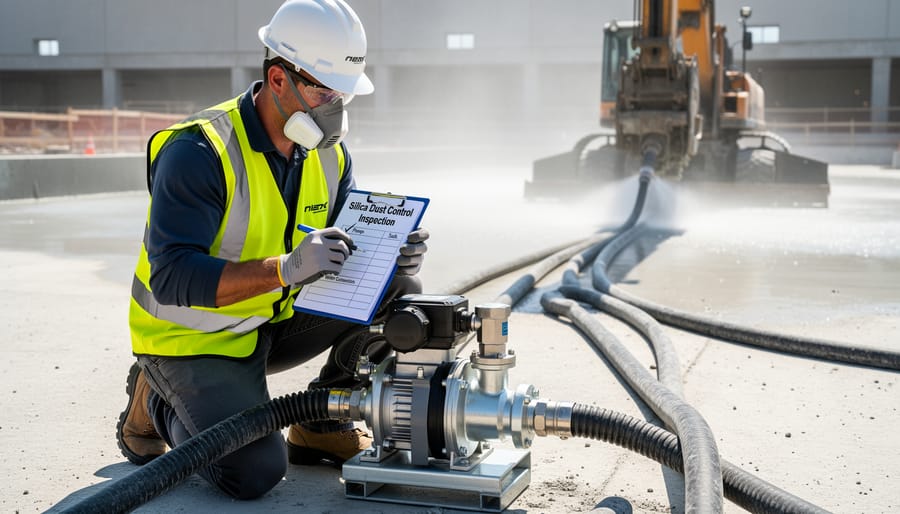
Pumps, Seals, and Water Flow Issues
Your wet dust collection system’s pump is the heart of the operation, and when it struggles, your silica protection suffers. Understanding common pump issues helps you catch problems before they compromise dust capture.
The most frequent pump problem is reduced water pressure, which you’ll notice when the spray pattern becomes weak or uneven. This typically indicates worn impellers or clogged intake screens. Check the intake filter first—construction dust can accumulate here surprisingly fast. If water flow remains weak after cleaning, the impeller may need replacement, a repair many rental centers can handle quickly.
Seal degradation is another critical issue to watch. Early warning signs include water pooling around the pump housing or moisture on electrical connections. Never ignore these symptoms, as failed seals can cause motor damage and create electrical hazards. If you’re renting equipment and notice dampness around pump seals, report it immediately before continuing work.
Reduced water flow directly impacts your dust capture efficiency. When spray nozzles don’t deliver adequate water volume, airborne silica particles pass through without being captured. You might notice more visible dust at the collection point or residue accumulating where it shouldn’t. This isn’t just an equipment issue—it’s a health concern.
Regular pump inspections should include checking water pressure at startup, listening for unusual noises indicating bearing wear, and ensuring all connections remain dry. Community feedback consistently shows that catching pump problems early prevents costly downtime and maintains the protection you’re counting on.
Filters and Separators: When to Clean vs. Replace
Knowing when to clean versus replace components saves money and maintains system effectiveness. For filters, inspect them after each use—if you see tears, excessive caking that won’t rinse off, or reduced suction despite cleaning, it’s replacement time. Most filters in wet systems can be cleaned multiple times, but their effectiveness diminishes as pores clog permanently with fine silica particles.
Check your separator efficiency regularly. If you notice more sediment accumulating in the filter chamber rather than settling in the collection tank, your separator isn’t working properly. Cyclonic separators typically don’t require replacement unless physically damaged, but check for cracks or worn seals that reduce separation performance.
Cost-effective decision making comes down to tracking filter lifespan. Keep a simple log noting when you clean or replace filters—most quality filters handle 5-10 cleanings before needing replacement. If you’re cleaning more than once per project, you’re likely overdue for a new filter.
For rental equipment, always inspect filters before starting work and report any concerns immediately. Incorporating wet dust collectors into your equipment maintenance plan ensures consistent performance and compliance with safety standards.
Remember: a clogged or damaged filter compromises silica protection, defeating the system’s purpose. When in doubt, replace it—your lungs are worth the investment.
Real-World Silica Control: What Actually Works on Job Sites
Setup Mistakes That Reduce Protection
Even the best wet dust collection system fails when setup errors allow silica to escape into the air you breathe. Understanding these common mistakes helps you maximize protection whether you own or rent your equipment.
Insufficient water flow ranks as the most frequent problem. Your system needs adequate water pressure to effectively suppress dust at the cutting surface. If you see dry dust escaping during operation, immediately stop and increase water flow. Check that supply lines aren’t kinked and filters aren’t clogged. Most grinders require at least 0.5 to 1 liter per minute for proper suppression.
Poor shroud contact creates gaps where silica-laden dust escapes freely. The shroud must sit flush against your work surface throughout the entire cut. Uneven surfaces require careful positioning and sometimes manual adjustment as you work. Like proper guard usage, maintaining consistent shroud contact demands attention but proves essential for safety.
Improper hose routing causes unnecessary restrictions that reduce suction power. Avoid sharp bends, excessive length, and crushing the hose under materials or equipment. Keep hoses as straight and short as practical between your tool and collection unit.
Wrong shroud size represents another critical error. Shrouds must match your specific grinder model and blade diameter. Using an incompatible shroud creates gaps that defeat the entire system’s purpose. Always verify compatibility before starting work, especially with rental equipment where previous users may have mixed components.
Combining Wet Collection with Respiratory Protection
While wet dust collection systems dramatically reduce airborne silica, they’re your first line of defense, not your only one. Think of it as a hierarchy: engineering controls like wet collection come first, but certain situations require backup protection.
When grinding, cutting, or chasing in confined spaces, working upwind of the dust source, or handling particularly high-silica materials like engineered stone, you’ll need appropriate respiratory protection as a secondary safeguard. Even the best wet collection systems can’t capture 100% of particles, especially during equipment startup, filter changes, or when connections loosen during work.
Choosing the right respirator depends on your specific task. For most concrete and masonry work with functioning wet collection, a P2-rated disposable respirator provides adequate backup protection. For extended exposure or work with engineered stone, consider a powered air-purifying respirator or half-face respirator with P3 filters. These offer better protection and improved comfort during long shifts.
Here’s what matters: respirators protect you when dust collection systems can’t keep up, but they’re not a substitute for proper engineering controls. Many workers make the mistake of relying solely on masks while skipping dust collection altogether. This approach fails because respirators only work when fitted correctly, maintained properly, and worn consistently. They’re also uncomfortable, reducing productivity over time.
Always start with maximizing your wet collection system’s effectiveness, then add respiratory protection as your safety backup.
Troubleshooting Guide: Quick Fixes for Common Problems
Even the best wet dust collection systems can experience hiccups. Here’s how to quickly diagnose and fix the most common issues you’ll encounter.
Reduced Suction Power
If your system isn’t pulling dust like it should, start with the basics. Check your water reservoir level first—most wet collectors need water at the minimum fill line to maintain proper suction. Too little water means reduced dust capture. Next, inspect your filter or separator. Clogs from accumulated slurry are the number one culprit for weak suction. Remove the filter, rinse it thoroughly under running water, and check for any damaged sections that might need replacement. Finally, examine your hose connections. Loose fittings or cracks in the hose can cause significant air leaks that kill suction.
Water Leaking from the Tank
Water pooling around your unit usually points to a few specific problems. First, ensure your drain valve is completely closed—this simple oversight accounts for many leak complaints. Check the tank gasket or seal where the lid connects to the body. These rubber seals can dry out or get debris stuck in them, preventing a proper seal. Clean the sealing surface and inspect for cracks. If you’re renting equipment, report damaged seals immediately rather than attempting repairs yourself. Also verify you haven’t overfilled the tank beyond the maximum fill line, which can cause overflow during operation.
System Won’t Start or Shuts Off Unexpectedly
Before assuming equipment failure, check that your power source is functioning and the circuit breaker hasn’t tripped. Wet collectors draw significant amperage, especially during startup. If the unit shuts off mid-use, you may have triggered thermal overload protection due to a clogged filter restricting airflow. Let the system cool for 15-20 minutes, clean the filter, and try again. For rental units experiencing persistent electrical issues, contact your rental provider rather than troubleshooting electrical components yourself.
Excessive Noise or Vibration
Unusual sounds often indicate loose components or debris in the impeller. Power down completely and inspect the intake area for any foreign objects. Check that all mounting bolts are secure and the unit sits level on the ground.
Maintaining your wet dust collection system isn’t just about keeping equipment running smoothly—it’s about protecting yourself from a serious occupational hazard. Silica exposure can lead to silicosis, an incurable lung disease that develops over years of breathing contaminated air. The good news? These health consequences are entirely preventable with properly maintained equipment and consistent safety practices.
Whether you own or rent your wet dust collection system, making maintenance a non-negotiable part of your workflow is essential. Regular water level checks, filter inspections, and proper disposal procedures take just minutes but provide lasting protection for your respiratory health.
We’d love to hear from you: What maintenance routines work best in your shop? Have you discovered any helpful tips or encountered challenges with your wet dust collection setup? Share your experiences in the comments below. Your insights help build a safer, more informed community of professionals and DIYers who prioritize health alongside productivity. Remember, proper dust control today means healthier lungs tomorrow—and that’s worth the effort.
Related Posts

Post a Comment