
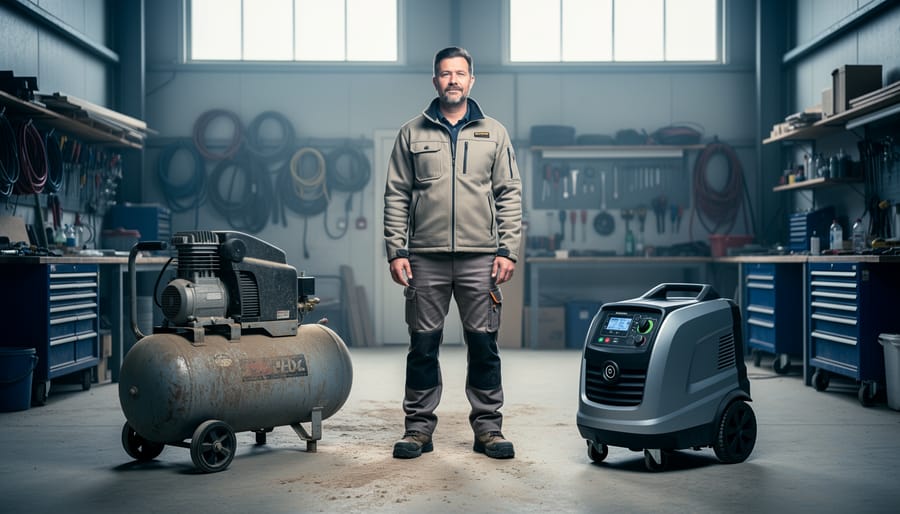
Calculate the total cost of ownership by adding purchase price, operating expenses, maintenance, repairs, and disposal costs over the asset’s entire lifespan. A $500 power tool that requires $200 annually in maintenance over ten years actually costs $2,500, not the sticker price you see at checkout.
Track energy consumption and operating hours to identify equipment that drains your budget through inefficiency. That older air compressor might have cost less upfront, but if it uses 30% more electricity than newer models, you’re losing money every time you plug it in.
Factor in downtime costs when comparing options, as unreliable equipment creates project delays that exceed repair expenses. When a concrete mixer breaks mid-pour, you’re paying for idle workers, rushed replacement rentals, and potential material waste—all hidden costs that compound quickly.
Compare lifecycle costs against rental alternatives by calculating your actual usage needs. If you only need a scaffolding system twice yearly, purchasing equipment that sits idle 350 days makes no financial sense compared to short-term rentals that eliminate storage, maintenance, and depreciation expenses.
Life-cycle cost analysis transforms how you approach every tool and equipment decision. Rather than chasing the lowest price tag, you’ll make informed choices based on real-world performance data, community reviews, and total ownership expenses. This approach protects your bottom line while ensuring you have reliable equipment when projects demand it most.
What Life-Cycle Cost Analysis Actually Means (In Plain English)
Life-cycle cost analysis sounds complicated, but it’s really just a fancy way of saying “figure out what something actually costs you over time.” Instead of only looking at the price tag, you’re calculating every dollar you’ll spend on that item from the day you buy it until you’re done with it.
Think about it this way: you’re standing in the tool aisle deciding between a $40 drill and a $120 drill. The cheap one looks tempting, right? But here’s what life-cycle cost analysis asks you to consider: How long will each drill last? The budget drill might need replacing in two years, while the quality one could work for a decade. What about maintenance? The cheaper model might burn through batteries faster or need parts replaced. When you add up replacement costs, batteries, repairs, and even the time you’ll waste dealing with a tool that struggles through tough jobs, that $40 drill might actually cost you more in the long run.
Here’s another example that hits home for many DIYers: choosing deck materials. Pressure-treated wood costs less upfront than composite decking. But factor in annual staining, sealing, board replacements every few years, and the extra labor hours you’ll spend on maintenance. Suddenly, composite decking that requires just occasional washing might be the smarter financial choice over a 15-year period.
Life-cycle cost analysis simply means doing the math on total ownership costs, including purchase price, operating expenses, maintenance, repairs, energy consumption, and eventual disposal or replacement. It’s about seeing the complete financial picture, not just the first payment.
The Four Costs That Make Up Your True Total
Initial Purchase and Installation
When you’re evaluating the true cost of owning versus renting equipment, the initial purchase and installation expenses represent your starting point. This upfront investment includes several components that many people overlook when making their decision.
The purchase price is the most obvious cost, but it’s rarely the complete picture. You’ll also need to factor in delivery charges, which can vary significantly based on the size and weight of your equipment. For larger tools like table saws or compressors, delivery fees might add several hundred dollars to your total.
Installation and setup costs deserve careful attention too. Some equipment arrives ready to use, while other tools require professional assembly or calibration. For example, a woodworking planer might need precise blade alignment, or an air compressor system could require electrical upgrades and proper mounting. If you lack the expertise to handle setup yourself, professional installation fees become part of your initial investment.
Don’t forget about essential accessories and safety equipment needed to operate your purchase from day one. These might include specialized bits, blades, safety guards, or power adapters that aren’t included in the base price. Creating an itemized list of all upfront expenses gives you an accurate baseline for comparing against rental options and helps you understand when your investment will begin paying for itself through regular use.
Operating Costs Over Time
Operating costs represent the steady stream of expenses that occur throughout a tool or equipment’s working life, and they often dwarf the initial purchase price. For power tools, energy consumption is a primary factor—that corded circular saw or air compressor adds to your electricity bill with every use. If you’re running gas-powered equipment like pressure washers or generators, fuel costs accumulate project after project, and fuel prices fluctuate over time, making these expenses unpredictable.
Consumables are another ongoing expense that’s easy to underestimate. Blades, drill bits, sandpaper, filters, and lubricants need regular replacement to maintain performance and safety. A quality table saw might need new blades several times a year depending on usage, and these seemingly small purchases add up significantly over a five or ten-year period.
Routine servicing keeps equipment running efficiently and prevents costly breakdowns. Oil changes, filter replacements, calibration, and professional tune-ups are maintenance tasks that can’t be skipped without risking performance degradation or complete failure. When calculating life-cycle costs, track these recurring expenses realistically—check manufacturer recommendations for service intervals and factor in both parts and labor. Understanding these ongoing costs helps you compare whether purchasing, renting, or upgrading to more efficient equipment makes the most financial sense for your specific situation.
Maintenance and Repairs
Maintenance and repairs represent ongoing costs that significantly affect your tool’s true lifetime value. Scheduled maintenance includes routine tasks like oil changes, blade sharpening, filter replacements, and calibration checks. While these preventative measures require upfront investment, they typically reduce long-term expenses by catching problems early.
Unexpected repairs, however, can derail your budget. A failed motor, broken gears, or damaged components often mean costly parts and labor. When calculating life-cycle costs, factor in the likelihood of repairs based on manufacturer warranty coverage, build quality, and user reviews from others who’ve owned the equipment long-term. Community feedback often reveals patterns about which tools hold up versus those requiring frequent fixes.
Don’t overlook downtime costs either. When your equipment breaks, you’re not just paying for repairs—you’re losing productive work time. For professionals, this might mean missed deadlines or hiring rental equipment as a temporary replacement. Even DIY homeowners face project delays that can cascade into other complications.
Replacement parts availability matters too. Tools from established brands typically have better parts support, while discontinued models or obscure manufacturers may leave you searching for compatible components or force premature replacement of otherwise functional equipment.
End-of-Life and Disposal
Every tool eventually reaches the end of its useful life, and understanding these final costs completes your life-cycle analysis. Decommissioning costs might include safe disposal of power tools with lithium batteries, proper handling of equipment containing hazardous materials, or simply the time and transportation expenses to haul items away. Municipal disposal fees vary widely depending on your location and the type of equipment, so check with local waste management services for accurate estimates.
However, not all end-of-life scenarios mean pure cost. Many tools retain resale value, especially professional-grade equipment that’s been well-maintained. Online marketplaces, tool exchanges, and trade-in programs can recover 10-30% of the original purchase price for quality tools. Some manufacturers also offer recycling programs that may provide credits toward new purchases.
When comparing ownership versus rental, remember that rental companies handle all disposal responsibilities, eliminating these costs and logistics from your equation. For owned tools, factor in realistic resale expectations based on brand reputation, condition, and market demand. Document maintenance history to maximize resale value. By accounting for these final stage costs and potential recovery values, you close the financial loop and gain the complete picture needed for truly informed purchasing decisions.
How Value Engineering Fits Into the Picture
Value engineering works hand-in-hand with life-cycle cost analysis to help you get the most bang for your buck. While life-cycle cost analysis shows you the total picture of what something will cost over time, value engineering focuses on maximizing function while keeping those lifetime costs as low as possible.
Think of it this way: value engineering asks, “How can we achieve the same result for less money over the product’s lifetime?” It’s not about cutting corners or buying cheap alternatives. Instead, it’s about smart substitutions and strategic investments that deliver better long-term value.
Here’s where it gets practical. Say you’re choosing between a standard circular saw and a professional-grade model for a major renovation project. The professional saw costs twice as much upfront, but value engineering helps you analyze whether its superior motor, longer blade life, and reduced maintenance needs will actually save money over five years of regular use. In many cases, that higher initial investment pays for itself through fewer blade replacements, less downtime, and better performance.
In construction, value engineering might mean spending more on high-quality insulation during a build. The extra $2,000 upfront could reduce heating and cooling costs by $500 annually, meaning you break even in four years and save thousands afterward. This approach complements predicting project costs by helping you understand where those calculated expenses should actually increase for better outcomes.
The key principle is simple: evaluate every choice based on its function-to-cost ratio across the entire life cycle. Sometimes the budget option makes sense. Other times, investing more upfront dramatically reduces your total cost of ownership. Value engineering gives you the framework to make that distinction confidently, ensuring you’re not just spending less today but actually saving more tomorrow.
Real-World Scenarios: When Cheaper Isn’t Cheaper
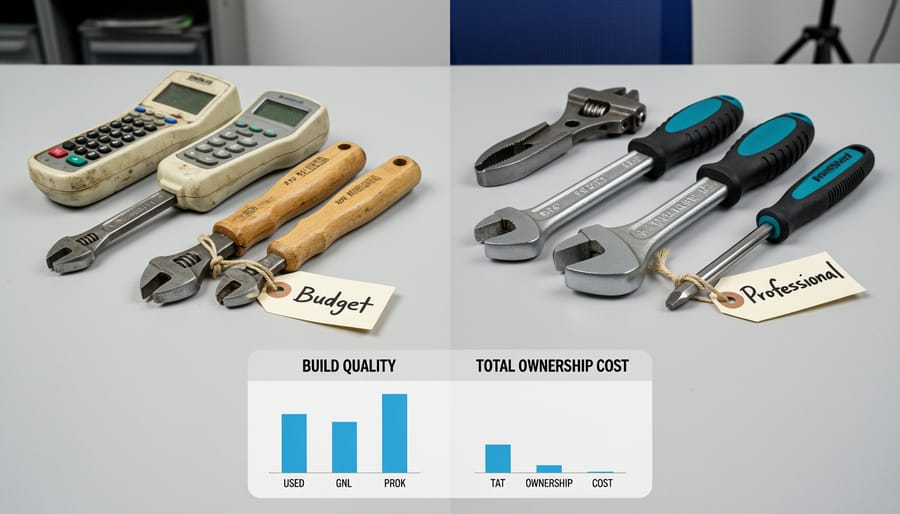
Tool Investment: Budget Compressor vs. Professional Grade
Let’s examine two compressors to understand how initial price rarely tells the whole story. A budget model at £150 might seem like the smart choice, but when you factor in its typical 3-year lifespan, you’ll spend £750 over 15 years on five replacement units. Meanwhile, a professional-grade compressor at £600 can easily last 15 years or more with proper maintenance.
The differences extend beyond replacement costs. Budget compressors typically consume 15-20% more electricity due to less efficient motors and poorer air retention. On a unit running 10 hours weekly, this translates to roughly £30-40 extra per year in energy costs. Over 15 years, that’s an additional £450-600.
Repair costs also factor significantly. Budget models often require repairs around year two, averaging £40-60 for parts and labour. Professional units, built with superior components, typically need only routine maintenance like oil changes and filter replacements, costing about £20 annually.
Community feedback from users reinforces these findings. One tradesperson shared: “I went through three cheap compressors in four years before investing in quality. Haven’t looked back since.” Another noted that professional models maintain consistent pressure better, reducing project time and frustration.
The total 15-year cost breakdown reveals the reality: the budget route costs approximately £1,400-1,500 when accounting for replacements, repairs, and energy waste. The professional compressor totals around £1,200-1,300, including maintenance and electricity. You save money while gaining reliability and better performance throughout the tool’s working life.
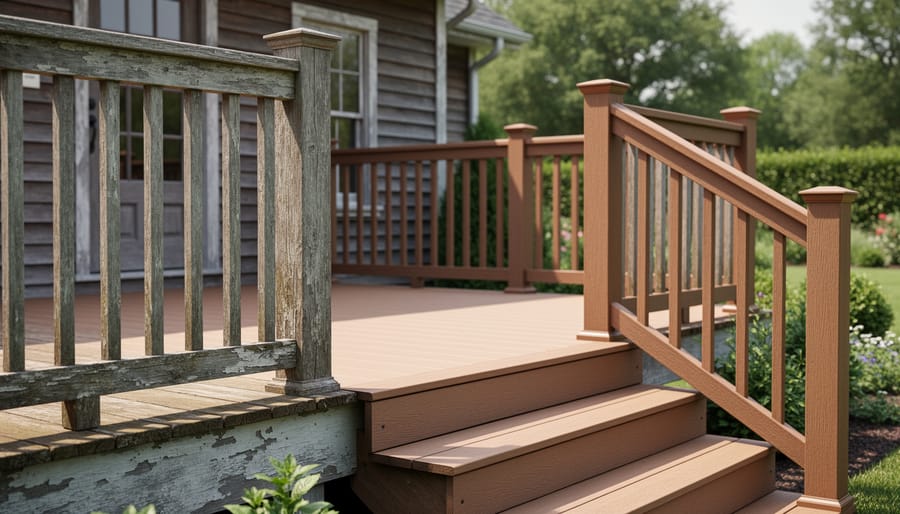
Material Choice: Treated Timber vs. Composite Decking
When planning an outdoor deck project, choosing between treated timber and composite decking involves more than comparing price tags at the hardware store. Let’s examine the true costs over a typical 20-year lifespan.
Treated timber decking offers lower initial costs, typically ranging from $30-$50 per square metre for materials. However, the maintenance requirements add up quickly. You’ll need to sand, seal, and restain every 2-3 years, which means ongoing expenses for materials and either your time or contractor fees. Factor in occasional board replacements due to rot, warping, or splitting, especially in high-traffic areas. Over 20 years, expect to spend roughly $15-$25 per square metre on maintenance products alone, plus labour costs if you’re not doing it yourself.
Composite decking presents a higher upfront investment at $80-$150 per square metre, but requires minimal maintenance beyond basic cleaning. There’s no refinishing needed, and quality composite materials come with 25+ year warranties against fading, staining, and structural issues. While you might initially spend double or triple the material cost, you’ll save thousands in maintenance over two decades.
When making your decision, remember that material price considerations extend beyond today’s purchase. Calculate both the initial investment and projected maintenance costs, then divide by 20 years to understand your true annual cost. For many homeowners, composite decking actually becomes the more economical choice when viewing the complete lifecycle.
Equipment Rental vs. Purchase Decision
Let’s break down the rental-versus-purchase decision with a simple calculation. Start by estimating how many times you’ll actually use the equipment per year. For example, if you need a power washer only twice annually, renting at $75 per use costs $150 yearly. Compare this to purchasing a quality unit for $400 plus maintenance costs of around $50 per year.
The break-even point occurs when total rental costs equal the purchase price plus ongoing expenses. In this scenario, that’s approximately 3.5 years. If you’ll use the tool beyond this timeframe, buying makes financial sense. However, remember that ownership includes storage space, insurance, repairs, and the risk of obsolescence as technology improves.
Consider the maintenance factor carefully. Rental equipment comes serviced and ready to use, while owned tools require your time and money for upkeep. Calculate your hourly rate and add maintenance hours to ownership costs. For occasional-use items like specialized saws or scaffolding, rental often wins because you avoid these hidden expenses entirely while accessing well-maintained, professional-grade equipment exactly when needed.
Simple Steps to Calculate Life-Cycle Costs Yourself
Ready to crunch the numbers on your next equipment purchase or rental decision? Here’s a straightforward method you can apply today, whether you’re choosing between buying a concrete mixer or renting one for occasional projects.
Start with the basic formula: Life-Cycle Cost = Initial Purchase Price + Operating Costs + Maintenance Costs – Residual Value. Let’s break down each component so you can plug in your own figures.
First, identify your timeframe. For power tools, consider 5-10 years depending on usage intensity. Weekend DIYers might stretch this longer, while professional tradespeople working daily should use shorter periods. This timeframe determines how long you’ll track costs.
Next, list all costs over that period. Initial purchase price is easy—that’s the sticker price. Operating costs include electricity, fuel, consumables like blades or bits, and storage. Maintenance covers regular servicing, repairs, and replacement parts. Don’t forget indirect costs like transportation or downtime when equipment breaks.
Here’s where discount rates come in—a concept that sounds complicated but isn’t. Money today is worth more than money tomorrow because of inflation and earning potential. A simple approach: use a 3-5% discount rate for personal projects. This means a hundred dollars spent three years from now only counts as about 86-89 dollars in today’s money. Online calculators can handle this math automatically.
Track the residual value—what you could sell the equipment for at the end of your timeframe. Quality tools from reputable brands typically retain 20-40% of their value after five years.
Now compare this total against rental costs. Multiply your rental rate by the number of times you’ll need the equipment over the same timeframe. Add any transportation fees for pickup and return.
This approach integrates seamlessly with broader cost estimation strategies that help you budget entire projects more accurately. The beauty of this calculation is its flexibility—adjust the variables based on your specific situation, usage patterns, and local market conditions. Start simple, and refine your estimates as you gather real-world data from your own projects.
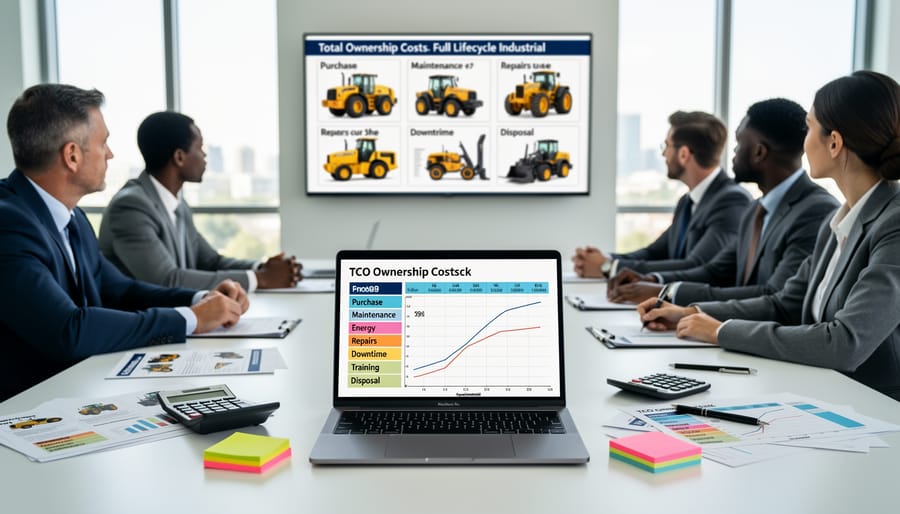
Common Mistakes That Skew Your Analysis
Even experienced professionals fall into traps that undermine their life-cycle cost calculations. Understanding these common mistakes helps you make more accurate financial decisions.
Ignoring inflation is perhaps the most widespread error. A diesel generator that costs $500 annually to maintain today won’t cost the same in five years. Failing to factor in inflation, typically 2-4% annually, means your projections become increasingly unrealistic over time. Always adjust future costs to account for rising prices, especially for consumables like fuel, lubricants, and replacement parts.
Underestimating maintenance costs catches many people off guard. That budget-priced concrete mixer might seem like a bargain until you discover its belts need replacing every six months instead of annually. Real-world usage from community reviews often reveals the true maintenance burden better than manufacturer specifications. Check user feedback to understand actual maintenance intervals and costs rather than relying solely on optimistic product literature.
Energy costs represent another frequently overlooked expense. A 15-amp power tool running eight hours daily accumulates significant electricity charges over its lifetime. For fuel-powered equipment, fluctuating petrol or diesel prices can dramatically impact your total costs. Calculate energy consumption based on actual runtime, not just nameplate ratings.
Technological obsolescence deserves serious consideration, especially for expensive equipment. That state-of-the-art laser level might become outdated when new standards emerge, forcing premature replacement. Similarly, equipment without available spare parts becomes worthless regardless of its physical condition.
Finally, inadequate contingency planning leaves you vulnerable to unexpected repairs or replacements. Building buffer amounts into your analysis protects against unforeseen circumstances that inevitably arise during extended ownership periods. Accounting for these variables from the start produces far more reliable cost projections.
What the Tool Hire Community Says
Our community members have shared countless stories about how life-cycle thinking transformed their approach to tool ownership. The experiences speak volumes about the real-world impact of looking beyond sticker prices.
Mark, a weekend woodworker from Bristol, shared how he nearly purchased a £400 compound miter saw for a single deck project. After calculating that he’d only need it twice a year, he opted for rental instead. “I ran the numbers over five years and realized I’d spend maybe £150 total on rentals versus £400 upfront plus maintenance and storage costs. That £250 difference went toward better quality timber.”
Professional plasterer Sarah from Leeds offered a different perspective: “I bought a second mixing drill after doing a proper cost analysis. Running to the hire shop every morning was costing me two hours weekly in lost productivity. The upfront cost hurt, but over eighteen months, I’ve saved hundreds in rental fees and my schedule’s more flexible.”
The community consistently emphasizes three key lessons. First, honest usage estimates matter more than optimistic ones. Second, factor in hidden costs like transportation to rental shops, storage solutions, and your time value. Third, consider the learning curve—some specialized tools require practice that rental periods don’t always accommodate.
One apprentice electrician noted that renting cable pullers helped him understand which features actually mattered before investing in his own equipment. This try-before-you-buy approach, combined with life-cycle analysis, prevented costly purchasing mistakes and built confidence in his long-term investment decisions.
Smart decision-making means looking past the sticker price to understand what you’re really paying over time. Whether you’re choosing between renting or buying a tool, selecting materials for a renovation, or investing in equipment for your business, life-cycle cost analysis gives you the full financial picture. By factoring in maintenance, energy consumption, repair costs, and eventual disposal or resale value, you avoid the trap of cheap upfront purchases that drain your wallet later.
The good news? You don’t need to be a financial expert to apply this thinking. Start simple with your next project decision. Compare not just the purchase price, but ask yourself: How long will this last? What will it cost to maintain? Will it save me time or money down the road? Even a basic comparison can reveal surprising insights that protect your budget.
We’d love to hear from you. Have you applied life-cycle thinking to a recent tool purchase or project? Did choosing quality over cheap upfront cost pay off, or did you learn a valuable lesson the hard way? Share your experiences in the comments below and help fellow community members make smarter choices together.
Related Posts