
Set your baseline rental rates by calculating total equipment costs (purchase price, maintenance, storage) and dividing by expected rental days over the tool’s lifespan, then add your target profit margin of 15-25%. This cost-plus foundation ensures you never operate at a loss while remaining competitive in your local market.
Implement dynamic pricing that adjusts rates based on demand patterns throughout the year. Charge premium rates during peak construction seasons (spring and summer) when contractors urgently need equipment, and offer 20-30% discounts during slower winter months to maintain cash flow and equipment utilization. Track your booking data monthly to identify these patterns specific to your inventory.
Structure tiered pricing packages that reward longer rental commitments: establish daily, weekly, and monthly rates where the per-day cost decreases significantly with duration. A standard framework charges full daily rate for 1-2 days, offers weekly rates at 3.5x the daily rate (effectively 50% off per day), and monthly rates at 10-12x daily rates. This encourages customers to rent longer while maximizing your revenue per transaction.
Bundle complementary tools together at a 15-20% discount compared to renting separately. Pair a tile saw with a wet vacuum, or package paint sprayers with safety equipment and drop cloths. This strategy increases average transaction value, improves customer convenience, and differentiates your offering from competitors who only rent individual items.
Test psychological pricing tactics by ending rates in .95 or .99 rather than round numbers, making a $49.95 daily rate feel substantially lower than $50 despite the minimal difference. Monitor conversion rates across different price points to find the sweet spot where customer perception meets your profitability goals.
Understanding the Tool Rental Market Landscape
What Tool Renters Actually Care About
Understanding what drives rental decisions helps you price competitively while meeting customer expectations. Based on community feedback and real user reviews, renters prioritize four main factors when choosing a tool rental platform.
Price remains important, but it’s rarely the only deciding factor. Most renters compare total costs including delivery fees, insurance, and minimum rental periods. They’re willing to pay slightly more for platforms that eliminate hidden charges and offer transparent pricing upfront. For example, reviews consistently praise services that bundle delivery into the daily rate rather than adding surprise fees at checkout.
Convenience often outweighs minor price differences. Same-day availability, flexible pickup times, and straightforward booking processes matter enormously. Users frequently mention choosing local options over cheaper alternatives when they need tools quickly for construction equipment needs or time-sensitive projects.
Tool condition directly impacts trust and repeat business. Community reviews reveal that renters expect well-maintained equipment with clear usage instructions. One damaged or poorly functioning tool can permanently lose a customer, even if your prices are competitive. Regular maintenance updates and condition ratings build confidence.
Rental duration flexibility addresses different user needs. DIY homeowners prefer daily rates without weekly minimums, while professional tradespeople value discounted longer-term rentals. Platforms offering both options capture wider markets. User feedback shows appreciation for grace periods on returns and prorated refunds for early equipment returns, turning pricing flexibility into a competitive advantage that justifies premium positioning.
The Hidden Costs That Eat Your Margins
Before you can set profitable rental rates, you need to understand what it actually costs to keep your tools available for rent. Many tool rental businesses fail because they only consider the purchase price, ignoring the hidden expenses that quietly erode profit margins.
Maintenance and repairs represent your most unpredictable cost. Power tools returned from job sites need inspection, cleaning, and often component replacement. A circular saw might need blade changes after every few rentals, while pressure washers require pump maintenance. Budget at least 15-20% of rental income for ongoing upkeep.
Storage costs money whether you’re renting commercial space or using your garage. Calculate the square footage each tool category occupies and assign proportional rent costs. Climate-controlled storage for sensitive equipment like electronics adds another layer of expense.
Insurance protects your investment but varies dramatically based on your inventory value and location. Liability coverage is essential when customers use potentially dangerous equipment. Expect to pay 2-5% of your total tool inventory value annually.
Delivery and pickup services have become customer expectations, not luxuries. Whether you handle logistics yourself or outsource, factor in fuel, vehicle maintenance, and labor time. Each delivery cuts into the rental fee you’re charging.
Equipment depreciation is the silent margin killer. That 500-dollar drill loses value with every rental, regardless of condition. Most tools depreciate 20-30% in year one, then 10-15% annually thereafter. Calculate your true break-even point by dividing total acquisition and operating costs by your expected rental frequency. This reveals how many rentals you need before turning actual profit, not just covering the sticker price.

Core Ecommerce Pricing Strategies That Work for Tool Rental
Cost-Plus Pricing: The Foundation Strategy
Cost-plus pricing forms the bedrock of any successful tool rental business. This straightforward approach ensures you cover your costs while earning a profit, making it perfect for both newcomers and established operators refining their pricing models.
The basic formula is simple: divide your total equipment cost by its expected rental lifespan, then add your desired profit margin. Here’s how it breaks down:
Daily Rental Rate = (Equipment Cost / Expected Rental Days) + Profit Margin
Let’s walk through a real-world example using a residential pressure washer. Suppose you purchase a quality pressure washer for $400. Based on manufacturer specifications and user reviews from your community, you estimate it will last approximately 200 rental days before requiring replacement. You want to earn a 30% profit margin.
First, calculate the base cost per rental: $400 / 200 days = $2 per day
Next, add your profit margin: $2 x 1.30 = $2.60 per day
Your daily rental rate would be $2.60, though you’d likely round to $3 for simplicity.
For power drills, the math works similarly. A $120 drill lasting 150 rental days with the same 30% margin would rent for approximately $1.05 per day, or around $1 after rounding.
Remember to factor in maintenance costs, storage expenses, and insurance when calculating your equipment cost. These hidden expenses can significantly impact profitability if overlooked. While cost-plus pricing provides stability and predictability, it’s just your starting point. Market conditions, competitor pricing, and seasonal demand should influence your final rates.
Competitive Pricing: Staying in the Game
Staying competitive doesn’t mean always offering the lowest price. Start by monitoring what similar tool rental businesses charge in your area through their websites, social media, and even mystery shopping calls. Track these prices monthly in a simple spreadsheet alongside your own costs to spot trends and opportunities.
When deciding whether to match competitor prices, consider your unique strengths. If a competitor undercuts you on basic drill rentals, assess whether matching makes financial sense or if you should highlight your superior tool condition, flexible pickup times, or expert advice instead. For commodity items like ladders or basic power tools, matching prices often makes sense to stay visible in comparison shopping.
Undercutting works strategically for building initial customer relationships or clearing older inventory, but avoid making it your default approach. You’ll erode profit margins and train customers to always expect discounts.
Premium pricing succeeds when you can clearly demonstrate added value. Do your tools come freshly serviced with safety checks? Do you offer free delivery within a certain radius? These service differentiators justify higher prices, especially for professional tradespeople who value reliability over savings. Similar principles apply to B2B pricing strategies, where relationship value matters even more.
Remember, competing solely on price attracts price-sensitive customers who’ll leave for the next cheaper option. Focus instead on the complete customer experience.
Dynamic Pricing: Adjusting for Demand
Dynamic pricing is a strategy where you adjust rental rates based on real-time factors like demand, availability, and timing. Think of it like surge pricing for rideshares, but applied to your tool inventory. This approach helps you maximize revenue during busy periods while staying competitive during slower times.
The most straightforward application is weekend versus weekday pricing. Many DIY enthusiasts rent tools on weekends for home projects, creating higher demand on Fridays through Sundays. You might charge 20-30% more for weekend rentals compared to midweek rates. Professional contractors, who typically work Monday through Friday, often appreciate discounted weekday pricing since they’re accessing tools when demand is lower anyway.
Seasonal fluctuations offer another opportunity for dynamic pricing. Spring and summer represent peak construction and home improvement seasons in most regions. During these months, you can implement premium pricing on high-demand equipment like pressure washers, concrete mixers, and landscaping tools. Conversely, winter months might see significantly reduced demand in colder climates, making it an ideal time to lower prices and offer promotions to maintain cash flow.
Availability-based pricing works particularly well for specialized or limited-stock equipment. If you only have one tile saw and it’s frequently rented, gradually increasing the price helps you capture more value from that popular item. Community-driven reviews can provide valuable insights into which tools deserve premium positioning.
Start conservatively with dynamic pricing adjustments of 10-15% to gauge customer response, then refine your strategy based on booking patterns and feedback from your rental community.
Bundle Pricing: Encouraging Larger Rentals
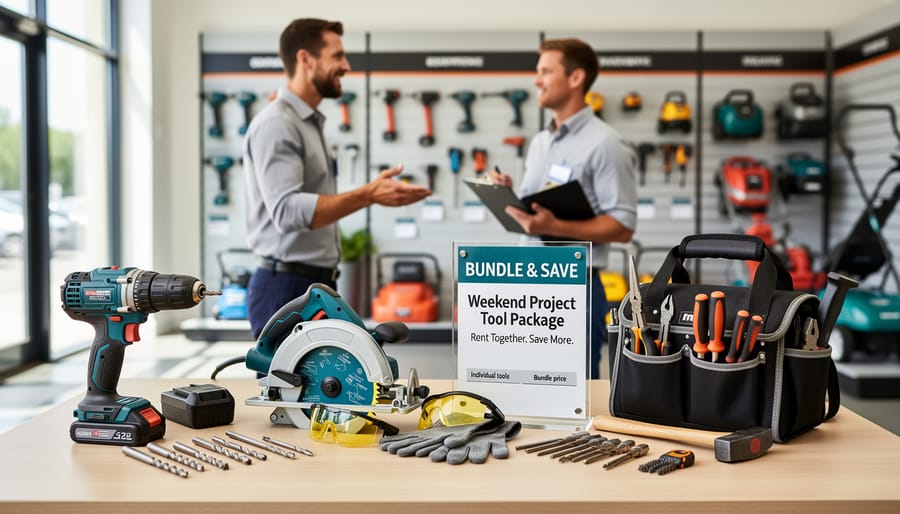
Bundle pricing taps into a simple psychological principle: customers perceive greater value when related items are grouped together at a discount. For tool rental businesses, strategic bundling not only increases your average transaction value but also helps customers complete their projects more efficiently.
Consider creating project-specific bundles like a complete tiling kit (wet saw, tile cutter, and leveling system) or a landscaping package (aerator, dethatcher, and spreader). These combinations address everything a customer needs, reducing the friction of multiple rental decisions. Price your bundles at 15-20% below the individual rental costs to make the savings immediately obvious.
The key to profitable bundling is pairing high-demand tools with complementary items that might otherwise sit idle. For example, bundle a pressure washer with surface cleaners and extension wands. This moves slower inventory while genuinely enhancing the customer’s experience.
To streamline rental transactions, clearly display bundle savings on your pricing page and checkout process. Use phrases like “Save $25 when you rent together” rather than just showing the bundled price. This transparency builds trust and encourages larger rentals.
Test different bundle combinations based on seasonal projects and customer feedback. Community-driven reviews often reveal which tool combinations customers wish they’d rented together, providing valuable insights for your next profitable package deal.
Tiered Duration Pricing: Rewarding Longer Rentals
Tiered duration pricing works on a simple principle: the longer someone rents, the better their daily rate becomes. This strategy keeps your equipment working consistently while rewarding customers who commit to extended rentals.
Start by establishing your base daily rate that covers costs and desired profit margin. From there, create meaningful discounts for weekly and monthly rentals. A common structure offers 10-15% savings on weekly rentals and 20-30% on monthly commitments compared to the daily rate multiplied out.
Here’s a sample pricing grid for a power drill:
Daily Rate: $15/day
Weekly Rate: $70/week (equivalent to $10/day, saving $35)
Monthly Rate: $180/month (equivalent to $6/day, saving $270)
Notice how the monthly rate feels like a significant win for the customer while still maintaining your profit margins. The key is balancing attractive discounts with operational costs like maintenance, storage, and administrative overhead.
When calculating your tiers, consider the actual utilization of each tool. High-demand items can sustain smaller discount percentages, while slower-moving inventory might benefit from more aggressive weekly and monthly pricing to guarantee income.
Test your pricing structure with community feedback from existing customers. Many tool rental businesses adjust their tiers seasonally, offering better monthly rates during slower periods to maintain steady cash flow. Track which tier gets the most bookings and adjust accordingly. Remember, a tool rented consistently at a lower monthly rate generates more revenue than one sitting idle at premium daily pricing.

Optimizing Your Pricing Strategy: From Theory to Practice
Start With Data: What Your Numbers Are Telling You
Before you can set effective rental prices, you need to understand what’s actually happening in your business. Start by tracking three key metrics: how often each tool gets rented, when demand peaks throughout the year, and who’s renting from you.
For rental frequency, create a simple spreadsheet listing each tool and tallying rental days per month. This reveals your moneymakers versus shelf-sitters. A pressure washer rented 20 days monthly generates far more value than a tile cutter used twice. Even basic tracking helps identify which tools deserve premium spots in your inventory and which might need price adjustments or retirement.
Seasonal patterns matter enormously in tool rentals. Gardening equipment flies off shelves in spring, while heaters peak in winter. Review your rental history over 12 months to spot these trends. Small operators can use free tools like Google Sheets with date stamps, while growing businesses might invest in rental management software that automatically generates these insights.
Customer behavior data is equally valuable. Are professional tradespeople your bread and butter, or weekend DIYers? Track whether customers rent for single projects or return regularly. This information directly impacts your pricing strategy optimization decisions.
Don’t overcomplicate this process. Start with manual logs if needed. The goal is spotting patterns: which tools justify higher prices due to demand, which need promotional pricing to move, and where you’re leaving money on the table. Your numbers tell the story; you just need to listen.
Testing Price Changes Without Losing Customers
Testing price changes doesn’t have to mean risking your customer relationships. Start with A/B testing by offering different rates to similar customer segments and tracking which performs better. For example, test a new weekend rate on power tools with half your customers while maintaining current pricing for the other half, then compare rental frequency and revenue.
Consider piloting changes on specific tool categories first rather than overhauling your entire pricing structure. Less popular items or new inventory additions make ideal testing grounds since they carry lower risk. When implementing pricing changes, introduce them gradually—perhaps adjusting rates by 5-10% increments rather than dramatic jumps.
Most importantly, communicate openly with your customers. Announce upcoming changes through email newsletters and social media, explaining the reasoning behind adjustments. Maybe your equipment maintenance costs have increased, or you’ve added delivery services that justify new pricing tiers. Customers appreciate transparency.
Monitor feedback channels closely during test periods. Pay attention to community-driven reviews and direct customer comments. If rental frequency drops significantly or negative feedback spikes, you’ll know to recalibrate. Remember, small tweaks informed by real data beat guesswork every time.
When to Raise Prices (And How to Do It Right)
Knowing when to adjust your rates requires monitoring several key indicators. Consider raising prices when your equipment utilization rates consistently exceed 75%, demand regularly outstrips supply, or operating costs increase significantly. Market research showing competitors charging more for similar tools also signals pricing opportunity.
Communication matters immensely when implementing increases. Give existing customers at least 30 days advance notice through email, explaining the reasons behind the change. Focus on value rather than just cost—highlight new equipment additions, improved maintenance standards, or enhanced customer service that justify higher rates.
Implementing grandfather clauses for your most loyal customers builds goodwill and retention. Consider maintaining current rates for renters who’ve completed ten or more transactions, or offering a six-month grace period before increases take effect for regular customers. This approach, often suggested in community-driven reviews from experienced rental operators, protects your reputation while improving revenue.
Strategic timing minimizes customer pushback. Avoid price increases during peak rental seasons when customers already expect to pay premium rates. Instead, adjust prices during slower periods when you can personally explain changes and demonstrate added value. Test increases on new customers first before rolling them out to your established base, allowing you to refine your messaging based on real feedback.
Psychological Pricing Tactics for Tool Rental
The Power of Charm Pricing
Charm pricing leverages a simple psychological principle: £19.99 feels significantly cheaper than £20.00, even though the difference is just one penny. This works because we process numbers from left to right, focusing on that first digit. For tool rental businesses, this strategy performs exceptionally well with lower-value items like hand tools, small power tools, or short-term daily rentals where price sensitivity is highest.
When customers browse your catalogue for basic equipment, charm pricing can be the deciding factor between your offering and a competitor’s. A cordless drill at £14.99 per day appears more accessible than £15.00, particularly for DIY enthusiasts comparing multiple options.
However, rounded numbers have their place too. For premium or specialist equipment like laser levels, scaffolding systems, or professional-grade machinery, prices like £50 or £100 actually convey quality and reliability. Customers renting high-value tools expect professional pricing that reflects the equipment’s capabilities. Mixing strategies based on your product tiers creates an intuitive pricing structure where budget-friendly items feel affordable whilst premium equipment maintains its perceived value.
Test both approaches with your audience and monitor which generates better conversion rates for different tool categories.
Anchoring: Making Your Prices Look Reasonable
Anchoring works by giving customers a reference point that makes your actual offer look more appealing. For tool rental businesses, this means displaying the purchase price next to your rental rate. When someone sees a $450 impact driver available to rent for $35 per day, that daily rate suddenly feels like exceptional value. The purchase price serves as the anchor that frames the rental as a smart financial decision.
You can also use premium options strategically. List a high-end commercial-grade tool alongside your standard rentals. Even if few customers choose the premium option, it makes your mid-range tools appear more reasonably priced and accessible. A $75 daily rental seems moderate when positioned next to a $150 professional-grade alternative.
Apply anchoring ethically by ensuring all displayed prices are accurate and available. Don’t inflate purchase prices or create fake premium tiers just to manipulate perception. Your community values transparency, and misleading anchors will damage trust quickly. Instead, use genuine comparisons that help customers understand the real value proposition. Show actual retail prices from reputable sources and offer legitimate premium alternatives that some customers will genuinely need for specialized projects.
Decoy Pricing: The Three-Option Trick
The decoy pricing strategy leverages a simple psychological principle: when presented with three options, customers naturally gravitate toward the middle choice, especially when it appears to offer the best value. For tool rentals, this might look like offering a 1-day rental at $40, a 3-day rental at $80 (saving $40 compared to three separate days), and a 7-day rental at $120. The 3-day option becomes your decoy, making the weekly rental seem like an exceptional deal while still generating higher revenue than single-day bookings.
To implement this framework, start by identifying your most popular rental duration. Price your shortest option at your base rate, then create a middle tier that offers modest savings per day. Finally, price your longest option to deliver the most dramatic per-day discount, encouraging customers to keep tools longer and reducing turnover costs. This approach works because it removes decision paralysis while guiding renters toward options that maximize your profit margins and equipment utilization rates.
Common Pricing Mistakes Tool Rental Businesses Make
Underpricing to Compete
Setting your tool rental prices too low might seem like a smart way to attract customers, but it often backfires. When you underprice, you signal lower quality to potential renters and attract price-shoppers who’ll leave the moment they find something cheaper elsewhere. These customers are also more likely to treat your equipment roughly and be less understanding when issues arise.
More importantly, underpricing makes it nearly impossible to cover your costs properly. Tool maintenance, replacement, insurance, and your time all have real value. Charging rock-bottom prices means you can’t invest in better equipment or provide the customer service that builds loyalty.
Instead of competing solely on price, focus on the value you offer. This might include delivering tools to job sites, providing expert advice on which equipment works best for specific projects, maintaining tools in excellent condition, or offering flexible rental periods. Share customer reviews and testimonials that highlight these benefits. When renters understand what sets you apart beyond just price, they’ll happily pay fair rates for reliable service and quality equipment they can trust.
Ignoring Your Local Market
One common pricing mistake is copying what big national chains charge without considering your local market conditions. Just because a major rental company lists a pressure washer at $75 per day doesn’t mean that price will work in your area. Your community has unique characteristics that directly impact what customers can and will pay.
Start by researching local income levels and economic conditions. A pricing strategy that succeeds in an affluent suburb might fail in a working-class neighborhood, and vice versa. Check what your direct competitors charge, but also consider indirect competition like local hardware stores and other rental services. Survey your existing customers through reviews and feedback to understand their price sensitivity and expectations.
Local demand patterns matter too. If you’re in a region with heavy construction activity, contractors may prioritize availability and reliability over rock-bottom prices. In residential areas, weekend DIYers might be more price-conscious but value convenience. Adjust your rates based on seasonal factors specific to your location, whether that’s snow removal equipment in winter or lawn care tools in spring.
Remember, successful pricing reflects your market reality, not someone else’s business model.
Setting It and Forgetting It
One of the biggest mistakes rental businesses make is establishing prices and never revisiting them. Market conditions shift constantly—competitor rates change, new tools enter the market, and seasonal demand fluctuates. Equipment that was brand new last year has depreciated, potentially requiring price adjustments to remain competitive while still covering costs. Consumer expectations also evolve based on what they see across different platforms and local competitors. Without regular pricing reviews, you risk either overcharging and losing customers to more competitive options, or undercharging and leaving money on the table. Schedule quarterly pricing audits at minimum, checking competitor rates, tracking your equipment utilization rates, and analyzing customer feedback. Pay special attention to aging inventory—tools showing wear may need gradual price reductions, while consistently high-demand items might support slight increases. This ongoing attention ensures your pricing strategy stays aligned with real market conditions rather than outdated assumptions.
Pricing your tool rental inventory effectively isn’t simply about covering your equipment costs and calling it a day. It’s a balancing act that requires optimizing for profitability while keeping your customers satisfied and coming back for their next project. The strategies we’ve covered, from value-based pricing to psychological tactics and seasonal adjustments, all work together to help you build a sustainable, competitive business.
The best approach? Start small. Pick one or two strategies that align with your current business stage and test them out. Maybe that means implementing weekend discounts or adjusting your pricing tiers for premium tools. Track your results closely: monitor rental rates, customer feedback, and your bottom line. Use this data to refine your approach continuously.
Remember, your pricing strategy should evolve as your business grows and market conditions change. What works today might need tweaking in six months, and that’s perfectly normal.
We’d love to hear from you. What pricing strategies have worked in your tool rental business? Are you struggling with a particular pricing challenge? Share your experiences and questions with our community below. Your insights could help a fellow tool rental operator find the breakthrough they need.
Related Posts