

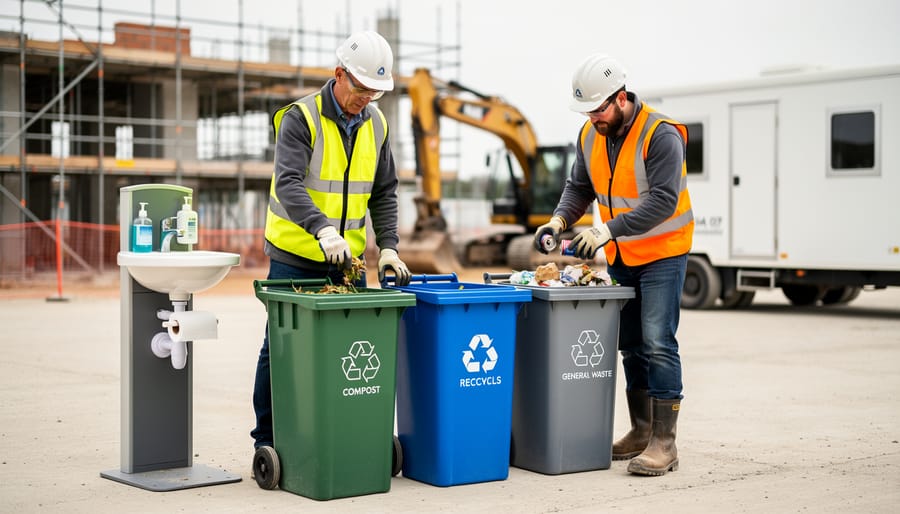
Designate separate waste streams on your project site by setting up clearly labeled bins for organic waste, recyclables, and general rubbish within the first day of any renovation or construction job. Food waste from worker breaks and site canteens accounts for up to 15% of total project waste, creating unnecessary landfill costs and pest problems that can delay timelines by days or even weeks.
Calculate your waste volumes before starting work. A typical five-person crew generates approximately 2-3 kilograms of food waste daily during an average project. This means a month-long renovation produces roughly 60-90 kilograms of organic waste requiring proper containment and regular removal to maintain site hygiene and comply with local environmental regulations.
Implement a three-bin system at every break area: one for compostable food scraps, one for recyclable packaging, and one for non-recyclable waste. Position these stations near water sources and handwashing facilities to encourage proper use. According to feedback from professional contractors in our community, this simple setup reduces cross-contamination between waste streams by over 70% and cuts disposal costs significantly.
Schedule waste removal based on your project duration and crew size. Short-term projects under two weeks can typically manage with weekly pickups, while longer renovations require twice-weekly organic waste collection to prevent odors and pest attraction. Many hire platforms now offer waste management equipment alongside traditional tools, making it easier to source the right bins and compactors without purchasing equipment you’ll only need temporarily.
Why Food Waste Matters on Work Sites
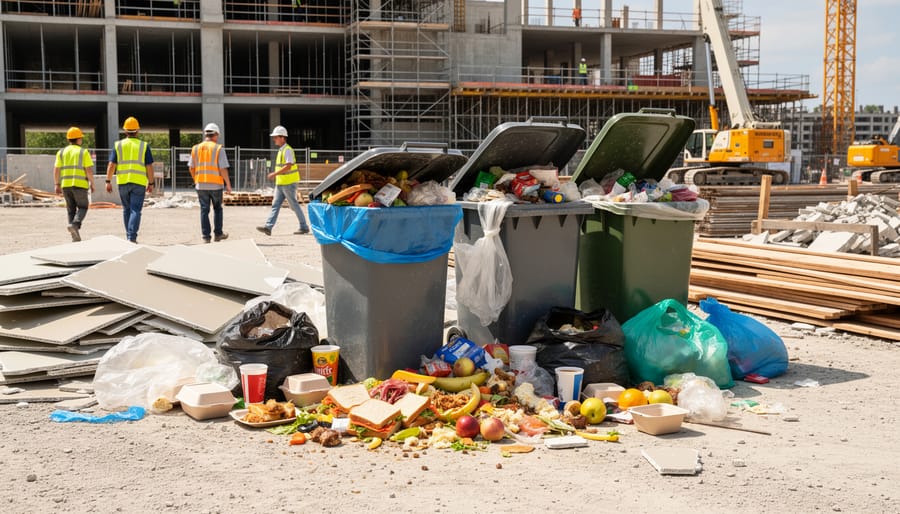
The Real Cost of Throwing Away Lunch
Food waste on work sites hits your bottom line harder than you might realize. Let’s break down the real costs that affect your project budget.
First, there’s the upfront expense of purchasing lunches and snacks for your crew. When half of that food ends up in the bin, you’re literally throwing money away. Industry data shows construction sites waste approximately 30-40% of catered meals, which translates to hundreds or thousands of pounds per project depending on crew size and duration.
Next come disposal fees. Commercial waste collection isn’t cheap, and food waste is particularly expensive because it requires separate handling. Many councils now charge premium rates for mixed waste containing food, with some contractors reporting disposal costs increasing by 20-30% when food waste isn’t properly separated.
Don’t overlook environmental compliance costs either. New regulations in many areas require businesses to document waste management practices. Failing to properly handle food waste can result in fines ranging from £300 to several thousand pounds for repeat offenders.
Finally, consider the hidden costs: bin overflow leading to pest problems, crew time spent managing overflowing skips, and potential damage to your professional reputation. Smart project managers now factor food waste prevention into their initial budget planning, recognizing that a small investment in proper waste management equipment and training saves significantly more down the line.
Skip Hire and Food Contamination Problems
When food waste ends up in general waste skips on project sites, it creates immediate problems that go beyond just unpleasant smells. Decomposing food scraps generate strong odors within 24-48 hours, particularly during warmer months, making work environments uncomfortable for your team and neighboring properties.
The bigger issue is pest attraction. Rats, flies, and other vermin are drawn to food waste, turning your skip into a breeding ground that can spread across the entire site. We’ve seen feedback from community members reporting rodent infestations that started from poorly managed site waste, leading to costly pest control interventions and project delays.
Liquid leachate from rotting food also contaminates other recyclable materials in mixed skips, meaning perfectly good timber, metal, or cardboard becomes unusable waste. This contamination increases your overall disposal volumes and skip hire costs, as contaminated loads often incur additional processing fees.
Food waste also accelerates the decomposition of other organic materials, creating unstable loads that pose safety risks during collection. Professional waste contractors have shared experiences of skips becoming hazardous due to mixed food and construction waste, requiring special handling procedures that delay your project timeline.
Essential Equipment for Food Waste Management
Composters and Digesters for On-Site Processing
For temporary work sites and short-term projects, portable composting units and digesters offer practical food waste solutions without permanent infrastructure. These systems break down organic waste on-site, reducing skip hire costs and waste removal trips.
Compact tumblers are ideal for smaller crews, processing 5-15kg daily. These drum-style units speed up decomposition through regular rotation and typically produce usable compost within 4-6 weeks. According to user reviews, they’re straightforward to operate and require minimal maintenance, making them suitable for sites without dedicated waste management staff.
For larger projects with canteen facilities, consider hiring hot composting bins (50-100 litre capacity) or electric digesters. Hot bins maintain higher temperatures that accelerate breakdown and handle cooked foods, meat, and dairy that traditional composters can’t process. Electric digesters work even faster, converting waste to compost within 24 hours, though they require power access.
Anaerobic digesters suit sites generating substantial daily food waste (20kg plus). These sealed units produce both compost and biogas, potentially offsetting site energy costs. However, they need careful monitoring and aren’t recommended for DIY setups without proper guidance.
When hiring, match capacity to your team size. As a rule, allow 0.5kg daily capacity per person eating on-site. Many hire companies offer delivery, setup demonstrations, and collection services, with weekly rates typically more cost-effective than purchasing for short-term projects.
Specialized Waste Bins and Separation Systems
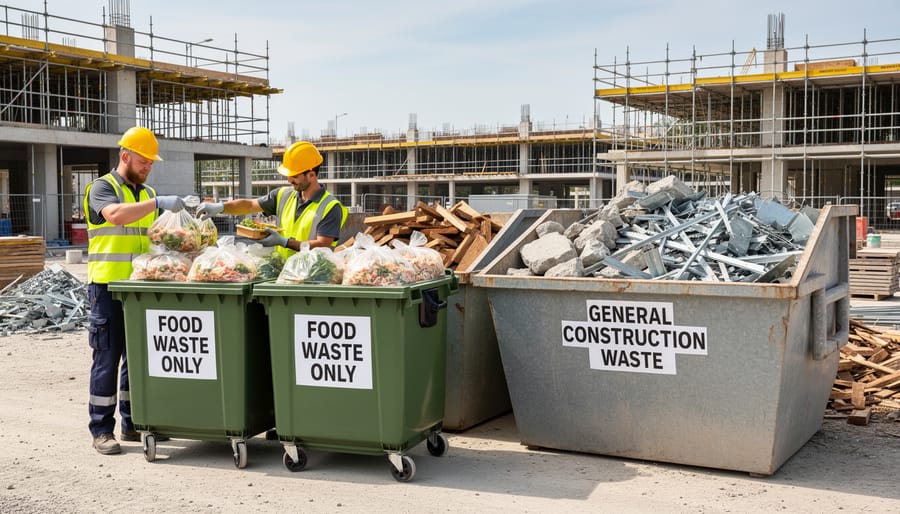
Implementing the right separation systems transforms food waste management from chaotic to streamlined. Color-coded bins are your first line of defense against contamination. Most successful project sites use a three-bin system: green for compostable food waste, brown for non-recyclable materials, and blue for recyclables. This visual approach requires zero training—crews instantly know where items belong.
Sealed containers are essential for managing odors and preventing pest issues, particularly on multi-day projects. Look for bins with tight-fitting lids and rubber gaskets that create airtight seals. Many DIY enthusiasts and professional teams report that 240-liter wheeled bins with foot pedals work best, keeping hands free while maintaining hygiene standards.
Modular separation systems offer flexibility as project needs change. Stackable units let you expand capacity during peak waste periods, then scale down for smaller jobs. Some teams use labeled bag holders that clip onto existing site barriers, maximizing space efficiency.
User feedback consistently highlights one critical point: position bins near food consumption areas. Placement matters more than fancy features. When bins sit within five meters of break areas, contamination rates drop by up to 60% because crews actually use them properly rather than defaulting to general waste.
Refrigeration Units for Temporary Sites
On extended construction or renovation projects, food waste becomes a significant issue when workers bring packed lunches or when catering is provided for larger crews. Without proper cooling, perishable items spoil quickly, especially during warmer months, leading to unnecessary waste and potential health risks.
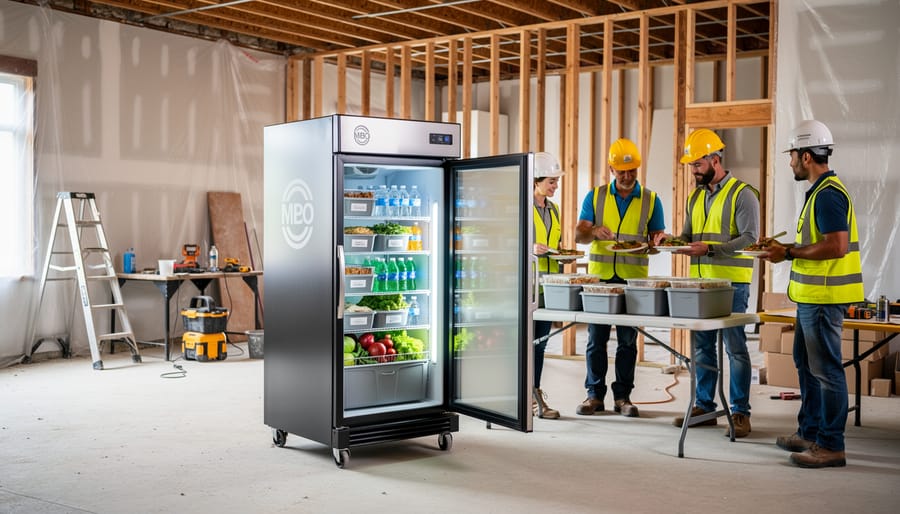
Hiring portable refrigeration units provides a practical solution for temporary work sites. These mobile cooling units maintain consistent temperatures, keeping food fresh throughout the workday and reducing spoilage-related waste. They’re particularly valuable for multi-week projects where establishing proper food storage can significantly impact both worker satisfaction and environmental responsibility.
When selecting a cooling unit for hire, consider your crew size and available power supply. Most portable fridges run on standard power outlets, though larger units may require generator support. Site supervisors report that providing adequate refrigeration reduces lunch waste by up to 60 percent, as workers feel confident bringing perishable items knowing they’ll stay fresh.
For optimal results, position the unit in a shaded area away from direct sun exposure and ensure proper ventilation around the cooling vents. Regular temperature checks help maintain food safety standards while maximizing the unit’s efficiency throughout your project timeline.
Step-by-Step: Setting Up a Food Waste System on Your Project
Phase 1: Assessment and Planning
Start by calculating your project’s food waste volume to determine the right equipment and waste management services you’ll need. A simple formula works well: multiply your crew size by the project duration in days, then by 0.5kg per person daily. For example, a 10-person crew working 20 days generates approximately 100kg of food waste.
Next, assess your storage requirements. You’ll need secure, covered space to prevent pest issues and weather exposure. Consider access points for collection vehicles and distance from work areas. Most sites need at least 2-3 square meters for bins and maneuverability.
When choosing equipment, match bin capacity to your calculations. For projects under 50kg weekly, standard 120-liter bins suffice. Larger projects require 240-liter wheeled bins or skip bins. Look for sealed lids and easy-to-clean surfaces. Community reviews consistently highlight that investing in quality bins upfront prevents odor problems and reduces collection frequency, saving time and money throughout your project.
Phase 2: Equipment Setup and Crew Training
Once you’ve completed Phase 1, it’s time to get your equipment in place and ensure everyone on site knows how to use it properly.
Start by positioning your bins strategically. Place food waste containers near common eating areas like break rooms, lunch tables, or portable cabins. Keep them away from work zones where contamination from building materials is likely. If you’re managing a larger site, consider multiple collection points to make participation easier. Position bins on level ground and ensure they’re accessible for collection vehicles.
Next, establish a realistic collection schedule. For small projects with 5-10 workers, twice-weekly pickup usually suffices. Larger sites generating significant organic waste may need daily collection, especially during warm weather when food breaks down quickly. Coordinate with your waste management provider to align schedules with their routes and avoid unnecessary trips.
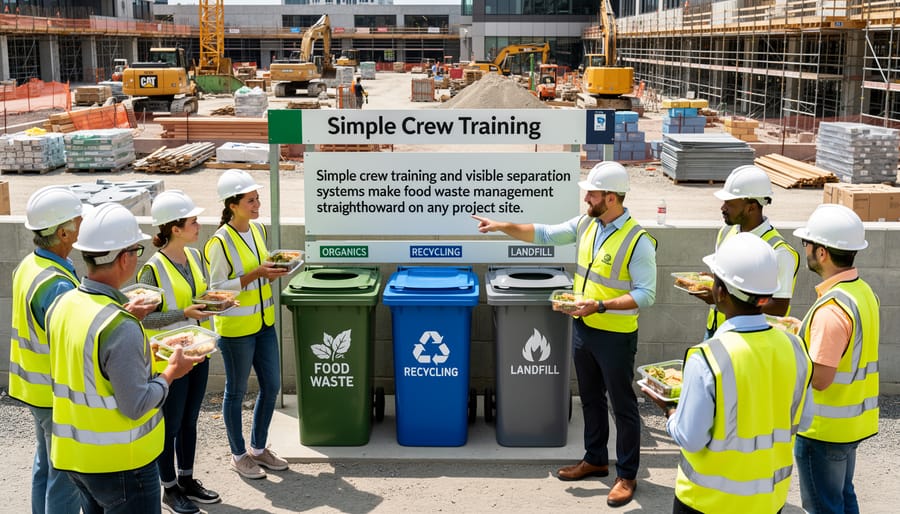
Clear signage makes all the difference in preventing contamination. Create simple visual guides showing what belongs in each bin. For food waste, include examples like fruit peels, sandwich crusts, coffee grounds, and tea bags. Equally important is showing what doesn’t belong: plastic wrappers, aluminum foil, or disposable utensils. Use images rather than text-heavy descriptions since not all crew members may share the same first language.
Hold a brief 10-minute toolbox talk during your morning meeting. Explain why separation matters, demonstrate the process, and address questions. Appoint a site champion who can answer queries and monitor bin usage. This person doesn’t need special training, just enthusiasm and willingness to help colleagues get it right.
Phase 3: Ongoing Management and Adjustment
Once your food waste management system is running, regular monitoring keeps it effective throughout your project. Check collection bins daily, especially during peak work periods. Look for signs of overflow, contamination with non-food items, or odor issues that signal collection frequency needs adjustment.
Track your waste volumes weekly using a simple logbook or mobile app. Note patterns like which days generate more waste or which crew areas need additional bins. This data helps you right-size your equipment needs and avoid paying for unused capacity.
Common troubleshooting starts with contamination problems. If workers mix general rubbish with food waste, add clearer signage or brief your team again on what goes where. Pest issues typically mean bins aren’t being emptied frequently enough or lids aren’t sealing properly. Address this immediately by increasing collection frequency or switching to sealed containers.
Temperature changes affect decomposition rates and odor control. During warmer months, you may need more frequent pickups or additional odor-control measures like biodegradable bin liners with activated carbon.
Don’t hesitate to adjust your approach based on real-world results. If your initial estimates were off, scale up or down accordingly. Many waste management providers offer flexible contracts that allow modifications as your project evolves. Learning from each phase prepares you for more accurate planning on future projects.
Food Waste Projects That Actually Work
Commercial Renovation: The Restaurant Strip-Out Solution
When Manchester-based contractor James Riley tackled a three-restaurant strip-out project in 2023, his team faced an unexpected challenge: tonnes of decomposing food waste mixed with construction debris. The commercial kitchens had closed suddenly, leaving walk-in freezers full of spoiled ingredients that complicated the demolition timeline.
Riley’s solution focused on systematic separation from day one. His crew used heavy-duty wheelie bins with sealed lids exclusively for organic waste, positioning them at each extraction point before any demolition equipment entered the space. This prevented cross-contamination with recyclable metals from kitchen equipment and reduced overall disposal costs by 40 percent.
The team partnered with BioCycle Commercial Services, a specialist food waste collector offering daily pickups during the two-week demolition period. For smaller strip-outs, Riley recommends standard 240-litre bins with lockable lids, but this project required 1100-litre commercial bins due to volume.
Key equipment that made the difference included heavy-duty rubber gloves rated for biohazard handling, industrial face masks, and pressure washers for sanitizing areas post-removal. Riley’s team also kept separate hand tools designated only for food waste areas to maintain hygiene standards.
His advice to fellow contractors: always inspect commercial kitchens before quoting and factor in specialist waste removal costs upfront rather than mixing everything into standard skip hire.
Long-Term Residential Projects: The Site Kitchen Approach
When the Morrison family embarked on a six-month home extension, their project manager implemented a temporary site kitchen that transformed their waste management approach. The setup was straightforward: a weatherproof shelter housing a small refrigerator, microwave, and dedicated composting station replaced the usual reliance on takeaway containers and disposable packaging.
The crew of eight workers previously generated approximately three bags of mixed waste daily, primarily food packaging and leftover meals. By introducing reusable containers, bulk snack purchases, and on-site meal preparation, they reduced this to just one bag every two days. The composting bin handled all organic waste, including tea bags, fruit peels, and sandwich crusts.
The financial impact proved significant. Skip hire costs dropped by 40 percent over the project duration, saving nearly £600. The compost produced enriched the garden soil once the extension completed, eliminating the need for purchased topsoil.
Community feedback on similar approaches has been overwhelmingly positive. One tradesperson noted that crews appreciated the healthier meal options and the sense of contributing to environmental goals. The key success factor was designating one team member as the daily kitchen coordinator, ensuring the system remained organized and hygienic throughout the lengthy renovation period.
What Tradespeople Are Saying: User Experiences
Real tradespeople who’ve tackled food waste on their sites share valuable insights. Mark, a renovation contractor from Manchester, reports: “We started using separate bins for food scraps during our kitchen refits. The team actually embraced it once we explained the landfill fees we’d save.” His tip: place clearly labeled bins near break areas where workers naturally congregate.
Sarah, a DIY homeowner managing a home extension, found success with compostable waste bags. “They made sorting food waste less intimidating for everyone helping with the project,” she notes, adding that weekly collections prevented odor issues.
Several contractors recommend appointing a “waste champion” on larger sites. James, who manages commercial renovations, explains: “One person checking bins daily keeps contamination low and everyone accountable.”
Common feedback emphasizes simplicity. Overcomplicating systems leads to poor compliance. Most successful implementers suggest starting small with one or two designated food waste containers, then expanding as the team adapts to new habits.
Common Mistakes (And How to Avoid Them)
Underestimating Collection Frequency
Once-weekly pickups might work for residential areas, but active project sites generate food waste at much faster rates. A crew of ten workers eating lunch daily produces roughly 15-20kg of organic waste weekly, which starts decomposing within 48 hours in warm conditions. This leads to odours, pest attraction, and health code violations before collection day arrives.
To calculate your ideal schedule, track waste volumes for one week. Count team members, multiply by average waste per person (approximately 0.3kg daily for food scraps), then factor in your bin capacity. If you’re filling an 80-litre bin beyond 75 percent capacity before collection day, you need more frequent service. Most contractors on medium-sized sites find twice-weekly collections strike the right balance between cost and hygiene.
Community feedback confirms this approach works. Several users report switching from weekly to bi-weekly collections eliminated their pest problems entirely while adding minimal expense to project budgets.
Mixing Waste Streams
One of the biggest mistakes on job sites is mixing food waste with construction debris like drywall, wood scraps, or packaging materials. When food waste contaminates other materials, it creates health hazards, attracts pests, and makes recycling impossible. Many waste management companies will reject entire loads if they spot food contamination, costing you time and money on reprocessing fees.
The fix is straightforward: designate separate collection points. Place clearly labeled bins in break areas specifically for food scraps, coffee grounds, and lunch leftovers. Keep these away from your main construction waste containers. Use sealed, lidded bins to prevent odors and pest problems. Empty food waste bins daily, especially during warm weather when decomposition accelerates quickly.
For larger projects, consider a dedicated food waste skip positioned near temporary site facilities. Communicate the separation system during your site induction so everyone on the crew understands which materials go where. Simple visual guides posted near bins help maintain compliance throughout the project duration.
Ignoring Local Regulations
Before launching any food waste management project on your work site, check your local regulations. Commercial food waste disposal often requires specific permits, separation methods, and approved hauling services that differ significantly from residential requirements. In many areas, businesses generating over a certain threshold of organic waste must participate in composting or recycling programs.
Start by contacting your local council’s environmental health department or waste management authority. They’ll outline mandatory requirements for your specific location and project size. Many regions now have online portals with downloadable guides for commercial food waste compliance. Your waste contractor should also provide current regulatory information, but verify independently to avoid costly fines.
Keep documentation of your disposal methods, including hauler licenses and waste diversion records. These prove compliance during inspections and support any required environmental reporting. When planning site facilities, factor in space for compliant separation bins and collection schedules that meet local pickup frequency requirements. Understanding these rules upfront prevents project delays and ensures your food waste strategy stays both effective and legal.
Cost-Benefit Breakdown: Is It Worth It?
Let’s break down the real costs and benefits you’ll encounter when implementing food waste management on your work site.
Initial Investment
Your upfront costs typically include dedicated waste bins (around $50-150 per bin depending on size), clear signage ($20-40), and potentially composting equipment if you’re managing waste on-site. For smaller projects, you might spend $100-300 total to get started. Larger sites with crew facilities could see initial costs of $500-1,000. Don’t forget staff training time, which might take 30 minutes per person to explain the new system.
Ongoing Costs
Regular waste collection for organic materials usually costs 20-30% more than standard trash pickup initially. However, as you separate recyclables and compostables, your general waste volume drops significantly. Many contractors report their overall waste management costs decrease by 15-25% within three months of implementation.
The Savings Side
Here’s where it gets interesting. Reducing food waste means buying less excess food for your crew, saving 10-20% on catering costs. Some projects report savings of $200-500 monthly on sites with 10+ workers. If you compost on-site, that material can be used for landscaping restoration, cutting your soil amendment costs.
You’ll also avoid potential fines in areas with mandatory waste separation laws, which can run $250-1,000 per violation.
The Verdict
For most projects lasting more than two months, the system pays for itself through reduced waste fees and food purchasing costs. Smaller weekend projects might not see financial benefits, but they build good habits. Community feedback consistently shows that teams appreciate structured waste management, leading to better overall site organization and fewer disposal headaches.
Managing food waste on your project site doesn’t have to be overwhelming. The key is to start small and build momentum. Whether you’re running a commercial renovation with on-site workers or tackling a lengthy home improvement project, implementing even one or two strategies from this guide can make a measurable difference in reducing waste, cutting costs, and minimizing your environmental footprint.
Begin by assessing your current situation. How much food waste does your project generate daily or weekly? Once you understand the scale, choose the approach that fits your timeline and resources. Perhaps it’s as simple as setting up designated compost bins for lunch scraps, or exploring equipment hire options for larger-scale waste processing solutions. The important thing is taking that first step rather than waiting for the perfect comprehensive plan.
We believe the best solutions come from real-world experience and community knowledge. That’s why we want to hear from you. What food waste management strategies have worked on your projects? Have you discovered innovative uses for equipment or creative workarounds that others might benefit from? Whether you’ve successfully implemented a full composting system or simply found a better way to organize break room waste, your insights help fellow DIY enthusiasts and tradespeople tackle similar challenges.
Share your experiences, tips, and honest reviews of the equipment you’ve used. Together, we can build a resource that helps everyone work smarter, waste less, and create more sustainable project sites.
Related Posts


Post a Comment