


Transform your home workspace with L-shaped office furniture that maximizes corner spaces and creates distinct zones for focused work and collaboration. Modern L-shaped desks deliver up to 40% more usable surface area than traditional rectangular designs, while maintaining an open, flowing aesthetic that works in rooms as small as 100 square feet. Whether you choose to build your own home office setup or opt for pre-made solutions, these versatile configurations offer built-in storage, ergonomic keyboard trays, and cable management systems that keep technology organized and accessible. The L-shaped layout naturally creates separate zones for computer work, paperwork, and client meetings – perfect for home-based professionals who need a polished, professional workspace that transitions smoothly between tasks.
Key benefits include:
– Maximizes corner space utilization
– Creates distinct work zones
– Provides ample storage options
– Supports proper ergonomics
– Enables clean cable management
– Maintains professional aesthetics
Why L-Shaped Office Furniture Makes Sense for Your Home
Space Optimization Benefits
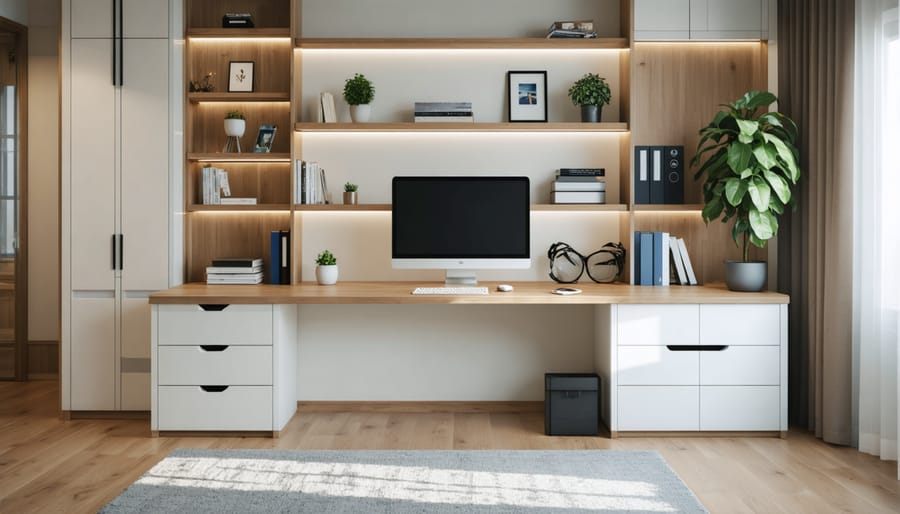
L-shaped office furniture transforms underutilized corner spaces into productive work areas, effectively doubling your available surface area without consuming excessive floor space. By following the natural contours of your room’s walls, these configurations create distinct zones for different tasks while maintaining an open feel to your home office.
The wraparound design offers a primary work surface for your computer setup and a secondary wing perfect for paperwork, printing stations, or reference materials. This natural division helps establish an efficient workflow, allowing you to pivot between tasks without constantly rearranging your workspace. The corner junction provides an ideal spot for dual-monitor setups or central equipment that needs to be easily accessible from both sides.
Storage solutions in L-shaped designs often include built-in cabinets, drawers, and shelving units that maximize vertical space. This comprehensive storage approach keeps essential items within arm’s reach while maintaining a clutter-free environment. The configuration also creates a natural boundary between work and living spaces, helping maintain work-life balance in home settings.
Many L-shaped designs feature modular components, allowing you to adjust and customize the layout as your needs evolve. This adaptability ensures your investment remains practical and functional for years to come.
Ergonomic Advantages
L-shaped office furniture offers significant ergonomic benefits that can enhance both comfort and productivity in your home workspace. The wrap-around design allows you to maintain proper posture while keeping essential items within arm’s reach, reducing the strain from repetitive reaching and twisting movements.
The key ergonomic advantage lies in the furniture’s 90-degree configuration, which creates distinct work zones that can be customized to your specific needs. Position your primary monitor at eye level on one wing, keeping it at arm’s length to prevent eye strain. The secondary wing provides space for reference materials or additional screens without requiring awkward neck movements.
When setting up your L-shaped workspace, ensure your keyboard and mouse are at elbow height, with your forearms parallel to the floor. The corner area serves as an ideal spot for your main work surface, as it allows you to pivot between tasks smoothly while maintaining proper spine alignment.
Many L-shaped desks also accommodate ergonomic accessories like keyboard trays and monitor stands, further enhancing their health benefits. Remember to leave enough legroom underneath to allow for proper circulation and occasional stretching.
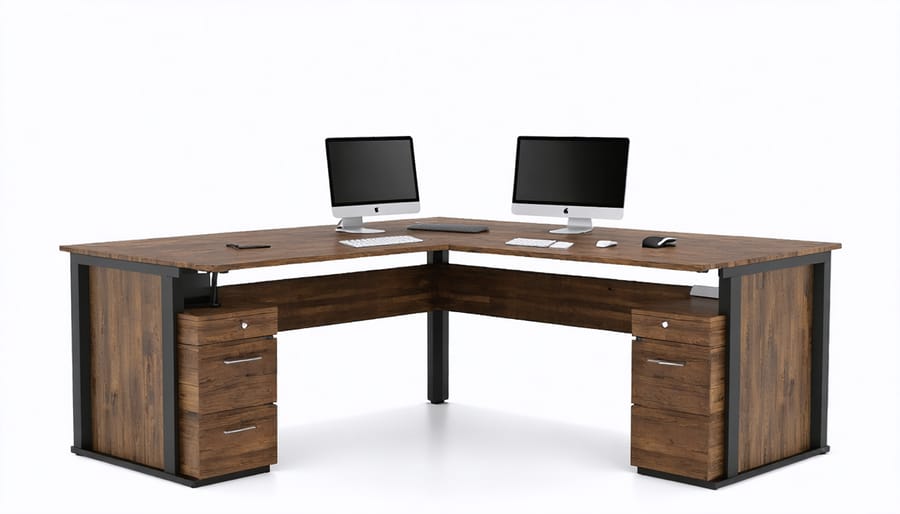
Custom L-Shaped Furniture Design Elements
Materials and Finishes
When selecting materials for your L-shaped home office furniture, it’s essential to understand the various options and their characteristics. For detailed guidance on furniture making materials and tools, consider exploring our comprehensive guide.
Solid wood remains a popular choice, offering durability and timeless appeal. Hardwoods like oak, maple, and walnut provide excellent longevity but come at a higher price point. Pine and birch offer more budget-friendly alternatives while still maintaining an attractive appearance.
Engineered wood products, including MDF and particleboard with laminate finishes, present cost-effective solutions with consistent appearance. These materials resist warping and are ideal for DIY projects, though they may not withstand moisture as well as solid wood.
Metal components, particularly for legs and support structures, add modern appeal and stability. Aluminum and steel frames offer excellent durability and load-bearing capacity, while allowing for sleek, contemporary designs.
For surface finishes, consider:
– Matte laminates: Reduce glare from office lighting
– Wood veneer: Provides natural wood appearance at lower cost
– Powder-coated metal: Offers durability and color options
– Glass inserts: Add sophistication and easy-clean surfaces
Choose materials that balance your budget, maintenance preferences, and aesthetic goals while ensuring they can withstand daily office use.
Storage Solutions
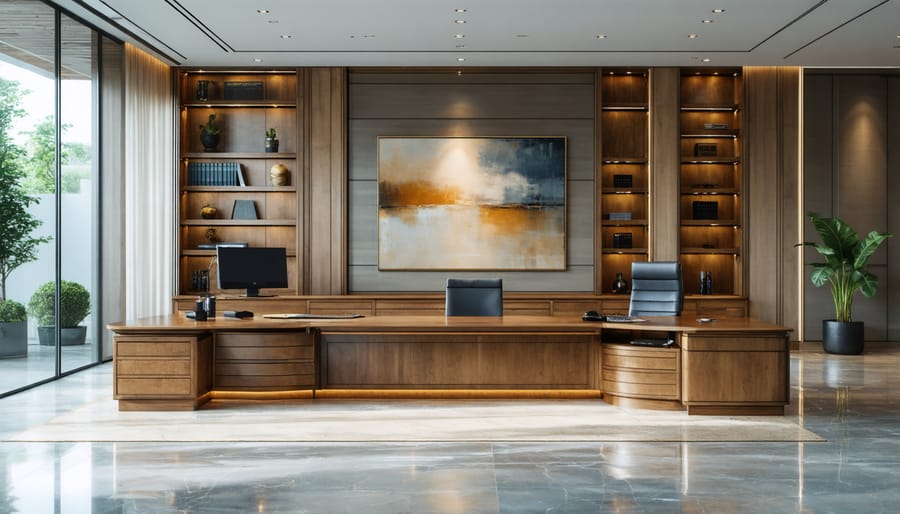
L-shaped office furniture excels in maximizing storage space through clever built-in solutions that keep your workspace organized and clutter-free. Most L-shaped desks come with multiple storage options, including file drawers that accommodate both letter and legal-size documents, adjustable shelving for books and binders, and dedicated compartments for office supplies.
Look for models featuring overhead hutches that provide vertical storage without consuming valuable floor space. These typically include combination arrangements of open shelving, closed cabinets with doors, and cubbies for frequently accessed items. Cable management systems integrated into the desk structure help keep technology-related cords tidy and out of sight.
Many contemporary L-shaped designs incorporate modular storage components that can be customized to your specific needs. Consider options with built-in keyboard trays, printer stands, and CPU holders to maximize desk surface area. Pull-out writing surfaces offer additional workspace when needed while tucking away when not in use.
For optimal organization, choose furniture with a mix of storage types: deep drawers for larger items, shallow drawers for supplies, and open shelving for display and quick access. Some models feature built-in USB hubs and power outlets, keeping your devices charged while maintaining a clean aesthetic. Remember to measure your storage needs before purchasing to ensure the configuration matches your work requirements.
Desktop Configuration Options
L-shaped office furniture offers exceptional flexibility in desktop configuration, allowing you to customize your workspace to match your specific needs. The primary desk surface typically ranges from 48 to 72 inches on the main side, with a return measuring 36 to 48 inches, creating an efficient corner workspace.
For right-handed users, positioning the main desk surface on the left with the return on the right often works best, allowing smooth transitions between tasks. Left-handed users might prefer the opposite arrangement. Consider placing your computer monitor at the corner junction, creating a natural focal point while maximizing the available desk surface for other tasks.
The L-configuration naturally creates distinct work zones. The main surface can serve as your primary workstation for computer tasks, while the return provides space for paperwork, reference materials, or creative projects. Some users dedicate one surface to digital work and the other to analog activities, maintaining clear boundaries between different types of tasks.
Storage solutions can be integrated on either side, with file cabinets and drawers positioned under the desktop. overhead storage cabinets or shelving units can be mounted on the wall above either surface, maximizing vertical space while keeping frequently used items within easy reach.
Consider leaving the corner space open underneath to accommodate a CPU tower or to create legroom for comfortable movement between the two desk surfaces. This arrangement promotes better ergonomics and workspace flow.
Planning Your Custom L-Shaped Office
Measuring Your Space
Before purchasing your L-shaped office furniture, accurate measurements of your space are crucial for a perfect fit. Start by clearing the intended area completely to ensure precise measurements. Using a tape measure, determine the total length of each wall where the desk will be placed, measuring from corner to corner.
Remember to account for baseboards, windows, doors, and any other architectural features that might affect furniture placement. For optimal workspace, allow at least 3 feet of clearance for your office chair to move freely, and ensure doorways have at least 30 inches of clear space for comfortable access.
Sketch your room layout on graph paper, with each square representing one foot. Mark the locations of electrical outlets, phone jacks, and ethernet ports, as these will influence your desk placement and cable management solutions. Also note the position of windows, as natural light can affect screen visibility and overall comfort.
Consider the dimensions of additional furniture pieces you’ll need, such as filing cabinets or bookcases. A typical L-shaped desk requires a minimum room dimension of 6 feet by 6 feet, but larger spaces will provide more comfort and flexibility. Take multiple measurements to ensure accuracy, and photograph your space from different angles for reference when shopping or planning your layout.
Pro tip: Create paper templates of your desired furniture dimensions and place them on the floor to visualize the layout before making your final decision.
Design Considerations
When planning your L-shaped home office furniture, several key factors will determine both functionality and comfort. First, measure your available space carefully, including windows, doors, and power outlets. Allow at least 1.5 meters of clearance for chair movement and ensure the desk depth accommodates your computer setup and workspace needs.
Consider the primary uses of your office space. If you frequently collaborate with others, position the return section (shorter part of the L) facing the room’s entrance. For solo work, placing it against a wall can maximize privacy and help you update your interior space while maintaining efficiency.
Storage requirements play a crucial role in design. Incorporate built-in cabinets, drawers, or floating shelves that complement the L-shape without compromising leg room. Cable management solutions should be planned early, with dedicated channels or grommets for power cords and data cables.
Material selection impacts both durability and aesthetics. Solid wood offers longevity but requires more maintenance, while laminate provides cost-effective durability. Consider using contrasting materials or colors between the desk surface and storage components to create visual interest.
Ergonomics should never be compromised. Ensure your design includes appropriate desk height (typically 73-76cm), considers monitor placement, and allows for proper keyboard positioning. Including adjustable elements can help future-proof your furniture for changing needs.
Working with Custom Furniture Makers
Working with a custom furniture maker can transform your vision for an L-shaped office into reality. Start by creating a detailed sketch or digital mockup of your desired design, including specific measurements and any special features you want. Take photos of your space and note potential obstacles like power outlets or windows.
When approaching craftsmen, be prepared with a clear budget range and timeline expectations. Many custom makers require a deposit and several weeks or months for completion. Request samples of their previous work, particularly pieces similar to what you’re envisioning. Ask about their preferred materials and construction methods – experienced makers will explain the benefits of different woods, finishes, and joinery techniques.
Communication is crucial throughout the process. Discuss storage needs, ergonomic requirements, and how you plan to use the space. Be specific about details like drawer depths, cable management solutions, and preferred hardware finishes. Request regular progress updates and photos during construction.
Consider asking for a detailed contract that outlines materials, timeline, payment schedule, and delivery terms. Don’t forget to discuss finish options and maintenance requirements. A good craftsman will provide care instructions to help your custom piece last for years.
Remember to verify their workshop insurance and ask about warranties or guarantees on their work. Getting references from previous clients can provide valuable insights into their reliability and craftsmanship quality.
Maintenance and Care
Regular maintenance of your L-shaped office furniture ensures its longevity and keeps your workspace looking professional. To maintain wooden furniture, dust weekly with a soft microfiber cloth, moving from top to bottom to prevent debris from settling on cleaned surfaces. For laminate surfaces, use a mild cleaning solution of water and gentle dish soap, avoiding excess moisture that could seep into joints.
Pay special attention to corner joints and underneath surfaces where dust tends to accumulate. Every three months, check and tighten any loose screws or hardware, especially in areas that bear weight like keyboard trays and drawer slides. Apply furniture polish sparingly to wooden surfaces twice a year to protect the finish and prevent drying.
For leather chair components, clean with appropriate leather cleaner and condition every six months. Keep your L-shaped desk away from direct sunlight to prevent fading and warping, and use coasters or desk mats to protect surfaces from drink rings and scratches.
Address spills immediately to prevent staining or water damage. Consider using felt pads under equipment to prevent scratches, and regularly adjust your chair’s position to distribute wear evenly across the carpet or floor protector. With proper care, your L-shaped office furniture can maintain its appearance and functionality for many years.
Creating the perfect L-shaped home office setup doesn’t have to be overwhelming. By focusing on your specific space requirements, work habits, and storage needs, you can design a functional and attractive workspace that serves you well for years to come. Whether you choose a pre-made solution or opt for a custom build, remember to prioritize ergonomics, material quality, and proper measurements. Take time to plan your layout, consider future expansion possibilities, and don’t forget to incorporate personal touches that make your office feel inspiring. With the right L-shaped furniture configuration, you’ll maximize your corner space while creating an efficient work environment that enhances both productivity and comfort. Ready to transform your home office? Start by measuring your space and exploring the options we’ve discussed to find the perfect fit for your needs.
Related Posts

Post a Comment