

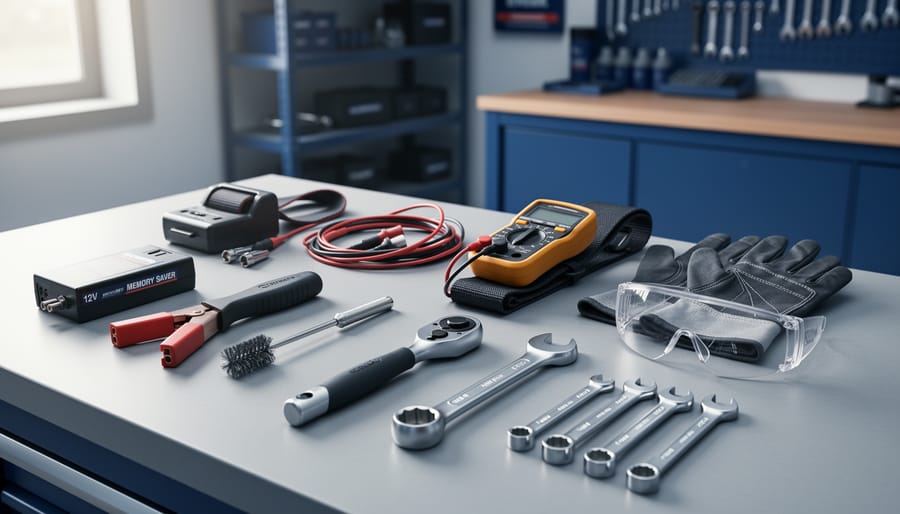
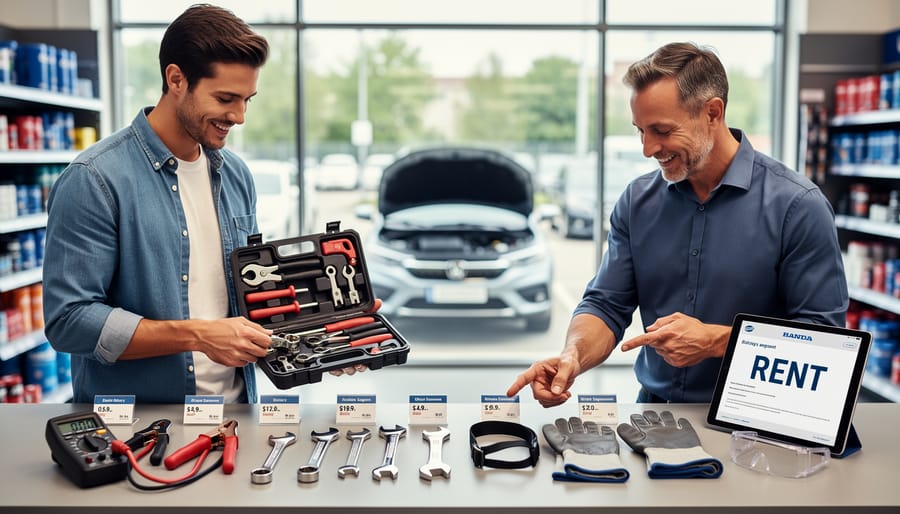
Replacing your car battery doesn’t require buying expensive specialized tools you’ll use once every five years. Most auto parts stores and tool hire centres rent battery terminal cleaners, memory savers, and battery carrying handles for a fraction of the purchase price—typically $10-25 per day compared to $50-200 to buy outright.
Understand what tools you actually need before visiting a hire shop. A memory saver (also called a battery backup device) plugs into your cigarette lighter and preserves your radio presets and computer settings during replacement. Battery terminal pullers safely remove corroded terminals without damaging cables, while post cleaners restore proper electrical connection on your new battery. Most DIY car maintenance tasks require only basic hand tools you already own, but these specialized items make battery replacement significantly safer and easier.
Check your local tool library or hire centre’s online inventory before your battery fails completely. Many locations now offer same-day booking, and some provide bundle packages specifically for battery replacement that include all necessary equipment plus safety gear. Reading customer reviews helps identify which hire shops maintain their equipment properly and offer helpful guidance for first-time users.
Plan your battery replacement during business hours when you can return tools the same day to minimize hire costs and access staff assistance if needed.
What You Actually Need: Essential Car Battery Replacement Tools
Basic Tools vs. Specialized Equipment
Most car battery replacements require just basic hand tools you probably already have: a socket wrench set with 10mm and 13mm sockets, an adjustable spanner, and safety gloves. These handle the straightforward task of disconnecting cables and removing hold-down brackets on standard batteries.
However, specialized equipment becomes necessary in specific situations. Battery terminal cleaners efficiently remove corrosion that basic wire brushes can’t tackle. Battery load testers help diagnose whether you actually need a replacement or if the battery just needs charging. Memory savers preserve your car’s radio presets and computer settings during replacement, particularly valuable for modern vehicles with complex electronics.
For professional work or fleet maintenance, battery charging stations and portable jump starters are worth hiring rather than purchasing. These expensive items see occasional use but prove essential when needed. Understanding this distinction helps you make smart decisions about tool rentals for DIY projects.
According to community feedback, most DIYers successfully replace batteries using basic tools, hiring specialized equipment only when dealing with corroded terminals or maintaining electronic settings in luxury vehicles.
The Memory Saver: Your Car’s Settings Protection
When you disconnect your car battery for replacement, you risk losing important vehicle settings—radio presets, clock settings, seat positions, and even computer calibration data. In modern vehicles, this can trigger warning lights or require expensive dealer recalibration. A memory saver is a simple device that plugs into your vehicle’s cigarette lighter or OB-II port, providing temporary power while you swap batteries. It maintains the electrical current needed to preserve all your vehicle’s stored information.
This small but essential tool prevents the frustration of reprogramming everything after a battery change. Whether you visit a battery shop in Liverpool or tackle the job yourself, having a memory saver can save hours of reconfiguration work.
Here’s why hiring makes perfect sense: you’ll likely only replace your battery every three to five years, making purchase impractical. Memory savers typically cost between fifty and two hundred dollars to buy, but hiring costs just a fraction of that price. Since the tool plugs in during the brief battery swap, you’ll only need it for an hour or two. Why purchase something that sits unused for years when you can hire it affordably for each battery replacement?
The Real Cost Comparison: Hiring vs. Buying
Breaking Down Typical Hire Rates
Understanding hire rates helps you budget effectively for your battery replacement project. Most national tool hire chains charge between £8-£15 per day for basic battery terminal cleaners and memory savers. A battery terminal puller typically costs around £5-£8 daily, while battery carrying straps are often the most affordable at £3-£6 per day.
For comprehensive battery replacement kits that include multiple tools, expect to pay £15-£25 daily. Weekly rates usually offer better value, averaging £35-£60 for complete kits. Independent hire shops may charge slightly less, with daily rates starting from £6 for individual items.
Weekend specials are worth considering, with many providers offering Friday-to-Monday packages at one-and-a-half times the daily rate rather than charging for three full days. Some chains also include a deposit requirement, typically £20-£50, refundable upon tool return in good condition. Always ask about package deals if you need several items, as bundling can reduce your overall costs by 15-20 percent.
When Buying Makes More Sense
If you’re a professional mechanic or frequently work on multiple vehicles each month, purchasing your own car battery replacement tools makes financial sense. A quality battery terminal cleaner costs around £15-25, while a battery carry strap runs £10-20. When you calculate hiring costs of £5-15 per day across multiple jobs, you’ll typically break even after just three to five uses.
Professional tradespeople should consider buying when they’re servicing batteries more than once monthly. Mobile mechanics particularly benefit from owning their toolkit, as it eliminates the inconvenience of coordinating hire shop opening hours and ensures tools are always available for emergency callouts. Similarly, fleet managers maintaining multiple company vehicles will find ownership more practical than repeated hiring.
DIY enthusiasts who maintain several family vehicles or help friends and neighbors might also find purchase worthwhile. However, remember that specialized diagnostic equipment and battery testers represent a larger investment. Start with basic hand tools and consider hiring expensive electronic testing equipment until usage justifies purchase. Many tradespeople adopt a hybrid approach, owning essential everyday tools while hiring specialized equipment for occasional complex jobs. This strategy maximizes cost-effectiveness while maintaining professional capability.
Step-by-Step: Replacing Your Car Battery with Hired Tools
Safety First: Pre-Work Preparations
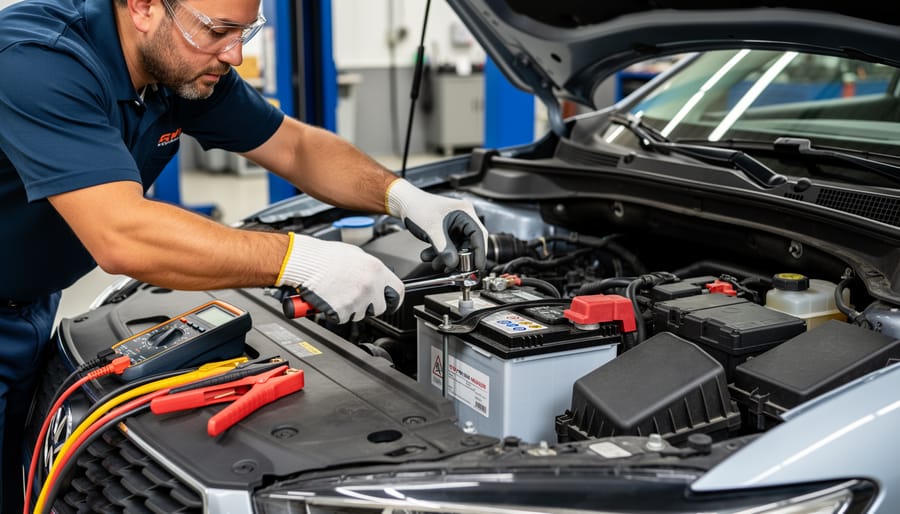
Before you begin your battery replacement project, taking proper safety precautions is essential to protect both yourself and your vehicle’s sensitive electronics. Start by parking on a level surface in a well-ventilated area, as batteries emit hydrogen gas which is highly flammable. Always wear safety glasses and protective gloves to guard against acid burns and sparks.
The most critical step is disconnecting the negative terminal first, followed by the positive terminal. This sequence prevents electrical shorts that could damage your vehicle’s computer systems or cause sparks. Never allow metal tools to bridge both terminals simultaneously. If your vehicle has advanced electronics or an alarm system, consider using a memory saver tool to prevent losing radio presets and diagnostic codes.
Clear your workspace of any flammable materials and keep a fire extinguisher nearby. Check the battery for cracks or leaks before handling, as battery acid is corrosive and dangerous. If you notice damage, do not attempt removal yourself. Remove jewelry and secure loose clothing to prevent accidental contact with electrical components. One community member shared how a forgotten ring caused a severe burn during their first attempt, emphasizing why these precautions matter. Taking five extra minutes for proper preparation prevents costly mistakes and injuries.
The Removal and Installation Process
Before starting, ensure you’ve hired the correct tools: socket wrenches or spanners (typically 10mm or 13mm), battery terminal cleaner, wire brush, and safety equipment including gloves and goggles. Position your vehicle on level ground with the engine off and keys removed.
Begin by identifying the negative terminal, marked with a minus sign and usually covered with a black cap. Using your hired socket wrench, turn the terminal bolt anticlockwise to loosen it. Never remove the positive terminal first, as this risks short-circuiting. Once loose, gently wiggle the terminal connector and lift it away from the battery post. Repeat this process for the positive terminal (marked with a plus sign and red cap).
If terminals are stuck due to corrosion, apply a small amount of penetrating oil and wait a few minutes. Avoid forcing them, which can damage the posts. Some hire shops provide terminal pullers specifically for stubborn connections.
Next, locate the battery hold-down clamp, usually at the base or top of the battery. Use the appropriate socket to remove the securing bolt, then lift out the old battery using both hands or a battery strap if provided. Batteries are heavy (typically 15-20kg), so lift with your legs, not your back.
Before installing the new battery, use the wire brush from your hire kit to clean both terminal connectors and battery tray. This ensures optimal electrical contact. Place the new battery in position, ensuring terminals are on the correct side, then reattach the hold-down clamp.
Connect the positive terminal first, followed by the negative. Tighten each firmly but don’t overtighten, which can crack the terminals. A quarter-turn past hand-tight is usually sufficient. Finally, apply petroleum jelly to terminals to prevent future corrosion.
Where to Hire Car Battery Replacement Tools Near You
Questions to Ask Before You Hire
Before committing to a rental, protect yourself by asking these essential questions. First, inspect the tool’s condition: “Can I see the equipment before hiring?” and “When was it last serviced?” Request documentation of recent maintenance checks. Clarify all costs upfront by asking about deposit requirements, daily versus weekly rates, and whether insurance or damage waiver fees apply. Understanding the return policy is crucial—ask “What’s the grace period for returns?” and “Are there penalties for late returns?” Don’t forget practical details like “What identification and payment methods do you require?” and “Is there a demonstration available?” Many hire shops offer brief tutorials, which can be invaluable if you’re unfamiliar with the specific tools. Finally, confirm “What happens if the tool malfunctions during my rental period?” A reputable hire company should have clear policies for equipment failure. Taking five minutes to ask these questions can save you from unexpected charges and ensure you’re getting reliable, well-maintained equipment for your battery replacement project.
Community Reviews Matter: Learning from Others
Customer reviews are your best resource for identifying reliable hire services. Start by checking overall ratings across multiple platforms—Google Reviews, Trustpilot, and social media pages all provide valuable insights. Look for patterns rather than isolated complaints; consistent praise for tool condition and customer service indicates a trustworthy provider.
Pay attention to specific red flags in reviews. Complaints about tools arriving dirty, uncharged, or with missing parts suggest poor maintenance standards. Multiple mentions of hidden fees or unclear pricing structures warrant caution. Similarly, reports of unresponsive customer support when tools malfunction can leave you stranded mid-project.
Focus on recent reviews from the past six months, as service quality can change over time. Look for feedback from users tackling similar projects—their experiences with battery replacement tools specifically will be most relevant to your needs. Reviews mentioning helpful staff guidance or clear usage instructions often indicate businesses that prioritize customer success over quick transactions.
Common Mistakes That Cost Time and Money
Even with the right tools available, battery replacement can go sideways quickly without proper technique. One community member shared how they stripped the terminal bolts by using an adjustable wrench instead of the correct socket size, turning a 20-minute job into a three-hour ordeal requiring new terminal clamps. The lesson? Always use properly fitted tools rather than making do with what’s in your garage.
Another common mistake involves forgetting to protect the vehicle’s electrical system. A DIY enthusiast reported resetting their car’s entire computer system, losing radio presets and requiring a dealer visit, simply because they disconnected the battery without using a memory saver tool. This small oversight cost them £85 at the dealership.
Cross-threading terminal bolts happens more often than you’d think, especially when working in tight engine bays. One tradesperson noted that rushing the job without proper lighting led to misaligned terminals that cracked the battery casing. Terminal cleaning is another frequently skipped step that causes immediate problems. Corroded connections create resistance, making even a new battery appear faulty.
Perhaps the costliest mistake is improper battery disposal. One homeowner admitted leaving their old battery in the garage for months, not realizing hire shops often handle recycling as part of the service. This delayed their deposit refund and created an environmental hazard. When hiring tools, always ask about the complete service package, including disposal options and proper technique guidance. Most rental shops provide brief tutorials that prevent these expensive errors.
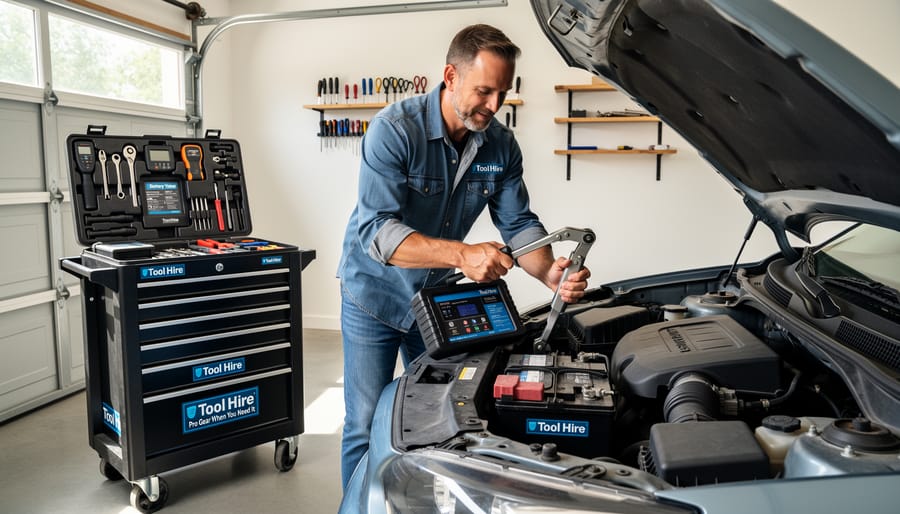
Hiring tools for car battery replacement offers a practical, cost-effective solution whether you’re tackling a one-time job or testing the waters before investing in your own equipment. By renting specialized tools like battery terminal cleaners, memory savers, and multimeters, you avoid the expense of purchasing items you’ll use infrequently while still achieving professional results.
Take a moment to assess your specific situation. Consider the complexity of your vehicle’s battery system, your comfort level with DIY maintenance, and how often you’ll need these tools. For most home mechanics, hiring makes excellent financial sense and provides access to quality equipment without the storage headaches.
We’d love to hear from you. Have you hired tools for battery replacement before? What was your experience? Perhaps you have questions about the process or need advice on choosing the right equipment for your vehicle. Share your thoughts in the comments below and help fellow DIYers make informed decisions. Your real-world insights strengthen our community and help others navigate their automotive projects with confidence.
Related Posts


Post a Comment