
Every year, building owners collectively waste billions on short-sighted purchasing decisions that prioritize low upfront costs over actual value. The cheapest HVAC system, lighting fixture, or insulation material often becomes the most expensive choice when you factor in energy bills, maintenance costs, and premature replacement. Life-cycle costing (LCC) changes this equation by calculating the total cost of ownership over a product’s entire lifespan, revealing the true financial impact of your building decisions.
For a concrete example, consider two commercial boilers: Option A costs $5,000 upfront but consumes $2,000 annually in energy with a 10-year lifespan. Option B costs $8,000 but uses only $1,200 yearly with a 15-year lifespan. Basic math shows Option A totaling $25,000 over 15 years (including replacement), while Option B costs just $26,000 but with superior performance and fewer disruptions. This simple calculation demonstrates why construction professionals and homeowners increasingly integrate LCC into their sustainable building practices.
The methodology extends beyond major systems to everyday choices, including whether to purchase or hire specialized equipment for renovation projects. Understanding LCC empowers you to evaluate competing products objectively, justify higher upfront investments when warranted, and avoid the false economy of buying cheap twice. This approach proves particularly valuable in today’s construction environment, where energy efficiency, durability, and maintenance requirements directly impact both environmental footprint and bottom-line profitability.
This guide breaks down life-cycle costing into practical steps anyone can apply, from calculating present value to comparing real-world scenarios in residential and commercial contexts.
What Is Life-Cycle Costing? (Breaking Down the Basics)
The Four Cost Categories You Need to Track
Understanding life-cycle costing means looking beyond the price tag and examining four key cost categories that occur throughout a product’s lifetime. Let’s break down each one with practical examples you’ll recognize from the job site.
Initial costs are what you pay upfront to acquire equipment or materials. For a cordless drill, this includes the purchase price, battery packs, charger, and carry case. In construction, initial costs might cover a heat pump system, installation labor, and necessary electrical upgrades. While this is often the most visible cost, it’s just the beginning of your total investment.
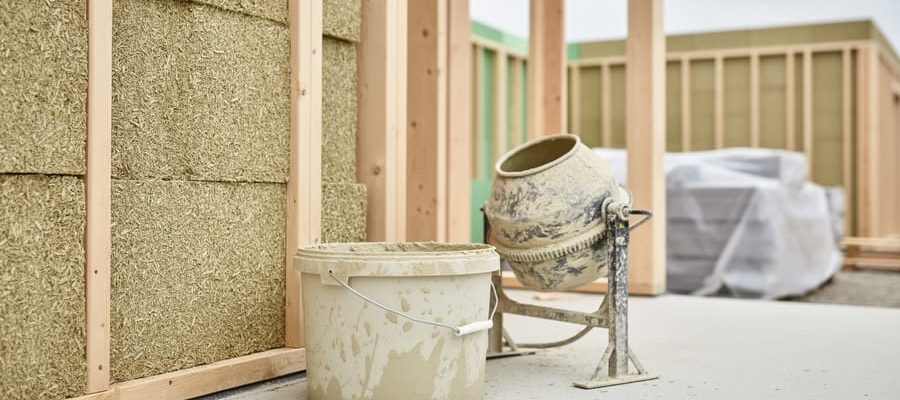
Operating costs represent the day-to-day expenses of using something over time. Think about fuel for a diesel generator, electricity to run power tools, or the energy consumption of a building’s heating and cooling system. A concrete mixer might cost £15 in electricity per month during active use, while a commercial air compressor could add significantly more to your utility bills. These costs accumulate steadily, often exceeding the initial purchase price over several years.
Maintenance and repair costs keep equipment functioning properly throughout its lifespan. Regular servicing for a cement mixer might run £80 annually, while replacing worn blades on a tile cutter costs around £25 every few months. For buildings, this category includes HVAC filter changes, repainting, roof repairs, and replacing worn components. Professional tradespeople often find that proper maintenance reduces these costs compared to emergency repairs.
Disposal or end-of-life costs occur when equipment or materials reach retirement. This includes removal fees for old insulation, recycling charges for metal tools, or demolition costs for building systems. Some items, like scrap copper piping, actually generate value at disposal, offsetting other costs in your calculation.
Why Life-Cycle Costing Matters for Your Next Project
The True Cost of ‘Cheap’ Tools and Materials
Let’s look at real numbers from tools many of us use regularly. A budget cordless drill might cost £40, while a quality model runs £150. Over five years, that cheaper drill typically needs replacing twice due to battery failure and motor wear, totaling £120. Add frequent charging interruptions and reduced torque that slows jobs by roughly 15%, and you’re losing both money and time. The quality drill, meanwhile, maintains consistent performance throughout its lifespan, often lasting 8-10 years with minimal maintenance.
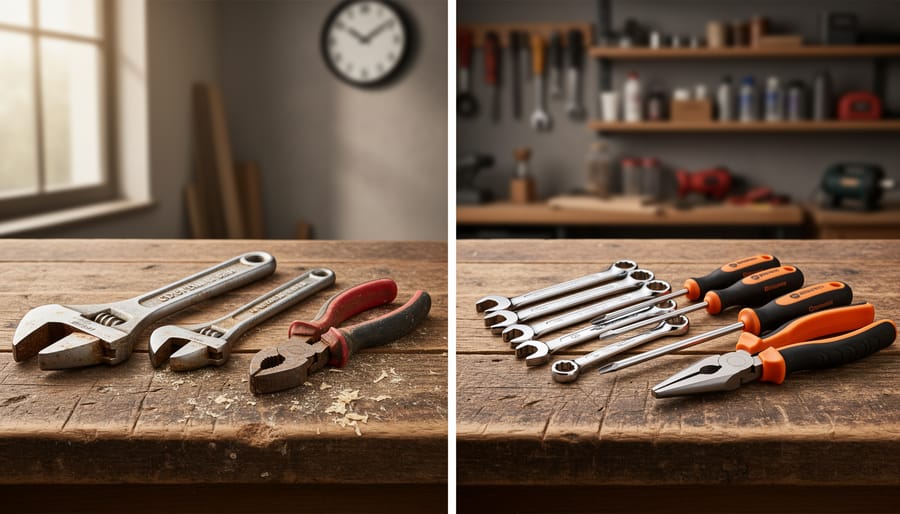
The story repeats with hand tools. A £15 budget spanner set shows visible wear after 200 uses, with chrome flaking and jaws slipping by year two. Professional-grade sets at £60 remain precise after thousands of applications. When that cheap spanner rounds off a bolt head, you’ve just added hours and potential damage costs to your project.
Paint rollers offer another telling example. Budget rollers at £3 shed fibers, require more coats, and last maybe three rooms. A £12 quality roller handles 15+ rooms while delivering better coverage, actually reducing paint consumption by up to 20% according to community feedback from regular users.
This is where strategic tool hire makes financial sense. For occasional projects, hiring professional-grade equipment gives you quality performance without the purchase price. You avoid the maintenance costs, storage concerns, and performance degradation that plague owned budget tools. The calculation becomes simple: hire quality when you need it, buy quality only for frequent use.
How Sustainable Building Practices Save Money Long-Term
Life-cycle costing reveals why sustainable building choices make financial sense beyond the initial price tag. When you invest in eco-friendly features upfront, you’re essentially prepaying for years of reduced operating expenses.
Consider energy-efficient systems like heat pumps or solar panels. While a standard hot water system might cost $1,200 installed, a heat pump water heater runs around $3,500. That’s a $2,300 difference. However, the heat pump typically saves $400-600 annually on energy bills, delivering payback in 4-6 years. Over its 15-year lifespan, you’re looking at $3,000-6,000 in net savings.
Similarly, quality insulation demonstrates excellent life-cycle returns. Upgrading from standard R2.5 to R4.0 ceiling insulation adds roughly $800-1,000 to a typical home but reduces heating and cooling costs by 20-30 percent annually. Most homeowners report payback periods of 5-7 years, followed by decades of ongoing savings.
Durable materials like fiber cement cladding cost more than vinyl initially but last 50+ years versus 20-30 years, eliminating replacement costs and maintenance headaches. LED lighting fixtures pay for themselves within 2-3 years through reduced electricity use and bulb replacements.
The pattern is clear: sustainable choices shift expenses from ongoing operational costs to one-time capital investments, protecting you from rising energy prices while reducing your environmental footprint.
How to Calculate Life-Cycle Costs (Simple Steps Anyone Can Follow)

The Quick Comparison Method for Tool and Equipment Decisions
When you’re deciding between renting and buying tools, or choosing between a budget option and a professional-grade model, the Quick Comparison Method gives you a clear answer without complex spreadsheets.
Here’s how it works in three simple steps:
First, calculate the break-even point for rental versus purchase. Divide the purchase price by the daily rental cost. This tells you how many days of use make buying worthwhile. For example, if a pressure washer costs $300 to buy and $45 to rent per day, your break-even point is roughly 7 days. If you’ll only use it twice a year for weekend projects, renting makes financial sense for at least the next three years.
Second, factor in maintenance and storage costs for owned equipment. Add approximately 10-15% of the purchase price annually for servicing, repairs, and replacement parts. Our pressure washer example would cost around $30-45 per year in upkeep, plus you need dry storage space.
Third, compare the total cost over your realistic usage period. Let’s say you need that pressure washer for two days each spring for the next five years. That’s 10 days total usage.
Rental option: 10 days × $45 = $450
Purchase option: $300 (initial) + $150 (5 years maintenance) = $450
They’re equal in this scenario, but renting eliminates storage hassles and the risk of equipment becoming outdated or breaking down outside warranty periods.
The method works equally well for comparing quality tiers. A $200 drill might last 3 years with occasional use, while a $400 professional model lasts 10 years. Calculate cost per year ($67 versus $40) to see which delivers better value for your usage pattern.
Key Factors That Change Your Calculations
Not all equipment or materials deserve the same level of life-cycle analysis. Understanding which factors matter most for your specific situation helps you invest your research time wisely.
Usage frequency dramatically affects your calculations. A concrete mixer you’ll use daily on a commercial project has completely different economics than one needed for a single weekend patio pour. High-frequency tools justify higher upfront costs if they offer better durability and lower operating expenses. For occasional use, rental often makes more financial sense than ownership.
Energy costs become critical for equipment that runs continuously or consumes significant power. A climate control system operating year-round in your building will accumulate substantial energy expenses over its lifetime. Compare energy ratings carefully, as a unit costing 20% more upfront might save thousands in electricity over ten years. This factor matters less for hand tools or equipment used sporadically.
The maintenance requirements of equipment vary enormously. Some tools need regular servicing, replacement parts, and specialist attention, while others work reliably with minimal care. Factor in both the direct costs and your time commitment when comparing options.
Expected lifespan determines how long you’ll benefit from your investment. Quality construction equipment might last 15-20 years with proper care, while budget alternatives could fail within 3-5 years, requiring replacement.
Technological obsolescence particularly affects digital tools and systems. Battery-powered equipment, smart building controls, and computerized machinery may become outdated before they physically wear out, limiting resale value and parts availability.
Applying Life-Cycle Costing to Common Building Decisions
HVAC Systems and Insulation Choices
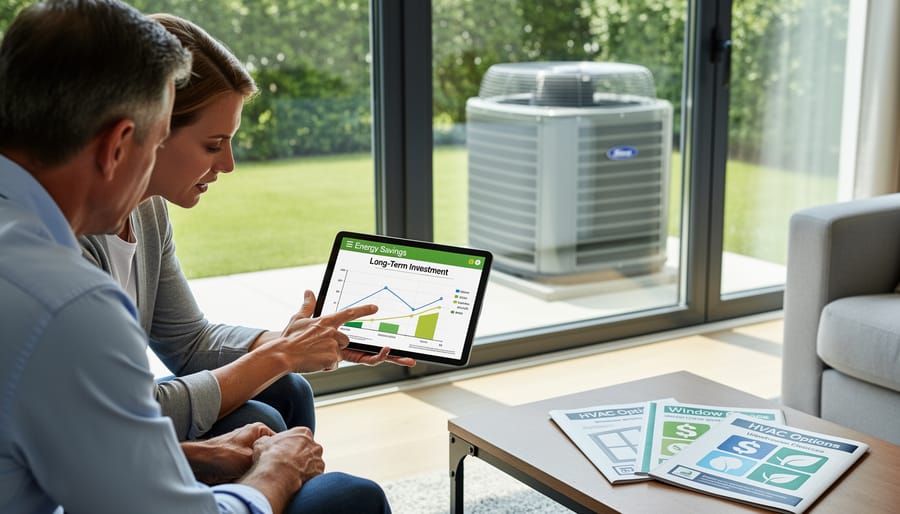
When choosing HVAC systems and insulation, understanding life-cycle costs helps you see beyond the price tag. Let’s break down what these choices really cost over time.
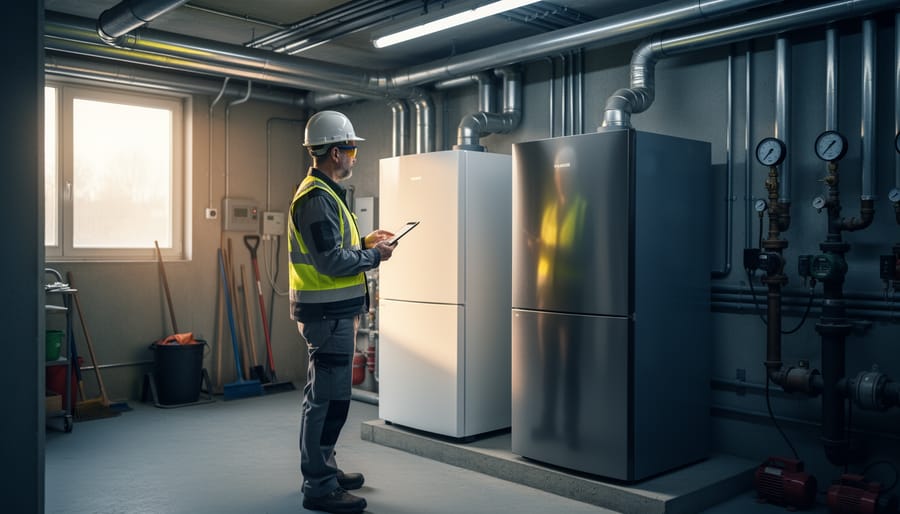
A heat pump system typically costs £8,000-12,000 installed, compared to £3,000-5,000 for a traditional gas boiler. However, heat pumps can reduce heating bills by 30-50% annually, meaning payback periods of 7-12 years depending on your energy usage. Air source heat pumps work best in well-insulated homes, making your insulation choice equally important.
For insulation, spray foam costs £40-50 per square meter versus £15-25 for standard fibreglass batts. While that’s double the upfront investment, spray foam’s superior R-value (resistance to heat flow) can cut heating costs by an additional 15-20% yearly. In a typical home, this means payback in 8-10 years, after which you’re simply saving money.
Ground source heat pumps offer the longest lifespan at 25+ years but cost £14,000-20,000 installed. Their exceptional efficiency means running costs of just £500-800 annually for average homes.
The key is matching system capacity to your actual needs. Oversized systems waste energy and money. Consider hiring thermal imaging equipment to identify heat loss areas before making major investments, ensuring your money goes where it matters most.
Roofing Materials and Window Selection
Choosing roofing materials and windows requires balancing initial investment against replacement cycles and energy savings. Let’s break down the numbers to help you make an informed decision.
For roofing, asphalt shingles cost roughly $100-150 per square (100 square feet) with a 15-25 year lifespan and minimal maintenance. Metal roofing runs $300-600 per square but lasts 40-70 years with virtually no upkeep. Tile roofing sits at $400-800 per square and can last 50-100 years. While asphalt seems budget-friendly initially, you’ll likely replace it 2-3 times during a metal roof’s lifespan, making metal the winner in total life-cycle costs for most homeowners.
Window selection follows similar logic. Single-pane windows are cheapest upfront but allow significant heat transfer, increasing energy bills. Double-pane windows cost 10-15% more but reduce heating and cooling costs by up to 24%. Triple-pane windows add another 10-20% to costs while offering marginal additional savings in moderate climates, though they’re worthwhile in extreme temperature zones.
When calculating your project, factor in regional climate conditions and how long you plan to own the property. Community reviews from other homeowners in your area can provide real-world performance data beyond manufacturer claims.
Power Tools: When to Hire, Buy Budget, or Invest Premium
When deciding between hiring, buying budget tools, or investing in premium equipment, apply a simple life-cycle cost framework based on usage frequency. Community feedback consistently shows that hiring makes financial sense for tools used fewer than three times annually. One tradesperson shared that hiring a concrete mixer twice yearly at £45 per day costs £90, compared to purchasing a budget model at £300 that may need replacing within five years.
For occasional DIY projects, the break-even calculation is straightforward: divide the purchase price by the daily hire rate. If you won’t use the tool that many times within three years, hiring wins. A premium mitre saw costing £600 versus £30 daily hire means you’d need 20 days of use to justify purchase.
Budget tools suit regular homeowners tackling periodic maintenance, typically offering adequate performance for infrequent use. However, user reviews reveal that cheaper power tools often fail after 50-100 hours of operation, making them poor value for professional tradespeople.
Premium tools become cost-effective for professionals using equipment daily. Community members report quality cordless drill sets lasting 5-7 years with heavy use, versus budget versions needing annual replacement. Factor in downtime costs, warranty coverage, and resale value when comparing options across this spectrum.
Flooring and Finish Materials
When comparing flooring options through a life-cycle costing lens, the story goes far beyond the purchase price. Let’s break down some popular choices.
Vinyl flooring might cost $2-8 per square metre upfront with minimal installation complexity, but typically needs replacement every 10-15 years. Maintenance is straightforward, though worn areas can’t be refinished. Over 30 years, you’re looking at two full replacements plus regular cleaning supplies.
Hardwood flooring runs $50-150 per square metre initially, but can last 50-100 years with proper care. Factor in refinishing costs every 10-15 years (around $30-50 per square metre), which many DIYers can tackle with hired floor sanders. The long-term payoff often justifies the higher entry point.
Bamboo and reclaimed wood represent compelling sustainable materials worth considering. Bamboo ($40-80 per square metre) grows rapidly and offers durability comparable to traditional hardwoods. Reclaimed wood provides character and environmental benefits, though prices vary widely based on source and condition.
Tile flooring ($25-100 per square metre) offers exceptional longevity—often 75+ years—with virtually no maintenance beyond grout sealing. High durability in wet areas makes it particularly cost-effective for bathrooms and kitchens.
Community reviews consistently highlight that choosing durable flooring reduces disruption costs—the hidden expense of moving furniture and living through renovations every decade.
Common Mistakes to Avoid When Thinking About Long-Term Costs
Even experienced builders and homeowners fall into predictable traps when calculating life-cycle costs. Understanding these common mistakes can save you thousands over the life of your project.
The most frequent error is completely ignoring maintenance requirements. Many people compare purchase prices without factoring in ongoing upkeep. For instance, a cheaper HVAC system might need filter changes every month versus quarterly, and those seemingly small differences add up significantly over fifteen years. Reviews from tradespeople consistently highlight how “bargain” equipment often requires more frequent servicing, eroding any initial savings. One contractor shared that his budget-priced compressor needed repairs three times in two years, while his premium unit ran maintenance-free for five.
Underestimating energy costs ranks as another major pitfall. People often base calculations on current utility rates without considering rising energy prices or seasonal variations. A heating system that costs £200 monthly in winter actually represents £2,400 annually, not the £200 some folks mentally anchor to. Community feedback reveals that homeowners frequently express shock at their first full-year energy bills because they failed to project across all seasons.
Over-optimistic lifespan assumptions create false economies too. Manufacturers might claim a twenty-year lifespan under ideal conditions, but real-world usage often differs dramatically. DIY enthusiasts working in dusty or damp environments report equipment degrading much faster than specifications suggest. Always reduce manufacturer estimates by twenty to thirty percent for realistic planning.
Finally, many calculations ignore technological obsolescence. That state-of-the-art system you install today might become inefficient or incompatible within a decade. User experiences show that older “smart” systems sometimes cannot integrate with newer technology, forcing premature replacement despite physical functionality.
The lesson from countless project reviews? Build in buffers for maintenance, use conservative estimates for equipment life, factor inflation into energy costs, and remember that cheaper upfront doesn’t automatically mean better value. Real costs emerge over years, not at the checkout counter.
Resources and Tools to Help You Make Smarter Decisions
Making smarter life-cycle costing decisions doesn’t require complex spreadsheets or expensive consultants. Several free online tools can help you compare options quickly. Energy cost calculators like the ones provided by government energy departments let you estimate running costs for different equipment over typical lifespans. Simply input wattage, usage hours, and your local electricity rates to see real numbers.
For tool and equipment decisions, manufacturer websites often publish total cost of ownership comparisons that factor in maintenance schedules and warranty coverage. Compare warranty lengths and what they actually cover, as a five-year comprehensive warranty can significantly reduce your true ownership costs compared to a basic one-year guarantee.
Community forums and user review sections on tool hire platforms offer invaluable real-world data that manufacturer specs won’t tell you. Users share honest experiences about how long equipment actually lasted, unexpected maintenance issues, and whether tools performed as advertised. These reviews effectively provide crowdsourced LCC information, revealing which brands require frequent repairs or which models still run strong after years of heavy use.
When researching rental equipment, pay attention to reviews mentioning durability and performance over time. Comments like “hired this three times over two years, still runs perfectly” indicate reliable equipment worth considering for purchase. Conversely, repeated complaints about breakdowns suggest higher lifetime costs regardless of attractive purchase prices.
Building material suppliers increasingly provide LCC data sheets comparing their products against alternatives, showing projected replacement intervals and maintenance requirements that impact your bottom line over decades.
Here’s the truth: life-cycle costing isn’t some complicated financial wizardry reserved for corporate accountants and construction executives. At its heart, it’s simply thinking ahead about what something will truly cost you over time, not just what you pay today. When you’re deciding whether to buy that power tool or hire it for a single project, you’re already doing a basic version of LCC in your head. When you compare a cheaper material against a pricier but longer-lasting alternative, that’s life-cycle thinking at work.
The beauty of this approach is how naturally it supports both sustainable building practices and smarter budget management. By considering energy consumption, maintenance requirements, and replacement timelines, you’re not just protecting your wallet—you’re making choices that reduce waste and environmental impact. That budget-friendly insulation upgrade pays for itself through lower heating bills while reducing your carbon footprint. The durable flooring option saves you from landfill-bound replacements every few years.
Start small with your next decision. Renting equipment for a one-off job? Calculate the total hire costs versus purchase price and storage expenses. Choosing between roofing materials? Factor in expected lifespan and maintenance intervals. Building that garden shed? Consider how material choices affect repairs down the line.
We’d love to hear how life-cycle costing has influenced your projects. Have you made a purchase decision that seemed expensive upfront but saved you money over time? Did hiring rather than buying prove the smarter choice? Share your experiences with our community—your real-world insights help fellow DIYers and tradespeople make better-informed decisions.
Related Posts

Post a Comment