If you’re in the construction, mining, or infrastructure industry, you’re likely highly aware of the importance of having the right machinery to power through the job.
Your choice of heavy-duty machinery can influence the performance, efficiency, and safety of your operations. Choosing the equipment that ticks all the boxes—or at least comes very close to it—is essential in ensuring the workplace is productive and safe.
That said, it’s natural for even top-tier equipment to degrade and develop worsening mechanisms over time. This is especially true for excavators, as they are built with thousands of moving parts that may give way at any moment after constant use and pressure.
Replacing an entire excavator can be costly, and the original manufacturer may not always have the specific broken parts in stock. Fortunately, aftermarket excavator parts are aplenty, and they’re often more affordable than manufacturer-branded ones while still maintaining a high level of quality.
If your excavator is starting to show signs of wear and tear, opting for new aftermarket excavator parts can be a viable solution to patch your machine and bring its efficiency back up to speed.
Here’s what you need to know before making an aftermarket excavator part purchase, from the most common replaceable parts to the signs you need to switch them.
Let’s take a look in more detail.
Common Types of Excavator Parts
It’s essential to familarise yourself with the different parts of an excavator.
This can help equip you with better knowledge of how to take care of the machine, as well as help inform you of the parts that may need to be repaired or replaced.
Here are a few of these key components found in excavators you should know:
- Track chains: These chains are found underneath the excavator and allow the excavator to traverse through different types of terrain with stability. These chains are made of high-strength steel links fastened together and are designed to withstand all sorts of motion.
- Idlers: A stationary metal wheel and axle set positioned at the front end of the excavator track that guides the track chain.
- Sprocket: A chain wheel positioned at the other end of an excavator track from the idler. Propels the machine forward or backward.
- Rollers: Spaced out evenly in the undercarriage to keep chains aligned and propel the excavator forward.
- Cab: The cabin where the operator controls the excavator. It comes with a seat, a rollover protective structure for sun protection, and a control panel.
- Engine: Operates the machine’s hydraulic system and the front attachment. Runs with fuel or diesel.
- Main control valve: The valve that links the engine with the hydraulic centre. It’s also responsible for powering the arm and boom.
- Fuel tank: Stores fuel to keep the excavator running.
- Hydraulic cylinders: Control the movement of the boom, arm, and bucket by converting hydraulic fluid into mechanical force.
- Swing motor: Allows the cab to rotate 360 degrees for efficient digging.
- Boom: The main arm of the excavator that does the heavy lifting.
- Stick: Also known as an articulated arm, this component controls the reach and digging capabilities.
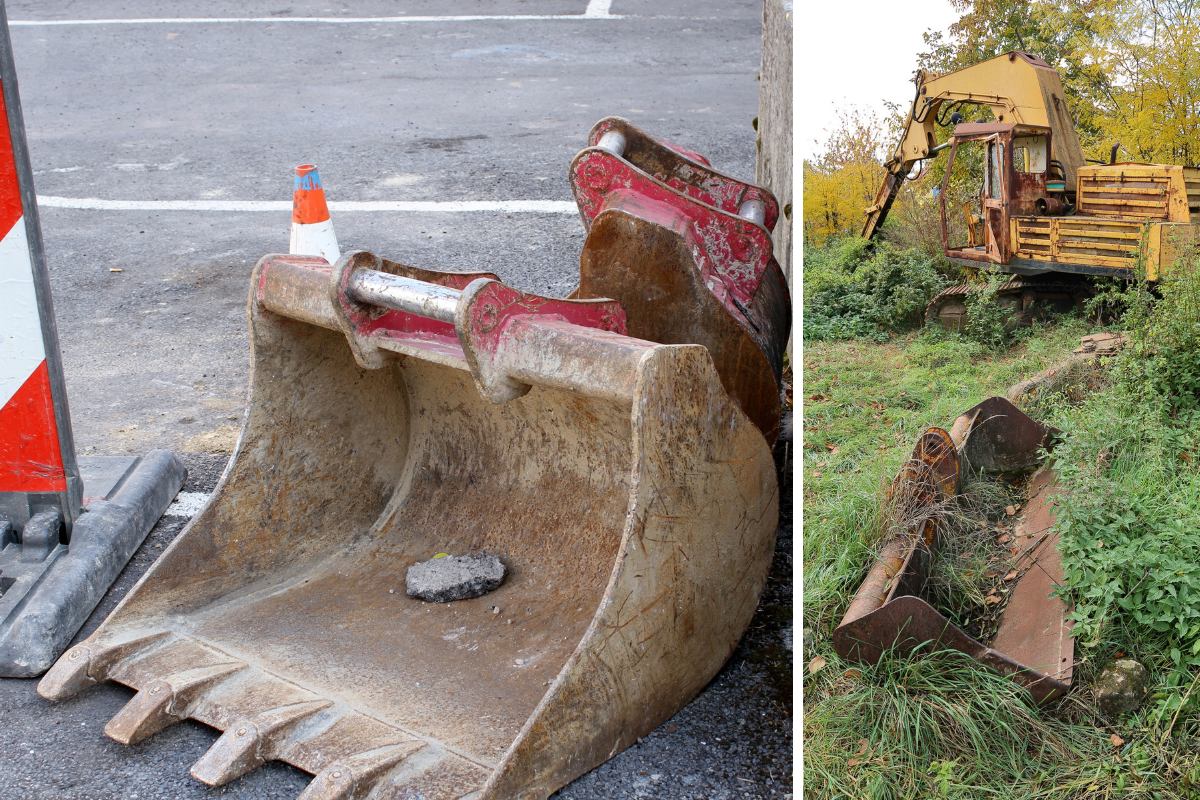
- Bucket: The part that digs and scoops material from the ground.
- Counterweight: A tonne of steel at the back of the excavator to prevent it from tipping when it carries heavy loads.
Knowing these excavator parts can help you understand how each part plays a role in doing excavation duties.
It’s important to note that these parts may differ based on the type of excavator. However, for the most part, the aforementioned parts are found in most excavators and can help people perform a variety of tasks across industries like mining, construction, and forestry.
Signs You Need to Switch Excavator Parts
Replacing excavator parts is an inevitability at least once over the course of the machine’s lifespan. That said, if you don’t have an expert handler or mechanic within arm’s reach, it can be difficult to time this repair work efficiently.
That said, timing can be the difference maker in saving you hundreds if not thousands of dollars. Here are some general signs that it’s time to consider getting some replacements or repair work done:
- Hydraulic fluid leaks in the cylinders, hoses, and pumps.
- Weakened bucket digging power and decreased swing speed.
- Loose tracks or rollers that lead to reduced stability.
- Clunking or grinding noises in the engine, undercarriage, or hydraulic systems.
- Overheating and excessive fuel consumption.
- Delayed arm attachment response.
Any of these signs can hamper the productivity and safety of the excavator. This calls for repair work, or in more severe cases, a replacement of parts altogether.
If you opt for the latter route, you have two options: original equipment manufacturer (OEM) parts or aftermarket parts produced by third-party companies.
OEM vs Aftermarket: The Differences
OEM parts and aftermarket parts may have functionally little differences, but there are some aspects between them that differ from each other.
For one, OEM, or original equipment manufacturer, parts are parts made by the same company that has manufactured the vehicle. If it’s a trusted brand, you can be assured of the part’s durability and high quality.
They’re also guaranteed to be compatible with your excavator, leaving no room for doubt the moment you’ve placed your order.
The downside is that they often fetch a higher price and have a more limited range when compared to aftermarket parts. This means if it’s not available, then you’ll have to wait a long time for it to be back up again.
Aftermarket parts such as John Deere undercarriage parts from TKV offer greater availability, affordability, and customisability given that there is a wider catalogue to choose from. However, buyers may face quality variability, compatibility issues, and potential safety hazards due to not being specifically made for the excavator.
It’s important to weigh the pros and cons of each to ensure that you’re securing the best part for your needs. Typically, purchasers of aftermarket parts are cost-conscious, performance upgraders, or owners of older and not-frequently-used excavators.
If you fit that profile, you could benefit from opting for aftermarket parts over OEM parts for your heavy machinery.
Selecting The Best Aftermarket Excavator Parts: A Buying Guide
Before acquiring an aftermarket excavator part, you need to follow these steps to make the most out of your purchase.
- Identify the part of the excavator that needs a replacement: Diagnose the problem with a repair specialist and allow them to assess the condition of your excavator. They can tell you what item needs repair or replacement, which is information that you can use to proceed to the next steps.
- Research aftermarket providers: Look into different brands that offer high-quality and durable aftermarket parts that fit your price range and quality assessment. Choose the one that balances value, cost, and customer service.
- Use online resources to search specific parts: Use websites that aggregate different excavator parts like CAT to seek a list of viable parts to replace your existing equipment.
- Confirm compatibility of parts: Locate the machine’s model and serial number and confirm with the seller if their machine parts are compatible with your excavator’s make and model.
- Check for warranties: Talk with the parts provider and get a clear stance on the warranty terms of the replacement part. Look into return policies too for clearer peace of mind.
- Read customer reviews: Look at what other customers have to say in online reviews about the product. Choose to partner with a provider who demonstrates reliability, consistency, and a commitment to high quality—all upheld in various customer reviews.
After purchasing an excavator part, you simply have to wait for it to be shipped to you (or bring it home from the store for physical purchases). You can let experts handle the installation process to ensure that your machinery is properly and safely set up.
By following these steps, you can rest easy knowing that your aftermarket purchase is successful and that your excavator can return to its baseline performance level, or at least come close to it.
We hope this guide has helped you!
Related Posts