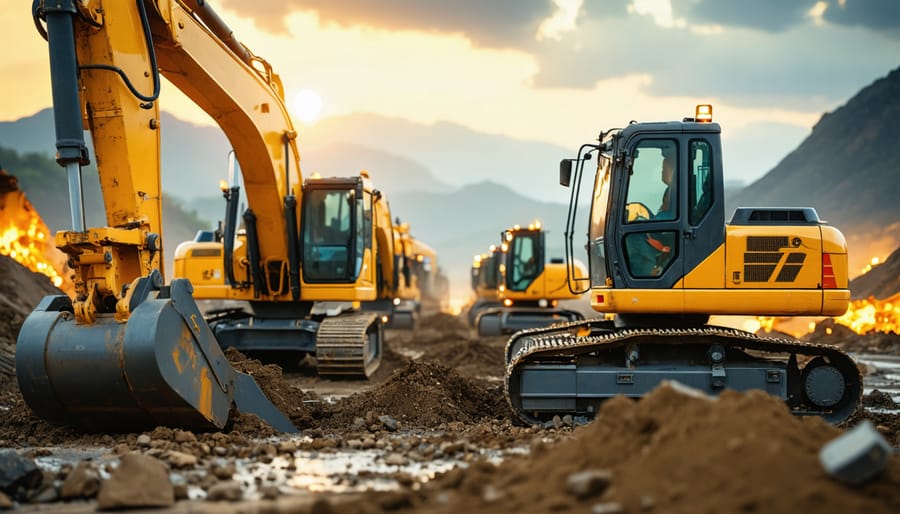
Transform your construction project’s financial outlook by leasing equipment instead of buying. Modern construction equipment leasing delivers immediate access to high-end machinery without the burden of massive upfront costs or long-term maintenance responsibilities. From compact loaders to heavy-duty excavators, strategic equipment leasing helps contractors and DIY builders maximize their budget while maintaining project flexibility.
Smart leasing decisions start with understanding your project timeline, calculating utilization rates, and comparing total ownership costs against monthly lease payments. Today’s leasing options offer flexible terms, comprehensive maintenance packages, and the latest technology updates – advantages that traditional equipment ownership simply can’t match.
Whether you’re a seasoned contractor expanding your fleet or a homeowner tackling a major renovation, equipment leasing provides a practical solution to access the right tools exactly when you need them. This cost-effective approach eliminates storage concerns, reduces maintenance headaches, and ensures you’re always working with well-maintained, project-appropriate machinery.
Consider this your practical guide to navigating the construction equipment leasing landscape, where we’ll explore everything from choosing the right lease terms to maximizing equipment productivity while keeping your bottom line healthy.
Financial Benefits of Leasing Construction Equipment
Reduced Capital Investment
One of the most compelling financial advantages of equipment rentals is the significant reduction in upfront capital investment. When you lease construction equipment instead of buying it outright, you free up valuable financial resources that can be directed toward other crucial business needs.
Consider this: a new excavator might cost hundreds of thousands of dollars, while leasing the same machine requires only a fraction of that amount upfront. This preserved capital can be used for hiring additional staff, investing in marketing, or taking on more projects simultaneously. It’s like keeping your powder dry for when you really need it.
For small businesses and contractors, this approach to equipment management can be particularly beneficial during the growth phase. Rather than tying up your working capital in expensive machinery that might sit idle between projects, leasing allows you to maintain healthy cash flow while still accessing top-quality equipment when needed.
Many contractors find that the money saved through leasing can be reinvested into their business to generate additional revenue streams. This might include expanding into new service areas, upgrading other essential tools, or building an emergency fund for unexpected opportunities or challenges.
Remember, preserving capital doesn’t just mean saving money – it’s about maintaining the financial flexibility to respond to market changes and business opportunities as they arise.
Tax Benefits and Write-offs
Leasing construction equipment can offer significant tax advantages that many contractors and DIY enthusiasts might overlook. When you lease equipment, the payments are typically considered operating expenses, which means they’re fully tax-deductible in the year they’re made. This differs from purchasing equipment outright, where depreciation must be calculated over several years.
For businesses, lease payments can be written off as business expenses, potentially reducing your taxable income. This immediate tax benefit can improve cash flow and help with financial planning throughout the fiscal year. Additionally, since leased equipment is not considered a capital asset, it won’t appear on your balance sheet as debt, which can be advantageous when seeking other forms of financing.
Some lease agreements may also qualify for Section 179 deductions, allowing you to deduct the full cost of certain leased equipment in the first year. However, it’s essential to consult with a tax professional to understand which specific leases qualify and how to properly document these expenses.
Keep detailed records of all lease payments, maintenance costs, and related expenses. These records will be invaluable during tax season and can help maximize your deductions. Many lessors provide annual statements that break down payment allocations, making it easier to track and report these expenses accurately on your tax returns.
Remember that tax laws and regulations can change, so staying informed about current deduction limits and requirements is crucial for optimal financial planning.
Operational Advantages of Equipment Leasing
Access to Latest Equipment
When you lease construction equipment, you gain immediate access to the latest and most advanced machinery available in the market. Instead of being stuck with outdated tools, leasing allows you to work with essential construction equipment that incorporates the newest technology and safety features.
Modern equipment offers numerous advantages, including improved fuel efficiency, reduced emissions, and enhanced operator comfort. These newer machines often come equipped with advanced diagnostics systems that help prevent breakdowns and optimize performance. You’ll benefit from features like GPS tracking, automated grade control, and real-time performance monitoring that can significantly improve productivity on your job site.
Leasing companies typically maintain their fleet with regular servicing and updates, ensuring you’re always working with well-maintained machinery. This means less downtime due to repairs and more reliable performance during critical project phases. You won’t have to worry about equipment becoming obsolete, as most leasing providers regularly rotate their inventory to keep pace with industry innovations.
Additionally, modern equipment often includes ergonomic designs and improved safety features that help reduce operator fatigue and minimize accident risks. These advances can lead to better project outcomes and increased worker satisfaction. Many newer models also feature simplified controls and user-friendly interfaces, making them more accessible to operators of varying experience levels.
By leasing, you can easily upgrade to newer models as they become available, ensuring your business stays competitive without the substantial capital investment required for purchasing new equipment outright.
Flexibility in Equipment Selection
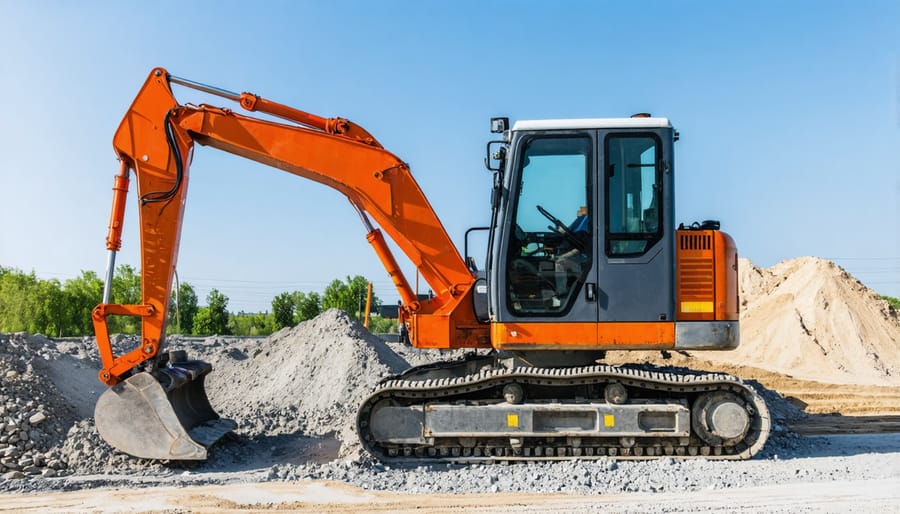
One of the biggest advantages of leasing construction equipment is the freedom to choose exactly what you need for each specific project. Unlike owning equipment that might sit idle between jobs, leasing allows you to select specialized machinery that perfectly matches your current requirements.
For example, if you’re working on a demolition project this month and need a hydraulic breaker, but next month’s job requires an excavator with specific attachments, leasing gives you that flexibility without the long-term commitment. This adaptability is particularly valuable for contractors who handle diverse projects or seasonal work.
Many leasing companies maintain updated fleets with various equipment sizes and capabilities. Need a compact loader for a tight urban construction site? You can lease one. Working on a large commercial project that requires heavy-duty earthmoving equipment? There’s a suitable option for that too. This flexibility extends to choosing between different brands and models, allowing you to test various equipment before making longer-term decisions.
The ability to match equipment to project requirements also helps optimize your budget. Instead of investing in expensive specialized equipment that you might only use occasionally, you can lease it specifically for the duration of the project. This approach ensures you have access to the right tools without the burden of ownership costs when the equipment isn’t in use.
Additionally, many leasing companies offer the option to upgrade or switch equipment if your project needs change, providing an extra layer of flexibility that’s particularly valuable in dynamic construction environments.
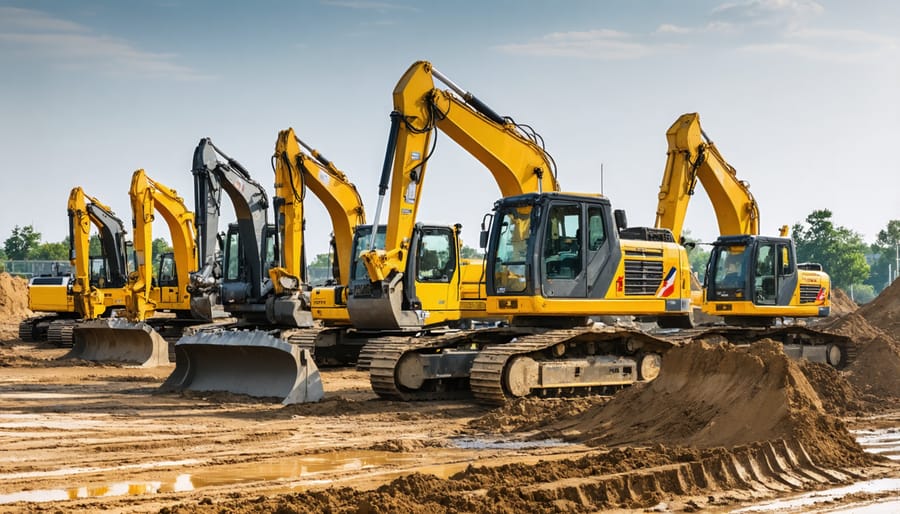
Making Smart Leasing Decisions
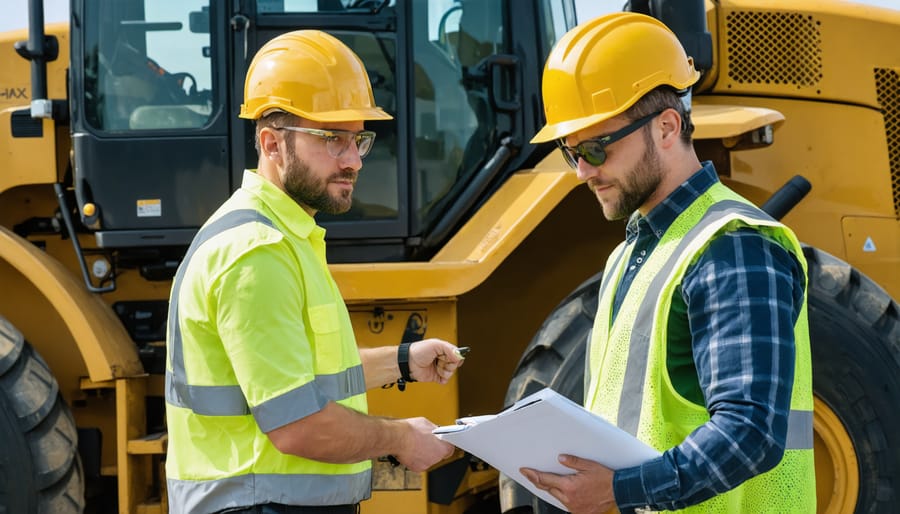
Evaluating Equipment Needs
Before committing to any equipment lease, thoroughly evaluating project equipment needs is essential for both cost efficiency and project success. Start by creating a detailed project timeline and listing all required tasks. This helps identify which equipment you’ll need and for how long.
Consider the scope of your project carefully. Will you need heavy machinery like excavators, or smaller equipment like concrete mixers? Factor in the project site conditions, including terrain accessibility and space constraints. These elements directly impact the type and size of equipment you should lease.
Make a checklist that includes:
– Project duration and equipment usage hours
– Required equipment specifications and capacities
– Site access and storage capabilities
– Operator skill requirements
– Backup equipment needs
Don’t forget to account for seasonal factors and weather conditions that might affect equipment performance. It’s also wise to consult with experienced contractors or equipment rental specialists who can provide valuable insights based on similar projects.
Remember to verify that the equipment you’re considering meets all local safety regulations and project specifications. Many rental companies offer equipment inspections and demonstrations before leasing, which can help ensure you’re making the right choice for your specific needs.
Understanding Lease Terms
Before signing any equipment lease agreement, it’s crucial to understand the key terms that will affect your rental experience and bottom line. The base rental rate is just the starting point – you’ll need to carefully review several other important contract elements.
Pay special attention to the lease duration and payment terms. Most equipment leases run from one month to several years, with longer terms typically offering better rates. Be clear on payment schedules, including whether payments are due monthly, quarterly, or upfront.
Insurance requirements are another vital consideration. Most leases require you to maintain specific coverage levels for damage and liability. Check if the lessor offers insurance options or if you need to secure your own policy.
Maintenance responsibilities should be clearly outlined. Some agreements include routine maintenance, while others place this burden on the lessee. Understanding who handles repairs, scheduled service, and emergency breakdowns is essential for avoiding unexpected costs.
Watch for clauses about equipment condition requirements, both during use and upon return. Many contracts specify cleanliness standards and acceptable wear and tear levels. Be aware of any penalties for excessive damage or unauthorized modifications.
Finally, review termination conditions and early return policies. Know what circumstances allow for early lease termination and any associated fees. Some agreements offer flexibility for seasonal work, while others maintain strict terms regardless of usage patterns.
Remember to negotiate these terms before signing. Many lessors are willing to adjust conditions to secure your business, especially for long-term agreements.
Safety and Insurance Considerations
When leasing construction equipment, safety and insurance considerations must be your top priority. Always follow established construction safety protocols and ensure all operators are properly trained and certified for the specific equipment they’ll be using.
Most reputable leasing companies require proof of insurance before releasing equipment. You’ll typically need both general liability insurance and equipment insurance coverage. The general liability policy should have coverage limits appropriate for your project scope, usually starting at $1 million. Equipment insurance protects against damage, theft, or accidents involving the leased machinery.
Before operating any leased equipment, conduct a thorough inspection and document any existing damage. Take photos and videos as evidence of the equipment’s condition at pickup. Familiarize yourself with emergency shutdown procedures and ensure all safety features are functioning correctly.
Always maintain a daily inspection log and report any issues immediately to the leasing company. Keep safety equipment, including hard hats, safety glasses, and high-visibility vests, readily available for all operators and nearby workers. Some leasing companies may require you to sign additional safety waivers or provide proof of operator certification for specialized equipment.
Remember that maintaining proper insurance coverage isn’t just about meeting requirements – it’s about protecting your business, workers, and project from potentially devastating financial consequences.
Leasing construction equipment offers a strategic advantage for both DIY enthusiasts and professional contractors looking to maximize their project efficiency while maintaining financial flexibility. Throughout this guide, we’ve explored the numerous benefits that make equipment leasing an attractive option for construction projects of all sizes.
By choosing to lease rather than purchase, you gain access to modern, well-maintained equipment without the burden of large upfront costs or long-term maintenance responsibilities. This approach allows you to scale your equipment needs according to project demands, ensuring you’re never over-invested in machinery that might sit idle between jobs.
The flexibility of leasing agreements means you can upgrade to newer models as technology advances, keeping your capabilities current without additional capital investment. This is particularly valuable in an industry where equipment efficiency and environmental standards continue to evolve rapidly.
Remember to carefully evaluate your specific project requirements, duration, and budget when making leasing decisions. Consider factors such as seasonal needs, project timeline, and the total cost of ownership versus leasing before committing to any agreement. Many successful contractors combine owned and leased equipment to create an optimal balance for their operations.
Don’t forget to leverage the experiences of other users in the community. Real-world feedback and reviews can provide valuable insights into equipment performance and reliability, helping you make more informed decisions. Many leasing providers now offer customer testimonials and ratings that can guide your choice.
Whether you’re a homeowner tackling a renovation project or a professional contractor managing multiple job sites, equipment leasing can provide the perfect solution to your equipment needs. By understanding the leasing process, carefully reviewing terms, and selecting reputable providers, you can ensure a successful leasing experience that enhances your project outcomes while maintaining financial flexibility.
Take the time to research your options, compare providers, and negotiate terms that align with your specific needs. The right leasing strategy can become a powerful tool in your project management arsenal, contributing to both immediate success and long-term business growth.
Related Posts