**Transform Your Outdoor Space with Smart Shade Solutions**
Motorized outdoor window shades combine convenience with climate control, letting you adjust sun exposure at the touch of a button—or automatically through sensors that respond to temperature and light. These automated systems protect furniture from UV damage, reduce cooling costs by up to 25%, and eliminate the hassle of manually cranking multiple shades across patios, pergolas, or wraparound porches.
Choose between hardwired systems that integrate with your home’s electrical setup, battery-powered options ideal for rental properties or retrofit projects, or solar-charged models that eliminate wiring entirely. Most motorized shades operate via remote control, smartphone apps, or voice commands through smart home platforms like Alexa and Google Home, giving you flexible control whether you’re inside or away from home.
Installation complexity varies significantly—plug-and-play battery systems often work as genuine DIY projects requiring only basic drilling and mounting skills, while hardwired installations typically need professional electrical work to ensure safety and code compliance. Consider your technical comfort level, local building regulations, and whether you’ll need permits before purchasing. The investment typically ranges from $300-$800 per shade depending on size, fabric quality, and automation features, with most homeowners reporting the convenience and energy savings justify the premium over manual alternatives within 3-5 years.
Why Motorize Your Outdoor Window Shades?
Motorizing your outdoor window shades transforms a simple home improvement into a smart investment that pays dividends in comfort, protection, and convenience. Here’s why homeowners and property managers are making the switch.
**Effortless Convenience at Your Fingertips**
Gone are the days of manually cranking shades up and down multiple times daily. With motorized systems, you control your outdoor shading with a remote, smartphone app, or voice command. Hosting a backyard dinner party? Lower all your shades simultaneously to block the evening sun without leaving your guests. Morning coffee on the patio? Raise them from inside before stepping out. This convenience becomes especially valuable for hard-to-reach installations or when managing multiple shades across large outdoor spaces.
**Superior UV and Weather Protection**
Motorized shades respond instantly to changing conditions, protecting your outdoor furniture, cushions, and indoor belongings from harmful UV rays and weather exposure. Set automated schedules based on sun patterns, or use smart sensors that adjust shades automatically when UV intensity increases. This proactive protection extends the lifespan of expensive outdoor furnishings and prevents sun damage to interior floors and upholstery near windows—a common concern many homeowners discover too late.
**Enhanced Temperature Control and Energy Savings**
Strategic shade deployment significantly impacts your home’s temperature regulation. Motorized systems integrated with home automation can lower shades during peak heat hours, reducing air conditioning costs by up to 30%. These energy-efficient shading solutions create comfortable outdoor living spaces while preventing heat transfer through windows and glass doors.
**Increased Property Value**
Smart home features appeal strongly to modern buyers. Motorized outdoor shading systems demonstrate thoughtful home improvement and technological integration, potentially increasing resale value. They signal a well-maintained property with attention to comfort and energy efficiency—qualities that resonate during property evaluations and open houses.
Types of Motorized Outdoor Shade Systems
Retractable Awning Systems
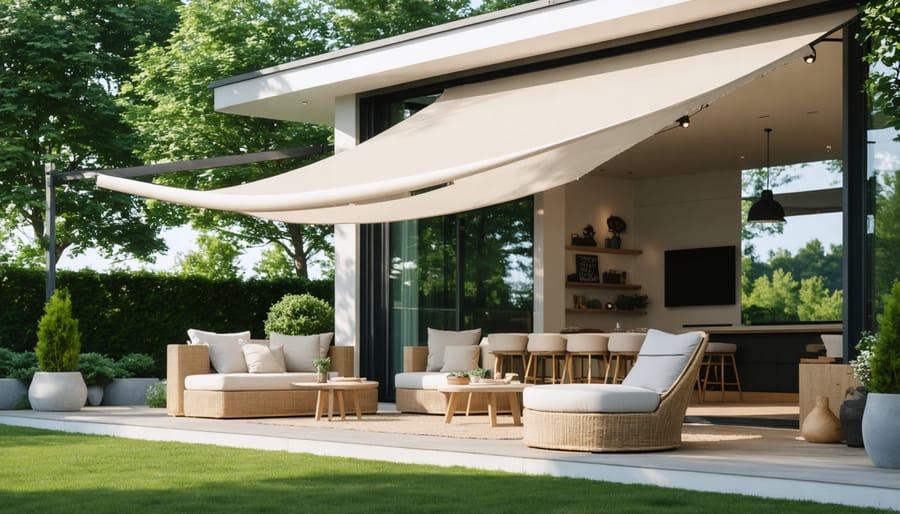
Retractable awning systems represent the heavy-duty solution for motorized outdoor shade coverage. These robust installations extend outward from exterior walls, creating shaded zones that can span 10-20 feet or more—perfect for patios, decks, and floor-to-ceiling window arrays.
Unlike fixed shades, motorized retractable awnings deploy and retract at the touch of a button, giving you complete control over sun exposure throughout the day. When weather turns harsh, simply retract them for protection. Most systems feature durable, weather-resistant fabrics (typically solution-dyed acrylics) that resist fading and mildew while blocking up to 98% of harmful UV rays.
Common applications include restaurant patios, residential outdoor living spaces, and commercial buildings with expansive glass facades. The motorization makes managing large, heavy awnings effortless—no manual cranking required. Many models integrate with smart home systems and include wind sensors that automatically retract the awning during gusty conditions to prevent damage.
Installation typically requires professional help due to the structural mounting requirements and electrical connections involved. However, understanding the system basics helps you make informed decisions when selecting and maintaining your investment. Community feedback consistently highlights durability and ease of use as top satisfaction factors.
Solar Roller Shades
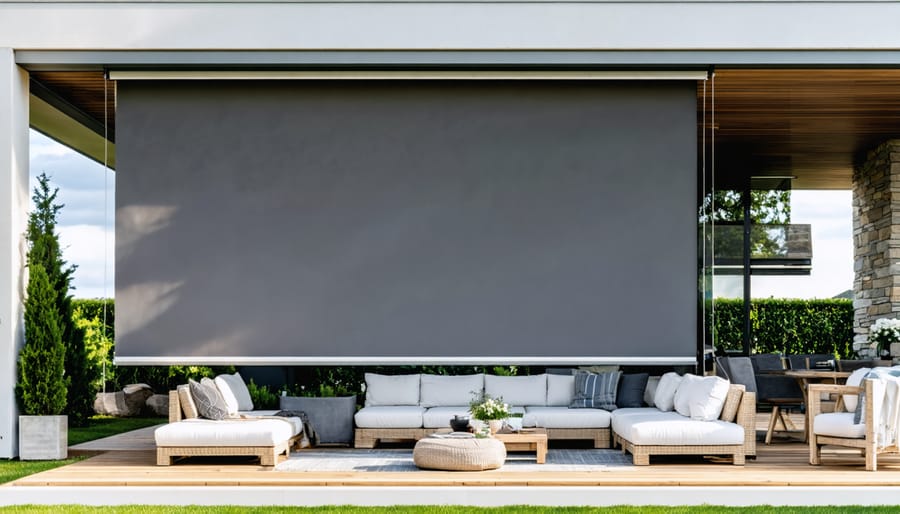
Solar roller shades represent the most popular choice for motorized outdoor applications, combining simplicity with effective sun control. These vertical-rolling systems operate on a straightforward mechanism where fabric wraps around a motorized tube housed in a protective cassette or exposed roller at the top of your window or opening.
When selecting fabric for your outdoor roller blinds, you’ll encounter “openness factor” ratings—a percentage indicating how tightly the fabric is woven. A 1% openness provides maximum UV protection and privacy while still allowing some outward visibility, ideal for glare reduction. A 5% openness offers better views and airflow but less heat rejection. For complete privacy and blackout capability, 0% openness (solid fabrics) block all light penetration.
Weather-resistant fabrics specifically designed for outdoor use resist fading, mildew, and moisture damage far better than interior-grade materials. Many DIYers appreciate that motorized solar shades require minimal maintenance—occasional hosing down typically suffices. Community feedback consistently highlights the convenience of programmable timers that automatically lower shades during peak sun hours, protecting outdoor furniture while reducing cooling costs. Consider your primary goal: view preservation, privacy, or maximum heat blocking when choosing fabric density.
Zip Screen and Track-Guided Systems
Zip screen systems represent a premium solution for outdoor motorized shades, featuring side tracks that guide and secure the fabric on both edges. Unlike traditional roller shades that hang freely, these track-guided systems keep the fabric taut and contained within aluminum or steel channels, preventing wind damage and eliminating gaps where light or insects might enter.
The enclosed design makes zip screens ideal for exposed locations where standard shades would struggle. Coastal properties experiencing consistent sea breezes, high-rise balconies, and open patios all benefit from this robust construction. The tracks can handle wind speeds that would shred unguided fabrics, with some commercial-grade systems rated for winds exceeding 60 mph.
Installation requires precise measurement and mounting of the side tracks, making this a more involved DIY project than standard roller shades. You’ll need to ensure the tracks are perfectly vertical and aligned, as even minor deviations affect smooth operation. Many homeowners find value in professional installation for zip systems, though experienced DIYers with proper measuring tools can tackle the job.
The motorization component integrates seamlessly, with motors typically housed in the top roller cassette. Community feedback consistently highlights zip screens’ durability and weather resistance as worth the higher initial investment compared to unguided systems.
Motorized Plantation Shutters
Motorized plantation shutters offer a permanent, architectural solution for outdoor spaces like patios and porches. These louvered panels mount directly to your home’s exterior, with adjustable slats that tilt to control light, airflow, and privacy at the touch of a button. Unlike fabric shades, they’re built from durable materials like aluminum or composite wood that withstand harsh weather year-round. Installation typically requires mounting hardware and electrical work, making this a more involved DIY project or professional installation. The motorization adds convenience for hard-to-reach windows while maintaining the classic aesthetic many homeowners prefer.
Power Options: Hardwired vs. Battery vs. Solar
Choosing the right power source for your motorized outdoor shades affects both installation complexity and long-term convenience. Let’s break down your three main options with real-world considerations from homeowners who’ve tackled these projects.
**Hardwired Power: The Professional Standard**
Hardwired systems connect directly to your home’s electrical supply, offering the most reliable performance. They’re ideal if you’re building new, renovating, or already have electrical access near your windows. The main advantage? You’ll never worry about batteries dying or weather affecting performance, which is crucial for the motion control systems that operate your shades.
**The honest drawback:** Unless you’re comfortable working with mains electricity (and local regulations permit it), you’ll need a licensed electrician. One community member reported spending $800-1200 for electrical work across four windows, though costs vary significantly by location and existing wiring.
**Battery-Powered: The DIY Winner**
Battery systems are the go-to for DIY installation. No electrical work required—just mount the brackets, hang the shade, and insert batteries (typically rechargeable lithium-ion packs lasting 6-12 months).
**Pros:** Complete installation flexibility, retrofit-friendly, and genuinely achievable in a weekend. **Cons:** You’re committing to maintenance. Set phone reminders to check battery levels, especially before extreme weather when you’ll want reliable operation. Some users find accessing batteries on high or hard-to-reach windows frustrating.
**Solar Power: The Emerging Option**
Solar-charged systems use small panels (often integrated into the shade housing) to maintain battery charge. They’re brilliant for sunny locations but less reliable in heavily shaded areas or regions with limited sunlight.
**Real user feedback:** Works exceptionally well for west and north-facing installations getting consistent sun exposure. Less successful for covered patios or south-facing walls blocked by trees. Consider your specific window’s sun exposure throughout the day—not just peak afternoon hours.
**Making Your Choice**
New construction or major renovation? Hardwired delivers premium performance. Retrofitting existing spaces? Battery-powered offers the easiest path. Sunny location with good exposure? Solar might save you maintenance hassles while supporting sustainability goals.
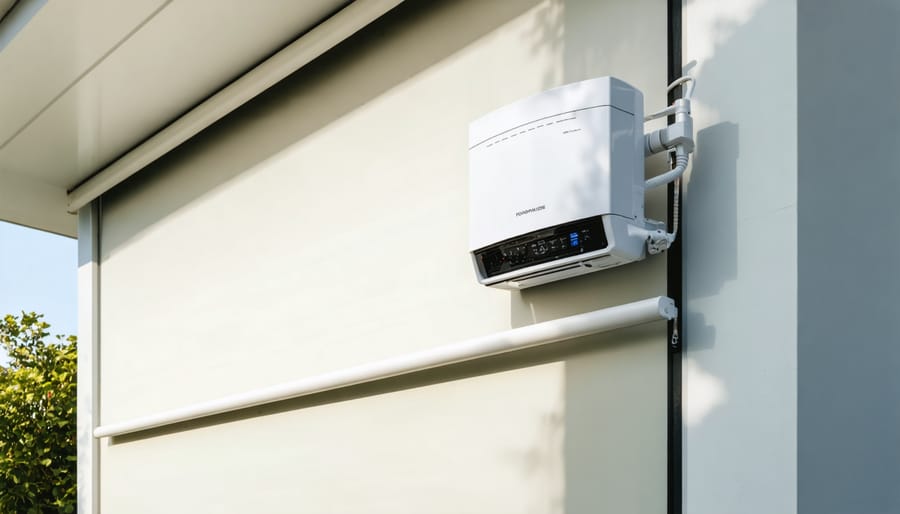
Installation Considerations for DIY vs. Professional
Installing motorized outdoor window shades requires careful consideration of your skill level and the complexity of your specific setup. Understanding when to tackle the project yourself versus calling in professionals can save you time, money, and potential headaches.
**What DIY Enthusiasts Can Handle**
If you’re reasonably handy and comfortable with basic electrical work, many motorized shade installations are within reach. Battery-powered systems are the most DIY-friendly option, requiring only mounting brackets, a drill, level, measuring tape, and screwdriver. These systems eliminate electrical wiring concerns entirely, making them ideal for beginners. Solar-powered shades add minimal complexity, requiring proper positioning for sunlight exposure.
Hardwired installations present moderate challenges but remain achievable for those with electrical experience. You’ll need wire strippers, voltage testers, and a solid understanding of your home’s electrical system. Most importantly, you must feel confident working safely with electricity and local electrical codes.
**When to Call the Professionals**
Consider professional help if you’re dealing with large or heavy shade systems, particularly those covering wide openings or exposed to high winds. Multi-story installations requiring ladder work or scaffolding pose significant safety risks. The DIY vs. professional installation decision often hinges on these safety factors.
Professionals become essential when hardwiring requires running new electrical circuits, working with smart home integration systems, or navigating complex building codes. If your project involves brick or concrete mounting surfaces, specialized tools and expertise ensure secure, lasting installations.
**Safety First**
Regardless of your approach, always turn off power at the breaker when working with electrical components, use proper fall protection for elevated work, and verify mounting surfaces can support the shade’s weight. Many tool hire centres offer specialized equipment like laser levels and masonry drills that make DIY installations safer and more precise.
Smart Home Integration and Control Options
Modern motorized outdoor shades offer multiple control methods to suit different preferences and lifestyles. The most basic option is a remote control—similar to what you’d use for a garage door—that lets you raise or lower shades from anywhere in the room. Most systems include wall-mounted remotes as standard, with handheld versions available as upgrades.
Smartphone apps take convenience further by allowing you to control your shades from anywhere with internet access. Whether you’re at work extending shades to protect furniture from afternoon sun, or away on holiday adjusting them to simulate occupancy, app control gives you complete flexibility. These apps typically work on both iOS and Android devices and connect via your home Wi-Fi network.
Voice control integration represents the most hands-free option. Popular motorized outdoor shade systems now work with Amazon Alexa, Google Assistant, and Apple HomeKit. Simple voice commands like “Alexa, lower the patio shades” make operation effortless, particularly useful when your hands are full or you’re entertaining guests.
The real power comes through automation features. You can schedule shades to lower automatically at sunset or raise at sunrise, helping regulate indoor temperatures without any manual input. Some advanced systems include light sensors that respond to changing weather conditions—automatically extending during bright periods to reduce glare and heat gain. This automation works similarly to smart window blinds inside your home.
When choosing a system, check compatibility with your existing smart home setup. Most manufacturers clearly list which platforms their products support, ensuring seamless integration with your current devices and routines.
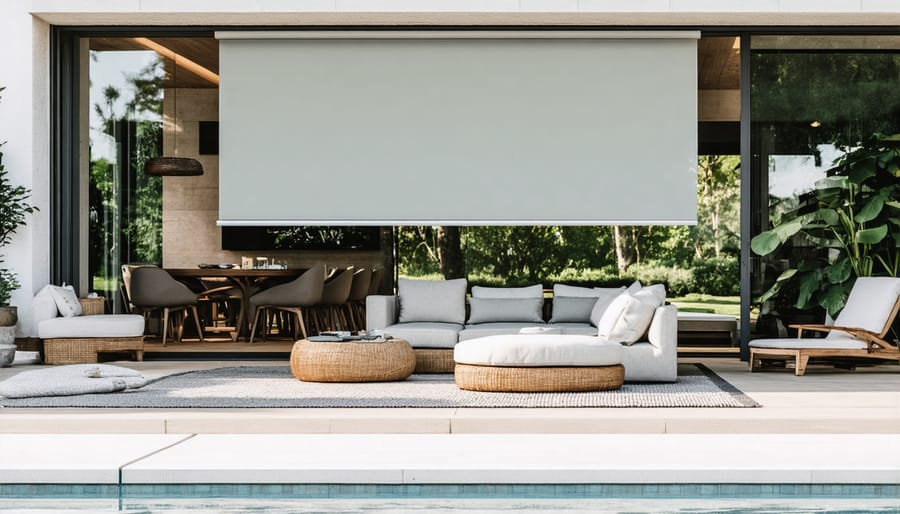
What to Look for When Buying Motorized Outdoor Shades
Choosing the right motorized outdoor shades requires balancing performance, durability, and budget. Here’s what experienced users and professionals recommend prioritizing during your purchase.
**Weather Resistance and Fabric Durability**
Your shades will face sun, wind, rain, and temperature extremes. Look for UV-resistant fabrics rated for outdoor use—typically solution-dyed acrylic or vinyl-coated polyester. These materials resist fading and mildew better than standard indoor fabrics. Check the fabric’s openness factor: tighter weaves (1-3% openness) block more sun but may trap heat, while more open weaves (5-10%) allow airflow and better visibility. Community feedback consistently highlights that marine-grade fabrics outlast budget alternatives by years, making them worth the upfront investment.
**Motor Quality and Type**
The motor is your system’s heart. Quality motors from established manufacturers typically last 10+ years with minimal maintenance. Hardwired motors generally offer more power and reliability than battery-operated options, though battery models provide installation flexibility. Users emphasize checking the motor’s duty cycle—how many continuous operations it can handle before needing rest. Commercial-grade motors handle frequent use better than residential models if you’ll be adjusting shades multiple times daily.
**Wind Ratings Matter**
Wind ratings indicate maximum wind speeds your shades can withstand before requiring retraction. Most residential shades handle 20-30 mph winds, but if you live in exposed or coastal areas, invest in systems rated for 40+ mph. Many users report damage from unexpected storms when skimping on wind ratings. Some advanced systems include wind sensors that automatically retract shades when gusts exceed safe limits.
**Warranty Coverage**
Compare warranties carefully—they reveal manufacturer confidence. Look for at least 5 years on motors and 3-5 years on fabrics. Read the fine print: some warranties void if you install the shades yourself rather than using certified professionals. Community reviews often mention responsive customer service being as valuable as the warranty itself.
**Smart Home Integration**
If you’re building a connected home, verify compatibility with your existing systems (Alexa, Google Home, HomeKit). Not all motorized shades communicate equally well with smart home platforms, and retrofitting incompatible systems proves frustrating and expensive.
Maintenance and Troubleshooting Tips
Keeping your motorized outdoor shades in top condition doesn’t require professional expertise—most maintenance tasks are straightforward enough for any DIY enthusiast to handle.
**Regular Maintenance Schedule**
Start by cleaning the shade fabric monthly using a soft brush or vacuum attachment to remove dust, pollen, and debris. For deeper cleaning, use mild soap and water with a soft cloth, avoiding harsh chemicals that can damage UV-protective coatings. Check the motor housing quarterly for spider webs or insect nests, which can interfere with operation.
Lubricate moving parts annually with silicone-based spray—never oil-based products that attract dirt. Inspect mounting brackets and hardware for rust or loosening, tightening any loose screws immediately to prevent strain on the motor.
**Common Problems and Quick Fixes**
If your shades stop responding, check the obvious first: battery levels in remotes or solar panels for debris blocking sunlight. Many users report that simply replacing remote batteries solves 80% of connectivity issues.
Shades moving slowly or stopping mid-cycle often indicate low battery power. Solar-powered units may need a few sunny days to recharge fully. For hardwired systems, verify the circuit breaker hasn’t tripped.
When shades won’t sync with your smart home system, try power cycling both the motor and your home network. Resetting the shade’s memory and re-pairing according to manufacturer instructions usually resolves connectivity problems.
**When to Call for Service**
Contact professionals if you hear grinding noises, notice visible motor damage, or experience repeated electrical issues. These indicate internal problems requiring specialized tools and expertise. Always disconnect power before attempting any troubleshooting to ensure safety.
Choosing the right motorized outdoor window shades comes down to understanding your specific needs: How much sun exposure does your space get? What’s your budget for both equipment and installation? Are you comfortable tackling a DIY installation, or would professional help better suit your situation? Consider the power source that makes most sense—hardwired systems offer reliability, while solar and battery options provide flexibility without running new electrical lines.
Remember that features like smart home integration and wind sensors add convenience but also affect your overall investment. Take time to measure your outdoor space accurately and evaluate whether you’ll install the shades yourself or hire a professional. Many homeowners find DIY installation manageable with the right preparation and tools.
We’d love to hear from our community: Have you installed motorized outdoor shades? What challenges did you encounter? Which features proved most valuable for your setup? Share your experiences and questions in the comments below. Your real-world insights help fellow homeowners make informed decisions and tackle their own outdoor shade projects with confidence.
Related Posts