Food processing facilities face unique flooring challenges that can make or break regulatory compliance and operational safety. Spills, temperature fluctuations, chemical exposure, and constant foot traffic create a demanding environment where ordinary concrete simply won’t cut it. Epoxy flooring has emerged as the industry standard for good reason—it provides a seamless, non-porous surface that prevents bacterial growth, withstands rigorous cleaning protocols, and meets strict health department requirements.
The right flooring system protects your business from costly shutdowns due to contamination issues while providing slip resistance even when wet. Modern epoxy formulations designed specifically for food processing environments resist the acids, oils, and sugars that would damage conventional surfaces. They also handle thermal shock from hot water washdowns and freezer conditions without cracking or deteriorating.
Whether you’re retrofitting an existing facility or building from scratch, understanding epoxy flooring options helps you make informed decisions about installation methods, curing times, and long-term maintenance. Professional installers bring specialized equipment and expertise, but smaller projects may be suitable for experienced tradespeople with proper preparation and tools.
This guide breaks down everything from surface preparation requirements and application techniques to maintenance schedules and cost considerations. You’ll learn which epoxy systems work best for different food industry applications, what tools you’ll need for installation, and how to ensure your flooring meets regulatory standards while delivering years of reliable performance.
What Makes Food Industry Flooring Different
The Regulatory Minefield You’re Navigating
When installing flooring in food processing or commercial kitchen facilities, you’ll need to meet several regulatory standards that protect food safety. Here’s what these requirements mean in practical terms.
The FDA (Food and Drug Administration) sets baseline standards through their Food Code, which most local health departments adopt. For flooring, this means surfaces must be smooth, non-absorbent, and easy to clean. Think of it this way: if your floor has cracks or porous areas where moisture can hide, bacteria can grow there even after cleaning.
USDA regulations apply specifically to meat, poultry, and egg processing facilities. These standards are stricter, requiring floors that can withstand frequent high-pressure washing and aggressive sanitizing chemicals without deteriorating.
HACCP (Hazard Analysis and Critical Control Points) programs focus on preventing contamination. Under HACCP principles, your flooring choice becomes part of your facility’s safety plan. For example, if your floor develops cracks that could harbor Listeria or Salmonella, that’s a documented hazard requiring immediate correction.
During inspections, regulators will check for ponding water, damaged areas, and floor-wall junctions. Epoxy flooring addresses these concerns by creating seamless, chemical-resistant surfaces with coved edges that eliminate corners where contaminants accumulate. Most importantly, proper installation documentation helps demonstrate compliance during audits, keeping your facility operating without interruption.
Daily Hazards That Destroy Ordinary Floors
Food processing facilities face relentless flooring challenges that quickly destroy conventional surfaces. Let’s look at what happens daily in these demanding environments.
Oils and fats create the first line of attack. When cooking oils, animal fats, or food-grade lubricants spill onto traditional concrete, they penetrate the porous surface, creating permanent stains and gradually weakening the structural integrity. Concrete becomes slippery and develops a greasy film that’s nearly impossible to remove completely.
Acids from citrus processing, vinegar production, and fermented foods eat away at standard flooring materials. Even seemingly mild substances like tomato sauce or fruit juices contain acids that etch concrete and deteriorate grout lines in tile installations. Over time, this creates pitting and rough patches where bacteria can hide.
Alkalis from cleaning agents deliver another blow. The harsh sanitizers and degreasers required for food safety compliance react chemically with untreated concrete, causing surface breakdown and dusting. Vinyl flooring bubbles and peels under repeated exposure to these powerful cleaners.
Thermal shock occurs when hot water washdowns meet cold floors, or when equipment generates localized heat. This constant expansion and contraction causes concrete to crack and tile to separate from its substrate.
Heavy equipment traffic from forklifts and pallet jacks chips and gouges softer flooring materials, while constant water exposure from cleaning protocols leads to moisture penetration, creating ideal conditions for mold growth beneath surface materials.
How Epoxy Flooring Solves Food Industry Problems
Seamless Protection Against Contamination
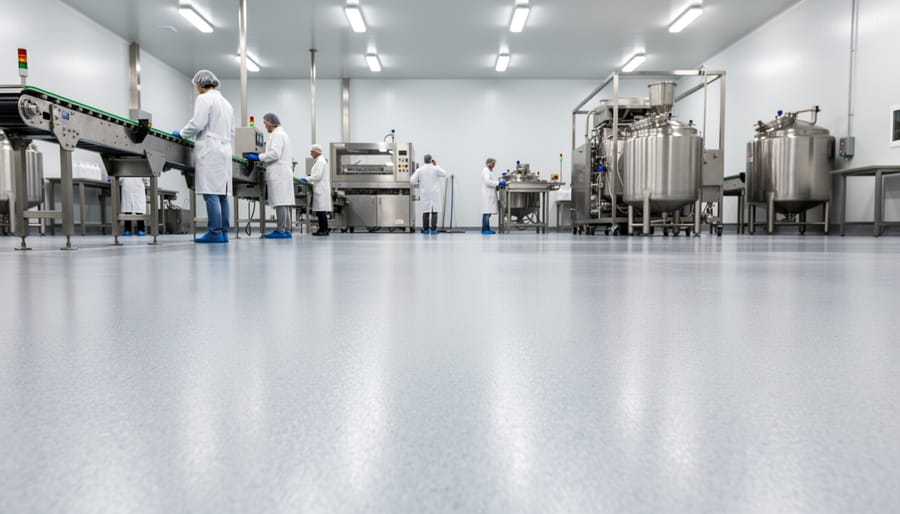
In food processing environments, where even microscopic contamination can lead to serious health risks, epoxy flooring delivers unparalleled protection through its completely seamless surface. Unlike traditional tile, vinyl, or concrete floors with grout lines and joints, epoxy creates a continuous, non-porous barrier that eliminates the cracks and crevices where bacteria, mold, and pathogens typically hide and multiply.
Think of grout lines in tile flooring as miniature highways for bacteria. These gaps collect moisture, food particles, and organic matter that become breeding grounds for harmful microorganisms. Even with rigorous cleaning, traditional flooring joints remain perpetually vulnerable. Epoxy eliminates this problem entirely by forming a monolithic surface without seams or gaps from wall to wall.
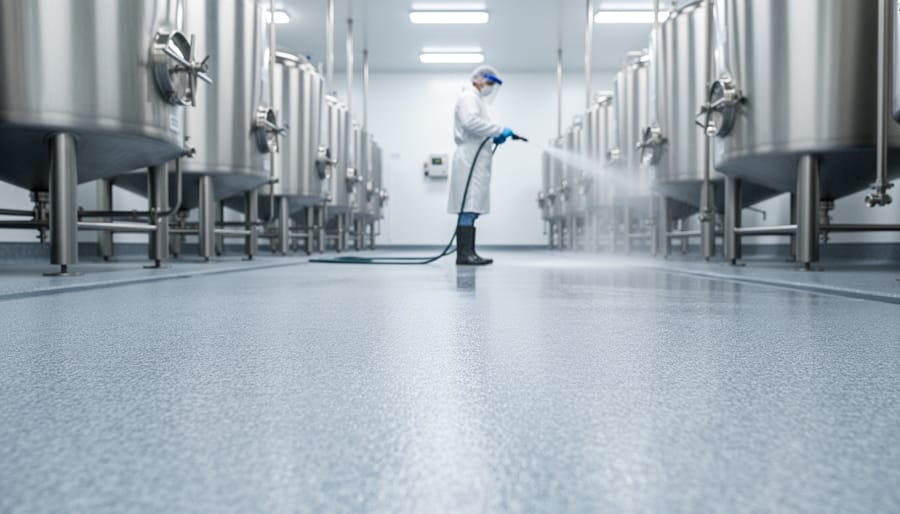
This seamless characteristic dramatically simplifies your sanitation protocols. Cleaning teams can efficiently spray down and sanitize floors without worrying about contaminants lurking in hidden spaces. The non-porous nature means liquids, oils, and food particles sit on the surface rather than seeping into the flooring material, making removal straightforward with standard cleaning equipment.
For facility managers dealing with strict health inspections, this translates to easier compliance. Inspectors often flag grout lines and floor joints as potential contamination risks, but a properly installed epoxy floor passes scrutiny by design, giving you one less compliance headache to manage while protecting your operation’s reputation and your customers’ safety.
Chemical and Temperature Resistance That Actually Works
Food-grade epoxy flooring stands up to the harsh conditions that would destroy standard concrete or tile. These specialized formulations resist the toughest challenges in food processing environments without breaking down or harboring bacteria.
The chemistry matters here. Food-grade epoxies handle repeated exposure to cleaning agents like chlorine bleaches, quaternary ammonium compounds, and caustic degreasers that strip away organic buildup. They also resist food acids from citrus processing, vinegar production, and dairy operations that would etch untreated concrete within months.
Temperature cycling presents another real-world test. A bakery floor might see 200-degree heat from industrial ovens, then get hosed down with cold water during cleaning. Quality epoxy systems flex with these extremes without cracking or delaminating. Walk-in freezers operating at minus 10 degrees require cold-temperature epoxy formulations that cure properly and maintain flexibility.
Oil resistance proves critical in meat processing and commercial kitchens where animal fats and cooking oils constantly contact the floor. Standard epoxies soften and deteriorate, but food-grade versions maintain their integrity and traction.
One processor shared that after switching from tile to food-grade epoxy, their floor survived five years of twice-daily pressure washing with industrial degreasers without showing wear, eliminating the grout line failures that previously required constant regrouting and created contamination risks.
Slip Resistance When It Matters Most
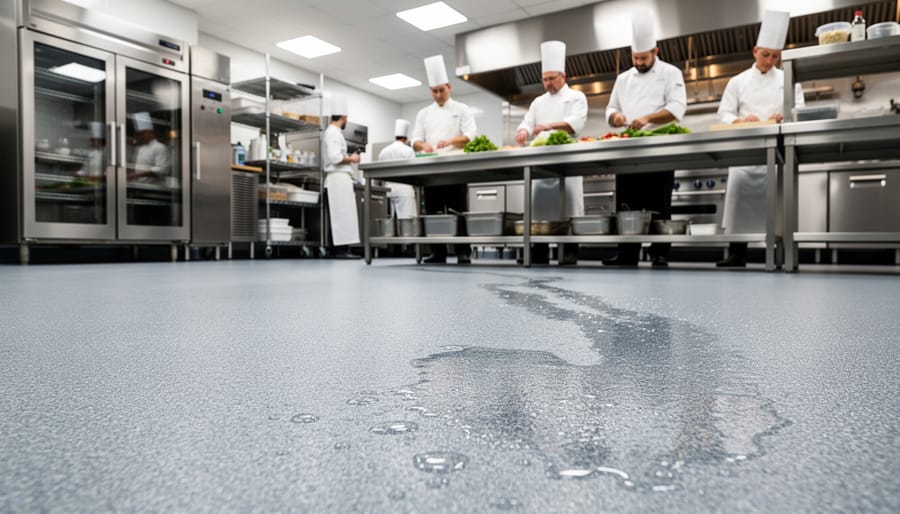
In food processing facilities, wet floors are inevitable—whether from cleaning protocols, spills, or condensation. Standard epoxy coatings can become dangerously slippery when moisture is present, creating serious hazards for workers carrying equipment or moving quickly through production areas. This is where textured epoxy solutions become essential for workplace safety.
Anti-slip epoxy systems incorporate specially designed additives that create traction without compromising the floor’s cleanability. The most common options include aluminum oxide particles, silica sand, or polymer beads mixed directly into the topcoat. These materials create a textured surface that grips footwear even when wet. The grit size matters—finer particles (40-60 grit) work well for light-duty areas, while coarser options (20-30 grit) suit heavy-traffic zones where liquids are constantly present.
Another popular approach involves broadcast aggregate finishes, where anti-slip media is scattered across wet epoxy and sealed with a clear topcoat. This method allows you to customize slip resistance based on specific area requirements.
When selecting your anti-slip system, consider the NFSI (National Floor Safety Institute) certification and coefficient of friction ratings. Most food facilities should target a minimum COF of 0.50 for dry conditions and 0.42 for wet surfaces. Testing samples in actual working conditions helps ensure you’re choosing the right texture level—too aggressive can make cleaning difficult, while insufficient texture compromises safety.
Innovative Epoxy Applications for Different Food Environments
Commercial Kitchen and Prep Areas
Commercial kitchens, restaurant prep areas, and catering facilities face unique flooring challenges that epoxy systems address effectively. The constant exposure to oils, acids, cleaning chemicals, and temperature fluctuations demands specialized formulations beyond standard epoxy products.
For these high-traffic zones, antimicrobial epoxy systems containing silver ion or copper additives help prevent bacterial growth between cleanings, supporting HACCP compliance. These additives integrate directly into the coating rather than sitting on the surface, maintaining effectiveness throughout the floor’s lifespan. When selecting products, verify they meet FDA and USDA requirements for food contact surfaces.
Rapid-cure epoxy formulations minimize operational disruption, allowing restaurants to resume service within 12-24 hours instead of several days. Fast-cure options prove essential during limited renovation windows or emergency repairs, though they require precise mixing ratios and temperature control during application.
Installation considerations include proper surface preparation using diamond grinders or shot blasters to ensure adhesion, followed by moisture testing to prevent delamination. Many facilities schedule installation during off-hours or temporary closures. While experienced tradespeople typically handle commercial kitchen applications due to strict regulatory requirements, smaller prep areas may suit confident DIYers willing to follow manufacturer specifications carefully.
The non-porous surface created by properly applied epoxy prevents liquid penetration and bacteria harboring, simplifying daily cleaning protocols while extending floor longevity in demanding environments.
Processing Plants and Manufacturing Facilities
Large-scale food manufacturing requires the most robust epoxy flooring systems available. In processing plants and manufacturing facilities, floors endure constant punishment from heavy forklift traffic, aggressive chemical cleaning agents, thermal shock from hot water washdowns, and impacts from dropped equipment or products.
For these demanding environments, heavy-duty epoxy systems typically feature a thicker application—often 3/16 to 1/4 inch or more. These industrial-grade systems incorporate extra layers of epoxy combined with aggregate materials that create exceptional impact resistance. Think of it as building up armor for your floor, with each layer adding strength and durability.
Chemical resistance becomes paramount in facilities that use caustic cleaners, acidic solutions, or sanitizing agents daily. Specialized epoxy formulations designed for extreme chemical exposure include novolac epoxy systems, which offer superior protection against concentrated acids, solvents, and harsh cleaning protocols. While more expensive upfront, they prevent costly downtime and floor replacement.
Drainage integration requires careful planning. Many processing plants install sloped epoxy floors that direct liquids toward floor drains, preventing standing water and bacterial growth. Professional installers use laser levels and specialized screeding tools to achieve precise slopes—typically 1/4 inch per foot toward drainage points.
For facilities processing raw meat, dairy, or other high-risk products, seamless epoxy installations eliminate grout lines and joints where bacteria can hide, making sanitation significantly easier and more effective.
Cold Storage and Freezer Rooms
Cold storage and freezer rooms present unique challenges that require specialized epoxy formulations designed to withstand extreme temperature fluctuations. Standard epoxy simply won’t cut it in sub-zero environments where floors experience constant thermal shock—the rapid expansion and contraction that occurs when temperatures swing from freezing to above-freezing during cleaning cycles.
These specialized cold-storage epoxies are formulated with flexible resins that can handle temperatures ranging from -40°F to well above freezing without cracking or delaminating. They also address moisture vapor transmission, a critical issue in freezer rooms where condensation can cause traditional flooring to fail. The epoxy creates a vapor barrier that prevents moisture from migrating through the concrete substrate, which could otherwise lead to ice formation beneath the floor and eventual surface breakdown.
When selecting epoxy for cold storage facilities, look for products specifically rated for cryogenic or sub-zero use. Installation requires careful attention to substrate preparation, as concrete must be properly dried and the ambient temperature controlled during application. Many facility managers hire professionals for this specialized work, though experienced DIYers can tackle smaller walk-in freezer projects with the right materials and guidance. Always ensure proper ventilation during application, even in cold environments, and follow manufacturer specifications for cure times at lower temperatures.
Installation Essentials: What You Need to Know
Surface Preparation: The Make-or-Break Step
Proper surface preparation determines whether your epoxy floor will last 15 years or fail within months. This critical phase accounts for roughly 80% of your project’s success, yet it’s where most installations go wrong.
Start by thoroughly cleaning the concrete surface to remove all grease, oils, and contaminants using industrial degreasers and high-pressure washers. Food industry facilities often have stubborn residues that require multiple cleaning passes. Next, inspect for cracks and damage. Fill hairline cracks with epoxy crack filler and repair larger structural issues before proceeding.
Moisture testing is non-negotiable in food environments where temperature fluctuations and cleaning routines create challenging conditions. Use a calcium chloride test or relative humidity probe to measure moisture vapor transmission. Readings above manufacturer specifications will cause delamination, no matter how perfectly you apply the epoxy.
The concrete profile, essentially the surface texture, must provide adequate tooth for epoxy adhesion. This typically requires mechanical grinding or shot blasting to achieve a CSP-2 or CSP-3 profile (Concrete Surface Profile). Think of it as creating a slightly rough texture similar to 60-80 grit sandpaper. Renting professional grinding equipment ensures consistent results compared to acid etching, which often produces uneven profiles and chemical disposal challenges in food facilities.
Finally, vacuum thoroughly to remove all dust before application begins.
Tools and Equipment You’ll Need
Installing epoxy flooring in food industry environments requires specialized equipment, some of which you’ll need to decide whether to hire or buy equipment depending on project frequency.
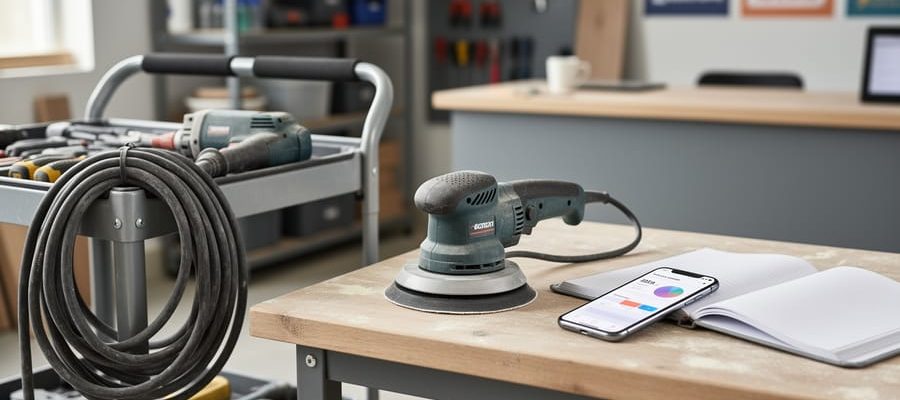
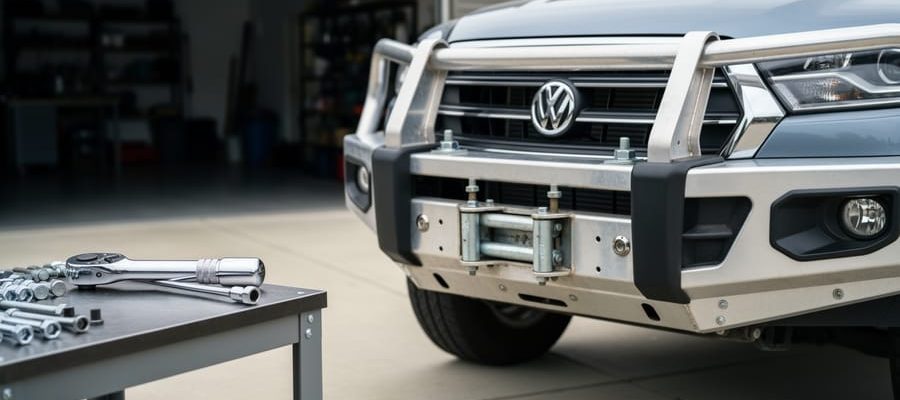
Surface preparation tools are essential and include concrete grinders or scarifiers for removing existing coatings and creating the proper profile. Floor shot blasters work well for larger areas. These heavy-duty machines are typically best hired unless you’re a professional installer.
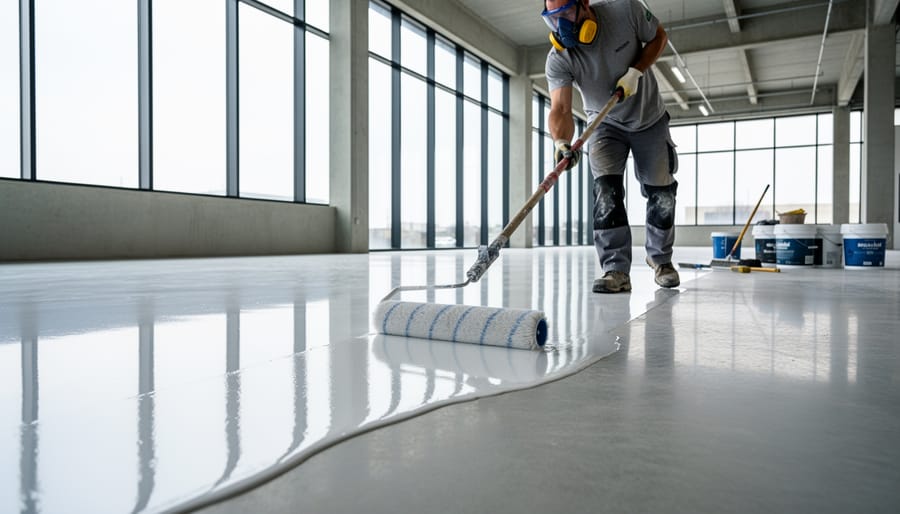
For mixing and application, you’ll need industrial-grade mixing paddles attached to heavy-duty drills, calibrated measuring containers for precise resin-to-hardener ratios, and notched squeegees or rollers designed for epoxy application. Spiked shoes allow you to walk on wet epoxy without leaving footprints.
Cleaning equipment includes industrial vacuums with HEPA filters to remove dust after grinding, and degreasing supplies for eliminating contaminants.
Safety equipment is non-negotiable in food facility applications. You’ll need respirators with organic vapor cartridges, chemical-resistant gloves, safety goggles, and protective coveralls. Proper ventilation equipment may also be required.
Temperature and humidity monitoring tools ensure ideal application conditions, critical for achieving food-grade certification standards. Most suppliers offer equipment packages specifically designed for food industry applications.
Application Timeline and Facility Downtime
Plan for 3-5 days of complete facility downtime for epoxy flooring installation in food industry settings. Surface preparation typically takes 1-2 days, depending on the condition of your existing floor and whether concrete repairs are needed. Application itself requires 1 day, but curing time is the real consideration. Most food-grade epoxy systems need 24-48 hours before light foot traffic and 5-7 days before reaching full chemical resistance and heavy equipment loads.
Schedule installations during planned shutdowns, holiday periods, or slower production times to minimize revenue loss. Working in sections allows partial facility operation, though this extends the overall timeline and requires careful coordination to maintain hygiene standards between finished and unfinished areas.
Temperature and humidity significantly affect curing times. Ideal conditions are 60-90°F with low humidity. Cold weather can double curing periods, while excessive heat may cause application problems. Your contractor should monitor conditions closely and adjust the schedule accordingly.
Consider phased installations for larger facilities, completing one production area at a time. This approach reduces immediate impact but requires longer overall commitment and temporary workflow adjustments.
Cost Breakdown: Investment vs. Long-Term Value
Pricing Factors and What Drives Costs Up
Several variables influence what you’ll spend on food industry epoxy flooring. Facility size is the primary factor—larger spaces naturally require more materials and labor hours. A 1,000 square foot space will cost considerably less than a 10,000 square foot warehouse.
The condition of your existing floor matters significantly. Cracked, uneven, or contaminated concrete needs extensive preparation—grinding, crack repair, and proper cleaning—which adds both time and equipment costs. Pristine concrete that only needs light profiling will reduce your overall expense.
The epoxy system type you choose creates major price differences. Basic two-part epoxies start around $3-7 per square foot for materials and labor, while specialized food-grade systems with antimicrobial additives, enhanced chemical resistance, and seamless finishes can range from $8-15+ per square foot. Industrial-grade systems designed for heavy traffic and frequent washdowns sit at the higher end.
Required additives drive costs upward. Slip-resistant aggregates, antimicrobial agents, UV stabilizers, and custom color matching each add to the base price. Labor complexity also varies—experienced installers familiar with food safety requirements command higher rates, but their expertise ensures proper installation and compliance. DIY approaches can reduce labor costs but require appropriate equipment rental and thorough understanding of application techniques to meet safety standards.
Calculating Your Return on Investment
When evaluating epoxy flooring against traditional options like tile or sealed concrete, consider the total ownership cost over time rather than just installation expenses. Quality epoxy systems typically last 15-20 years in food facilities compared to 5-10 years for standard sealed concrete and 10-15 years for tile.
The real savings emerge through reduced maintenance requirements. Epoxy’s seamless surface means less frequent deep cleaning and no grout line scrubbing, potentially saving 2-3 hours weekly in a mid-sized facility. Fewer floor replacements translate to reduced downtime—replacing damaged tile sections can shut down production areas for days, while minor epoxy repairs often take just hours.
Compliance benefits also factor into your return. Epoxy’s resistance to bacterial growth and easy sanitization help avoid costly health violations that could result in fines, recalls, or temporary closures. Track your current flooring maintenance costs, replacement frequency, and any compliance issues over the past five years. Compare these figures against epoxy’s projected 15-year lifespan with minimal maintenance to calculate your potential savings and payback period.
Maintenance That Keeps Your Floor Performing
Daily Cleaning Protocols
Daily cleaning keeps epoxy floors hygienic and extends their lifespan in food facilities. Start with dry sweeping or dust mopping to remove loose debris. For wet cleaning, use a pH-neutral detergent mixed with warm water—harsh chemicals or acidic cleaners can damage the epoxy coating over time.
Mop the floor thoroughly, paying attention to corners and areas around equipment where residue accumulates. For stubborn stains or heavy soil buildup, professional cleaning equipment like auto-scrubbers can make the job faster and more effective.
Avoid abrasive scrubbing pads that might scratch the surface, creating spaces where bacteria can harbor. Never use ammonia-based products, bleach at full strength, or citrus-based cleaners, as these break down the epoxy bond. Always rinse thoroughly after cleaning to prevent residue buildup, and ensure floors are completely dry before resuming operations to prevent slips and maintain food safety compliance.
When to Repair vs. Replace
Regular inspections help catch problems early and save money. Check your epoxy floor monthly for wear indicators like discoloration, surface dulling, or minor cracks. Small chips and scratches can be spot-repaired with epoxy patch kits available at most tool hire centers, preventing moisture infiltration and bacterial growth that violate food safety standards.
Address minor damage immediately by cleaning the area thoroughly, roughening the surface with 80-grit sandpaper, and applying a compatible epoxy repair compound. This simple fix prevents issues from spreading across larger sections.
Consider recoating when you notice widespread surface wear, fading, or multiple small damaged areas. A fresh topcoat restores chemical resistance and appearance without full replacement. However, complete replacement becomes necessary when you see extensive cracking, delamination (lifting from the concrete), or if the floor has served beyond its typical 10-15 year lifespan.
Common troubleshooting: Slippery surfaces indicate worn slip-resistant additives requiring recoating. Persistent odors suggest moisture trapped beneath, pointing to substrate issues needing professional assessment. Peeling edges mean improper initial bonding and typically require sectional replacement. When in doubt, consult experienced tradespeople who understand food industry compliance requirements before attempting major repairs yourself.
Epoxy flooring has established itself as the definitive solution for food industry facilities, combining exceptional hygiene standards, regulatory compliance, and long-term durability in one practical package. Its seamless, non-porous surface directly addresses the unique challenges of food processing environments while offering resistance to the harsh chemicals, temperature fluctuations, and constant traffic these spaces endure daily.
If you’re currently managing a food facility or planning a new installation, now is the time to evaluate your existing flooring. Ask yourself whether it meets current safety standards, how much downtime maintenance requires, and what hidden costs lurking beneath the surface might be costing your operation. For large-scale commercial projects, partnering with a professional installer experienced in food-grade applications ensures proper surface preparation and compliance with industry regulations. However, smaller facilities or those with in-house maintenance teams can explore tool rental options for equipment like concrete grinders and epoxy mixers, making DIY application more accessible and cost-effective. Whatever path you choose, investing in quality epoxy flooring protects both your operation and your bottom line.
Related Posts