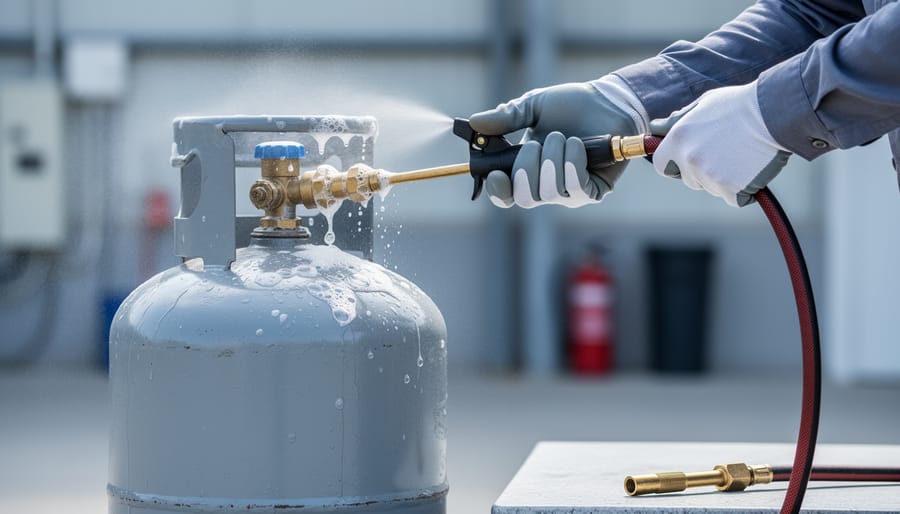
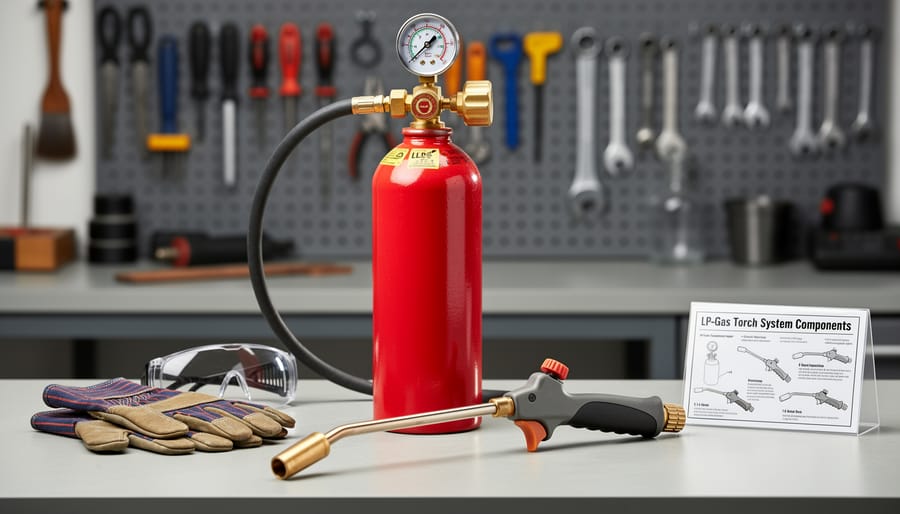
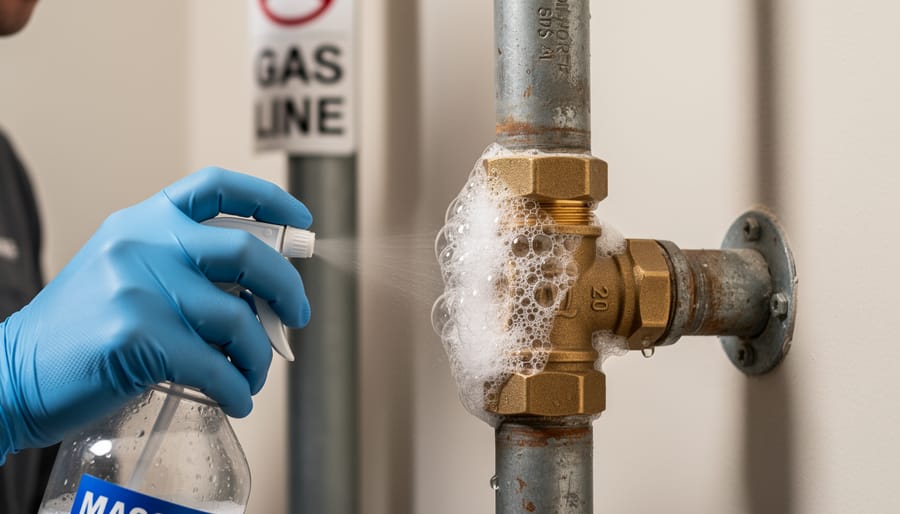
Inspect your LP-gas cylinder before every use, checking for dents, rust, damaged valves, or leaking connections by applying soapy water and watching for bubbles. Always store cylinders upright in well-ventilated outdoor areas away from ignition sources, basement storage, or temperatures exceeding 125°F, and keep them at least 20 feet from building openings. Turn off both the cylinder valve and torch control valve immediately after use, following the proper shutdown sequence to prevent gas accumulation in lines. Never use matches or lighters to check for leaks, and replace damaged hoses showing cracks, burns, or worn fittings before operating your torch.
Your safety depends on understanding that LP-gas is heavier than air and will settle in low areas where it can create explosive pockets. Maintain a fully-charged fire extinguisher rated for flammable gas fires within immediate reach of your work area, and establish your workspace with clear escape routes before lighting your torch. Keep children, pets, and bystanders at least 15 feet away from active torch operations, and never leave a lit torch unattended even for seconds.
Understanding LP-Gas and Why It Demands Respect
What Makes LP-Gas Different From Other Fuels
LP-gas, which includes propane and butane, behaves quite differently from liquid fuels like gasoline or natural gas, and understanding these differences is essential for safe handling. Unlike liquid fuels that need to be ignited directly, LP-gas turns from liquid to vapor at normal temperatures, which means it’s already in a flammable state when it leaves your torch.
Here’s what makes LP-gas unique: First, it has a high expansion ratio. One volume of liquid LP-gas expands to approximately 270 volumes of vapor, which is why even a small leak can create a surprisingly large amount of flammable gas in your workspace. Second, LP-gas is heavier than air. This means leaked gas doesn’t dissipate upward like natural gas—instead, it settles in low spots, creating invisible pockets of flammable vapor in basements, trenches, or floor depressions.
The vapor pressure of LP-gas also varies with temperature. As temperatures rise, pressure inside your cylinder increases significantly, which affects torch performance and safety. This is why storing cylinders in cool locations matters more than you might think.
Understanding these characteristics helps explain why specific safety rules exist, from proper ventilation requirements to cylinder storage guidelines. When you know how LP-gas behaves, the safety protocols make practical sense rather than seeming like arbitrary restrictions.
The Real Risks: What Can Go Wrong
LP-gas torches present several genuine hazards that demand your respect and attention. Flashback is perhaps the most startling risk—this occurs when flames travel back through the torch tip into the hoses or regulator, often caused by incorrect pressure settings or damaged equipment. You’ll hear a loud popping or squealing sound if this happens.
Cylinder rupture, while rare, can occur if cylinders are exposed to excessive heat, physical damage, or corrosion. This is why proper storage away from heat sources and regular visual inspections matter so much.
Asphyxiation is a silent danger, especially when working in enclosed spaces. LP-gas is heavier than air and displaces oxygen as it accumulates near floor level. Without adequate ventilation, you can lose consciousness before realizing anything is wrong.
Fire spread happens faster than most people expect. A momentary lapse—setting down a hot torch near combustible materials or failing to clear your work area—can ignite surrounding objects within seconds. According to user reports in our community, the most common near-misses involve forgetting that metal remains dangerously hot long after you’ve finished working.
These aren’t scare tactics; they’re realities that careful preparation and consistent safety practices effectively prevent.
Pre-Use Safety Checks That Could Save Your Life
Inspecting Your Cylinder and Connections
Before each use, thoroughly inspect your LP-gas cylinder and all connections to prevent dangerous leaks. Start with the leak test: mix a solution of dish soap and water, then brush or spray it generously onto all connection points, including the regulator attachment, hose connections, and valve threads. Open the cylinder valve slowly and watch for bubbles. Even small bubbles indicate a leak that must be fixed before proceeding.
Check the O-ring seal inside your regulator connection. This small rubber ring prevents gas from escaping and should be smooth, flexible, and free from cracks or flattening. Replace damaged O-rings immediately, as they’re inexpensive but critical safety components.
Examine all threads on both the cylinder valve and regulator for damage, cross-threading, or debris. Clean threads gently with a dry cloth and ensure connections thread smoothly by hand before tightening with a wrench. Never force connections or use damaged equipment.
Test your cylinder valve operation by opening and closing it completely. The valve should turn smoothly without sticking or requiring excessive force. If you notice stiffness, squealing, or difficulty operating the valve, have the cylinder professionally inspected before use. Many users in the community recommend keeping a maintenance log to track inspection dates and component replacements.
Torch Head and Hose Inspection
Before each use, examine your torch hose carefully for signs of wear. Run your hands along the entire length, checking for cracks, cuts, abrasions, or any soft spots that indicate internal degradation. Pay special attention to areas near connections where stress concentrations occur. If you notice any damage, replace the hose immediately—compromised hoses can leak gas or rupture under pressure, creating serious fire hazards.
Inspect the torch head for cracks in the body or handle. Even hairline fractures can allow gas to escape. Check that all connections are tight and secure, and look for any signs of melting or heat damage from previous use. The torch head should feel solid with no loose components rattling inside.
Examine the nozzle opening for blockages, carbon buildup, or debris. A clogged nozzle affects flame performance and can cause dangerous backfiring. Clean nozzles according to manufacturer instructions using appropriate tools—never use makeshift methods that could damage the opening.
Replace hoses every three to five years regardless of visible condition, as rubber degrades over time. Replace torch heads immediately if you discover cracks, persistent leaks, or if connections no longer seal properly. When in doubt about any component’s condition, err on the side of caution and replace it.
Safe Lighting and Operating Procedures
The Right Way to Light Your Torch
Lighting your LP-gas torch correctly is crucial for both safety and effectiveness. Before striking up, always check that all connections are secure and there are no gas leaks. Open the torch valve slowly, just a quarter turn to start, allowing a controlled flow of gas. You should hear a gentle hiss, not a roaring sound.
For ignition, use a spark striker rather than a cigarette lighter. Strikers provide better distance between your hand and the flame, reducing burn risk. Hold the striker about two inches from the torch tip at a 45-degree angle. Strike decisively while the gas flows. The torch should light immediately with a blue cone-shaped flame.
If the torch doesn’t light on the first attempt, immediately close the valve and wait 30 seconds before trying again. This prevents gas buildup, which can cause dangerous flashback. Never leave gas flowing while troubleshooting or searching for ignition tools.
Once lit, adjust the flame by slowly opening the valve until you achieve the desired intensity. A proper flame should be blue with a defined inner cone. For more detailed gas torch operation tips, refer to your specific torch manufacturer’s guidelines and always prioritize steady, controlled movements during the lighting process.
Maintaining Control During Use
Once your torch is lit and you’re ready to work, maintaining proper control is essential for both safety and effective results. Always position the torch at a comfortable angle that gives you clear visibility of both the flame and your work surface. Keep the torch pointing away from your body, with the flame directed downward or at your workpiece—never upward where heat can rise toward your hands or face.
Maintain a working distance of at least 6 to 12 inches between the flame and combustible materials, adjusting as needed based on the intensity of your specific task. Remember that heat radiates beyond the visible flame, so materials can ignite even without direct contact.
Watch your flame behavior closely throughout use. A properly adjusted flame should be blue with a distinct inner cone and minimal yellow tipping. If you notice excessive yellow flames, sputtering, or the flame pulling away from the torch tip, stop immediately and readjust your gas flow. A roaring sound usually means too much gas, while a flame that keeps going out suggests insufficient flow.
Adjust the control valve gradually—small turns make significant differences. If you need to set the torch down mid-project, always shut off the gas flow completely rather than leaving it burning unattended. Never leave a lit torch on unstable surfaces or where it could roll.
Pro tip from experienced users: Practice your adjustments before starting critical work to build confidence with your specific torch model.
Work Environment Safety Rules
Ventilation and Gas Accumulation Prevention
Proper ventilation is critical when working with LP-gas because propane is heavier than air and naturally sinks to floor level. Without adequate airflow, gas can accumulate in basements, pits, trenches, and other low-lying areas, creating invisible pockets of flammable vapor that pose serious explosion risks.
Always work in well-ventilated spaces with multiple air exchange points. Open windows and doors on opposite sides of your workspace to create cross-ventilation. Indoor work areas should have mechanical ventilation systems capable of moving air at ground level where propane settles. Avoid using LP-gas torches in enclosed spaces like closets, storage rooms, or unventilated garages.
Warning signs of poor ventilation include unusual odors lingering longer than expected, visible vapor clouds, or feeling lightheaded while working. If you detect the distinctive smell of LP-gas at floor level, immediately stop work, evacuate the area, and ventilate thoroughly before resuming.
Before starting any torch work, inspect your workspace for potential gas traps. Cover or seal floor drains, eliminate dead air spaces behind stored materials, and ensure nothing blocks air movement near the ground. Never work in pits or below-grade areas without forced ventilation systems running continuously throughout your project.
Fire Safety and Clear Zones
Always maintain a minimum clearance of 3 meters from combustible materials when operating LP-gas torches. This includes wood, paper, fabric, flammable liquids, and dry vegetation. Before starting work, scan your environment and remove any unnecessary flammables from the area. Keep a properly rated fire extinguisher within arm’s reach—a 2kg dry chemical extinguisher (minimum) is essential for gas-related fires. Understand that heat travels beyond the visible flame, potentially igniting materials through walls or underneath surfaces. Enhance your workspace safety and visibility by ensuring adequate lighting and marking hazard zones. Never work near fuel storage areas, aerosol cans, or paint containers. Check for hidden hazards like gas lines or electrical wiring before applying heat to any surface. Have a water source or fire blanket available as backup protection, and always monitor the work area for at least 30 minutes after completing torch operations to catch any delayed ignition.
Cylinder Storage and Transport Safety
Storage Requirements That Prevent Disasters
Storing LP-gas cylinders correctly is essential for preventing potentially catastrophic incidents. Always keep cylinders in well-ventilated outdoor areas away from direct sunlight and heat sources, as temperatures above 50°C can cause dangerous pressure buildup. Store cylinders upright and secure them with chains or straps to prevent tipping, which could damage the valve assembly and cause leaks. Following proper cylinder storage guidelines means keeping them at least 3 meters away from flammable materials like paint, solvents, or combustible waste. Never store cylinders in enclosed spaces such as sheds, basements, or vehicle trunks where gas can accumulate. Separate full and empty cylinders clearly, and ensure valve caps are fitted when not in use. Position cylinders on stable, level ground away from doorways and high-traffic areas where they might be knocked over. These simple precautions significantly reduce risks associated with LP-gas handling.
Transporting Cylinders Safely
When transporting LP-gas cylinders in your vehicle, always secure them upright using appropriate straps or tie-downs to prevent rolling or tipping during transit. Never place cylinders in enclosed passenger compartments like car trunks or back seats where leaked gas could accumulate. Instead, transport them in well-ventilated areas such as truck beds or open trailers with the valve caps tightly secured.
During hot weather, take extra precautions. Park in shaded areas when possible and never leave cylinders in hot vehicles for extended periods, as heat increases internal pressure and raises safety risks. Ensure adequate airflow around cylinders throughout your journey.
Before loading, inspect each cylinder for damage, leaks, or dents. Keep cylinders away from other equipment that could puncture or damage them during transport. If you smell gas while driving, immediately pull over in a safe location, open all windows, and move the cylinder to an open area away from ignition sources. Many users in our community recommend keeping a simple transport checklist to verify proper securing methods each time.
Emergency Procedures You Need to Know
Responding to Gas Leaks
If you smell gas or suspect a leak, act immediately. First, don’t touch any electrical switches, phones, or create sparks—these can ignite the gas. Turn off the gas supply at the cylinder valve by rotating it clockwise until completely closed. If the valve is too hot or damaged, skip this step and evacuate immediately.
Clear everyone from the area, including pets, and move at least 100 feet away from the leak source. Once you’re at a safe distance, call 911 or your local emergency services. Don’t re-enter the area until professionals declare it safe.
Never attempt to locate a leak using an open flame. If you turned off the gas supply, don’t turn it back on yourself—only qualified technicians should restore service after a leak. Keep your supplier’s emergency number saved in your phone and posted in your workspace. Remember, gas leaks can be invisible, so trust your nose and err on the side of caution. Community feedback consistently emphasizes that overreacting to potential gas leaks is always better than underestimating the danger.
Dealing With Torch Malfunctions
If your torch begins acting strangely, staying calm and following proper shutdown procedures can prevent serious injury. First, immediately close the oxygen valve, then the fuel valve to cut off the gas supply. Never try to relight a malfunctioning torch or continue working with faulty equipment.
Flashback, identified by a hissing or squealing sound and flame moving back toward the torch body, requires immediate action. Quickly shut off both valves starting with oxygen, then fuel. Allow the torch to cool completely before investigating the cause, which often involves clogged tips or incorrect pressure settings.
What you should never do is equally important: Don’t drop a lit torch, even in panic. Never attempt repairs while gas is flowing. Avoid using water to cool an overheated torch, as this can cause damage and dangerous pressure changes. Don’t ignore warning signs like popping sounds, irregular flames, or unusual smells. If you’re uncertain about the problem, consult an experienced user or contact the equipment supplier before attempting to use the torch again. Remember, replacing faulty equipment is always cheaper than treating burn injuries.
Personal Protection Equipment That Actually Matters
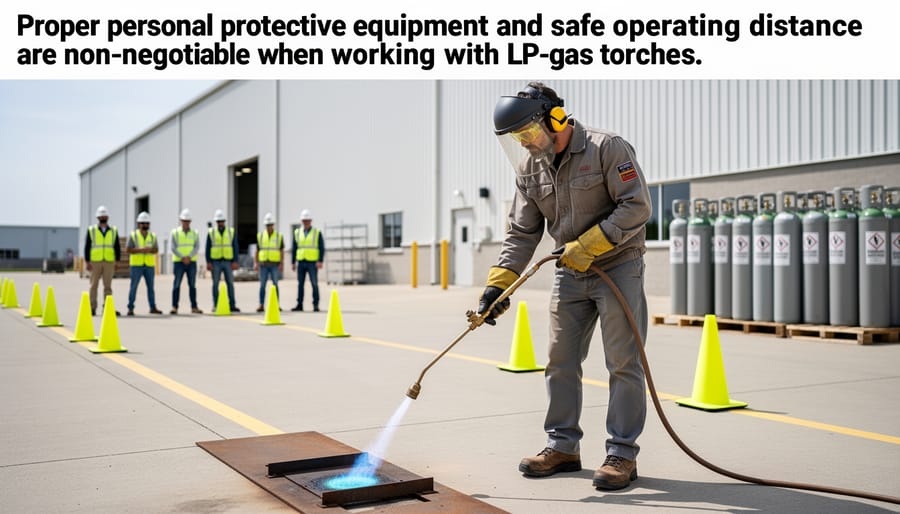
When working with LP-gas torches, proper personal protection equipment can mean the difference between a safe project and a trip to the emergency room. Just as with other essential safety equipment, each piece of PPE serves a specific purpose.
Start with eye protection rated for gas work, specifically safety glasses or goggles with side shields that meet Australian Standards AS/NZS 1337. Regular prescription glasses won’t cut it. For overhead torch work or cutting operations, upgrade to a full face shield to protect against falling sparks and molten metal droplets.
Heavy-duty leather or flame-resistant gloves are non-negotiable. Choose gauntlet-style gloves that extend past your wrists to prevent sparks from sliding down into the glove opening. Cotton or synthetic gloves will melt onto your skin.
Wear natural fiber clothing like cotton or treated flame-resistant fabrics. Avoid synthetic materials including polyester, nylon, and fleece, which can melt and cause severe burns. Long sleeves and full-length trousers are essential, even on hot days.
Steel-capped boots protect your feet from dropped cylinders and hot metal, while leather aprons add an extra barrier for prolonged torch work. Community feedback consistently emphasizes that proper PPE feels cumbersome initially but becomes second nature with regular use.
Common Mistakes Even Experienced Users Make
Even seasoned torch users fall into dangerous habits that seem harmless until something goes wrong. One of the most common violations we hear about from community members is the “just for a second” mentality when checking for leaks with a flame instead of soapy water. This shortcut has caused flash fires that could have been completely avoided with proper leak detection methods.
Many experienced users admit to storing cylinders horizontally or in enclosed spaces like car trunks during transport. One contractor shared how his cylinder rolled during a sudden stop, damaging the valve and creating a dangerous leak situation. Cylinders must always be secured upright, even for short trips.
Another frequent mistake is continuing to use regulators and hoses past their recommended lifespan. Rubber components degrade over time, regardless of visible condition. Several professionals have reported near-misses when aging hoses failed under pressure, emphasizing why regular replacement schedules matter more than visual inspections alone.
The “I know what I’m doing” approach to purging lines also causes problems. Rushing this step or skipping it entirely when switching between different gas types can create explosive mixtures. Community feedback consistently highlights purging shortcuts as a primary cause of unexpected flare-ups.
Finally, working in poorly ventilated areas because “it’ll only take a minute” remains dangerously common. Carbon monoxide and propane are both heavier than air and accumulate quickly in enclosed spaces. Multiple users have reported dizziness and headaches that could have escalated to serious incidents. No project deadline justifies compromising ventilation requirements.
LP-gas safety isn’t something you can compromise on or skip when you’re in a hurry. Every rule exists because someone, somewhere, learned a difficult lesson. The good news is that following these protocols becomes automatic with practice. What feels like a lengthy checklist today will soon be muscle memory that takes just moments to complete.
We’d love to hear from you in the comments below. What safety practices have become second nature in your workshop? Have you discovered any additional precautions that work well for your specific projects? Community knowledge makes all of us safer, and your experience might prevent someone else’s accident.
Remember that the few extra seconds spent double-checking connections, testing for leaks, or ensuring proper ventilation are always worth it. Shortcuts might save time in the moment, but they’re never worth the risk to yourself, your workspace, or others nearby. Whether you’re a weekend DIYer tackling your first soldering project or a seasoned professional working under deadline pressure, safety must always come first.
Keep these rules visible in your workspace, refresh your knowledge regularly, and never hesitate to slow down when something doesn’t feel right. Your safety depends on it.
Related Posts