
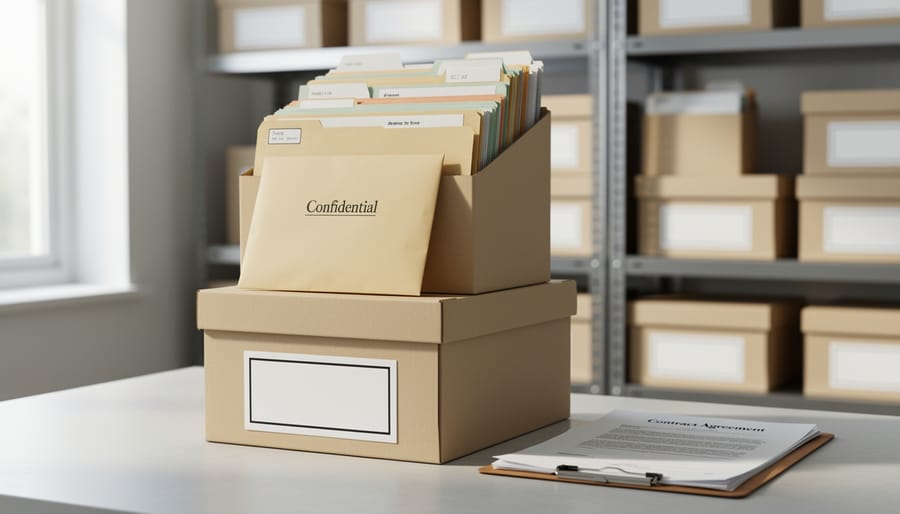
Even in an increasingly digital world, most businesses still accumulate paper. Financial records, contracts, employee files, client documents and archives can quickly take over filing cabinets, storerooms and spare offices. Yet many of these records need to be kept for years.
Self storage offers a practical solution for keeping business documents safe while freeing up valuable workspace. Here’s how to store records properly and protect them for the long term.
Know how long to keep records
Before storing documents, it helps to understand how long they need to be retained. Australian businesses generally need to keep many tax and financial records for at least five years, and some records for longer depending on the circumstances.
Employee records, contracts and industry-specific documents may have their own requirements. Check with your accountant or adviser so you know what to keep and what can be securely destroyed.
Sort before you store
Storing documents you don’t need wastes space and money. Before moving records into storage, sort through them and separate what must be kept from what can be disposed of securely.
Group documents by type and year. This makes it easier to retrieve specific records later and to identify which boxes can be destroyed when their retention period ends.
Use quality archive boxes
Standard cardboard boxes can weaken over time, especially when stacked. Purpose-made archive boxes are sturdier, uniform in size and designed for long-term document storage. They stack neatly and protect contents from dust.
Avoid overfilling boxes, which can cause them to bulge or split. Keep weight manageable so boxes can be lifted safely.
Label everything clearly
Clear labelling saves enormous time. Mark each box with its contents, date range, department and destruction date if applicable. Use the same labelling system across all boxes for consistency.
Keeping a master list or spreadsheet of what’s in each box, along with its location within the storage unit, makes retrieval quick and easy when you need a specific file.
Protect documents from damage
Paper is vulnerable to moisture, pests and heat. Choose a clean, dry, secure storage facility and avoid placing boxes directly on the floor. Using pallets or shelving keeps boxes off the ground and improves air circulation.
Store important documents in plastic sleeves or containers if extra protection is needed. Avoid storing food or anything that may attract pests in the same unit.
Keep sensitive information secure
Many business records contain confidential or personal information. Protecting this information is not only good practice but also important for privacy obligations. Choose a storage facility with strong security features, such as gated access, CCTV, individual unit alarms and secure locks.
Limit who has access to the storage unit and keep a record of when files are removed or returned.
Organise the storage unit
Arrange the unit so frequently accessed records are near the front and long-term archives are further back. Installing shelving allows you to make the most of vertical space and keeps boxes accessible.
Leave a clear aisle so you can reach boxes without moving everything. A little planning upfront makes future visits much easier.
Combine paper storage with digital records
Many businesses choose to scan important documents for easy access while keeping the originals in storage. Digital copies can be searched quickly, while originals remain available if needed.
Make sure digital files are backed up securely, and keep originals where they may be required for legal or compliance purposes.
Plan secure destruction
Once records have passed their required retention period, dispose of them securely. Shredding services ensure confidential information is destroyed properly. Reviewing stored records regularly prevents your storage unit from filling with documents you no longer need.
Choosing the right unit size
Document boxes take up more space than many people expect, particularly once you allow for shelving and an access aisle. Count your boxes, consider how many you will add each year and choose a unit with room to grow. A storage facility can help you estimate the right size based on the number of archive boxes you have.
A unit that is too small quickly becomes cluttered, making it hard to find files. A slightly larger unit with good shelving is often more practical and saves time every time you need to retrieve a record.
Secure storage units with good access control, CCTV and clean, dry conditions are well suited to keeping business records safe for years.
A smarter way to manage paperwork
Storing business documents in a secure self storage unit frees up office space, protects important records and keeps everything organised. With sorting, quality boxes, clear labelling and good security, your records will be safe and easy to find whenever you need them.
Related Posts