
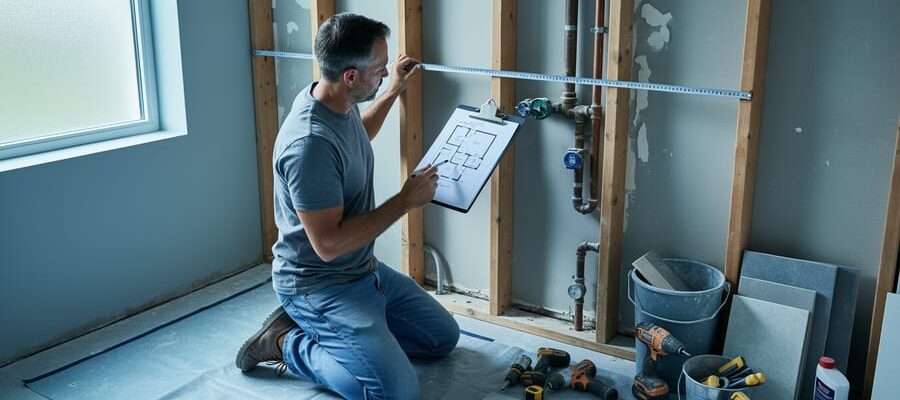
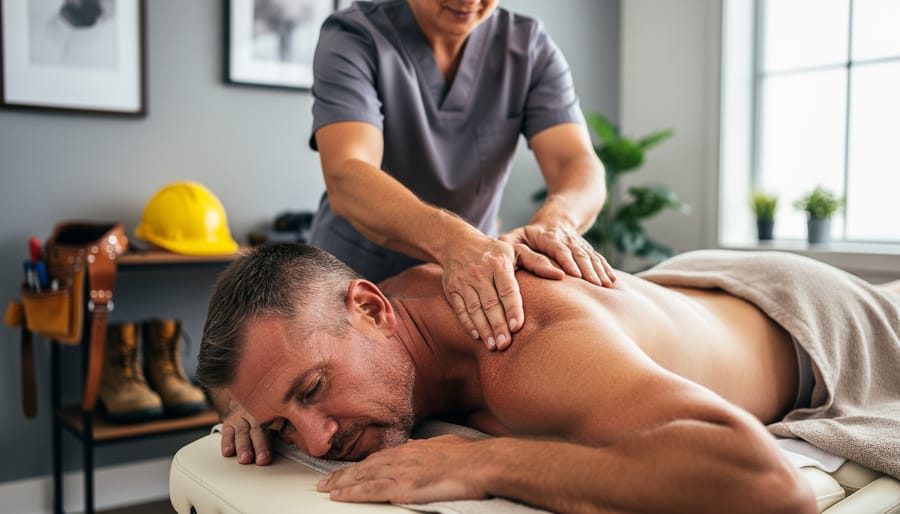
Your body takes a beating in the trades. Eight hours hauling lumber, swinging hammers, or crouched under sinks leaves your muscles knotted, joints aching, and pain radiating through your back, shoulders, and neck. You’ve tried ice packs and over-the-counter pills, but the discomfort keeps coming back because the root cause—repetitive strain, poor positioning, and accumulated tension—never gets addressed.
Therapeutic massage targets these work-related injuries directly. Unlike relaxation massage at day spas, therapeutic techniques focus on healing damaged tissue, breaking up scar tissue from old injuries, and restoring proper movement patterns your body has forgotten after years of compensating for pain. Each of the eight massage types covered here addresses specific trade-related problems: deep tissue for chronic lower back pain from lifting, trigger point therapy for that persistent shoulder knot from overhead work, sports massage for preventing re-injury when you can’t afford time off.
Understanding which technique matches your specific pain saves you money on ineffective treatments and gets you back to full capacity faster. This guide cuts through the wellness industry noise to explain exactly what each massage type does, which occupational injuries it treats best, and realistic expectations for recovery time. Whether you’re dealing with carpal tunnel from constant tool use or hip pain from climbing ladders, there’s a proven therapeutic approach that addresses your particular problem without the guesswork.
Why Tradespeople Need Therapeutic Massage More Than Most
If you’ve spent years swinging hammers, crawling under houses, or hauling materials up ladders, you already know the toll it takes on your body. Tradespeople face unique physical demands that most office workers never experience. The repetitive motions, awkward positions, and sheer physical load of construction, carpentry, plumbing, and electrical work create a perfect storm for chronic pain and injury.
Lower back pain is practically universal among tradies, often developing from constant bending, lifting, and twisting movements. Your shoulders cop it too, especially if you’re overhead working regularly or operating heavy tools for extended periods. Knees take a beating from kneeling on hard surfaces and climbing, while hands and wrists suffer from vibration exposure and gripping tools day in and day out.
The real problem? This tension doesn’t just disappear overnight. It builds up gradually, layer by layer, until you’re dealing with restricted movement, constant aches, or full-blown injuries that keep you off the tools. Many tradies push through the pain until it becomes unbearable, but that approach only makes recovery harder and longer.
Similar to osteopathy for tradesmen, therapeutic massage addresses these occupational hazards directly. It’s not about pampering or relaxation, though those are nice side benefits. It’s about maintaining your body as a working tool that needs regular maintenance, just like your equipment.
Community feedback from tradies who’ve incorporated regular massage into their routines consistently highlights improved flexibility, reduced pain levels, and better recovery times between jobs. One carpenter mentioned being able to work a full week without the usual Friday afternoon back spasms. A plumber reported finally sleeping through the night without shoulder pain waking him up.
Think of massage therapy as preventative maintenance for supporting strength and mobility throughout your working life. Your body is your livelihood, and keeping it functioning properly isn’t optional when your income depends on it.

The 8 Therapeutic Massage Techniques That Target Tradesman Injuries
Deep Tissue Massage for Chronic Muscle Tension
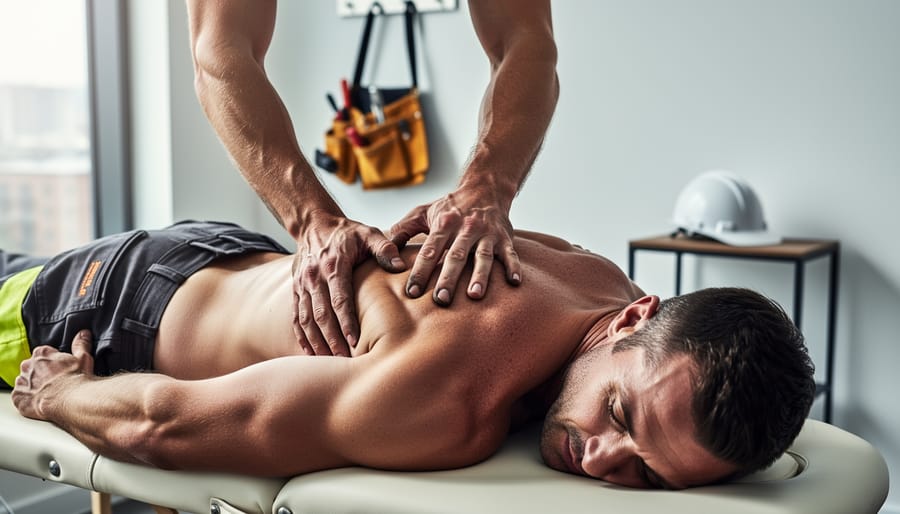
Deep tissue massage targets the deeper layers of muscle and connective tissue using firm pressure and slow strokes. This technique excels at breaking down scar tissue and adhesions that develop from repetitive movements common in trades work. When you perform the same motion hundreds of times daily, whether it’s overhead drilling, lifting materials, or bending to install flooring, your muscles form tight knots and fibrous tissue that restrict movement and cause persistent pain.
The therapist applies sustained pressure across the grain of the muscle, working systematically to release chronic tension patterns. You might experience some discomfort during treatment, but it shouldn’t be unbearable. Many tradespeople report this technique provides the most relief for stubborn lower back pain that doesn’t respond to lighter massage styles.
This approach proves particularly effective for shoulder tension resulting from overhead work like electrical installations, HVAC repairs, or painting. The focused pressure helps restore range of motion that deteriorates over months or years of strain.
Plan for some muscle soreness lasting 24 to 48 hours after your session, similar to post-workout achiness. Drinking plenty of water afterward helps flush metabolic waste released during treatment. Most professionals recommend starting with biweekly sessions for chronic conditions, then transitioning to monthly maintenance appointments.
Trigger Point Therapy for Knots and Referred Pain
Trigger point therapy zeroes in on those stubborn knots that develop from repetitive gripping, tool handling, and awkward positioning common in trade work. These hyperirritable spots in muscle tissue often create referred pain, meaning you might feel discomfort far from the actual problem area. For example, a trigger point in your forearm from constant drill use can send pain shooting up to your shoulder or down into your hand.
A therapist applies concentrated pressure directly to these points, holding for 30-90 seconds until the muscle releases. You’ll likely feel a “good hurt” sensation, sometimes accompanied by a twitch response as the knot breaks up. The technique proves especially effective for carpenters experiencing thumb and wrist pain, electricians with neck tension from overhead work, and plumbers dealing with lower back knots from crawling in tight spaces.
Many tradespeople report that understanding their referred pain patterns helps them communicate better with therapists. Common patterns include forearm trigger points causing elbow pain (often mistaken for tennis elbow), upper trapezius points creating headaches, and gluteal trigger points mimicking sciatica. Between professional sessions, you can use tennis balls or specialized tools for self-treatment at home.
Sports Massage for Injury Prevention and Recovery
Sports massage techniques adapt perfectly to trades work because your daily physical demands mirror those of athletes. Whether you’re framing walls, laying bricks, or installing roofing, your body endures repetitive movements, heavy lifting, and sustained awkward positions that strain muscles and connective tissue.
Pre-work application prepares your muscles for the day ahead. A quick 10-15 minute session focusing on the muscle groups you’ll use most activates blood flow and improves flexibility. For example, carpenters benefit from forearm and shoulder work before starting precision tasks, while concreters need lower back and leg preparation.
Post-work recovery sessions reduce inflammation and flush out metabolic waste products that build up during physical labor. This speeds healing and prevents the cumulative damage that leads to chronic injuries. Community feedback consistently shows tradespeople who incorporate regular sports massage report fewer sick days and longer careers.
The technique uses firm pressure and specific strokes targeting deep muscle layers. Similar to proper safety measures in construction, prevention through sports massage proves more effective than treating established injuries. Many tradies schedule weekly sessions or learn basic self-massage techniques for daily maintenance between professional treatments.
Myofascial Release for Restricted Movement
Fascia is the thin connective tissue wrapping around your muscles like cling film. When you repeat the same motions day after day—swinging a hammer, gripping tools, or bending over workbenches—this tissue can become tight, restricted, and stuck together. Think of it like tape that’s been twisted and bunched up; it no longer moves smoothly and starts pulling on everything around it.
Myofascial release targets these restrictions through sustained pressure and stretching techniques. Unlike quick massage strokes, therapists apply slow, deliberate pressure to fascial restrictions, holding each position for several minutes until the tissue releases and lengthens. This approach is particularly effective for shoulder stiffness from overhead work, hip tightness from repetitive bending, and back restrictions from awkward positions.
Many tradespeople report this technique feels like a “good hurt”—intense but satisfying. The releases often create immediate improvements in range of motion, making it easier to reach overhead or twist without pain. For best results, communicate with your therapist about which movements feel restricted at work. They can then target the specific fascial lines affecting those motions, helping restore the flexibility you need for daily tasks.
Swedish Massage for Overall Stress and Circulation
Swedish massage serves as the gateway to therapeutic bodywork, offering straightforward benefits for tradespeople dealing with everyday work stress. This foundational technique uses five basic strokes: long gliding movements, kneading, rhythmic tapping, friction, and vibration. Together, these movements increase blood flow throughout your body, helping tired muscles recover faster after demanding physical labor.
For workers who spend long days on their feet or hunched over projects, Swedish massage addresses the cumulative toll of physical exertion. The improved circulation delivers fresh oxygen and nutrients to fatigued muscles while flushing out metabolic waste products that contribute to soreness and stiffness. This enhanced blood flow can speed up recovery between job sites and help prevent minor aches from developing into chronic problems.
Beyond the physical benefits, Swedish massage provides genuine mental stress relief. The rhythmic, predictable nature of the strokes triggers your body’s relaxation response, lowering stress hormones and promoting better sleep. Many tradespeople report feeling mentally refreshed after sessions, finding it easier to focus on detailed work and maintain patience with challenging projects. As an entry-level therapeutic option, Swedish massage requires no special preparation and works well as a monthly maintenance routine to support your body’s ongoing demands.
Neuromuscular Therapy for Postural Issues
Neuromuscular therapy targets trigger points, those tight knots in muscles that develop from repetitive stress and poor positioning. If you’ve spent years favoring your dominant hand while drilling, sawing, or hammering, you’ve likely developed muscle imbalances that pull your body out of alignment. This technique works by applying concentrated pressure to these trigger points, essentially resetting the muscle’s memory and restoring proper function.
Tradespeople often develop compensation patterns without realizing it. You might lean harder on one leg while standing at a workbench, or consistently twist the same direction when reaching for tools. Over time, these habits create shortened muscles on one side and overstretched muscles on the other. A neuromuscular therapist identifies these imbalances through assessment and treats them systematically.
During treatment, expect the therapist to apply sustained pressure to specific points, which can feel intense but shouldn’t be unbearable. Communication is key here. The goal is releasing tension that’s been building for months or years, so some discomfort is normal. Many tradespeople report immediate improvement in range of motion and reduced pain after just one session, though addressing chronic patterns typically requires multiple appointments spaced over several weeks.
Cross-Fiber Friction for Tendon and Ligament Repair
Cross-fiber friction is a targeted technique that works perpendicular to muscle and tendon fibers to break down scar tissue and promote healing. This method is particularly effective for tradespeople dealing with repetitive strain injuries like tennis elbow, rotator cuff problems, or ligament damage from heavy lifting.
The technique involves applying deep, focused pressure across the grain of the affected tissue. A therapist uses their fingertips or thumbs to create controlled friction that increases blood flow and realigns collagen fibers during the healing process. This approach helps prevent adhesions—those sticky bits of scar tissue that limit your range of motion and cause ongoing discomfort.
For best results, cross-fiber friction should be applied during the subacute healing phase, typically a few days after the initial injury. Treatment sessions are usually short, lasting 5-10 minutes on the affected area, as the technique can be intense. Many tradespeople report significant improvement in conditions like rotator cuff tendinitis or golfer’s elbow after consistent sessions combined with appropriate rest periods.
While this technique can be uncomfortable during application, it shouldn’t cause sharp pain. If you’re working with a massage therapist, communicate openly about pressure levels. This direct approach to tendon and ligament repair makes it a practical choice for workers who need to return to full function quickly.
Active Release Technique for Scar Tissue
If you’ve been doing physical work for years, you’ve likely accumulated scar tissue from old strains, minor tears, and repetitive stress injuries. Active Release Technique (ART) specifically targets this built-up scar tissue by combining precise hand pressure with guided movement. Unlike standard massage where you lie still, ART requires you to actively move the affected joint or muscle while the therapist applies tension to the tissue.
Here’s how it works: the practitioner identifies the exact location of adhesions (stuck tissue) through palpation, then has you perform specific movements while they maintain contact with the problem area. This breaks up scar tissue that restricts your range of motion and causes chronic pain. For tradespeople, this is particularly effective for shoulder issues from overhead work, elbow problems from repetitive motions, and lower back restrictions from lifting.
Most practitioners are certified specifically in ART, so look for those credentials when booking. Sessions typically last 15-30 minutes per area and can feel intense, but many workers report immediate improvement in flexibility and reduced pain. Consider ART if you’ve had injuries that never quite healed properly or notice your movement becoming increasingly restricted despite regular stretching.
What to Expect During Your First Massage Session
Walking into your first massage session can feel as unfamiliar as using a new power tool, but understanding the process removes the guesswork. Here’s what actually happens.
Your session begins with a brief consultation where the therapist asks about your work, specific pain points, and any injuries. Be honest about where you hurt. If your lower back seizes up after overhead work or your shoulders ache from repetitive movements, say so. This isn’t the time to tough it out. The therapist needs this information just like you need proper workplace safety training to prevent injuries on the job.
You’ll undress to your comfort level, typically down to underwear, and lie on a padded table under a sheet. Only the area being worked on gets uncovered. If you prefer staying fully clothed for techniques like Thai or sports massage, that’s completely acceptable.
Communication matters throughout the session. Speak up if pressure feels too intense or not enough. Good therapists check in regularly. Sessions typically run 60 to 90 minutes, though 30-minute focused treatments work for specific problem areas.
Some discomfort during deep tissue work is normal, like the burn during a good stretch, but sharp pain isn’t. The therapist adjusts based on your feedback.
Afterward, expect to feel relaxed but possibly slightly sore, similar to post-workout muscle fatigue. Drink plenty of water to help flush out toxins released from muscle tissue. Many tradespeople report improved mobility within 24 hours.
There’s nothing unmanly about addressing pain that affects your livelihood. Professional athletes and construction workers alike use massage for injury prevention and performance. Consider it maintenance for your body, just like servicing your tools.

Finding the Right Massage Therapist for Trades-Related Issues
Finding a massage therapist who understands your work isn’t like choosing a spa for relaxation. You need someone who knows the difference between office worker tension and the physical demands of swinging a hammer for eight hours.
Start by looking for therapists certified in sports massage or orthopedic massage. These specializations focus on treating injuries and chronic pain patterns common in physically demanding jobs. The National Certification Board for Therapeutic Massage & Bodywork (NCBTMB) and state licensing boards verify credentials. Ask potential therapists directly about their experience treating construction workers, electricians, plumbers, or similar trades.
During your initial consultation, describe your typical workday in detail. A good therapist will ask questions like: What repetitive motions do you perform? Which tools do you use most? Where exactly does the pain start and end? If they seem confused by your work description or rush through this conversation, keep looking.
Red flags include therapists who promise instant cures, dismiss your pain as normal aging, or pressure you into pre-paying for multiple sessions. Trust therapists who explain their treatment plan clearly and adjust techniques based on your feedback.
Many workers don’t realize their workplace benefits or workers’ compensation insurance may cover therapeutic massage for occupational injuries. Check with your HR department or insurance provider about coverage requirements. Some policies need a doctor’s referral, while others cover preventive care. Document everything related to work injuries to support potential claims.
Community feedback matters here too. Ask fellow tradespeople for recommendations or check online reviews from people in similar professions.
Self-Massage Tools and Techniques for On-the-Job Relief
Professional massage therapy delivers the best results, but budget-friendly self-massage tools can provide significant relief between sessions or during work breaks. Think of these tools as part of your maintenance routine, similar to how you’d regularly sharpen your blades or clean your equipment.
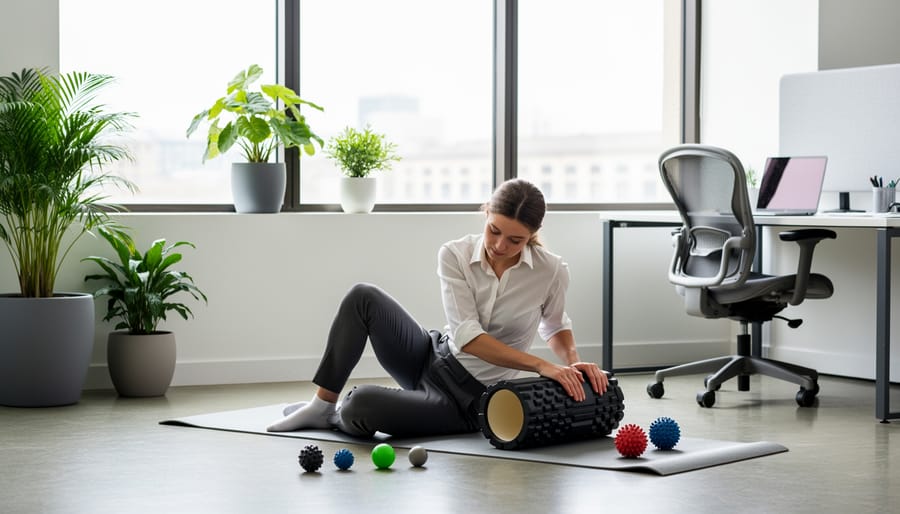
Foam rollers are excellent for addressing large muscle groups like your back, quads, and calves. Simply position the roller under the target area and use your body weight to apply pressure, rolling slowly for 30-60 seconds. This technique helps release tension built up from repetitive motions and prolonged standing. Many tradespeople keep a compact roller in their truck for quick relief during lunch breaks.
Massage balls, including tennis balls and specialized therapy balls, work wonders for pinpoint relief. Press the ball against a wall or floor, positioning it on trigger points in your shoulders, lower back, or feet. Roll in small circles or hold steady pressure for 20-30 seconds. These tools cost under $15 and fit easily in your toolbox.
Handheld massage devices range from simple manual rollers to electric percussive massagers. While higher-end models can be pricey, basic versions provide effective relief for tight muscles and cost about the same as a single professional massage session. Focus on areas you can safely reach yourself, avoiding bony areas and the spine directly.
Community members report best results when combining these tools with stretching and proper hydration. One electrician shared that using a foam roller for five minutes before bed significantly reduced his morning stiffness. However, remember these tools supplement but never replace professional treatment, especially for chronic pain or injuries. If self-massage causes sharp pain or symptoms worsen, consult a licensed massage therapist or healthcare provider immediately.
Your body is your most valuable tool, and like any quality equipment, it requires regular maintenance to perform at its best. Just as you wouldn’t neglect servicing your power tools or replacing worn drill bits, you shouldn’t ignore the physical strain that comes with trades work. The difference is simple: you can replace a broken tool, but you can’t replace your body.
Investing in regular massage therapy isn’t an indulgence—it’s a practical strategy for career longevity. The tradespeople who thrive for decades in physically demanding work aren’t just lucky; they’re proactive about managing their physical health. By addressing muscle tension, joint stiffness, and inflammation before they escalate, you’re preventing the minor aches of today from becoming the debilitating injuries that could sideline you tomorrow.
Consider the real costs of ignoring body maintenance. A few massage sessions are considerably less expensive than surgery, extended time off work, or chronic pain management. Beyond the financial aspect, staying pain-free means you can continue doing the work you love and providing for your family without limitations.
Just as staying comfortable on the jobsite requires planning and proper resources, maintaining your physical health requires commitment. Start with one session. Talk to your mates about their experiences. Find a therapist who understands trades work. Your future self will thank you for taking action today.
Related Posts


Post a Comment