

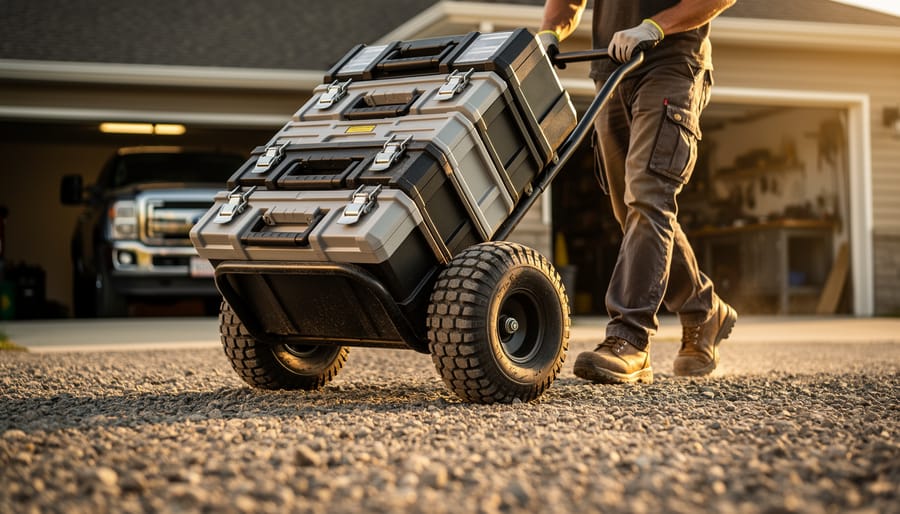
Evaluate your workspace mobility needs before investing in any storage system. A mechanic working across multiple job sites requires different features than a weekend DIYer organizing a garage. Consider how frequently you transport tools, the weight you’ll be moving, and the terrain you’ll cross—concrete floors versus gravel driveways demand different wheel types and materials.
Match your tool collection to the right storage configuration. Rolling tool chests work best for comprehensive collections staying in one location, while modular stackable systems let you transport only what each job requires. Tool bags and backpacks suit lightweight hand tools for quick residential repairs, whereas heavy-duty carts with pneumatic tires handle power tools and equipment across construction sites.
Prioritize accessibility over maximum capacity. The most effective mobile storage keeps your most-used tools within arm’s reach rather than buried under layers. Drawer dividers, foam inserts, and labeled compartments eliminate the time-wasting search through jumbled toolboxes that costs you productive hours.
Test weight distribution before loading fully. An improperly balanced cart tips easily, creating safety hazards and damaging expensive equipment. Place heavier items low and centered, securing loose tools to prevent shifting during transport.
Budget for durability, not just initial cost. Professional tradespeople consistently report that mid-range storage systems with reinforced corners and quality latches outlast cheaper alternatives by years. Community reviews reveal that spending 30 percent more upfront often prevents complete replacement within two years, ultimately saving money and reducing the frustration of failed equipment mid-project.
Why Mobile Tool Storage Matters More Than You Think
Poor tool storage isn’t just an inconvenience—it hits your wallet, wastes your time, and can even put you at risk. Let’s look at what’s really at stake when your tools aren’t properly organized and protected during transport.
The financial impact adds up faster than most people realize. According to feedback from our community members, the average tradesperson loses between $500-$1,000 annually to damaged or missing tools. One electrician shared how his unsecured toolbox shifted during transit, causing his digital multimeter to crack against metal handles. That single incident cost him $300 in replacements plus half a day’s work. Theft is another concern—tools left visible in vehicle beds or poorly secured containers are easy targets, with power tools being especially attractive to thieves.
Time loss is equally frustrating. Professional contractors report spending 15-30 minutes per day searching for misplaced tools or driving back to previous job sites for forgotten equipment. Over a year, that’s potentially 60-120 hours of billable time simply vanished. As one carpenter put it during our user survey: “I calculated that disorganization was costing me a full work week annually. That’s when I knew something had to change.”
Safety concerns are often overlooked until something goes wrong. Loose tools become projectiles during sudden stops or accidents. Rolling toolboxes without proper latching mechanisms can tip over, causing injury. Sharp implements mixed with other equipment create hazards when reaching into bags or boxes.
Tool longevity suffers too. Exposure to moisture, extreme temperatures, and physical impacts from bouncing around in vehicles accelerates wear and corrosion. Implementing proper mobile storage combined with a quarterly maintenance plan helps protect your investment and ensures tools remain reliable when you need them most.
These real-world impacts make mobile tool storage not just a convenience upgrade, but a practical necessity for anyone serious about their work or projects.
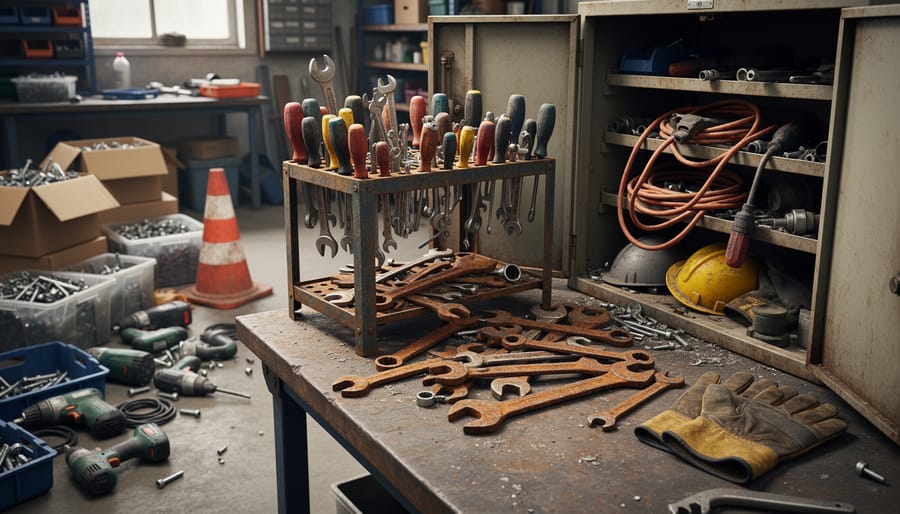
Types of Mobile Tool Storage Solutions
Tool Boxes and Chests on Wheels
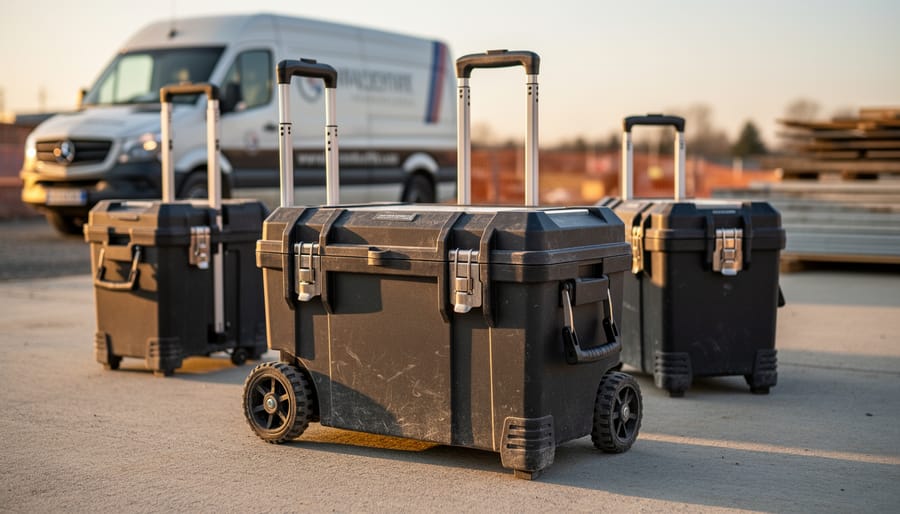
Rolling toolboxes and chests on wheels offer an excellent middle-ground solution for those who need mobility without the bulk of full-size tool carts. These units typically range from 20 to 40 gallons in capacity, making them ideal for carrying essential tools to different work areas around your home, garage, or job site.
Community reviews consistently highlight the convenience factor for lighter loads. One professional electrician shared that his wheeled toolbox handles everything needed for residential service calls without the strain of carrying a traditional box. The wheels eliminate the back-breaking lifting associated with heavy tool loads, though users note these aren’t designed for extremely rough terrain like gravel or construction debris.
When selecting a rolling toolbox, prioritize sturdy wheel construction. Look for models with at least 5-inch diameter wheels, preferably with ball bearings for smooth rolling. The handle should telescope and lock securely at comfortable heights. Durability matters too, so check for reinforced corners and heavy-duty latches that won’t fail after repeated use.
DIYers find that toolboxes with removable trays provide excellent organization for smaller items like drill bits and fasteners. Weight capacity varies significantly between models, ranging from 50 to 150 pounds, so match your selection to your typical tool load to avoid premature wear or handle failure.
Tool Carts and Rolling Cabinets
Tool carts and rolling cabinets represent a step up from basic toolboxes, offering the mobility of wheeled storage combined with the organizational capacity of a full workshop cabinet. These multi-drawer units typically feature anywhere from three to twelve drawers of varying depths, allowing you to separate tools by type, project, or frequency of use.
What sets these apart from standard toolboxes is their workspace integration. Many models include a flat top surface that doubles as a work area, letting you perform minor repairs or assembly tasks right where your tools are stored. Professional mechanics often position these carts as satellite workstations throughout their shop, keeping specialized tools close to specific work zones.
Heavy-duty options can support several hundred pounds and feature ball-bearing drawer slides that glide smoothly even under load. According to user reviews, the locking mechanisms are essential—look for models with a single lock that secures all drawers simultaneously to prevent them from sliding open during transport.
For job sites, contractors recommend choosing carts with larger diameter wheels (at least five inches) to navigate rough terrain and door thresholds. Workshop users prioritize drawer organization systems like foam inserts or adjustable dividers that keep tools from shifting during movement. Consider your typical working environment before selecting wheel type and cabinet height.
Vehicle-Mounted Storage Systems
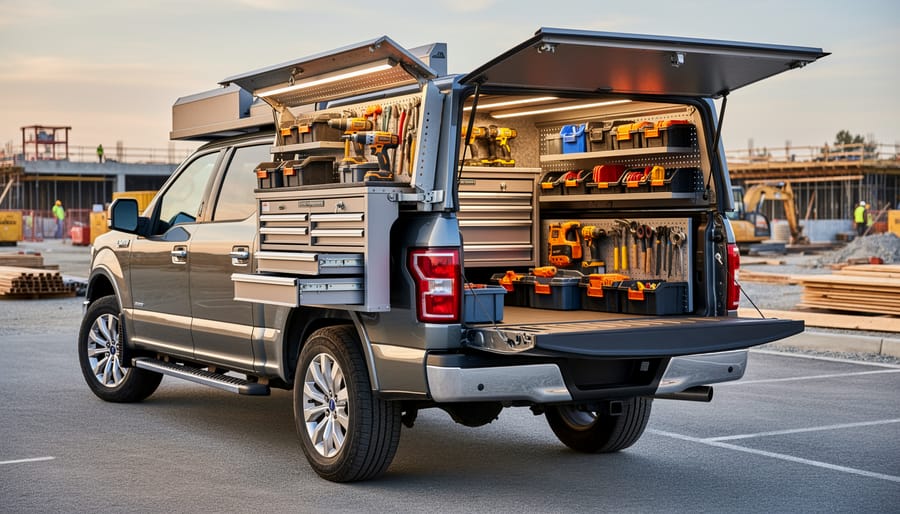
Vehicle-mounted storage systems transform your work vehicle into a mobile workshop, keeping tools organized and accessible while maximizing limited space. These solutions range from basic truck bed organizers to comprehensive van racking systems designed specifically for tradespeople.
Van racking represents the most robust option, featuring customizable shelving, drawer units, and mounting brackets that secure directly to your vehicle’s walls and floor. Popular among electricians and plumbers, these systems typically use aluminum or steel construction. According to user reviews, professional-grade systems from brands like Weather Guard and Adrian Steel withstand daily job site demands, though installation requires careful measuring to avoid interfering with wheel wells or side doors.
Truck bed organizers offer simpler alternatives, including sliding drawer systems and modular storage boxes that utilize vertical space. Many users recommend securing these units with bed tie-downs or bolting them directly to the truck bed to prevent shifting during transport.
Installation considerations are critical for safety. Always verify your vehicle’s weight capacity and distribute heavy tools evenly. Professional installers suggest keeping frequently used items at waist height to reduce back strain and improve efficiency.
Security features matter significantly for vehicle storage. Look for lockable compartments, reinforced doors, and tamper-resistant hardware. Community feedback consistently highlights that visible security measures deter theft better than hidden systems. Consider adding motion-sensor lighting and window tinting for additional protection. Remember that proper insurance coverage should complement your physical security measures.
Stackable Storage Modules
Stackable storage modules offer a flexible approach to tool organization that adapts as your collection grows. These systems use interlocking cases that stack vertically and connect securely, allowing you to transport just what you need for each job while maintaining a cohesive storage ecosystem at home or in your vehicle.
Popular brands like Milwaukee PACKOUT, DeWalt ToughSystem, and Ridgid Pro Tool Storage have created ecosystems where different-sized modules work together seamlessly. Each system typically includes small organizers for fasteners and bits, medium toolboxes for hand tools, and larger cases for power tools. The key advantage is compatibility—once you invest in one brand’s system, you can add pieces over time without replacing your entire setup.
When building your stackable system, start with a wheeled base unit for mobility, then add modules based on your most frequent tasks. Many users in the trade community recommend beginning with one or two core pieces rather than buying a complete set immediately. This lets you test whether the system fits your workflow before committing fully.
Consider weight distribution carefully—place heavier items in bottom modules to prevent toppling during transport. Most systems include customizable dividers and foam inserts, making it easy to create dedicated spaces for specific tools. User feedback consistently highlights the importance of choosing a system with durable latches and weather-resistant seals, especially for outdoor work environments.
Soft-Sided Tool Bags and Backpacks
Soft-sided tool bags and backpacks offer excellent portability for electricians, HVAC technicians, and DIYers with smaller tool collections. These fabric solutions typically weigh 60-70% less than comparable hard cases, making them ideal for climbing ladders or navigating tight job sites.
Community feedback consistently highlights their organizational advantages. Most models feature multiple internal pockets, reinforced tool loops, and external compartments that keep frequently-used items accessible. Professional electrician Mike T. notes, “I can grab my bag and have everything I need without lugging a heavy toolbox up three flights of stairs.”
Weather resistance varies significantly by brand. Look for options with waterproof bases, treated fabric, and covered zippers. However, users emphasize these bags cannot match the protection hard cases provide against crushing or severe impacts. One contractor learned this the hard way when a fallen board damaged delicate measuring tools.
Best applications include residential service calls, light maintenance work, and situations requiring frequent repositioning. For power tools or environments with exposure to extreme conditions, hard cases remain the better choice. Prices range from $30 for basic bags to $200 for professional-grade backpacks with advanced organization systems.
Specialized Mobile Solutions
Beyond standard rolling toolboxes, specialized mobile solutions target specific work scenarios and trades. Mobile workbenches combine portability with a stable work surface, featuring wheels that lock for stationary use and fold-down legs for height adjustment. These prove invaluable for on-site carpentry and assembly work.
Jobsite storage solutions prioritize durability and weather resistance, with reinforced corners, heavy-duty latches, and sealed compartments to protect tools from dust and moisture during outdoor projects. Many feature tie-down points for secure truck bed transport.
Trade-specific options address unique needs: electrician bags with individual compartments for wire strippers, testers, and cable coils; plumber carts with pipe holders and basin wrenches slots; and HVAC technician cases with manifold gauge pockets. According to community feedback, these purpose-built solutions significantly reduce setup time compared to generic storage.
Consider your primary trade tasks when selecting specialized storage. One contractor shared that switching to a trade-specific cart cut their tool retrieval time by nearly half, allowing them to complete more service calls daily.
Keeping Your Tools Safe During Transport
Securing Tools to Prevent Shifting
A mobile toolbox is only as good as its ability to keep everything in place during transport. Movement and shifting can damage tools, create safety hazards, and waste time when you arrive at your worksite.
Start by securing the storage unit itself. For truck beds, use ratchet straps or cargo nets anchored to tie-down points. Many wheeled tool chests come with built-in brake locks on the casters—always engage these before loading or unloading. Community feedback consistently emphasizes this simple step as crucial for preventing tip-overs.
Inside your containers, use foam tool organizers or drawer liners to create friction and absorb vibration. Shadow foam (pre-cut foam with tool-shaped cutouts) is particularly popular among users who’ve shared their experiences. For loose items, adjustable dividers create compartments that prevent tools from sliding around.
Heavy items should always go on the bottom to lower the center of gravity. Stack lighter items on top and fill empty spaces with rags or foam blocks to eliminate gaps where tools can shift.
For extreme conditions like off-road transport, consider adding bungee cords or Velcro straps inside drawers. Many professionals report this extra layer prevents drawers from accidentally opening during bumpy rides. Test your setup with a short drive before heading to an important job—it’s better to discover problems in your driveway than on the highway.
Protecting Against Theft
Mobile tool storage naturally faces theft risks, but practical security measures can significantly reduce your vulnerability. Start with quality locking mechanisms—look for toolboxes and cabinets featuring reinforced steel hasps and at least Grade 2 deadbolts. Many users report that visible security measures alone deter opportunistic thieves.
For vehicles and trailers, cable locks provide an additional barrier by securing toolboxes to anchor points. One contractor shared that investing in a thick, cut-resistant cable saved his equipment during a job site break-in. GPS trackers offer another layer of protection, allowing you to locate stolen items quickly. Modern trackers are surprisingly affordable and can be hidden inside larger toolboxes.
Smart parking practices matter just as much as hardware. When possible, park mobile storage in well-lit, visible areas or secure garages overnight. Remove smaller valuable items when leaving vehicles unattended for extended periods. Several tradespeople in our community recommend backing trailers against walls or other obstacles to prevent easy towing.
Finally, verify your insurance coverage. Homeowner’s policies often have limits on tool coverage, while business insurance may require specific riders for mobile equipment. Document your tools with photos and serial numbers—this preparation speeds up claims and helps police recover stolen property.
Weather and Environmental Protection
Mobile tool storage needs proper weather protection to keep your investment safe during transport. Water damage and rust are the primary enemies of tools on the move, but simple strategies can prevent costly repairs.
Start with waterproofing basics. Choose tool boxes, bags, or cases with water-resistant materials and sealed seams. Silicone gaskets around lids provide excellent moisture barriers. For existing storage, apply waterproof spray coatings to fabric cases or add rubber weather stripping to metal box edges. Always elevate mobile storage off wet surfaces using pallets or blocks.
Rust prevention requires ongoing attention. Apply thin coats of protective oil to metal tools before transport, especially in humid conditions. Silica gel packets placed inside compartments absorb moisture effectively. Community reviews consistently recommend VCI (Vapor Corrosion Inhibitor) strips as a set-and-forget solution that releases rust-preventing vapors.
Temperature extremes pose unique challenges. Lithium-ion batteries degrade faster in heat and lose charge in extreme cold, making protecting power tool batteries crucial during transport. Remove batteries from tools when storing in vehicles overnight. Insulated tool bags help buffer temperature swings for sensitive electronics and pneumatic tools. Users report that foam inserts provide both cushioning and thermal protection, keeping tools closer to ambient temperature during short trips.
Maintaining Your Mobile Storage System
Regular Cleaning and Inspection
Keeping your mobile tool storage clean isn’t just about appearances—it directly impacts functionality and longevity. Following regular maintenance schedules helps prevent costly repairs down the track.
For weekly cleaning, wipe down exterior surfaces to remove dust, debris, and moisture that can cause rust. Use a damp cloth for plastic surfaces and a slightly oiled rag for metal components. Monthly, conduct a thorough inspection of critical components. Check wheels for smooth rotation and look for debris wrapped around axles. Test all locks to ensure they engage properly—sticky locks often signal the need for lubrication. Examine hinges for rust or looseness, and verify latches click securely into place.
Watch for early warning signs like unusual noises when rolling, difficulty opening drawers, or gaps appearing around sealed compartments. According to community feedback, catching these issues early prevents complete component failure. Many users report that wheels are typically the first to show wear, followed by lock mechanisms. Inspect drawer slides quarterly for smooth operation, and check for cracks in plastic components or dents in metal frames that could compromise structural integrity. Regular cleaning also provides an opportunity to reorganize your tools and ensure weight distribution remains balanced.
Wheel and Hardware Maintenance
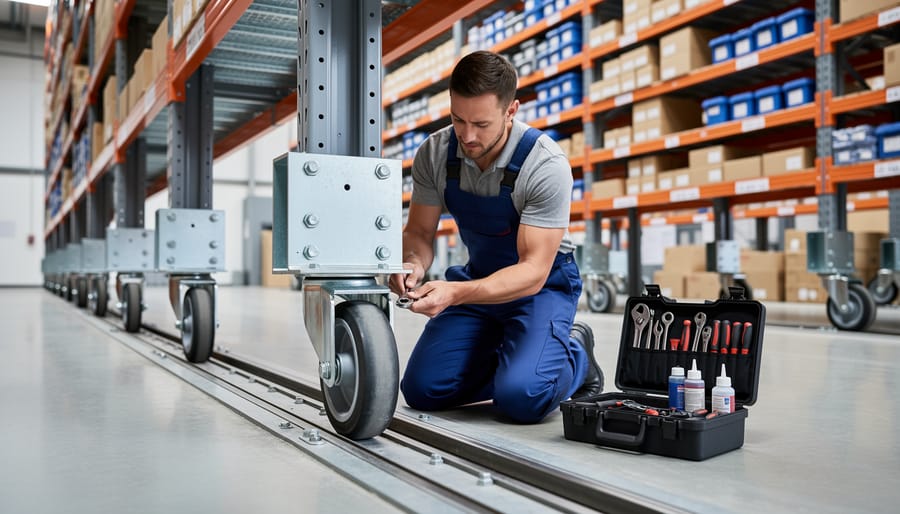
Keep your mobile tool storage rolling smoothly with regular maintenance. Every few months, flip your cart or cabinet and inspect the wheels or casters for debris, cracks, or flat spots. Remove any accumulated sawdust, metal shavings, or dirt with a stiff brush.
Apply a silicone-based lubricant to wheel axles and swivel mechanisms—avoid oil-based products that attract dust. One user from our community notes, “A quick spray every three months has kept my toolbox rolling like new for five years.” Wipe away excess lubricant to prevent dirt buildup.
Check all mounting bolts and hardware monthly, tightening any loose fasteners with the appropriate wrench. Worn wheels showing uneven tread or wobbling need immediate replacement. Most manufacturers sell replacement casters individually, so you don’t need to buy a complete set.
For swivel casters that stick or resist turning, loosen the mounting bolt slightly, clean the swivel plate, lubricate, and retighten. If wheels still drag after maintenance, replacement is your best option for safety and ease of movement. Well-maintained wheels prevent tipping hazards and make transporting heavy tools effortless, protecting both your investment and your back.
Organizing for Long-Term Efficiency
A well-organized mobile tool storage system saves time and prevents costly mishaps on every job. Start by implementing clear labeling—use a label maker or waterproof markers to identify drawer contents, including tool sizes and categories. This simple step eliminates guesswork when you’re working under pressure.
Weight distribution is crucial for safe transport and preventing tip-overs. Place heavier items like power tools and toolboxes on lower shelves or in bottom drawers. Keep frequently used items at waist height for easy access, and store lighter materials up top. This arrangement creates a stable center of gravity, especially important when moving your setup across uneven surfaces.
Regular maintenance of your storage system organization ensures long-term efficiency. Schedule quarterly reviews to purge broken tools, relocate items based on actual usage patterns, and reorganize as your collection evolves. Many professionals recommend photographing drawer contents and taping reference images to drawer fronts—a technique praised in community forums for speeding up tool retrieval.
Consider seasonal adjustments too. Swap out specialty tools you only need occasionally, keeping your mobile system lean and focused on current projects.
Choosing the Right Solution for Your Needs
Questions to Ask Before You Buy
Before investing in mobile tool storage, ask yourself these critical questions to ensure you choose the right solution. First, evaluate your tool collection size—how many tools do you regularly transport? A weekend DIYer with basic essentials needs different storage than a professional contractor hauling specialized equipment daily.
Consider your typical transport distances. Moving tools between floors in your home requires different features than traveling to multiple job sites across town. According to community feedback, users who underestimate their mobility needs often experience buyer’s remorse.
Your vehicle type matters significantly. Measure your truck bed, van interior, or car trunk before shopping. Some storage systems won’t fit certain vehicles, and forcing an incompatible setup creates safety hazards.
Budget realistically for both upfront costs and long-term durability. Quality mobile storage represents an investment, but cheaper options that fail quickly waste money. User-generated reviews consistently highlight that mid-range products often deliver the best value.
Finally, honestly assess whether rental or purchase makes more sense. If you need mobile storage for occasional projects, renting might save money. However, professionals and frequent DIYers typically find ownership more economical over time. Calculate your projected usage frequency to determine the break-even point.
What Real Users Say
Real users consistently highlight durability and wheel quality as game-changers in their mobile storage experiences. Professional contractors report that investing in pneumatic or ball-bearing wheels, rather than cheap plastic versions, dramatically extends the lifespan of their systems and reduces strain when navigating job sites. “I learned the hard way that saving $50 upfront cost me three times that in replacements,” shared one carpenter who switched to a commercial-grade rolling toolbox after two budget models failed within a year.
DIYers particularly value drawer organization systems with customizable dividers. Many note that without proper compartmentalization, even the best mobile units become cluttered messes. Weather resistance emerged as another crucial factor, with tradespeople emphasizing sealed edges and proper gaskets to protect tools from moisture damage during transport.
The most common regret among users? Buying systems that were too small initially. “I thought I’d save space, but I ended up buying three separate units anyway,” explained one electrician. Users recommend assessing your complete tool inventory before purchasing and choosing slightly larger capacity than you think you need. Community feedback overwhelmingly suggests that quality construction and thoughtful features outweigh initial cost savings every time.
Investing in the right mobile tool storage solution isn’t just about convenience—it’s a decision that directly impacts your safety, protects your valuable tools, and significantly boosts your productivity on every job. Whether you’re a weekend warrior tackling home projects or a seasoned professional moving between job sites daily, having an organized, secure system for transporting your tools makes every task smoother and more efficient.
Take a moment to honestly assess your current setup. Are you wasting time searching for the right tool? Have you noticed wear and damage from tools rattling around loose during transport? Are you experiencing back strain from awkward lifting? These are clear signs it’s time to upgrade your mobile storage system.
The good news is that you don’t necessarily need to make a major upfront investment. Many professionals and DIYers are discovering that renting specialized tool storage solutions for specific projects or trying before buying can be a smart approach.
We’d love to hear from you. What mobile storage challenges are you facing? Have you found a system that works perfectly for your needs? Share your experiences and tips with our community—your insights could help fellow tool users make better decisions. If you’re ready to explore options, check out the tool rental solutions available on our platform to find what works best for your next project.
Related Posts


Post a Comment