Hiring a mini excavator, a scissor lift or a generator is often the easy part of a project. The harder part is working out where the power comes from, what’s buried or strung overhead, and which jobs legally need a licensed electrician. Get those three things sorted before the gear arrives and the job runs safer, faster and without surprise call-outs.
This guide covers when DIY electrical work has to stop, how to plan temporary and permanent site power, and what to check around overhead services and private power poles before you start digging, lifting or building.
Where DIY Stops and a Licensed Electrician Takes Over
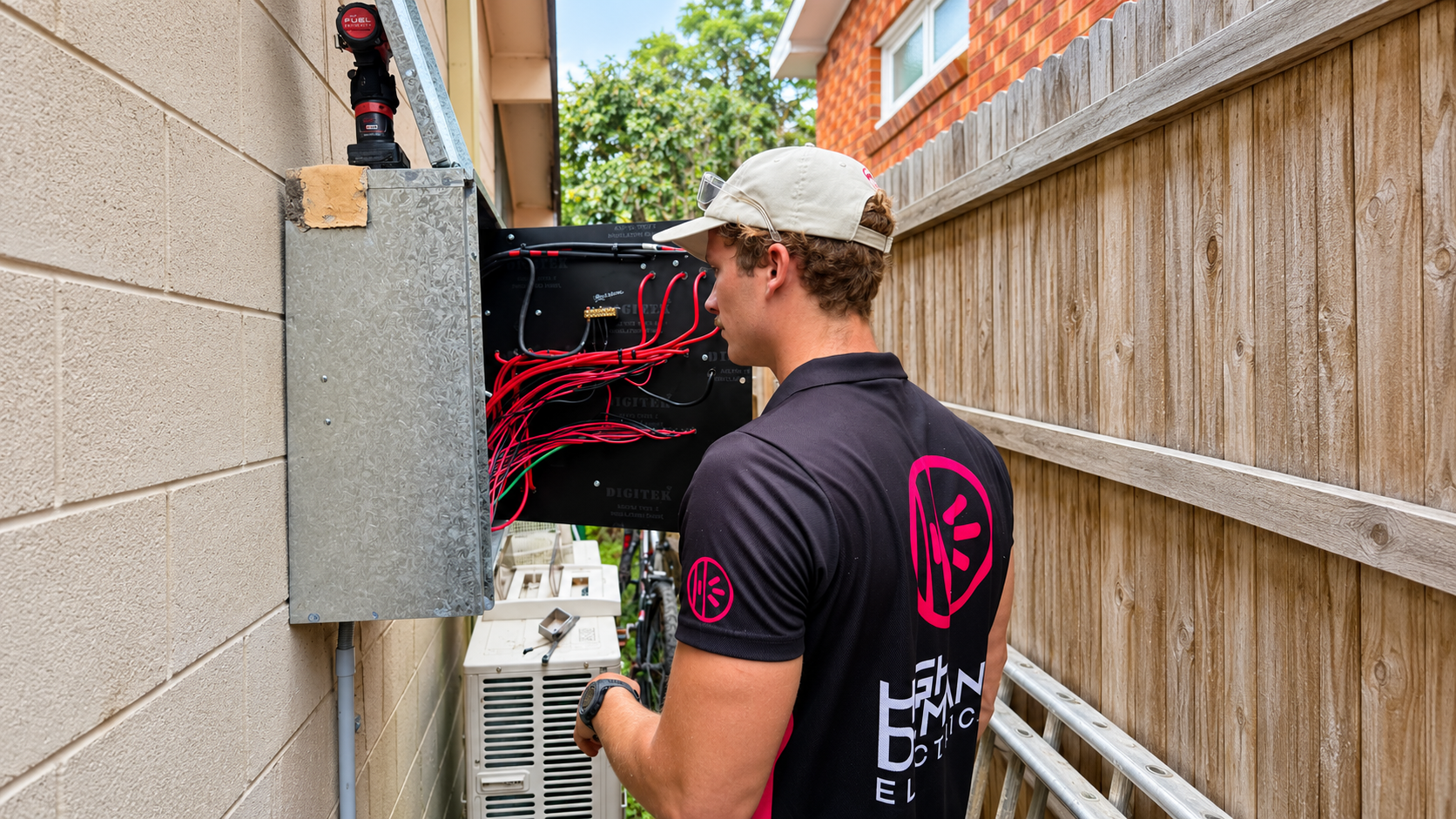
In NSW, any electrical wiring work must be done by a licensed electrician. There is no “handy homeowner” exemption for fixed wiring, and fines apply to unlicensed work. Insurance can also be voided if an unlicensed job causes a fire or injury.
What You Can Do Yourself
- Plug in and use portable tools, leads and appliances
- Replace light globes and plug-in fittings
- Reset a tripped safety switch or circuit breaker (once, then investigate why it tripped)
- Hire, set up and refuel a portable generator, using it only to run tools through its own outlets
What Needs a Licensed Electrician
- Installing, moving or replacing power points, switches, light fittings or fixed appliances
- Running new cables through walls, ceilings, slabs or trenches
- Any work inside a switchboard, including adding circuits or safety switches
- Connecting a generator to a home or building’s wiring
- Hard-wiring an EV charger, hot water system, air conditioner or oven
What Needs a Level 2 Accredited Service Provider (ASP)
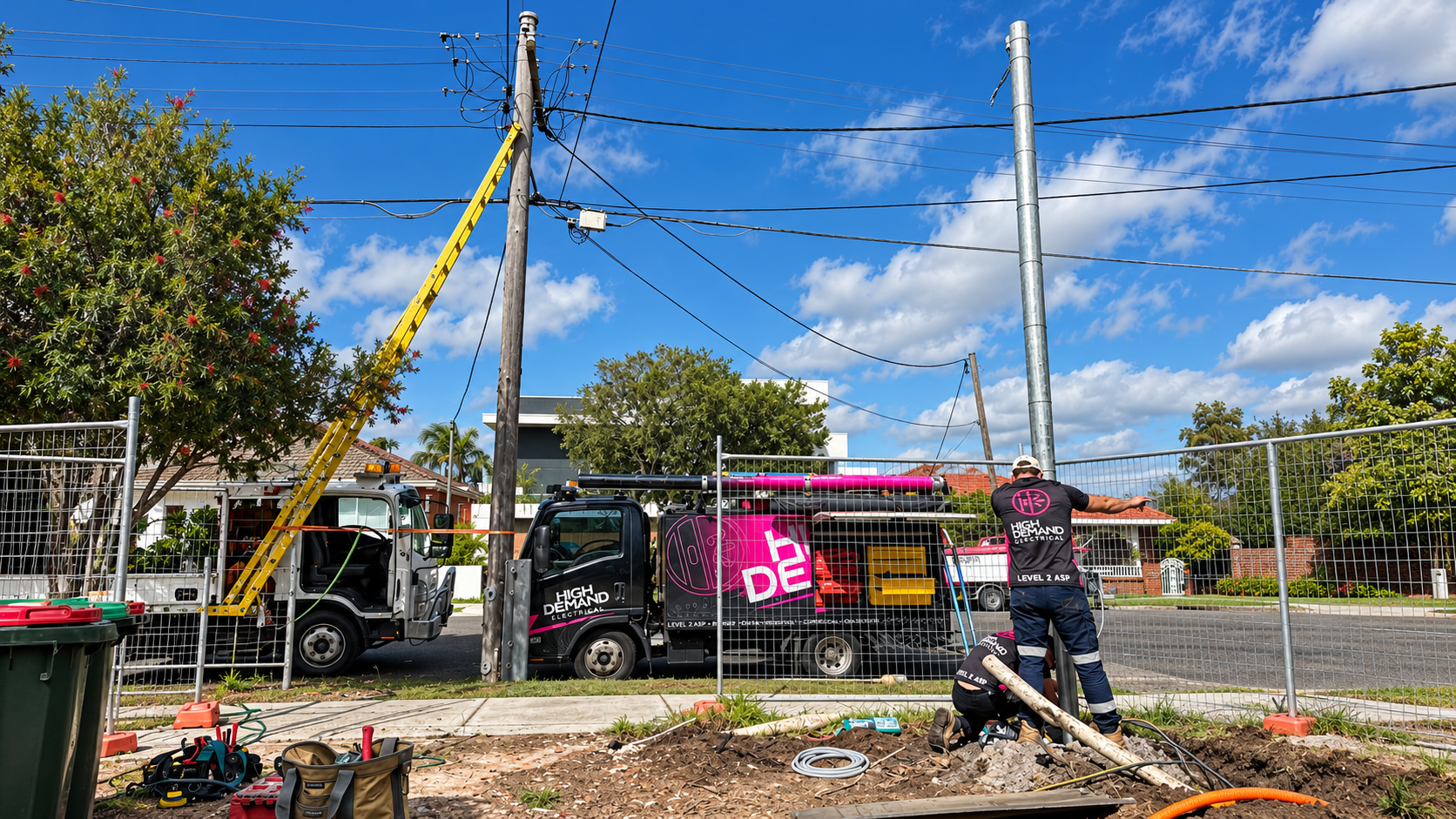
Some work goes beyond a standard licence because it touches the electricity network itself. Disconnecting or reconnecting supply, upgrading or relocating the service line, moving a meter, or working on a private power pole needs a Level 2 ASP. If your project involves demolition, a knock-down rebuild, an extension near the meter box or a supply upgrade, book this in early, as network approvals can take weeks.
When a licensed electrician finishes the work, they must give you a Certificate of Compliance for Electrical Work (CCEW). Keep it with your project paperwork. Certifiers, insurers and future buyers may ask for it.
Stop immediately if you notice: tingles from taps or metal fittings, scorch marks or a burning smell at outlets, a safety switch that keeps tripping, cables exposed during excavation or demolition, or any damage near the meter box. Make the area safe, keep people clear and call an electrician.
Planning Temporary Site Power
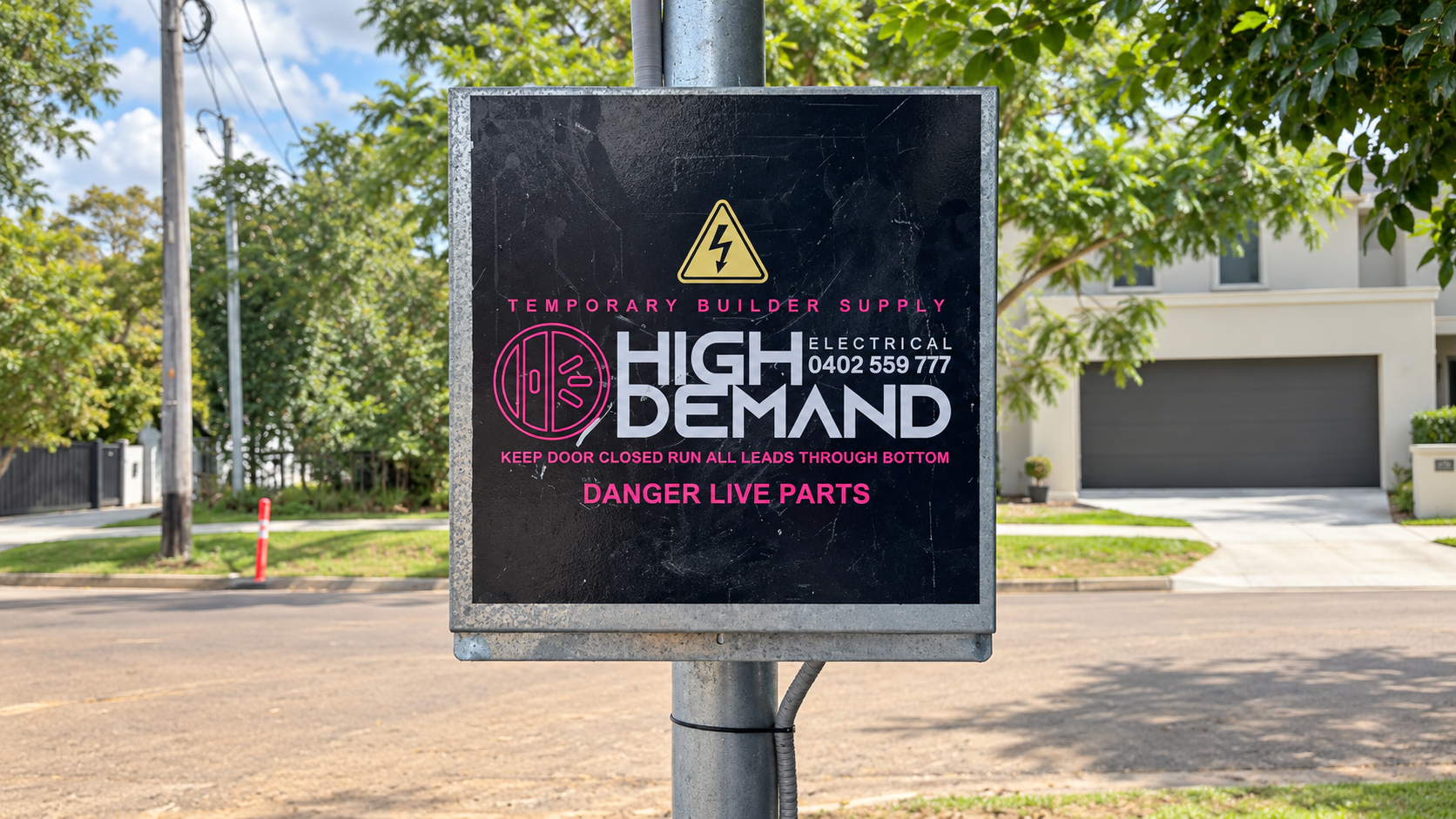
Temporary power should be sized and set up before work starts, not improvised once the first tool won’t run. Construction and demolition sites in Australia follow AS/NZS 3012, which sets the rules for temporary supply, leads, RCD protection and equipment testing.
1. List every load. Write down each tool and machine you’ll run at the same time: saws, compressors, welders, heaters, site lighting, pumps and the site shed. Note the running watts and the much higher starting load of motors. This tells you whether a single 15 A outlet, a builder’s temporary supply or a generator is the right fit.
2. Choose the supply.
|
Option |
Best for |
Who sets it up |
|
Existing house supply |
Small renovations, short jobs |
Licensed electrician checks capacity and RCDs |
|
Builder’s temporary supply (temp pole or temp board) |
New builds, knock-down rebuilds, longer jobs |
Level 2 ASP for the network connection, electrician for the board |
|
Remote areas, no supply yet, short jobs |
You, using the generator’s own outlets only |
|
|
Standby or backup generator |
Sites or homes that can’t lose power |
Licensed electrician, with a changeover switch |
3. Protect every circuit with an RCD. Every outlet used on a construction site needs residual current device protection. Use a portable RCD where the outlet isn’t already protected, and pick generators with RCD-protected outlets.
4. Test and tag. Under AS/NZS 3012, portable tools, leads and RCDs on construction sites are tested and tagged every three months. Check tags before use, and pull any lead with cuts, crushed sections or taped joins.
5. Run leads safely. Keep leads off the ground on lead stands or hooks where vehicles and machines travel, and away from water, sharp edges and doorways. Never run them through puddles or under plant tracks.
6. Never back-feed. Plugging a generator into a house power point with a double-ended lead is illegal and can kill line workers or neighbours on the same network. If you need a generator to power a building, have an electrician install an inlet and changeover switch. For sites or homes that can’t afford an outage, a permanent backup generator installation in Sydney with an automatic transfer switch is the safer long-term option.
Planning Permanent Power
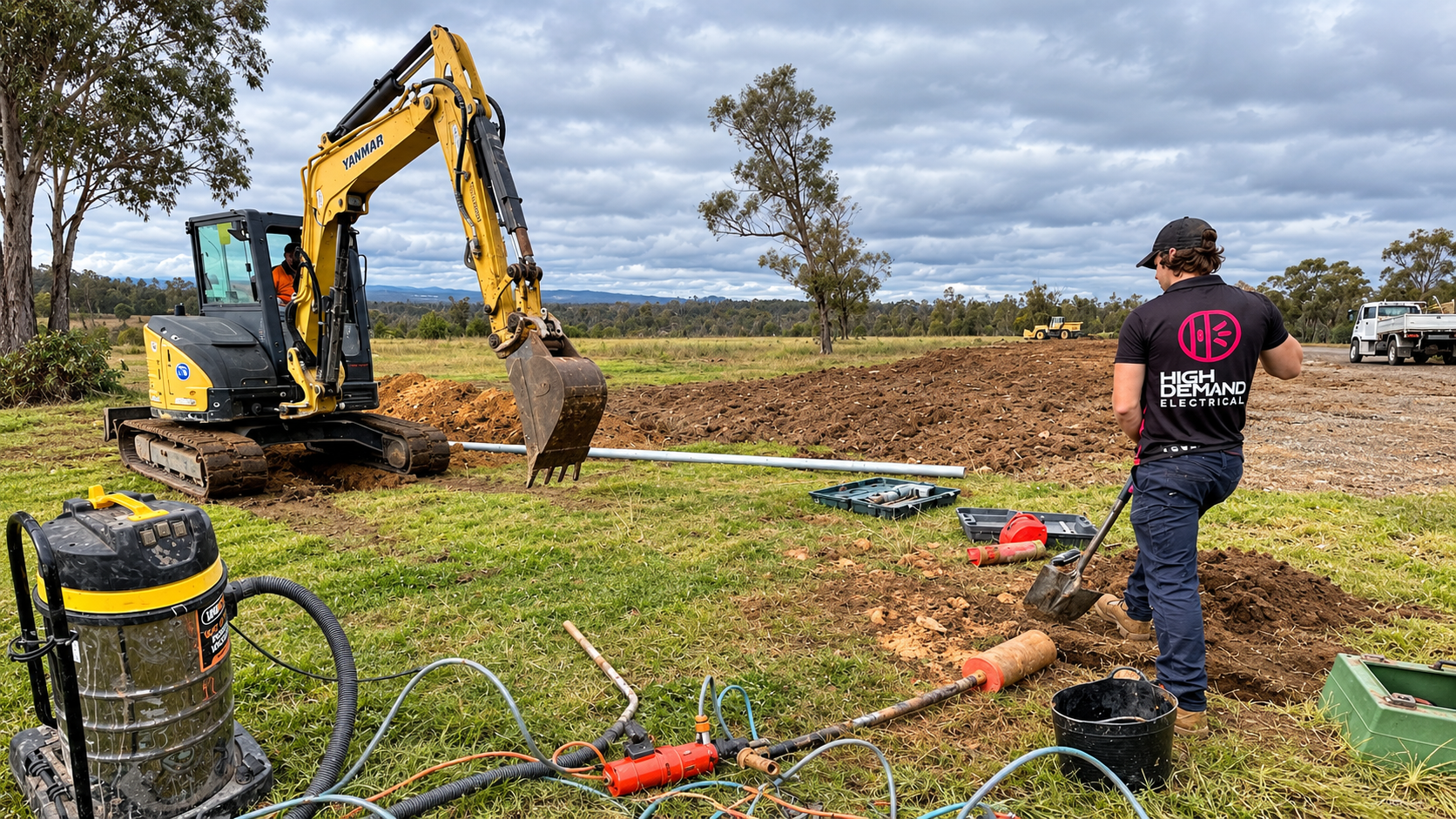
Permanent power is easiest to get right at the design stage, before slabs are poured and walls are lined. A few early decisions save a lot of chasing and rework later.
- Check your capacity. Ducted air, induction cooking, an EV charger, a pool and a granny flat can add up fast. Older single-phase supplies may need an upgrade to handle it.
- Upgrade the switchboard if needed. Old ceramic fuses, no safety switches or a board that’s full are all signs it’s time. Modern boards have room for new circuits and RCD protection on every circuit.
- Plan the service route. Decide early whether the new supply will come in overhead or underground, and where the meter and main switchboard will sit. Moving them later means more network work.
- Book network work early. Service upgrades, new connections, meter relocations and permanent disconnections for demolition are handled by a Level 2 ASP, who liaises with the network operator (Ausgrid, Endeavour Energy or Essential Energy, depending on your area).
This is where a Level 2 electrician in Sydney earns their keep: one accredited team can handle the disconnection, temporary supply and final connection, so the builder isn’t waiting on separate trades. Inner-city renovations bring their own quirks, such as narrow terrace frontages, shared overhead services and old meter boxes on party walls. If you’re renovating in Marrickville, Leichhardt or Newtown, look for a Level 2 electrician in the Inner West who knows these older homes and their access limits.
Overhead Services and Private Power Poles
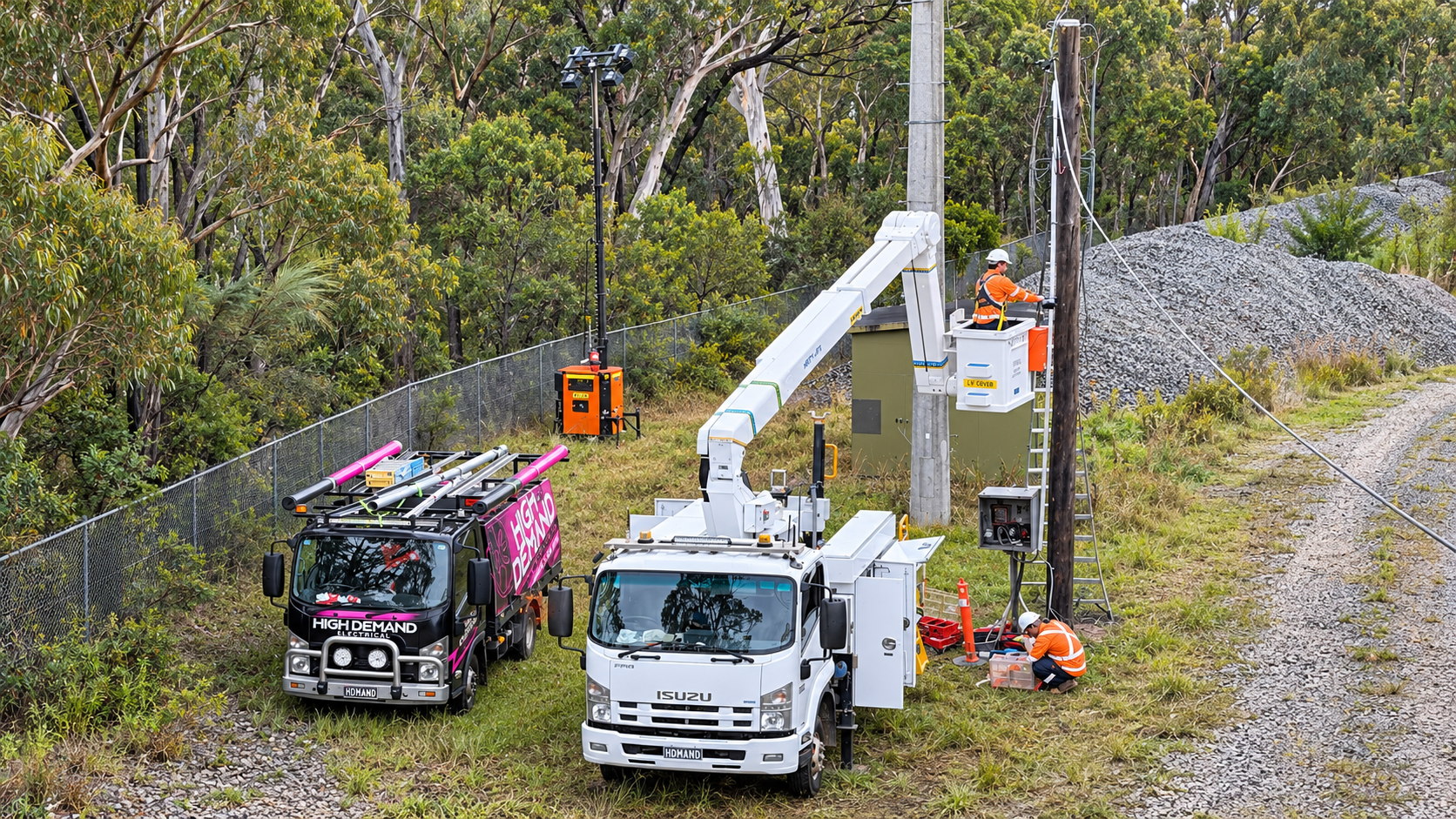
Contact with overhead power lines is one of the most common causes of serious electrical injury on worksites. Elevating work platforms, tippers, excavator booms, concrete pumps, ladders and even long lengths of scaffold tube can all reach a line. Electricity can also arc across a gap, so you don’t have to touch a line to be hurt.
Before the Equipment Arrives
- Look up and walk the site. Mark every overhead line, including the service line from the street pole to the house. These are easy to miss when you’re focused on the ground.
- Know the No Go Zones. NSW network operators and SafeWork NSW set minimum approach distances for people and plant near overhead lines. For most low-voltage lines on poles, that’s at least 3 metres, and more for higher-voltage lines. If any part of your machine, load or material could come closer, contact the network operator before work starts.
- Ask about tiger tails or a temporary disconnection. The network operator or a Level 2 ASP can arrange insulating covers, a temporary de-energise or a relocation of the service line while you work.
- Use a spotter. When operating near lines, have a dedicated person watching clearances and nothing else.
- Check underground too. Lodge a free enquiry with Before You Dig Australia before excavating or trenching. Underground mains and private consumer mains won’t always show on the plans.
Private Power Poles: What To Check
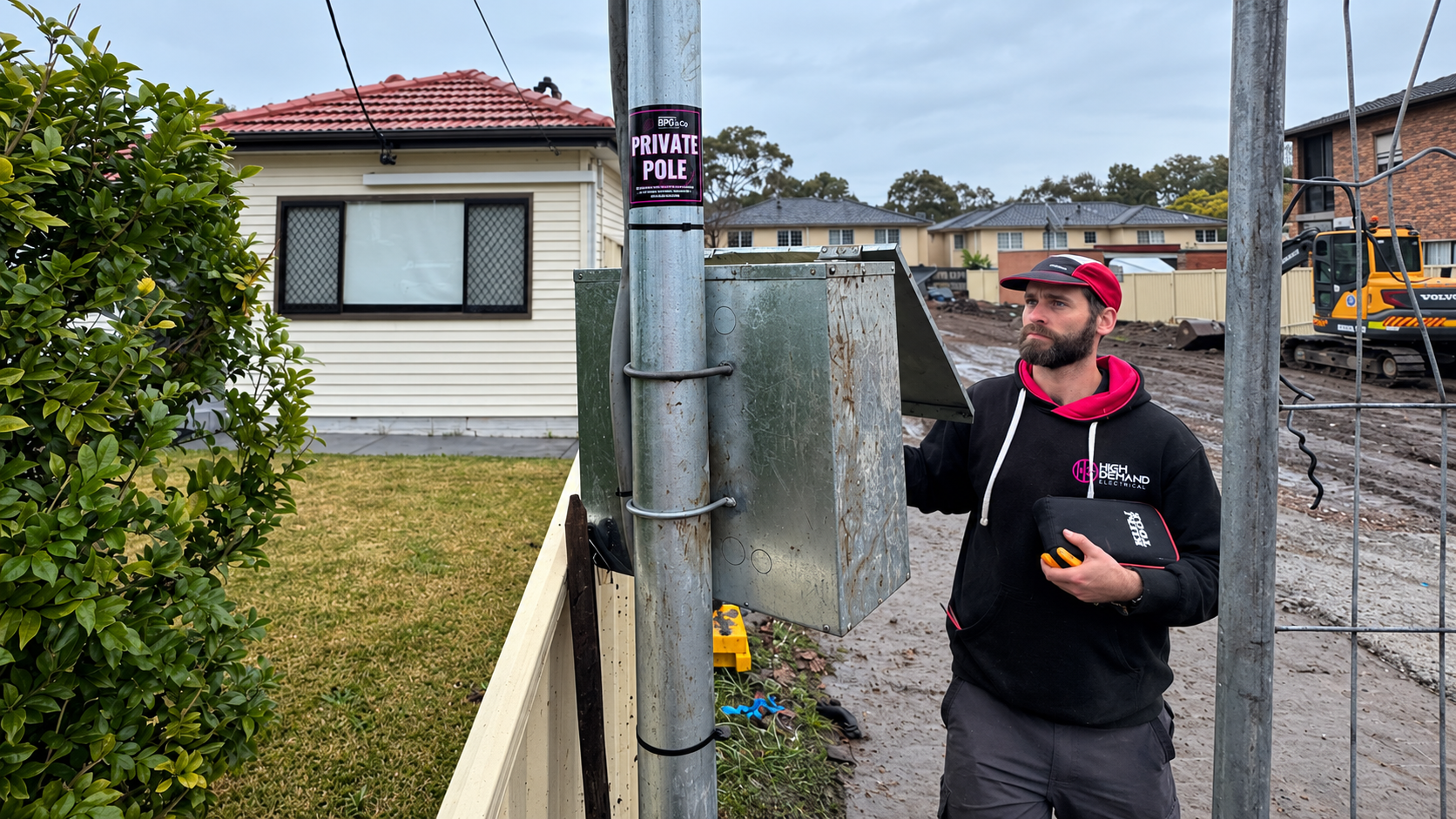
Many Sydney properties, especially long blocks, battle-axe lots and rural-residential sites, have a private power pole. Everything on the property side of the connection point is the owner’s responsibility, including the pole, its fittings and the lines it carries. Before hiring heavy plant or working nearby, check the pole for:
- Leaning, or a lean that has changed since you last looked
- Rot, termite damage or hollowing at ground level
- Cracks, splits or rust on steel poles
- Sagging lines, damaged insulators or loose fittings
- Trees or vegetation growing into the lines
- Recent impact damage from vehicles or machinery
If you see any of these, keep plant and people well clear and get it inspected before work goes ahead. Repairs and replacements on private poles must be done by a Level 2 ASP, andprivate power pole replacement in Sydney can also include moving the supply underground if the pole is in the way of a build.
If a machine contacts a line: stay in the cab if it’s safe to do so. Warn others to stay at least 8 metres away, and call 000 and the network operator. If you must leave due to fire, jump clear with your feet together without touching the machine and the ground at the same time, then shuffle away.
Pre-job Electrical Checklist
Run through this before you book your hire gear.
- All fixed wiring, switchboard and appliance work assigned to a licensed electrician
- Network work (disconnection, temp supply, service upgrade, meter move) booked with a Level 2 ASP
- Total tool and machine load listed, and supply chosen to match
- RCD protection on every outlet, including generator outlets
- Tools, leads and RCDs tested and tagged within the last three months
- Generator used only through its own outlets, or via an electrician-installed changeover switch
- Overhead lines marked, No Go Zones known and spotter assigned
- Before You Dig Australia enquiry lodged for any excavation or trenching
- Private power pole inspected, with any defects fixed before work starts
- CCEW collected for all completed electrical work
Frequently Asked Questions
Can I replace a power point myself in NSW?
No. Replacing a power point, switch or light fitting is electrical wiring work, which must be done by a licensed electrician in NSW.
Can I plug a generator into my house?
Not through a power point. Back-feeding through an outlet is illegal and dangerous. An electrician can install a generator inlet and changeover switch so the house is safely isolated from the grid.
Who is responsible for a private power pole?
The property owner. Poles and lines on the property side of the connection point must be maintained by the owner, and any work on them must be done by a Level 2 ASP.
How close can I work to overhead power lines?
For most low-voltage lines on poles, keep people and plant at least 3 metres away. Higher-voltage lines need more. Contact the network operator if your work could come any closer.
How often does site equipment need test and tag?
On construction and demolition sites, AS/NZS 3012 requires portable tools, leads and RCDs to be tested every three months.
Plan the Power, Then Hire the Gear
The right hire equipment makes a project faster, but only if the power, clearances and approvals are sorted first. Map your loads, protect every circuit, look up before you lift and dig, and bring in a licensed electrician or Level 2 ASP for anything beyond plug-in-and-go. A short planning call at the start costs far less than a stalled site, a damaged machine or an injury.
Related Posts